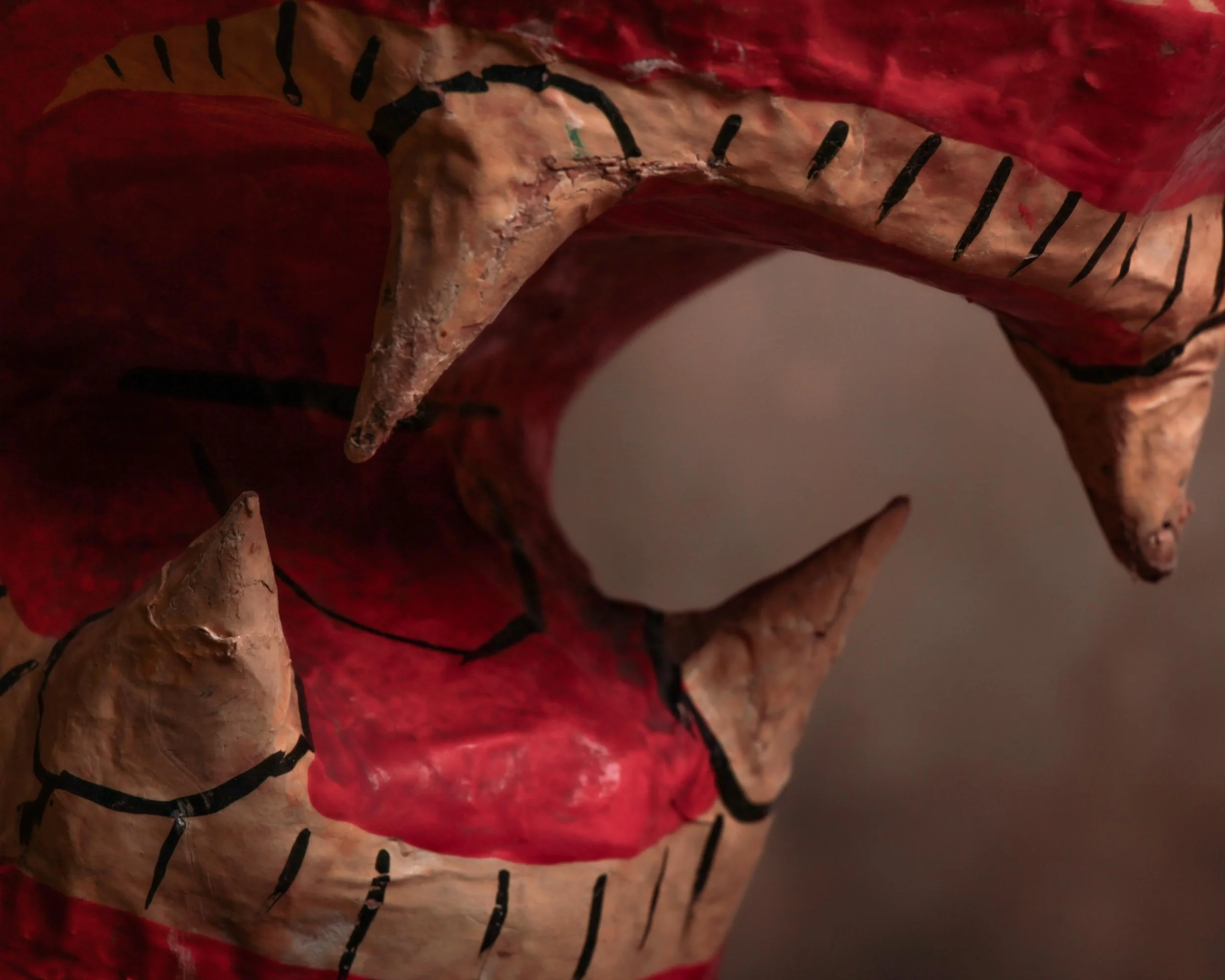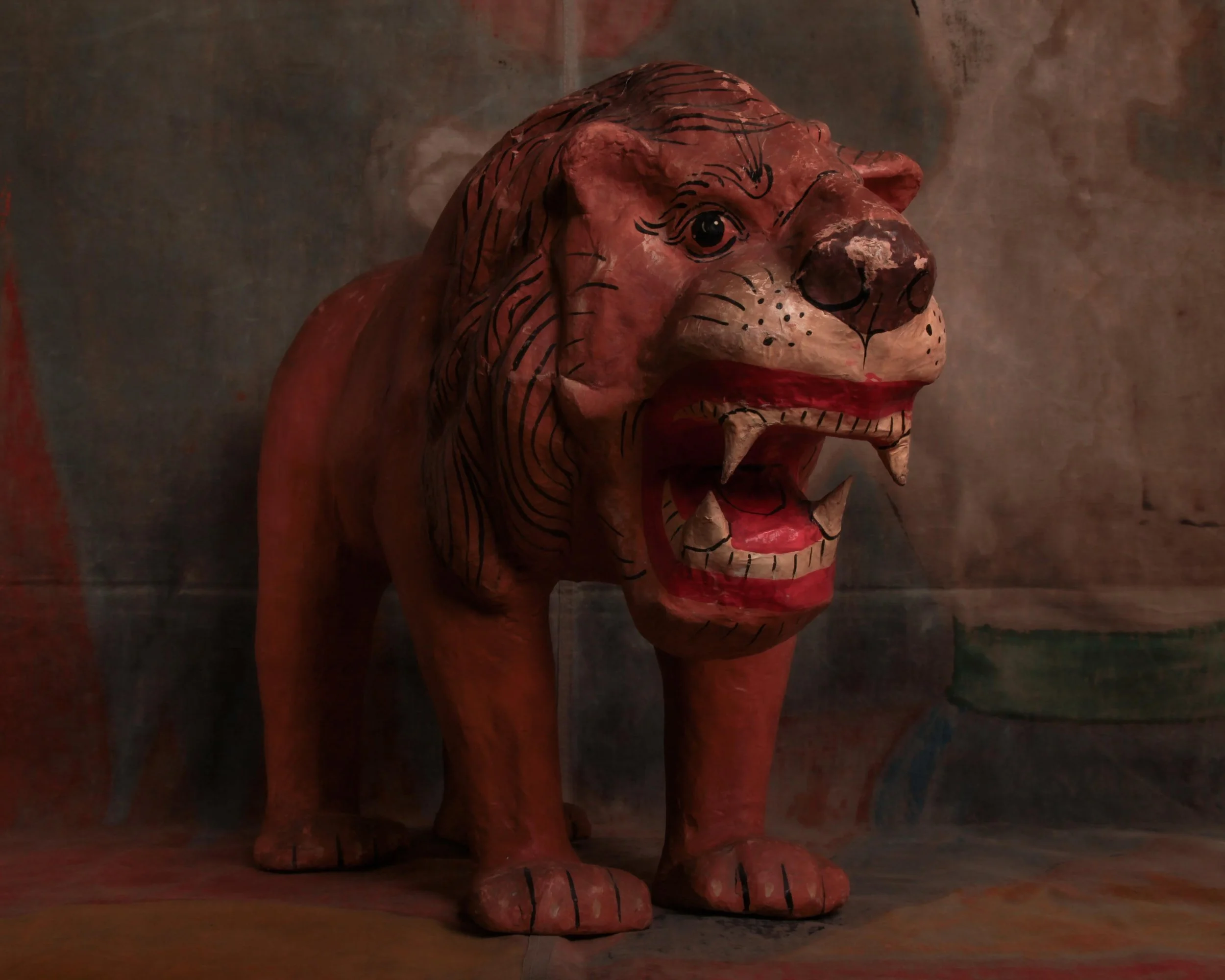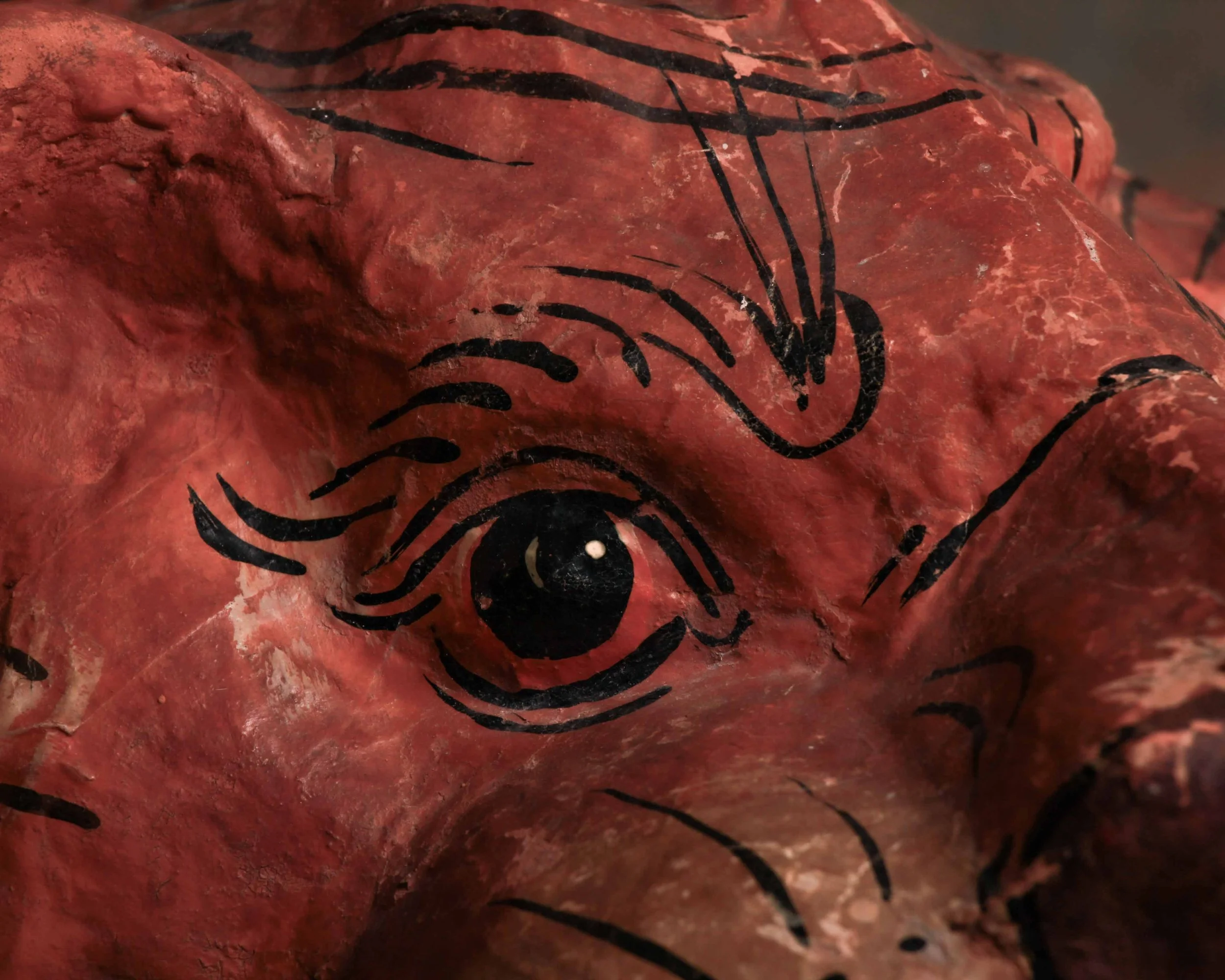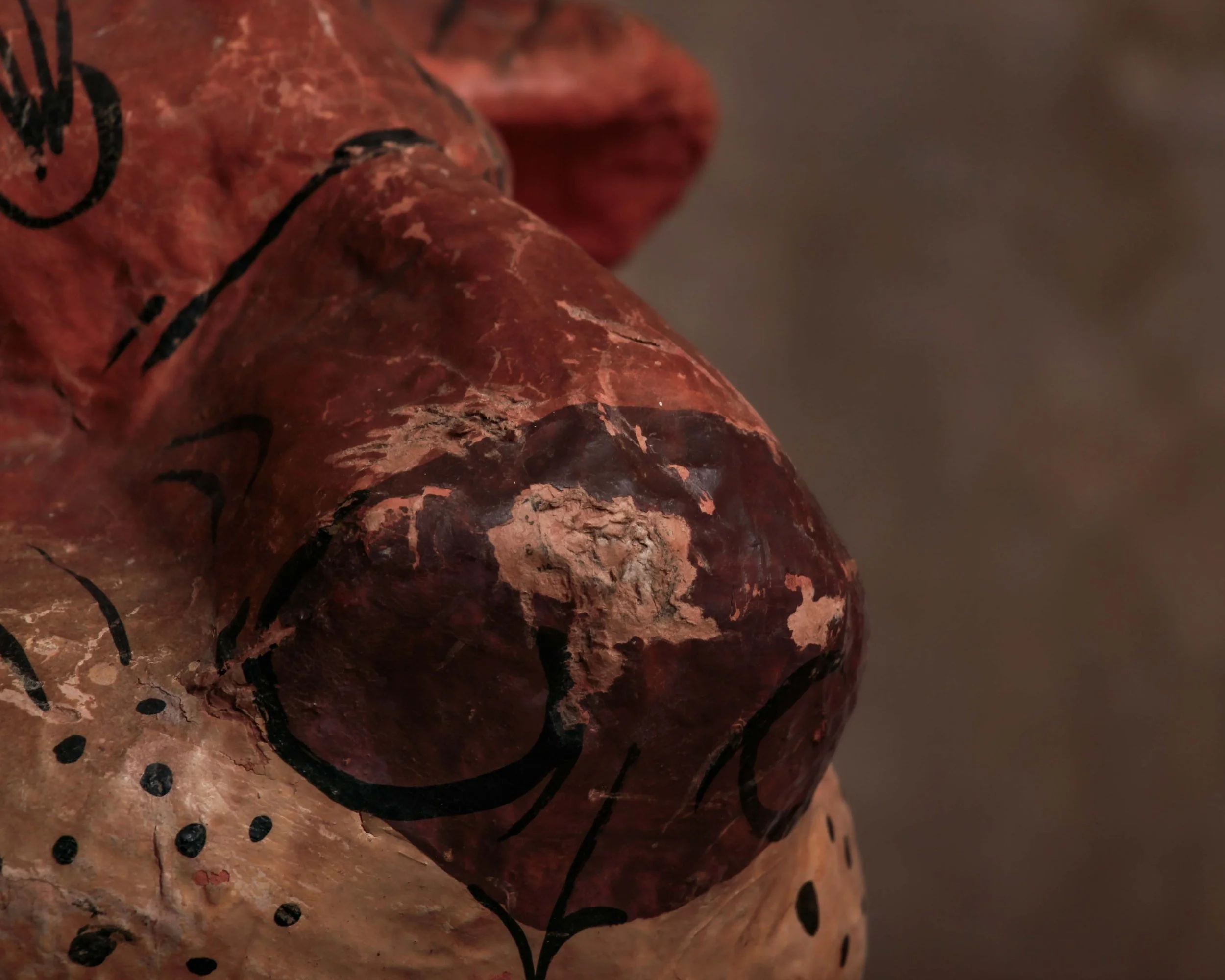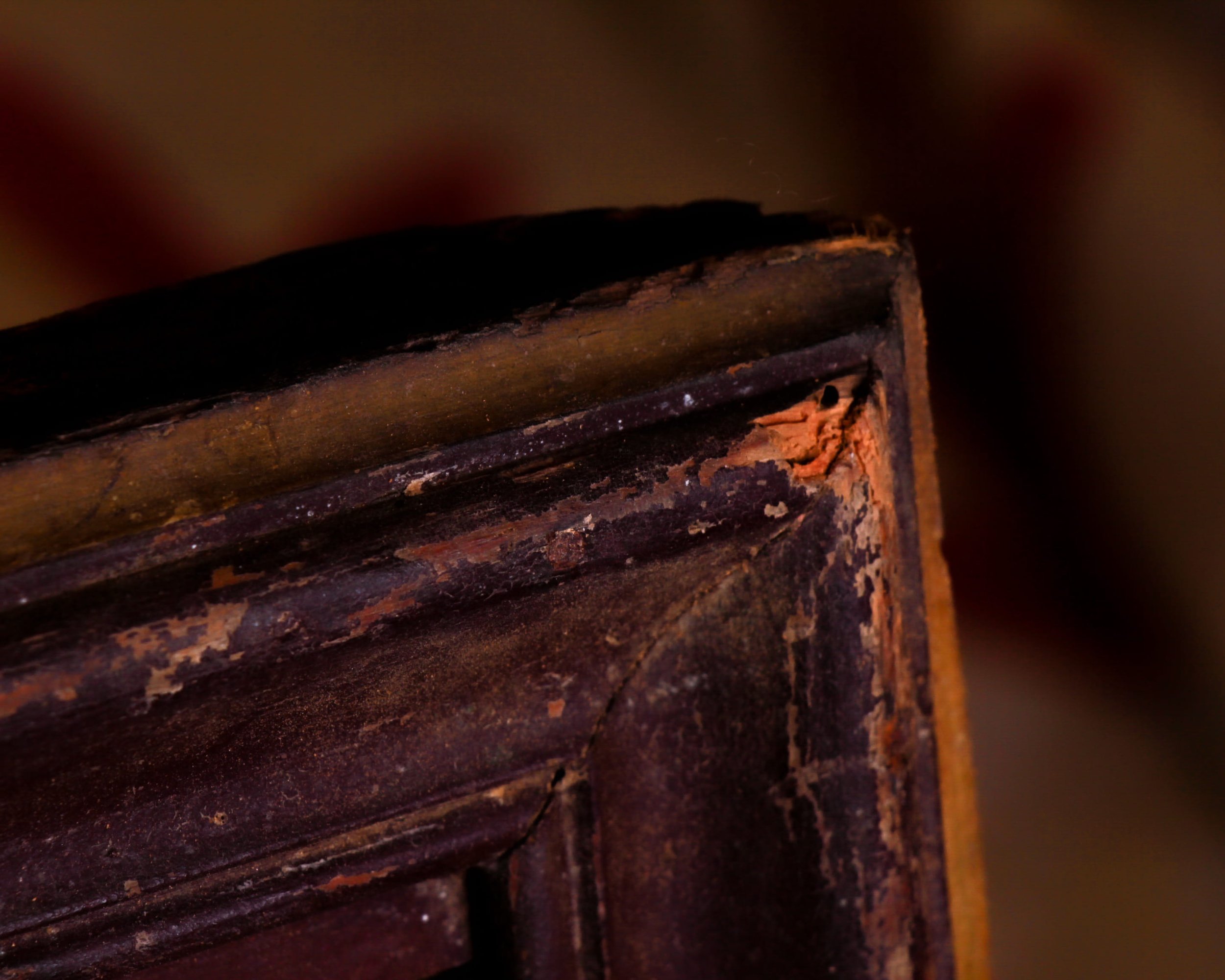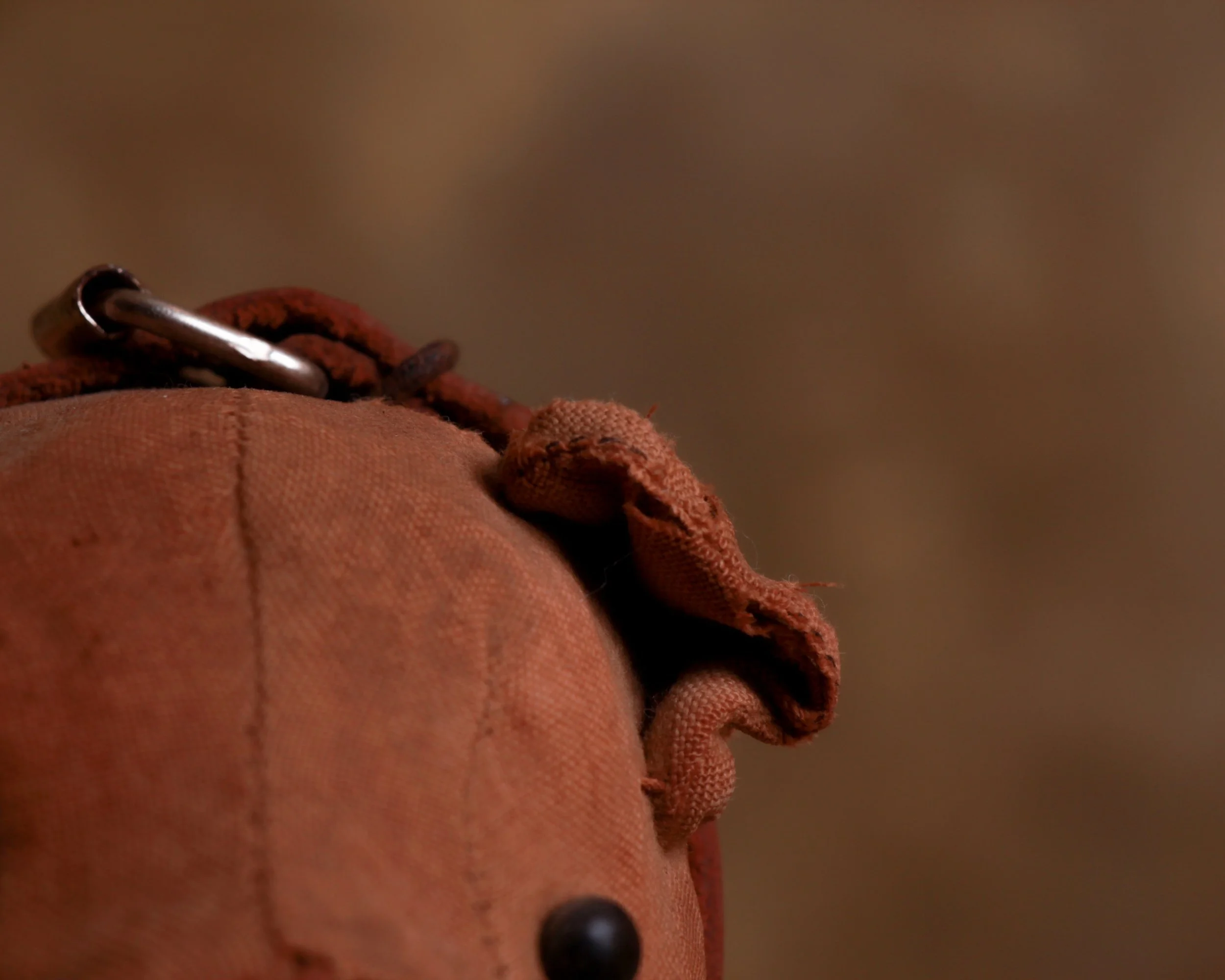
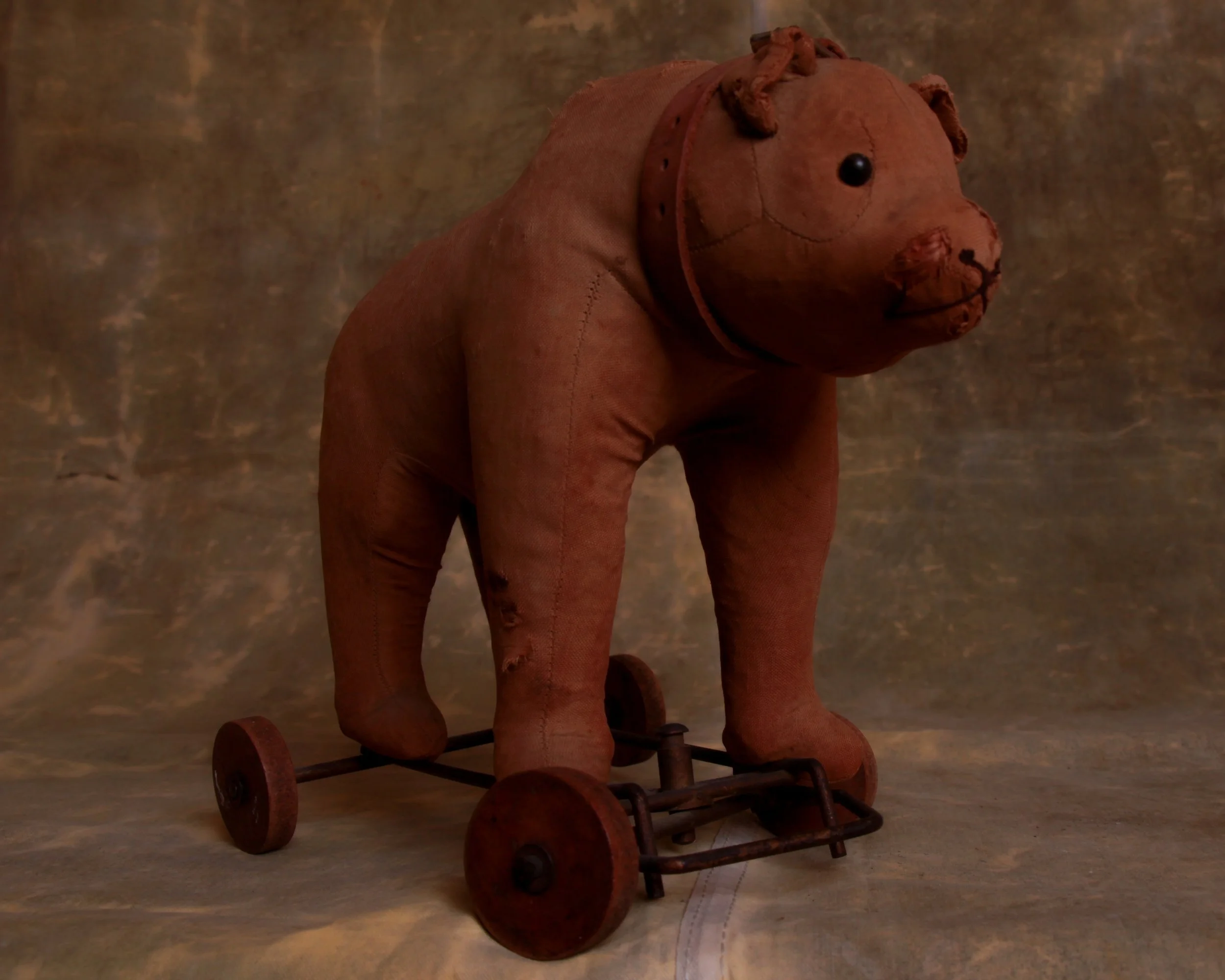
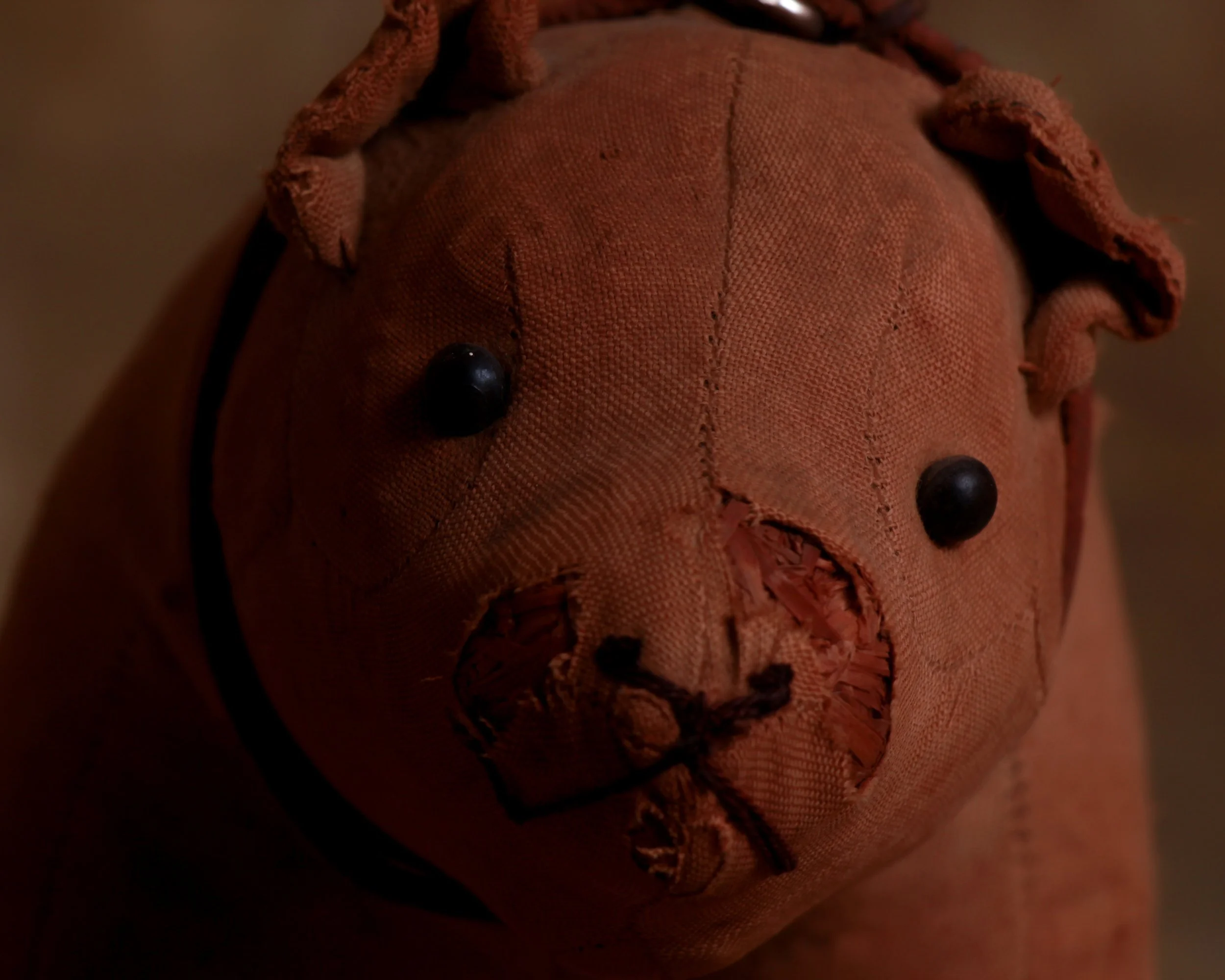
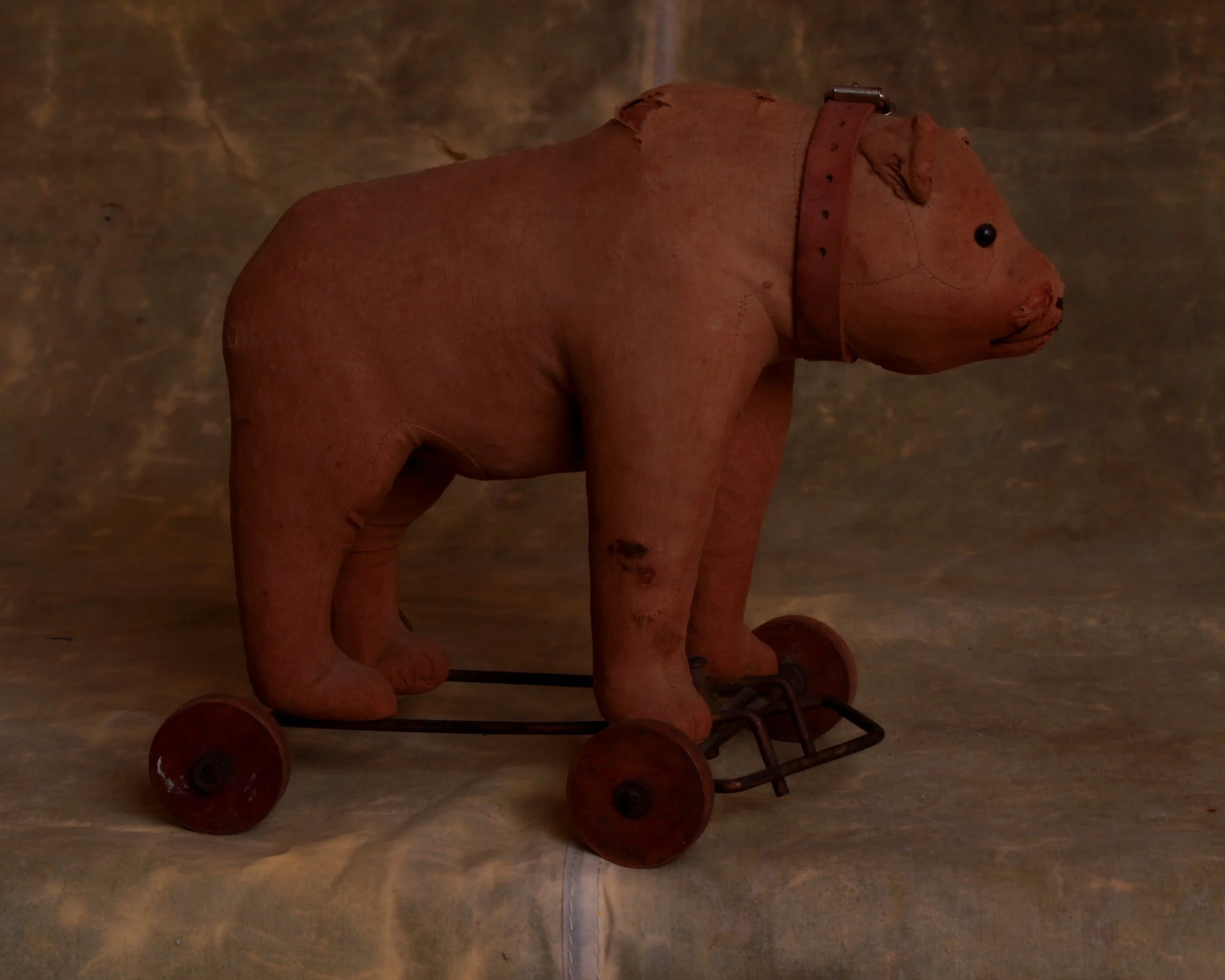
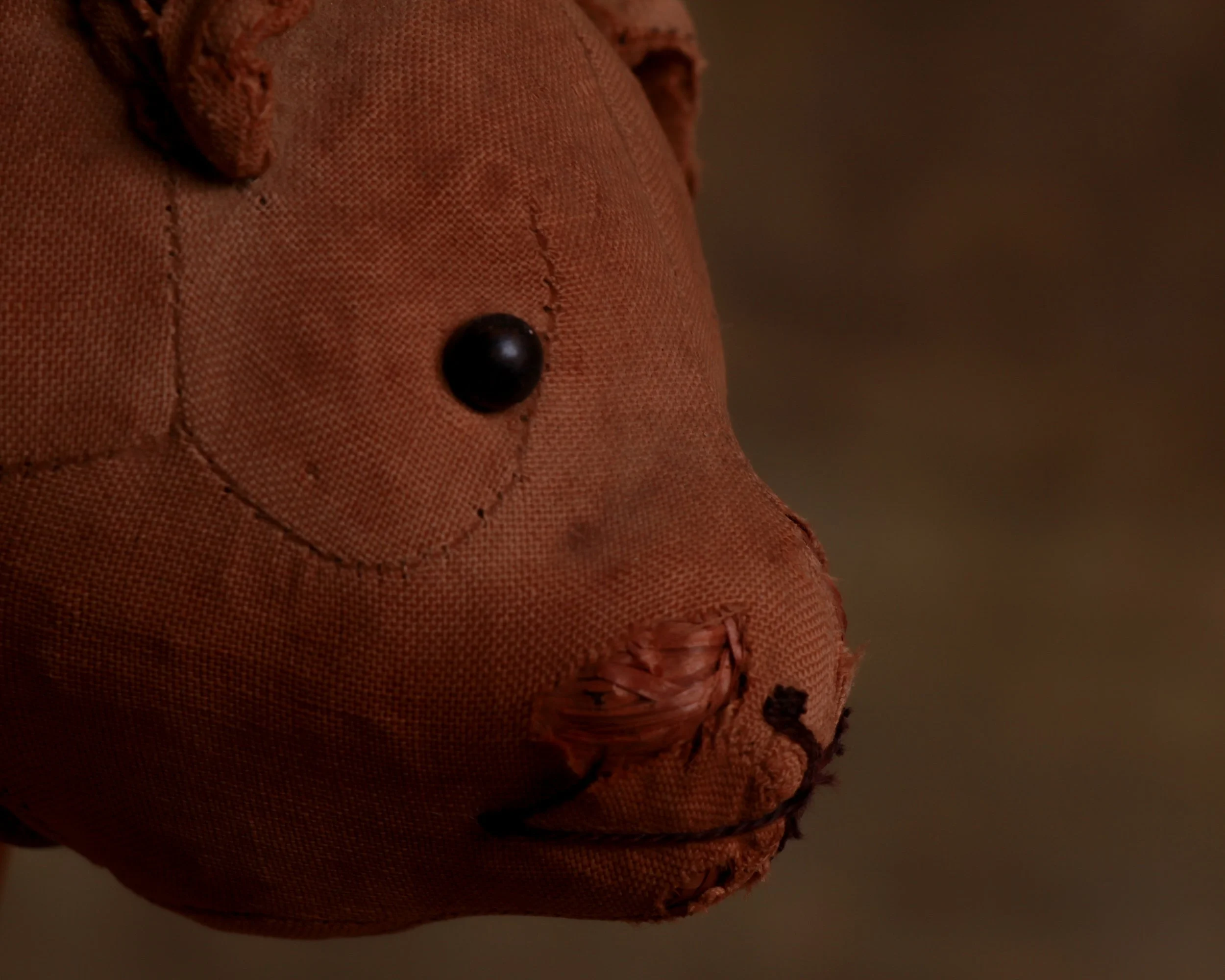
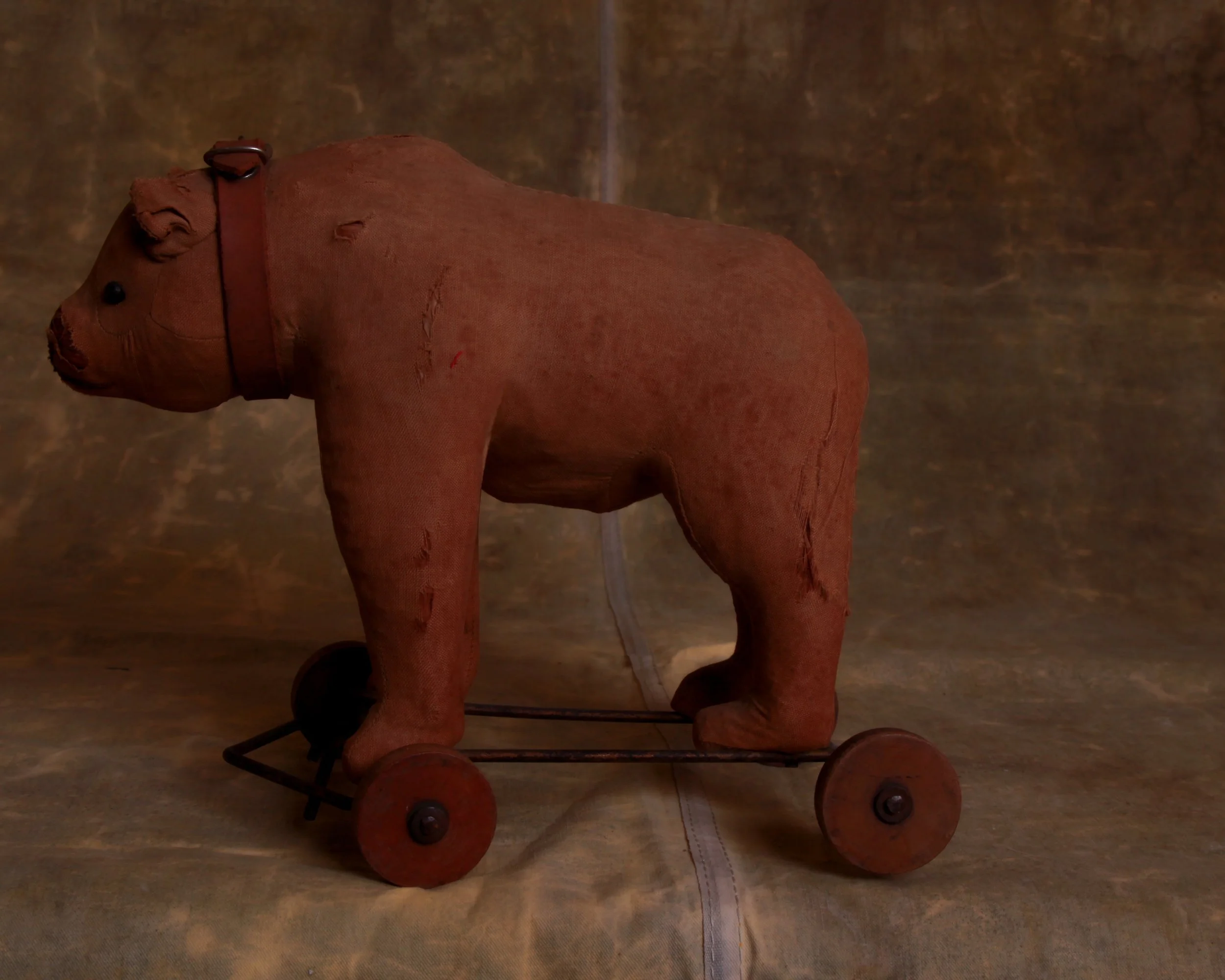
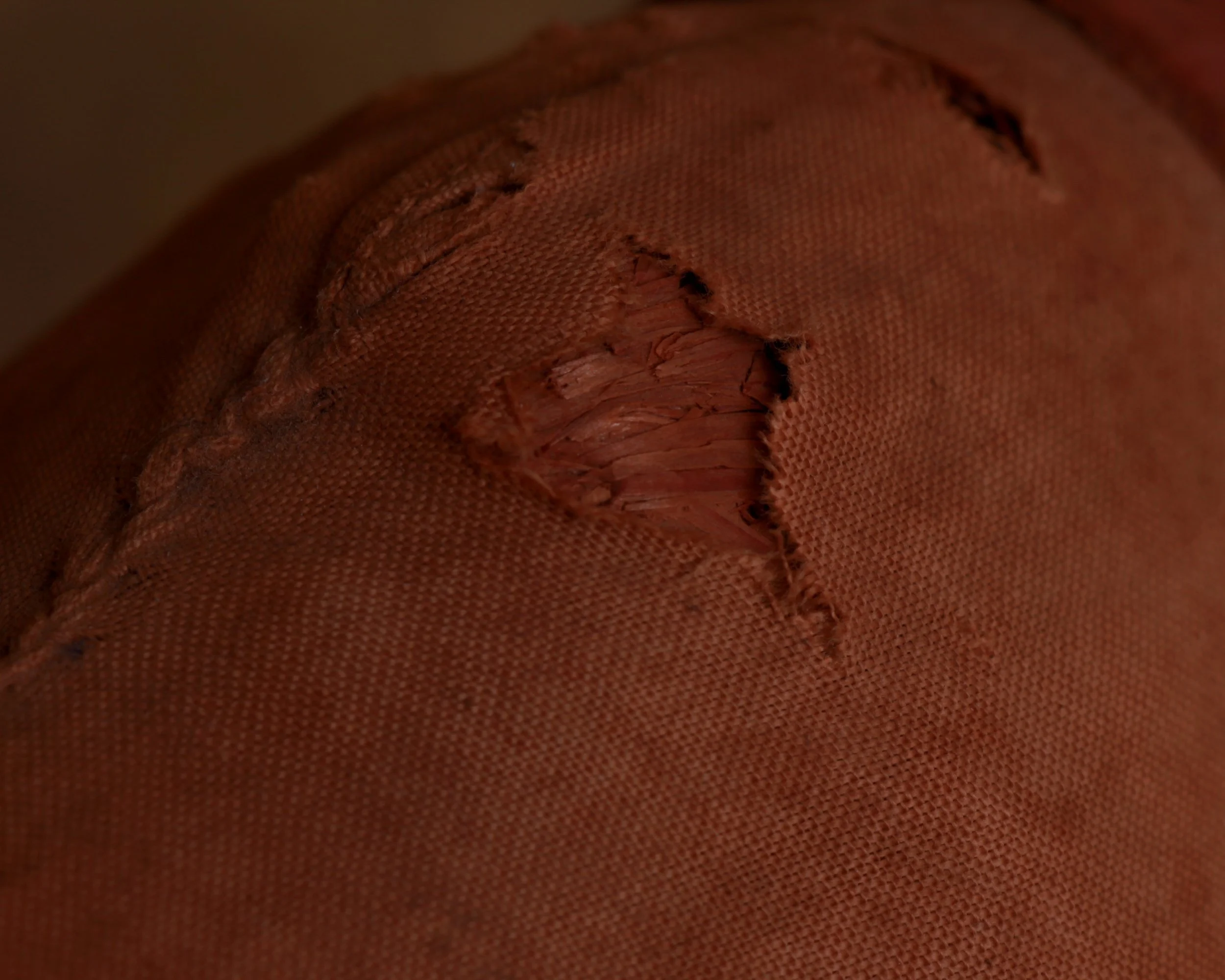
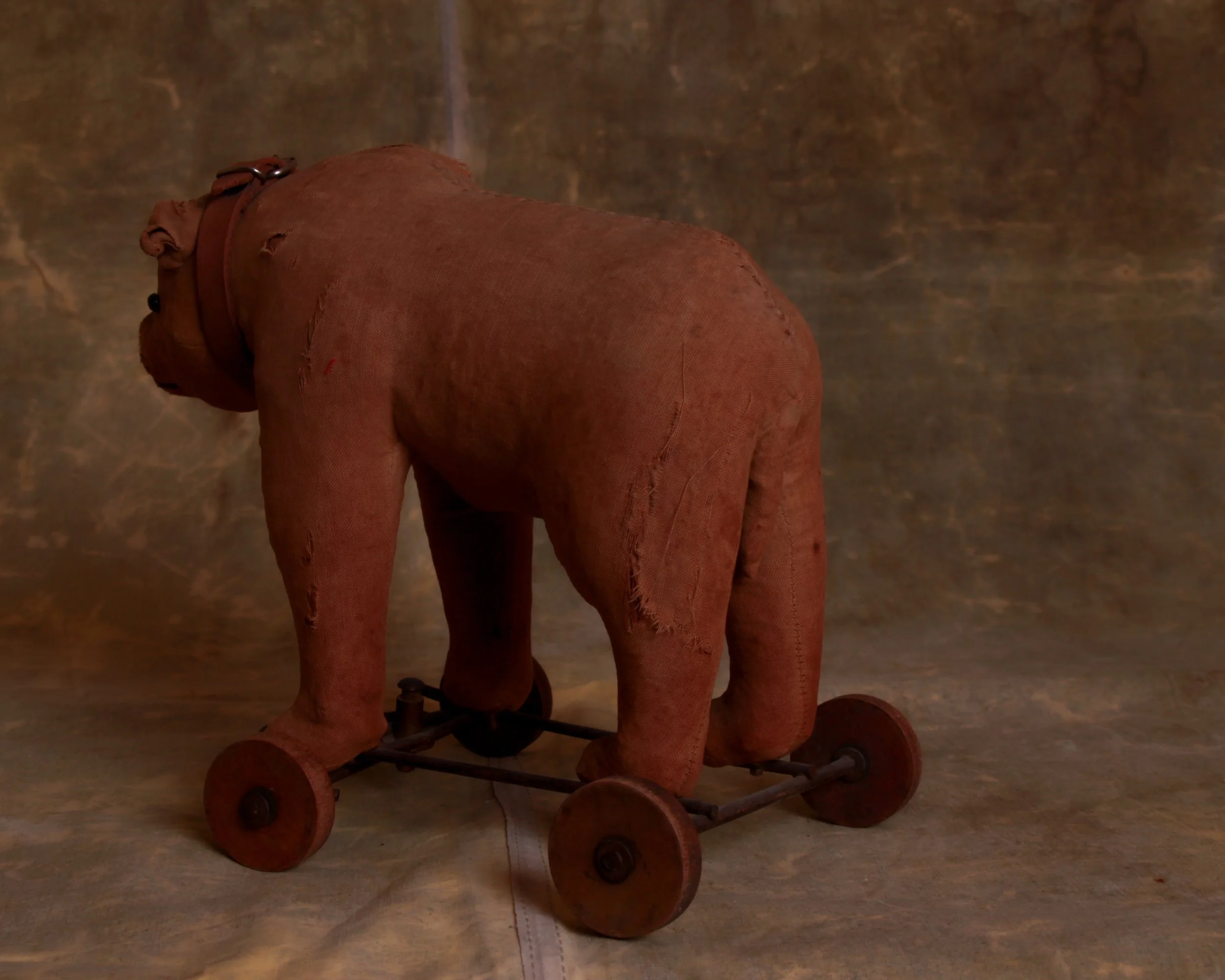
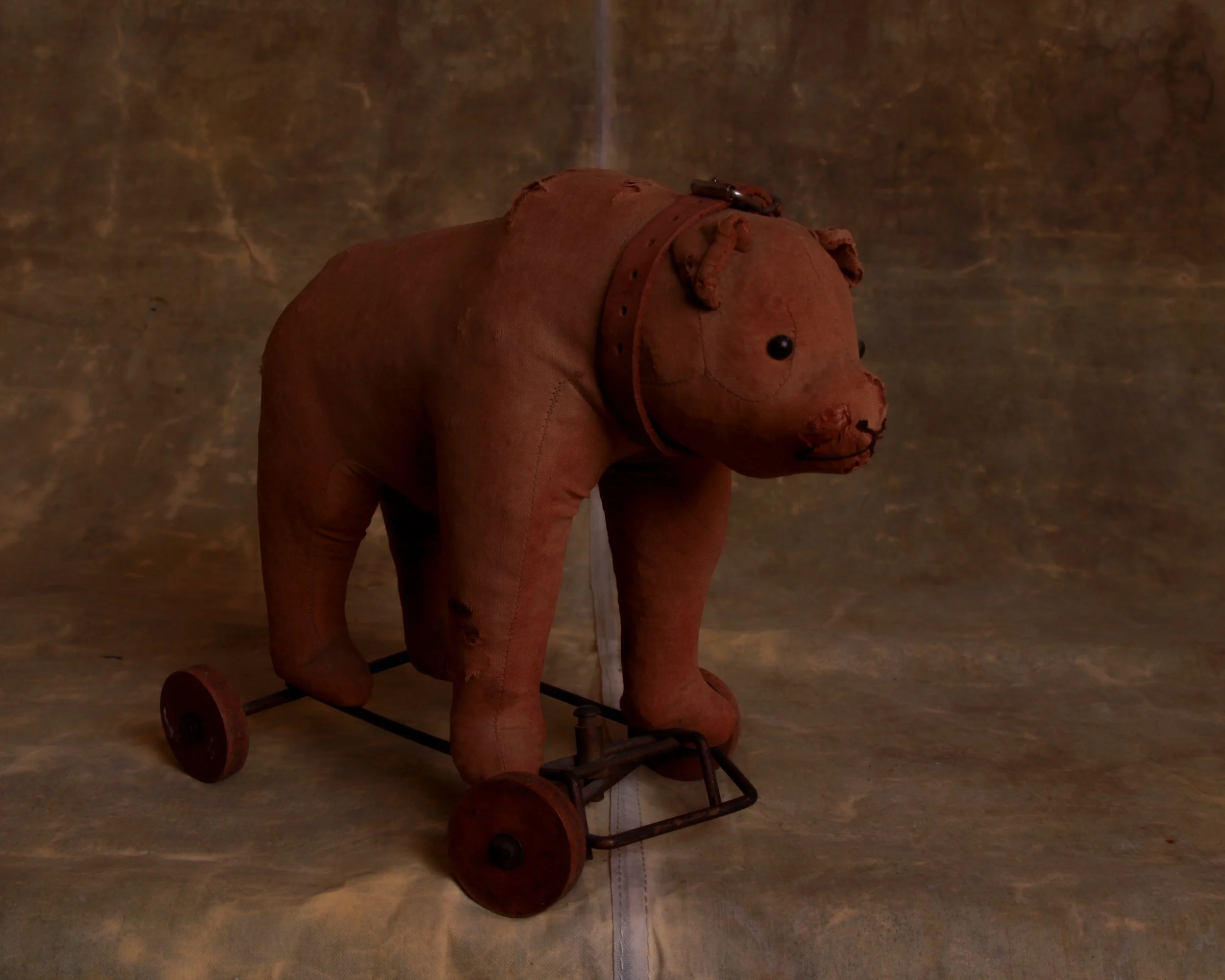
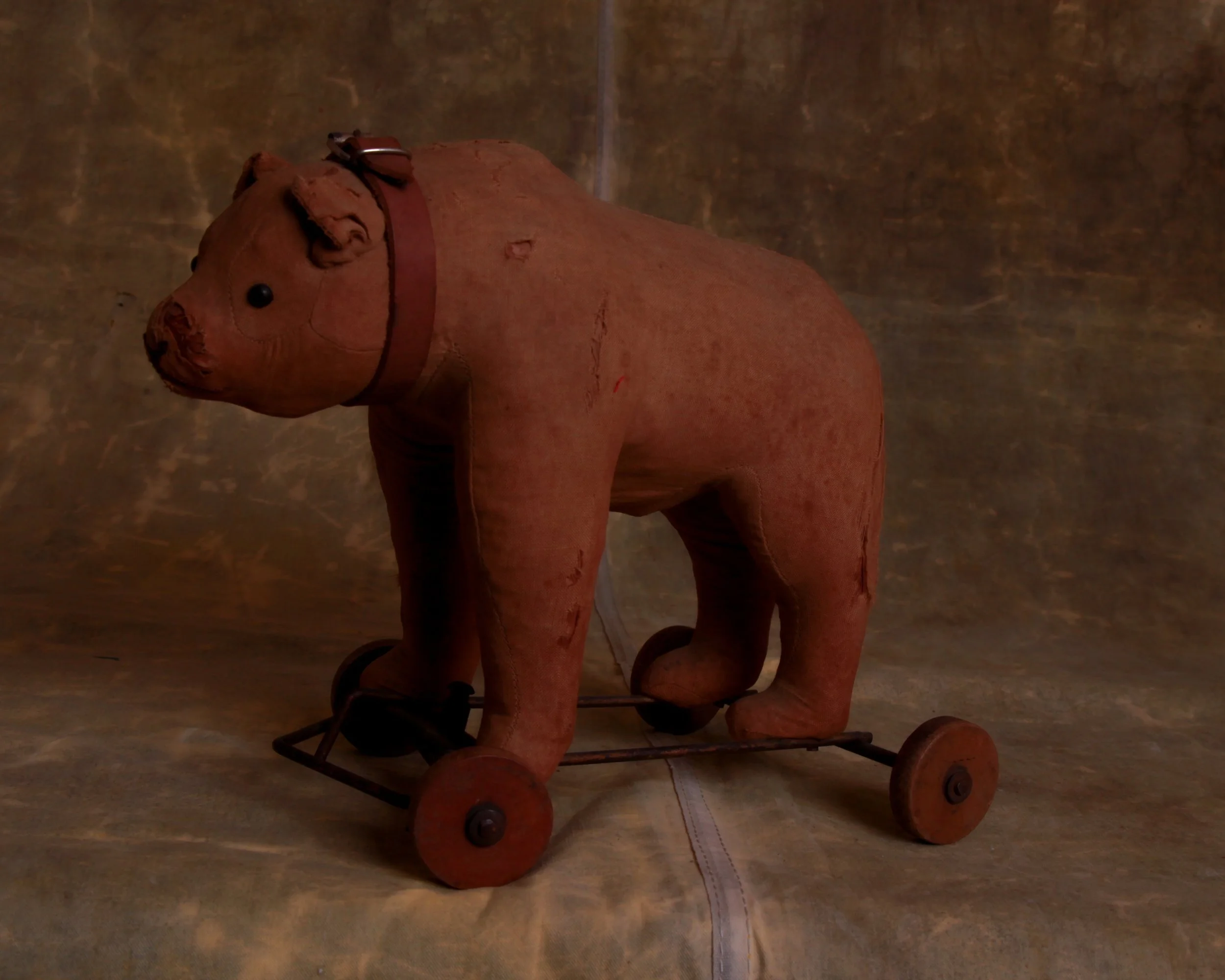
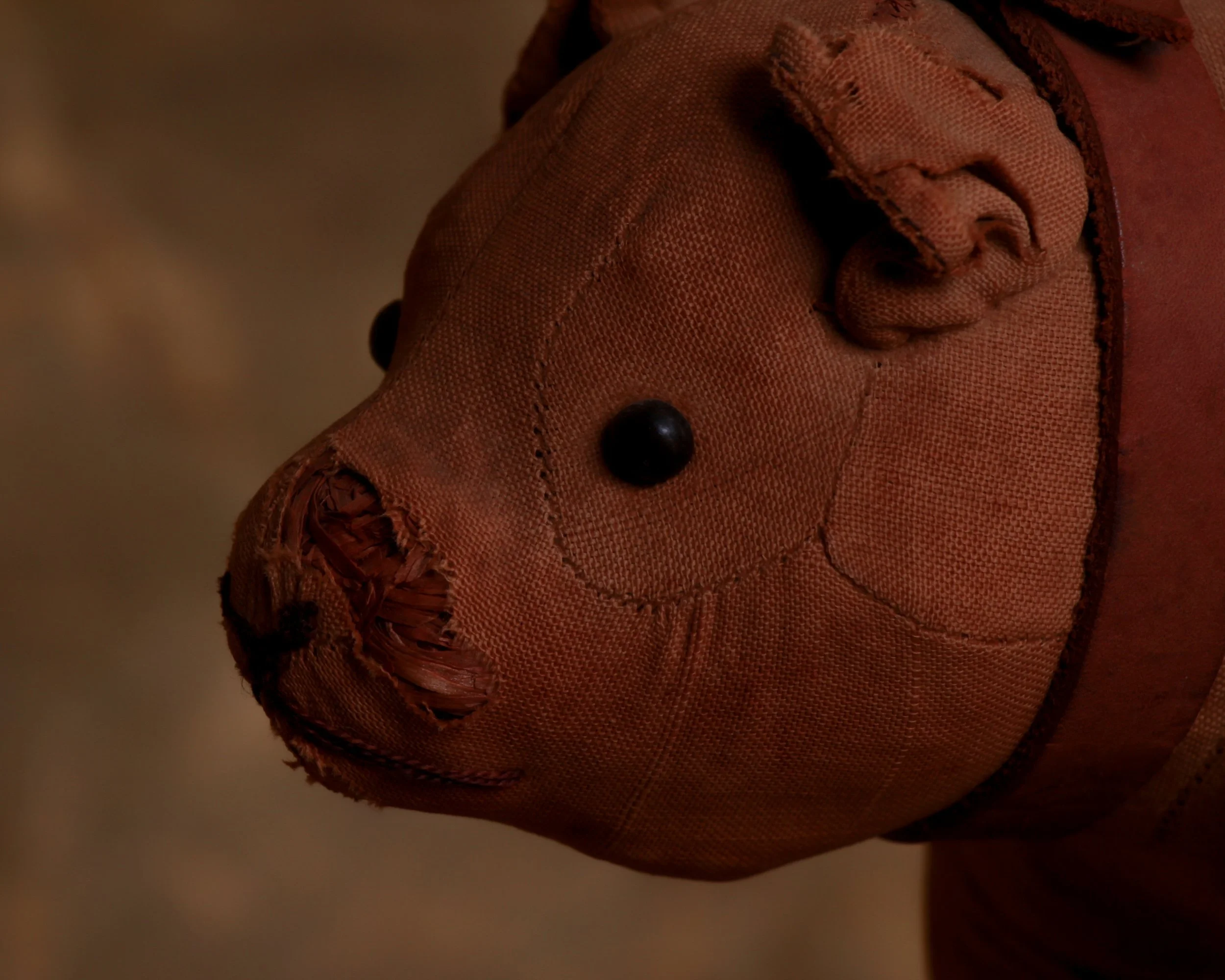
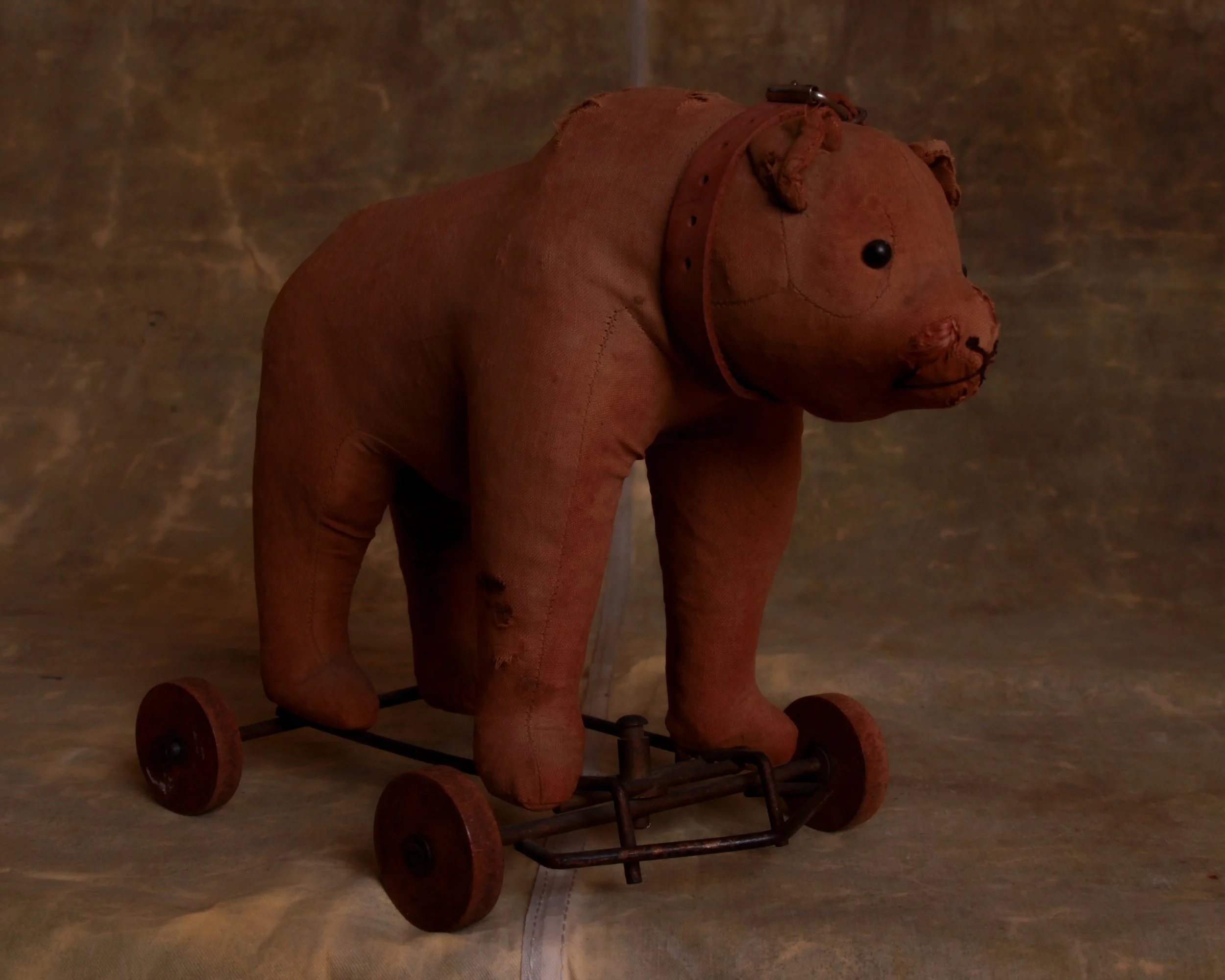
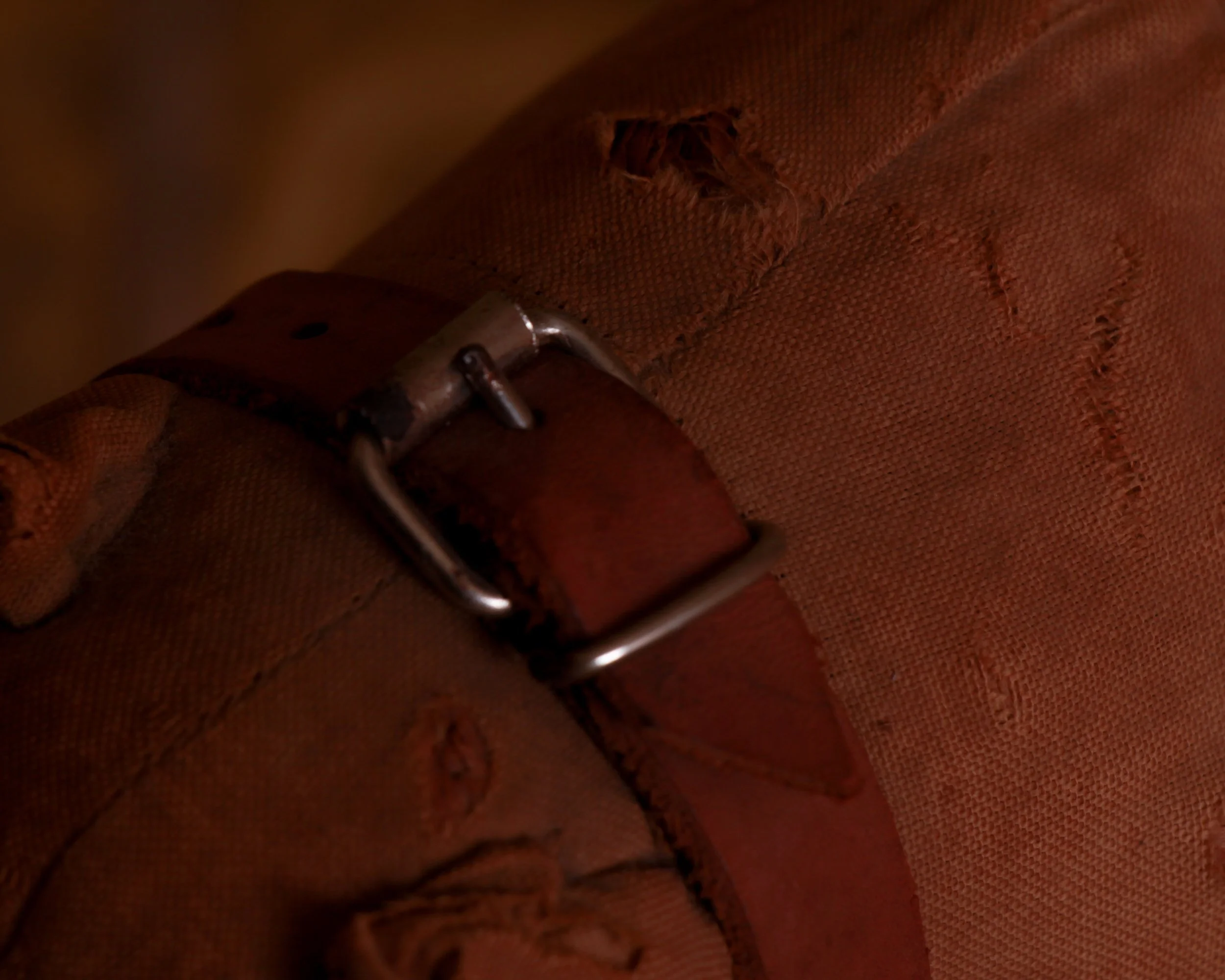
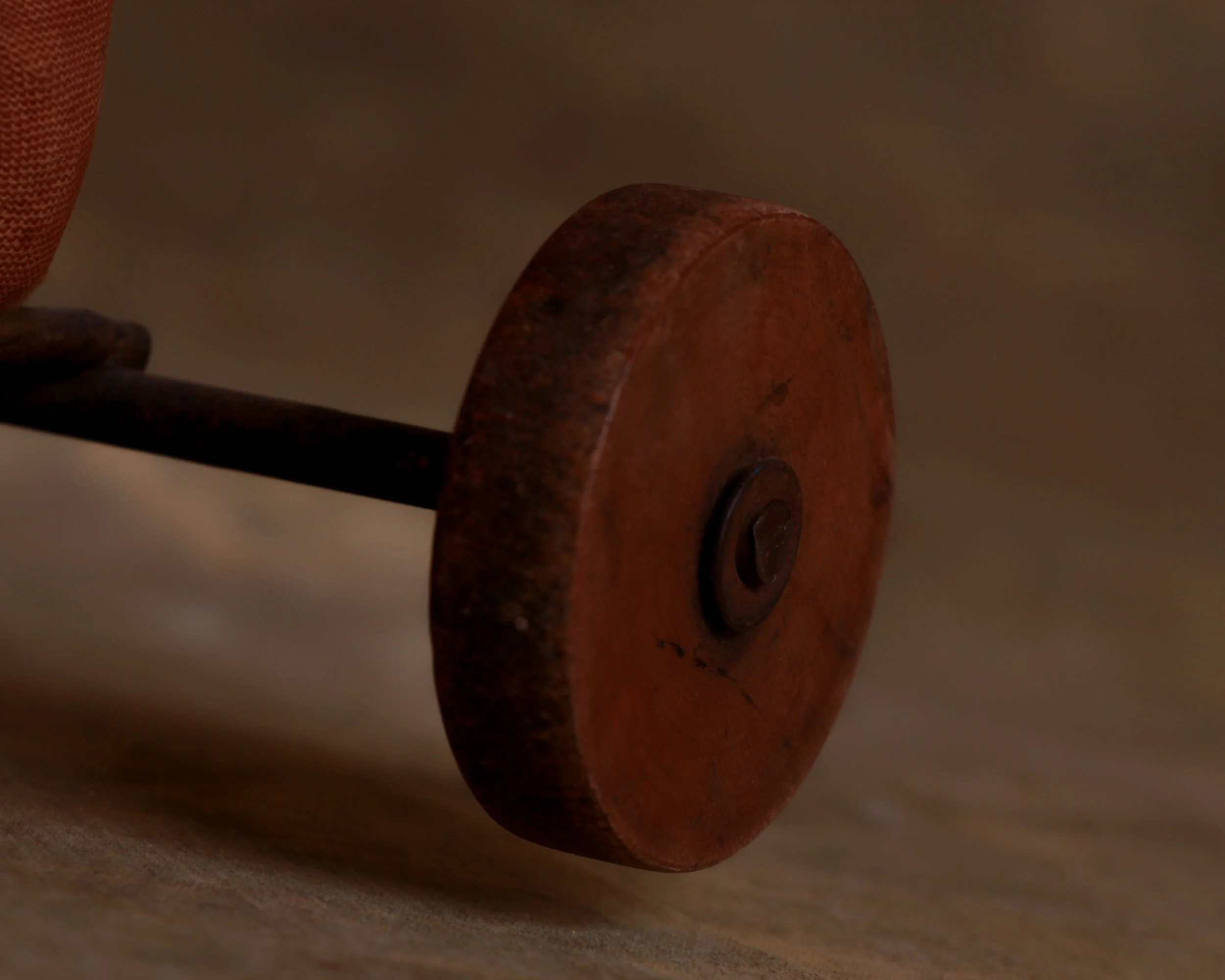
This late 19th pull toy bear has exactly the sort of worn, handmade presence that makes old toys so compelling. The bear is formed from a sturdy brown textile stretched and stitched over a stuffed body, with simple rounded ears, dark button-like eyes, a stitched mouth, and a heavily worn snout where the underlying material shows through. A leather collar with metal buckle circles the neck, while the whole figure stands over a simple iron carriage fitted with four wooden wheels.
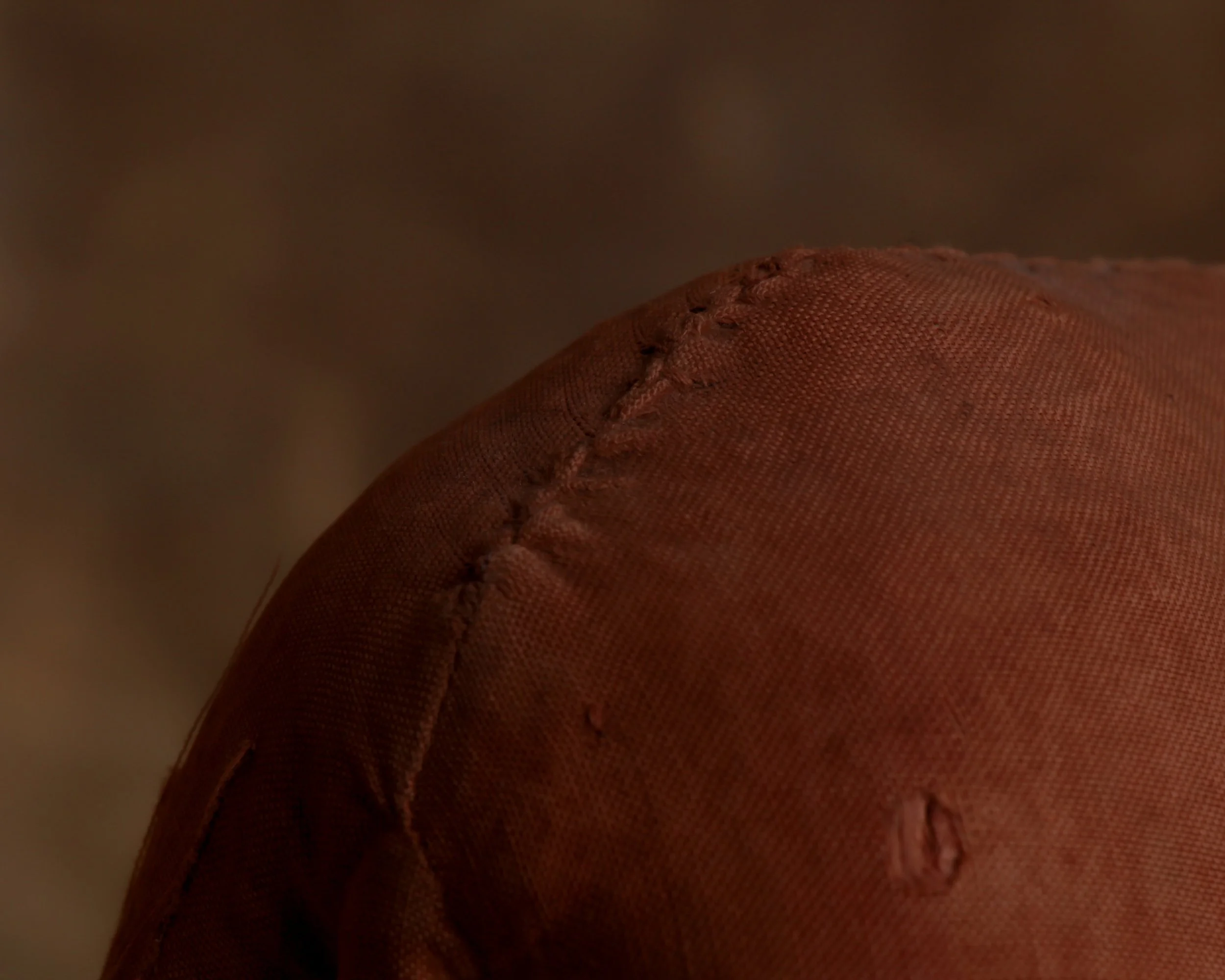
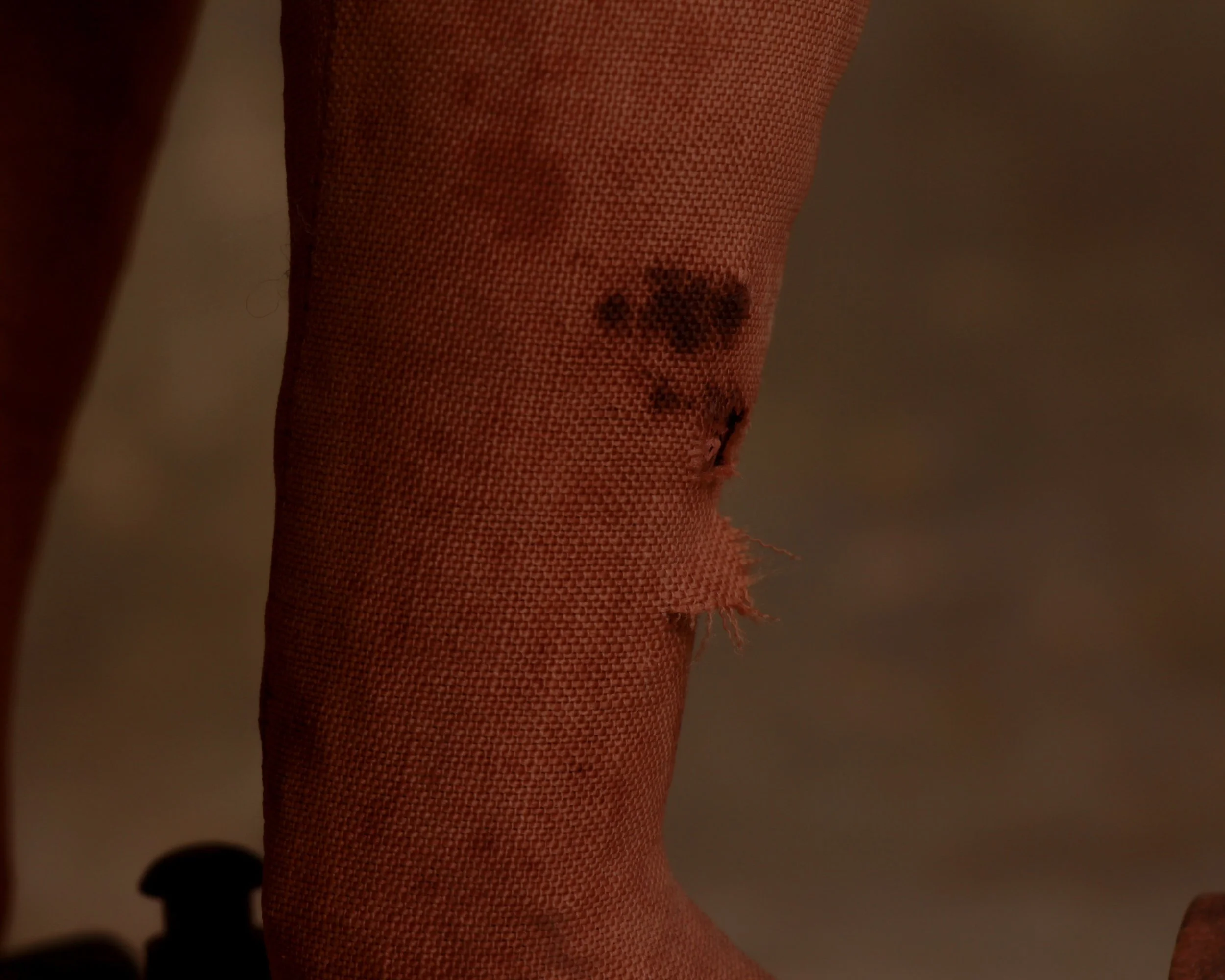
The condition tells a good part of the story. There are scattered tears, old repairs, staining, and areas of loss to the fabric, all consistent with a toy that was genuinely handled rather than tucked away. The exposed stuffing and worn seams give it a slightly battered, almost homemade quality that is much more interesting than something pristine.
Pull toys were a major part of the toy world by the late 19th century. Manufacturers in Europe and America produced horses, dogs, elephants, bears, and other animals mounted on wheeled platforms so children could pull them along by a string or cord. Before plastics and stamped metal took over the market, these toys were commonly made from wood, cloth, papier-mâché, leather, and simple iron hardware.
Bears became especially popular as toy subjects around the turn of the 20th century, helped by a growing fascination with wild animals, traveling circuses, zoos, and eventually the teddy bear craze that followed in the early 1900s.
This example feels a bit earlier and more utilitarian than the soft teddy bear type. It sits closer to the tradition of rolling animal toys, with its rigid stance, substantial body, and straightforward mechanical base. The contrast is what works so well: a tough little bear built to move, now softened by more than a century of wear.
This late 19th pull toy bear has exactly the sort of worn, handmade presence that makes old toys so compelling. The bear is formed from a sturdy brown textile stretched and stitched over a stuffed body, with simple rounded ears, dark button-like eyes, a stitched mouth, and a heavily worn snout where the underlying material shows through. A leather collar with metal buckle circles the neck, while the whole figure stands over a simple iron carriage fitted with four wooden wheels.
The condition tells a good part of the story. There are scattered tears, old repairs, staining, and areas of loss to the fabric, all consistent with a toy that was genuinely handled rather than tucked away. The exposed stuffing and worn seams give it a slightly battered, almost homemade quality that is much more interesting than something pristine.
Pull toys were a major part of the toy world by the late 19th century. Manufacturers in Europe and America produced horses, dogs, elephants, bears, and other animals mounted on wheeled platforms so children could pull them along by a string or cord. Before plastics and stamped metal took over the market, these toys were commonly made from wood, cloth, papier-mâché, leather, and simple iron hardware.
Bears became especially popular as toy subjects around the turn of the 20th century, helped by a growing fascination with wild animals, traveling circuses, zoos, and eventually the teddy bear craze that followed in the early 1900s.
This example feels a bit earlier and more utilitarian than the soft teddy bear type. It sits closer to the tradition of rolling animal toys, with its rigid stance, substantial body, and straightforward mechanical base. The contrast is what works so well: a tough little bear built to move, now softened by more than a century of wear.