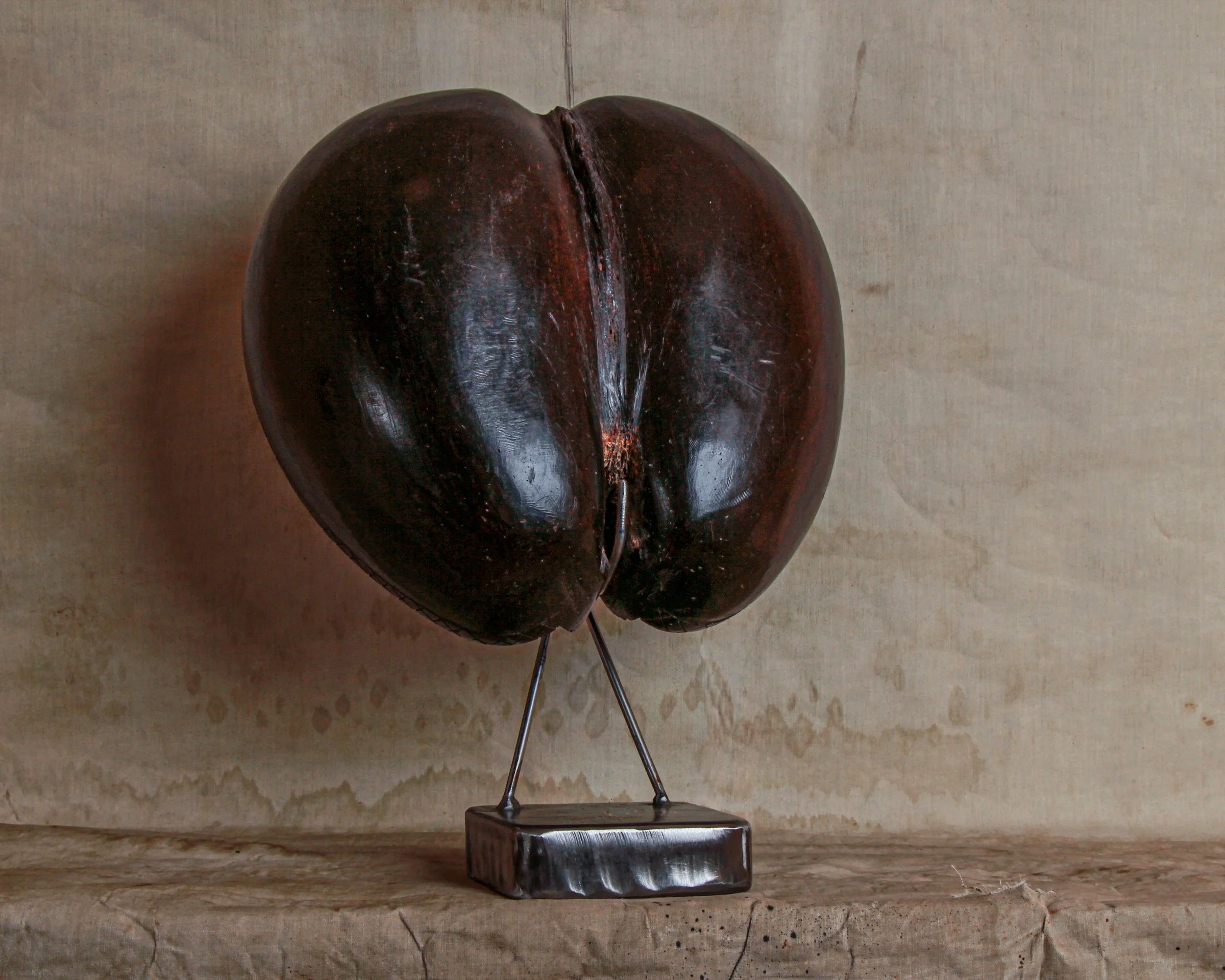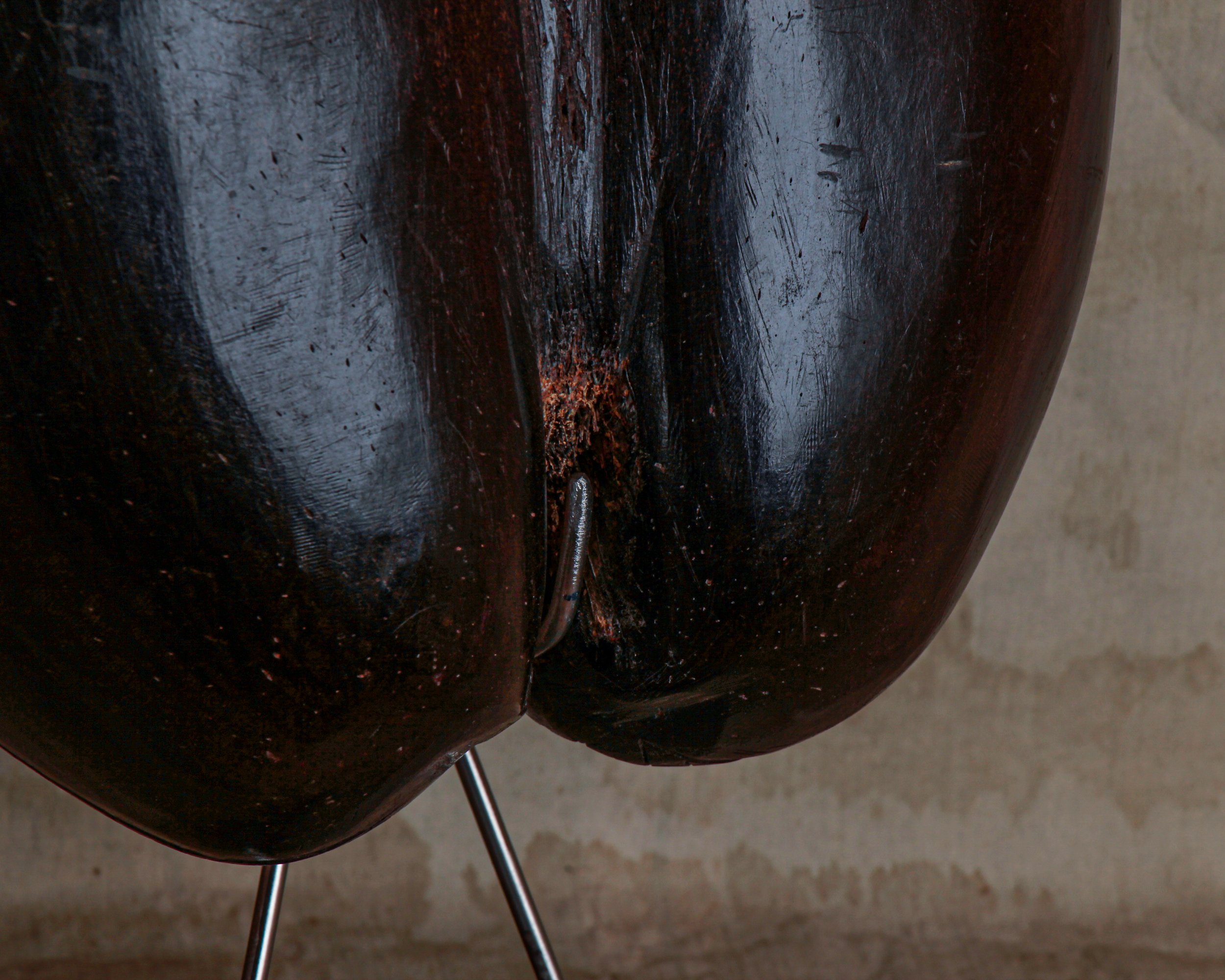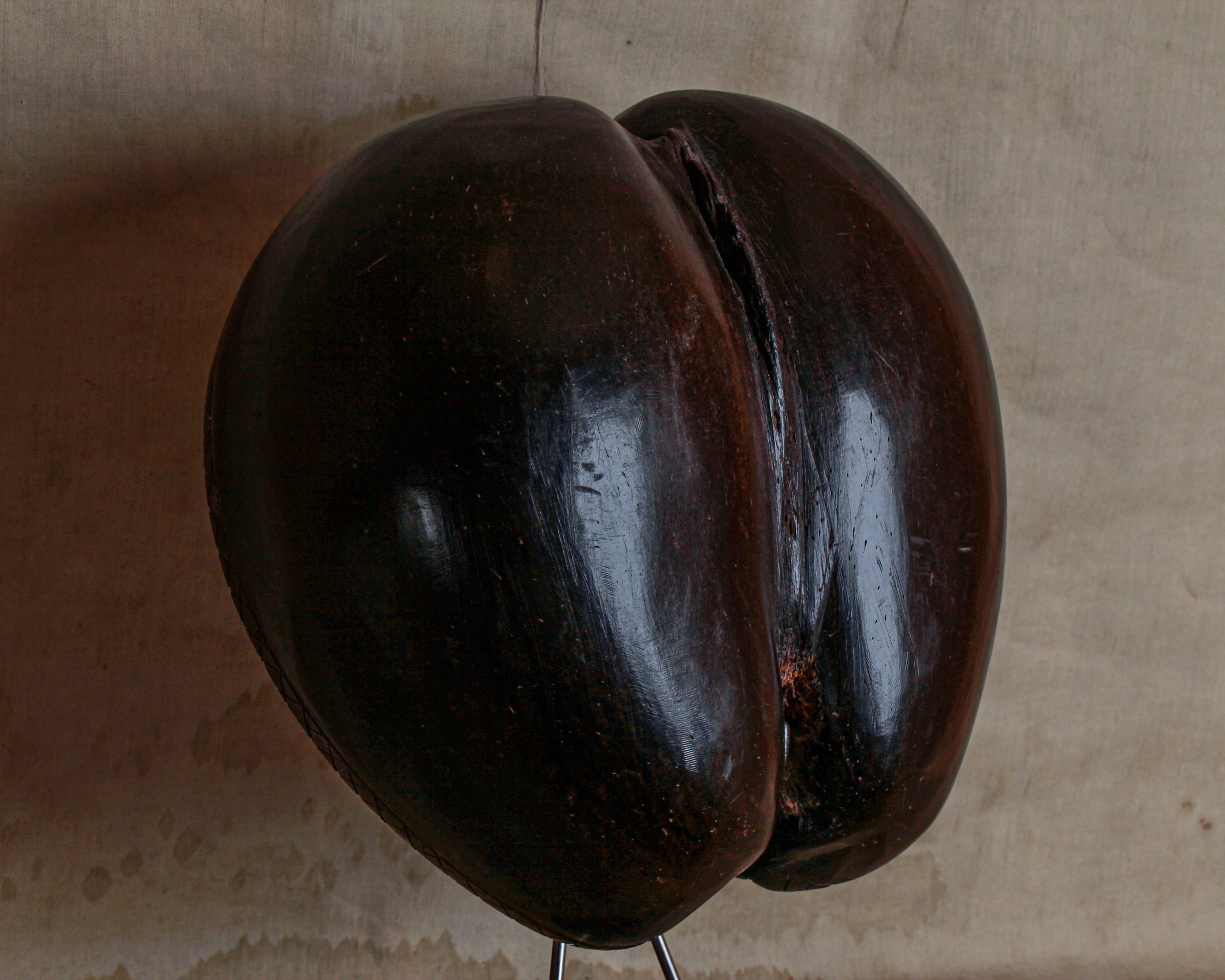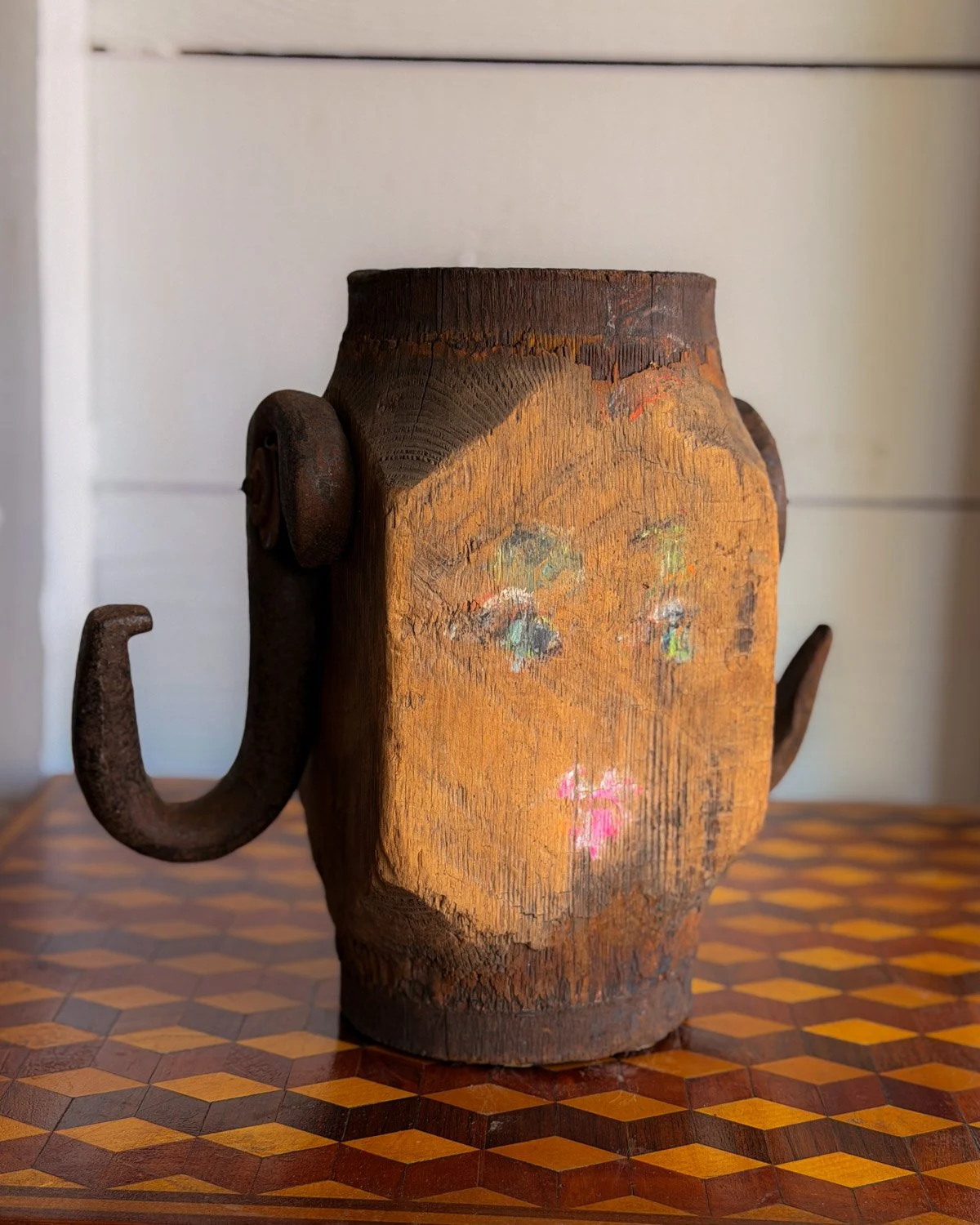
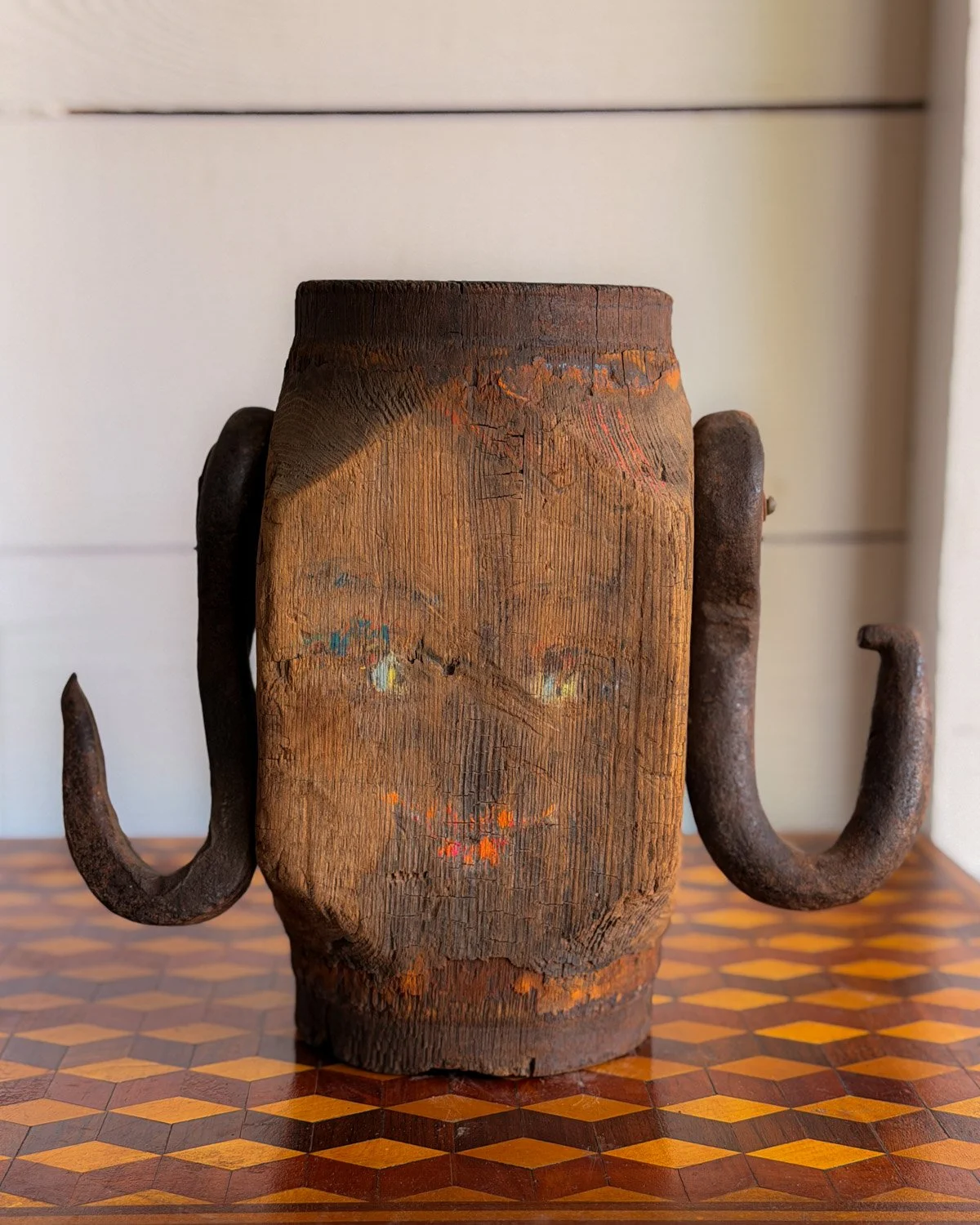
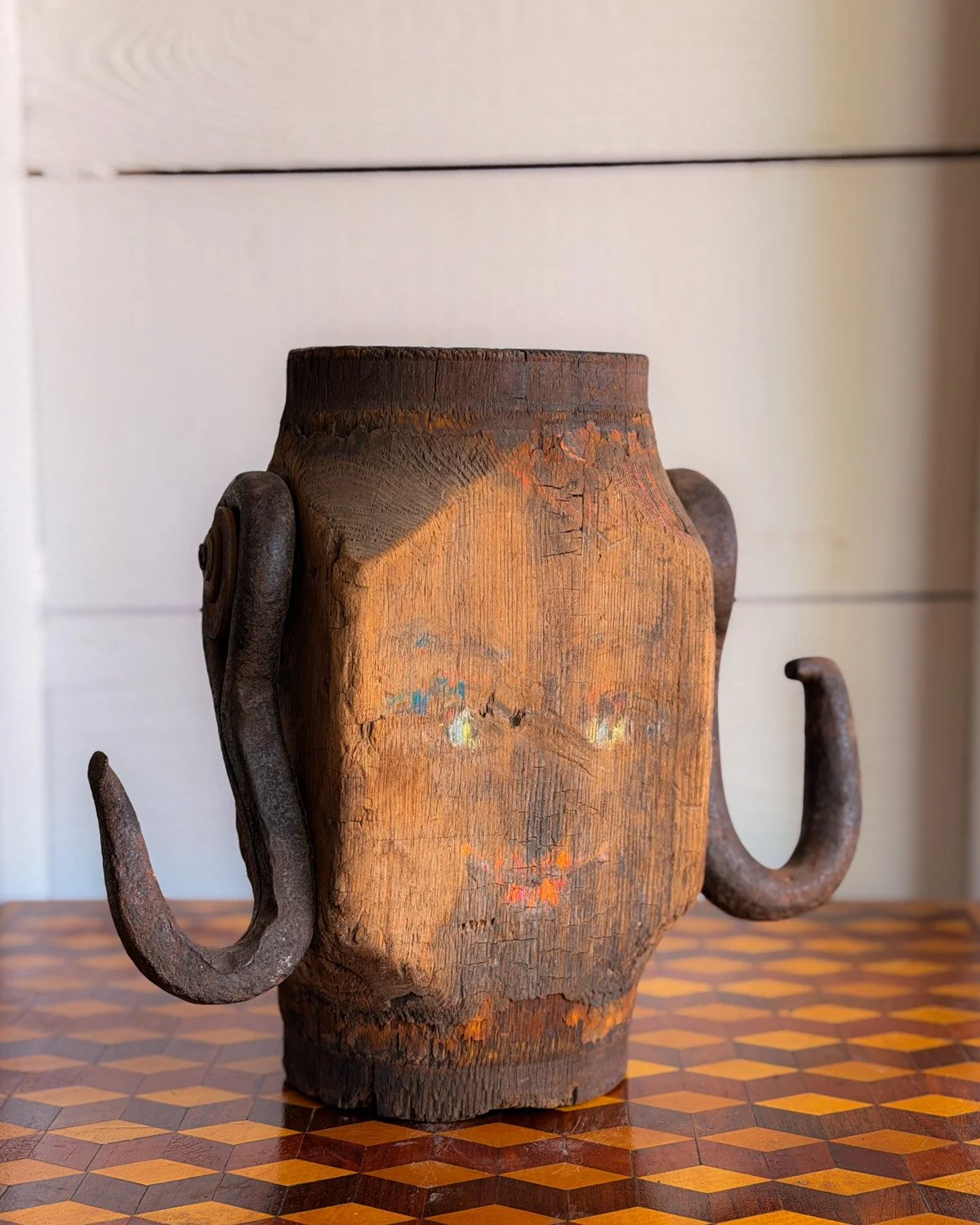
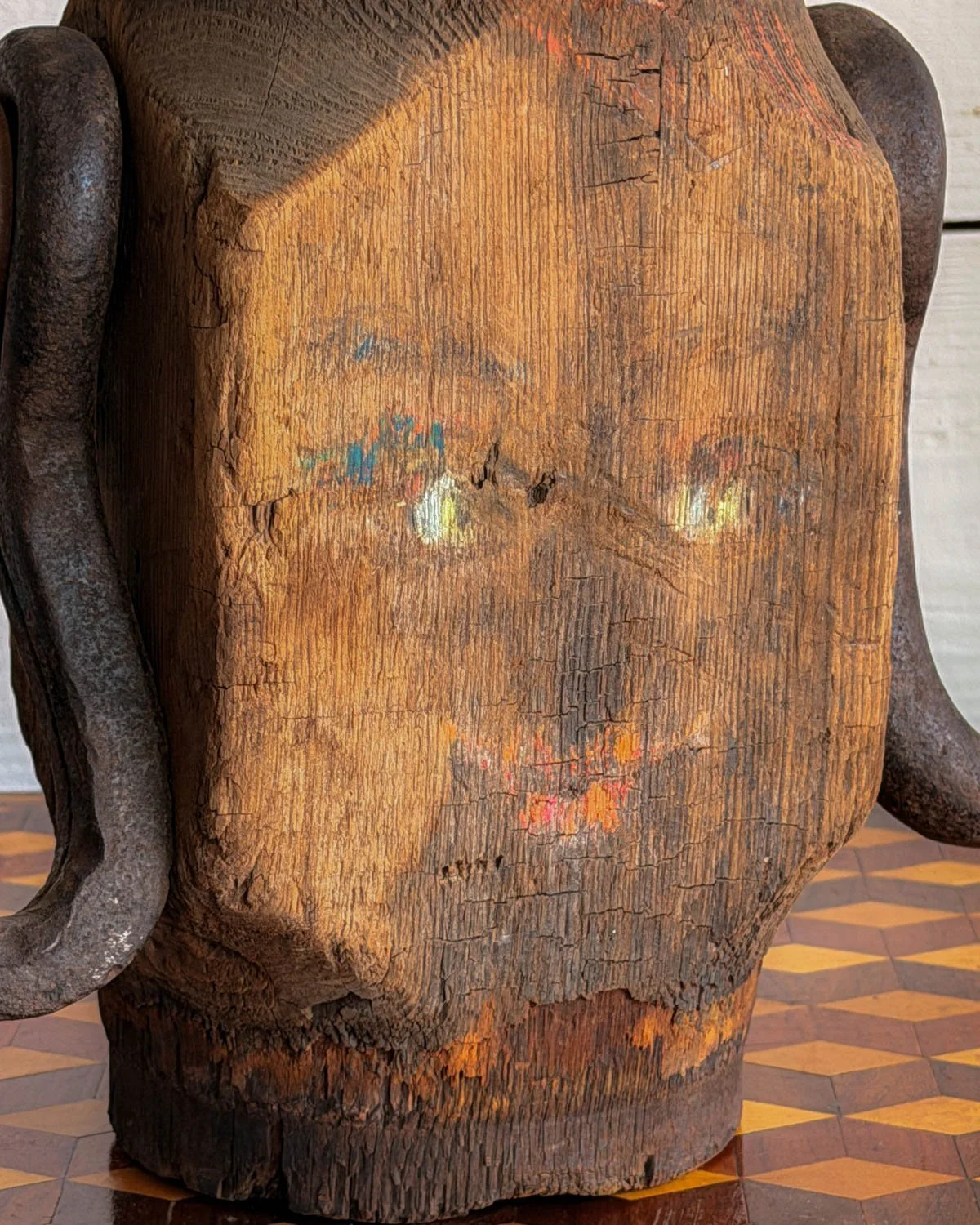
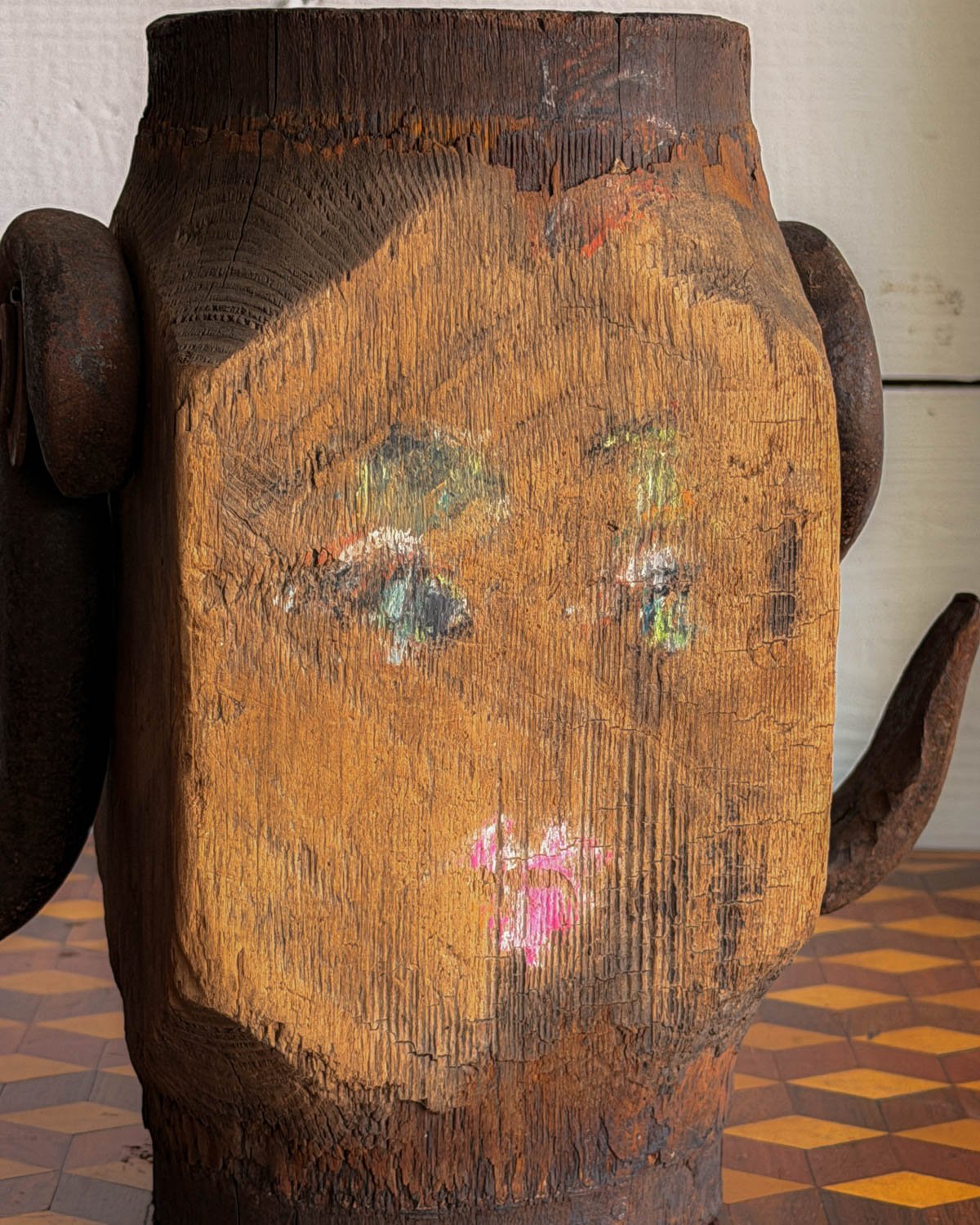
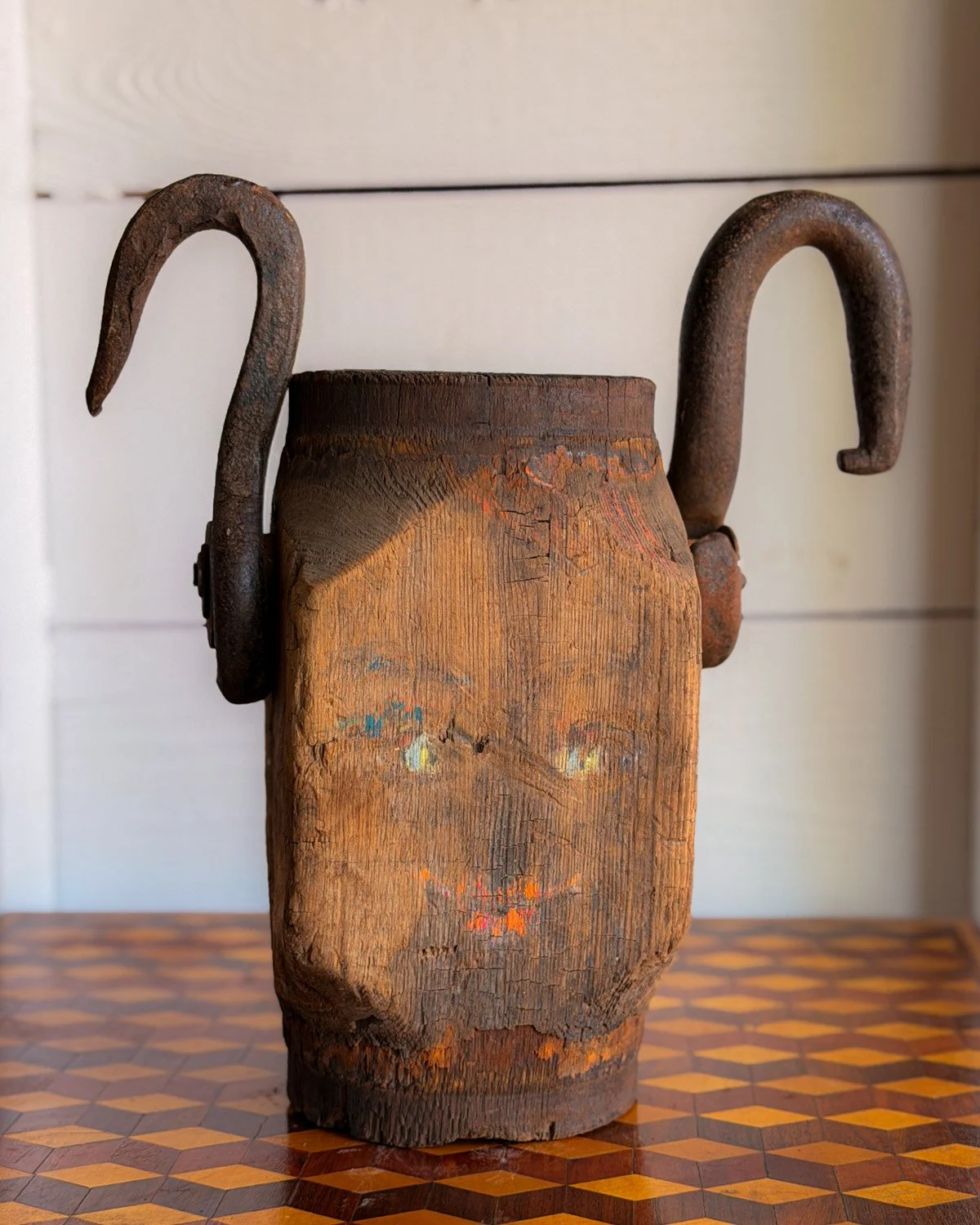
This unusual folk art piece began life as a heavy wooden rigging or pulley block and was later transformed with a painted face on both sides. The thick, hand-worked wooden body has a wonderfully worn surface, with deep tool marks, cracks, old staining and traces of earlier color. On each broad face, someone added a wonderfully simple human expression using touches of green, blue, white, orange and bright pink. The features are now heavily faded, which only adds to its wonderfully odd personality.
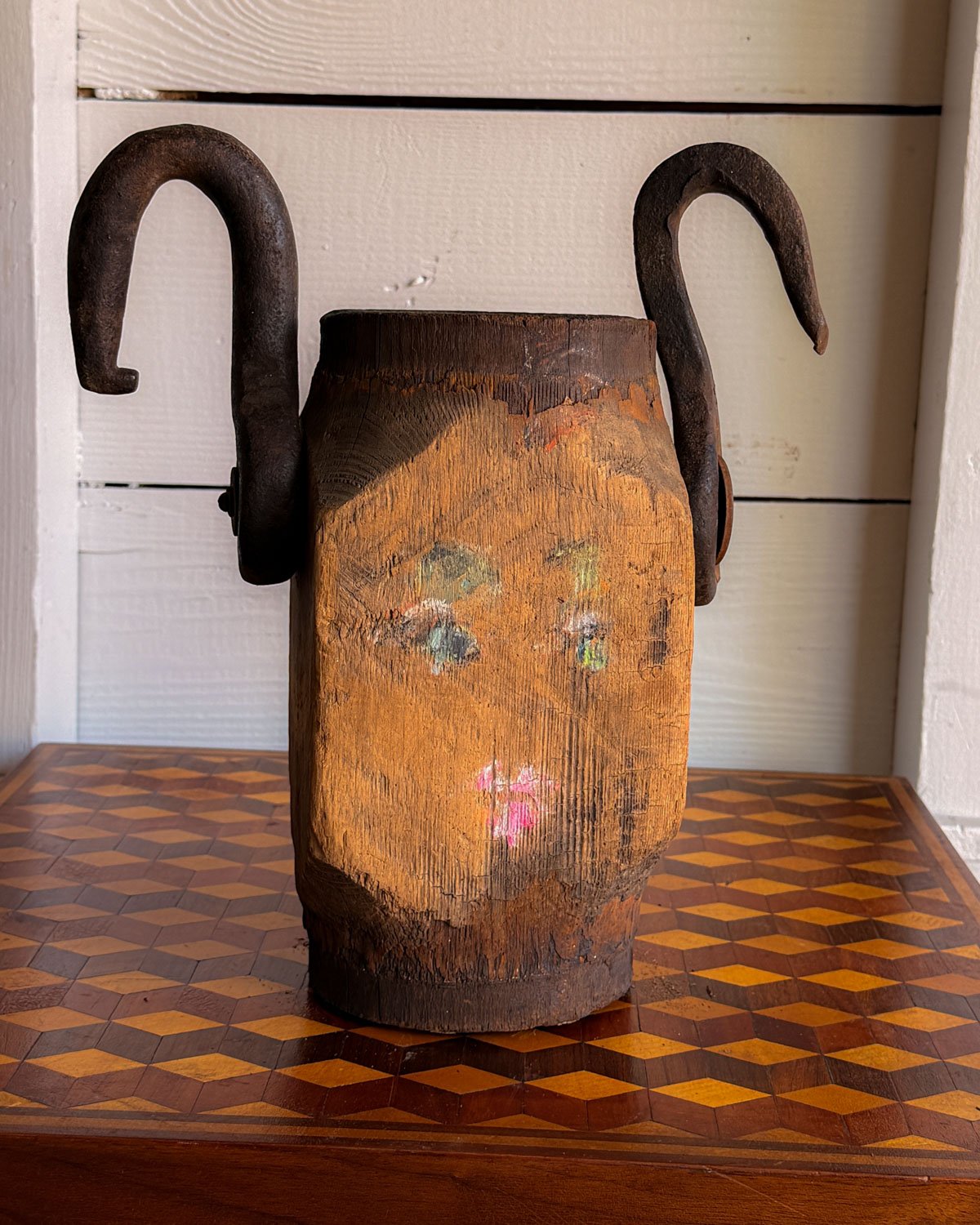
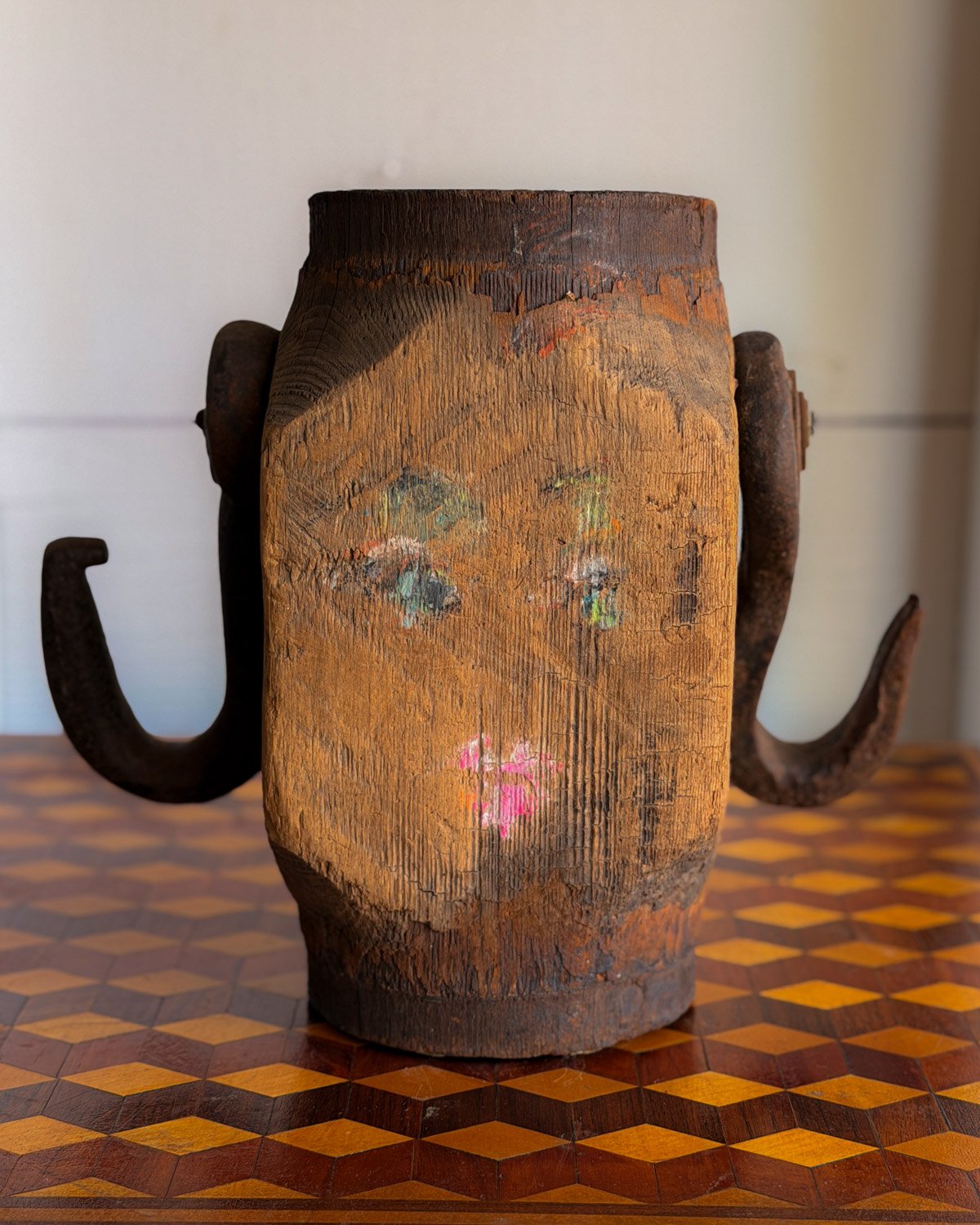
Even better are the two large forged iron hooks mounted to the sides. Originally functional hardware, they now read almost like exaggerated arms or ears, giving the whole object an accidental sculptural quality. The iron has developed a dark, crusty oxidation that sits nicely against the warm, weathered wood.
Wooden pulley blocks were essential pieces of equipment in the 18th, 19th and early 20th centuries. Most commonly associated with ships and sailing vessels, blocks allowed ropes to change direction and gave sailors mechanical advantage when raising sails, moving cargo and handling heavy loads. Similar heavy-duty blocks were also used around docks, farms, workshops and industrial settings, so without documented provenance it is safest to describe this example simply as a rigging or pulley block rather than definitively maritime.
Repurposing worn-out tools and utilitarian objects has a long history in American folk art. Once an object had outlived its practical usefulness, its familiar shape could become raw material for something decorative, humorous or personal. Paint, scraps of metal and a little imagination were often all that was needed.
Here, whoever painted the faces clearly saw something human hiding in the old block. The result sits somewhere between found-object sculpture, folk portrait and industrial artifact, with enough wear and mystery left intact to make you wonder who made it, and why.
This unusual folk art piece began life as a heavy wooden rigging or pulley block and was later transformed with a painted face on both sides. The thick, hand-worked wooden body has a wonderfully worn surface, with deep tool marks, cracks, old staining and traces of earlier color. On each broad face, someone added a wonderfully simple human expression using touches of green, blue, white, orange and bright pink. The features are now heavily faded, which only adds to its wonderfully odd personality.
Even better are the two large forged iron hooks mounted to the sides. Originally functional hardware, they now read almost like exaggerated arms or ears, giving the whole object an accidental sculptural quality. The iron has developed a dark, crusty oxidation that sits nicely against the warm, weathered wood.
Wooden pulley blocks were essential pieces of equipment in the 18th, 19th and early 20th centuries. Most commonly associated with ships and sailing vessels, blocks allowed ropes to change direction and gave sailors mechanical advantage when raising sails, moving cargo and handling heavy loads. Similar heavy-duty blocks were also used around docks, farms, workshops and industrial settings, so without documented provenance it is safest to describe this example simply as a rigging or pulley block rather than definitively maritime.
Repurposing worn-out tools and utilitarian objects has a long history in American folk art. Once an object had outlived its practical usefulness, its familiar shape could become raw material for something decorative, humorous or personal. Paint, scraps of metal and a little imagination were often all that was needed.
Here, whoever painted the faces clearly saw something human hiding in the old block. The result sits somewhere between found-object sculpture, folk portrait and industrial artifact, with enough wear and mystery left intact to make you wonder who made it, and why.