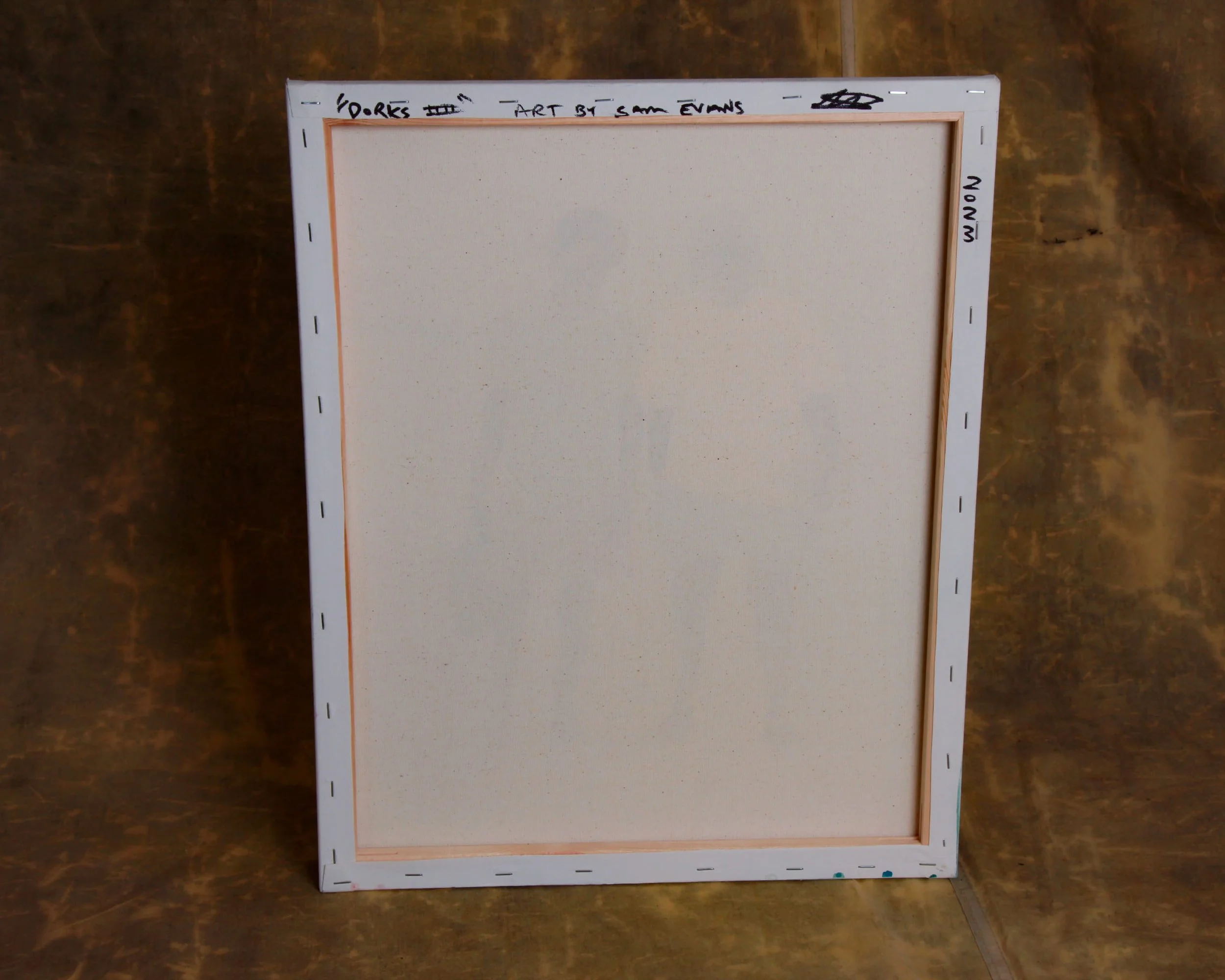
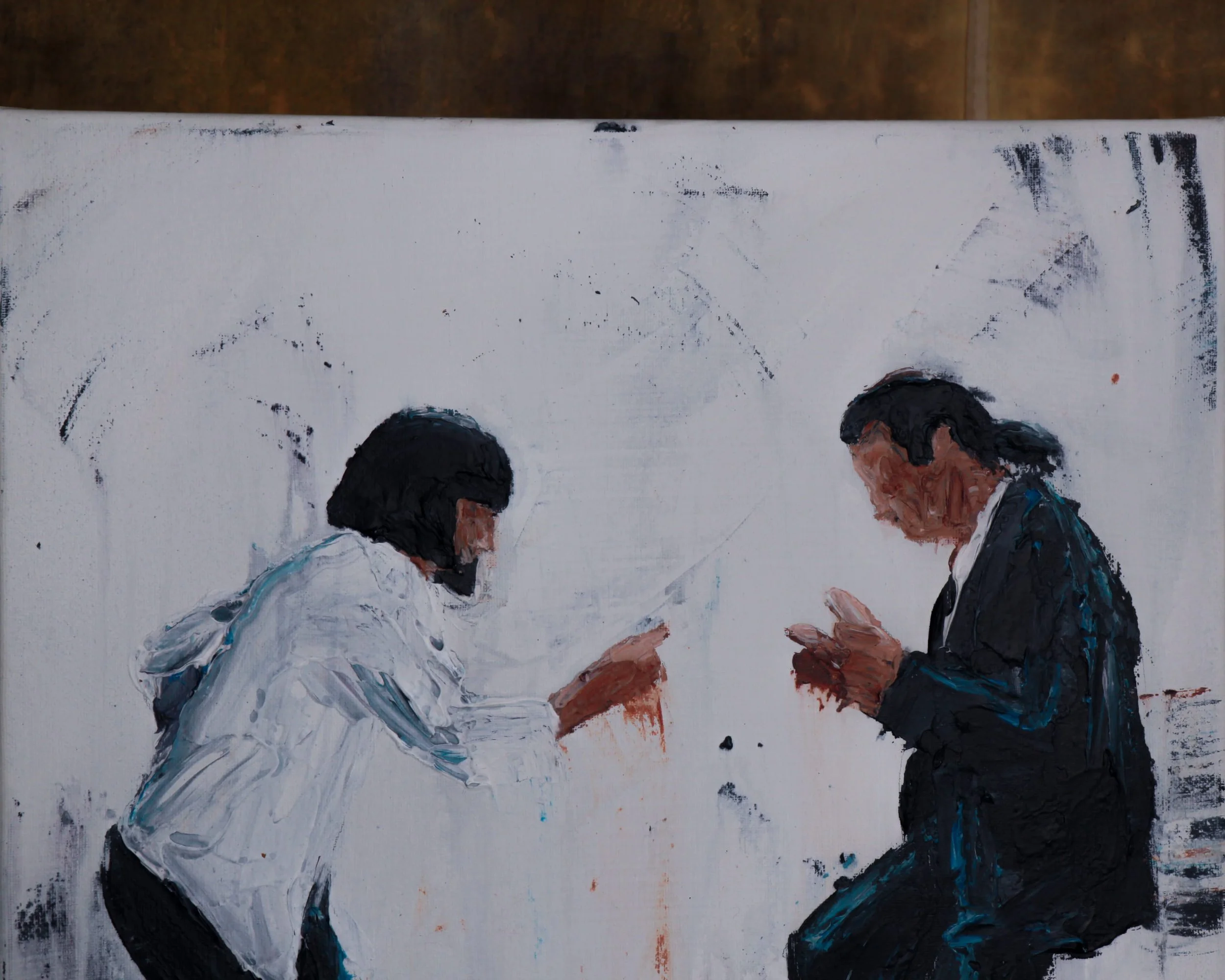
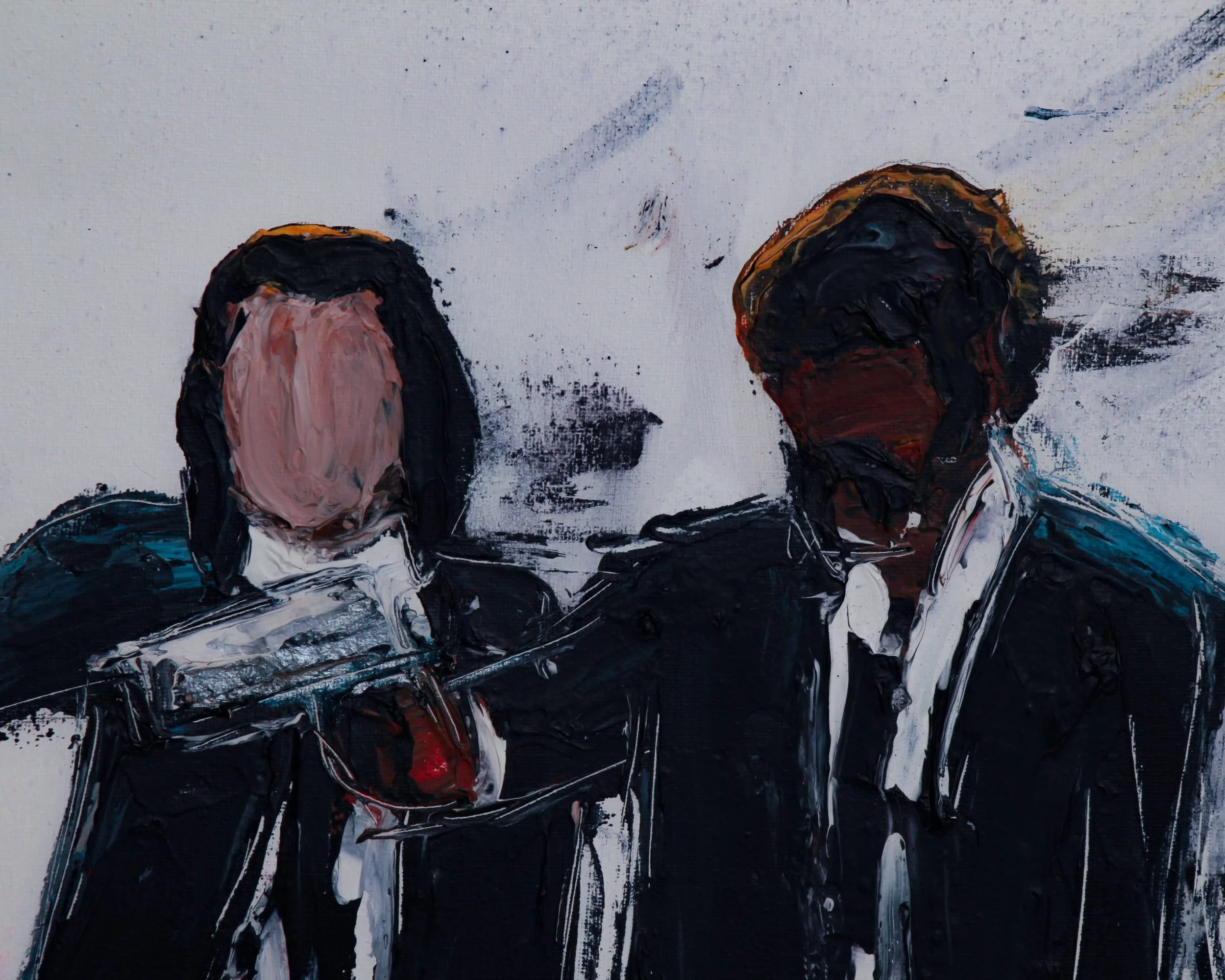
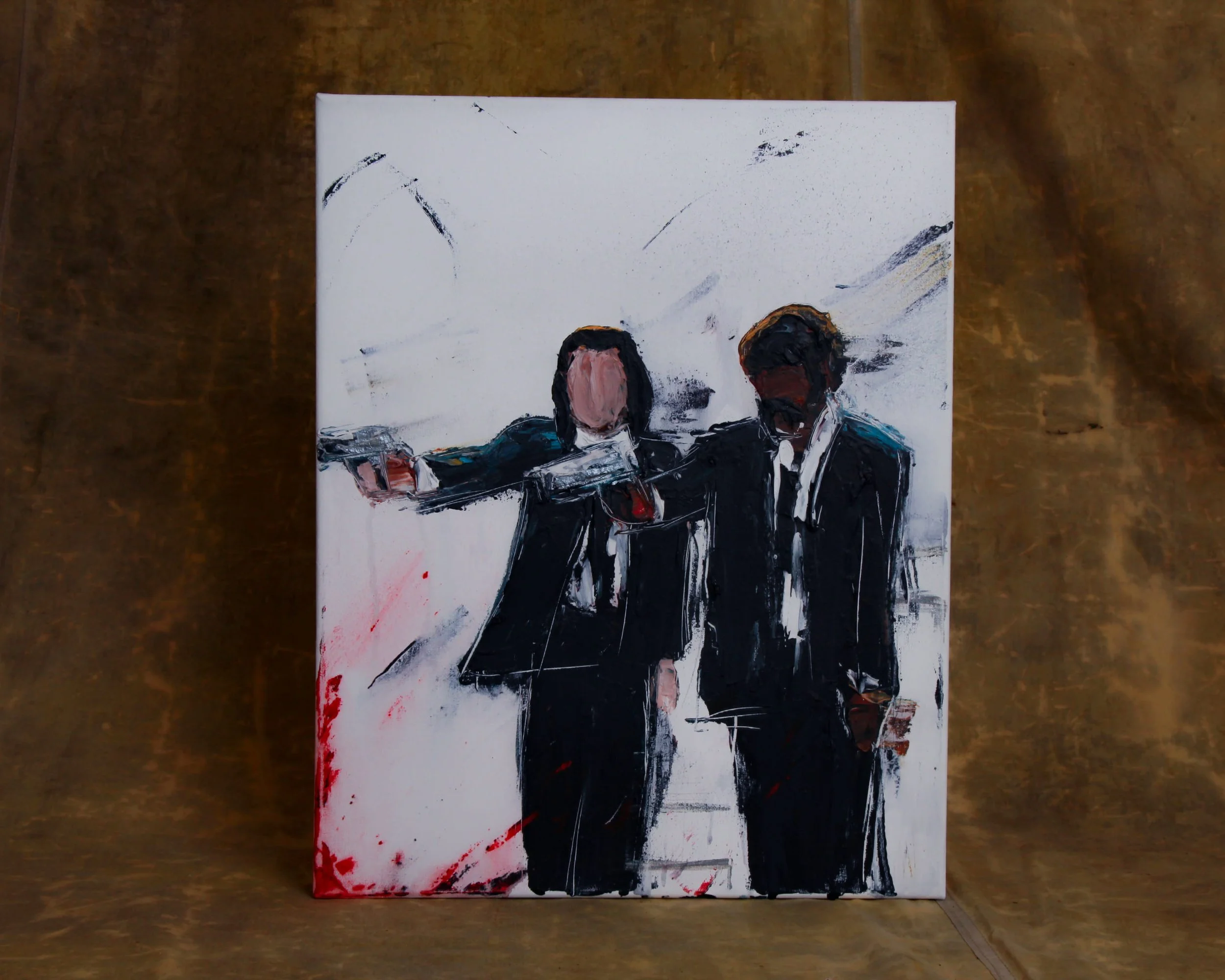
A tight, punchy trio of oil-on-board paintings by Sam Evans that taps straight into the cool, offbeat rhythm of Pulp Fiction. Vincent and Jules take center stage in their signature suits, rendered in loose, confident strokes that blur the faces but sharpen the attitude. There’s just enough red splatter and negative space to suggest the chaos without spelling it out.
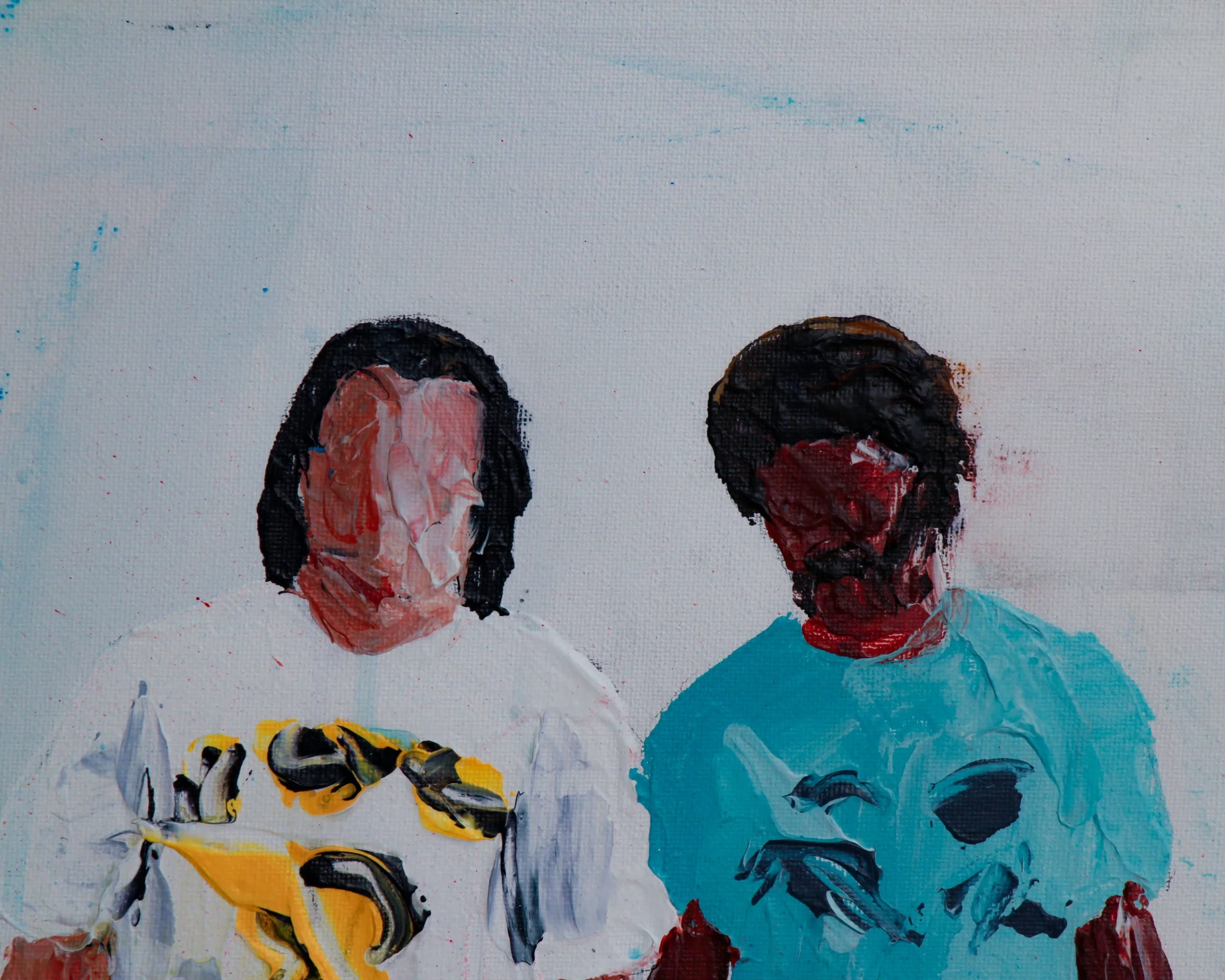
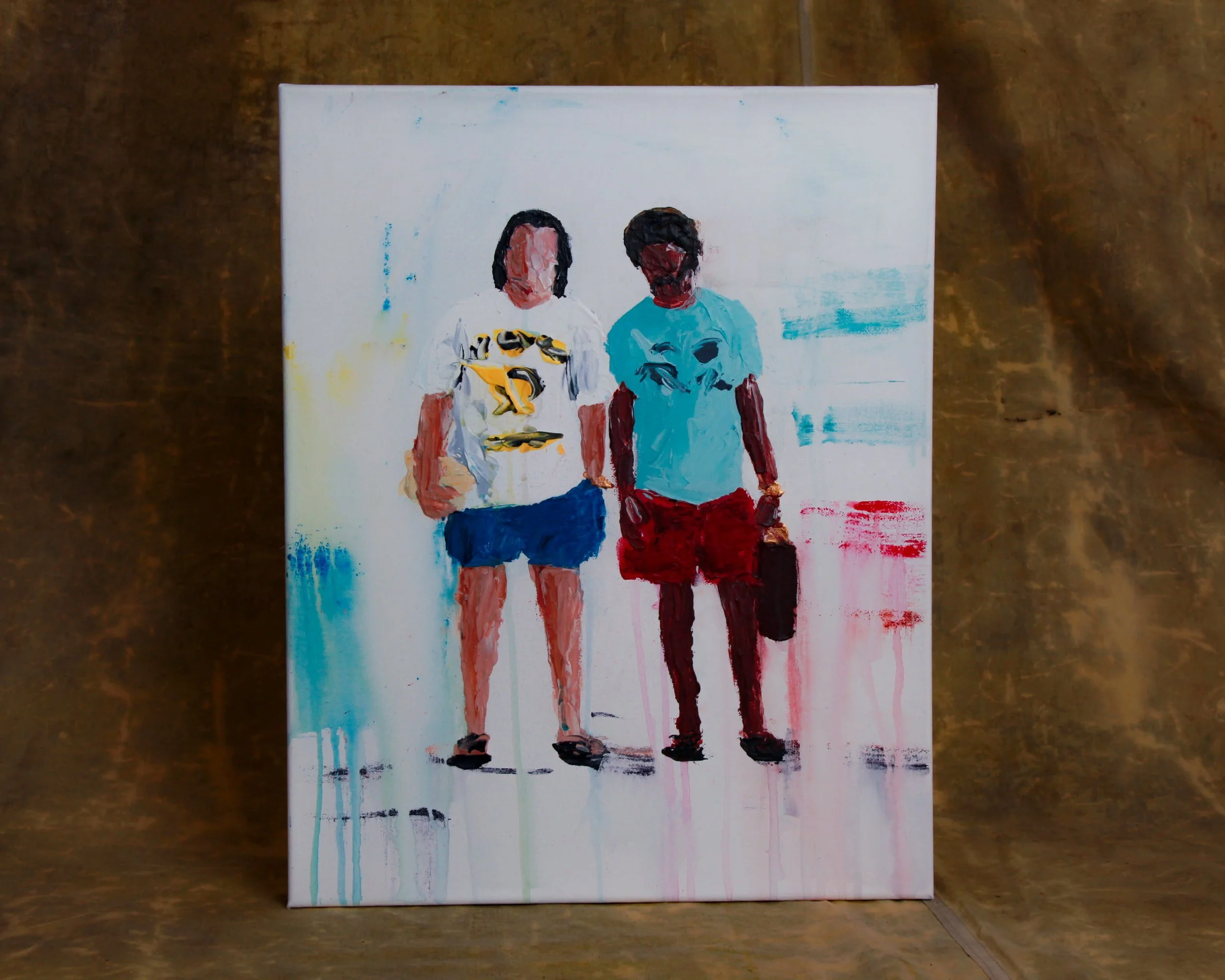
Another panel shifts gears entirely, trading black suits for T-shirts and shorts—an unexpected, almost absurdly casual take that somehow feels right at home in Tarantino’s universe. It’s playful, a little irreverent, and a reminder that these characters live as much in style as they do in story.
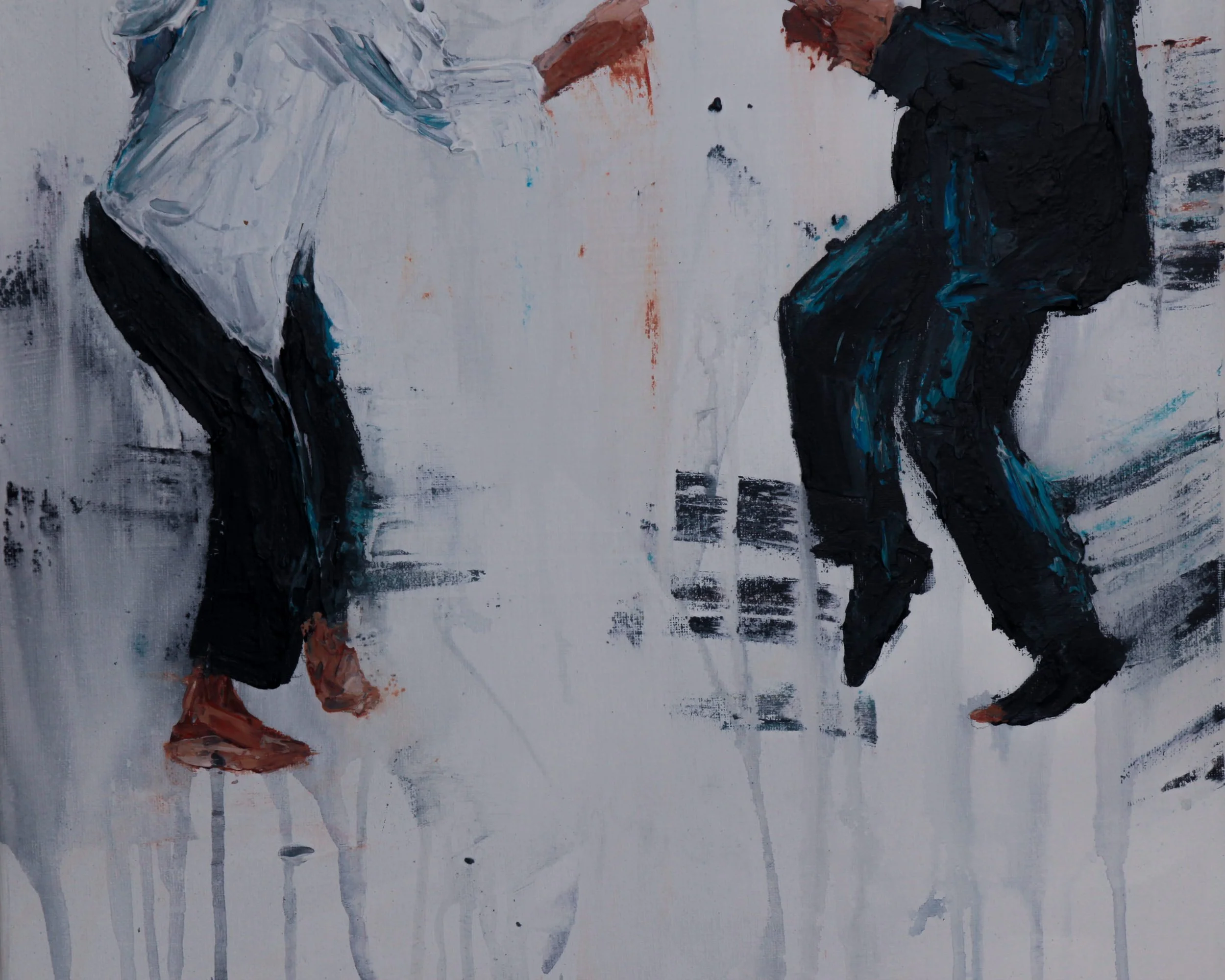
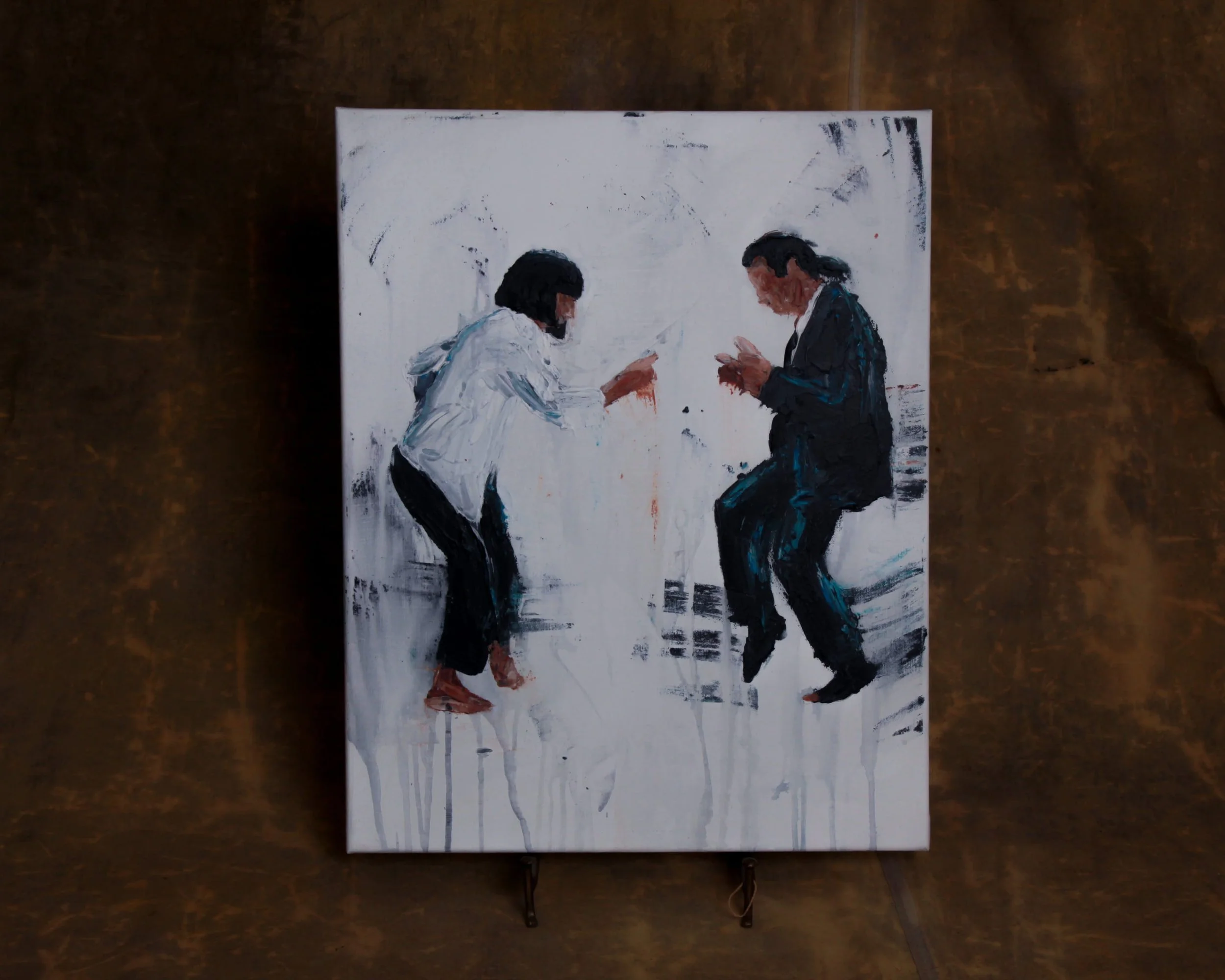
The third piece captures that iconic dance scene—mid-step, slightly off-balance, full of rhythm. Evans leans into movement here, letting drips and gestures carry the energy instead of fine detail.
Across all three, the paint is handled with a kind of deliberate looseness—scraped, dragged, and left to speak for itself. It’s not about perfect likeness; it’s about capturing the feeling.
Sam Evans
Sam Evans works in that space where image and memory overlap. Based in Australia, his paintings often pull from familiar figures—film characters, cultural icons, everyday faces—but strip them back to something more immediate. The likeness is there, but it’s not the point. Gesture, texture, and mood do most of the work.
His approach leans loose and intuitive. Oil on board or canvas, paint dragged, wiped, layered, sometimes left unresolved. You can see decisions as they happen—areas built up, others abandoned. It gives the work a sense of movement, like it’s still thinking.
What’s interesting is how he balances recognition with abstraction. A character might be instantly identifiable, yet the surface resists polish. Edges blur, colors shift, and the image sits somewhere between clarity and suggestion.
There’s a cinematic quality to it, but not in a literal way. More like fragments of scenes—cropped, paused, slightly altered.
His work doesn’t aim for perfection. It leans into imperfection, letting the process stay visible. That’s where the energy lives.
A tight, punchy trio of oil-on-board paintings by Sam Evans that taps straight into the cool, offbeat rhythm of Pulp Fiction. Vincent and Jules take center stage in their signature suits, rendered in loose, confident strokes that blur the faces but sharpen the attitude. There’s just enough red splatter and negative space to suggest the chaos without spelling it out.
Another panel shifts gears entirely, trading black suits for T-shirts and shorts—an unexpected, almost absurdly casual take that somehow feels right at home in Tarantino’s universe. It’s playful, a little irreverent, and a reminder that these characters live as much in style as they do in story.
The third piece captures that iconic dance scene—mid-step, slightly off-balance, full of rhythm. Evans leans into movement here, letting drips and gestures carry the energy instead of fine detail.
Across all three, the paint is handled with a kind of deliberate looseness—scraped, dragged, and left to speak for itself. It’s not about perfect likeness; it’s about capturing the feeling.
Sam Evans
Sam Evans works in that space where image and memory overlap. Based in Australia, his paintings often pull from familiar figures—film characters, cultural icons, everyday faces—but strip them back to something more immediate. The likeness is there, but it’s not the point. Gesture, texture, and mood do most of the work.
His approach leans loose and intuitive. Oil on board or canvas, paint dragged, wiped, layered, sometimes left unresolved. You can see decisions as they happen—areas built up, others abandoned. It gives the work a sense of movement, like it’s still thinking.
What’s interesting is how he balances recognition with abstraction. A character might be instantly identifiable, yet the surface resists polish. Edges blur, colors shift, and the image sits somewhere between clarity and suggestion.
There’s a cinematic quality to it, but not in a literal way. More like fragments of scenes—cropped, paused, slightly altered.
His work doesn’t aim for perfection. It leans into imperfection, letting the process stay visible. That’s where the energy lives.