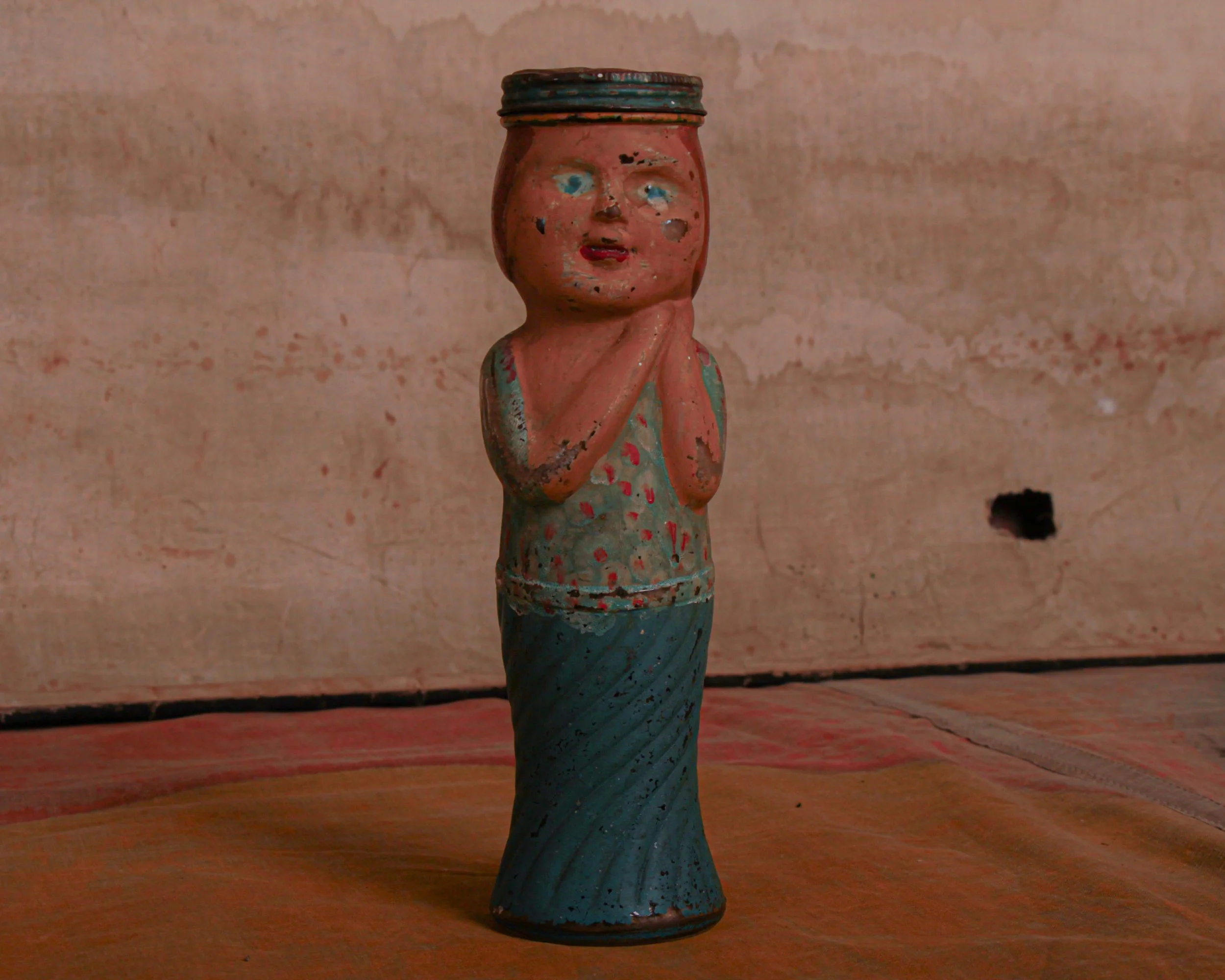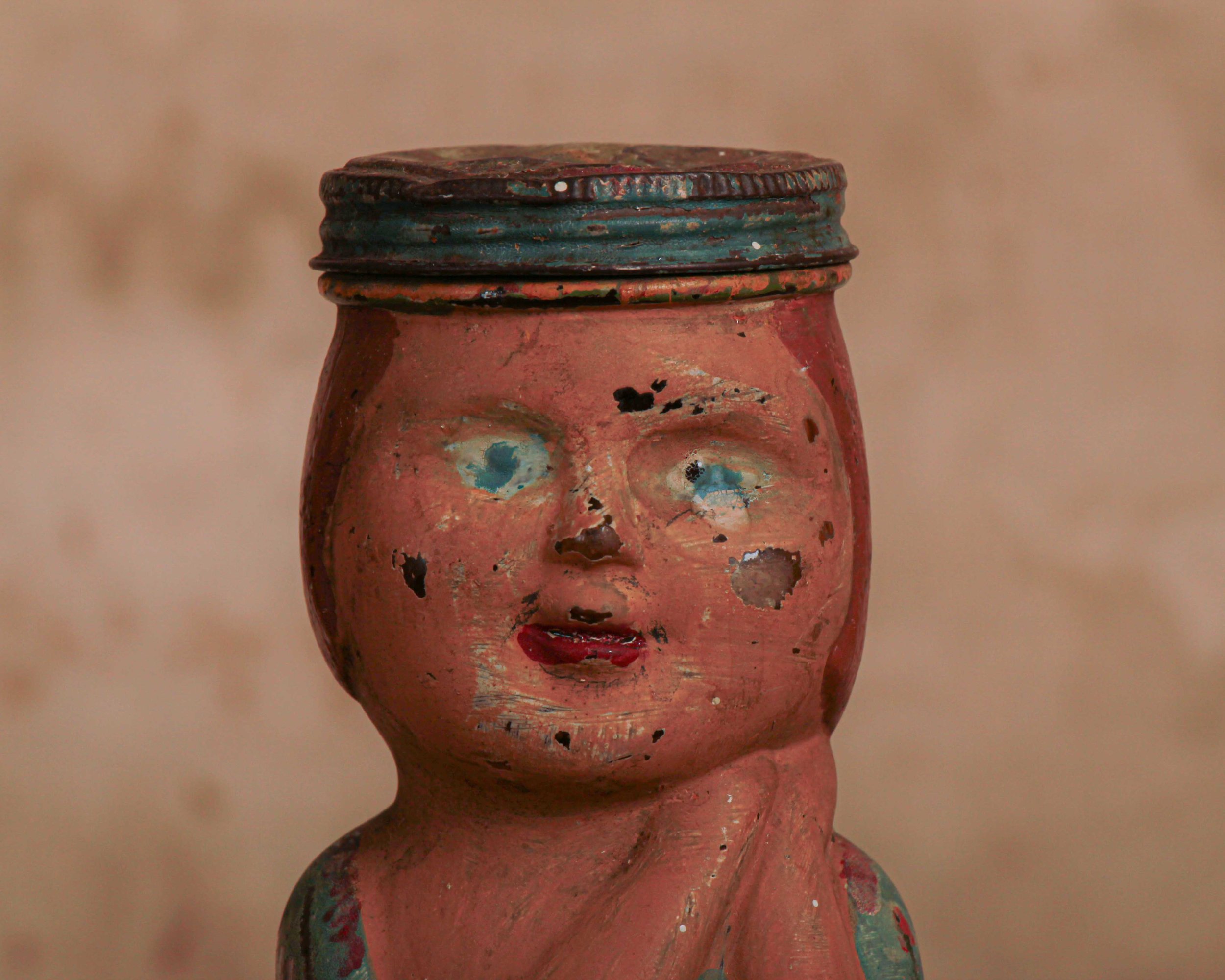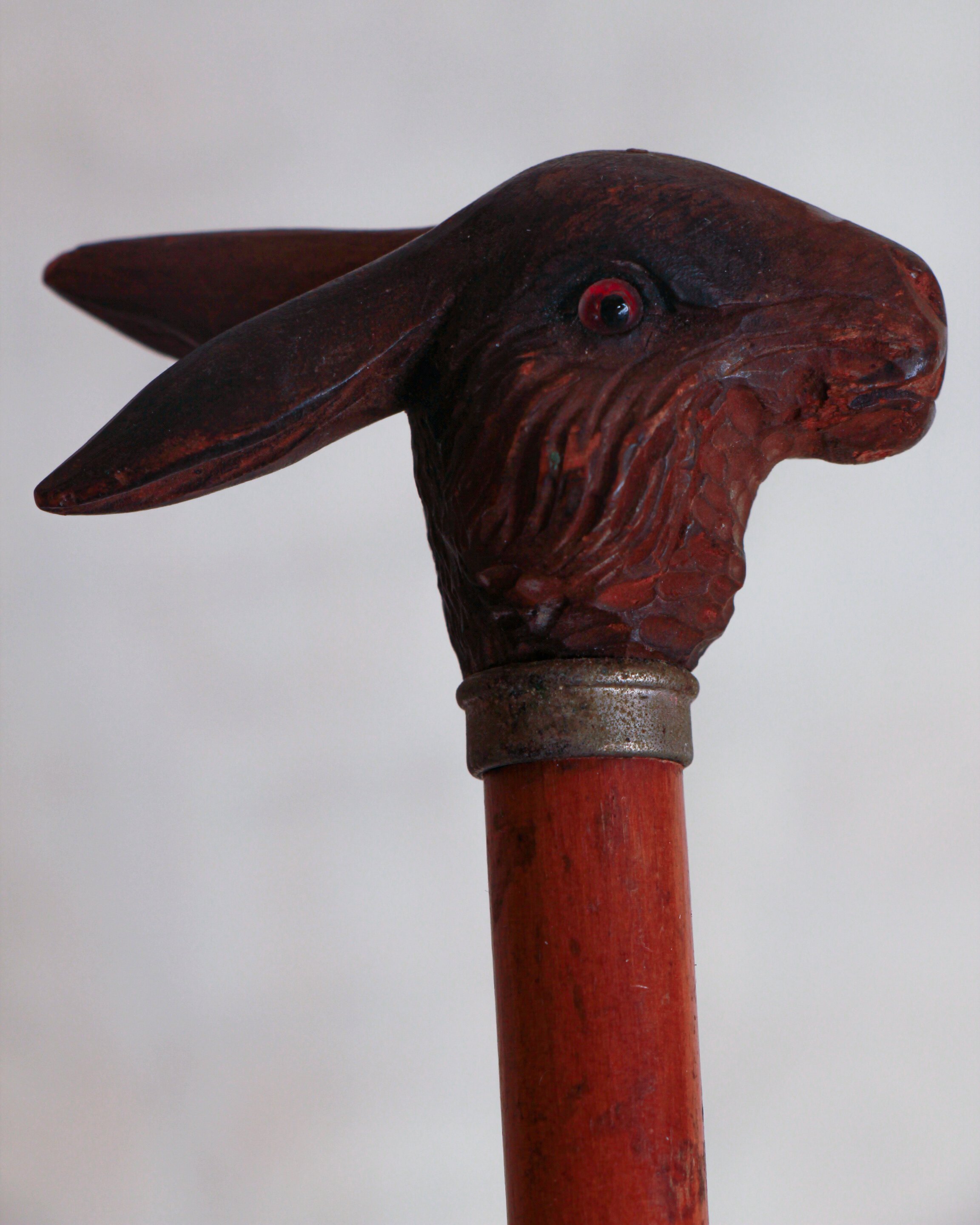
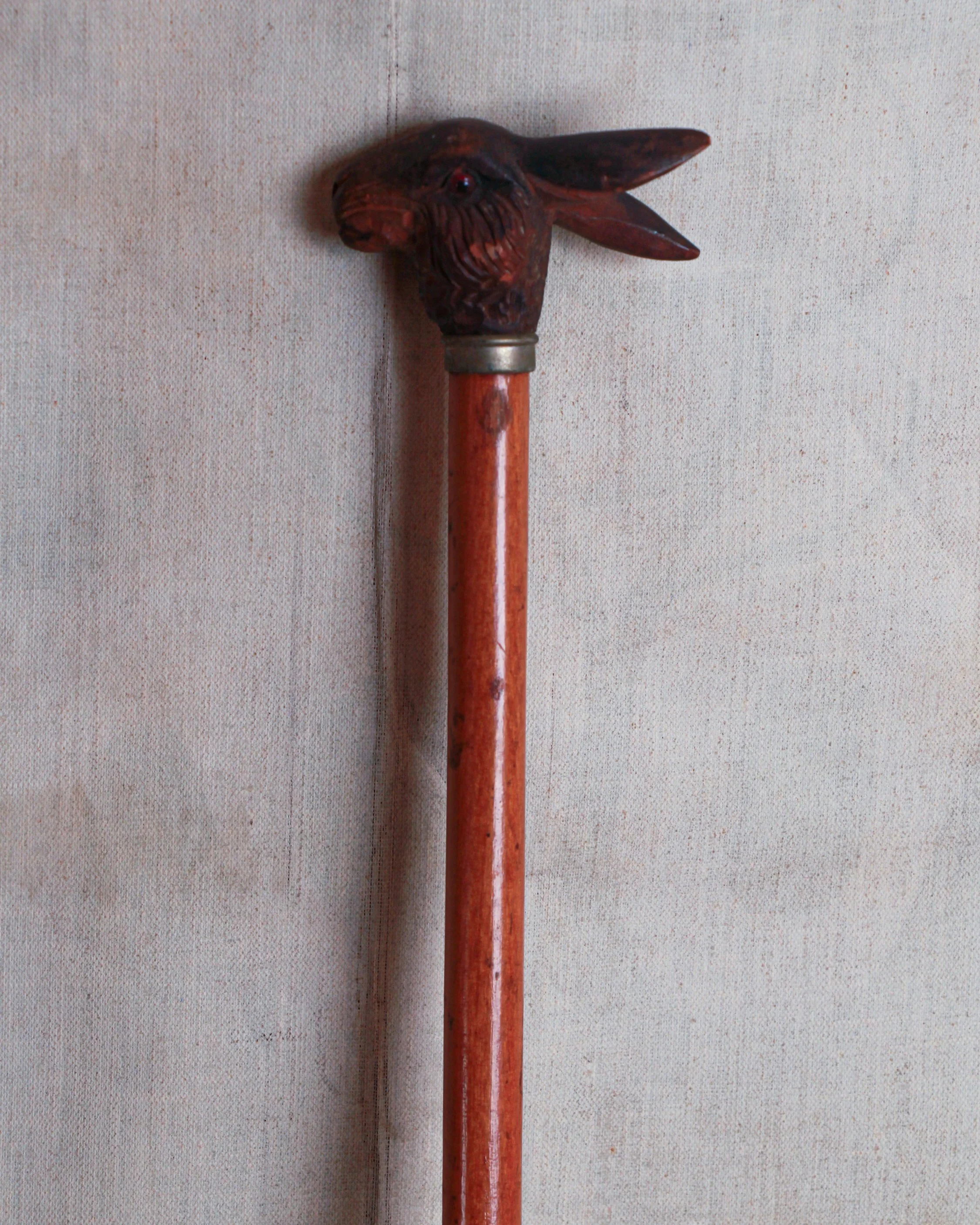
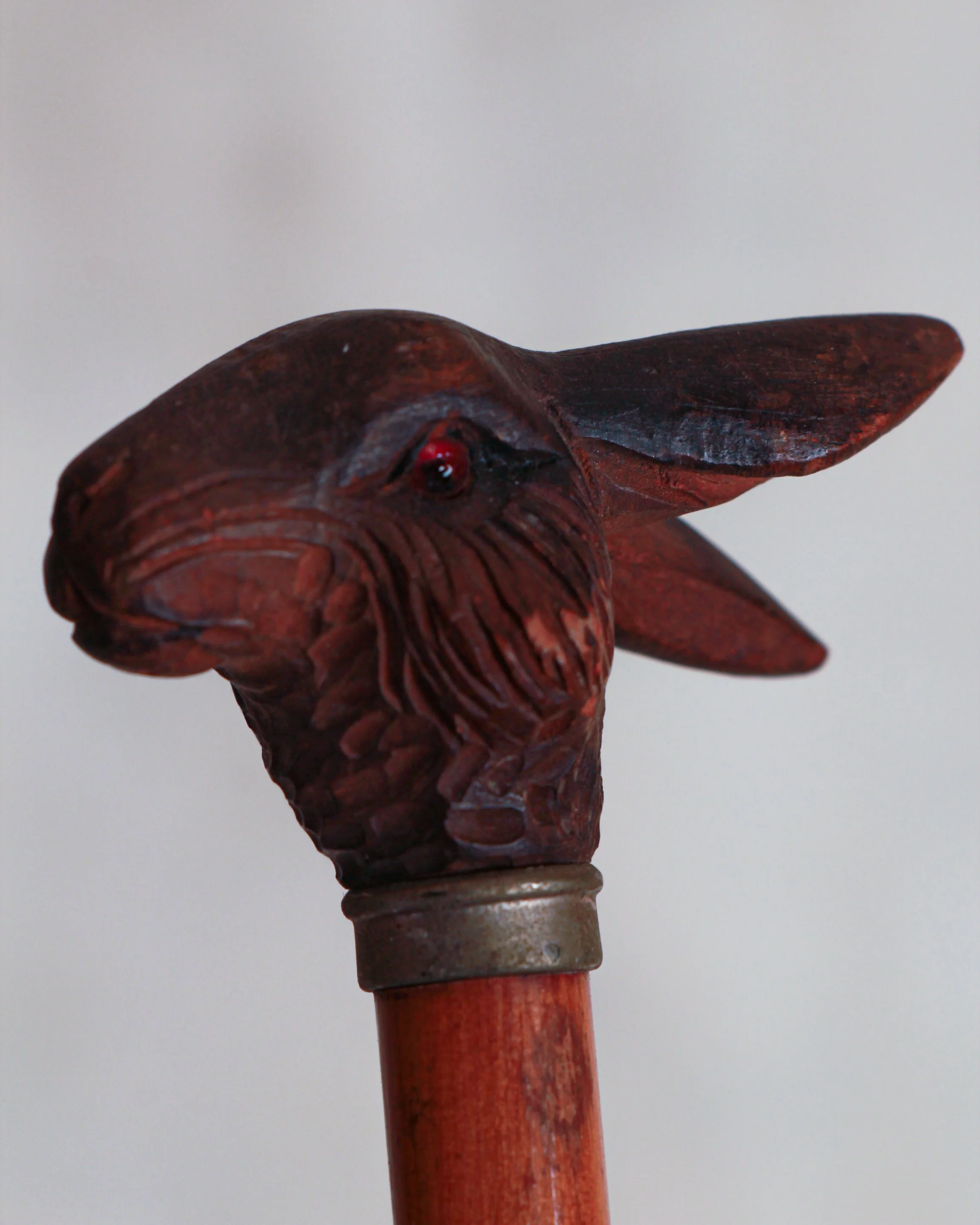
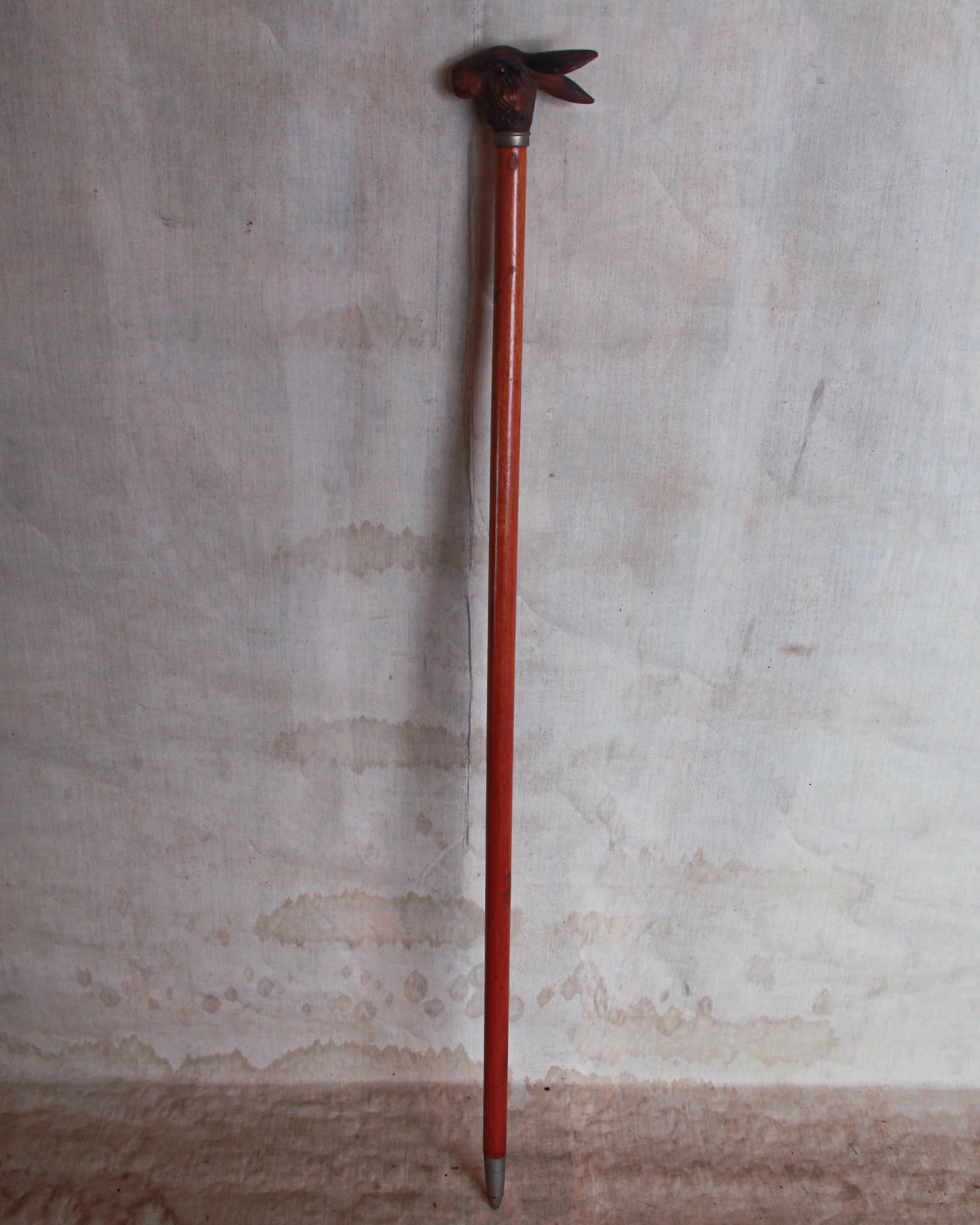
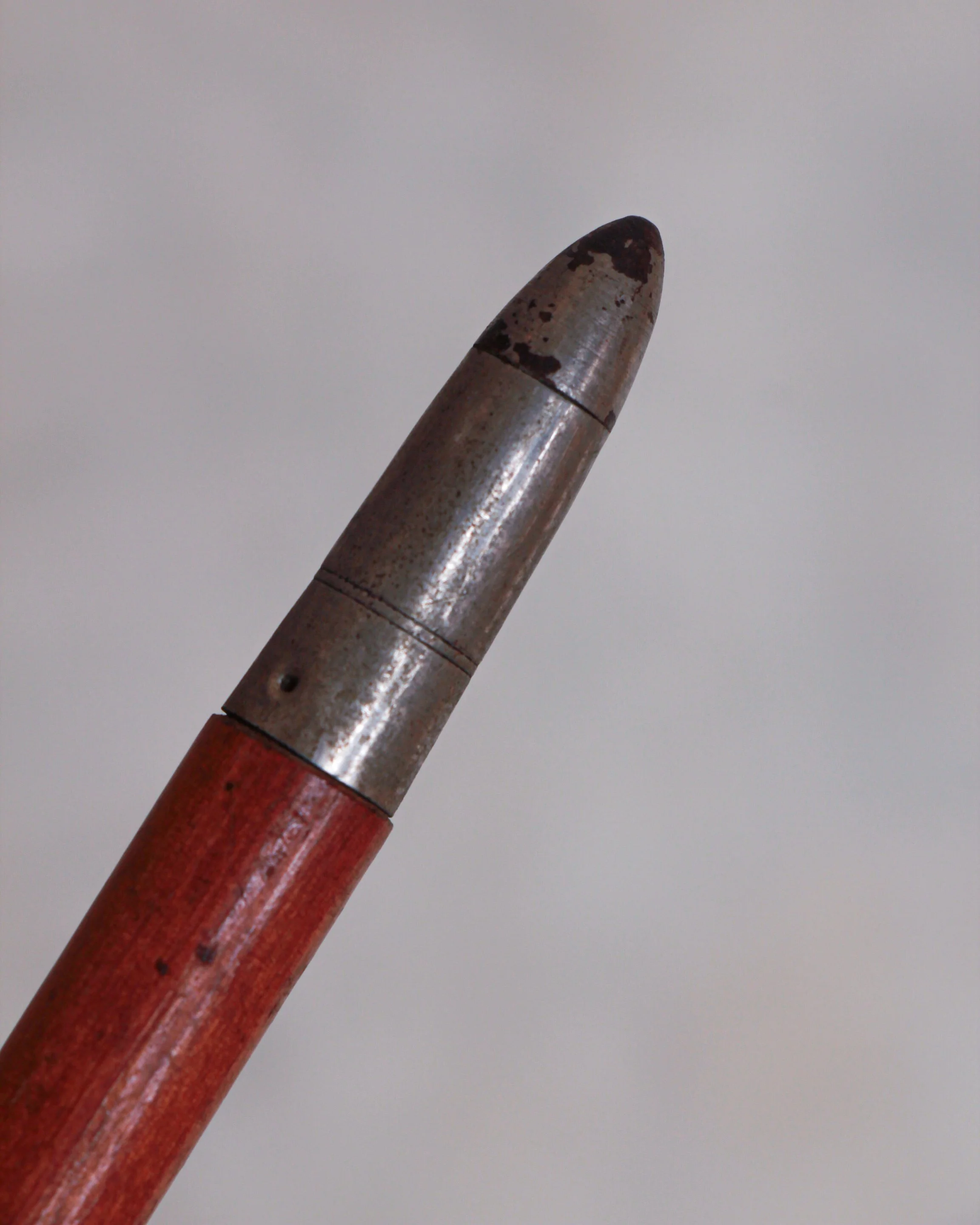
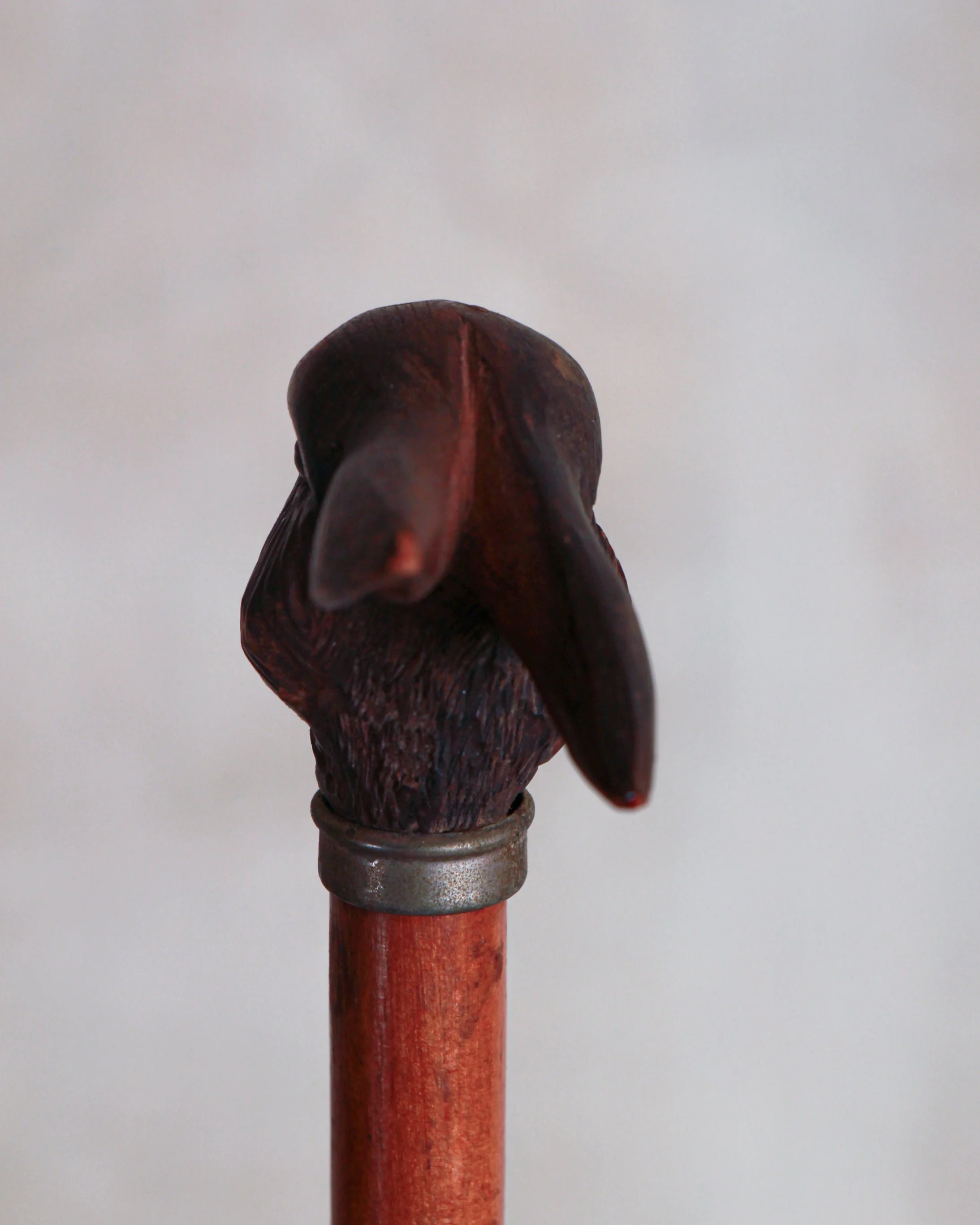
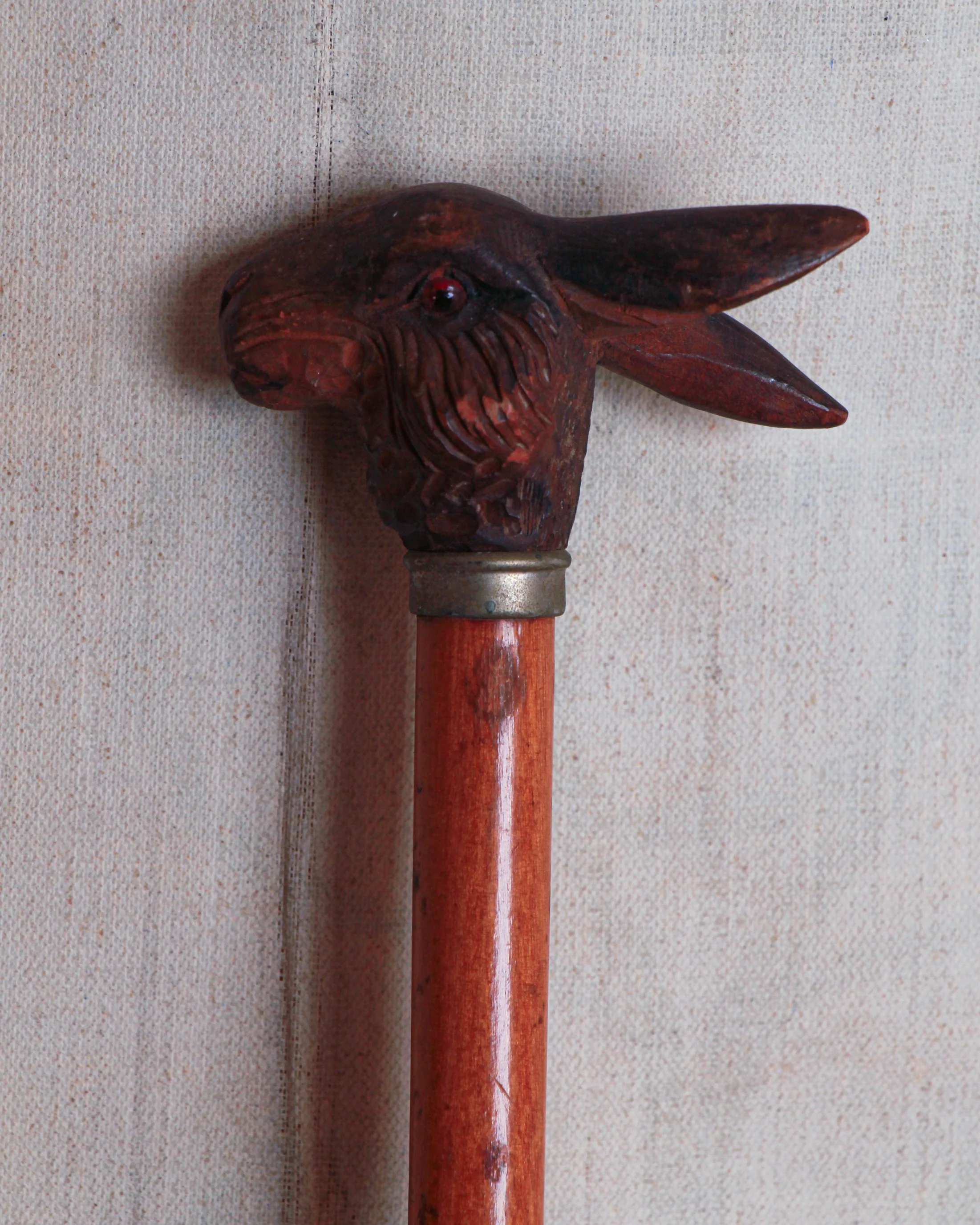
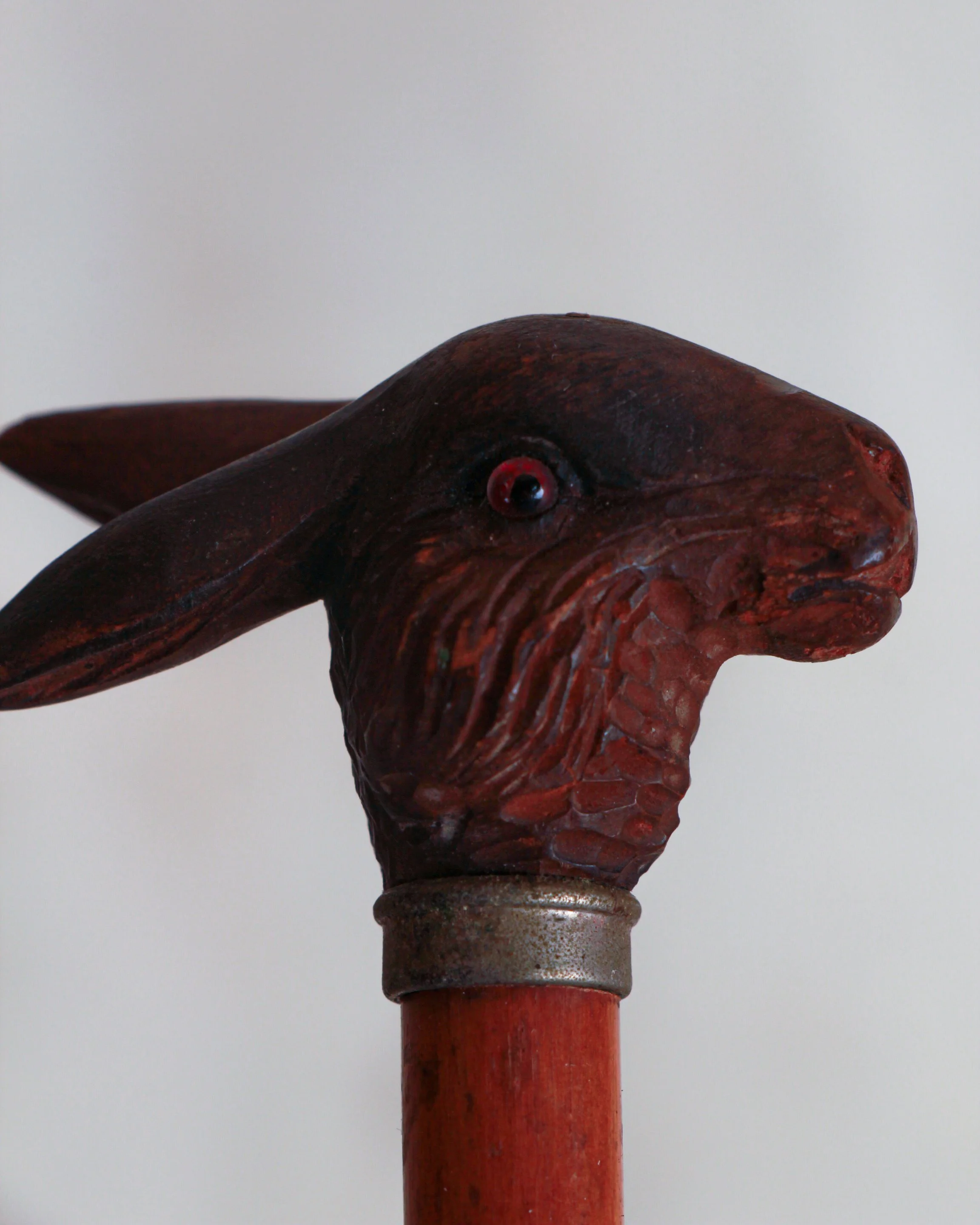
This charming early 20th-century child’s cane measures just 22 inches long and is topped with a wonderfully expressive carved wooden rabbit head. The rabbit has long swept-back ears, deeply carved fur and facial details, and small inset glass eyes that give it an unexpectedly lively personality. The carving is attached to a slender reddish-brown wooden shaft with a simple metal collar beneath the handle and a metal ferrule at the bottom. The surface shows the kind of gentle wear, darkening and small marks you’d hope to find on something that has survived a century or so.
Children’s walking sticks were made in surprisingly wide variety during the late 19th and early 20th centuries. While some were genuinely functional, many were essentially miniature versions of fashionable adult accessories. At a time when a cane could be part of a well-dressed gentleman’s everyday outfit, children were often given scaled-down examples that allowed them to imitate the adults around them.
Animal-head handles were especially popular. Dogs, horses, ducks, birds and rabbits all appeared, ranging from inexpensive molded handles to individually carved wooden examples. They belonged to a broader tradition of novelty walking sticks, where the handle became an opportunity for humor, craftsmanship and personal expression. Some were souvenirs, others were sold through sporting-goods shops, department stores or specialty cane makers.
The rabbit is an especially appealing subject for a child’s cane. Familiar from toys, children’s books and rural life, it gives what could otherwise be a fairly formal accessory a playful character.
At only 22 inches, this one was clearly intended for a young child rather than an adult. The combination of its small scale, hand-carved rabbit, glass eyes and well-aged metal fittings makes it a particularly fun surviving piece of early childhood fashion, somewhere between a walking stick, toy and piece of folk carving.
This charming early 20th-century child’s cane measures just 22 inches long and is topped with a wonderfully expressive carved wooden rabbit head. The rabbit has long swept-back ears, deeply carved fur and facial details, and small inset glass eyes that give it an unexpectedly lively personality. The carving is attached to a slender reddish-brown wooden shaft with a simple metal collar beneath the handle and a metal ferrule at the bottom. The surface shows the kind of gentle wear, darkening and small marks you’d hope to find on something that has survived a century or so.
Children’s walking sticks were made in surprisingly wide variety during the late 19th and early 20th centuries. While some were genuinely functional, many were essentially miniature versions of fashionable adult accessories. At a time when a cane could be part of a well-dressed gentleman’s everyday outfit, children were often given scaled-down examples that allowed them to imitate the adults around them.
Animal-head handles were especially popular. Dogs, horses, ducks, birds and rabbits all appeared, ranging from inexpensive molded handles to individually carved wooden examples. They belonged to a broader tradition of novelty walking sticks, where the handle became an opportunity for humor, craftsmanship and personal expression. Some were souvenirs, others were sold through sporting-goods shops, department stores or specialty cane makers.
The rabbit is an especially appealing subject for a child’s cane. Familiar from toys, children’s books and rural life, it gives what could otherwise be a fairly formal accessory a playful character.
At only 22 inches, this one was clearly intended for a young child rather than an adult. The combination of its small scale, hand-carved rabbit, glass eyes and well-aged metal fittings makes it a particularly fun surviving piece of early childhood fashion, somewhere between a walking stick, toy and piece of folk carving.