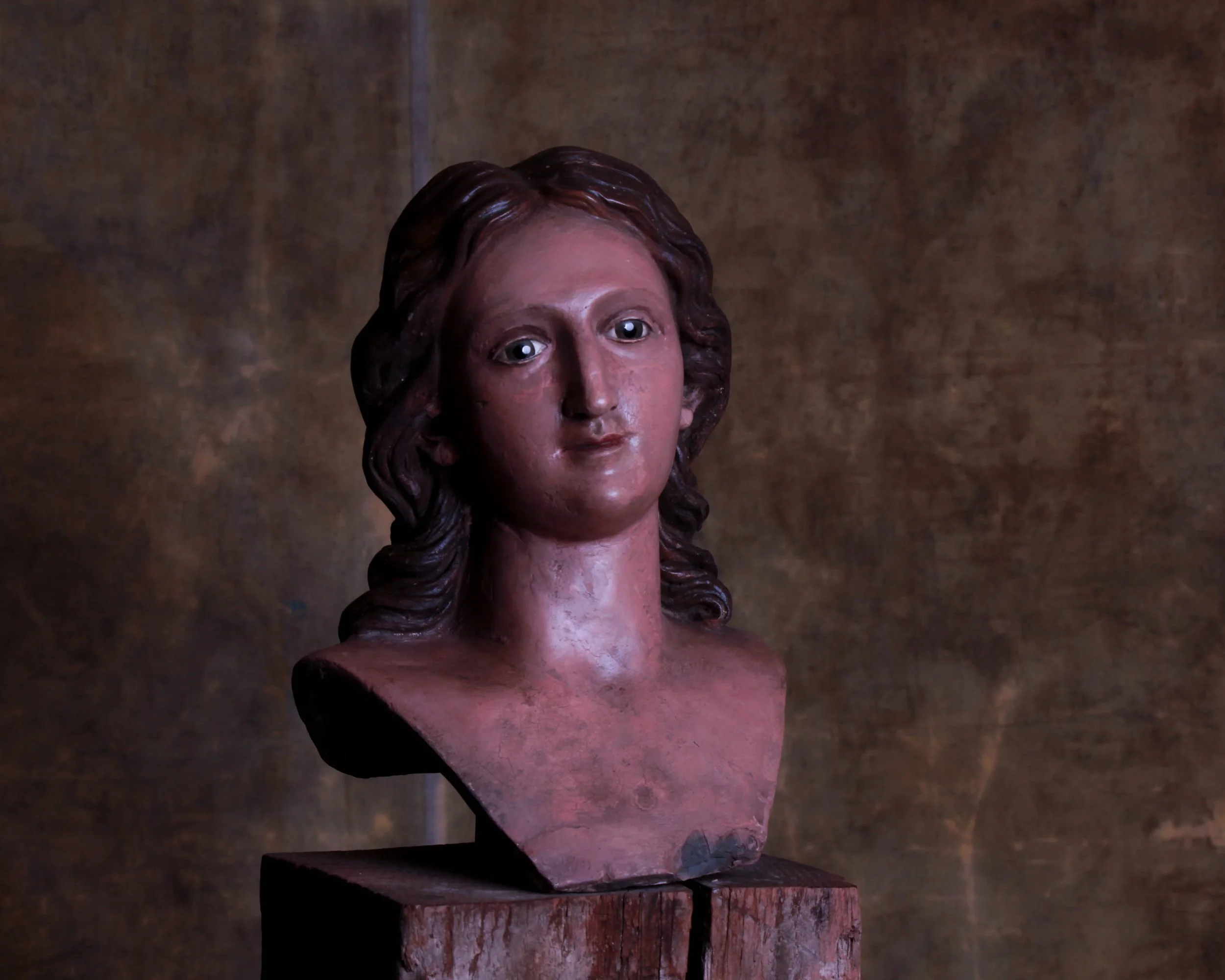
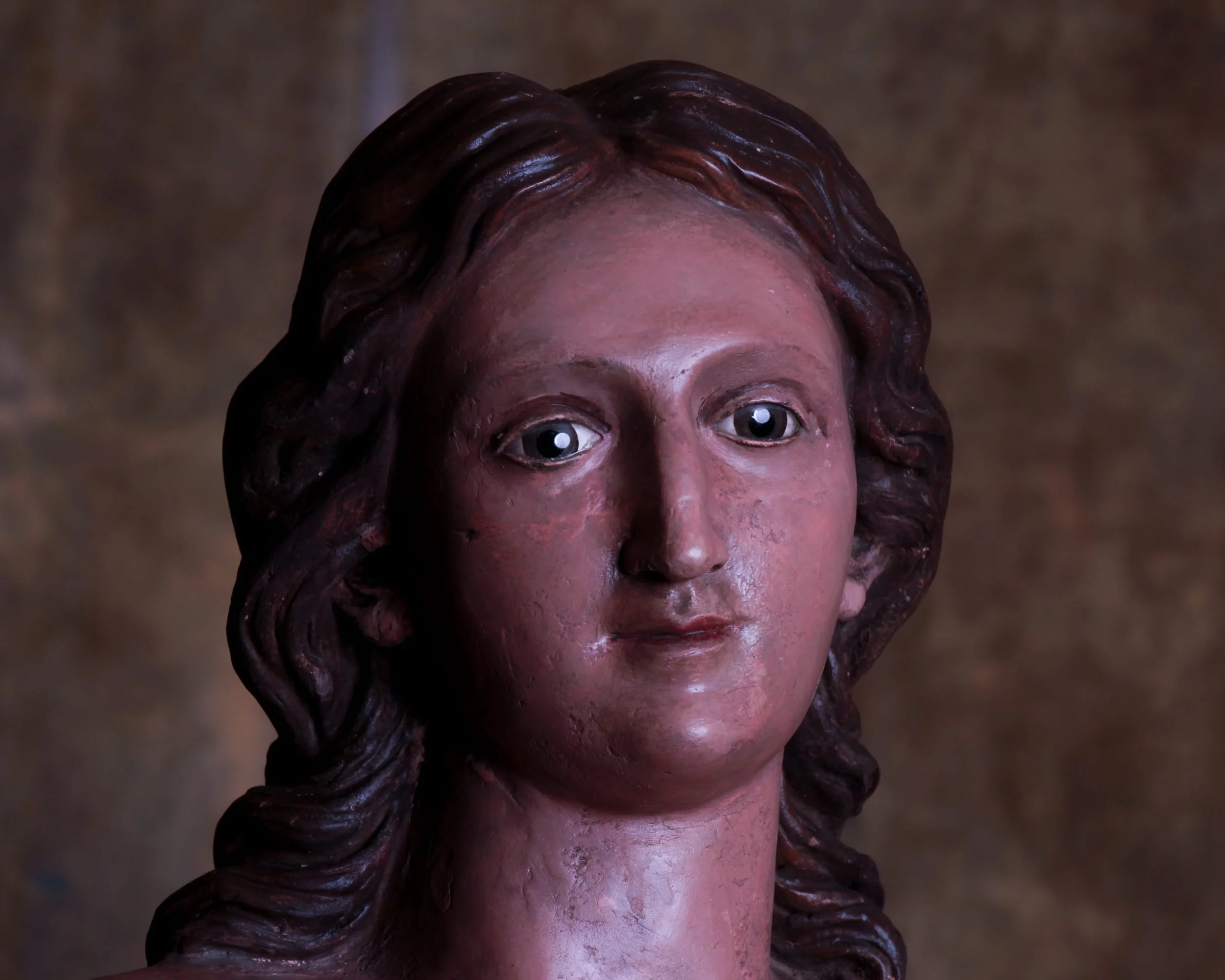
With her softly modeled features, flowing hair, and remarkably expressive glass eyes, this early 19th-century terracotta bust possesses the rare ability to hold a room without demanding attention. At first glance, she appears serene and composed. Spend a little more time with her, however, and the expression becomes harder to define. Curious, contemplative, perhaps even slightly amused. The ambiguity is part of the charm.
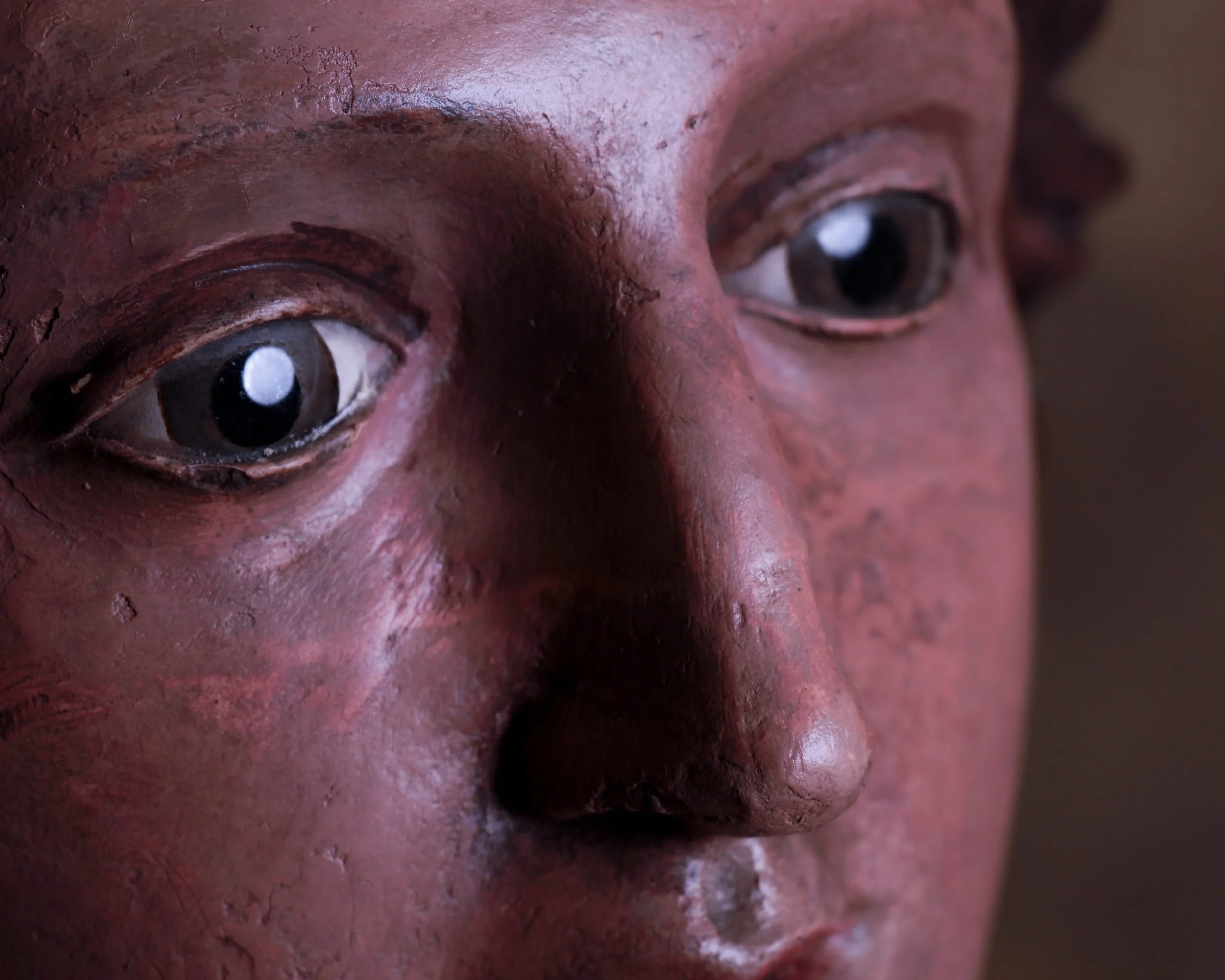
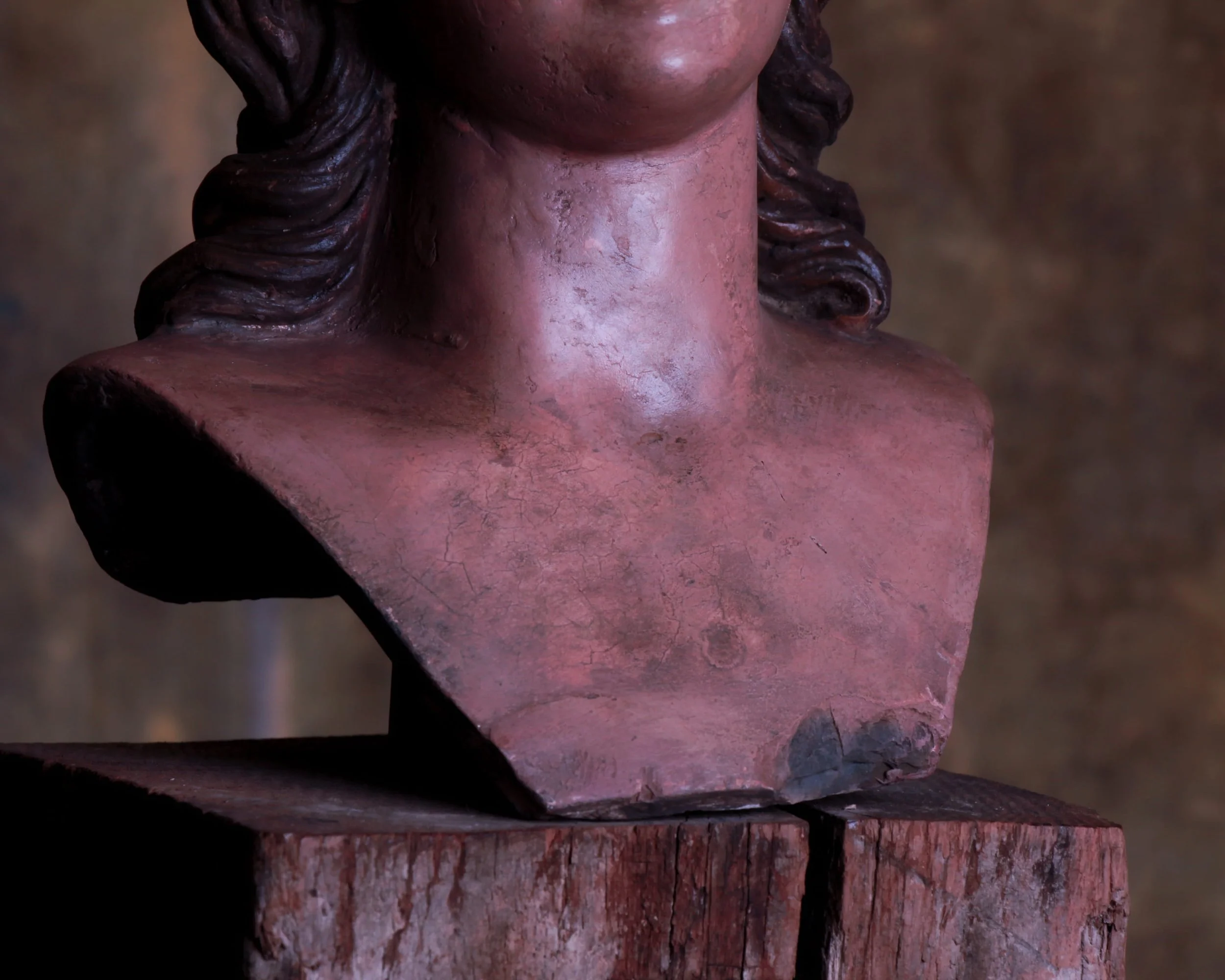
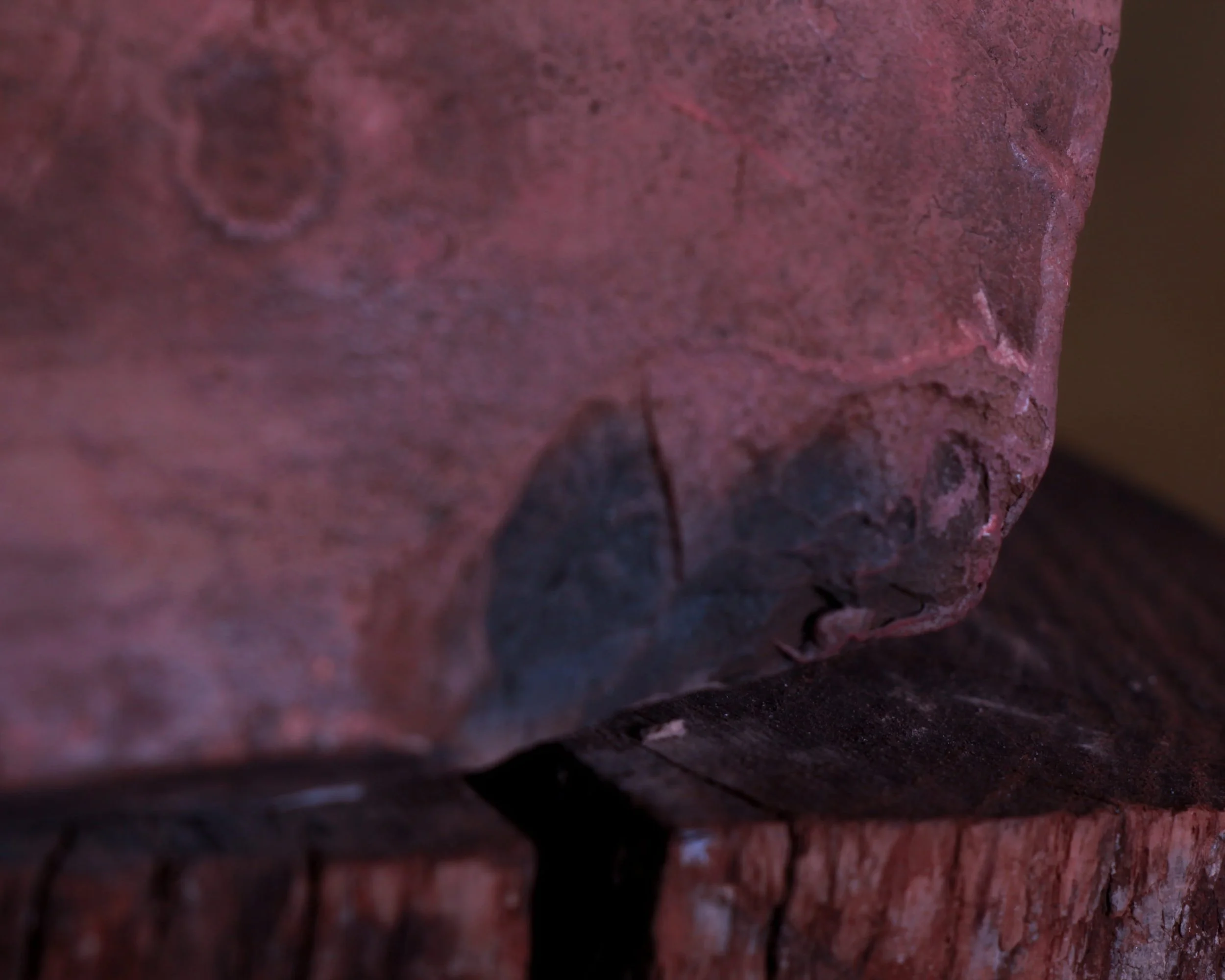
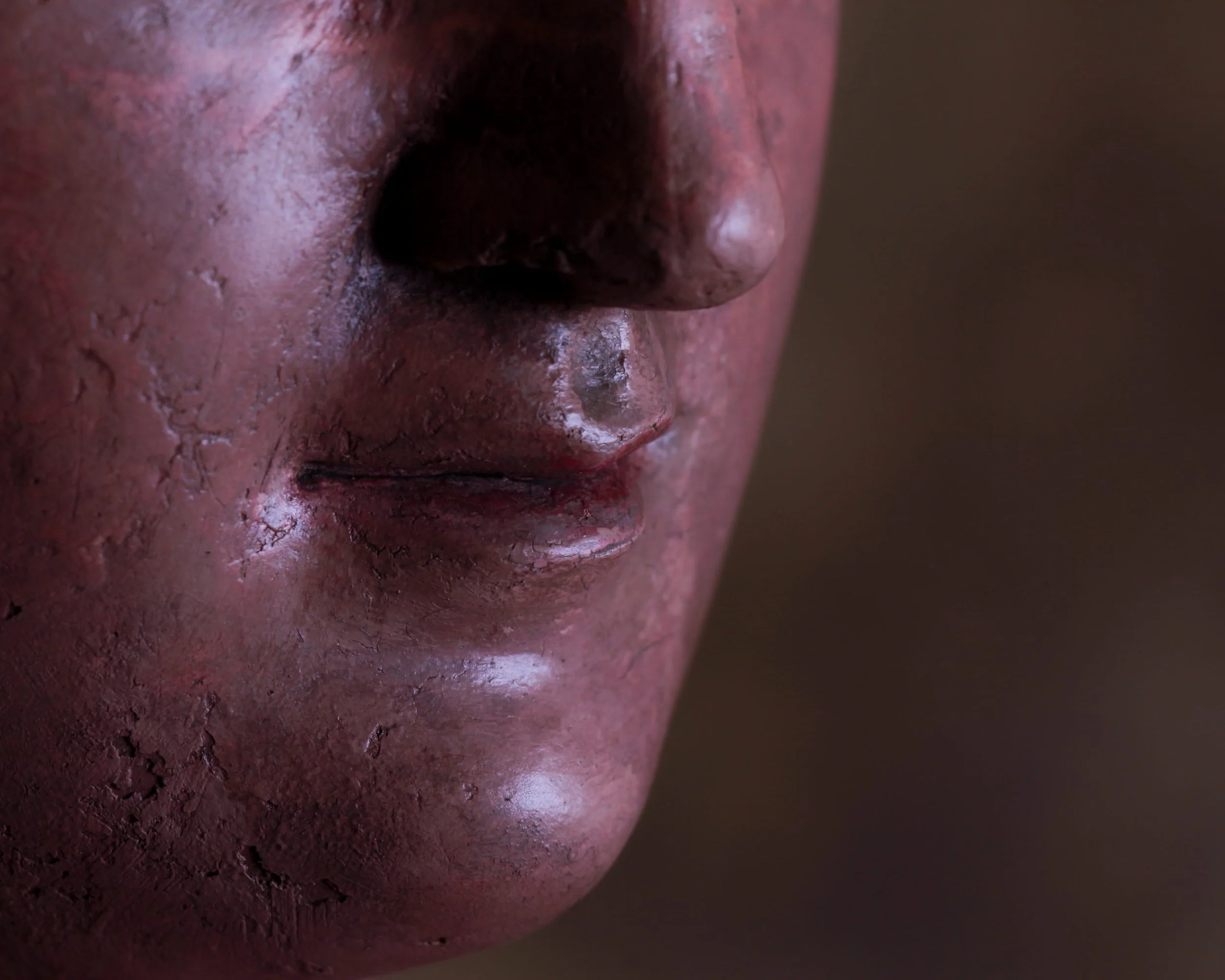
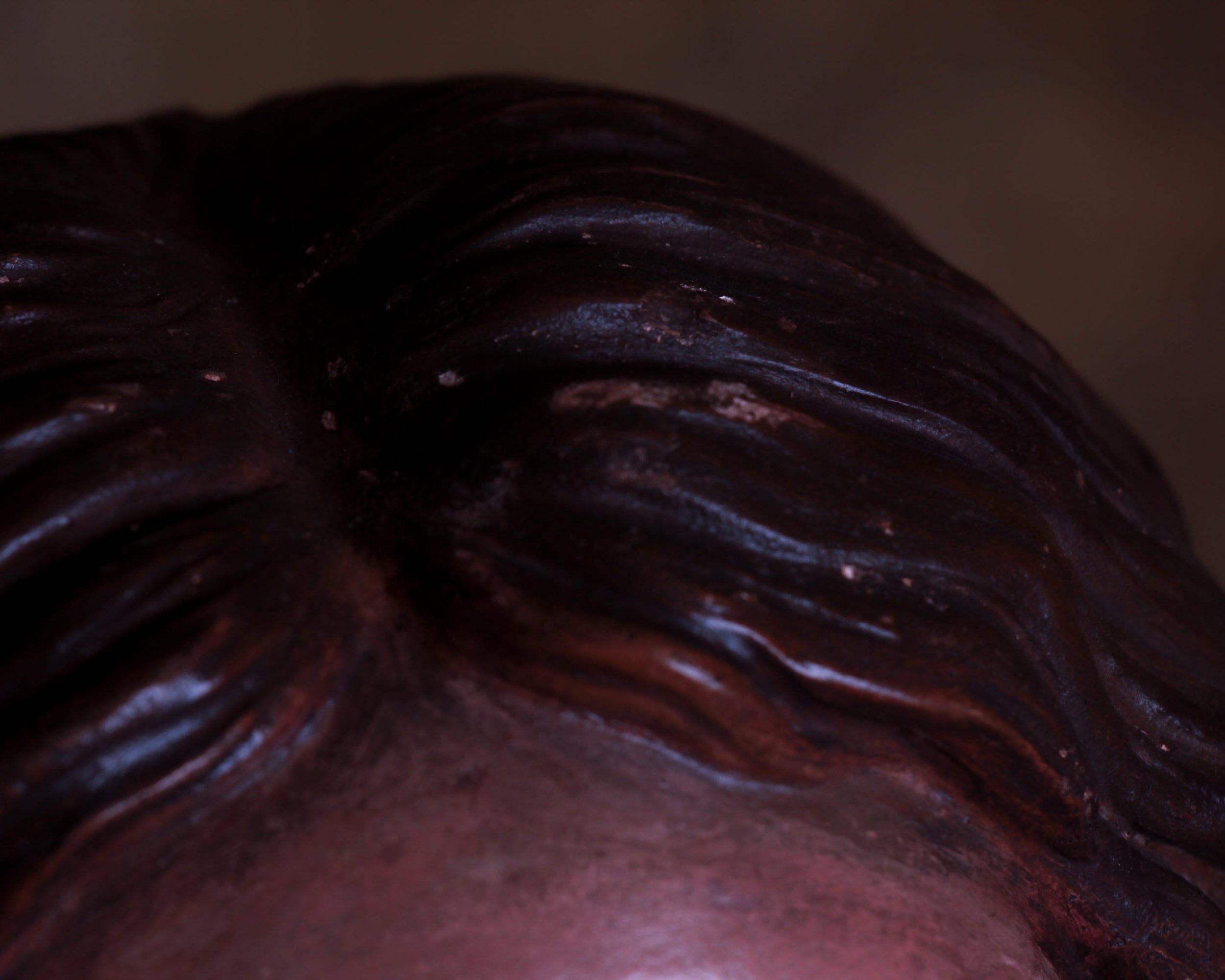
Hand-sculpted and painted more than two centuries ago, the bust retains a surface rich with age and character. The original polychrome finish has mellowed beautifully over time, developing a warm, earthy palette that complements the terracotta beneath. Fine craquelure, scattered losses, and areas of wear are not distractions but rather evidence of a long life well lived. They give the piece the kind of authenticity that simply cannot be manufactured.
The glass eyes are particularly captivating. Unlike many period sculptures whose gaze feels fixed or distant, these eyes create an immediate sense of presence. They catch the light, animate the face, and lend the bust an almost startling realism. It is easy to understand why religious and devotional figures of this period were often fitted with glass eyes; they transform sculpture into something that feels unexpectedly alive.
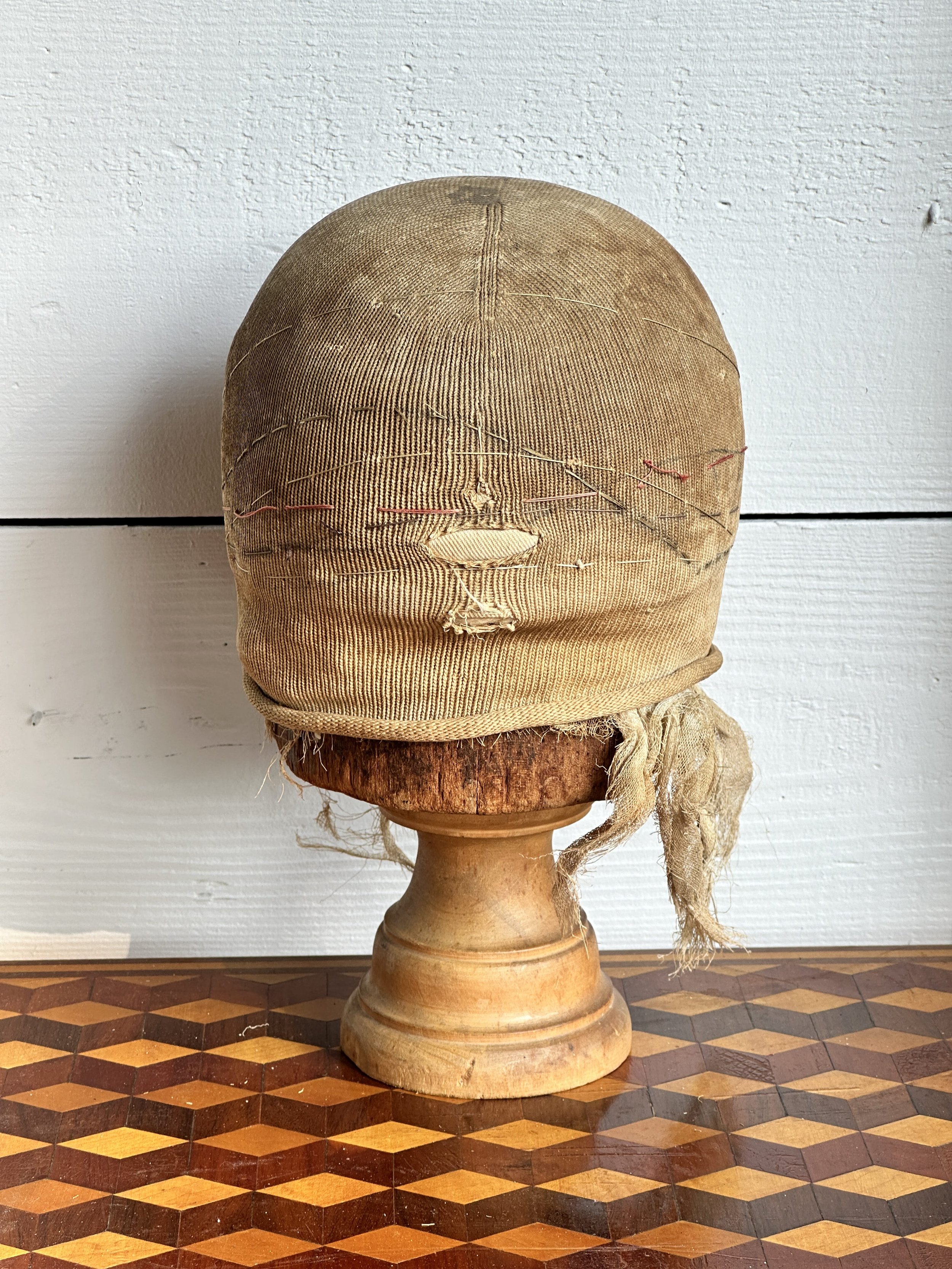
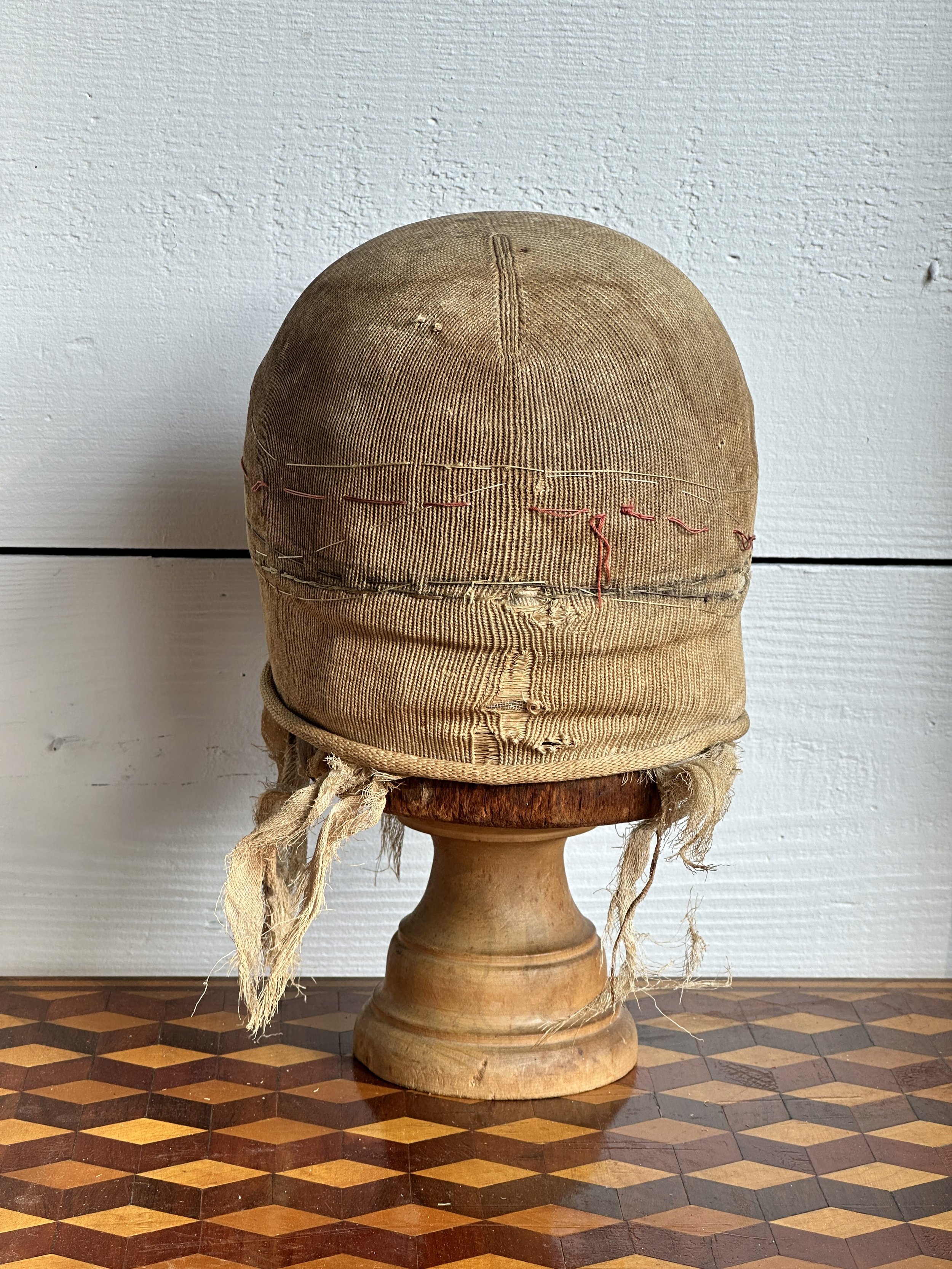
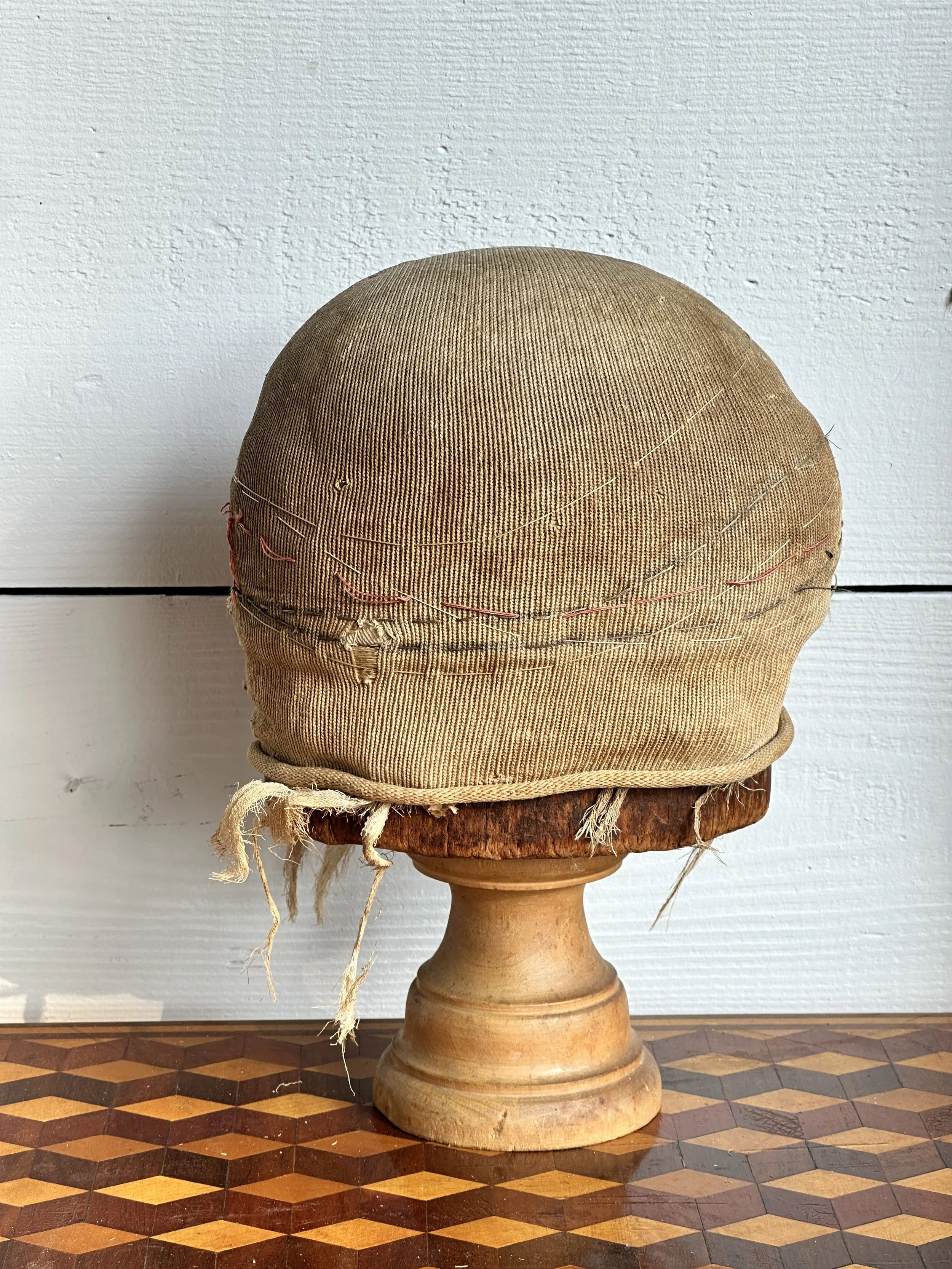
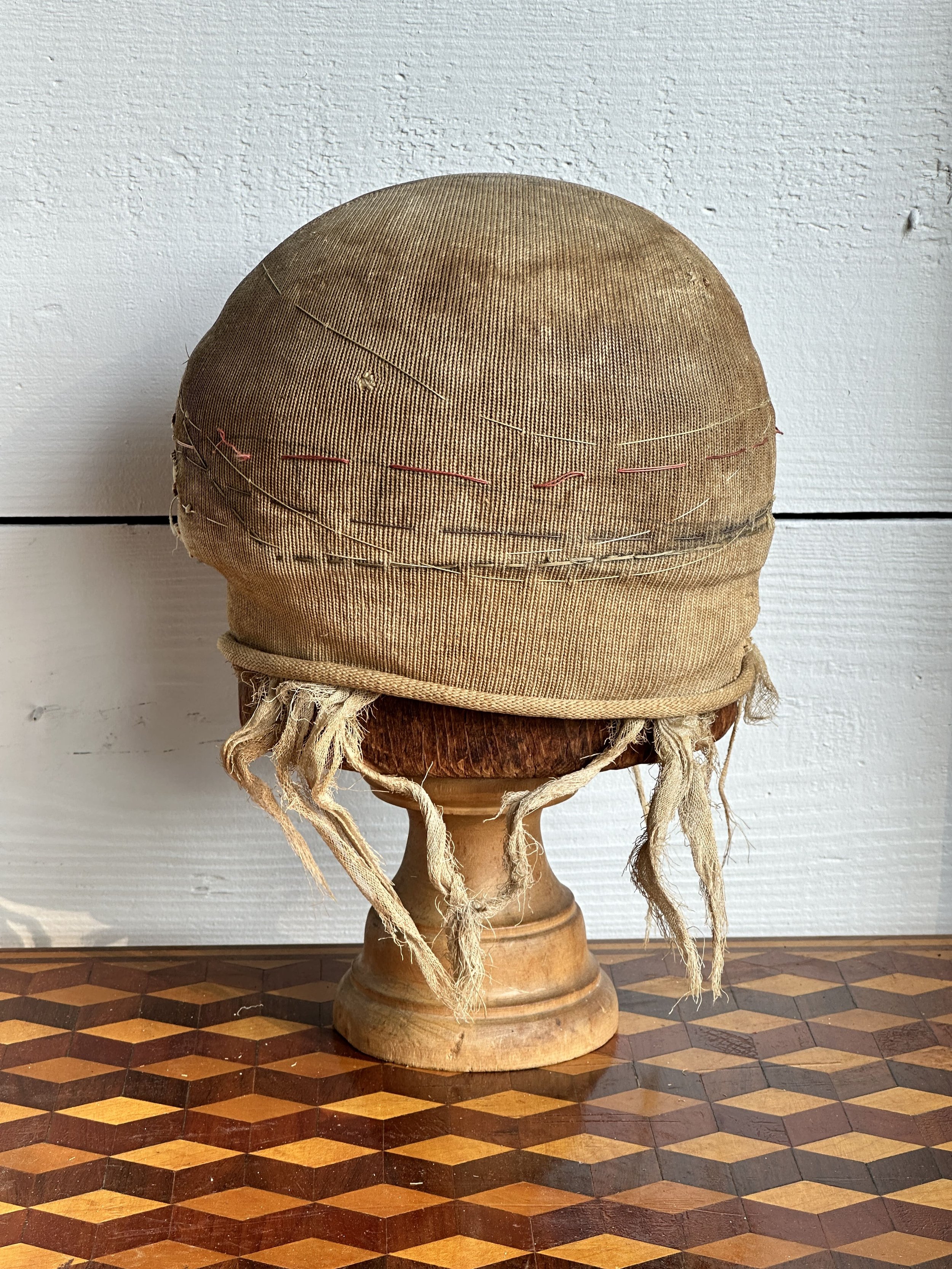
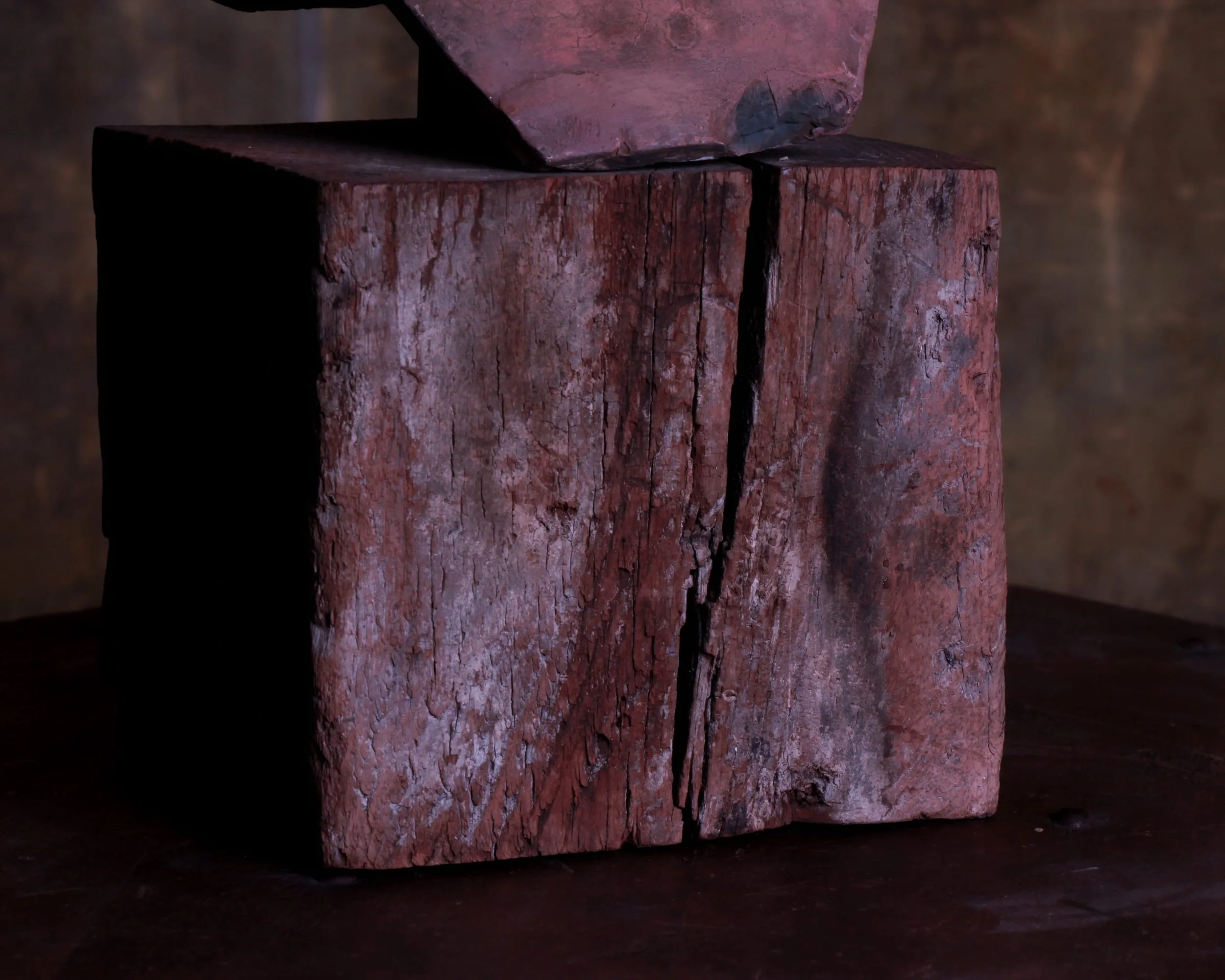
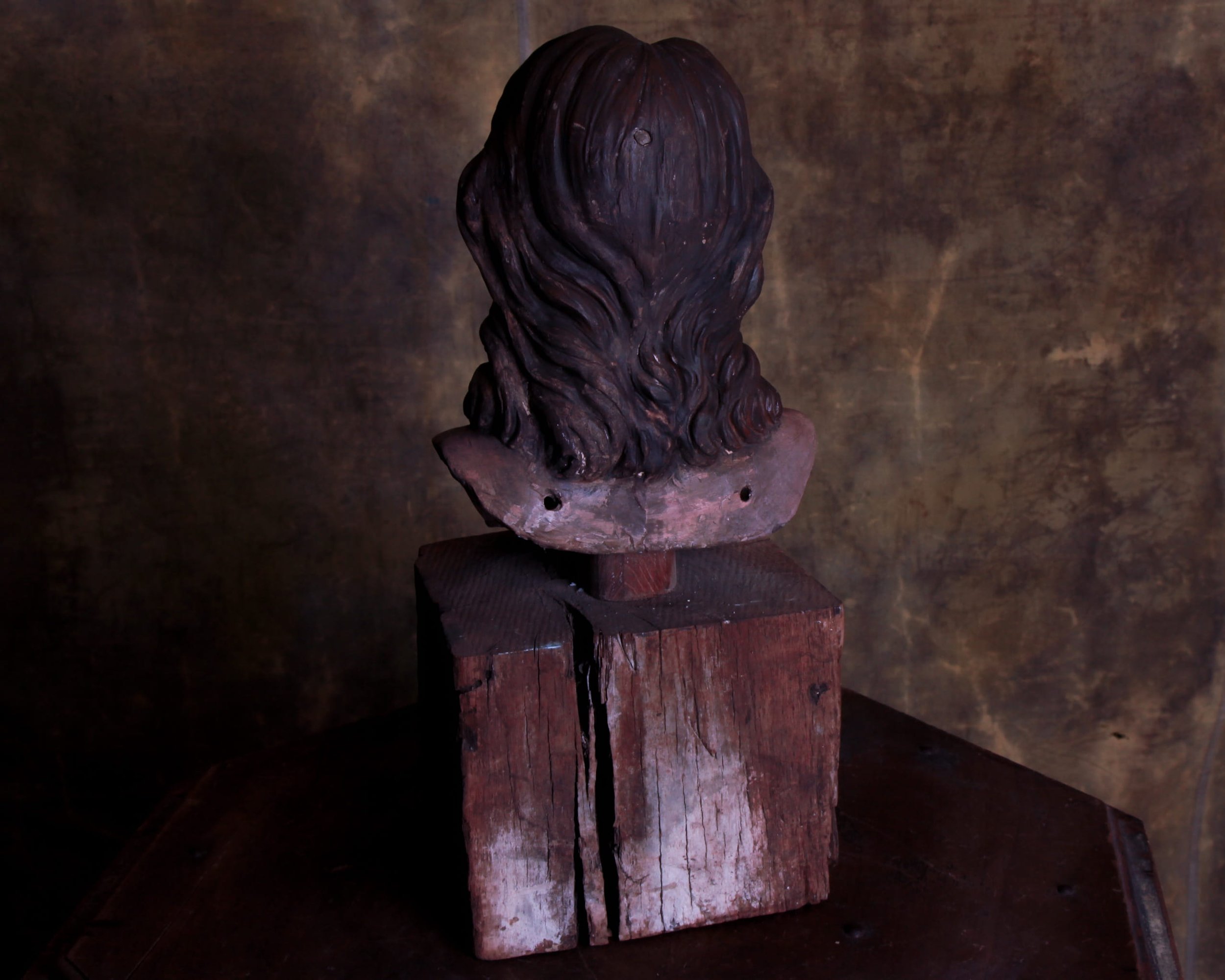
Mounted on a wonderfully primitive wooden base, the contrast between refined craftsmanship and rough-hewn support only adds to the appeal. The weathered block elevates the bust both literally and visually, creating a presentation that feels sculptural, balanced, and entirely honest.
Whether originally intended for a domestic altar, chapel setting, or devotional display, the piece now functions just as comfortably as a decorative object. It sits beautifully among folk art, religious artifacts, and classical sculpture alike.
Measuring 19 inches high overall, with the terracotta bust standing 11.5 inches high and resting on a 7.25-inch wooden base, this is a piece that rewards close inspection. The longer you look, the more personality emerges, which is perhaps why it remains so compelling after all these years.
With her softly modeled features, flowing hair, and remarkably expressive glass eyes, this early 19th-century terracotta bust possesses the rare ability to hold a room without demanding attention. At first glance, she appears serene and composed. Spend a little more time with her, however, and the expression becomes harder to define. Curious, contemplative, perhaps even slightly amused. The ambiguity is part of the charm.
Hand-sculpted and painted more than two centuries ago, the bust retains a surface rich with age and character. The original polychrome finish has mellowed beautifully over time, developing a warm, earthy palette that complements the terracotta beneath. Fine craquelure, scattered losses, and areas of wear are not distractions but rather evidence of a long life well lived. They give the piece the kind of authenticity that simply cannot be manufactured.
The glass eyes are particularly captivating. Unlike many period sculptures whose gaze feels fixed or distant, these eyes create an immediate sense of presence. They catch the light, animate the face, and lend the bust an almost startling realism. It is easy to understand why religious and devotional figures of this period were often fitted with glass eyes; they transform sculpture into something that feels unexpectedly alive.
Mounted on a wonderfully primitive wooden base, the contrast between refined craftsmanship and rough-hewn support only adds to the appeal. The weathered block elevates the bust both literally and visually, creating a presentation that feels sculptural, balanced, and entirely honest.
Whether originally intended for a domestic altar, chapel setting, or devotional display, the piece now functions just as comfortably as a decorative object. It sits beautifully among folk art, religious artifacts, and classical sculpture alike.
Measuring 19 inches high overall, with the terracotta bust standing 11.5 inches high and resting on a 7.25-inch wooden base, this is a piece that rewards close inspection. The longer you look, the more personality emerges, which is perhaps why it remains so compelling after all these years.