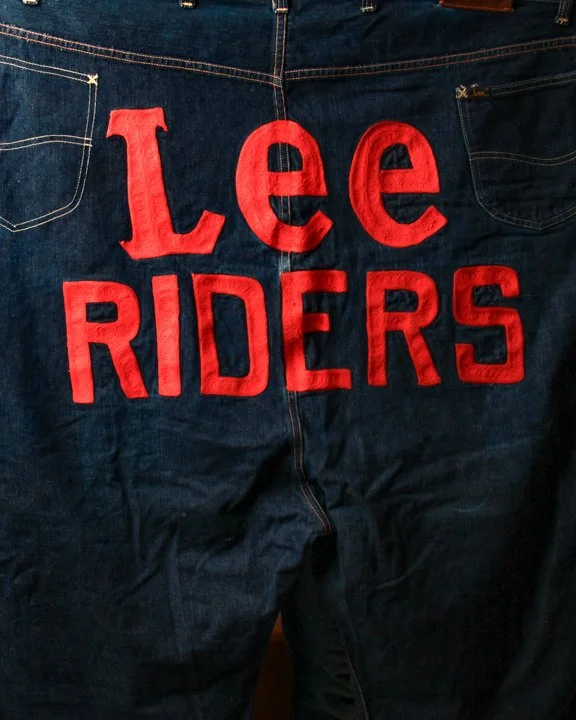
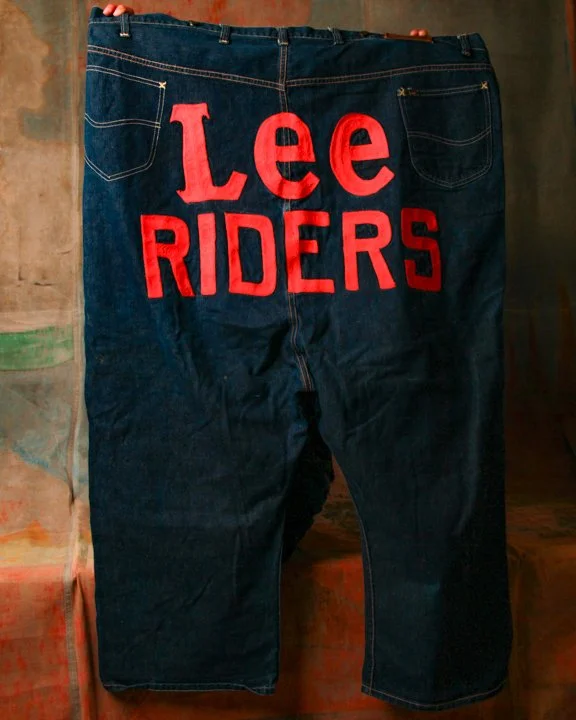
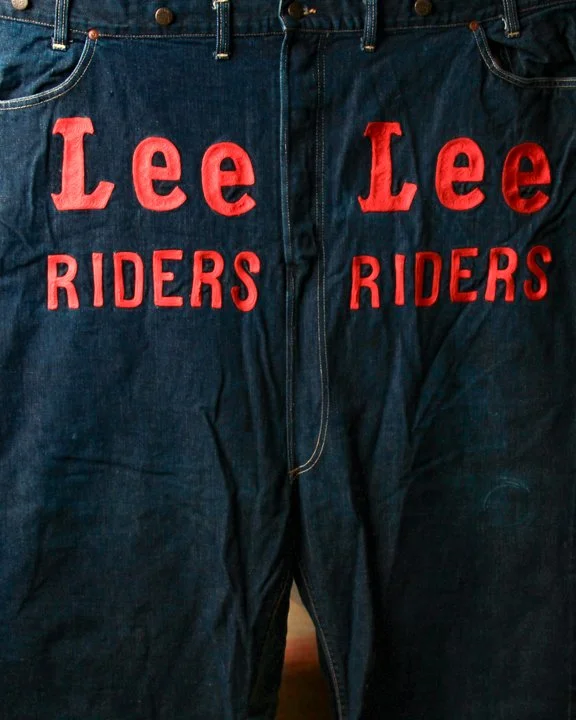
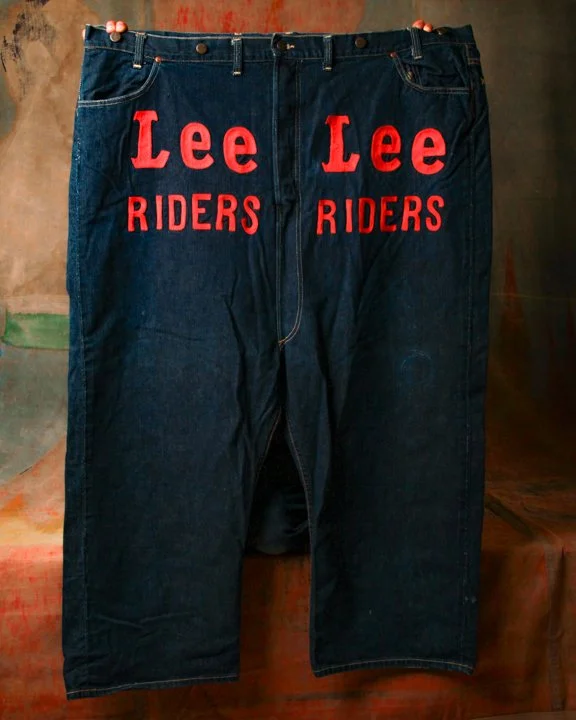
Oversized Lee Riders rodeo clown jeans. Originally made for the rodeo arena, these were worn by rodeo clowns (the brave souls who taunt bulls while saving cowboys), and the sizing is intentionally absurd. Think of them as performance gear with a wink. Made of deep indigo denim with a crisp, raw feel, these jeans are boldly emblazoned front and back with LEE RIDERS lettering in punchy orange. Double the branding on the front legs, plus a giant version across the back.
Category History
Rodeo clowns were never just comic relief—they were the safety net. In the early 20th century, as rodeo events grew larger and more organized, someone had to step in when things went sideways. That job fell to the clown, whose real role was to distract bulls, protect fallen riders, and buy precious seconds with quick thinking and quicker feet.
The oversized clothing became part of that strategy. Baggy shirts, wide suspenders, and loose pants weren’t just for laughs—they exaggerated movement, making the clown more visible and easier for the animal to focus on. Bright colors and bold patterns helped too, turning the clown into a moving target that could pull attention away from a vulnerable rider.
Materials were often tough and practical—denim, canvas, reinforced stitching—built to withstand dirt, horns, and hard landings. Over time, the look evolved into a recognizable uniform, but it always kept that balance of humor and function.
What’s compelling now is how much intent sits behind the spectacle. The costume reads playful, even ridiculous, but it’s engineered for survival. Vintage examples carry that history in their wear—faded fabric, patched knees, repairs that tell you exactly where the action happened.
Oversized Lee Riders rodeo clown jeans. Originally made for the rodeo arena, these were worn by rodeo clowns (the brave souls who taunt bulls while saving cowboys), and the sizing is intentionally absurd. Think of them as performance gear with a wink. Made of deep indigo denim with a crisp, raw feel, these jeans are boldly emblazoned front and back with LEE RIDERS lettering in punchy orange. Double the branding on the front legs, plus a giant version across the back.
Category History
Rodeo clowns were never just comic relief—they were the safety net. In the early 20th century, as rodeo events grew larger and more organized, someone had to step in when things went sideways. That job fell to the clown, whose real role was to distract bulls, protect fallen riders, and buy precious seconds with quick thinking and quicker feet.
The oversized clothing became part of that strategy. Baggy shirts, wide suspenders, and loose pants weren’t just for laughs—they exaggerated movement, making the clown more visible and easier for the animal to focus on. Bright colors and bold patterns helped too, turning the clown into a moving target that could pull attention away from a vulnerable rider.
Materials were often tough and practical—denim, canvas, reinforced stitching—built to withstand dirt, horns, and hard landings. Over time, the look evolved into a recognizable uniform, but it always kept that balance of humor and function.
What’s compelling now is how much intent sits behind the spectacle. The costume reads playful, even ridiculous, but it’s engineered for survival. Vintage examples carry that history in their wear—faded fabric, patched knees, repairs that tell you exactly where the action happened.