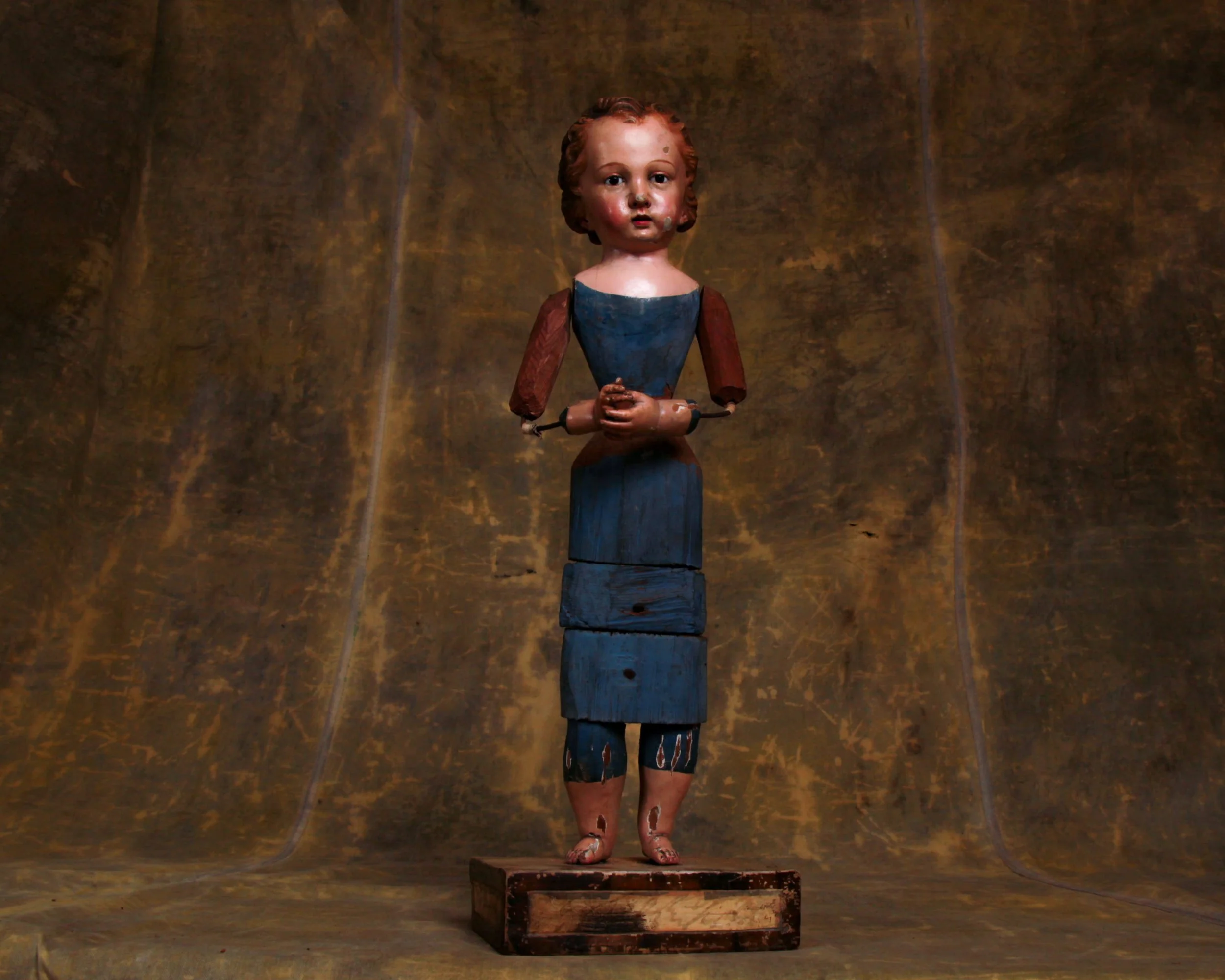
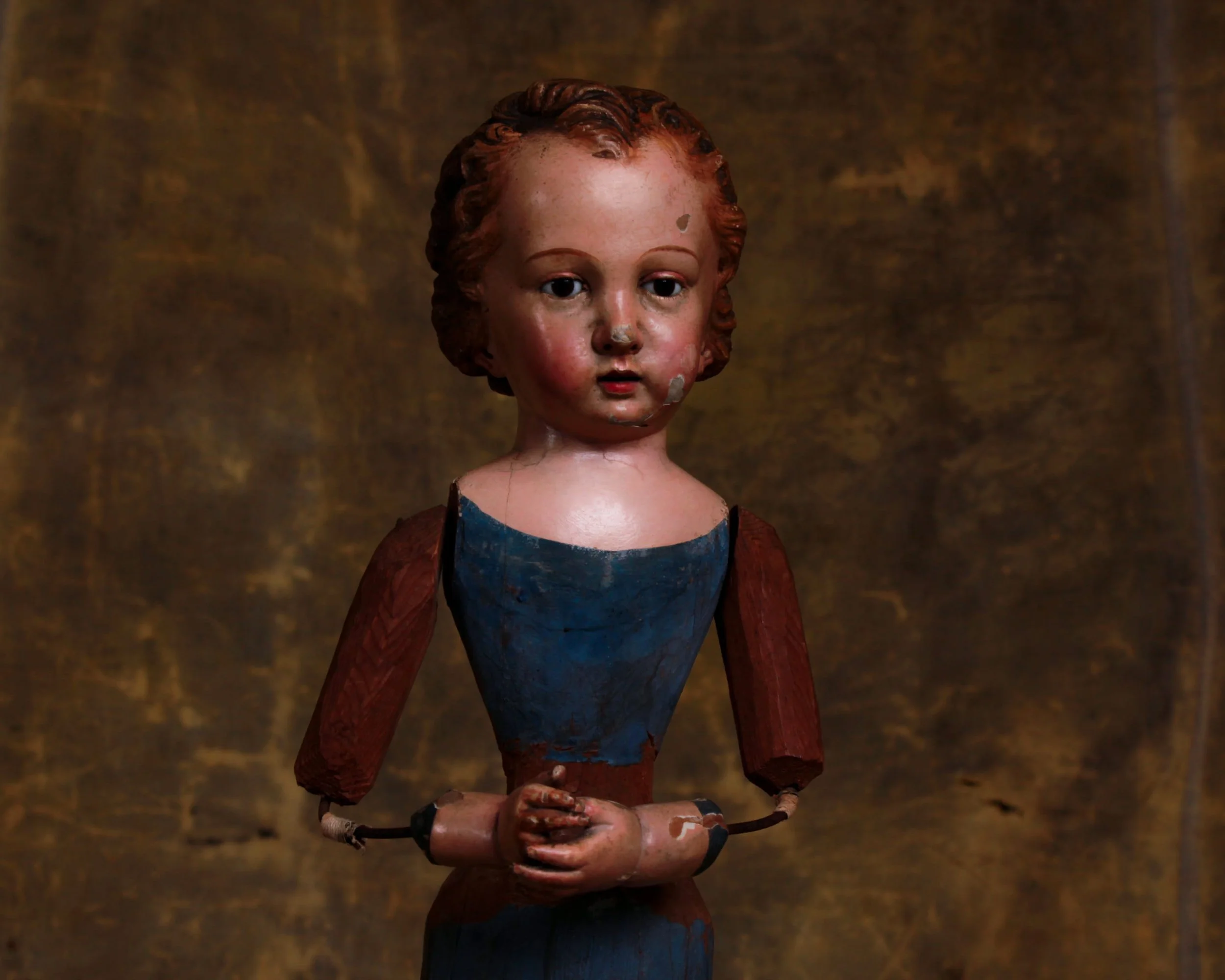
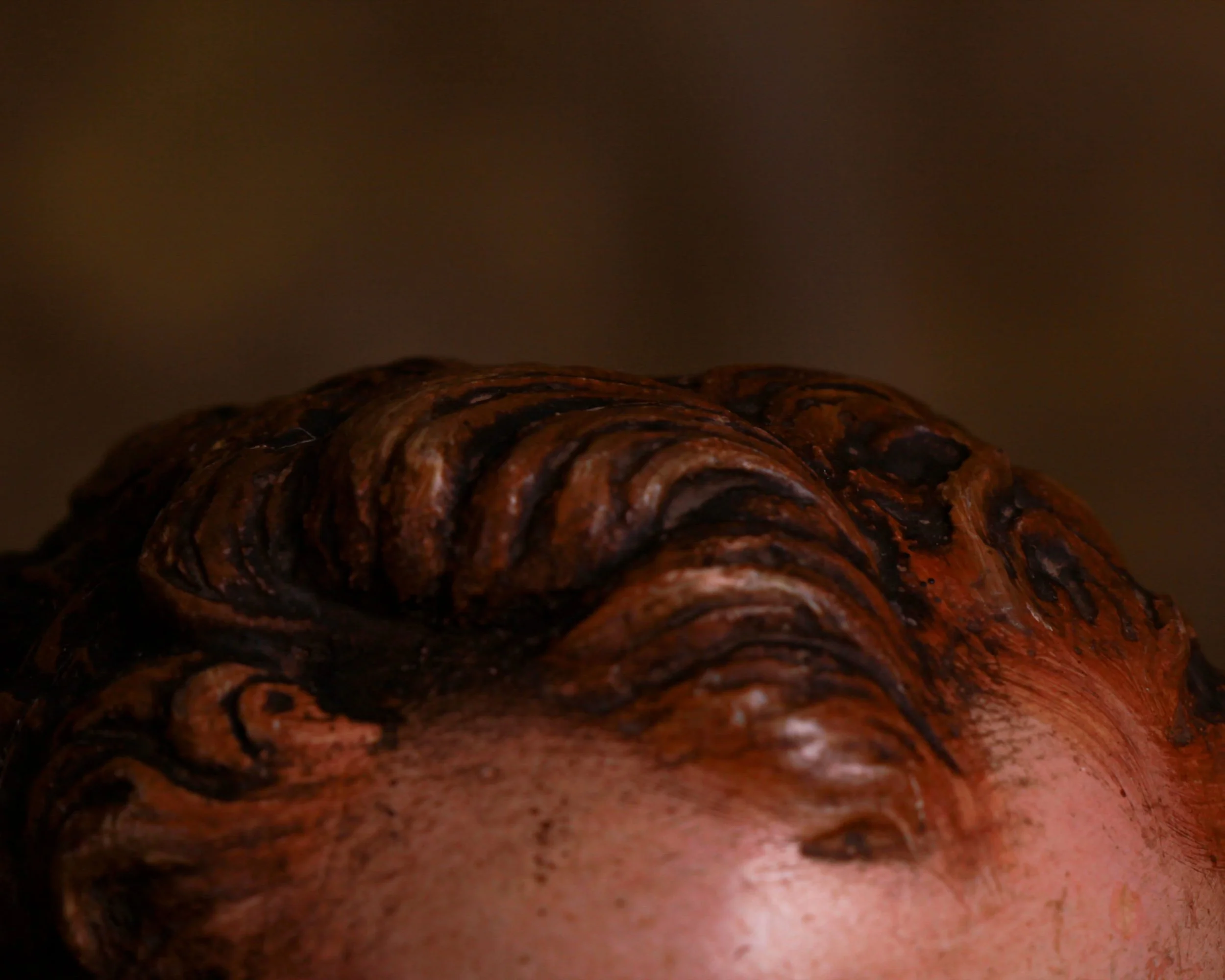
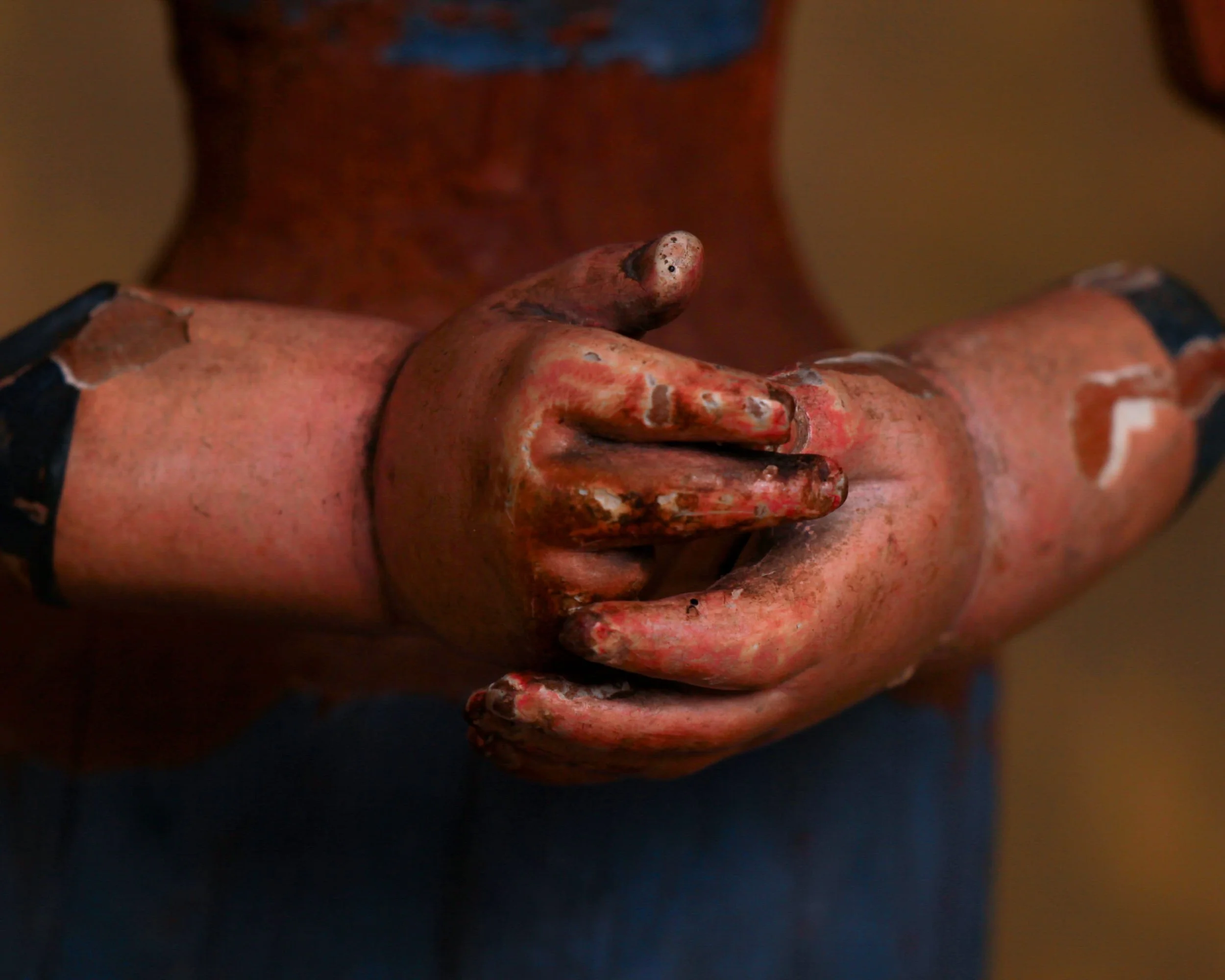
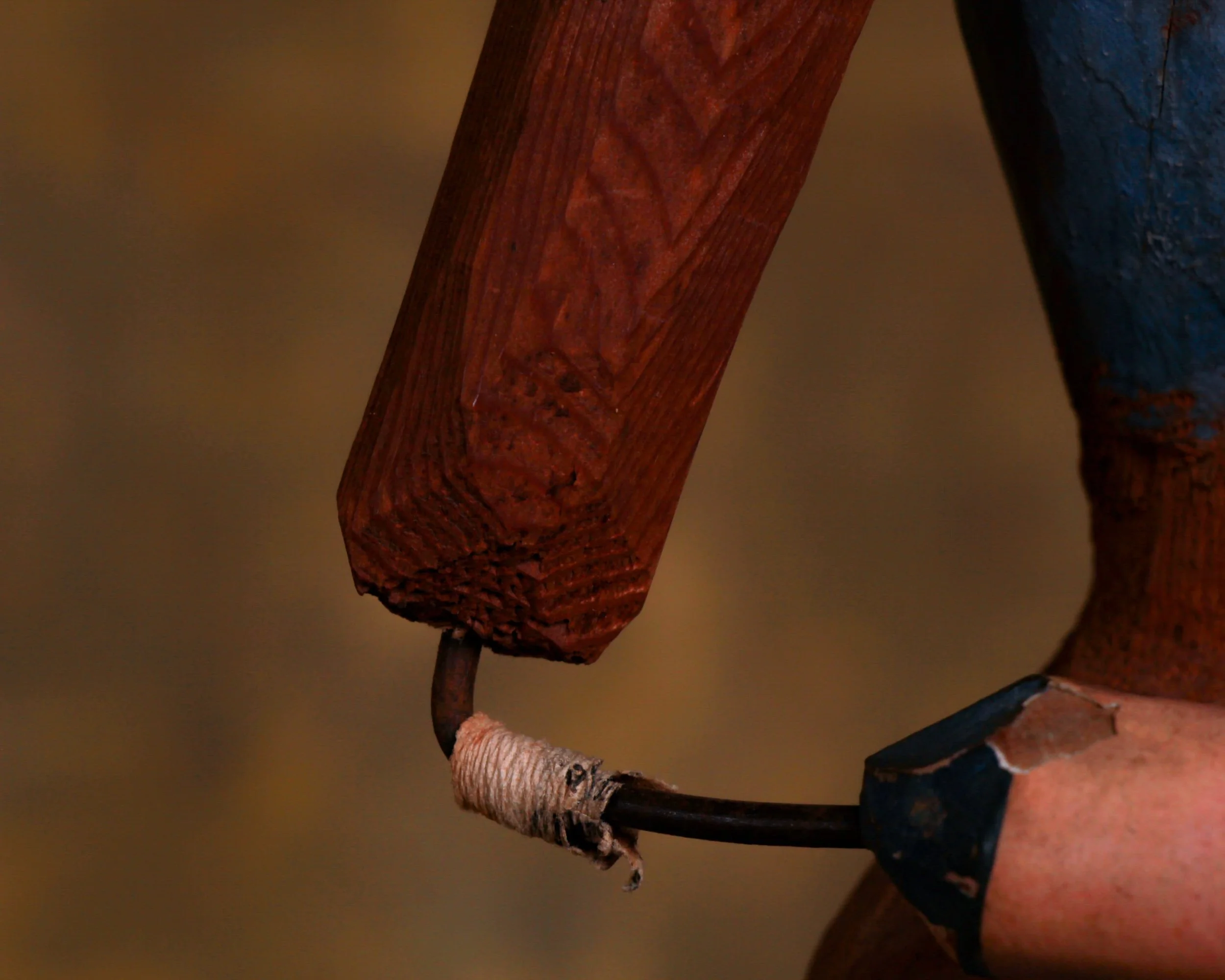
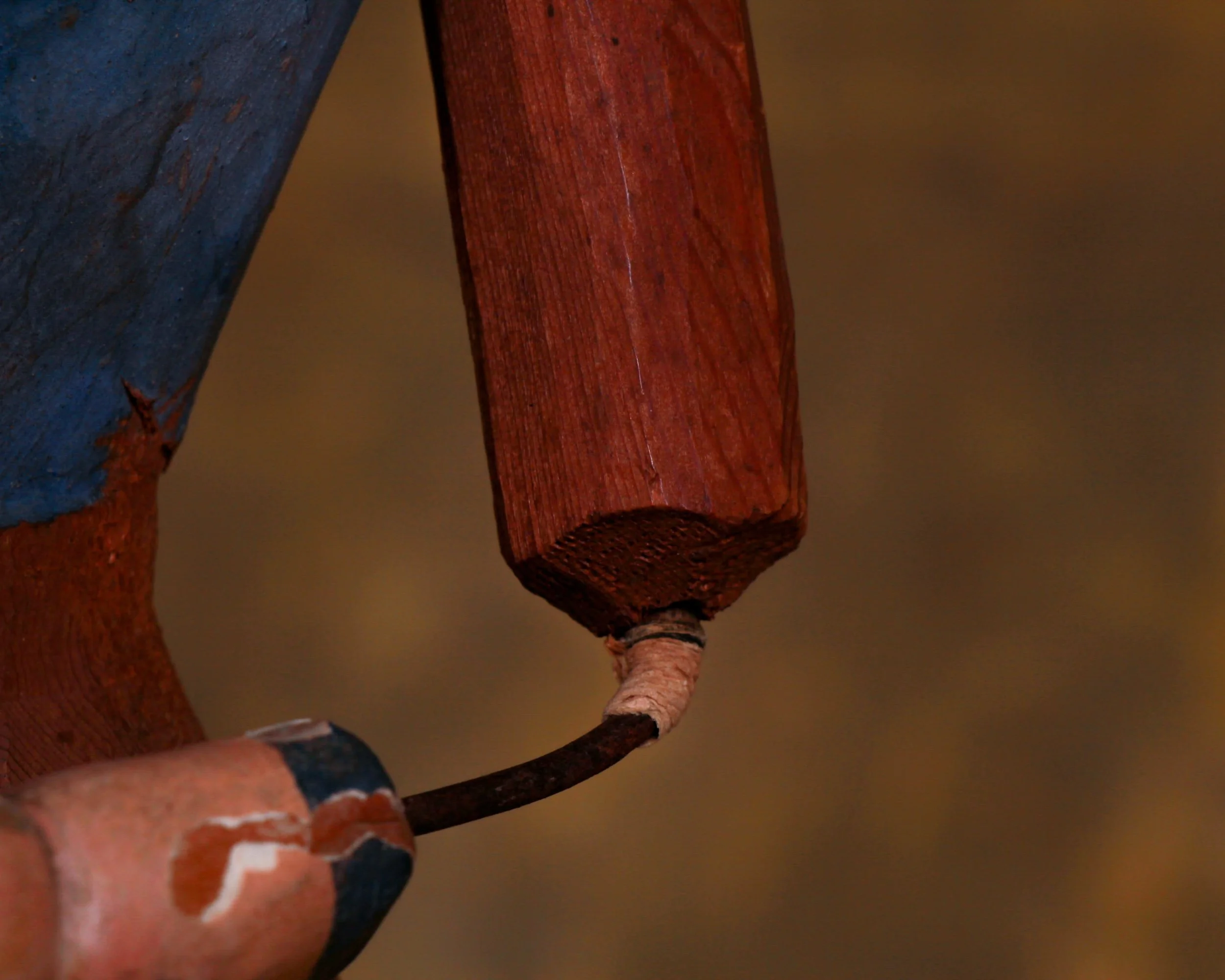
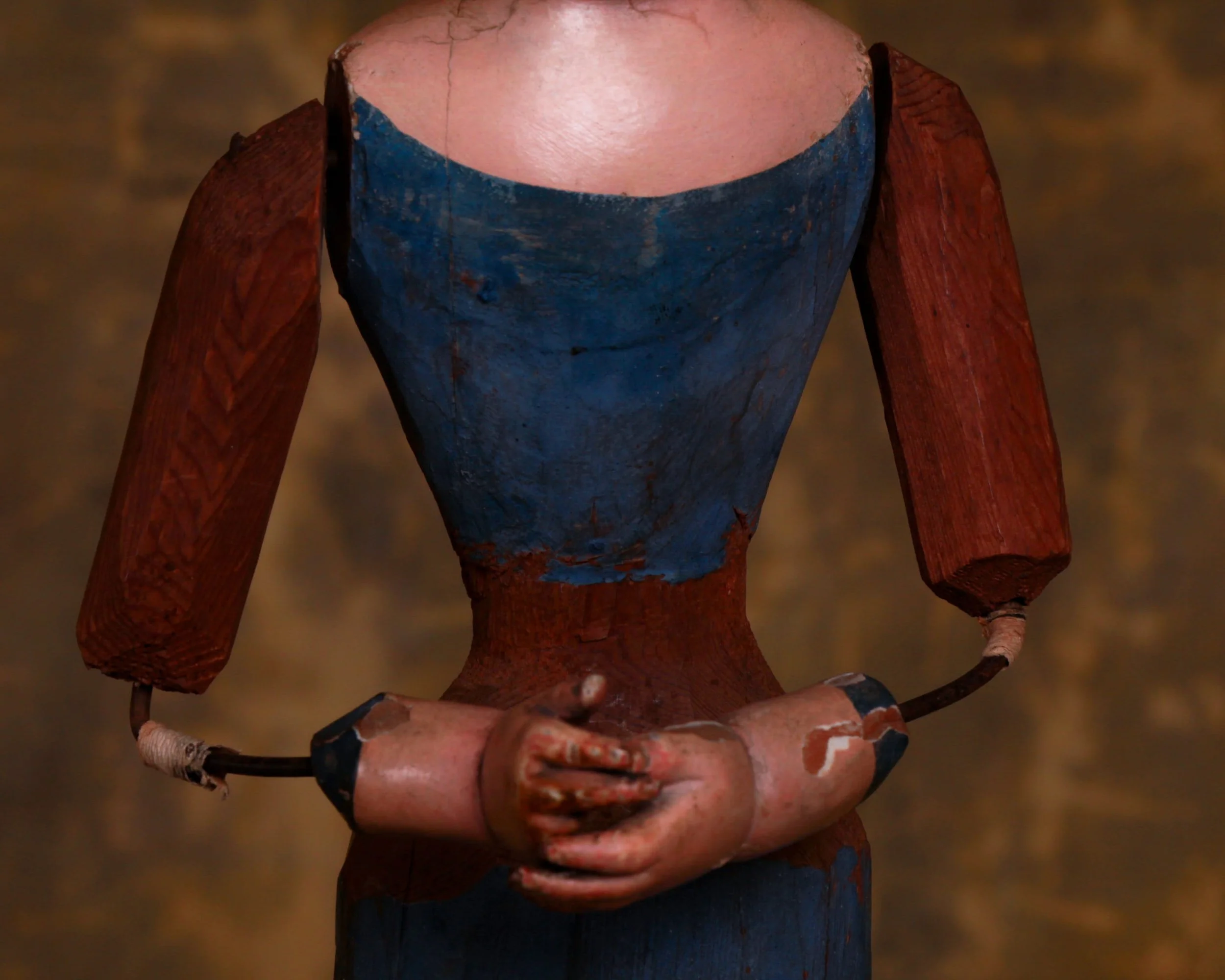
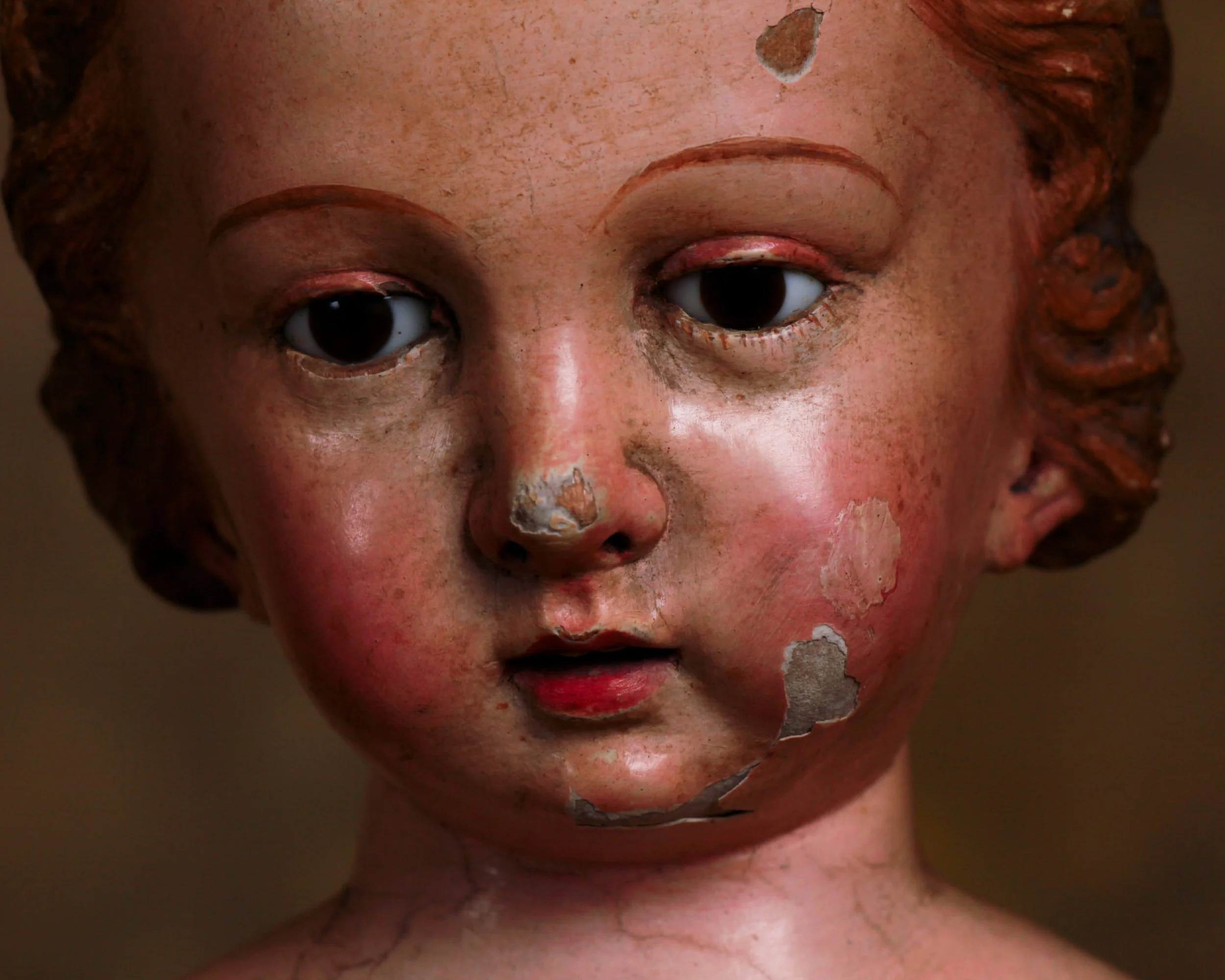
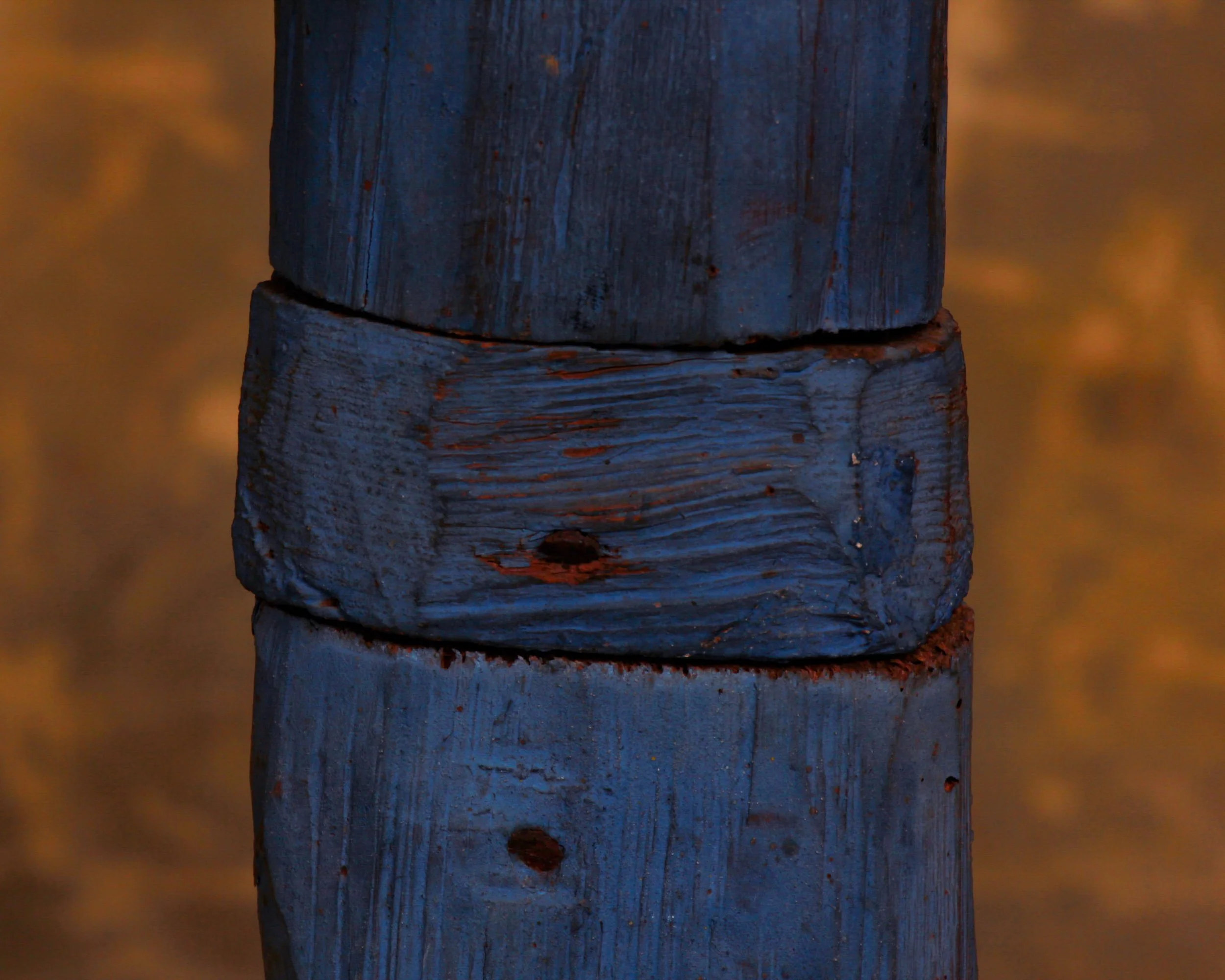
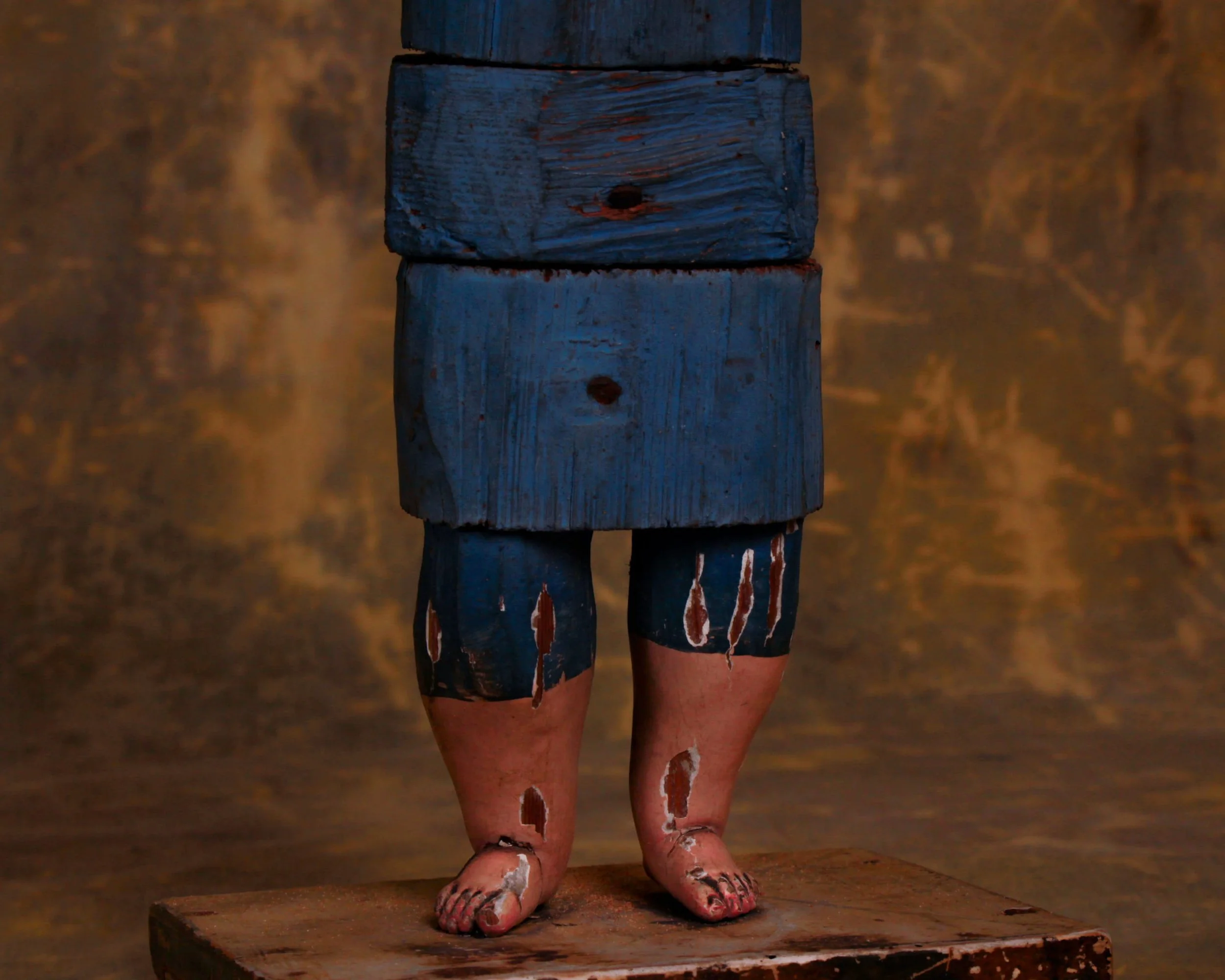
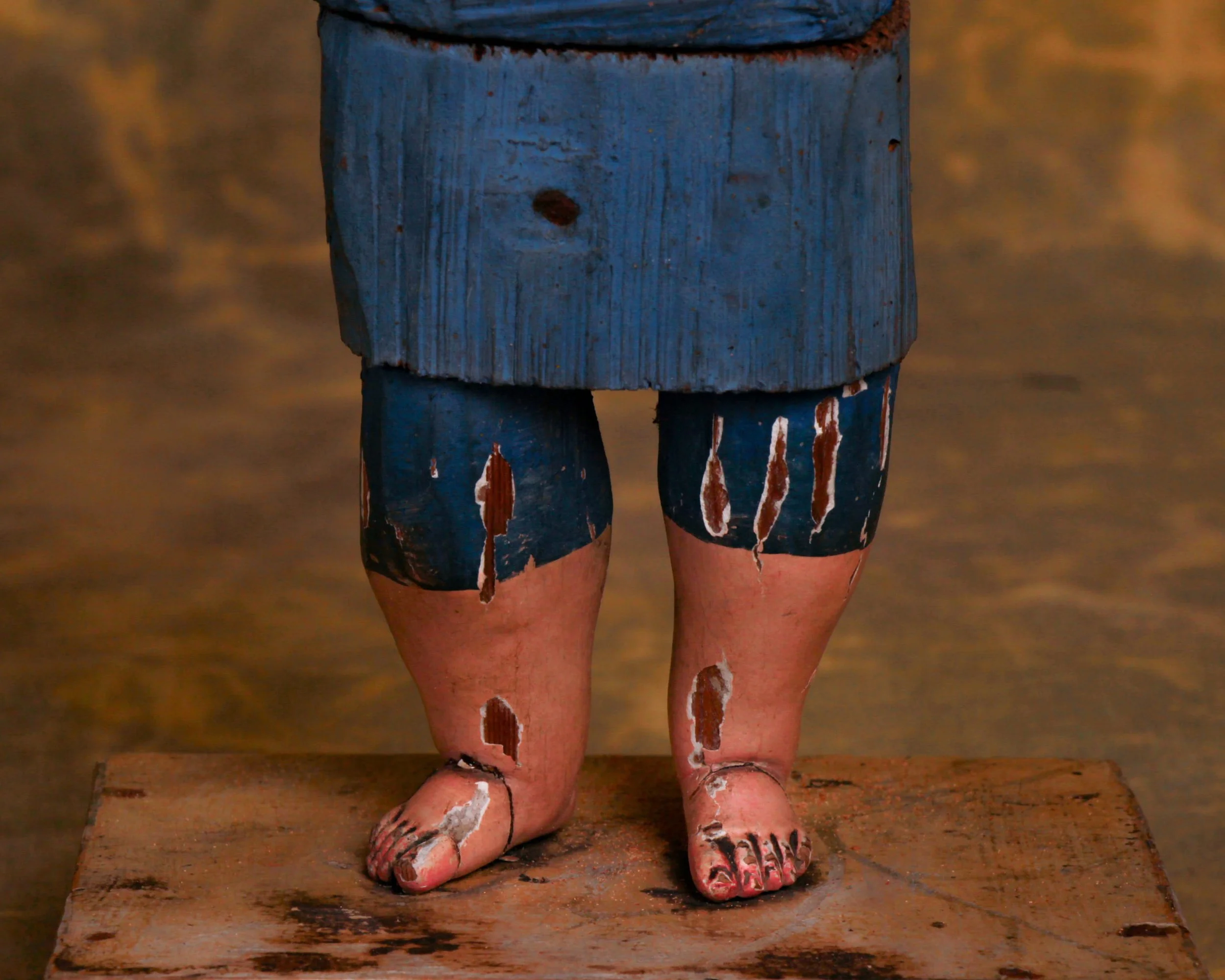

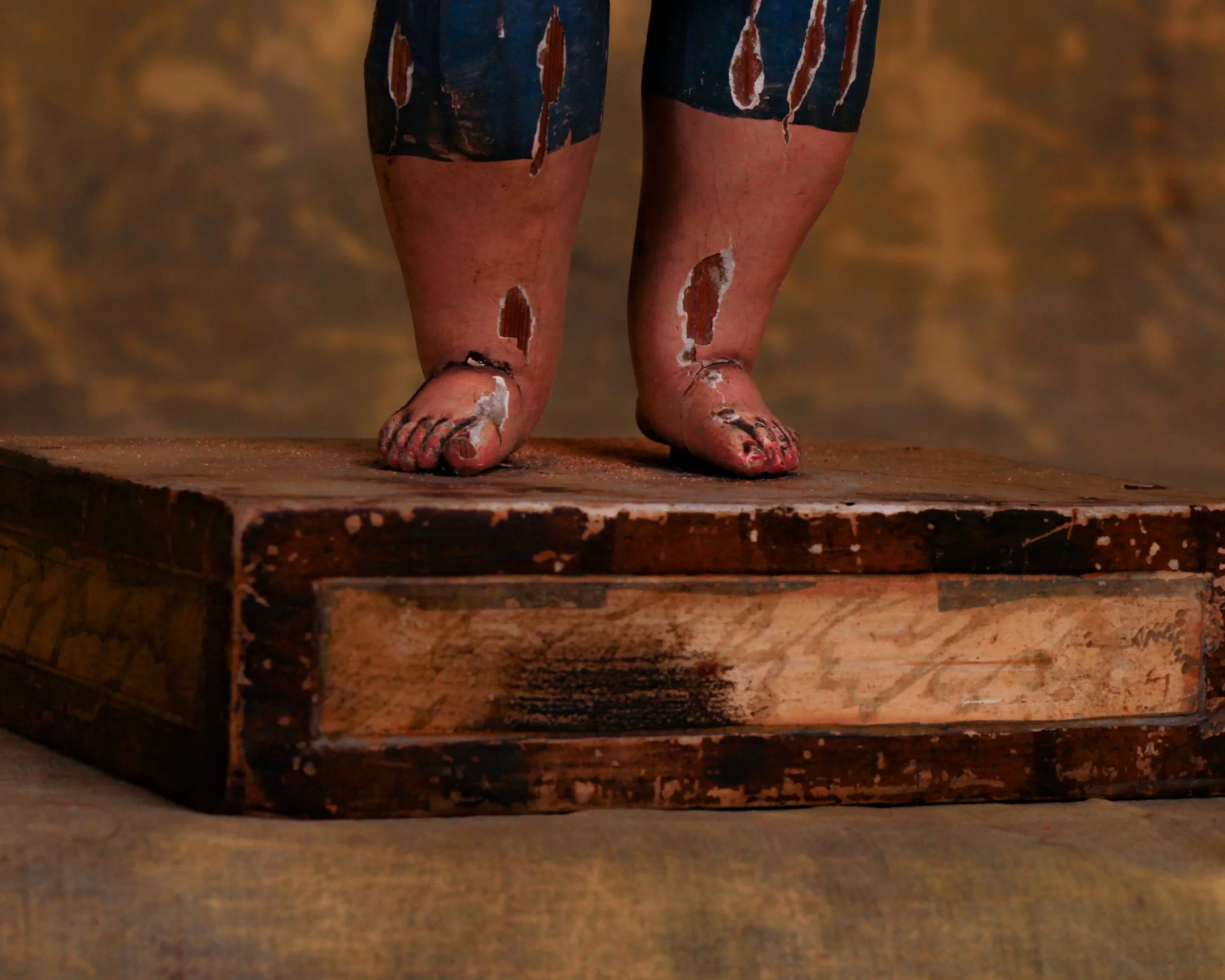
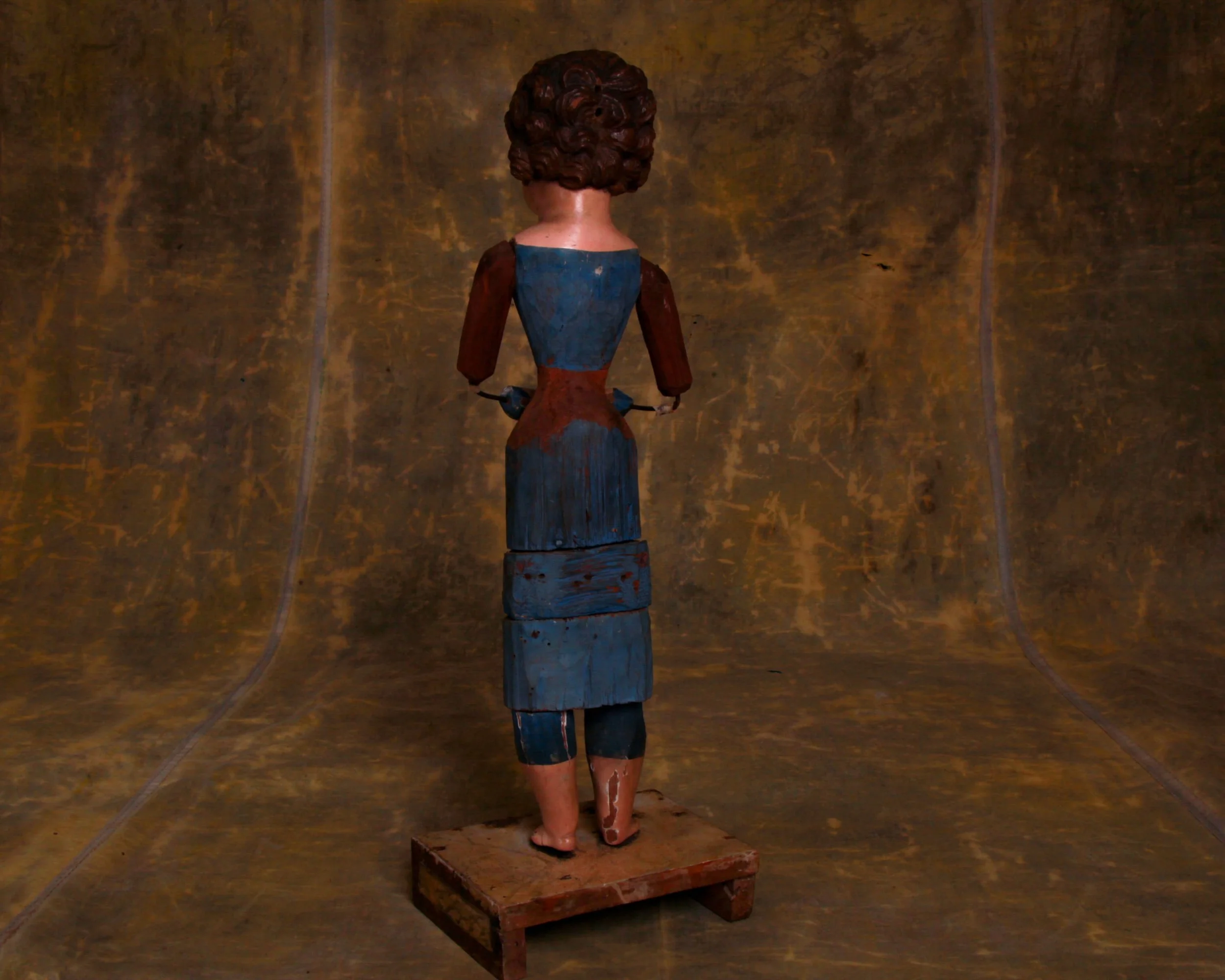
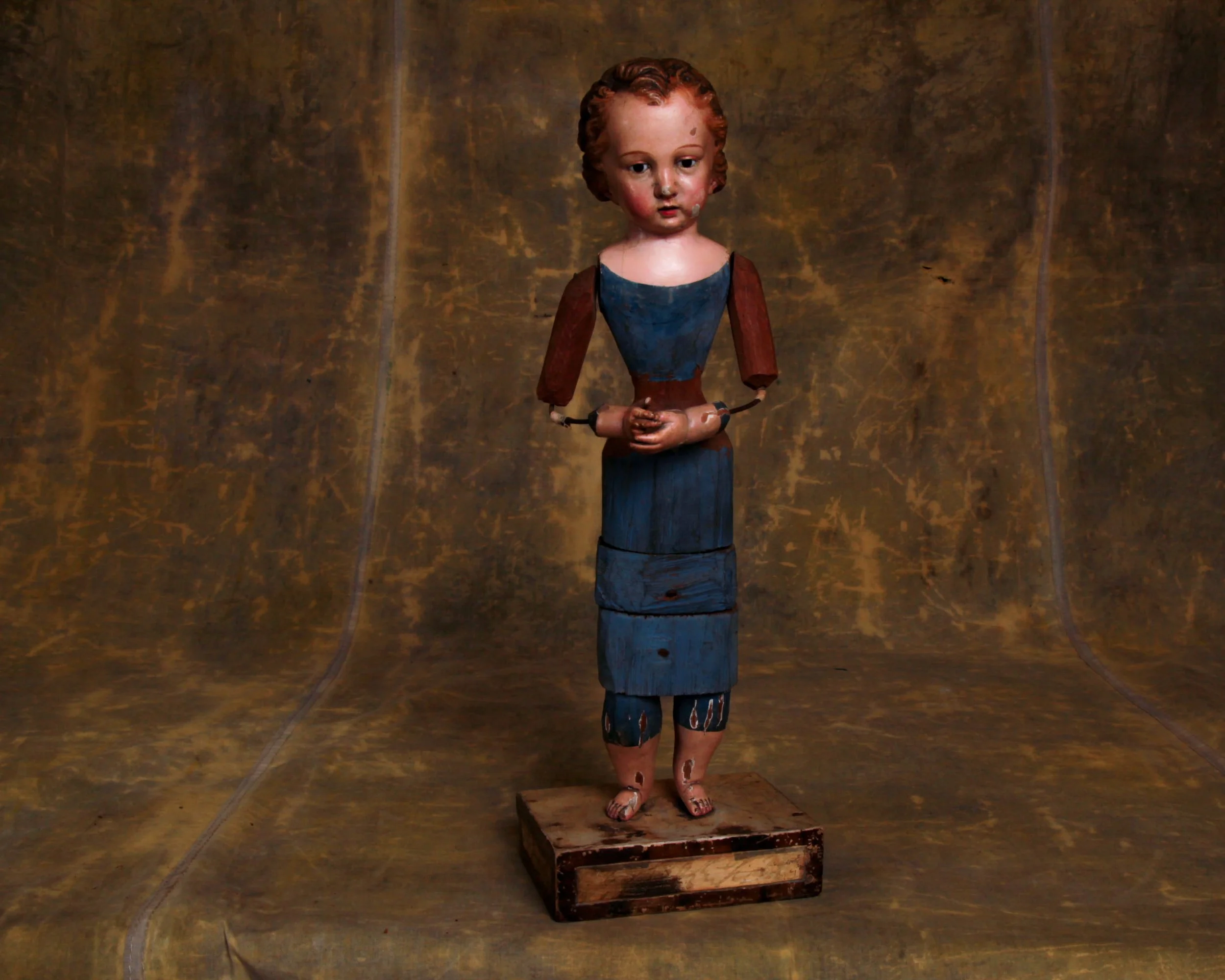
A 19th century Spanish capipote figure of the Salvator Mundi, carved in wood, built up with stucco, and finished in polychrome that has mellowed beautifully with time. Notice the proportions. The torso is elongated, the stance slightly improbable, the whole body just a touch off.
These santos figures were meant to be dressed in elaborate garments, with only the face, hands, and feet revealed to the faithful. The sculptor knew this. The anatomy was engineered for fabric, not for anatomy textbooks. Strip away the vestments and you are left with this wonderfully idiosyncratic silhouette.
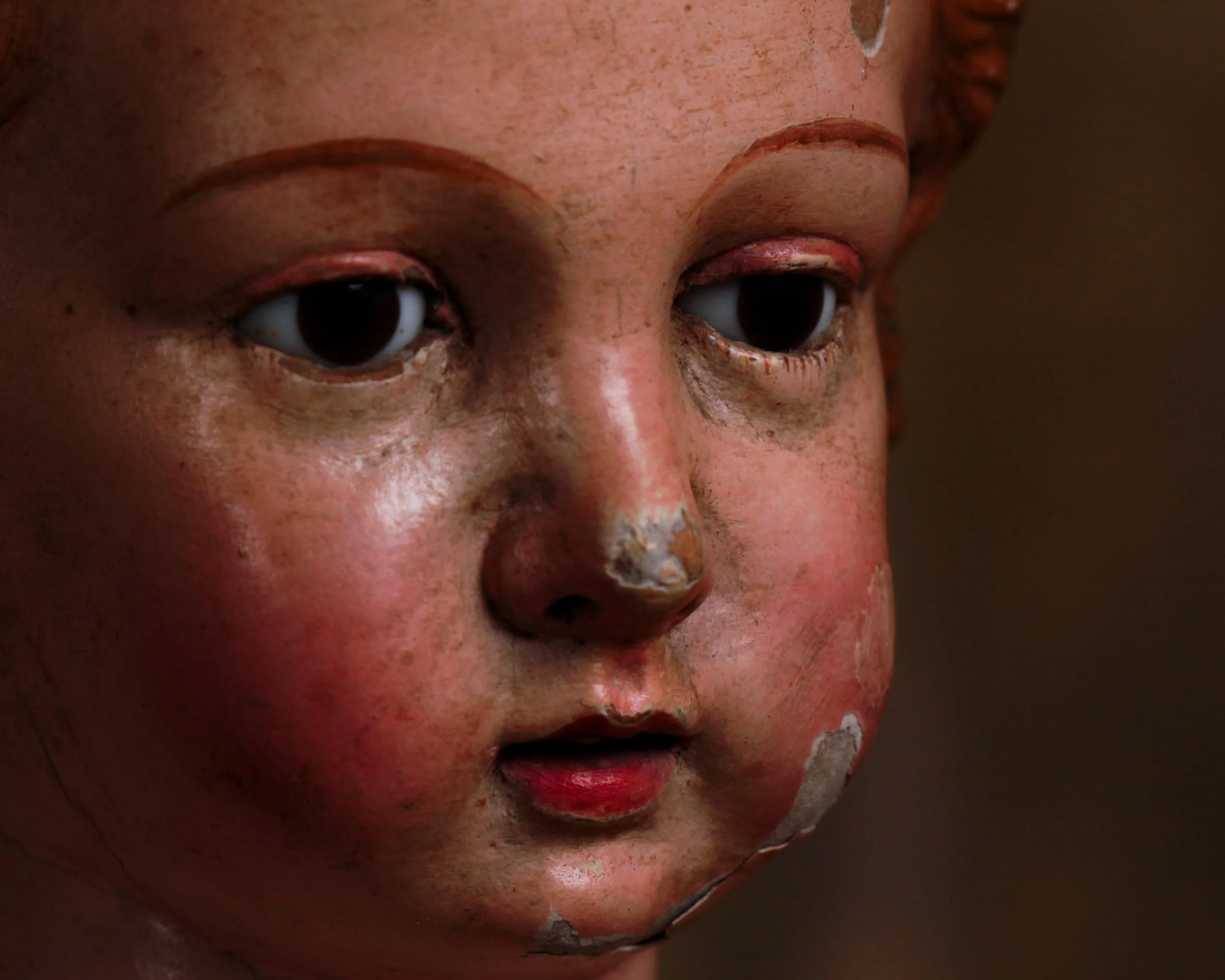
The sulphide glass eyes give the face an intensity that contrasts beautifully with the exaggerated body beneath. There is tenderness in the modeling of the cheeks, a seriousness in the gaze, and the faintest suggestion of humanity in the slightly imperfect finish.
Standing just under twenty inches tall at 19.5 inches high, and measuring approximately 6.3 inches wide by 4.75 inches deep, he has presence without overwhelming a room.
Category History
A 19th century Spanish capipote figure of the Salvator Mundi sits at the intersection of devotion and local tradition. “Salvator Mundi”—Christ as the Savior of the World—was a widely used iconography across Europe, typically shown blessing with one hand and holding a globe in the other. In Spain, these figures often took on regional character, shaped by workshop practices and religious customs.
The capipote detail—evoking the tall, conical hood associated with penitential processions—adds a distinctly Spanish layer. It ties the figure to Holy Week traditions, where symbolism, costume, and ritual all work together to create a powerful visual language.
Carved in wood and often polychromed, these figures were meant to be seen up close—faces expressive, surfaces worn from handling or time. They weren’t just decorative; they were part of lived belief.
What makes them compelling now is that blend of universal imagery and local identity. Familiar subject, interpreted through a very specific cultural lens.
A 19th century Spanish capipote figure of the Salvator Mundi, carved in wood, built up with stucco, and finished in polychrome that has mellowed beautifully with time. Notice the proportions. The torso is elongated, the stance slightly improbable, the whole body just a touch off.
These santos figures were meant to be dressed in elaborate garments, with only the face, hands, and feet revealed to the faithful. The sculptor knew this. The anatomy was engineered for fabric, not for anatomy textbooks. Strip away the vestments and you are left with this wonderfully idiosyncratic silhouette.
The sulphide glass eyes give the face an intensity that contrasts beautifully with the exaggerated body beneath. There is tenderness in the modeling of the cheeks, a seriousness in the gaze, and the faintest suggestion of humanity in the slightly imperfect finish.
Standing just under twenty inches tall at 19.5 inches high, and measuring approximately 6.3 inches wide by 4.75 inches deep, he has presence without overwhelming a room.
Category History
A 19th century Spanish capipote figure of the Salvator Mundi sits at the intersection of devotion and local tradition. “Salvator Mundi”—Christ as the Savior of the World—was a widely used iconography across Europe, typically shown blessing with one hand and holding a globe in the other. In Spain, these figures often took on regional character, shaped by workshop practices and religious customs.
The capipote detail—evoking the tall, conical hood associated with penitential processions—adds a distinctly Spanish layer. It ties the figure to Holy Week traditions, where symbolism, costume, and ritual all work together to create a powerful visual language.
Carved in wood and often polychromed, these figures were meant to be seen up close—faces expressive, surfaces worn from handling or time. They weren’t just decorative; they were part of lived belief.
What makes them compelling now is that blend of universal imagery and local identity. Familiar subject, interpreted through a very specific cultural lens.