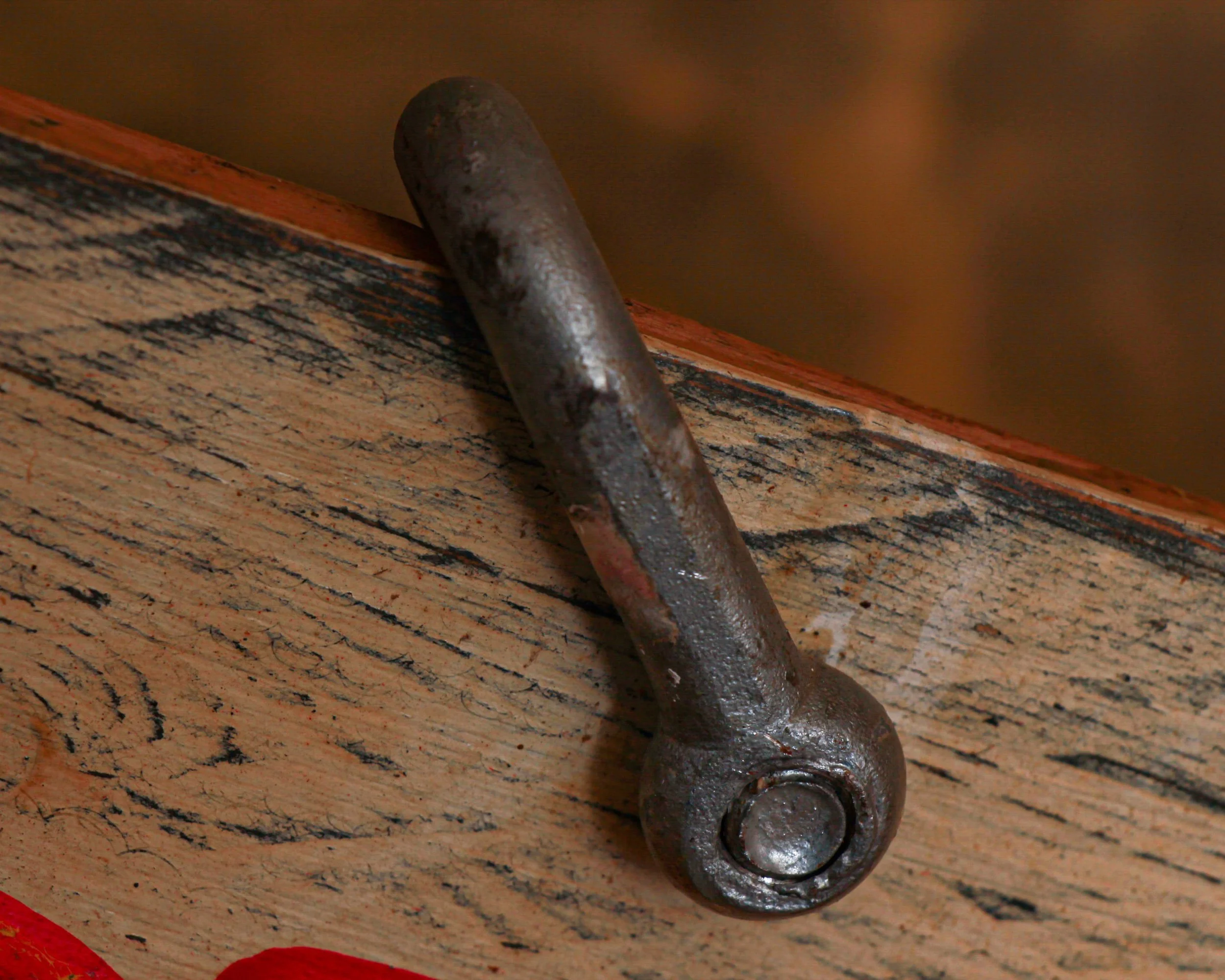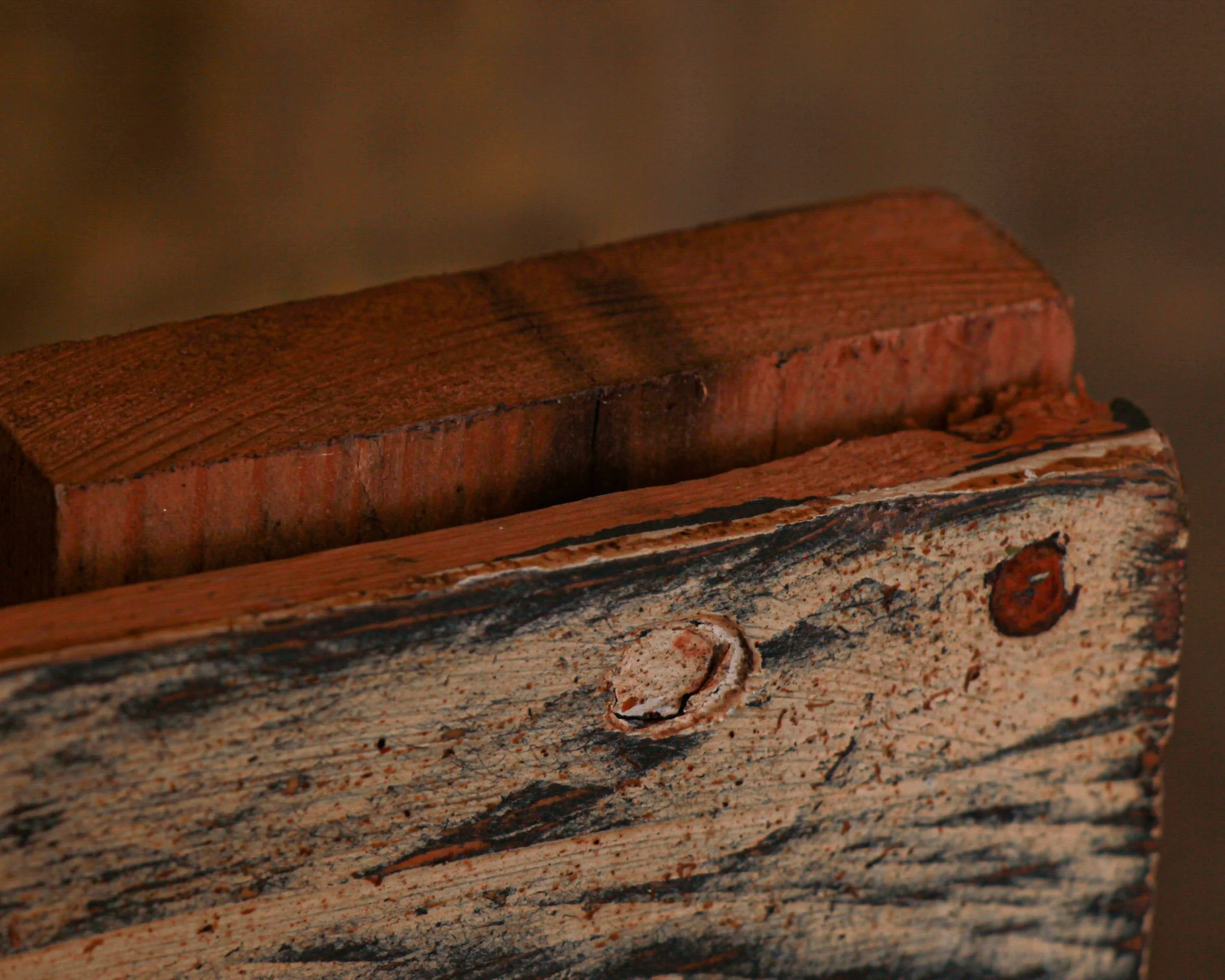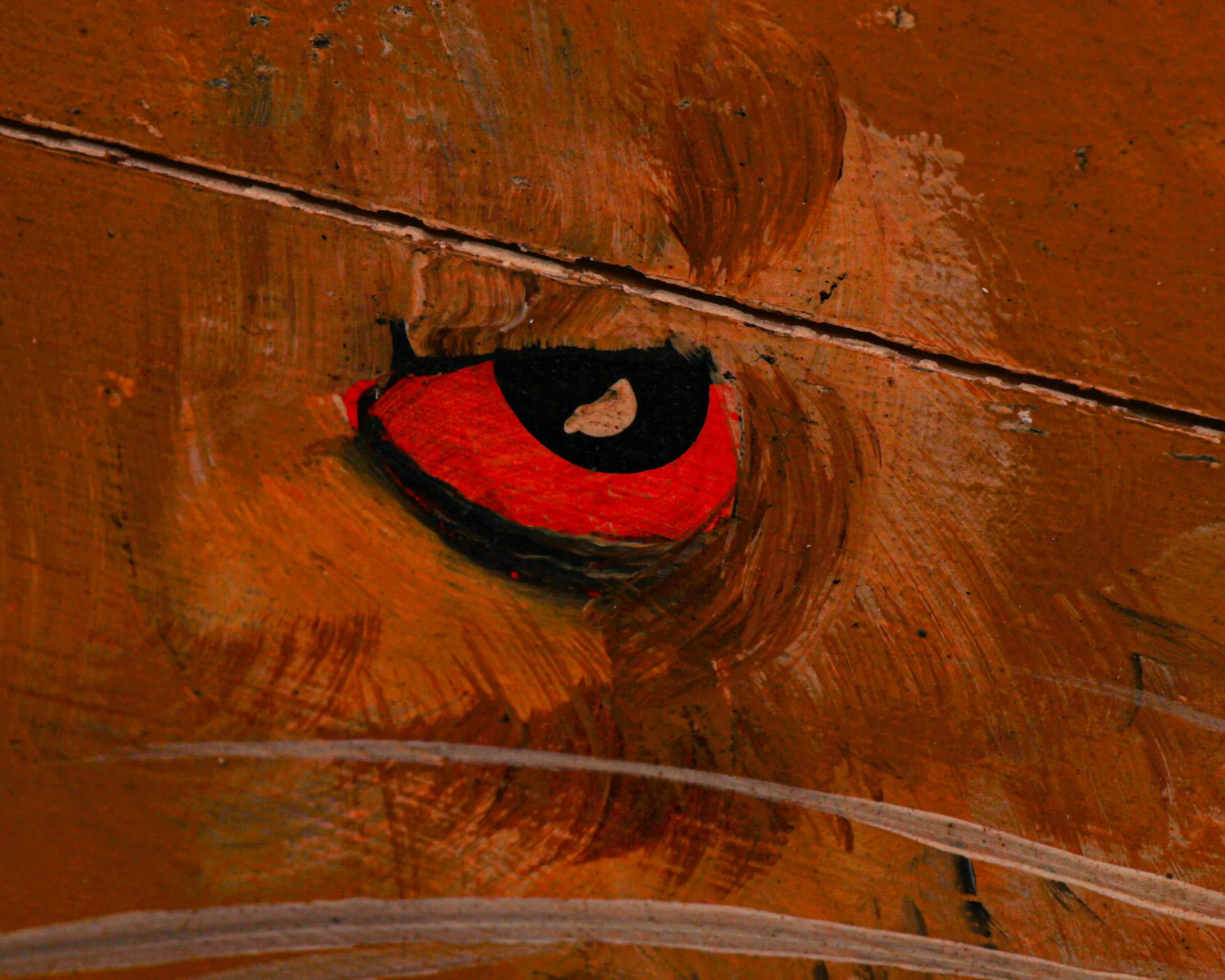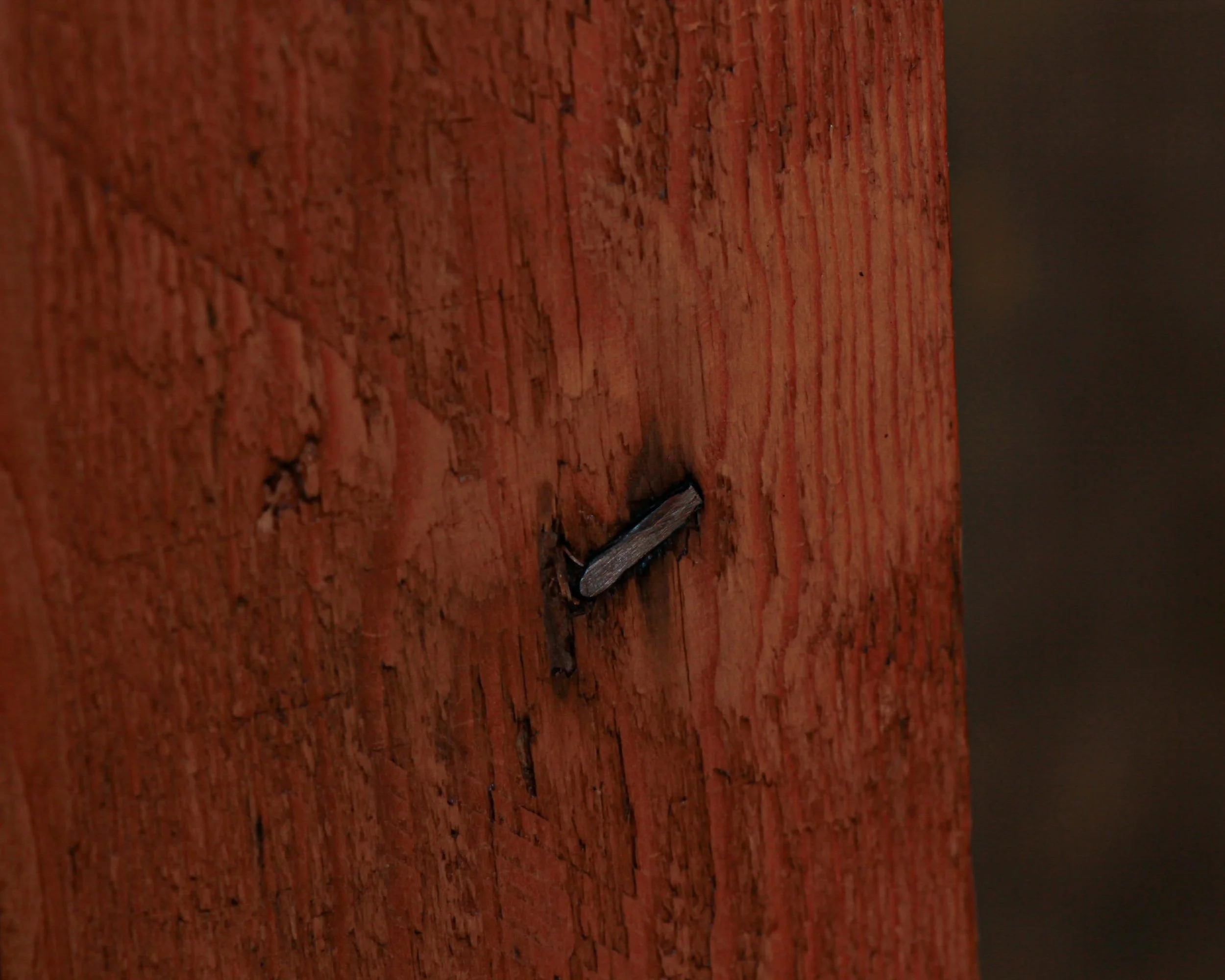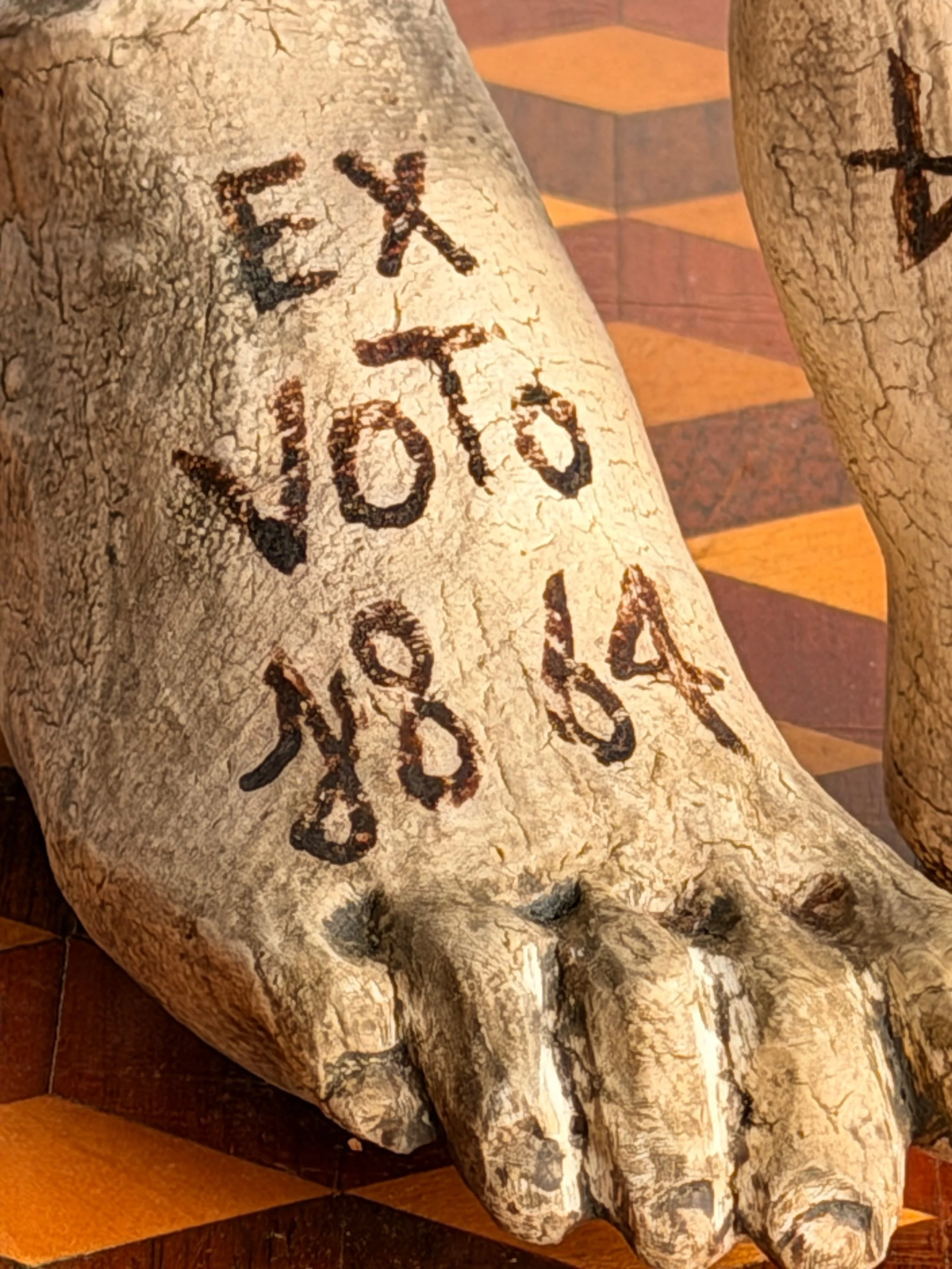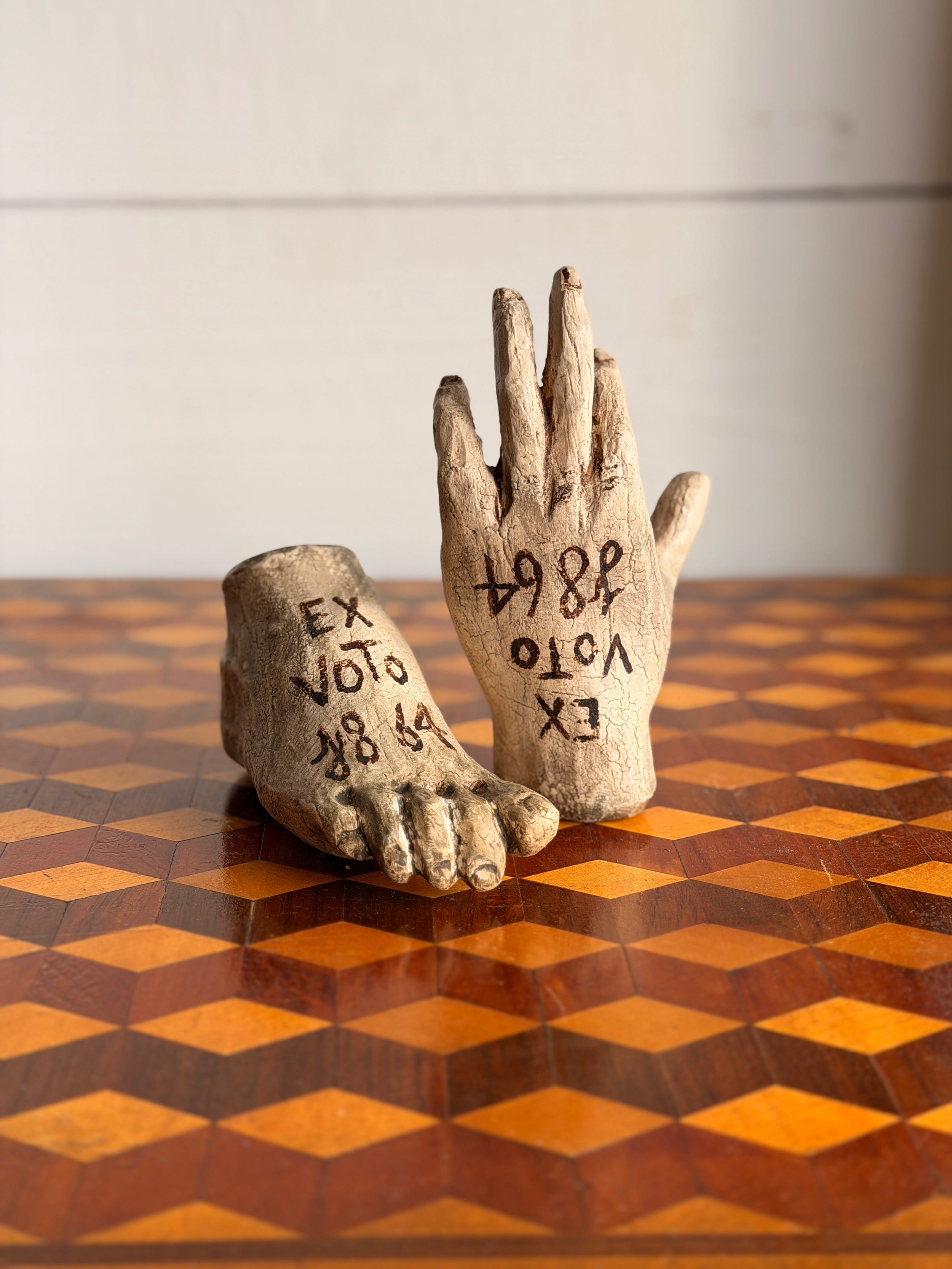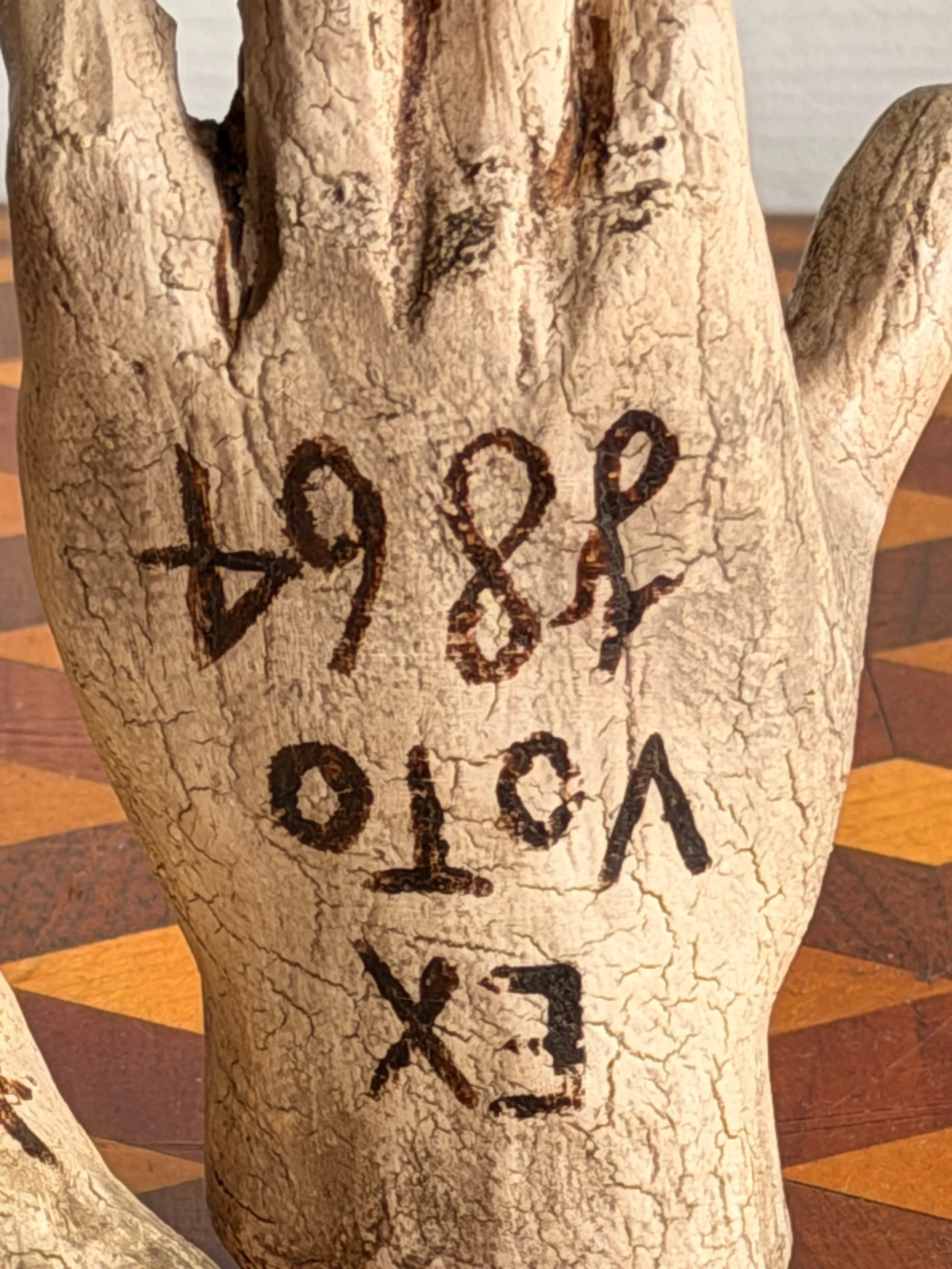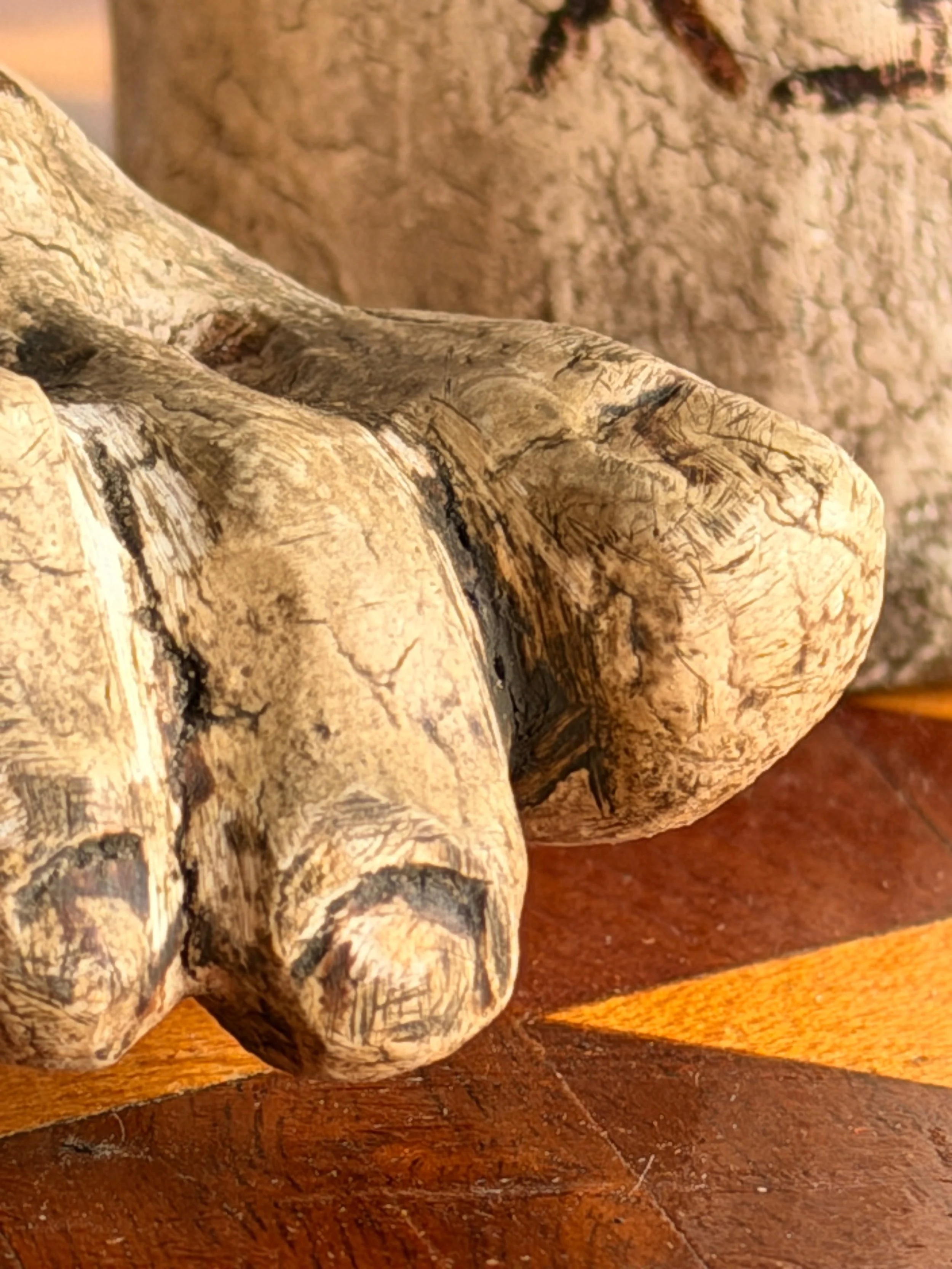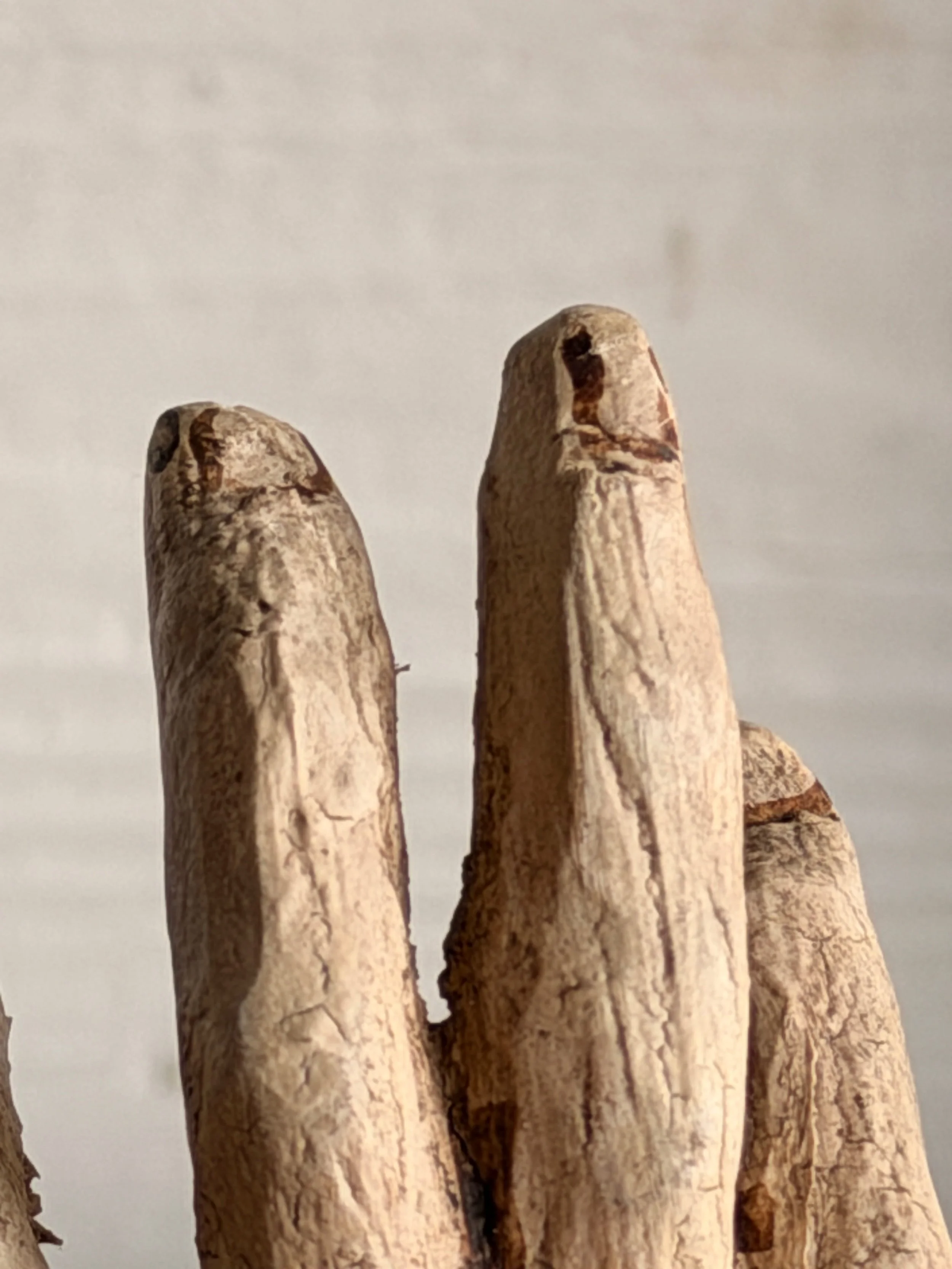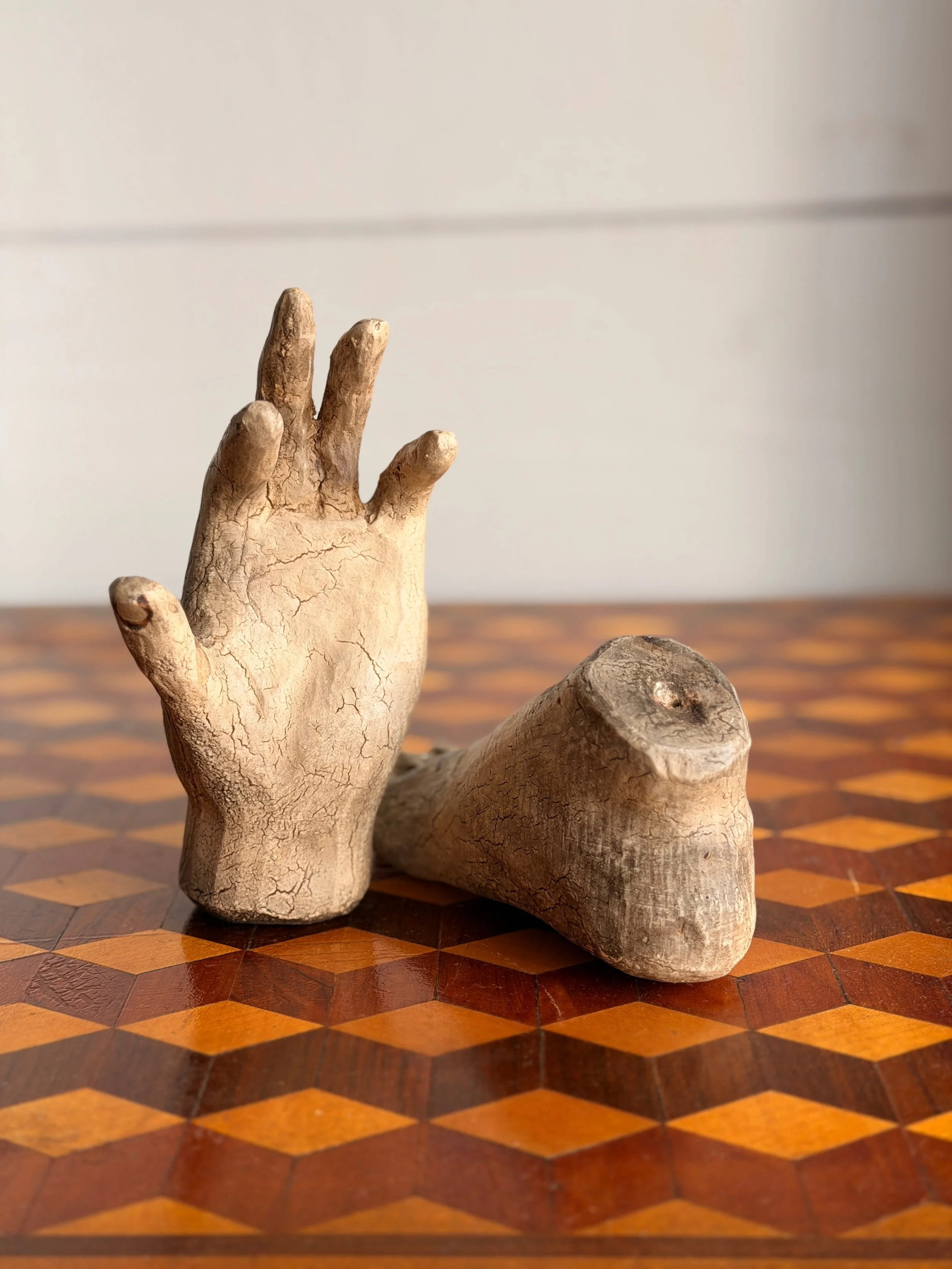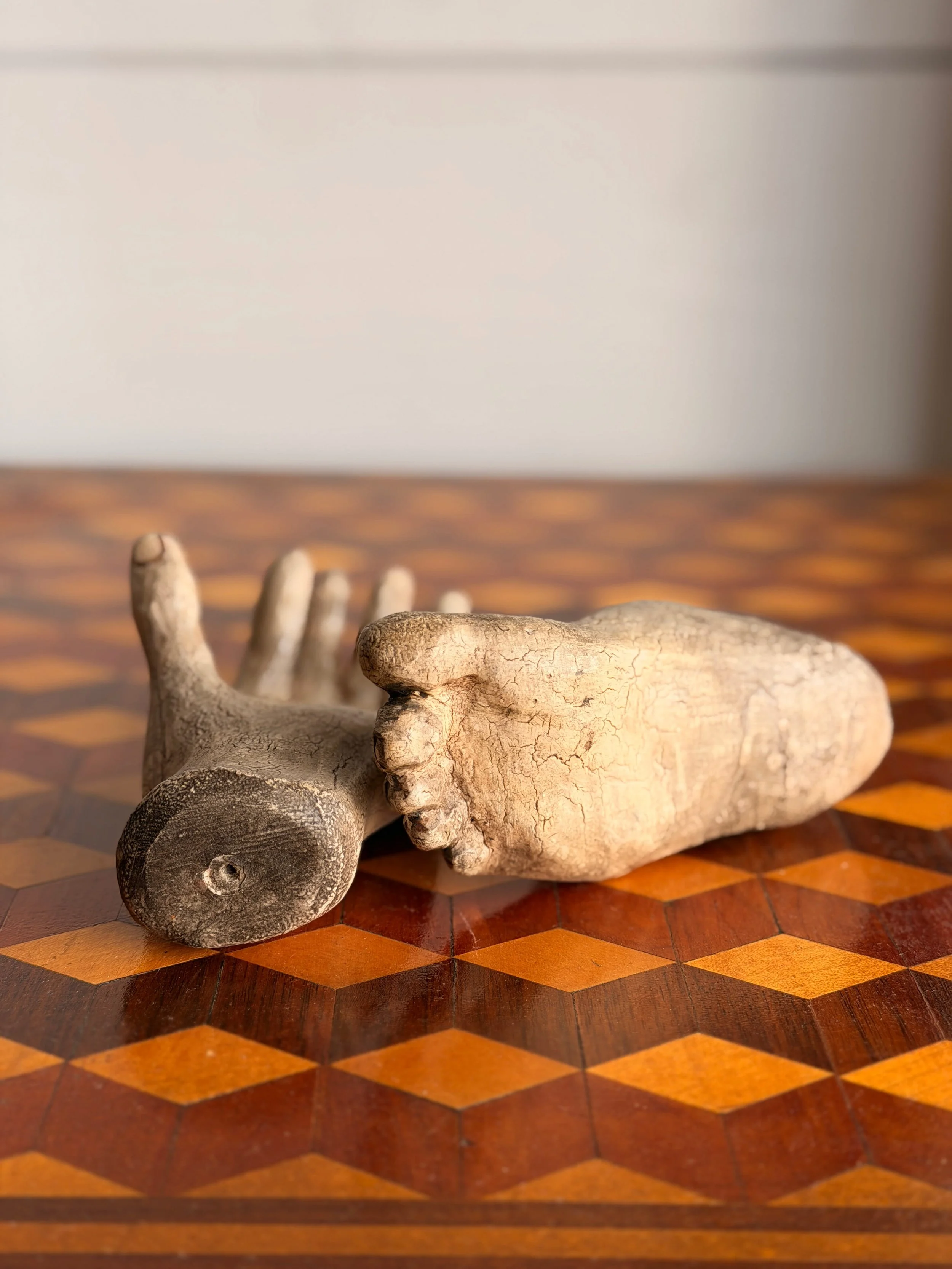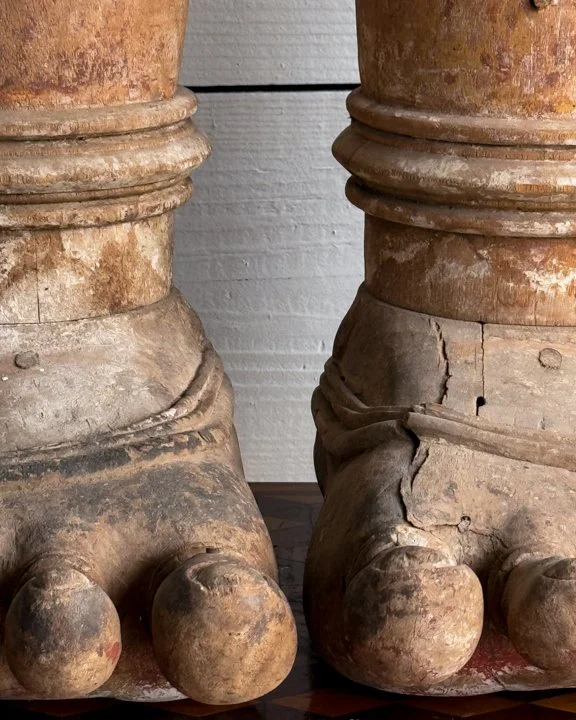

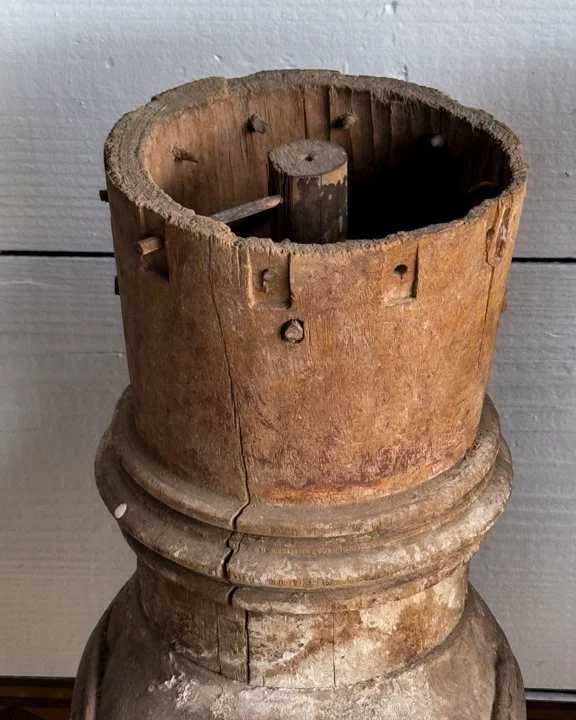
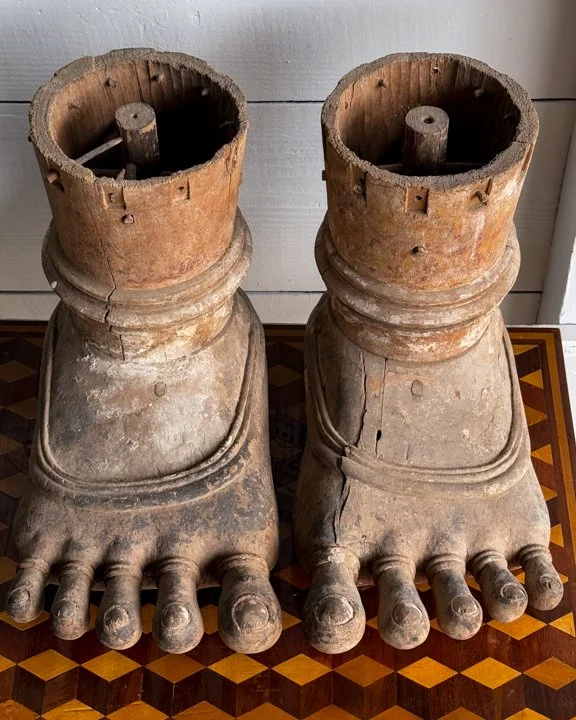
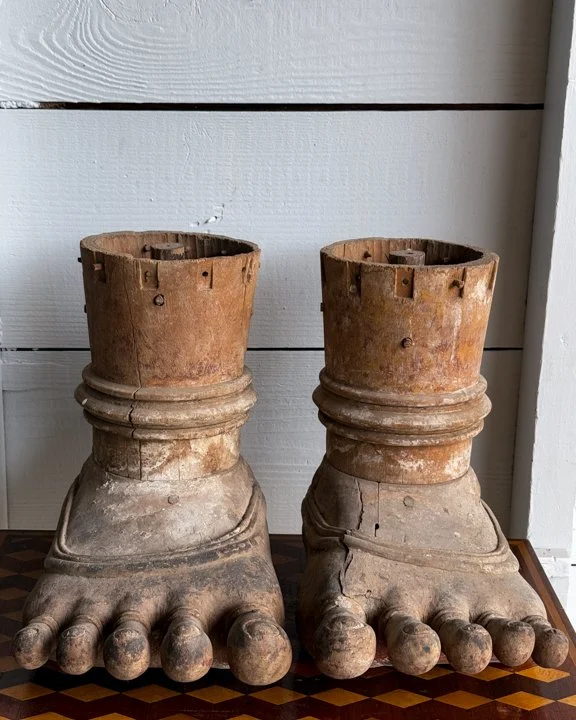
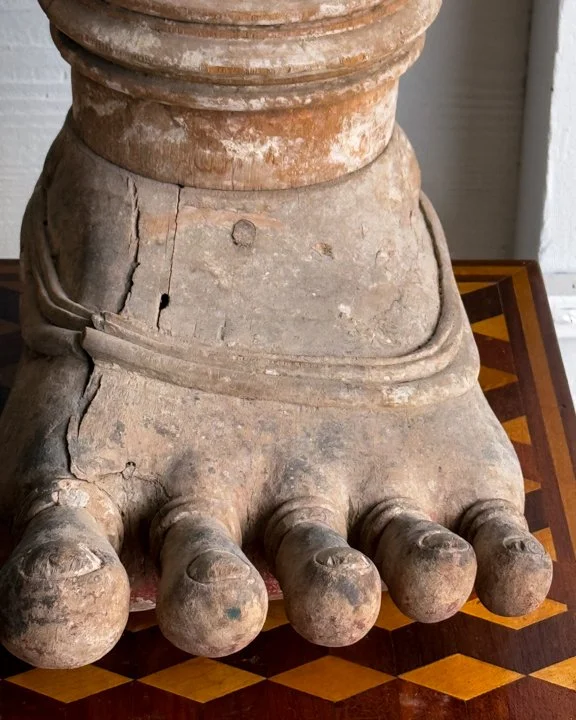
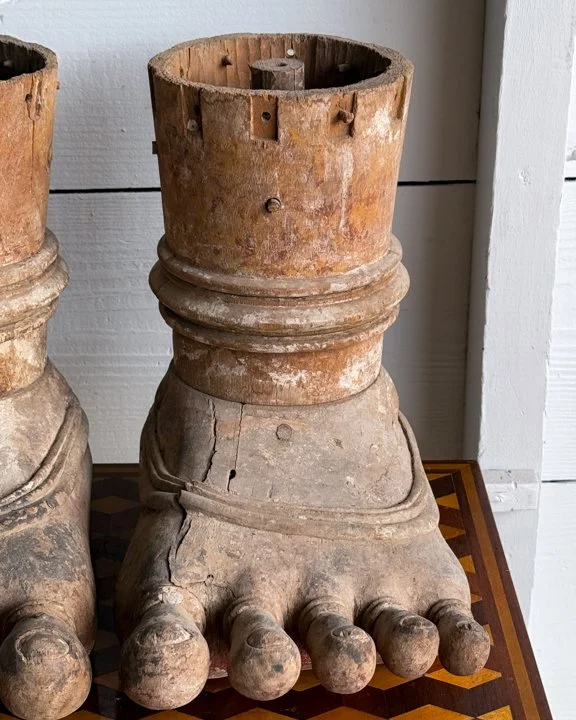
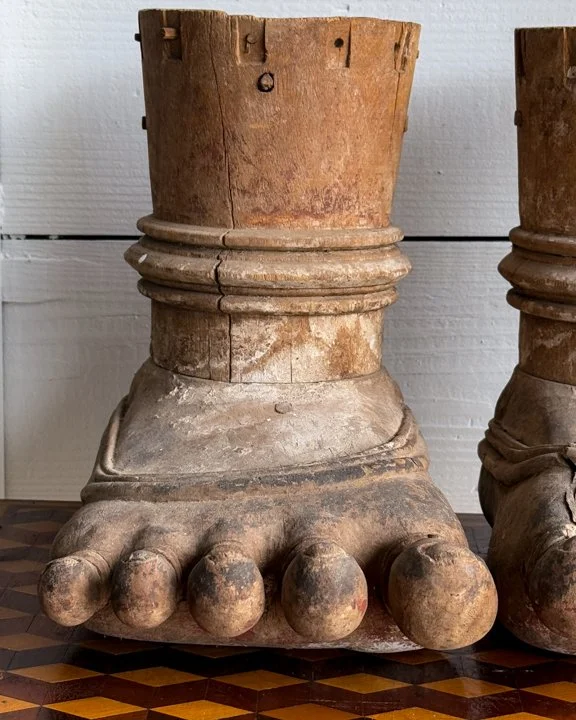
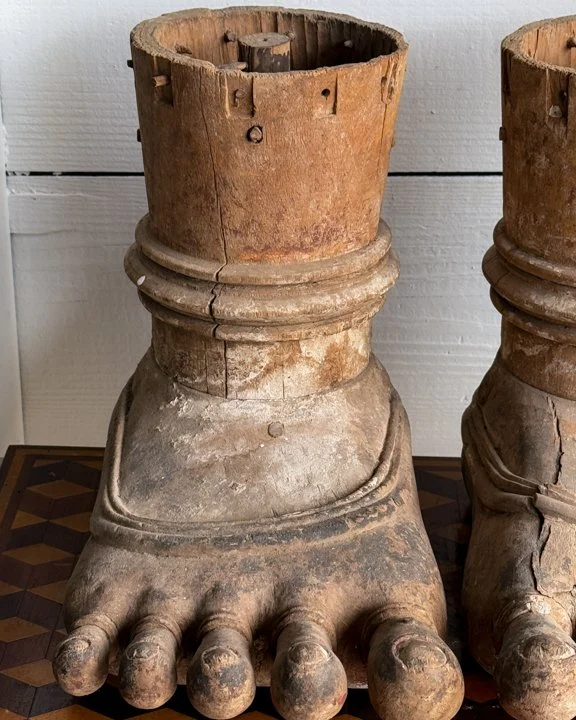
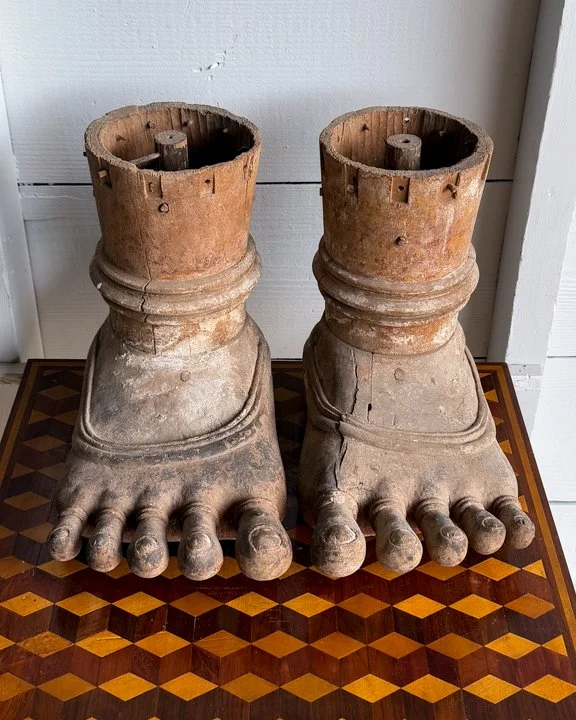
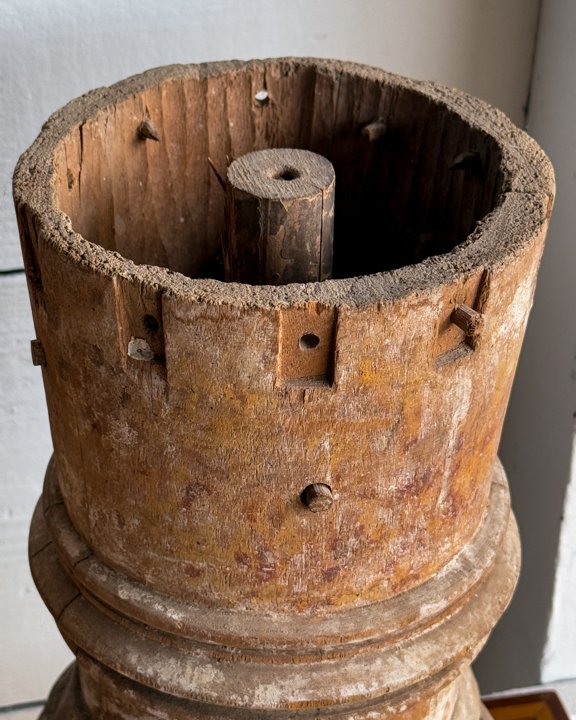
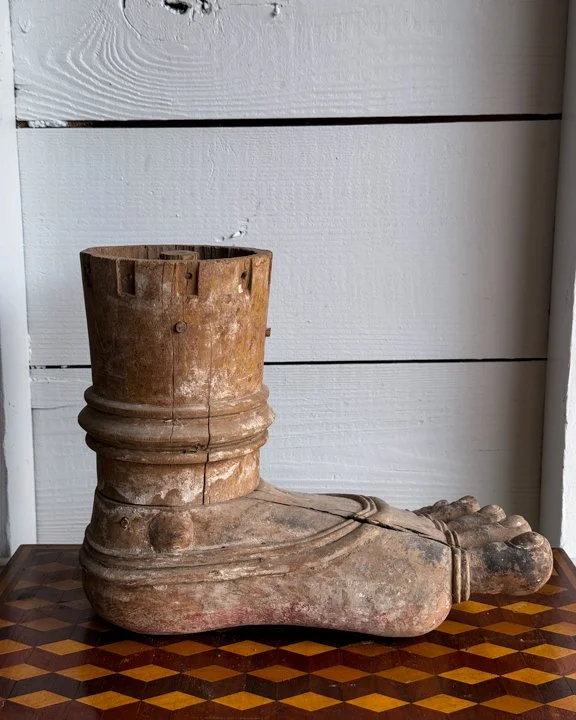
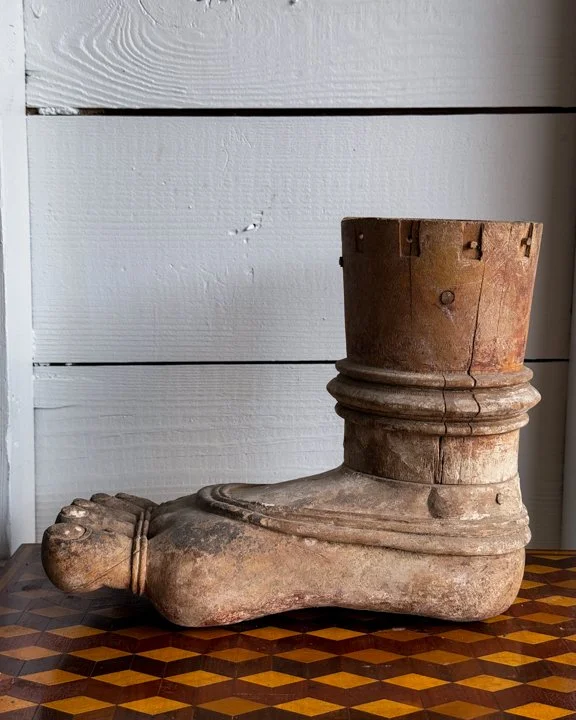
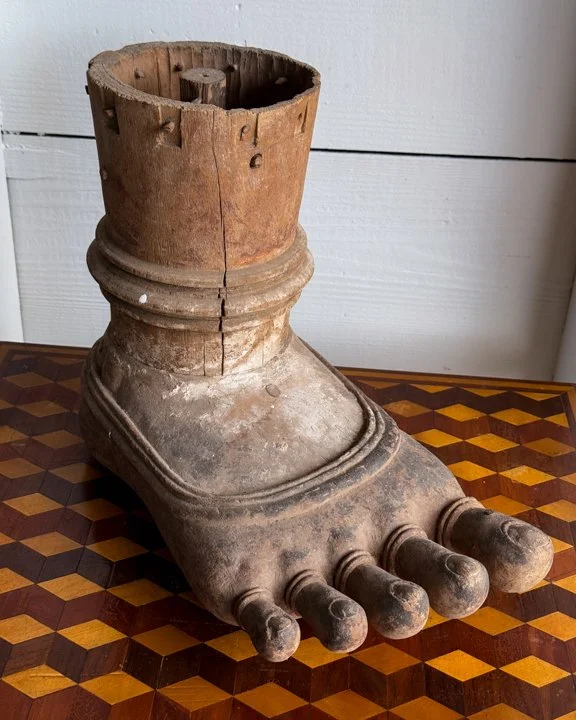
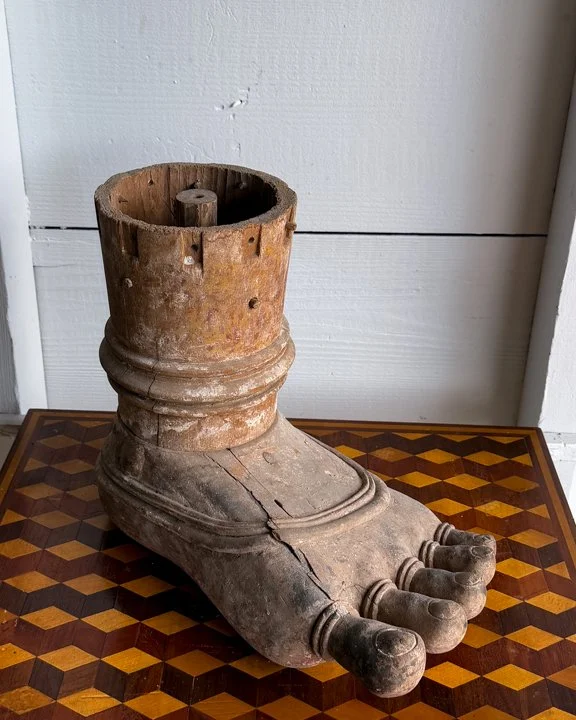
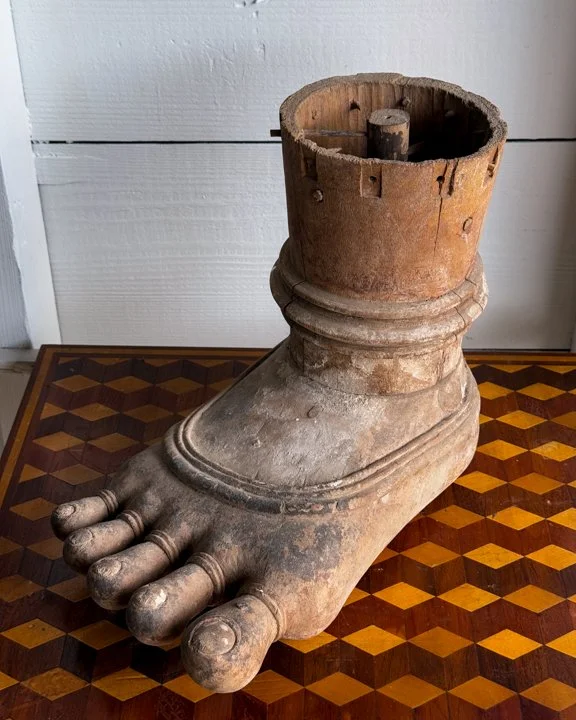
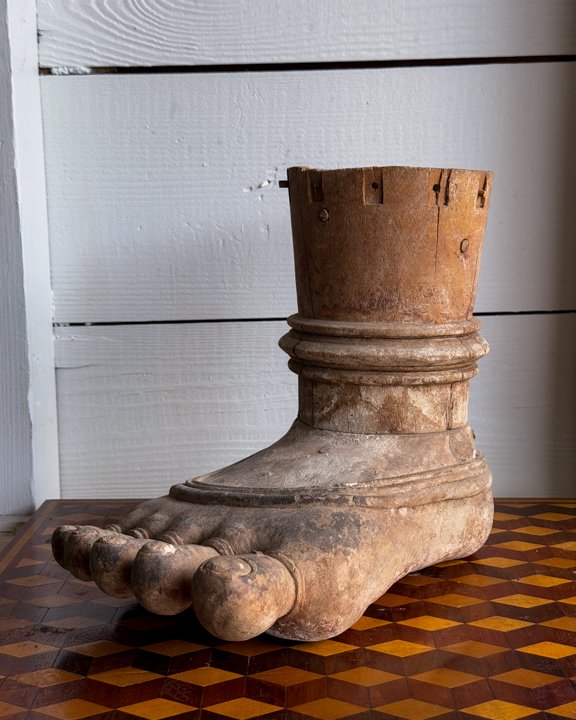
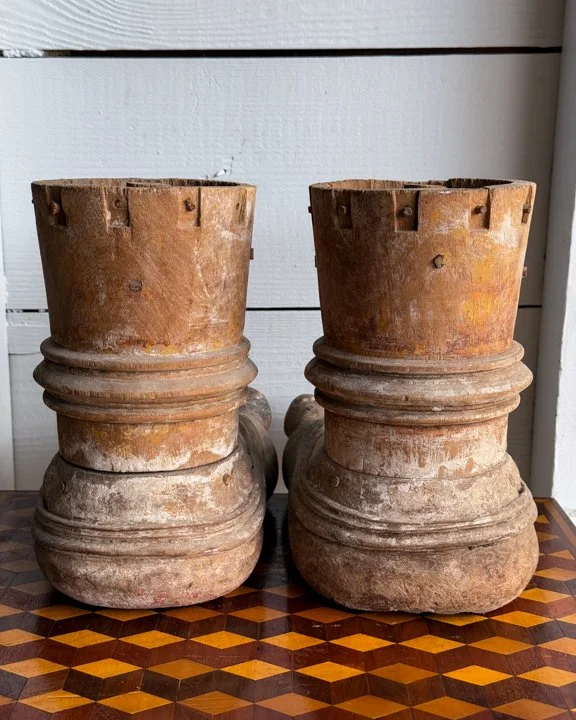
Here is a striking pair of 19th-century Indian carved wood feet, likely once part of a larger deity or temple sculpture. Each foot is carefully detailed with banded toes and ring-turning around the ankles, perched atop thick, architectural bases. The partially painted surface has mellowed into a beautiful dry patina, with traces of orange-red pigment still peeking through. The hollow lower legs feature central shafts and pegs, originally meant to secure them to a now-lost upper form. They’re large—13" wide and 11" tall—have a presence, and are seriously captivating. Rare, raw, and absolutely full of presence.
Category History
19th-century Indian deity sculptures sit at the intersection of devotion, craftsmanship, and daily ritual. These figures weren’t made as decoration—they were objects of worship, created to house and represent divine presence within temples or domestic shrines. Materials varied by region and purpose: carved wood, cast bronze, or stone, each chosen for durability and symbolic weight.
The forms are deliberate. Deities are depicted with specific attributes—multiple arms, held objects, distinctive postures—each element carrying meaning tied to stories, roles, and powers. Proportion isn’t always naturalistic; it’s guided by tradition, emphasizing what matters spiritually rather than anatomically.
What’s compelling is how they were used. These weren’t static pieces. Many were dressed, anointed, moved during rituals, and handled over time. That interaction leaves its mark—worn surfaces, softened details, traces of pigment or offerings.
Workshop practices played a role too. Some pieces were highly refined, others more direct, shaped by local makers working within established iconography but adding subtle variation.
Today, they read as both sacred objects and sculptural works. The craftsmanship is clear, but so is the intent. They weren’t made to be observed from a distance—they were meant to be engaged with, forming a connection between the physical and the devotional.
Here is a striking pair of 19th-century Indian carved wood feet, likely once part of a larger deity or temple sculpture. Each foot is carefully detailed with banded toes and ring-turning around the ankles, perched atop thick, architectural bases. The partially painted surface has mellowed into a beautiful dry patina, with traces of orange-red pigment still peeking through. The hollow lower legs feature central shafts and pegs, originally meant to secure them to a now-lost upper form. They’re large—13" wide and 11" tall—have a presence, and are seriously captivating. Rare, raw, and absolutely full of presence.
Category History
19th-century Indian deity sculptures sit at the intersection of devotion, craftsmanship, and daily ritual. These figures weren’t made as decoration—they were objects of worship, created to house and represent divine presence within temples or domestic shrines. Materials varied by region and purpose: carved wood, cast bronze, or stone, each chosen for durability and symbolic weight.
The forms are deliberate. Deities are depicted with specific attributes—multiple arms, held objects, distinctive postures—each element carrying meaning tied to stories, roles, and powers. Proportion isn’t always naturalistic; it’s guided by tradition, emphasizing what matters spiritually rather than anatomically.
What’s compelling is how they were used. These weren’t static pieces. Many were dressed, anointed, moved during rituals, and handled over time. That interaction leaves its mark—worn surfaces, softened details, traces of pigment or offerings.
Workshop practices played a role too. Some pieces were highly refined, others more direct, shaped by local makers working within established iconography but adding subtle variation.
Today, they read as both sacred objects and sculptural works. The craftsmanship is clear, but so is the intent. They weren’t made to be observed from a distance—they were meant to be engaged with, forming a connection between the physical and the devotional.