

PLEASE EMAIL US RE: SHIPPING TIMING BEFORE PURCHASING hello@heimweeantiques.com
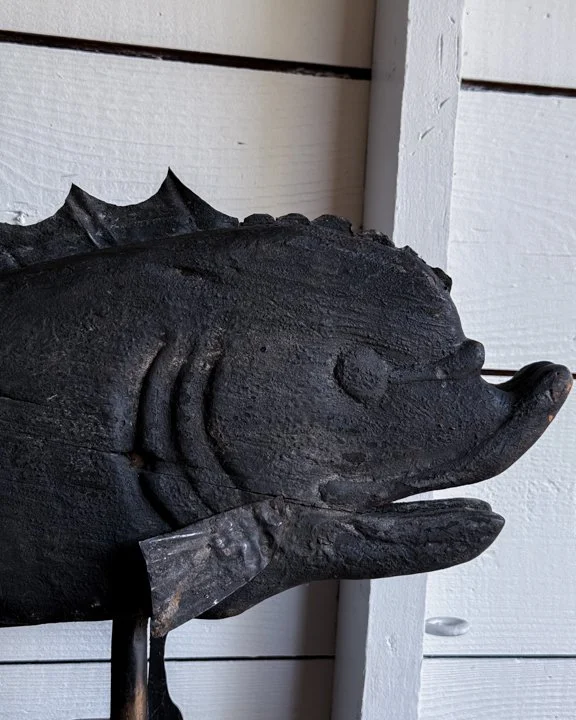
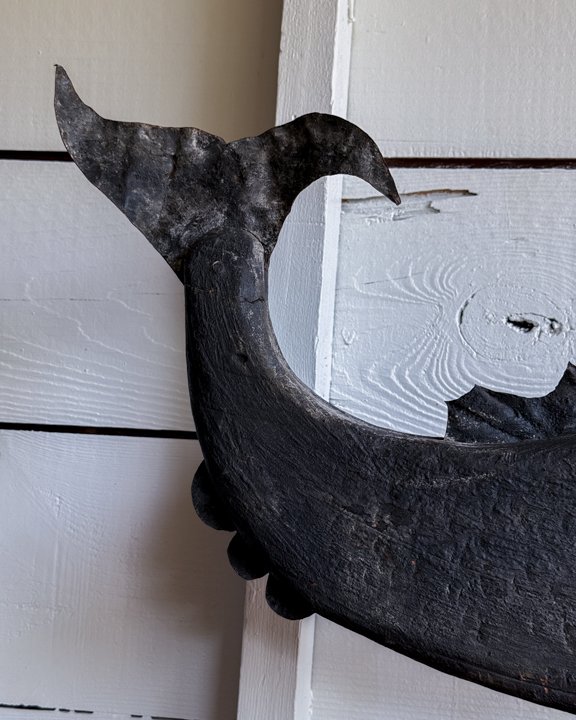
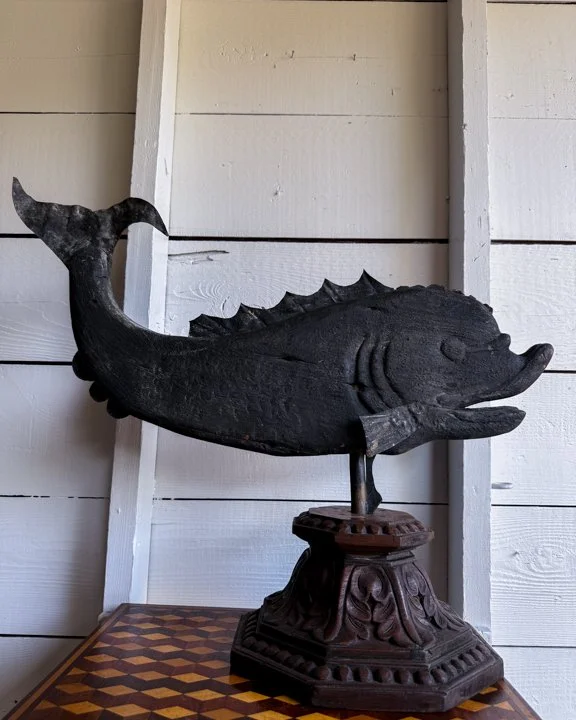
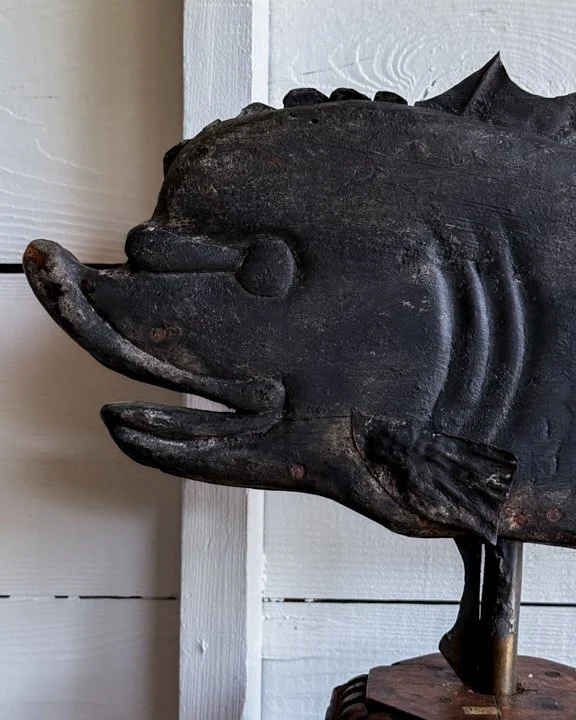
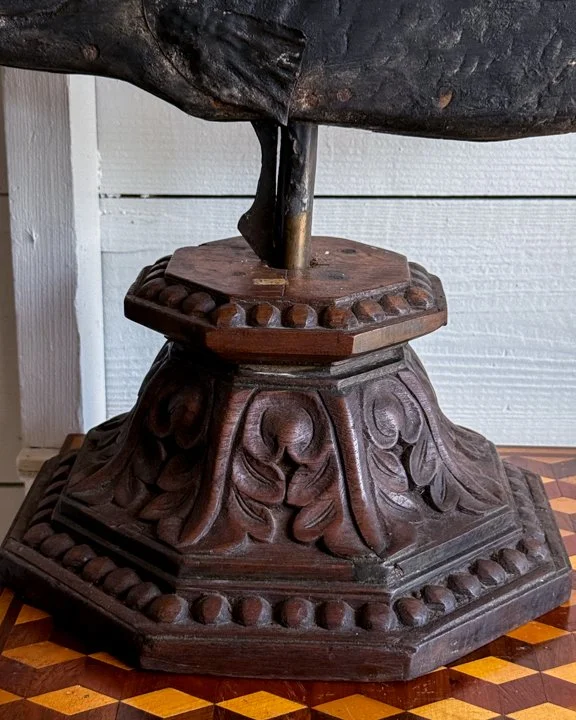
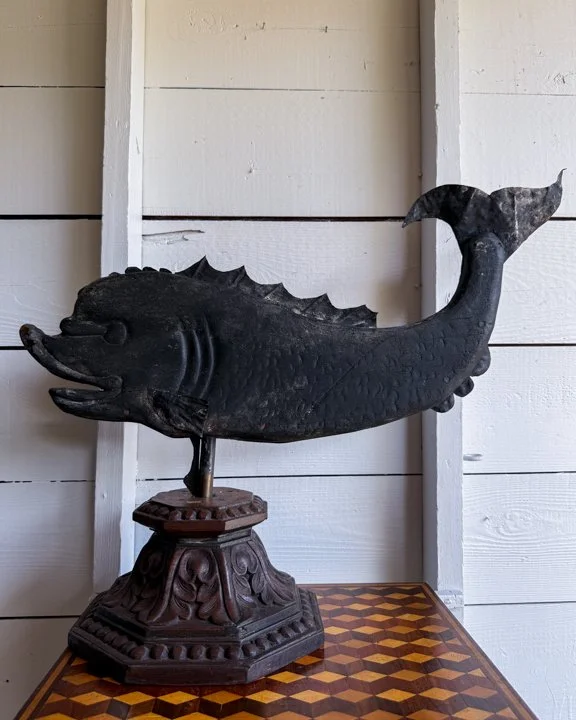
This late 19th-century weathervane comes with all the salty charm of a maritime mystery—weathered and crusty in all the right ways. Hand-hammered iron fins, carved wooden body. Its bulging eyes, curled lips, and sawtooth dorsal ridge land it somewhere between aquatic folk art and fever dream. The deep black surface shows years of exposure—oxidation, pitting, and patina in all the right places. The later wooden base was added for display, and honestly, it suits the beast. The carved pedestal has a gothic, almost cathedral feel, like someone gave this sea monster its own altar.
Weathervanes
Weathervanes are one of those objects that quietly do their job while doubling as a kind of public sculpture. Dating back centuries, they were originally practical—mounted on rooftops to show wind direction, helping farmers, sailors, and townspeople read the weather at a glance. But it didn’t take long for function to pick up a bit of personality.
Early examples were often simple—arrows or basic shapes—but by the 18th and 19th centuries, they evolved into more expressive forms. Roosters, horses, ships, banners—each one chosen for symbolism, local identity, or just visual appeal. Crafted from copper, iron, or wood, they were built to withstand the elements while remaining light enough to turn easily with the wind.
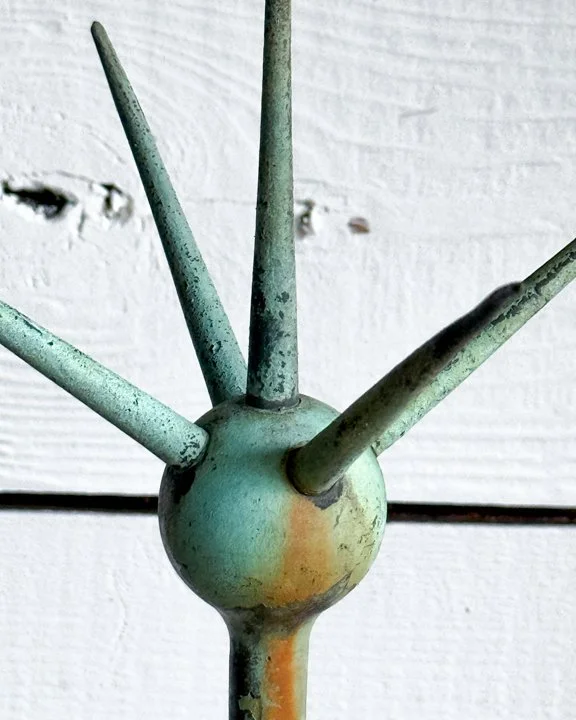
What makes weathervanes compelling now is how they age. Copper develops that soft verdigris, painted surfaces fade and peel, and the constant motion leaves subtle wear at the pivot point. They carry the weather they’ve tracked.
There’s also a quiet balance in their design. They need to be precise enough to function, but free enough to move. That tension gives them a kind of elegance.
Today, they read as markers of place—objects that once guided daily decisions, now standing as silhouettes against the sky, still turning, still pointing, still present.
PLEASE EMAIL US RE: SHIPPING TIMING BEFORE PURCHASING hello@heimweeantiques.com
This late 19th-century weathervane comes with all the salty charm of a maritime mystery—weathered and crusty in all the right ways. Hand-hammered iron fins, carved wooden body. Its bulging eyes, curled lips, and sawtooth dorsal ridge land it somewhere between aquatic folk art and fever dream. The deep black surface shows years of exposure—oxidation, pitting, and patina in all the right places. The later wooden base was added for display, and honestly, it suits the beast. The carved pedestal has a gothic, almost cathedral feel, like someone gave this sea monster its own altar.
Weathervanes
Weathervanes are one of those objects that quietly do their job while doubling as a kind of public sculpture. Dating back centuries, they were originally practical—mounted on rooftops to show wind direction, helping farmers, sailors, and townspeople read the weather at a glance. But it didn’t take long for function to pick up a bit of personality.
Early examples were often simple—arrows or basic shapes—but by the 18th and 19th centuries, they evolved into more expressive forms. Roosters, horses, ships, banners—each one chosen for symbolism, local identity, or just visual appeal. Crafted from copper, iron, or wood, they were built to withstand the elements while remaining light enough to turn easily with the wind.
What makes weathervanes compelling now is how they age. Copper develops that soft verdigris, painted surfaces fade and peel, and the constant motion leaves subtle wear at the pivot point. They carry the weather they’ve tracked.
There’s also a quiet balance in their design. They need to be precise enough to function, but free enough to move. That tension gives them a kind of elegance.
Today, they read as markers of place—objects that once guided daily decisions, now standing as silhouettes against the sky, still turning, still pointing, still present.