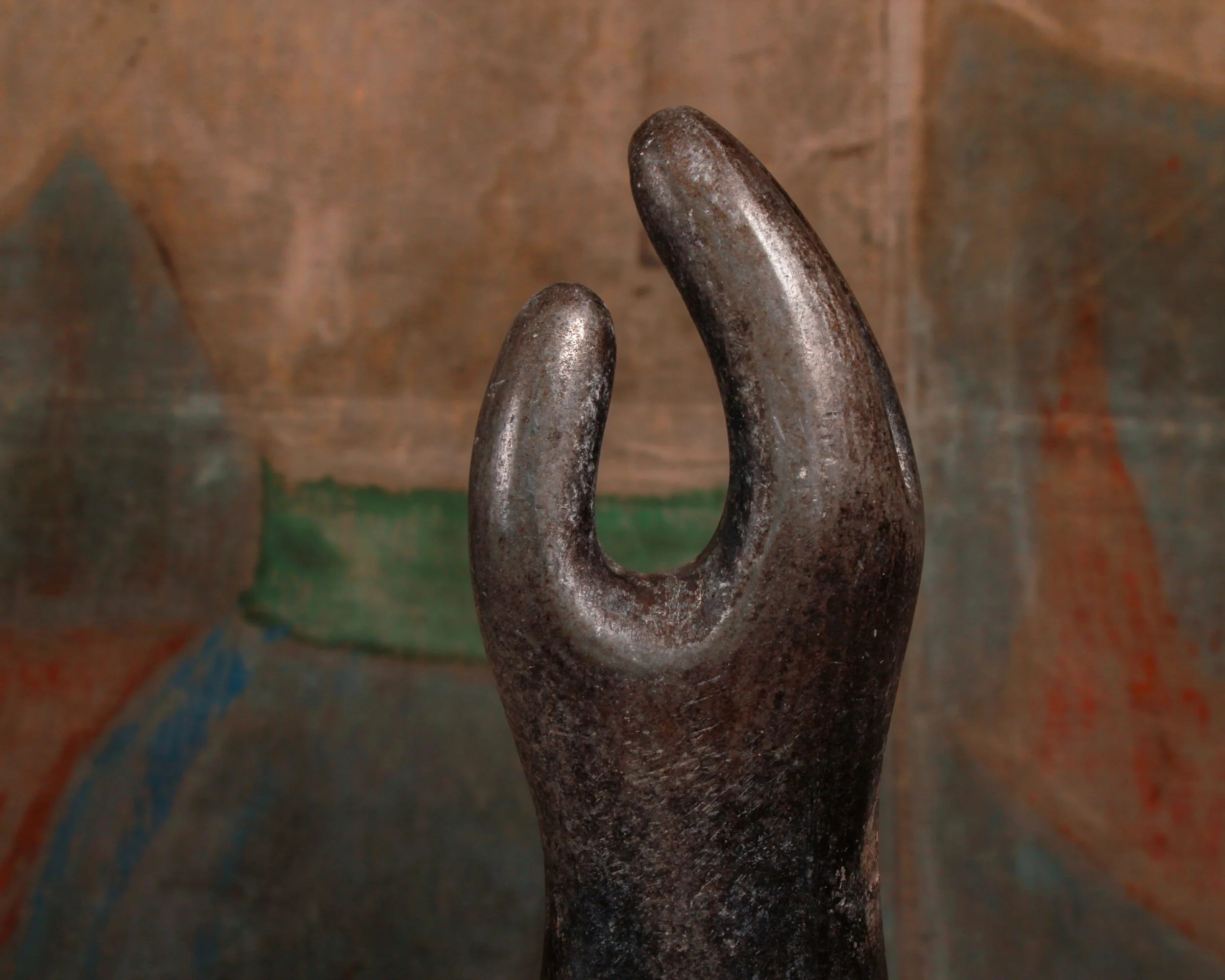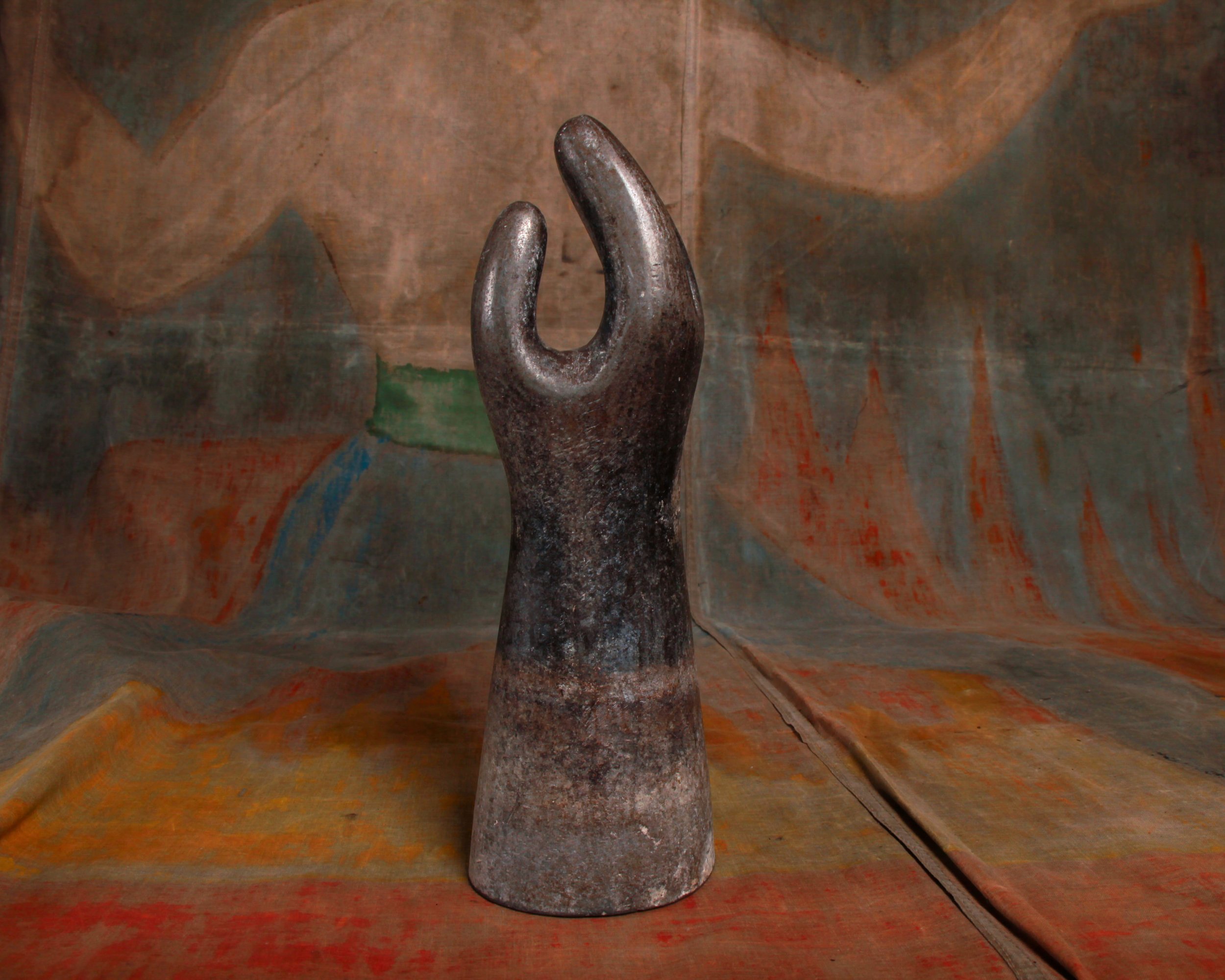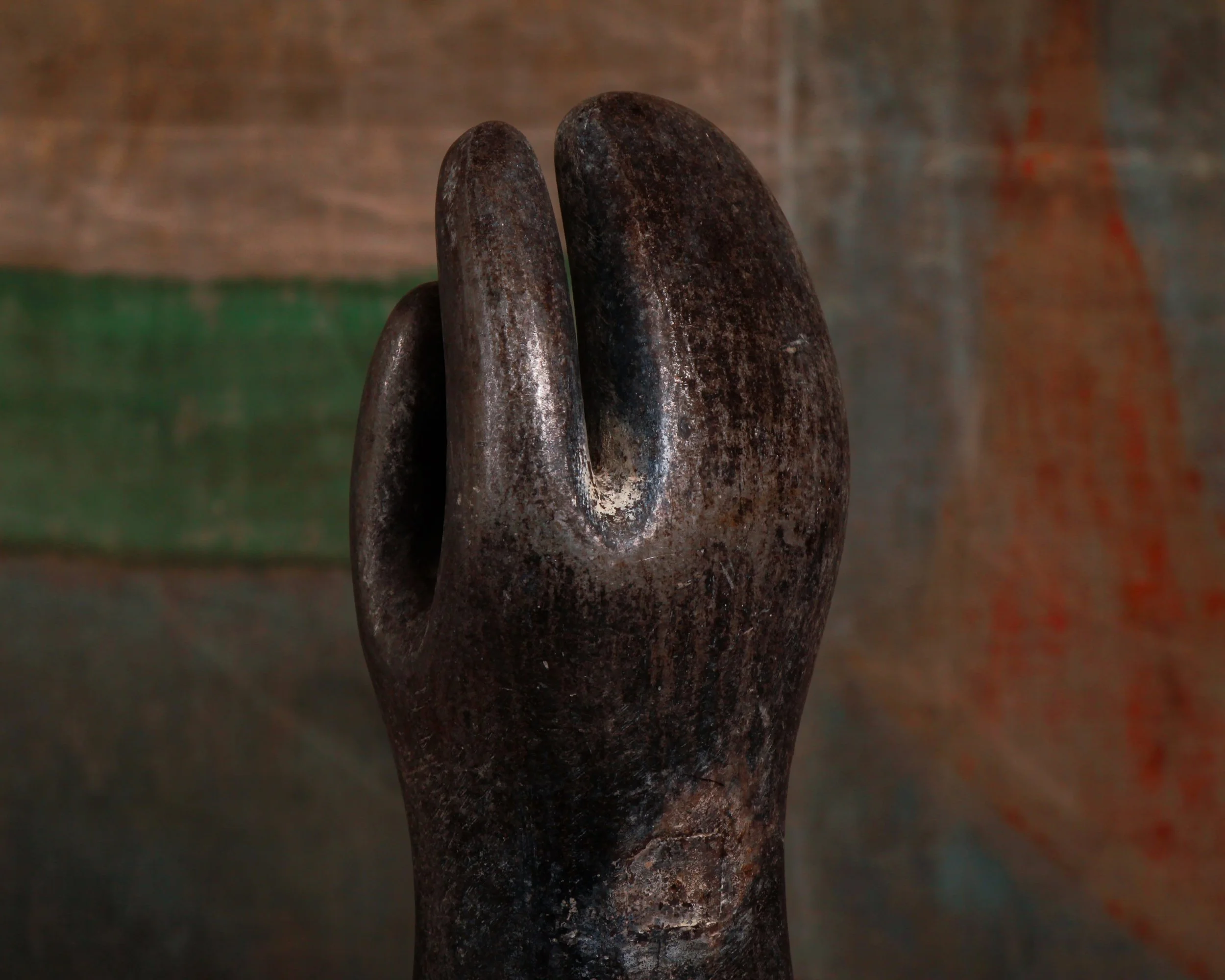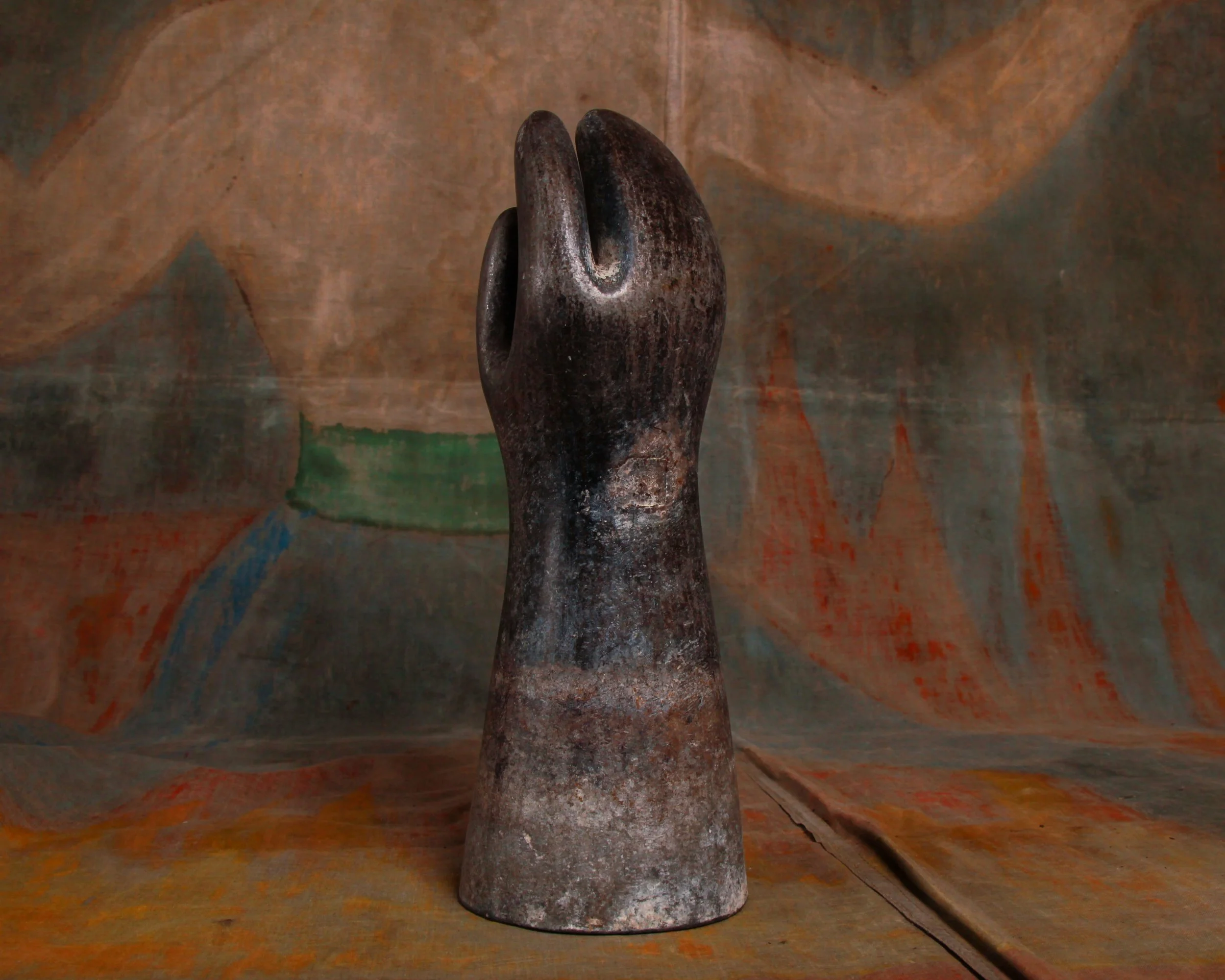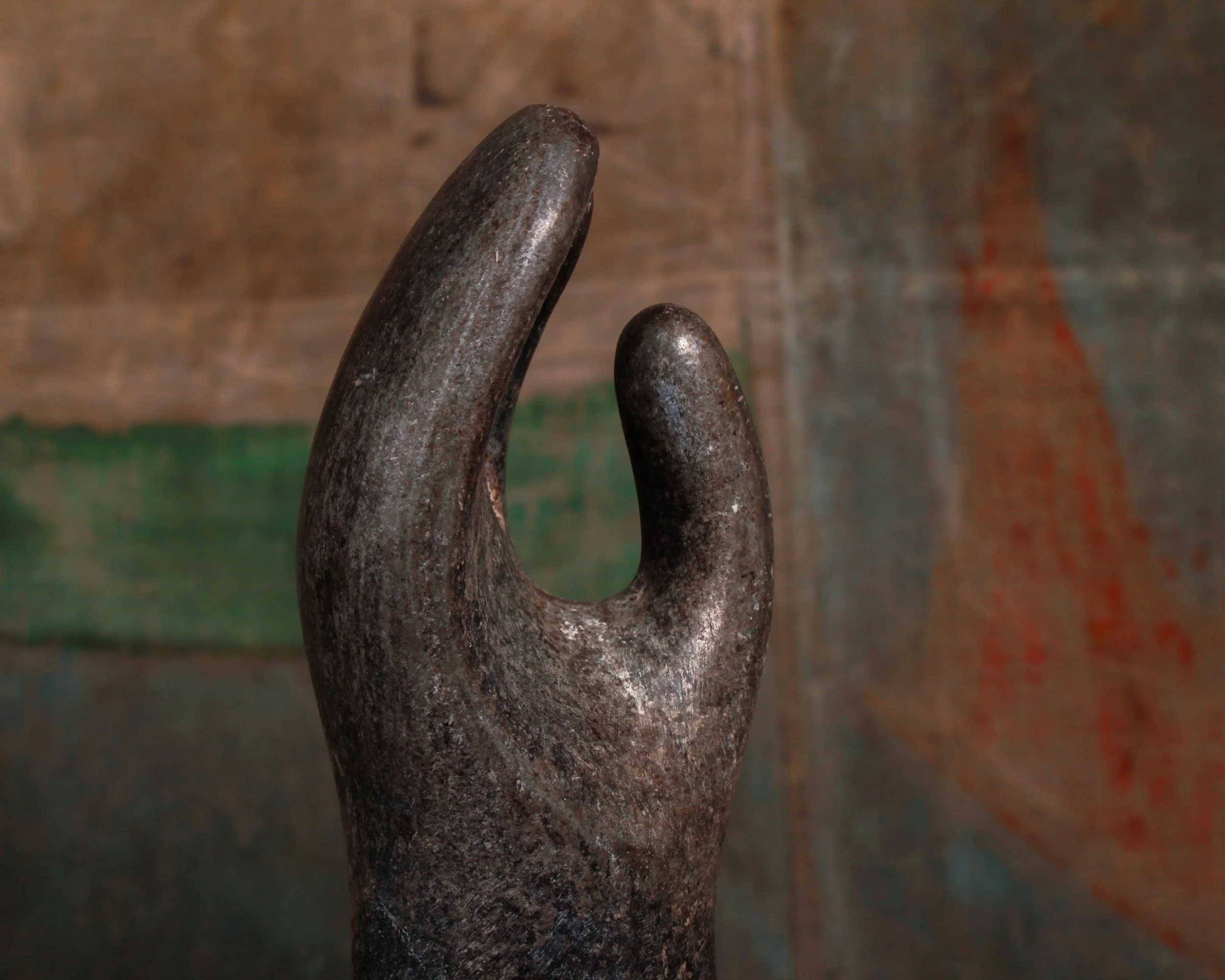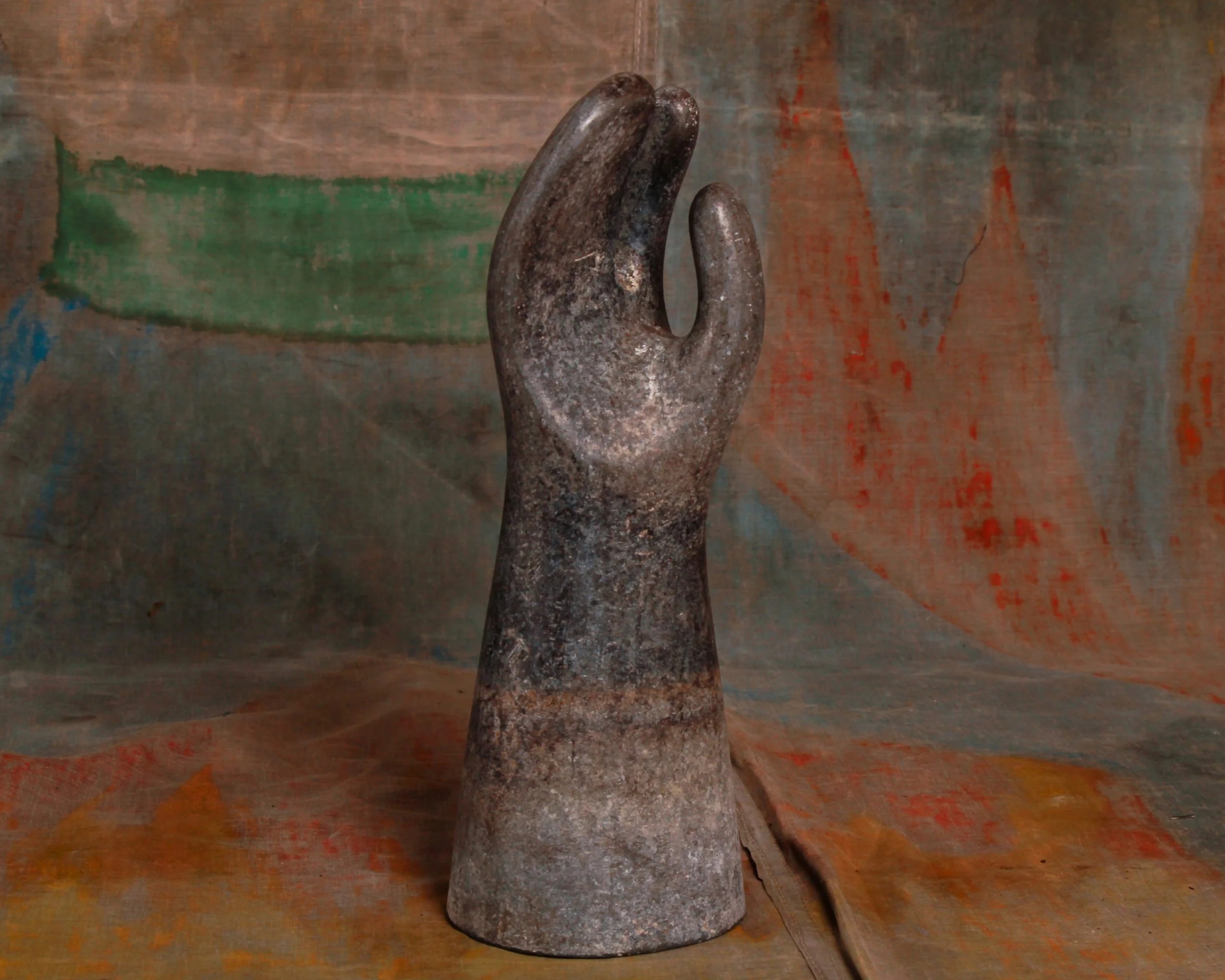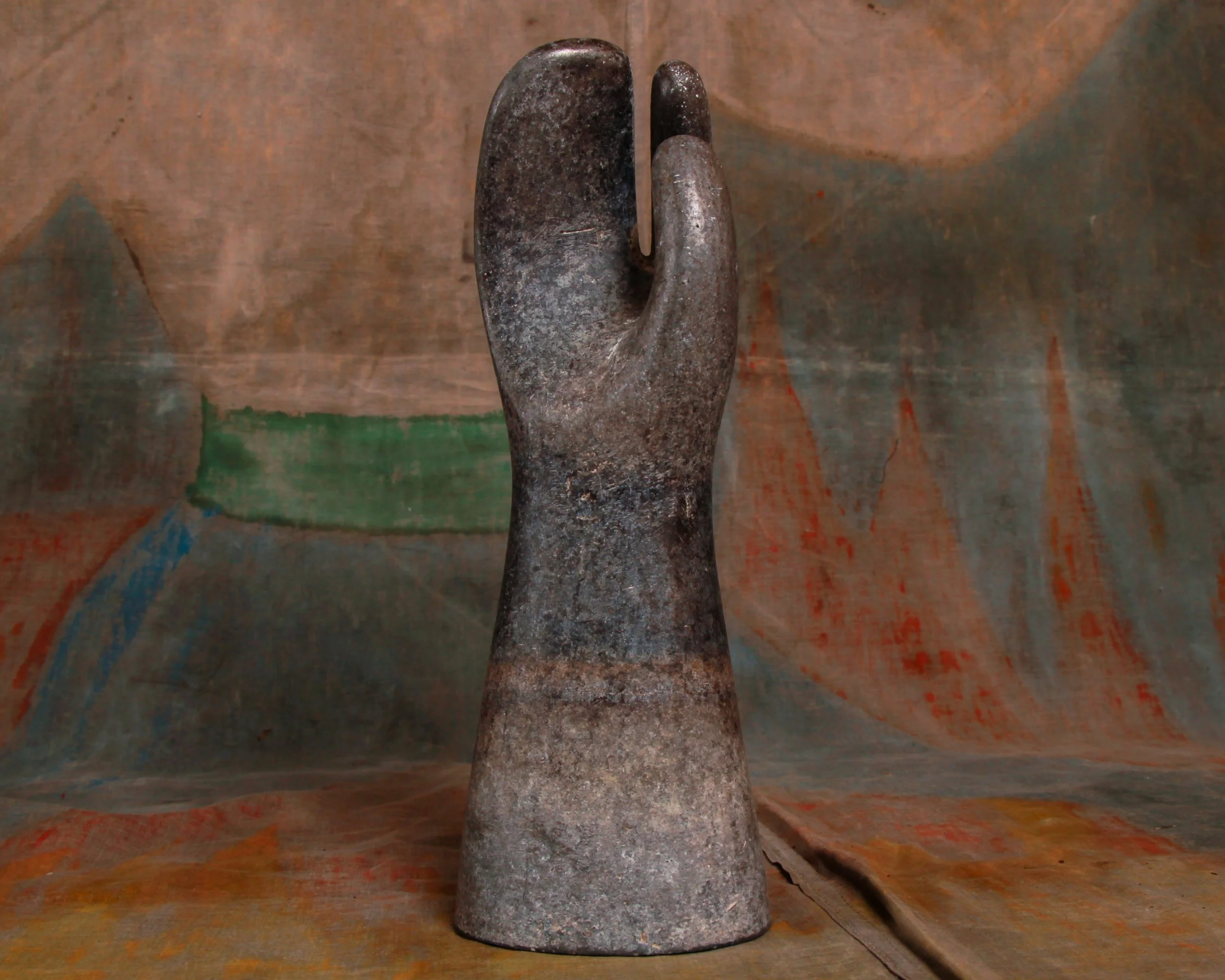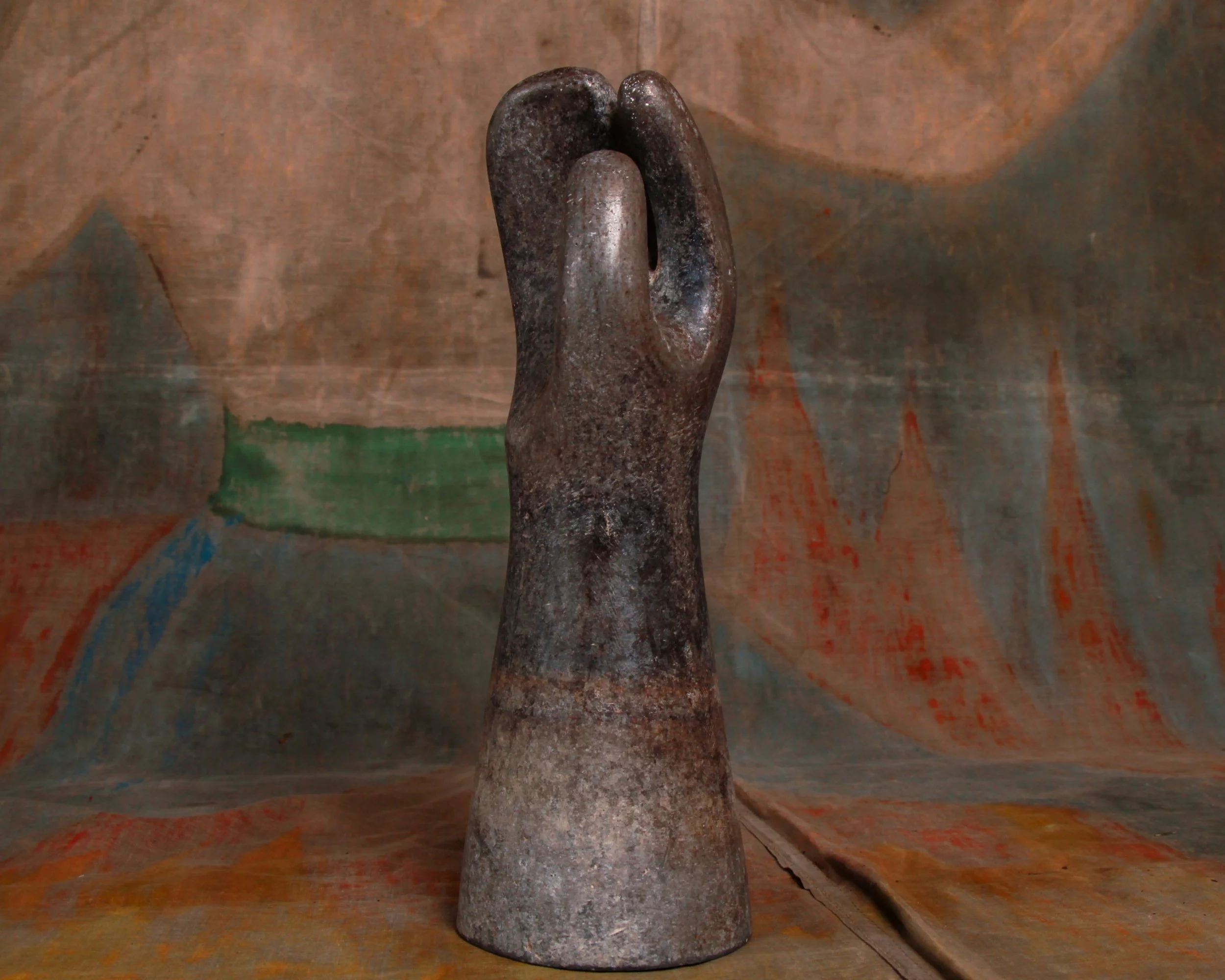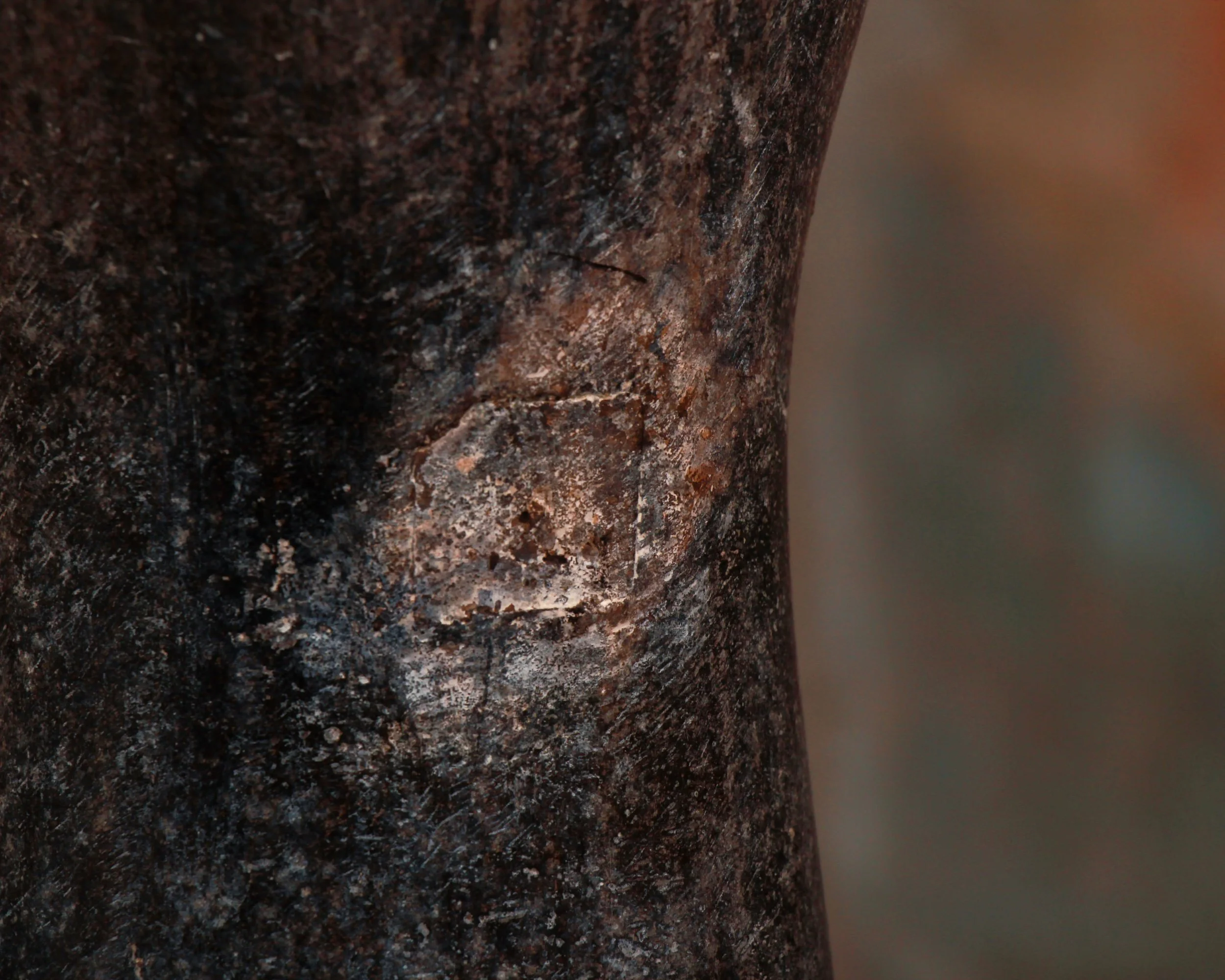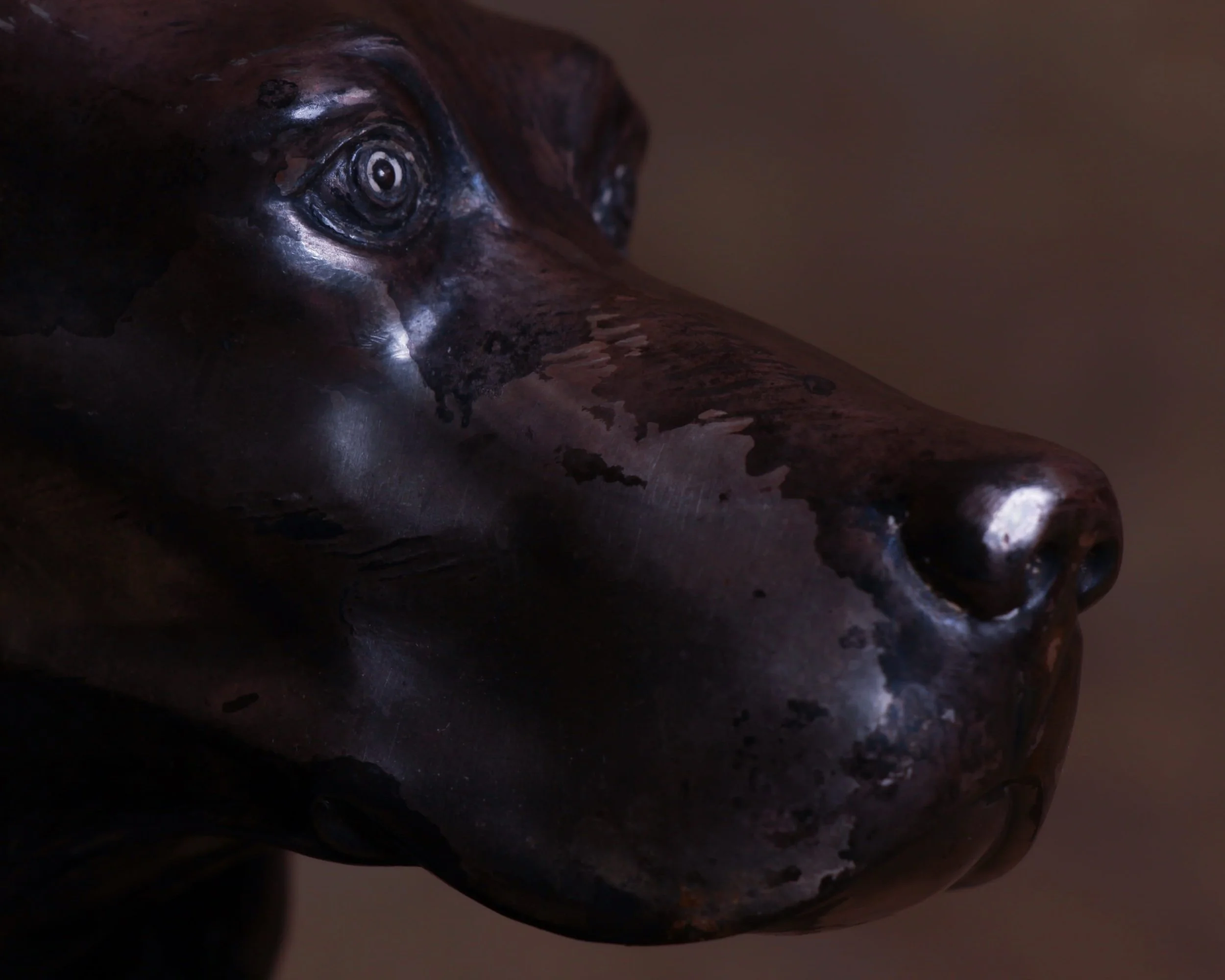
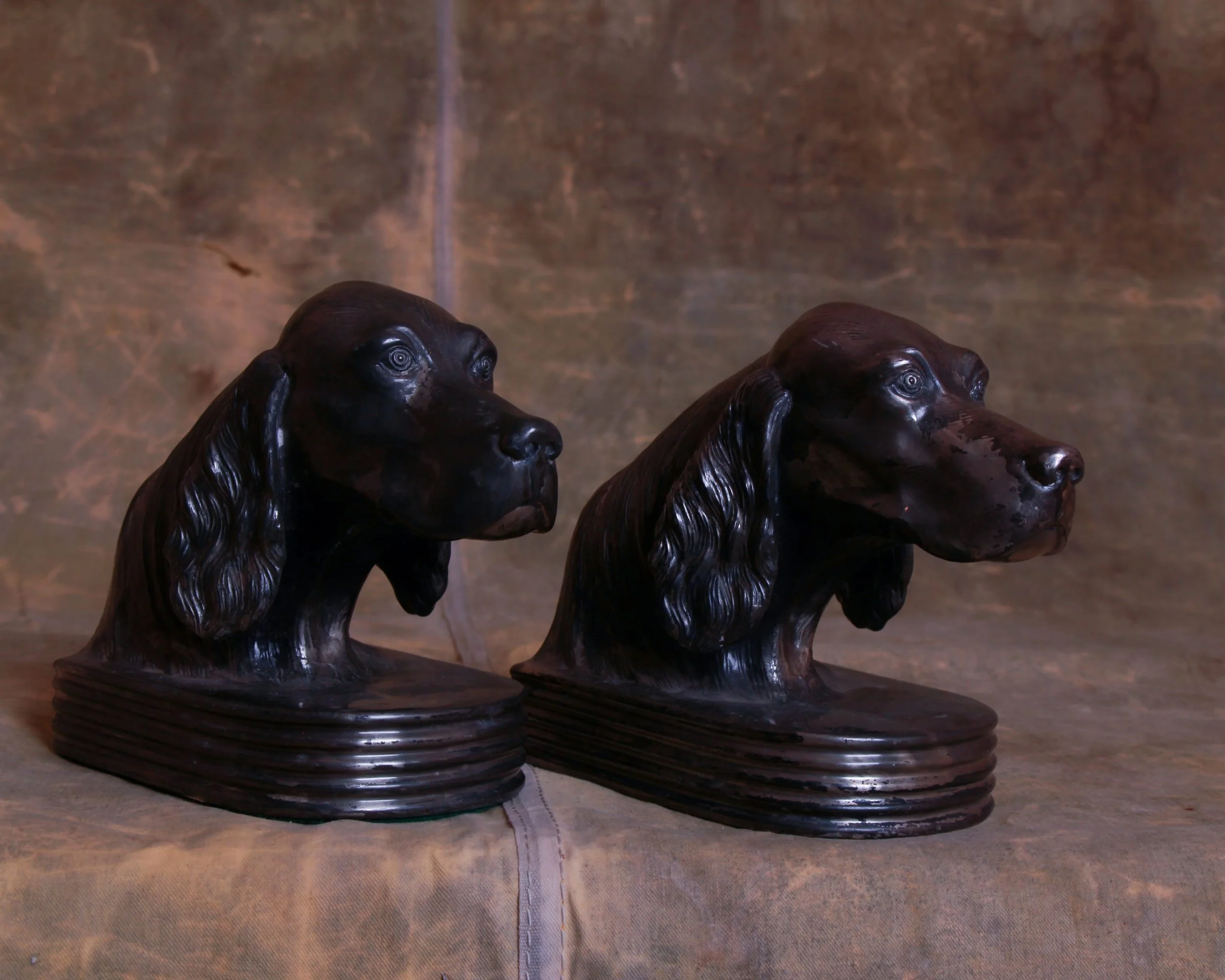
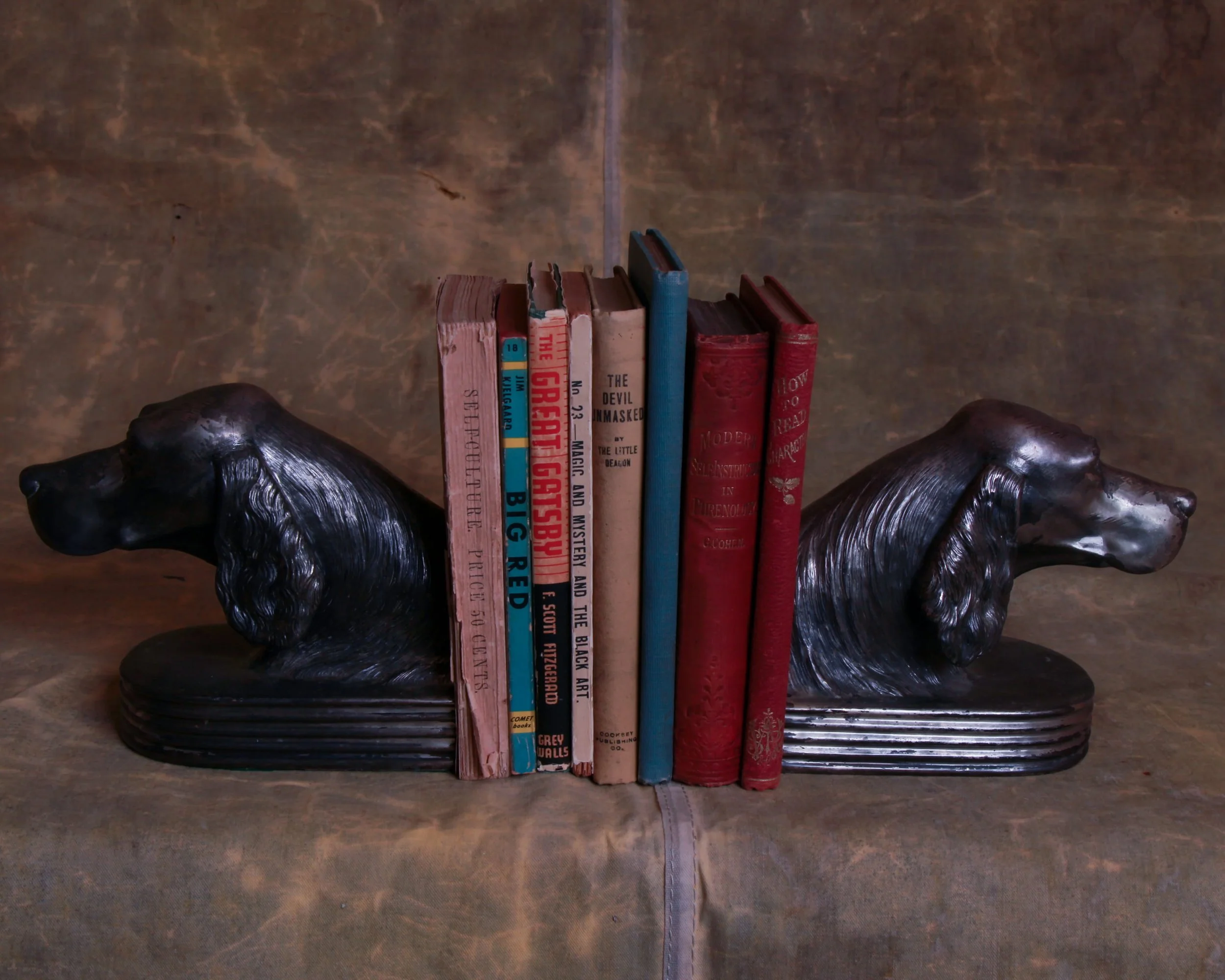
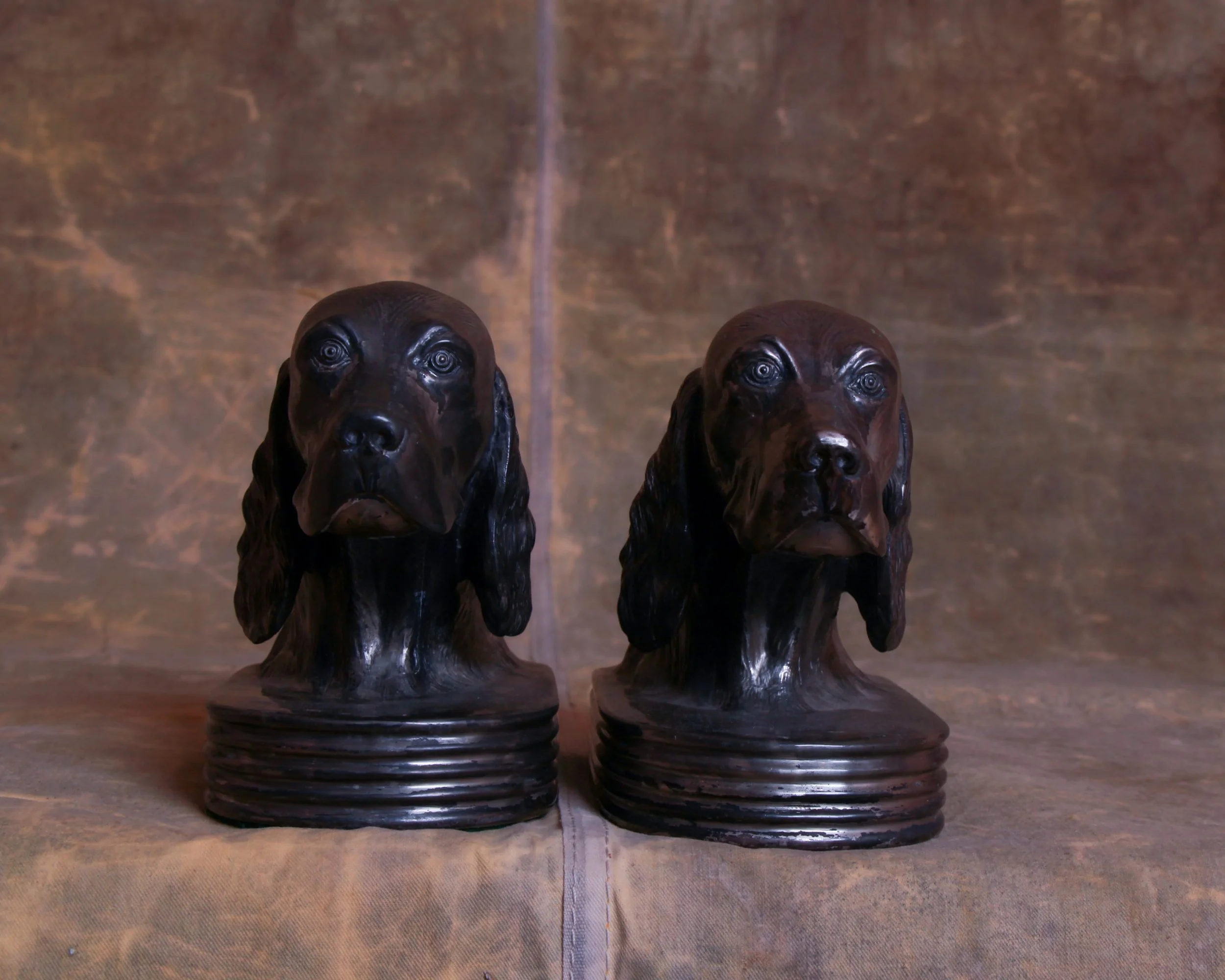
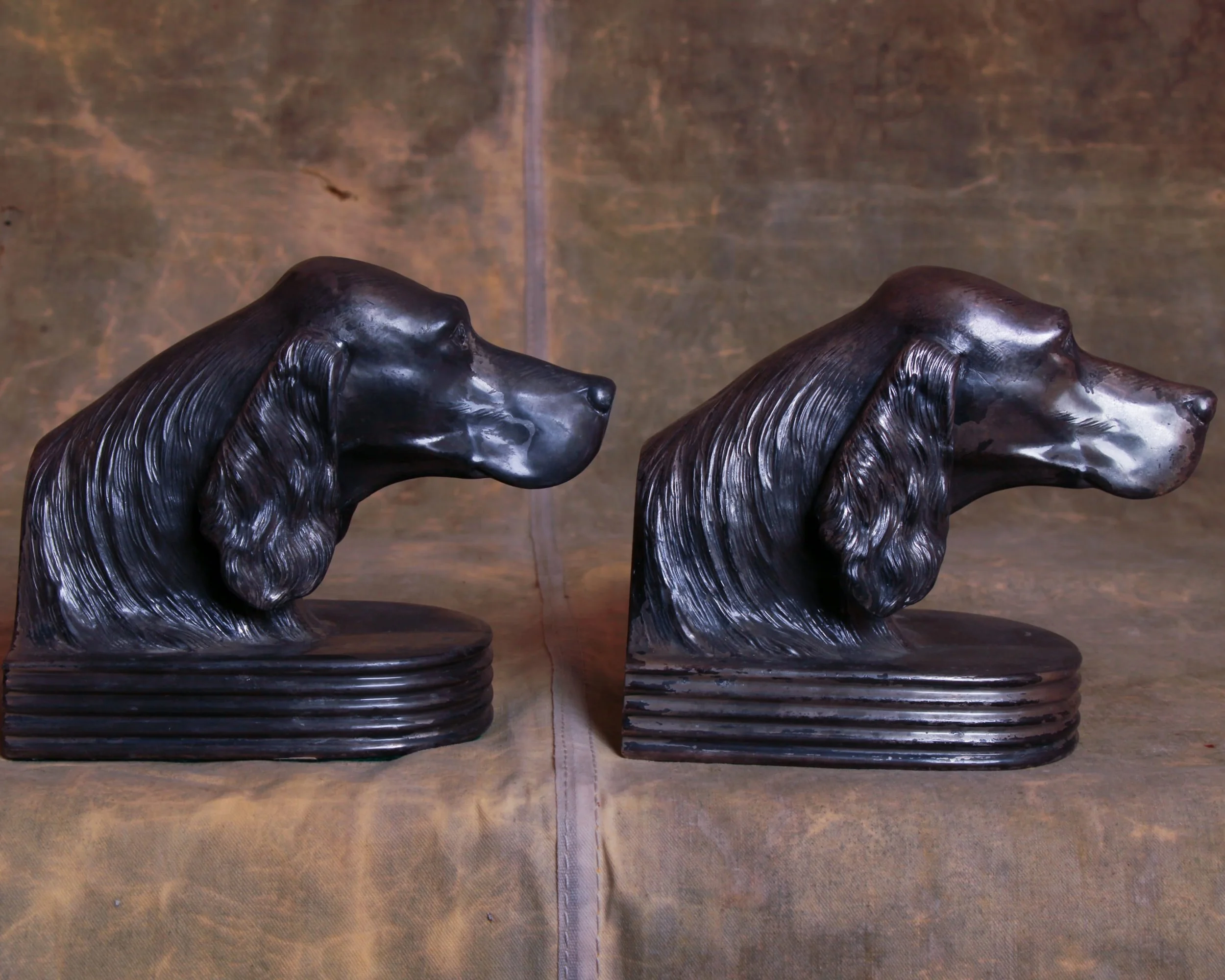
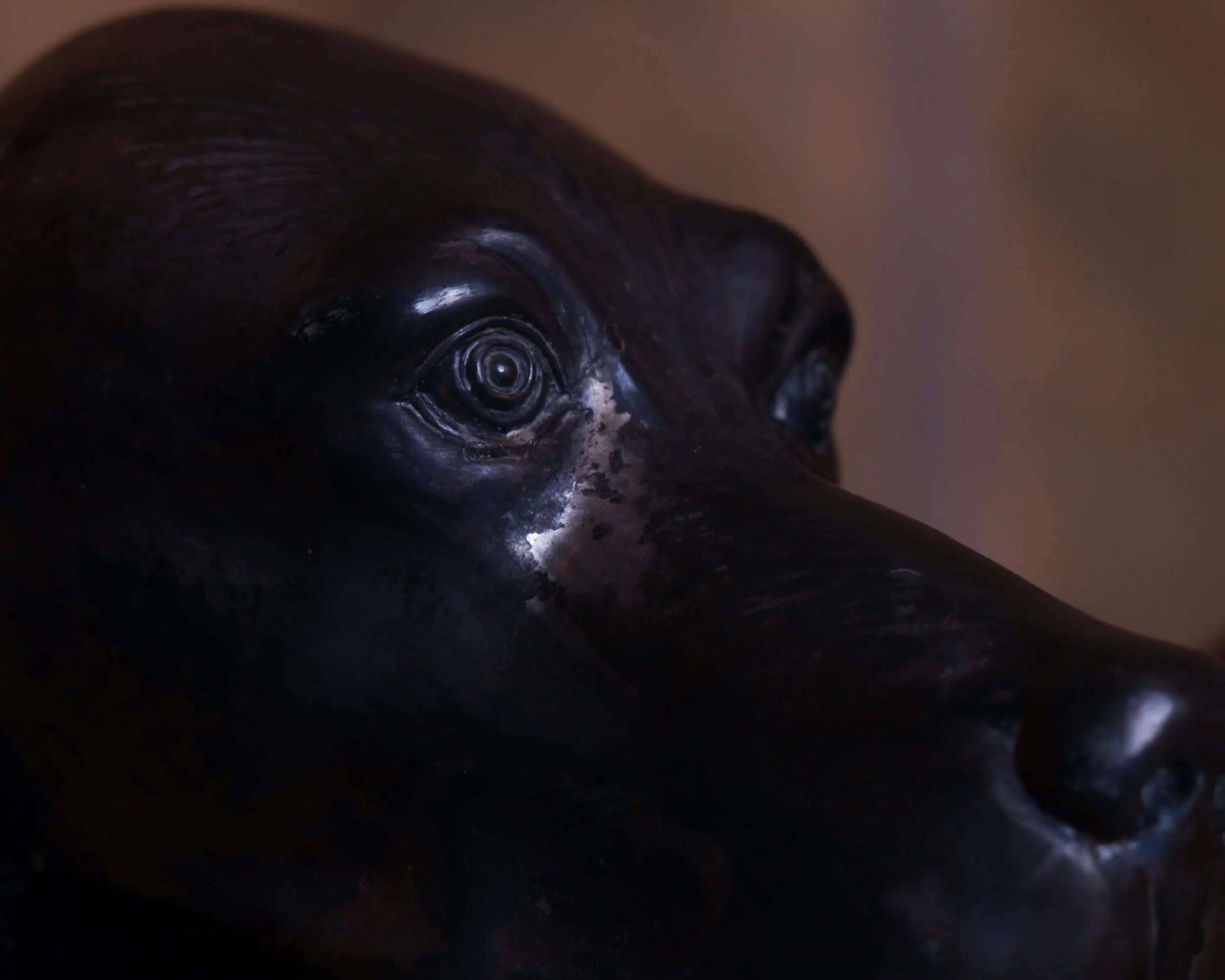
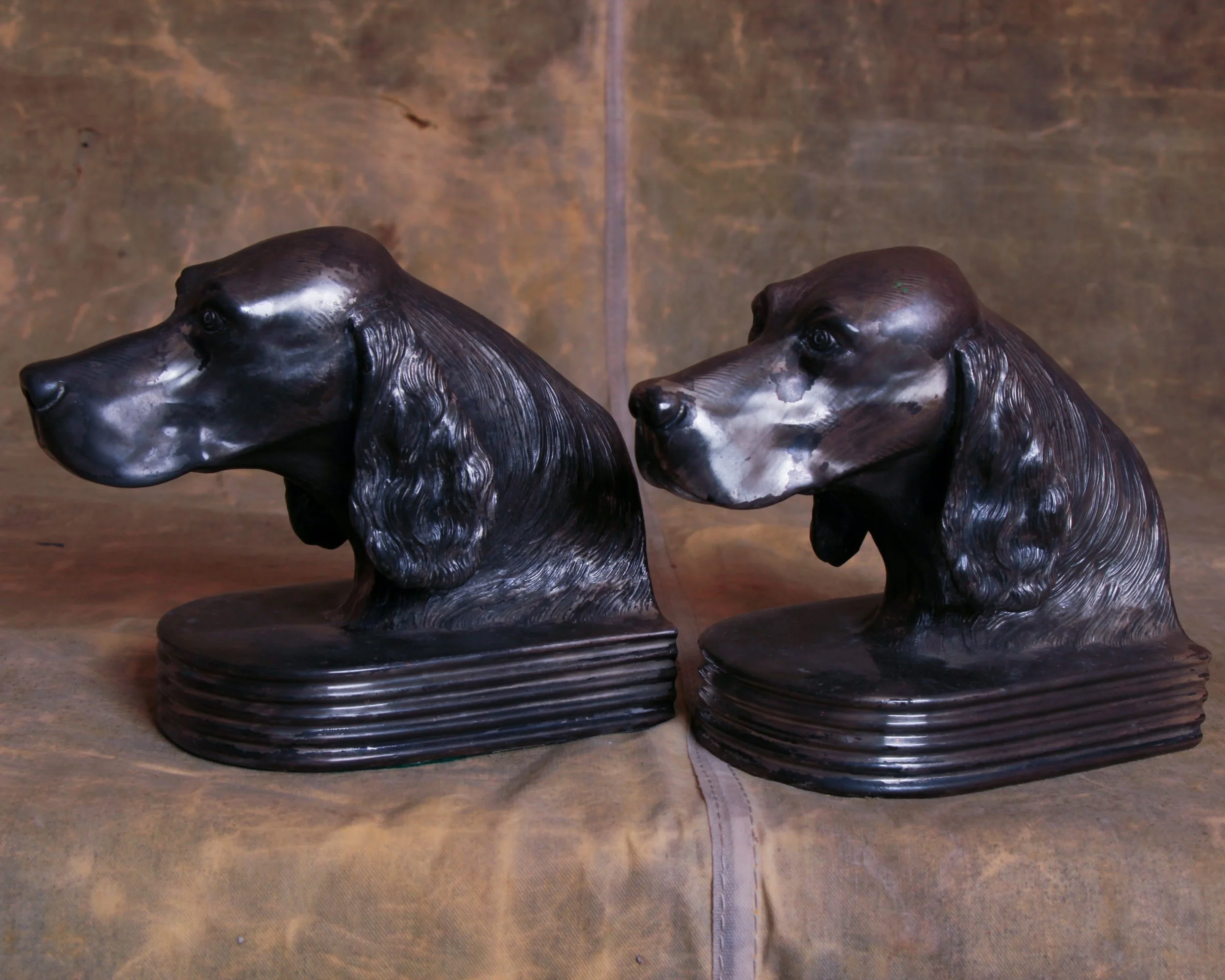
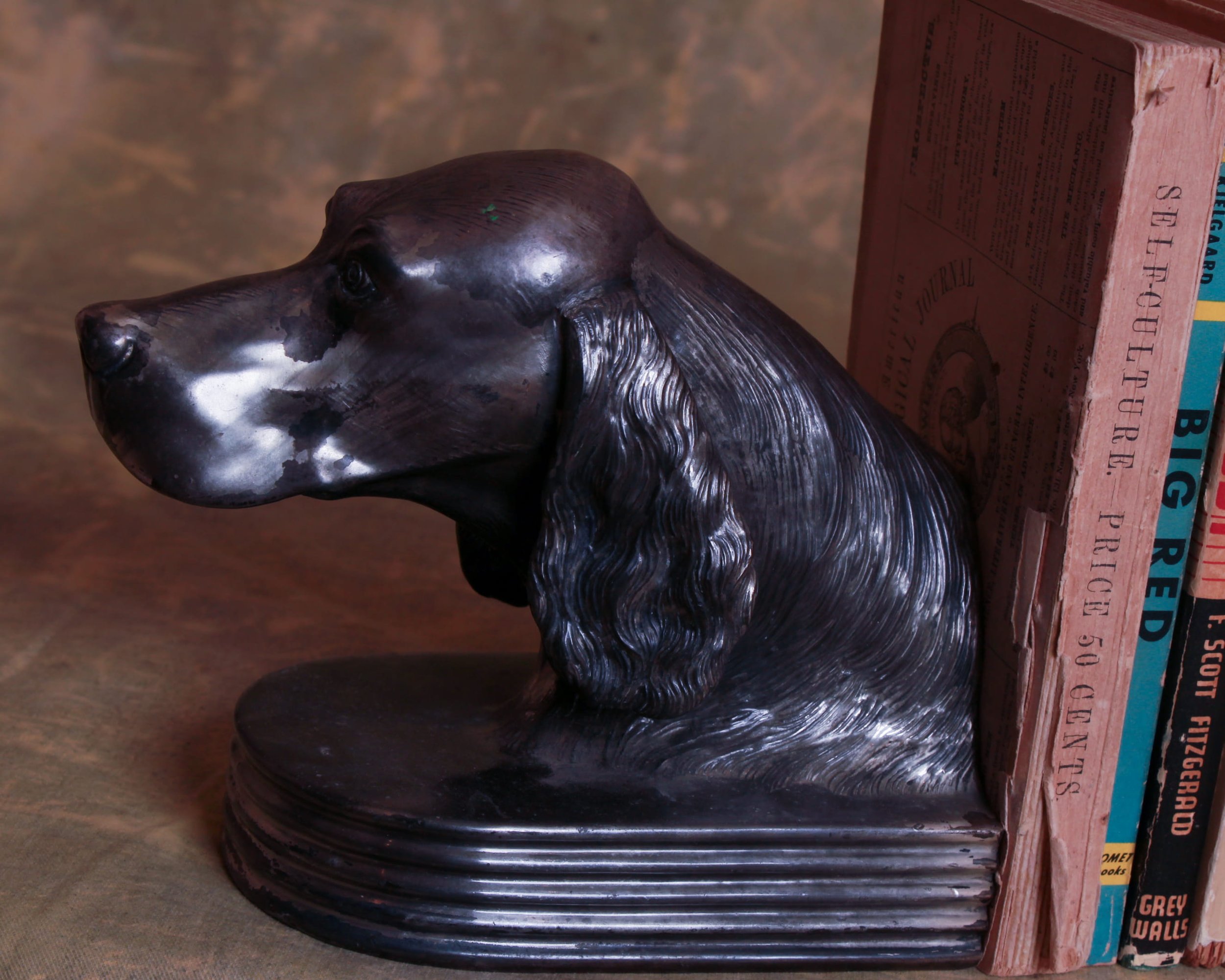
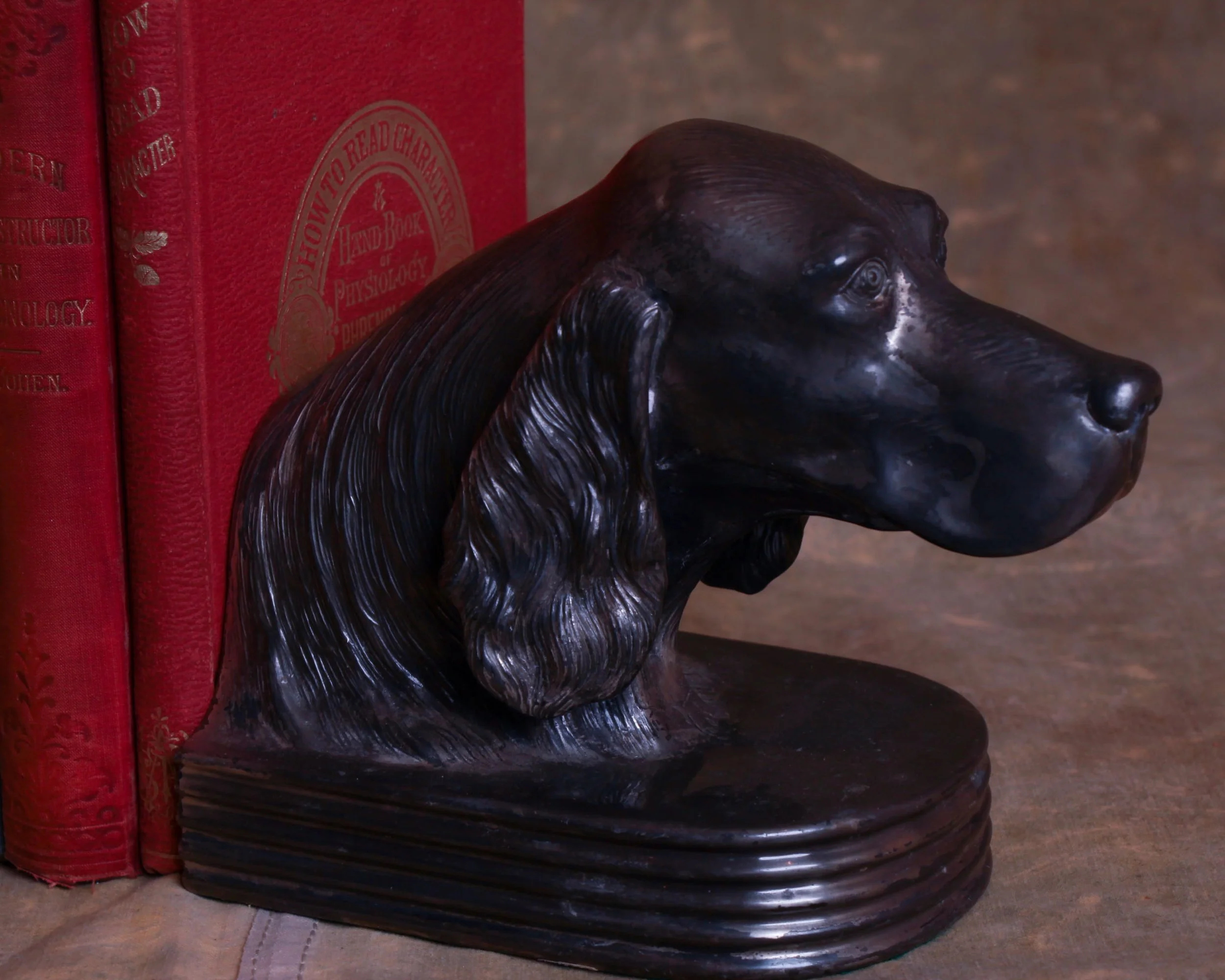
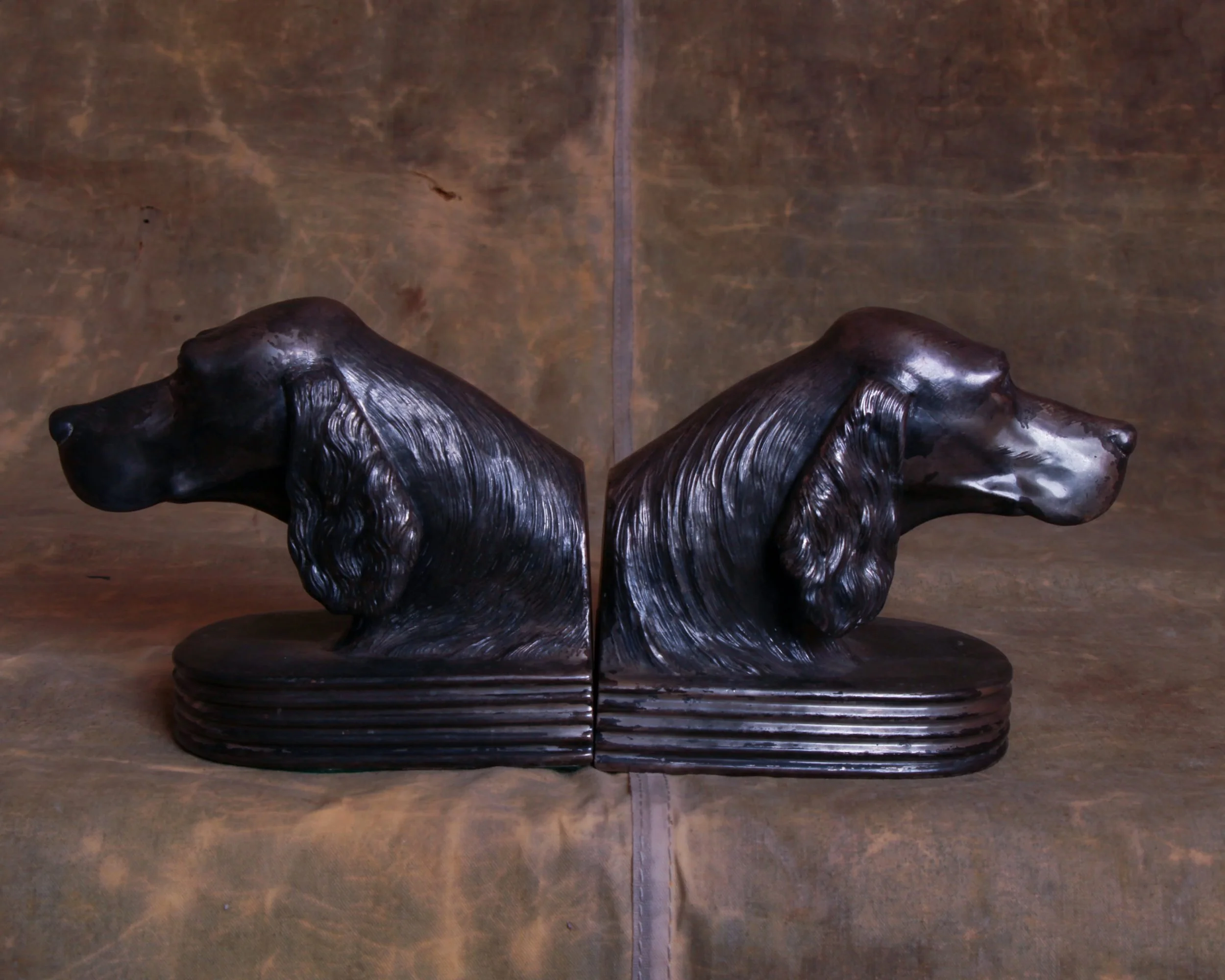
There’s a quiet elegance to these Art Deco Setter bookends that makes them feel less like desk accessories and more like small sculptures. Produced by the Jennings Brothers Manufacturing Co. in the 1920s, each dog is modeled with that unmistakable Deco balance of sleek form and fine detail. The long muzzle, attentive gaze, and beautifully textured ears give the pair a sense of calm watchfulness.
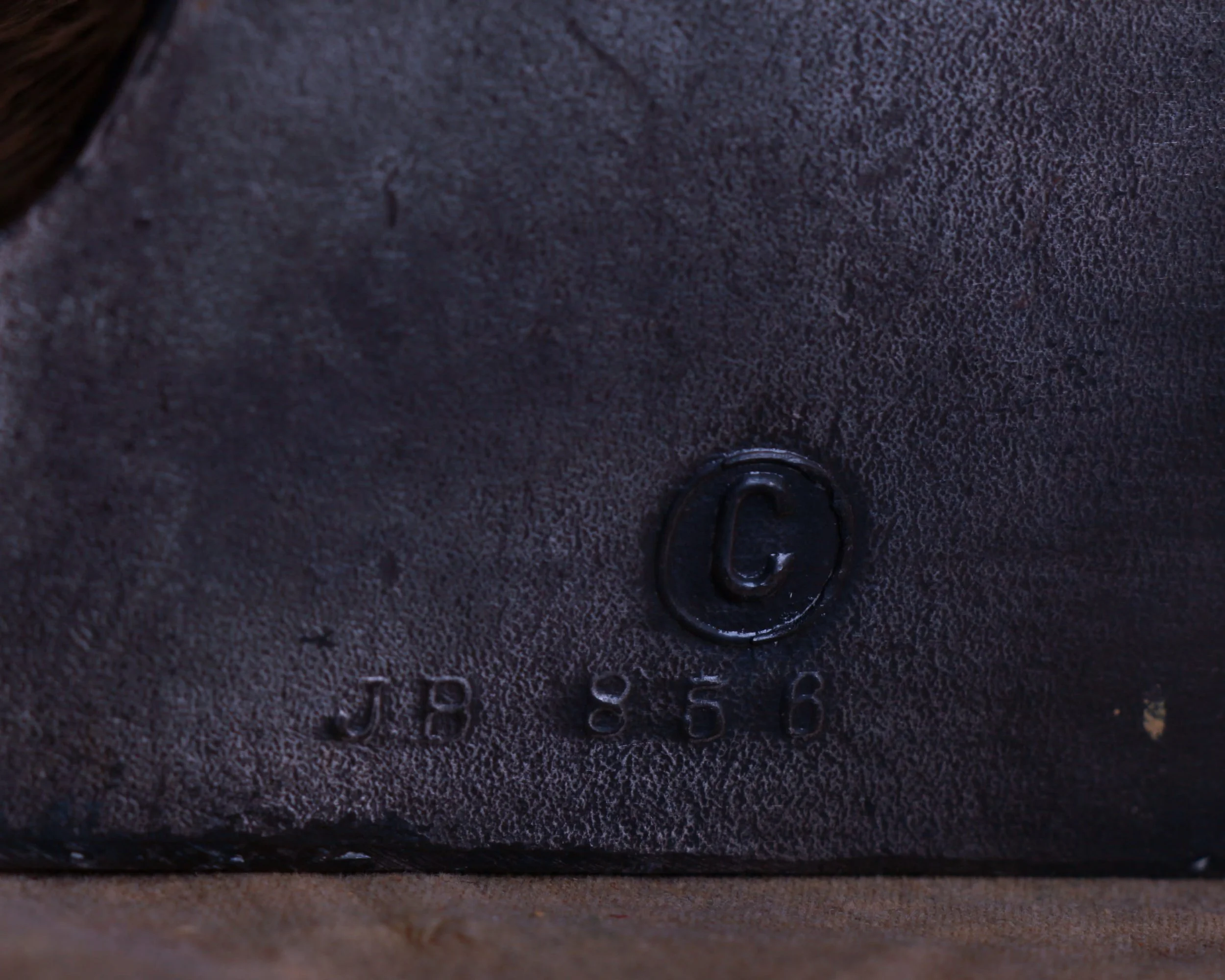
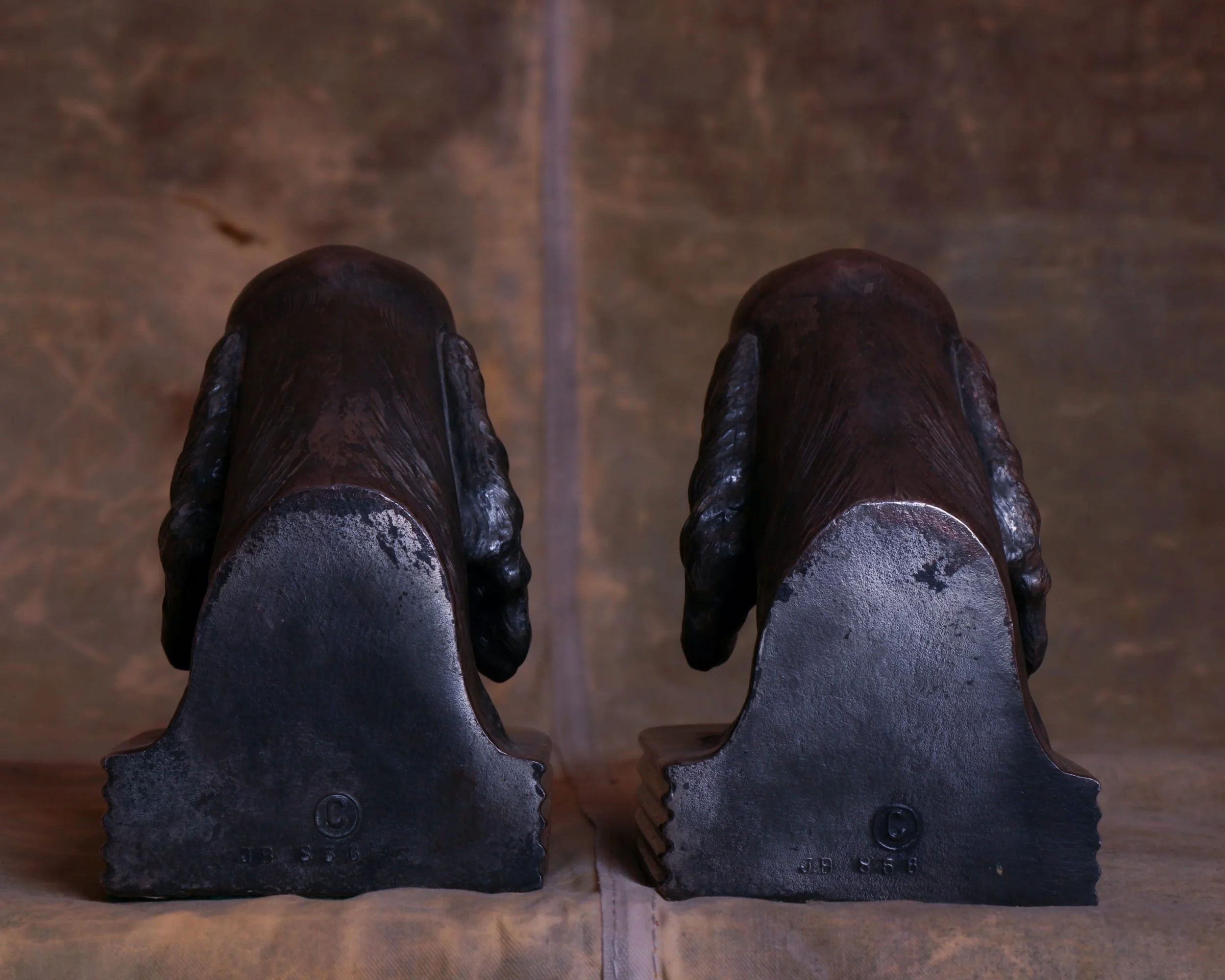
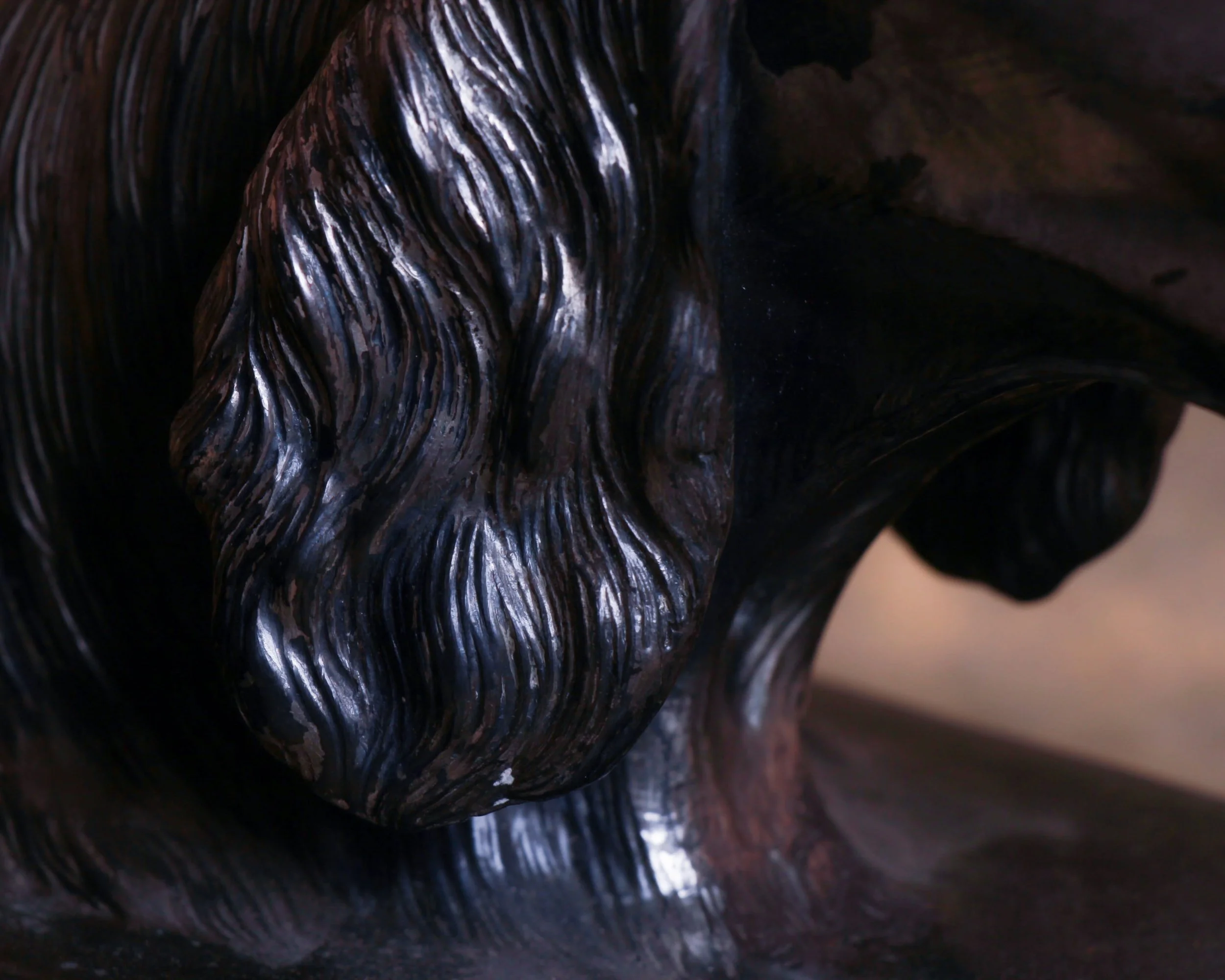
Cast in metal and finished in a rich, dark patina, both are embossed underneath with the Jennings Brothers mark “JB 856.” Jennings Brothers was known for its quality metalwork. Rather than being churned out as simple utilitarian objects, they were produced using a labor-intensive casting process that allowed for the depth and sculptural detail you see here.
Measures 7.5" W × 4" D × 6.5" H.
Category History
Art Deco bookends are small-scale expressions of a big idea: order, symmetry, and modern style distilled into something you can hold. Popular in the 1920s and 1930s, they reflect the broader Art Deco movement’s fascination with clean lines, geometry, and forward-looking design.
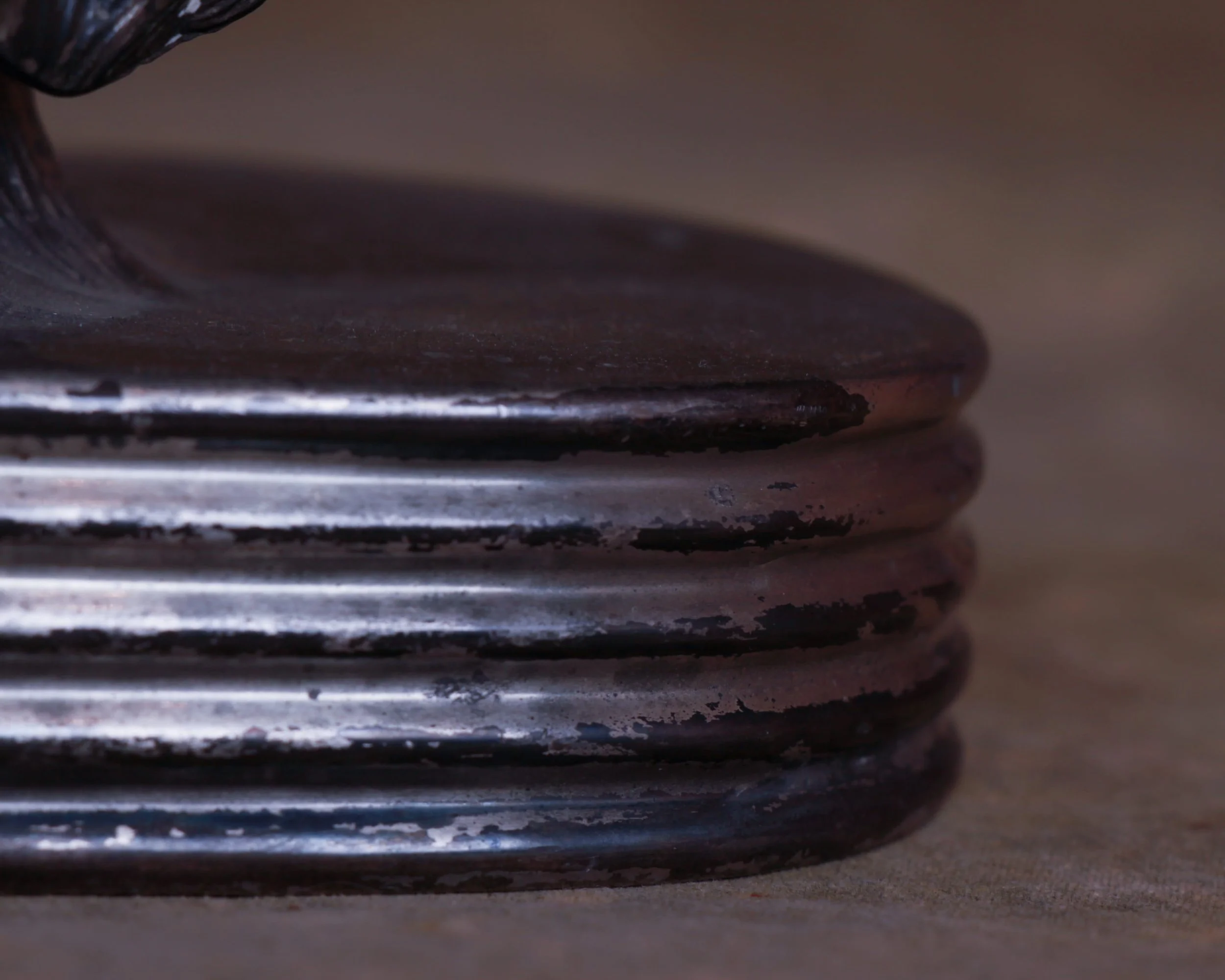
Materials varied—cast metal, spelter, marble, onyx, and occasionally wood—but the forms stayed consistent in spirit. You’ll see stepped bases, streamlined figures, stylized animals, and architectural motifs, all arranged with a sense of balance that feels deliberate without being rigid. Even when decorative, they’re grounded in function—built to hold weight, not just catch the eye.
What makes them interesting is that blend of sculpture and utility. A pair might frame a row of books, but it also reads as a composed object on its own. The best examples carry just enough detail to suggest movement or character without breaking the overall rhythm.
Over time, finishes soften, edges pick up wear, and surfaces develop a quiet patina. They age well.
They’re practical, but never plain—designed to bring a bit of structure and style to something as everyday as a shelf.
There’s a quiet elegance to these Art Deco Setter bookends that makes them feel less like desk accessories and more like small sculptures. Produced by the Jennings Brothers Manufacturing Co. in the 1920s, each dog is modeled with that unmistakable Deco balance of sleek form and fine detail. The long muzzle, attentive gaze, and beautifully textured ears give the pair a sense of calm watchfulness.
Cast in metal and finished in a rich, dark patina, both are embossed underneath with the Jennings Brothers mark “JB 856.” Jennings Brothers was known for its quality metalwork. Rather than being churned out as simple utilitarian objects, they were produced using a labor-intensive casting process that allowed for the depth and sculptural detail you see here.
Measures 7.5" W × 4" D × 6.5" H.
Category History
Art Deco bookends are small-scale expressions of a big idea: order, symmetry, and modern style distilled into something you can hold. Popular in the 1920s and 1930s, they reflect the broader Art Deco movement’s fascination with clean lines, geometry, and forward-looking design.
Materials varied—cast metal, spelter, marble, onyx, and occasionally wood—but the forms stayed consistent in spirit. You’ll see stepped bases, streamlined figures, stylized animals, and architectural motifs, all arranged with a sense of balance that feels deliberate without being rigid. Even when decorative, they’re grounded in function—built to hold weight, not just catch the eye.
What makes them interesting is that blend of sculpture and utility. A pair might frame a row of books, but it also reads as a composed object on its own. The best examples carry just enough detail to suggest movement or character without breaking the overall rhythm.
Over time, finishes soften, edges pick up wear, and surfaces develop a quiet patina. They age well.
They’re practical, but never plain—designed to bring a bit of structure and style to something as everyday as a shelf.