
ITEM NOT AVAILABLE IMMEDIATELY—INQUIRE IF INTERESTED hello@heimweeantiques.com
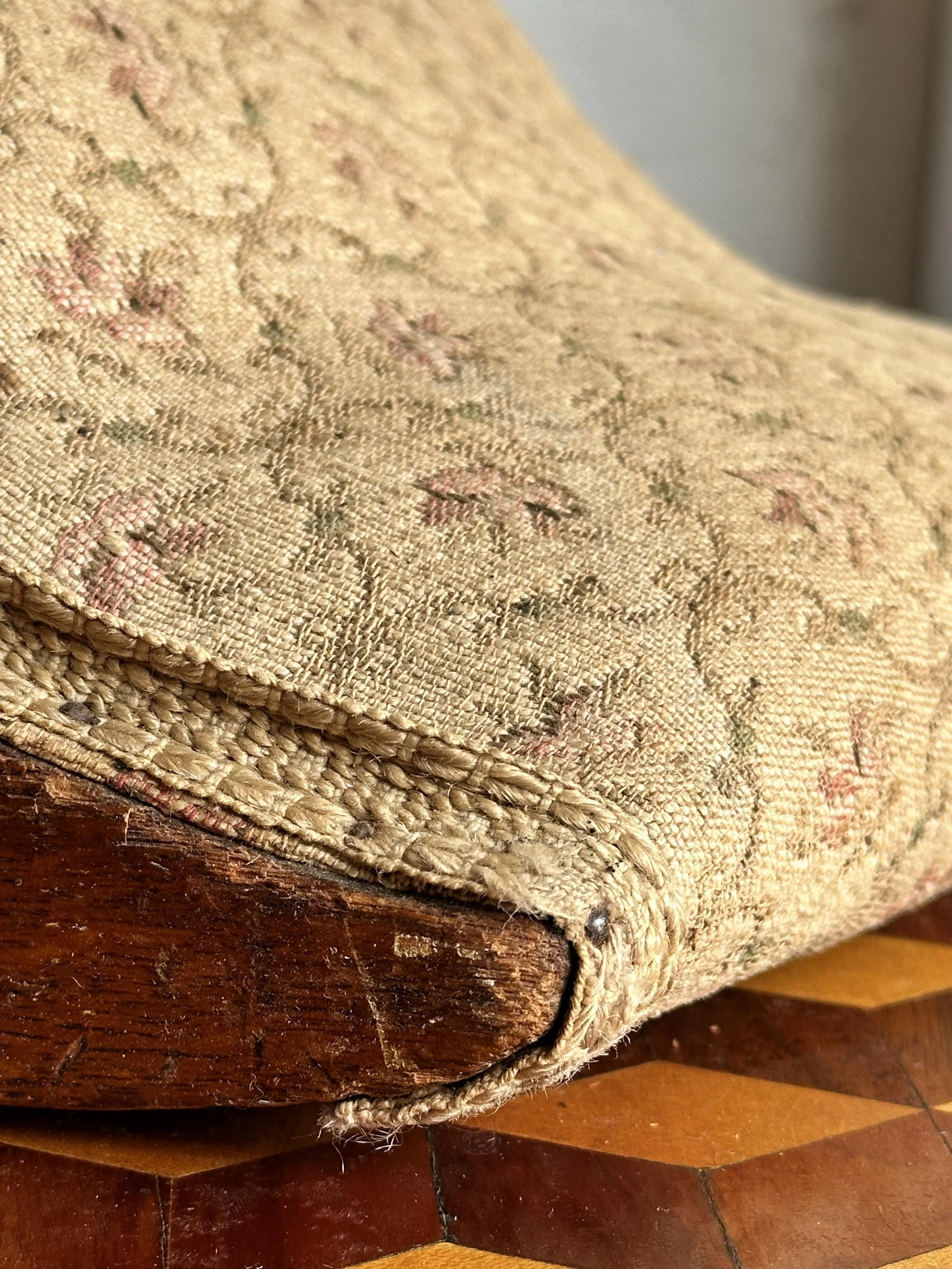
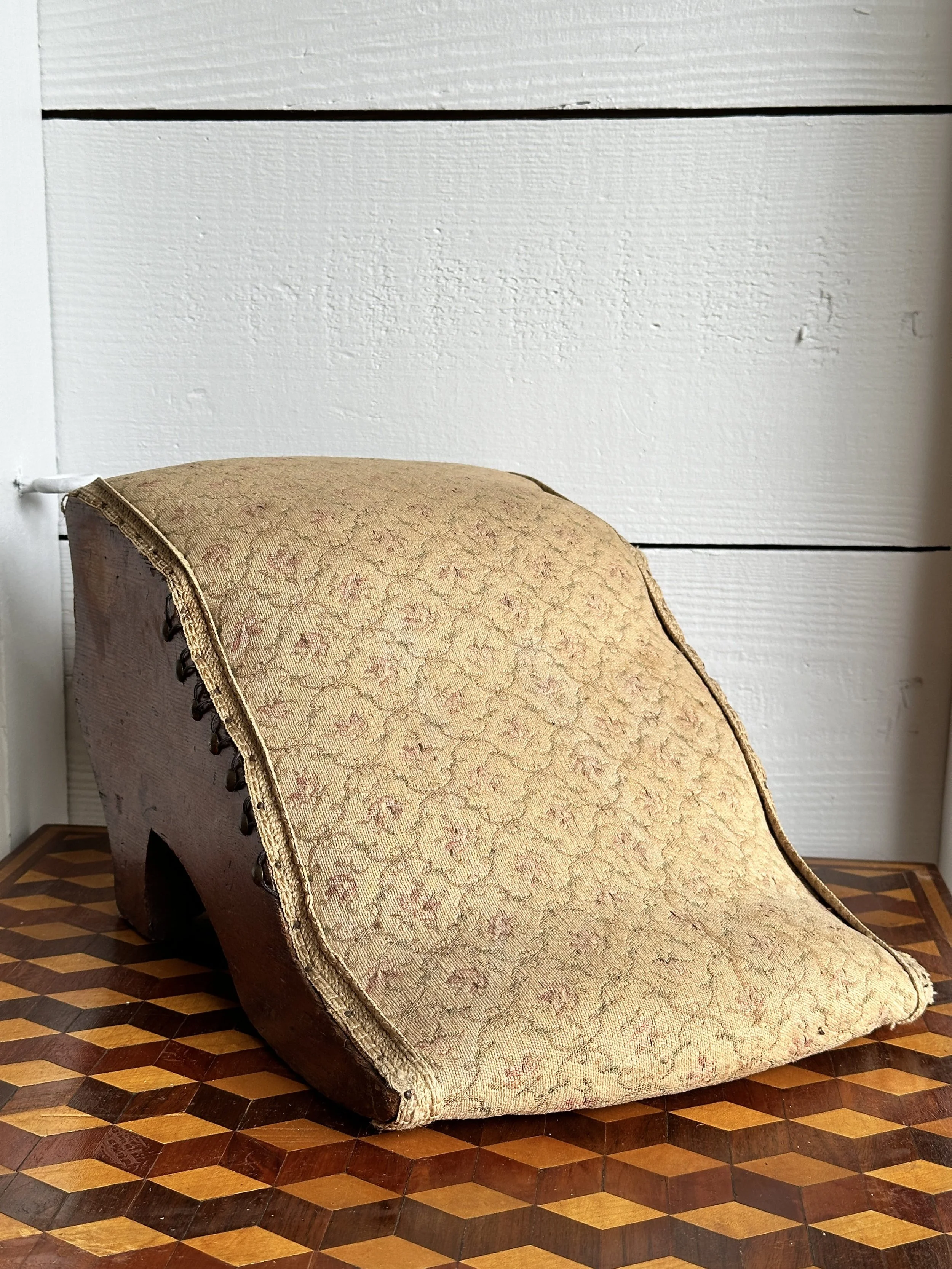
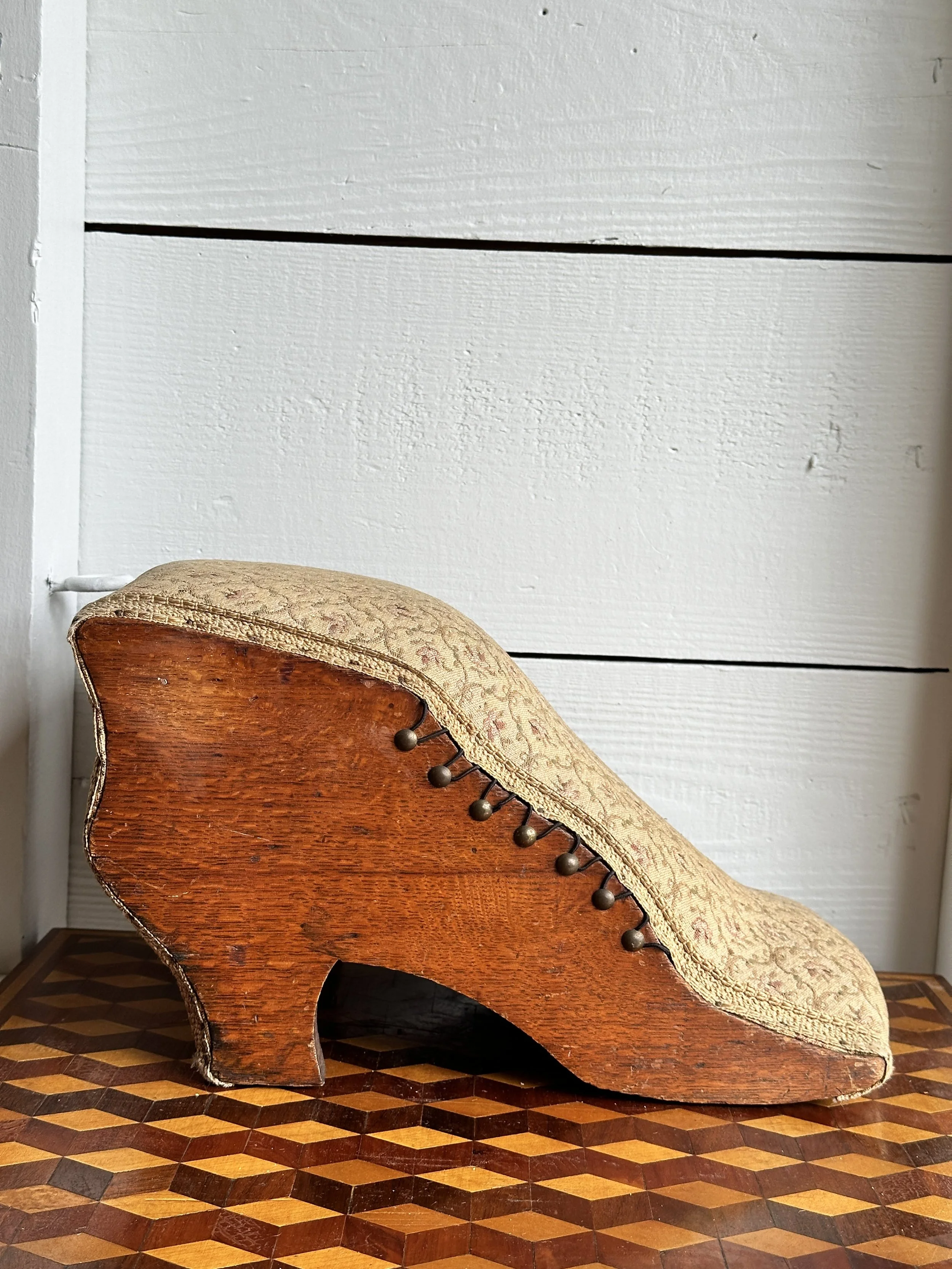
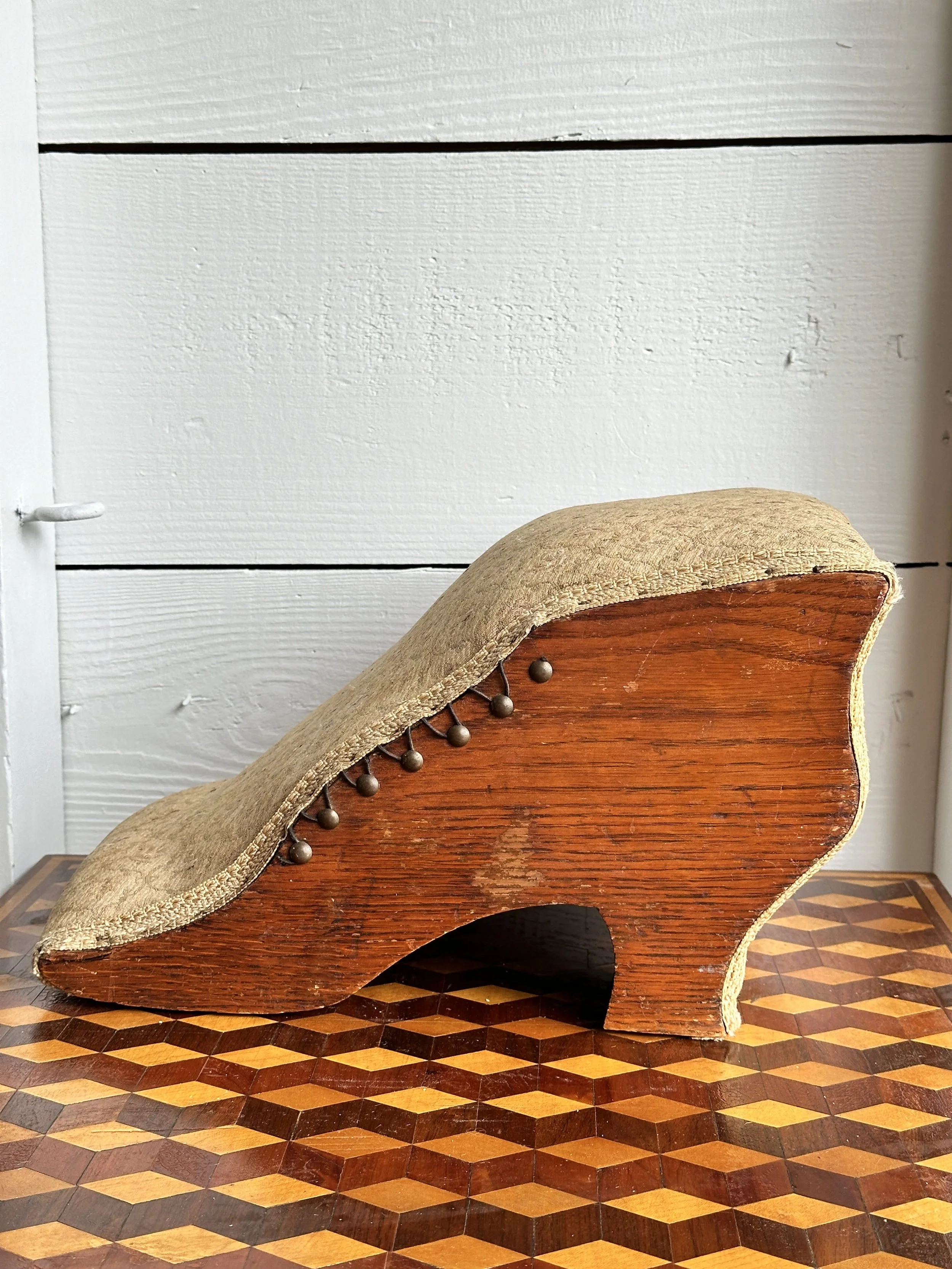
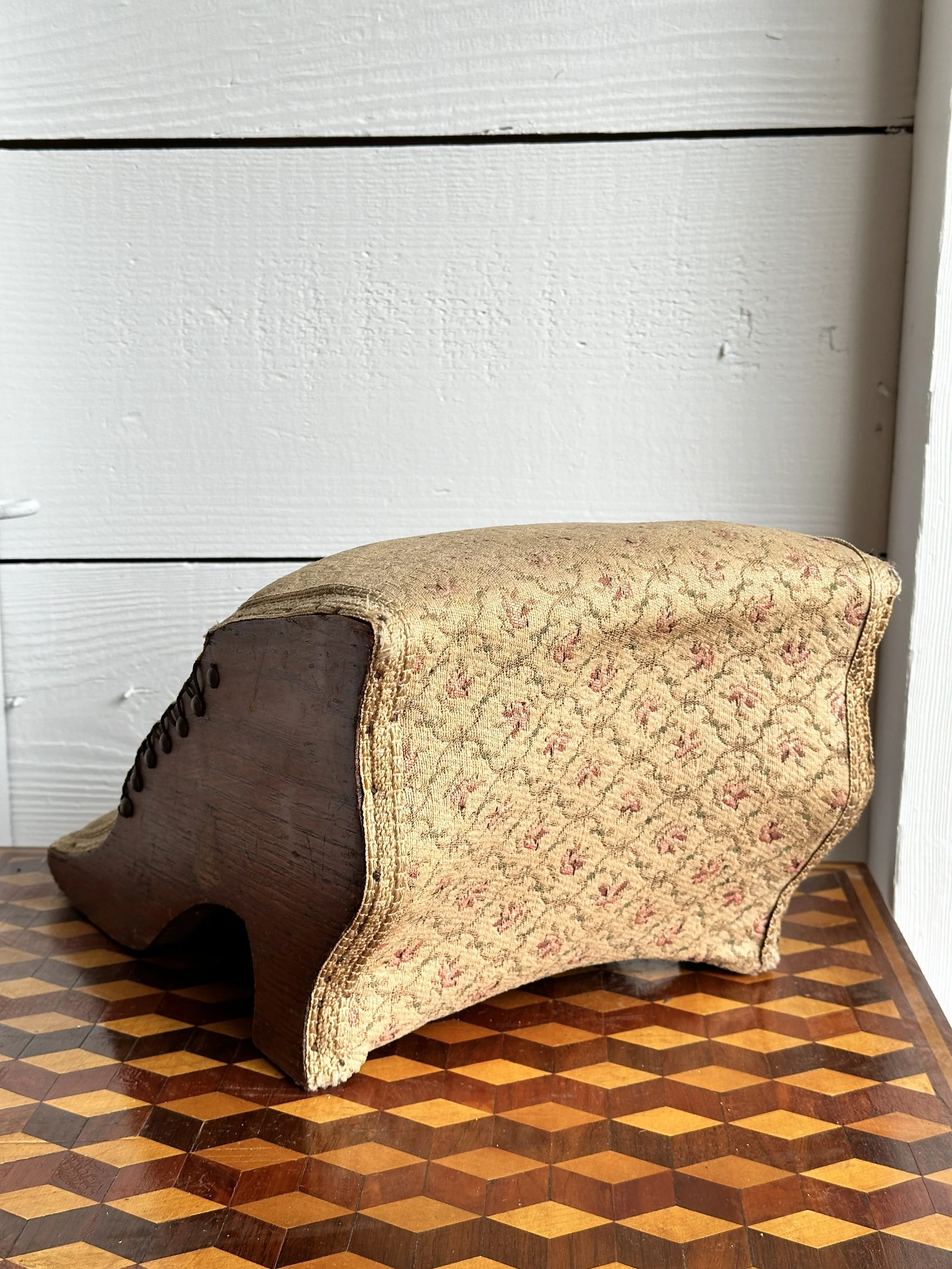
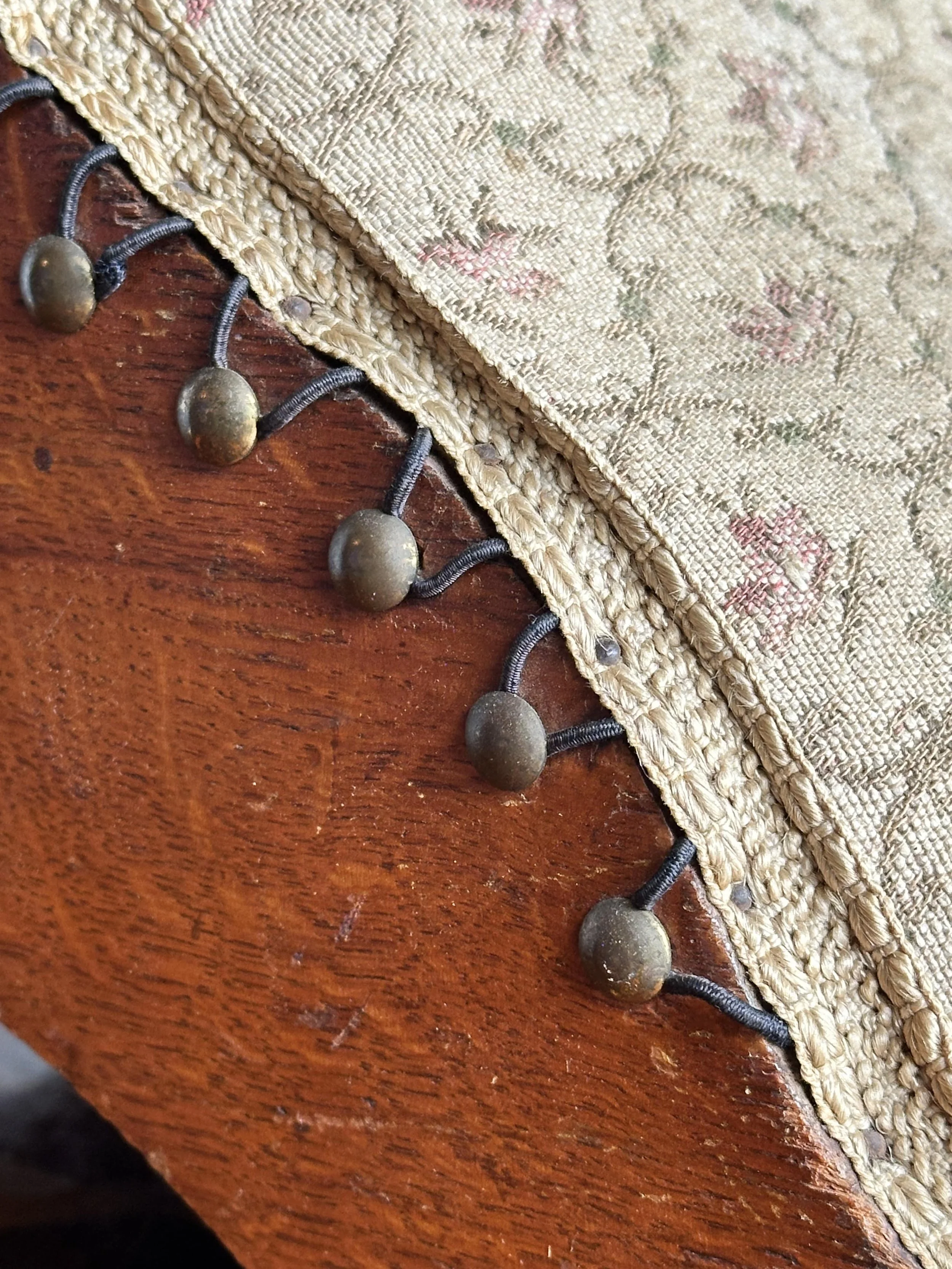
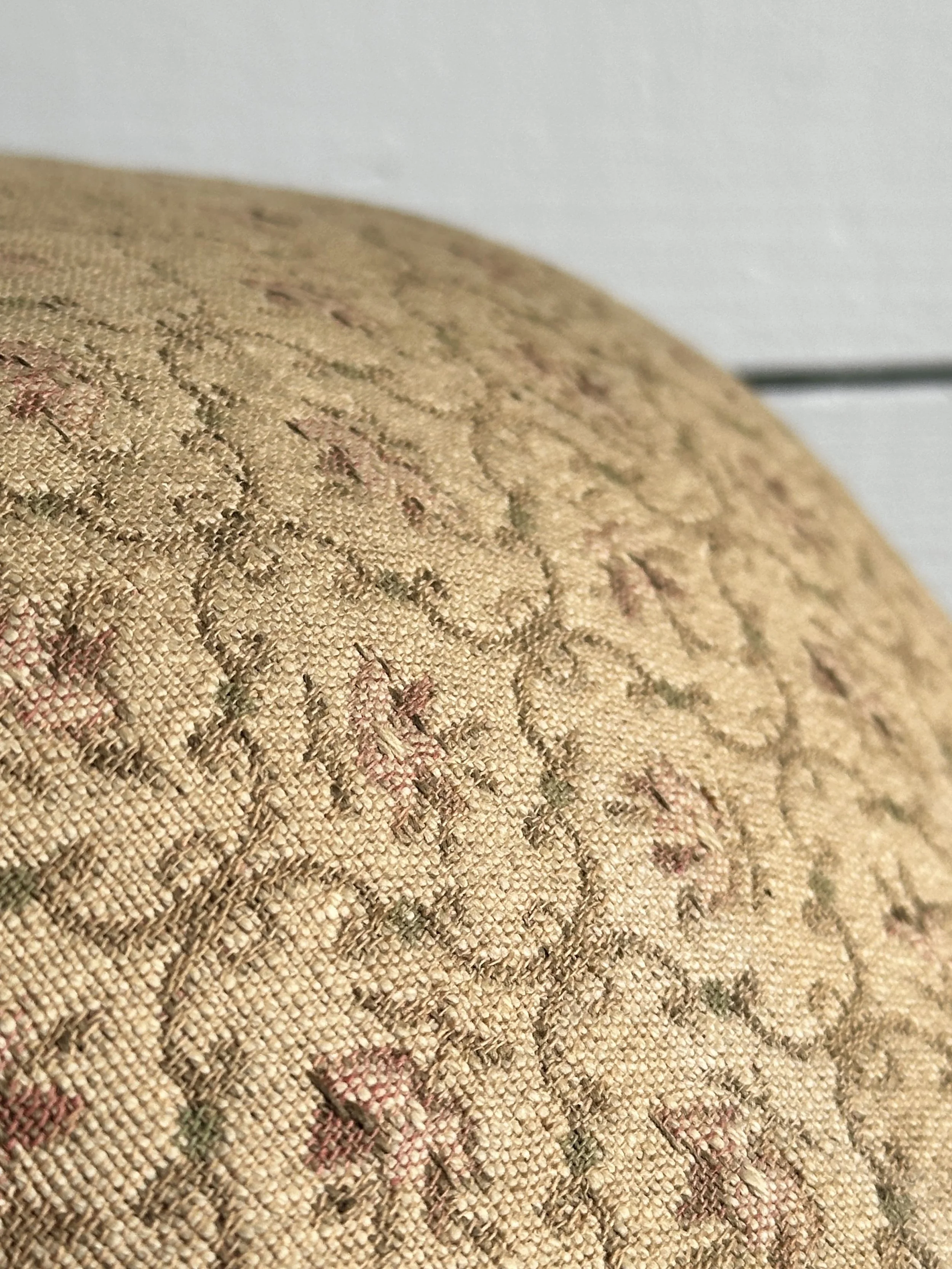
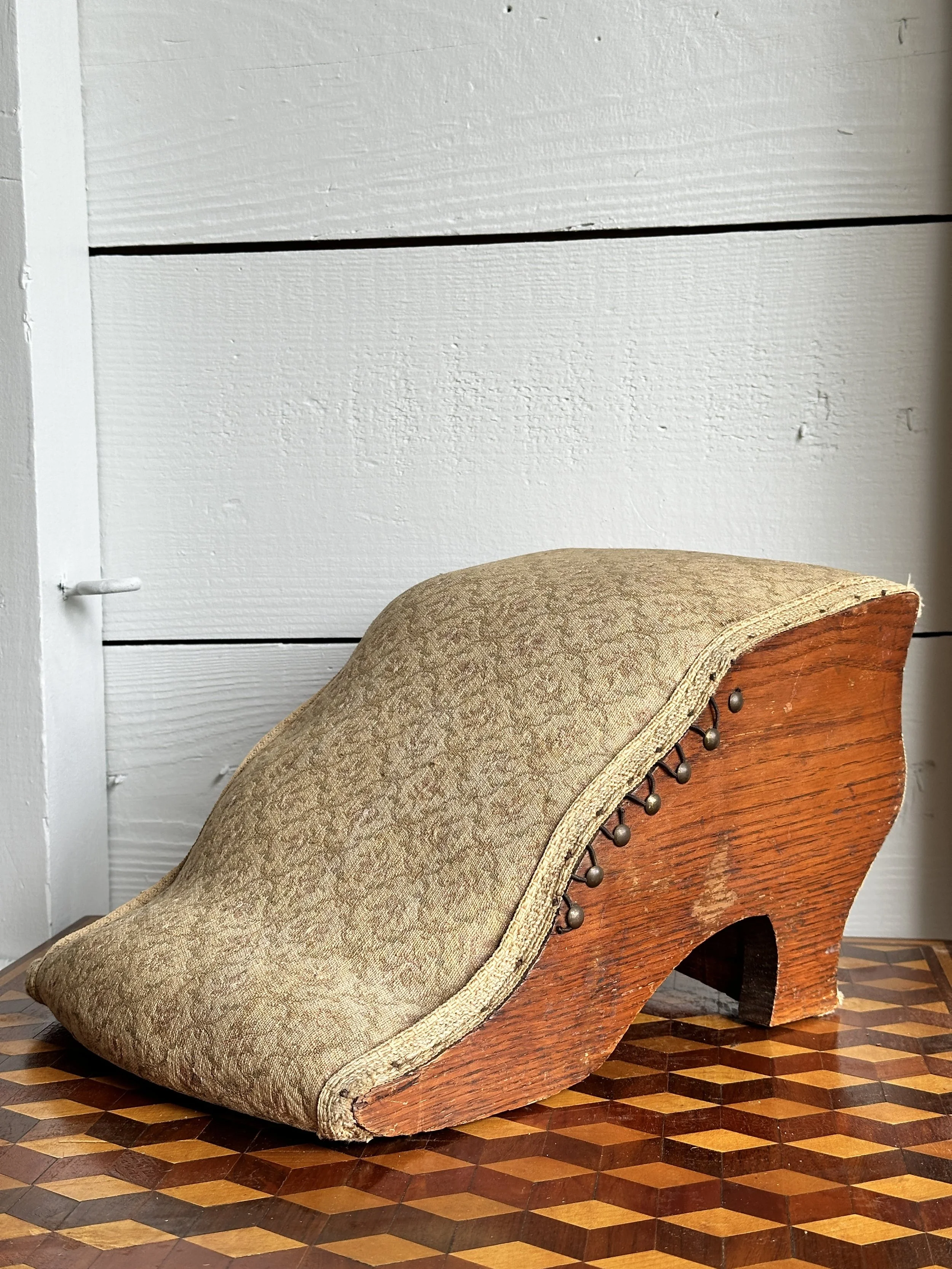
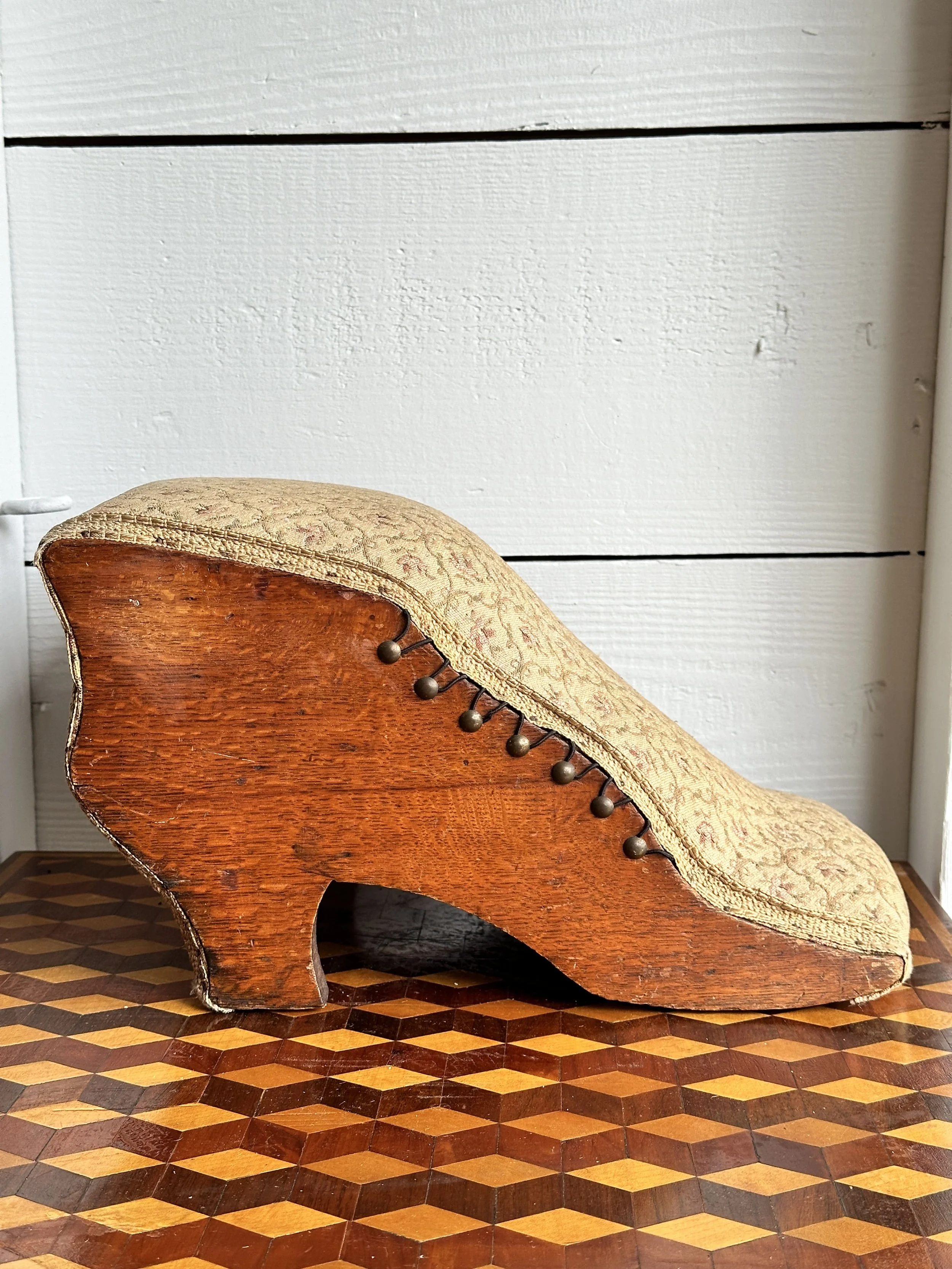
Victorian style with a wink—this 19th-century footstool takes the form of a high-button shoe, complete with a carved wooden heel, tacked trim, and jacquard upholstery that’s aged to perfection. It’s got just enough curve and quirk to feel like it stepped out of a fairytale parlor. The brass upholstery tacks and floral fabric are worn in all the right ways.
Category History
Victorian-era foot stools and shoe rests are small pieces with surprisingly specific jobs. In a time when interiors were layered with textiles, carved wood, and careful etiquette, even how you rested your feet—or removed your shoes—was considered. Foot stools offered comfort, lifting the legs slightly to ease posture, while shoe rests or boot jacks were designed to help remove tight-fitting footwear without bending or damaging the heel.
Materials varied, but many were made from solid wood with turned or carved legs, often topped with upholstered cushions or shaped platforms. Some were purely utilitarian, others leaned decorative, reflecting the broader Victorian taste for ornament and detail. Even the simplest examples tend to show thoughtful design—curved supports, reinforced joints, and proportions that feel balanced and intentional.
What’s interesting is how these objects sit between function and habit. They point to routines that were once daily and necessary—laced boots, long hours seated, formal living spaces. Over time, as footwear and furniture evolved, their role faded.
Today, they read as quiet, adaptable forms. A foot stool, a small stand, even a sculptural accent. The wear they carry—smoothed edges, compressed upholstery, subtle repairs—marks them as pieces that were used often, not just placed carefully.
ITEM NOT AVAILABLE IMMEDIATELY—INQUIRE IF INTERESTED hello@heimweeantiques.com
Victorian style with a wink—this 19th-century footstool takes the form of a high-button shoe, complete with a carved wooden heel, tacked trim, and jacquard upholstery that’s aged to perfection. It’s got just enough curve and quirk to feel like it stepped out of a fairytale parlor. The brass upholstery tacks and floral fabric are worn in all the right ways.
Category History
Victorian-era foot stools and shoe rests are small pieces with surprisingly specific jobs. In a time when interiors were layered with textiles, carved wood, and careful etiquette, even how you rested your feet—or removed your shoes—was considered. Foot stools offered comfort, lifting the legs slightly to ease posture, while shoe rests or boot jacks were designed to help remove tight-fitting footwear without bending or damaging the heel.
Materials varied, but many were made from solid wood with turned or carved legs, often topped with upholstered cushions or shaped platforms. Some were purely utilitarian, others leaned decorative, reflecting the broader Victorian taste for ornament and detail. Even the simplest examples tend to show thoughtful design—curved supports, reinforced joints, and proportions that feel balanced and intentional.
What’s interesting is how these objects sit between function and habit. They point to routines that were once daily and necessary—laced boots, long hours seated, formal living spaces. Over time, as footwear and furniture evolved, their role faded.
Today, they read as quiet, adaptable forms. A foot stool, a small stand, even a sculptural accent. The wear they carry—smoothed edges, compressed upholstery, subtle repairs—marks them as pieces that were used often, not just placed carefully.