ITEM NOT AVAILABLE IMMEDIATELY—INQUIRE IF INTERESTED hello@heimweeantiques.com
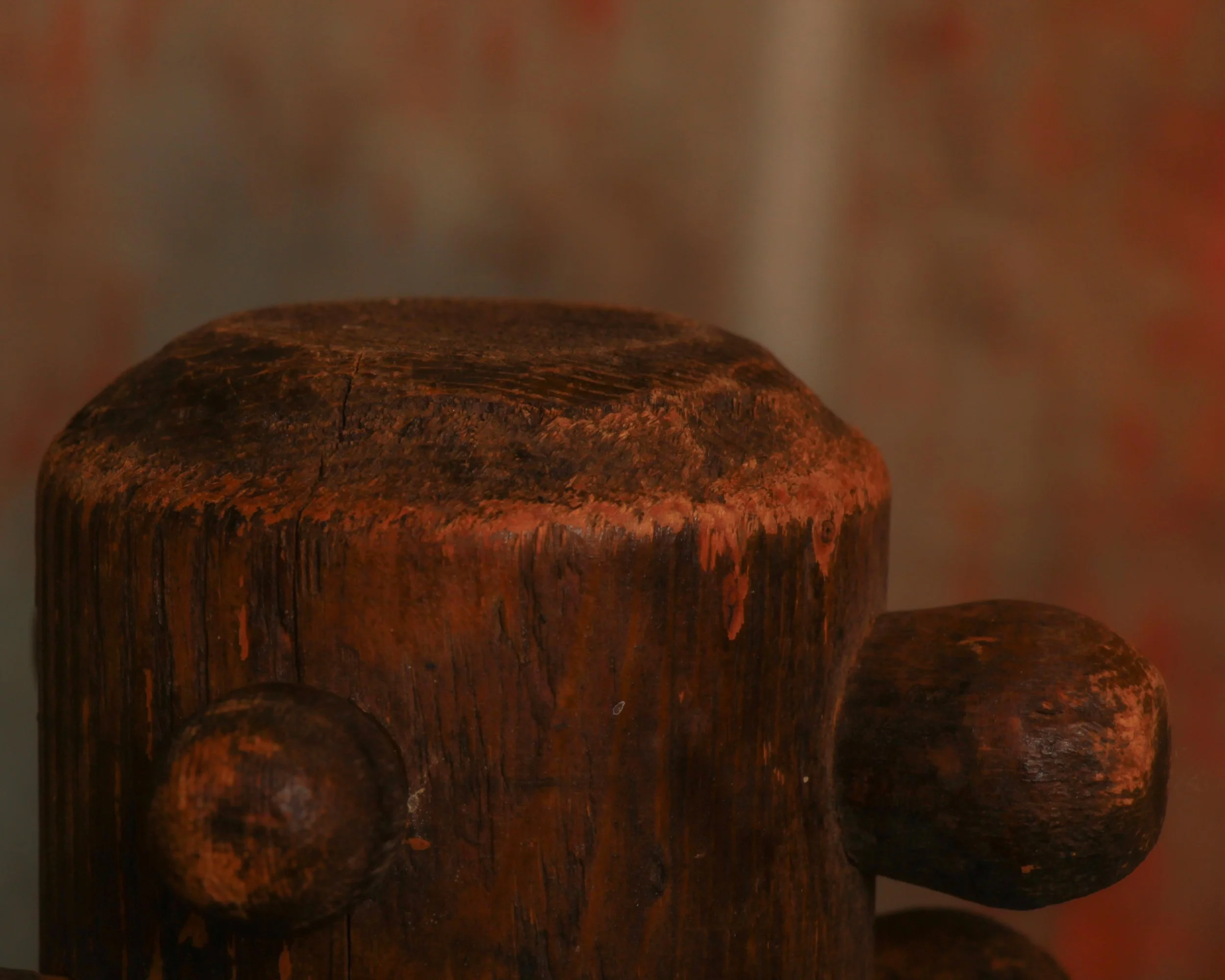
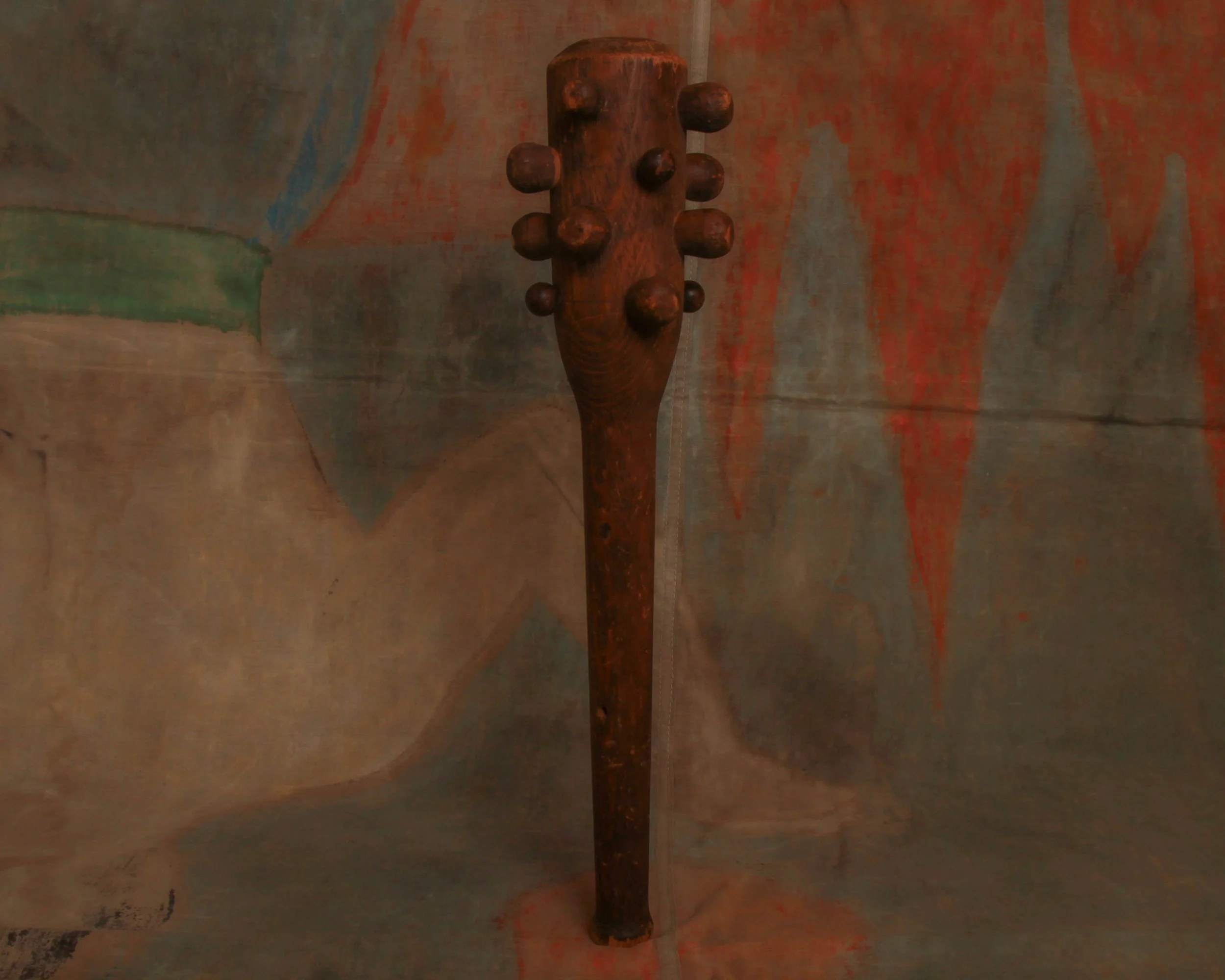
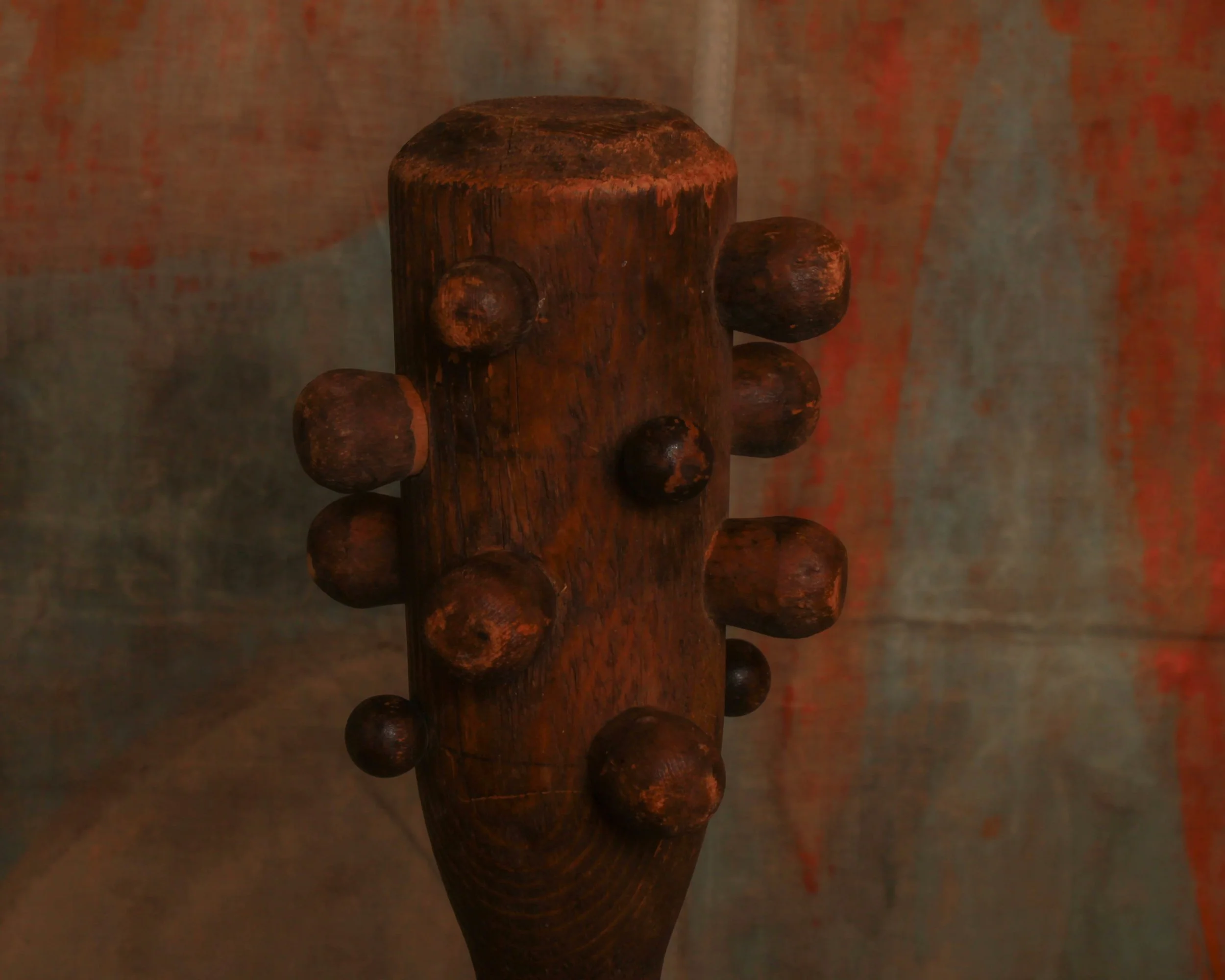
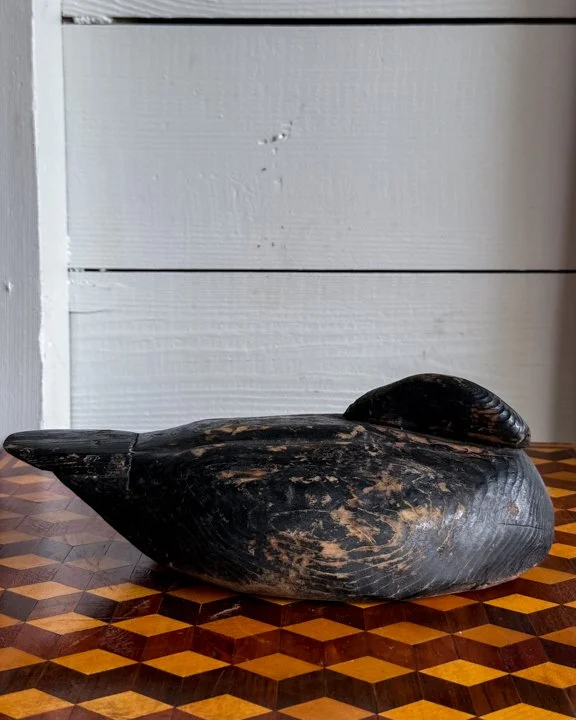
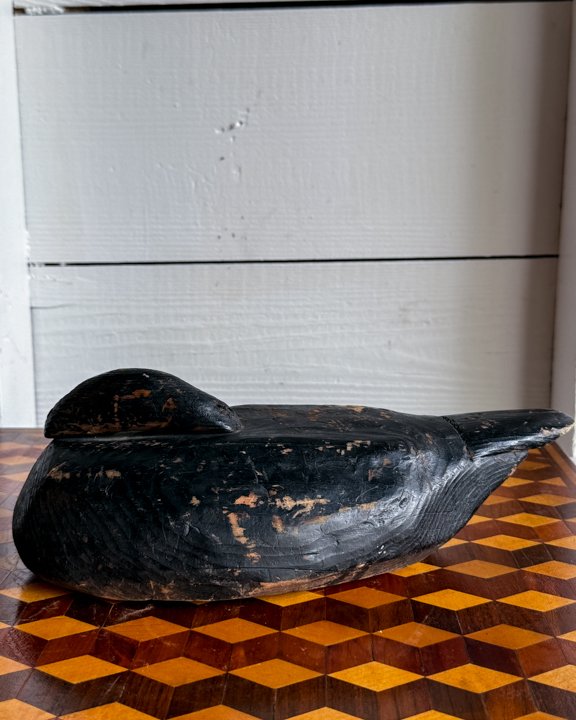
A classic sleeper duck decoy—head tucked in, tail just barely peeking—carved from solid wood and showing every bit of its age like a badge of honor. The surface is worn down to a ghost of its original paint, with scuffs, gouges, and feather chisel marks that speak to decades of use (and probably a few near misses in the marsh).
Category History
Duck and swan decoys sit right at the meeting point of survival and craft. Originally, they were tools—carved to lure real birds within range for hunting. Placed on water in carefully arranged spreads, they mimicked the posture, spacing, and behavior of live flocks. A good decoy didn’t just look right; it felt right in the water, riding the surface with a natural balance that could convince a wary bird from a distance.
Most early examples were hand-carved from wood—cedar, cork, or pine—then painted with an eye for species-specific markings. Makers paid close attention to silhouette and movement. From afar, detail mattered less than shape and contrast, so bold paint patterns and clean lines did much of the work. Some were hollowed to reduce weight, others weighted to sit low and steady.
What makes them compelling now is the personality each one carries. No two carvers approached it the same way. Some leaned realistic, others more stylized, letting tool marks and brushstrokes remain visible. Repairs, repaints, and patched bodies are common—these were working objects, not precious ones.
Swan decoys, often larger and more sculptural, sometimes doubled as confidence decoys, meant to signal safety to other birds. Today, both duck and swan examples read as sculpture as much as tool—objects shaped by water, weather, and a steady hand that knew exactly what mattered and what didn’t.
ITEM NOT AVAILABLE IMMEDIATELY—INQUIRE IF INTERESTED hello@heimweeantiques.com
A classic sleeper duck decoy—head tucked in, tail just barely peeking—carved from solid wood and showing every bit of its age like a badge of honor. The surface is worn down to a ghost of its original paint, with scuffs, gouges, and feather chisel marks that speak to decades of use (and probably a few near misses in the marsh).
Category History
Duck and swan decoys sit right at the meeting point of survival and craft. Originally, they were tools—carved to lure real birds within range for hunting. Placed on water in carefully arranged spreads, they mimicked the posture, spacing, and behavior of live flocks. A good decoy didn’t just look right; it felt right in the water, riding the surface with a natural balance that could convince a wary bird from a distance.
Most early examples were hand-carved from wood—cedar, cork, or pine—then painted with an eye for species-specific markings. Makers paid close attention to silhouette and movement. From afar, detail mattered less than shape and contrast, so bold paint patterns and clean lines did much of the work. Some were hollowed to reduce weight, others weighted to sit low and steady.
What makes them compelling now is the personality each one carries. No two carvers approached it the same way. Some leaned realistic, others more stylized, letting tool marks and brushstrokes remain visible. Repairs, repaints, and patched bodies are common—these were working objects, not precious ones.
Swan decoys, often larger and more sculptural, sometimes doubled as confidence decoys, meant to signal safety to other birds. Today, both duck and swan examples read as sculpture as much as tool—objects shaped by water, weather, and a steady hand that knew exactly what mattered and what didn’t.