ITEM NOT AVAILABLE IMMEDIATELY—INQUIRE IF INTERESTED hello@heimweeantiques.com
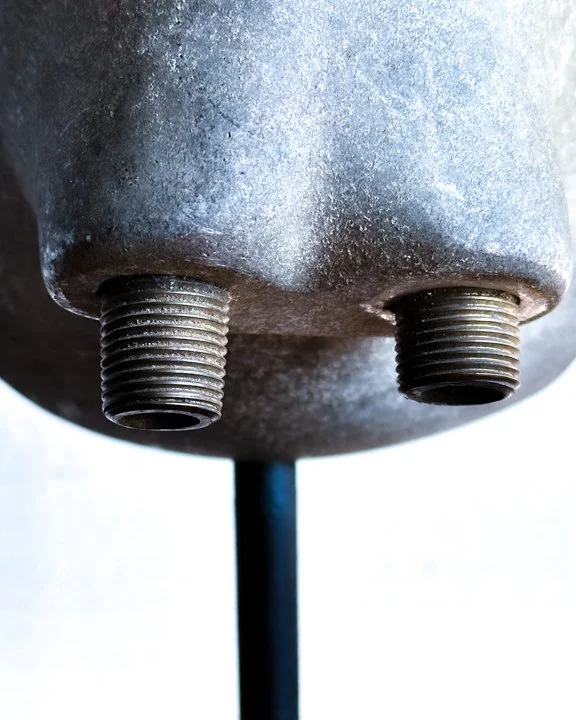
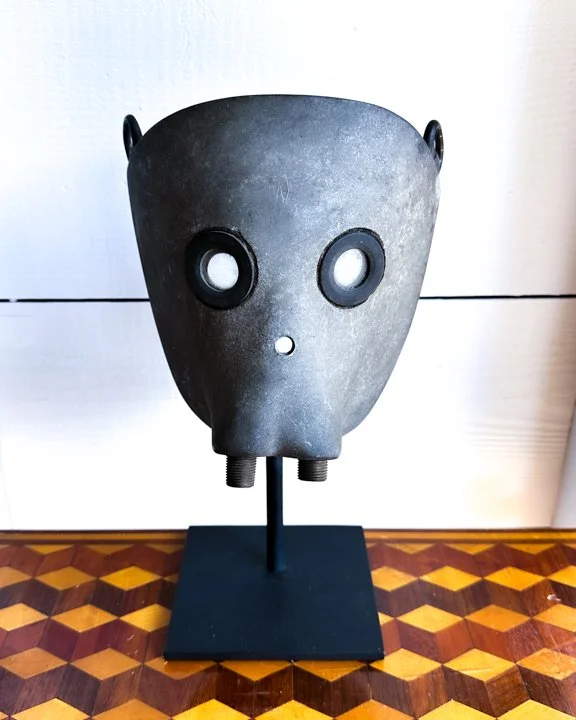
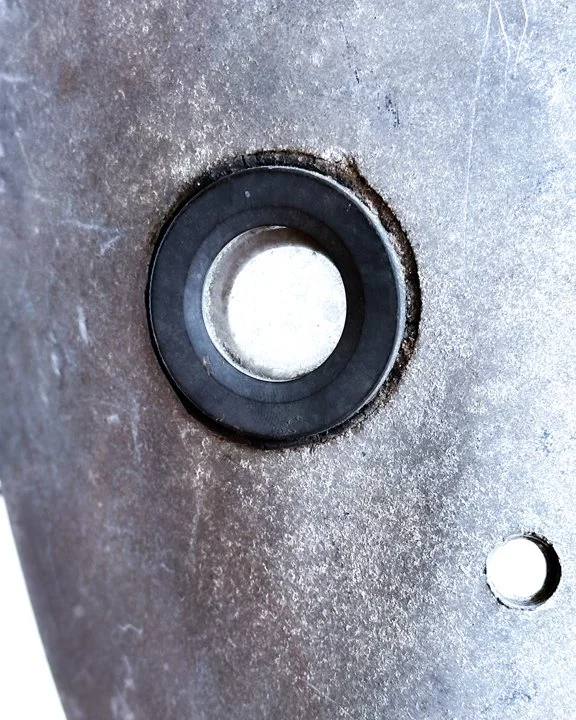
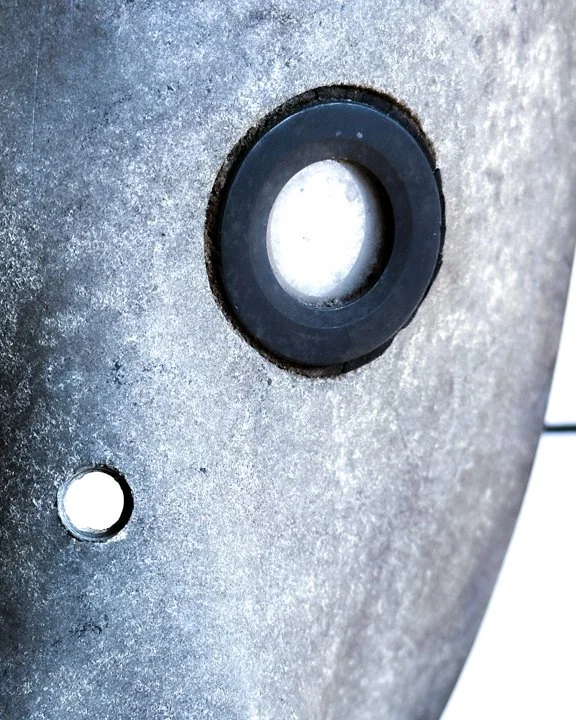
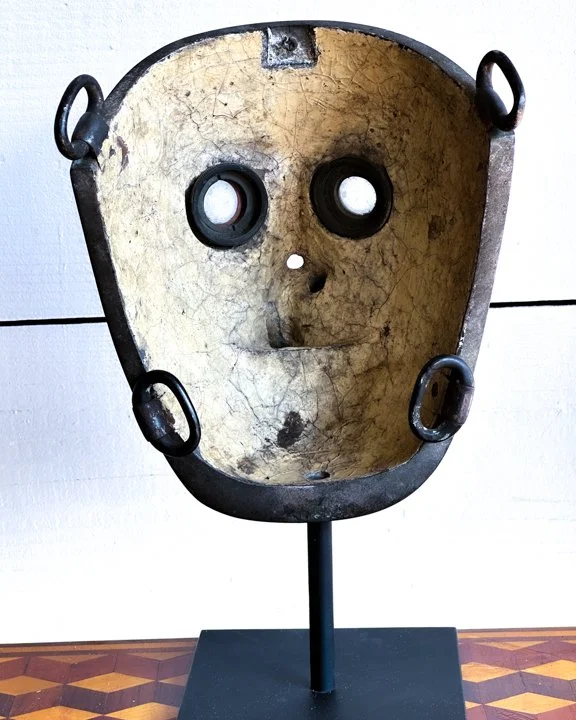
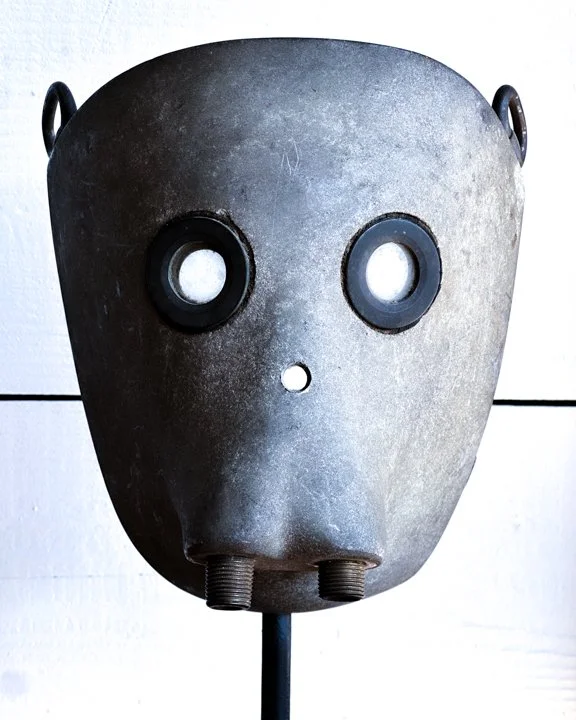
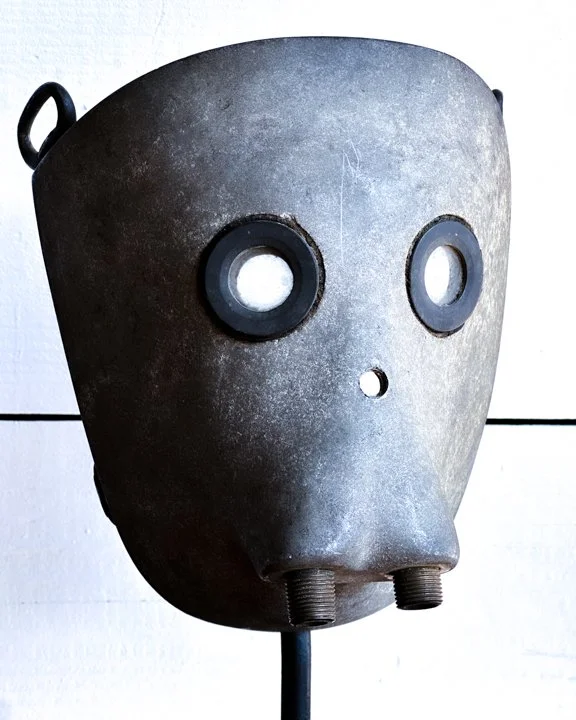
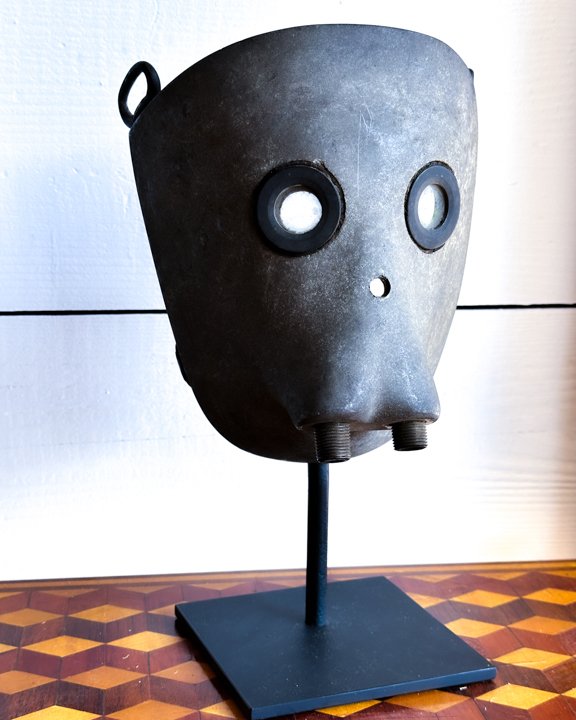
This piece looks like something straight out of a dystopian fever dream, but it’s actually a 19th-century smoke mask—an early attempt at protecting lungs from toxic air. Cast in metal with stark, goggle-like eyes and twin threaded ports for oxygen tubes, it’s equal parts ingenious and unsettling. Mounted on its stand, it tells the story of an era when factories belched smoke, and fire brigades experimented with ways to breathe through the haze.
Category History
19th-century smoke and fire masks sit at that early, experimental phase of firefighting—when the job was evolving faster than the gear designed to support it. As urban fires grew more dangerous with dense construction and industrial materials, firefighters needed a way to push deeper into smoke-filled spaces without being overwhelmed.
Early solutions were inventive, if imperfect. Some masks were little more than cloth hoods soaked in water or chemicals, meant to filter and cool the air. Others were more ambitious—leather or metal facepieces fitted with glass eye ports and connected to rudimentary air systems. A few designs used hoses to draw in air from outside the building, while others relied on canisters filled with charcoal or sponge to absorb smoke.
They weren’t standardized, and effectiveness varied widely. But they represent a turning point—the moment when protection became part of the strategy, not just courage and endurance.
What stands out now is how mechanical and handmade they feel. Rivets, straps, stitched seams, hand-cut lenses—each piece shows the trial-and-error thinking behind it. Many bear the marks of use: heat exposure, repairs, improvisations.
They’re not sleek or comfortable, but they’re honest. Early attempts to solve a life-and-death problem with the materials and knowledge available at the time—practical, determined, and a little bit experimental.
ITEM NOT AVAILABLE IMMEDIATELY—INQUIRE IF INTERESTED hello@heimweeantiques.com
This piece looks like something straight out of a dystopian fever dream, but it’s actually a 19th-century smoke mask—an early attempt at protecting lungs from toxic air. Cast in metal with stark, goggle-like eyes and twin threaded ports for oxygen tubes, it’s equal parts ingenious and unsettling. Mounted on its stand, it tells the story of an era when factories belched smoke, and fire brigades experimented with ways to breathe through the haze.
Category History
19th-century smoke and fire masks sit at that early, experimental phase of firefighting—when the job was evolving faster than the gear designed to support it. As urban fires grew more dangerous with dense construction and industrial materials, firefighters needed a way to push deeper into smoke-filled spaces without being overwhelmed.
Early solutions were inventive, if imperfect. Some masks were little more than cloth hoods soaked in water or chemicals, meant to filter and cool the air. Others were more ambitious—leather or metal facepieces fitted with glass eye ports and connected to rudimentary air systems. A few designs used hoses to draw in air from outside the building, while others relied on canisters filled with charcoal or sponge to absorb smoke.
They weren’t standardized, and effectiveness varied widely. But they represent a turning point—the moment when protection became part of the strategy, not just courage and endurance.
What stands out now is how mechanical and handmade they feel. Rivets, straps, stitched seams, hand-cut lenses—each piece shows the trial-and-error thinking behind it. Many bear the marks of use: heat exposure, repairs, improvisations.
They’re not sleek or comfortable, but they’re honest. Early attempts to solve a life-and-death problem with the materials and knowledge available at the time—practical, determined, and a little bit experimental.