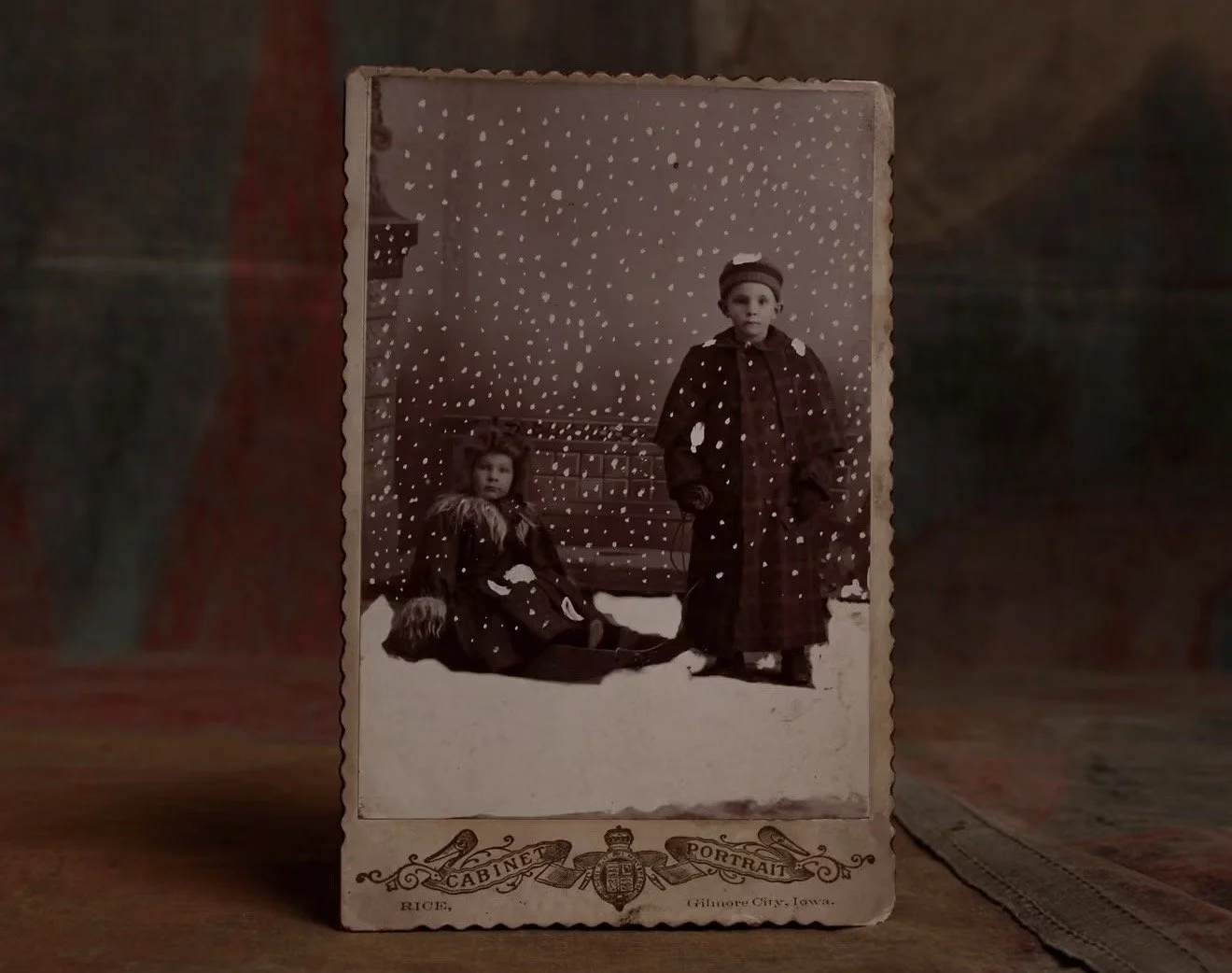
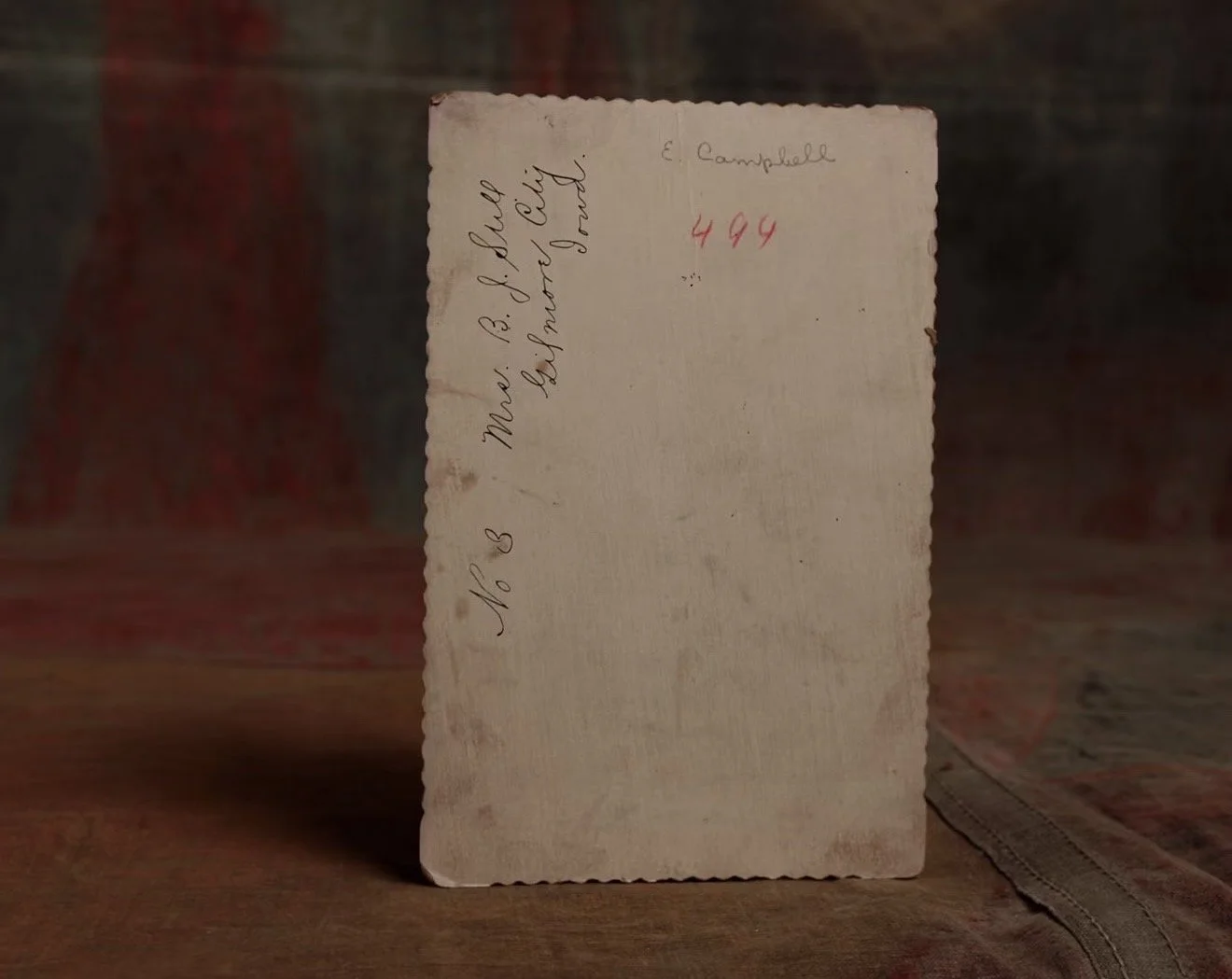
An unusual late 19th to early 20th century cabinet card photograph featuring two children posed in a photographer's studio, with an added snowfall effect that makes the scene appear to have been taken outdoors in winter. One child stands wearing a long coat and cap, while the other sits on the floor beside a decorative bench. Small white flecks scattered across the photograph create the illusion of falling snow. The card has scalloped edges and an ornate studio imprint reading "Rice, Gilmore City, Iowa," along with handwritten inscriptions on the reverse.
Cabinet cards became popular during the 1860s and remained a standard form of portrait photography into the early 20th century. They consisted of photographic prints mounted onto sturdy cardboard, typically measuring around 4¼ by 6½ inches. Unlike earlier cartes de visite, cabinet cards offered a larger image, allowing photographers to capture more detail in faces, clothing, and elaborate studio settings.
Photographers regularly experimented with painted backdrops, theatrical props, unusual lighting, and creative darkroom techniques to make their portraits more interesting. Artificial snow scenes became particularly fashionable during the 1880s and 1890s, offering customers the novelty of a winter portrait without having to stand outside in freezing weather.
The snowy effect could be produced by carefully applying white pigment to a photographic negative, sometimes using a toothbrush to scatter tiny droplets across the surface. When printed, these marks appeared as white snowflakes. Other techniques involved painted scenery, artificial snow on the studio floor, and additional retouching.
Long before digital photo editing, these playful photographic tricks demonstrated just how inventive Victorian-era photographers could be.