ITEM NOT AVAILABLE IMMEDIATELY—INQUIRE IF INTERESTED hello@heimweeantiques.com
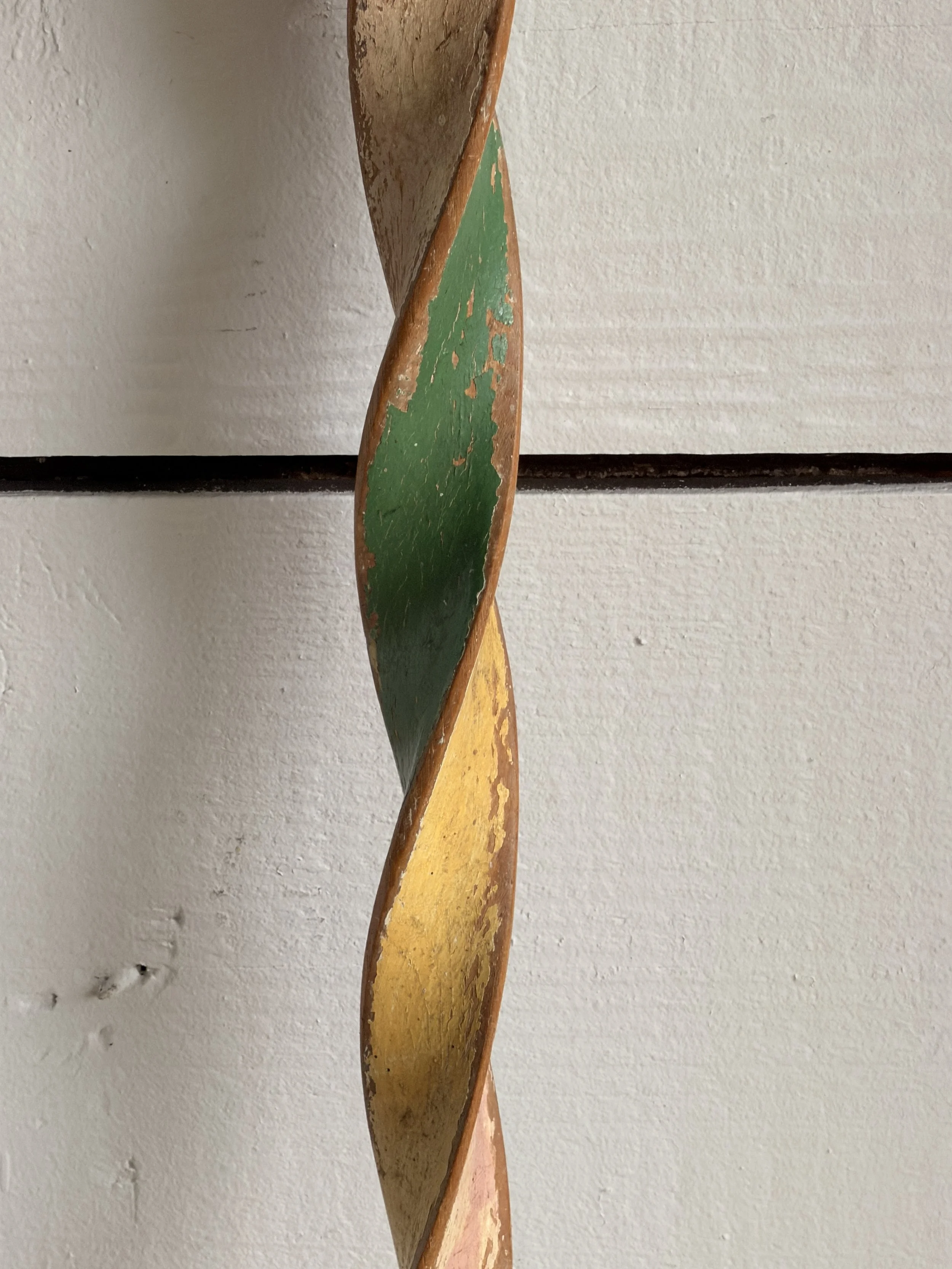
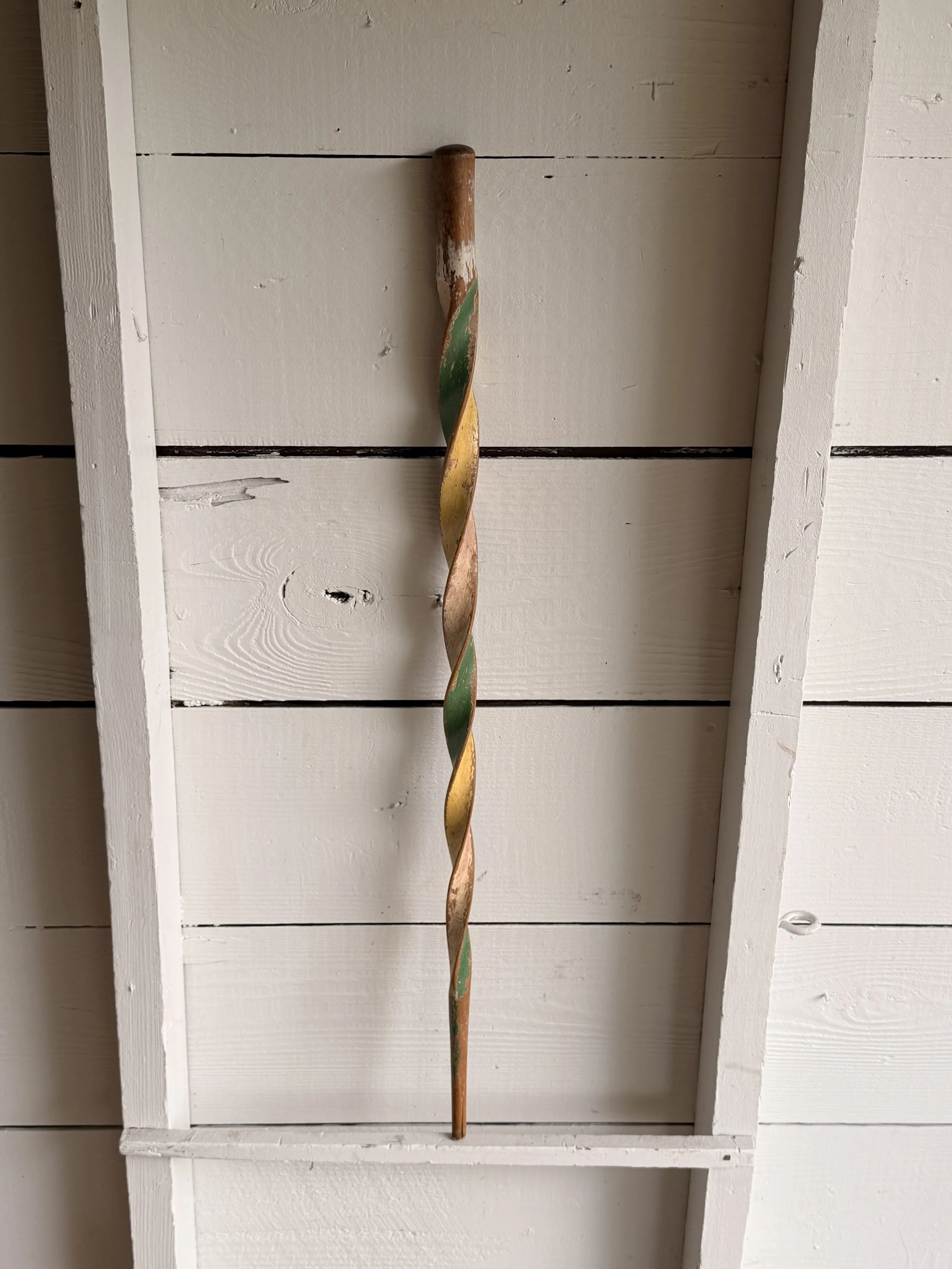
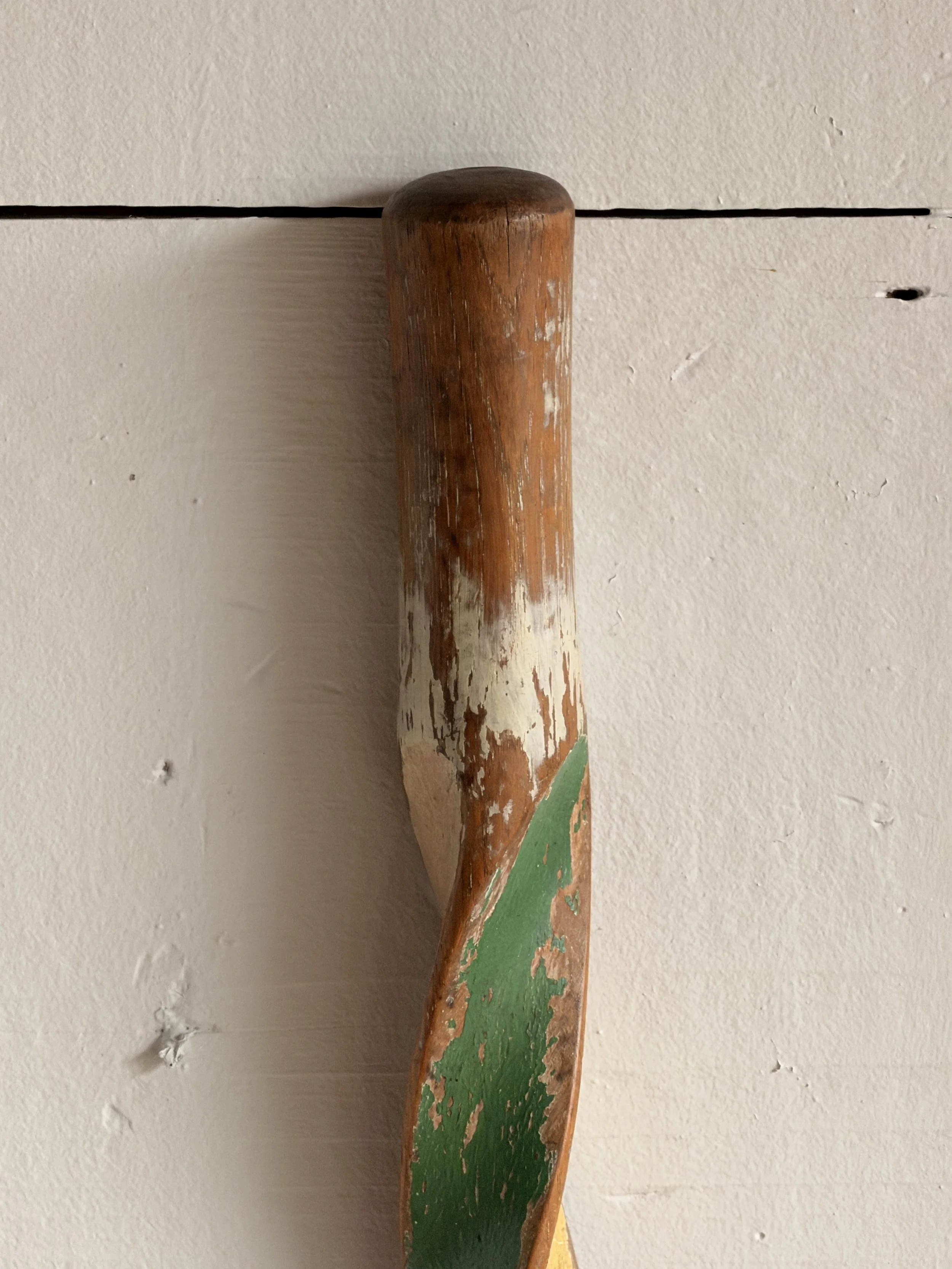
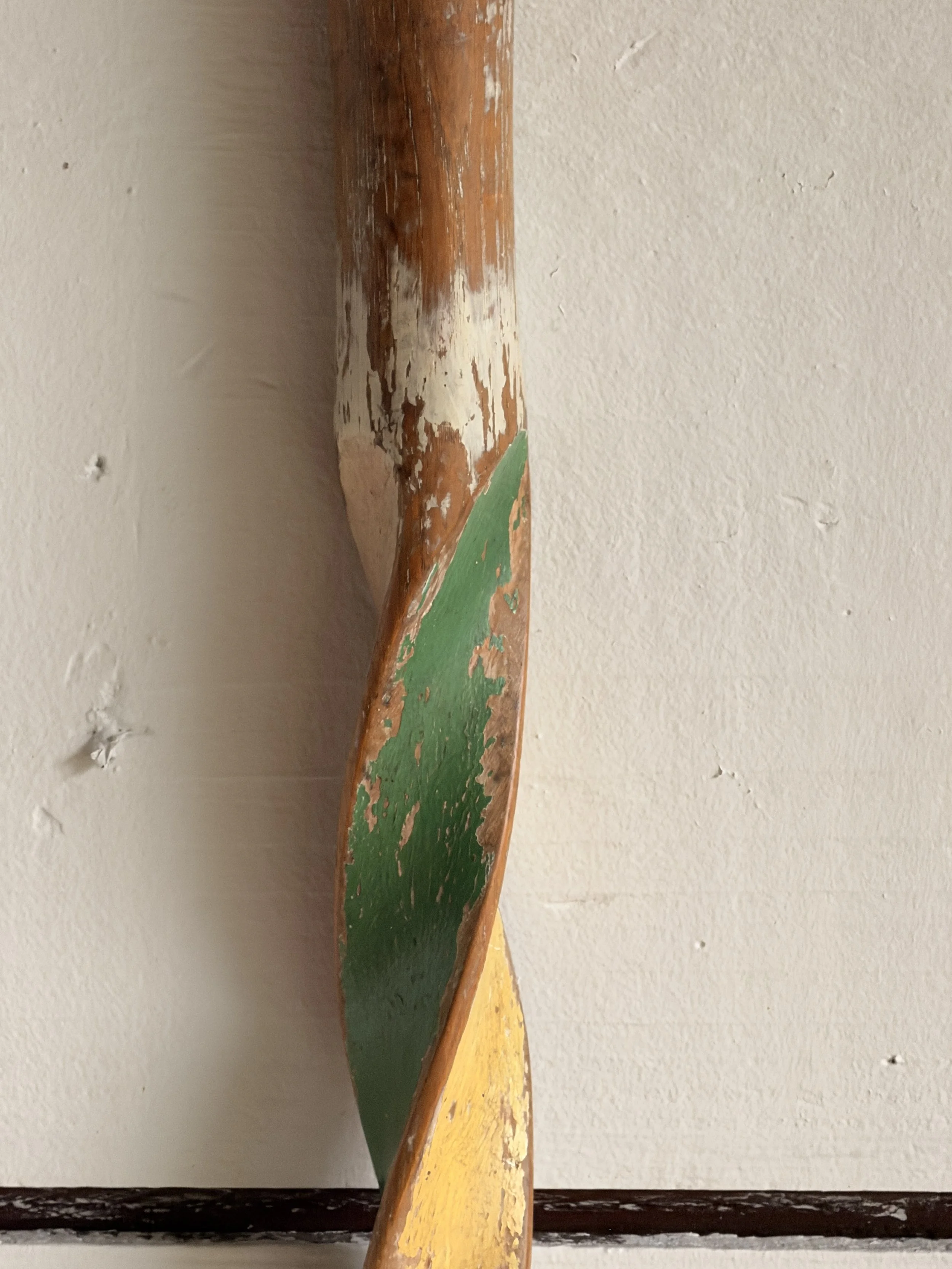
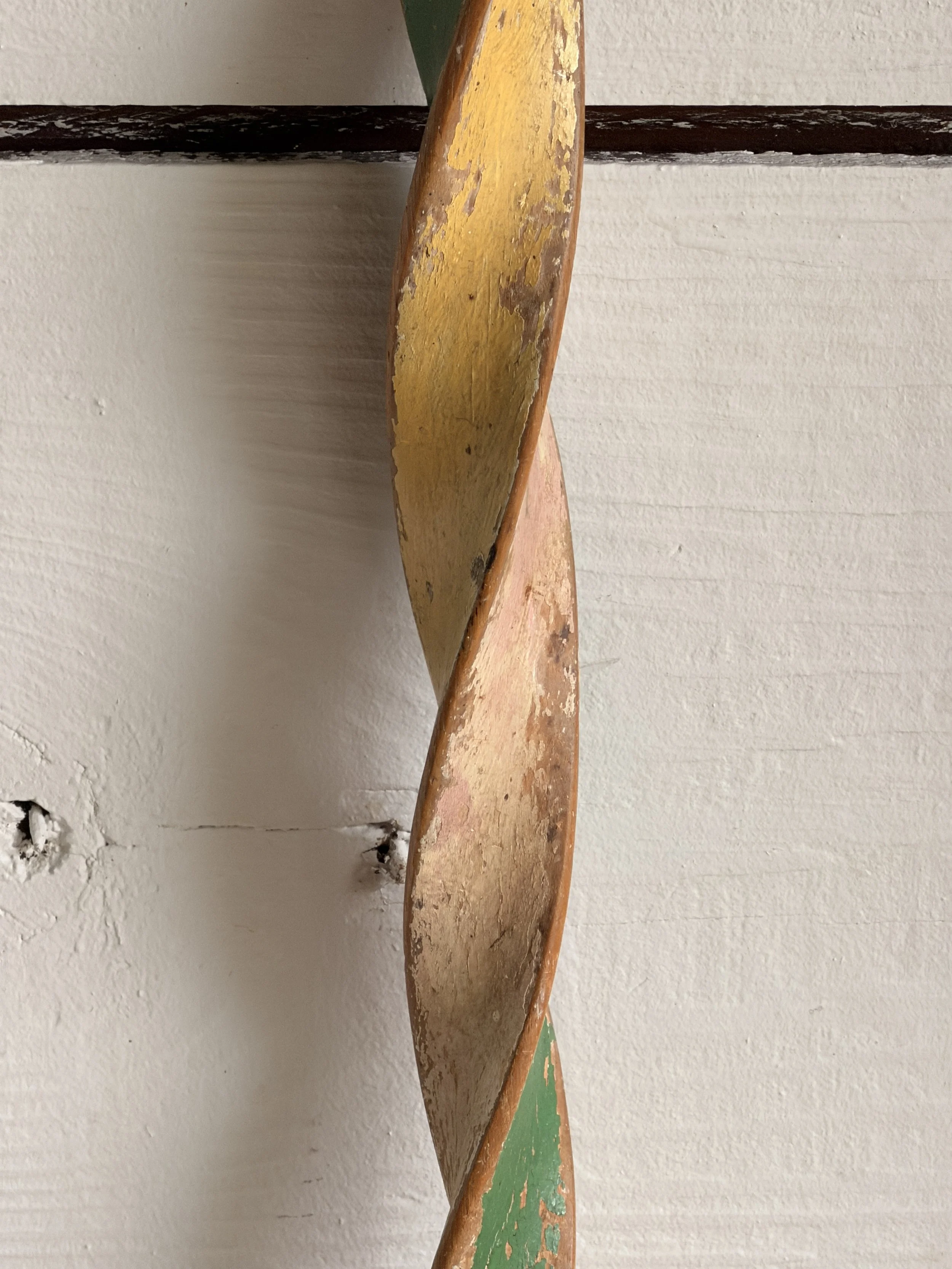
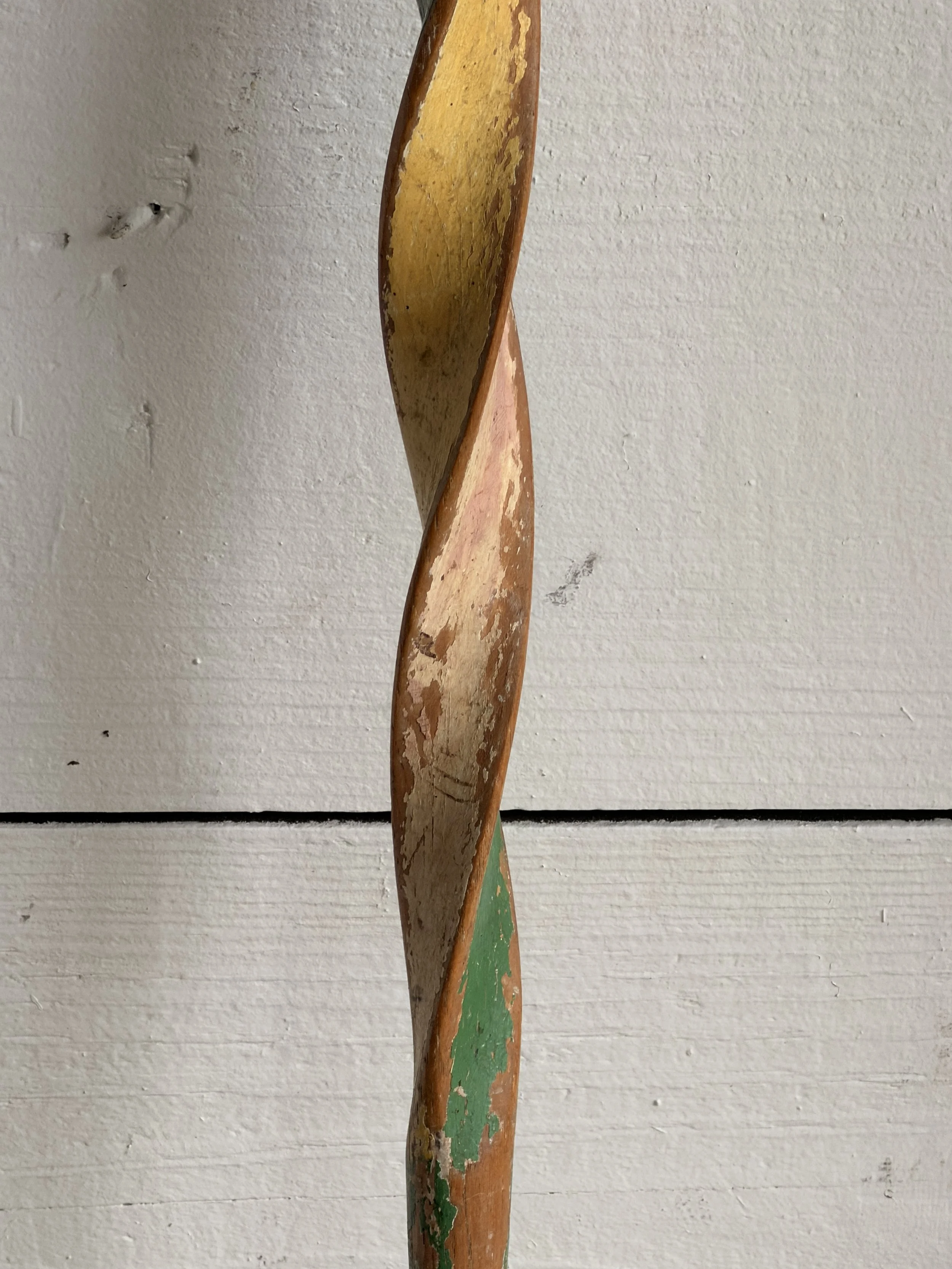
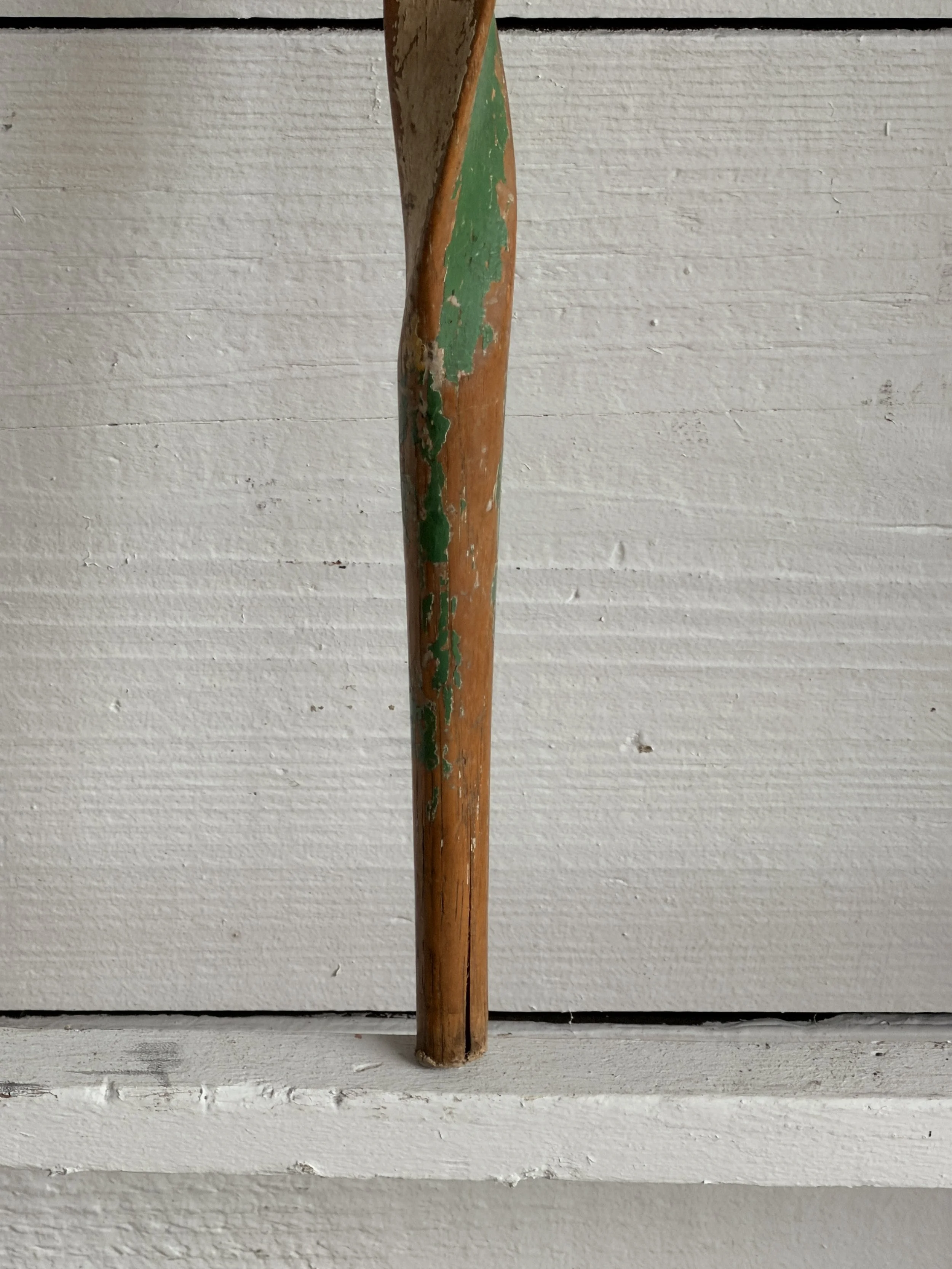
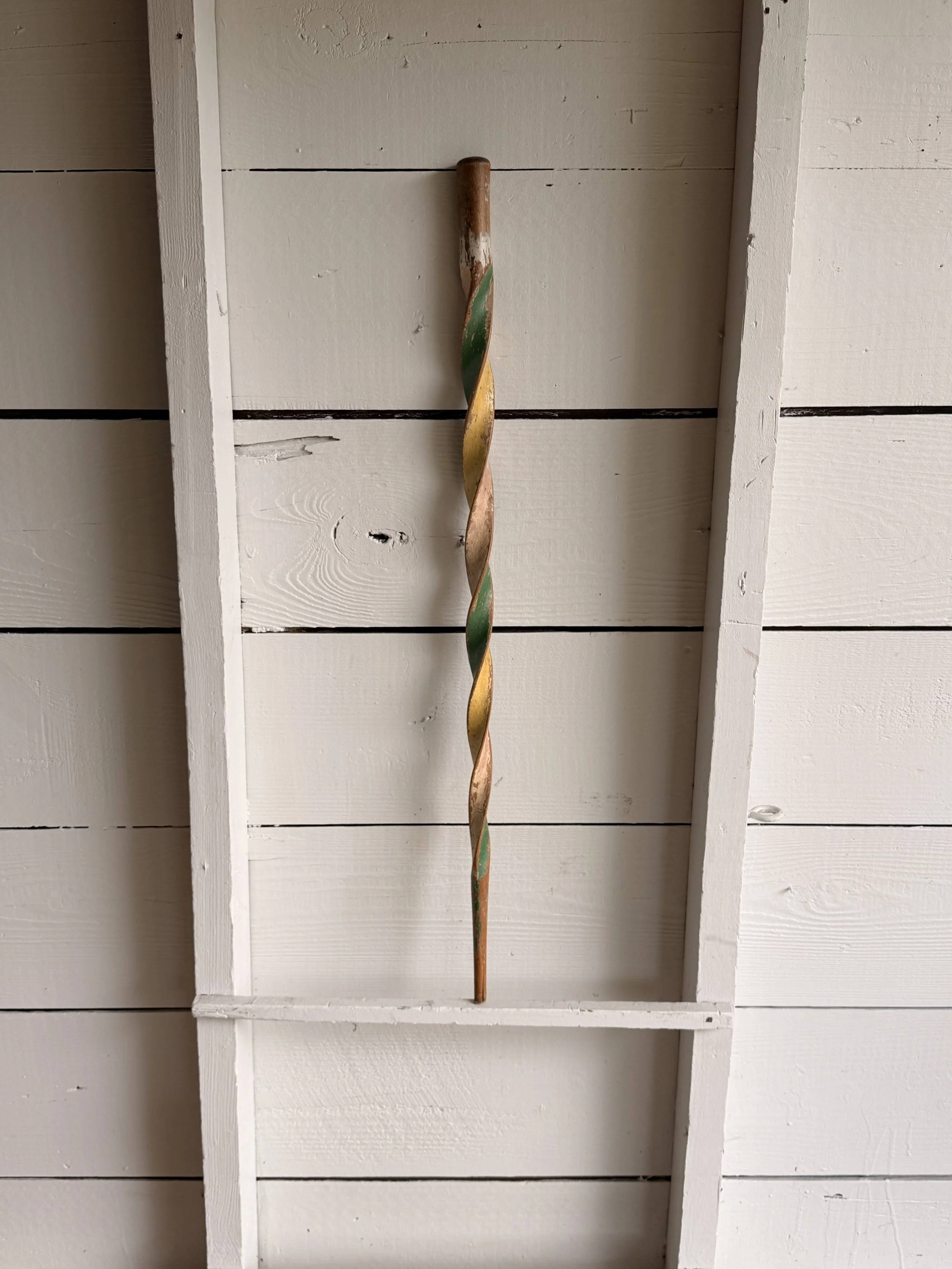
Antique hand-carved wooden cane with a wonderful open spiral running through most of the shaft. Rather than simply twisting the surface, the maker carved the wood deeply enough to create a continuous corkscrew form, giving the cane a strong sculptural presence from every angle. The spiral sections retain traces of old painted decoration in green, yellow, cream, and a faded pinkish tone, while the handle and lower shaft are left largely natural. Years of handling have softened the edges and worn away much of the paint, leaving a surface that feels genuinely used rather than artificially distressed.
Decorative canes like this belong to a long tradition of folk carving. During the 19th and early 20th centuries, walking sticks were everyday accessories for a remarkably broad range of people. Some were practical supports, while others were carried for style, status, ceremony, or simply because the owner enjoyed having a distinctive object in hand.
For amateur carvers and rural craftsmen, a cane was also the perfect blank canvas. It required relatively little material, could be worked with basic hand tools, and offered endless opportunities for personal expression. Makers carved snakes, geometric patterns, faces, chains, spirals, animals, and elaborate interlocking forms directly from the shaft. Pieces like this are often grouped with folk art or vernacular carving because the personality of the maker tends to matter more than strict adherence to formal design.
The spiral construction here would have required careful planning and a steady hand, particularly to keep the twist even while removing so much material from the center. The surviving painted sections make it even more unusual, adding a cheerful decorative rhythm to what is already a very graphic form.
There is scattered paint loss, surface wear, minor cracking, and general evidence of age throughout. Altogether, it has the relaxed, handmade character that makes old folk-carved canes so much fun to live with.
ITEM NOT AVAILABLE IMMEDIATELY—INQUIRE IF INTERESTED hello@heimweeantiques.com
Antique hand-carved wooden cane with a wonderful open spiral running through most of the shaft. Rather than simply twisting the surface, the maker carved the wood deeply enough to create a continuous corkscrew form, giving the cane a strong sculptural presence from every angle. The spiral sections retain traces of old painted decoration in green, yellow, cream, and a faded pinkish tone, while the handle and lower shaft are left largely natural. Years of handling have softened the edges and worn away much of the paint, leaving a surface that feels genuinely used rather than artificially distressed.
Decorative canes like this belong to a long tradition of folk carving. During the 19th and early 20th centuries, walking sticks were everyday accessories for a remarkably broad range of people. Some were practical supports, while others were carried for style, status, ceremony, or simply because the owner enjoyed having a distinctive object in hand.
For amateur carvers and rural craftsmen, a cane was also the perfect blank canvas. It required relatively little material, could be worked with basic hand tools, and offered endless opportunities for personal expression. Makers carved snakes, geometric patterns, faces, chains, spirals, animals, and elaborate interlocking forms directly from the shaft. Pieces like this are often grouped with folk art or vernacular carving because the personality of the maker tends to matter more than strict adherence to formal design.
The spiral construction here would have required careful planning and a steady hand, particularly to keep the twist even while removing so much material from the center. The surviving painted sections make it even more unusual, adding a cheerful decorative rhythm to what is already a very graphic form.
There is scattered paint loss, surface wear, minor cracking, and general evidence of age throughout. Altogether, it has the relaxed, handmade character that makes old folk-carved canes so much fun to live with.