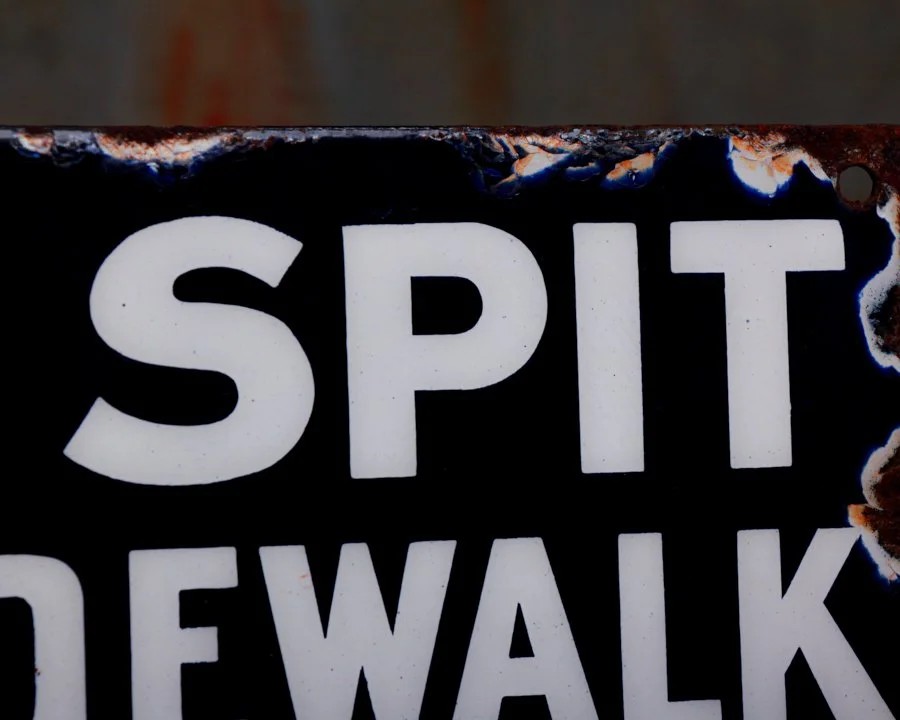
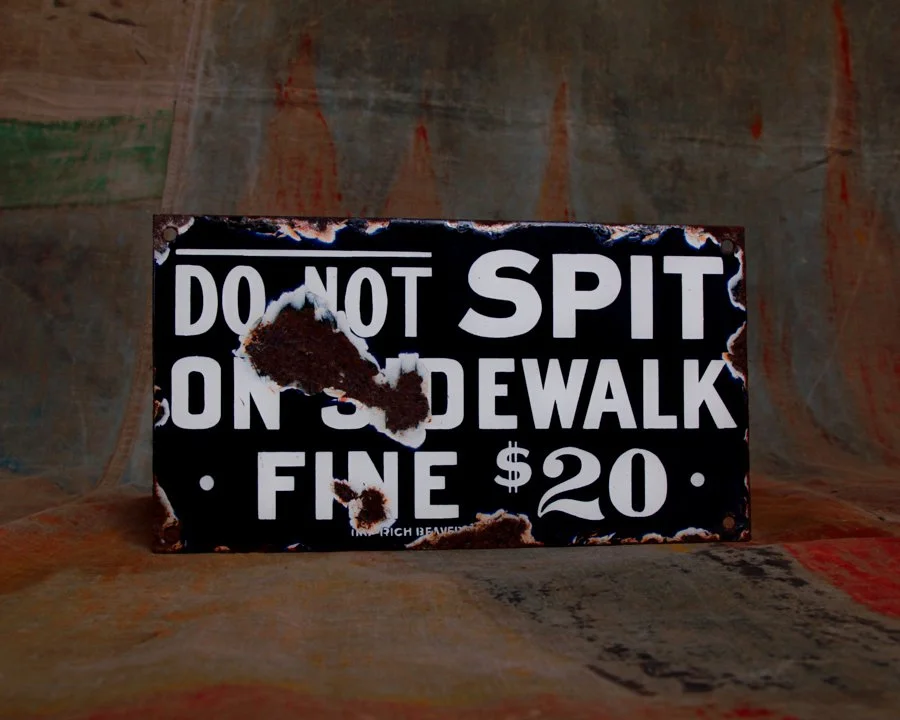
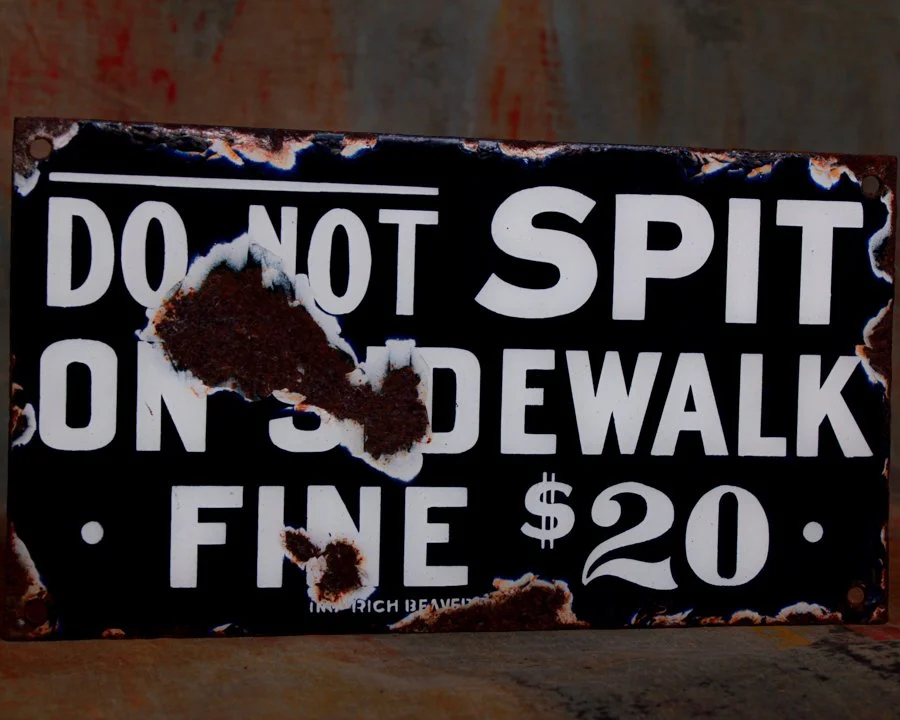
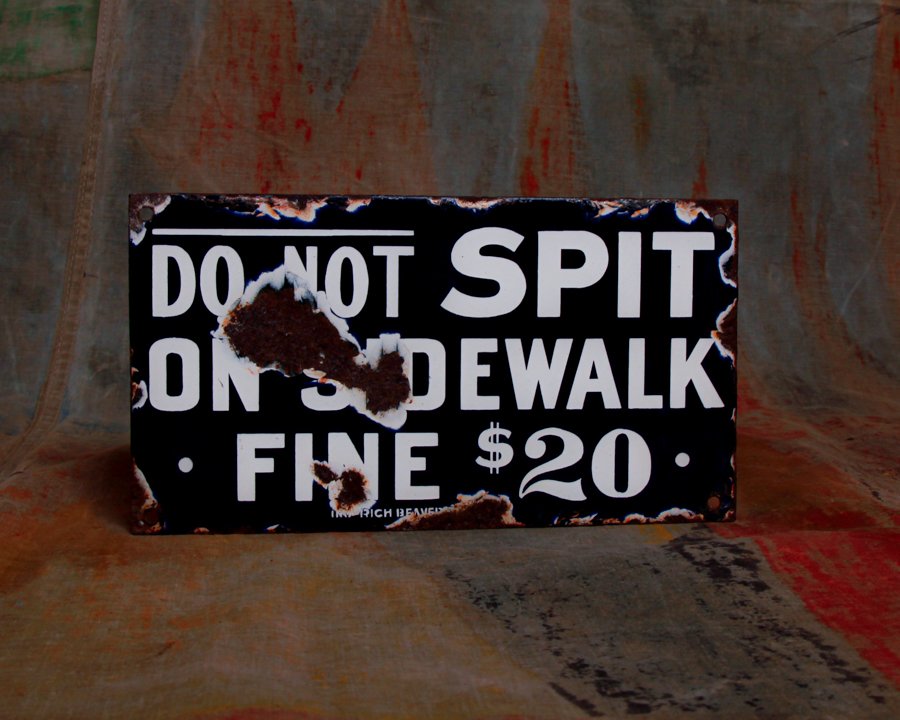
This old porcelain sign once laid down the law in no uncertain terms: DO NOT SPIT ON SIDEWALK - FINE $20.
Straightforward, bold, and impossible to ignore, it was part of a public health campaign from the early 1900s aimed at curbing the spread of disease, especially tuberculosis. You'd find signs like this posted around cities as a reminder to keep things clean-and to avoid a hefty fine.
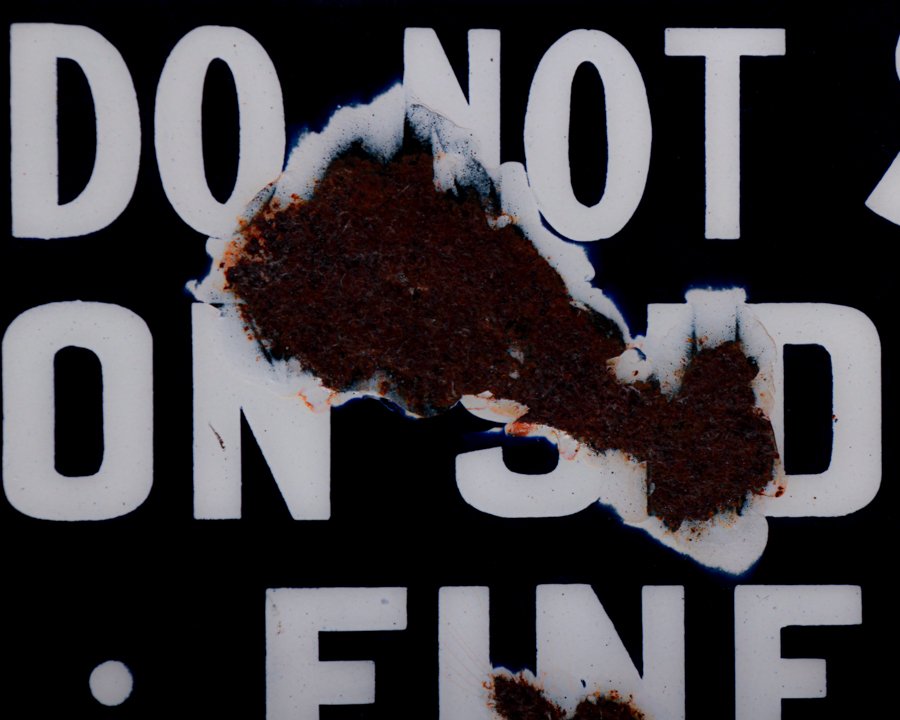
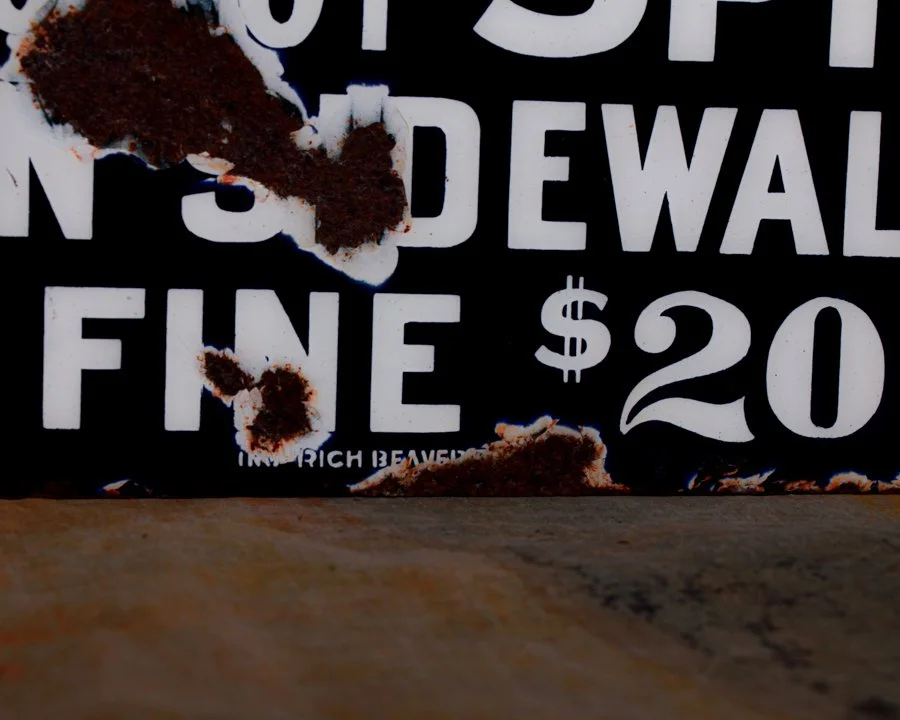
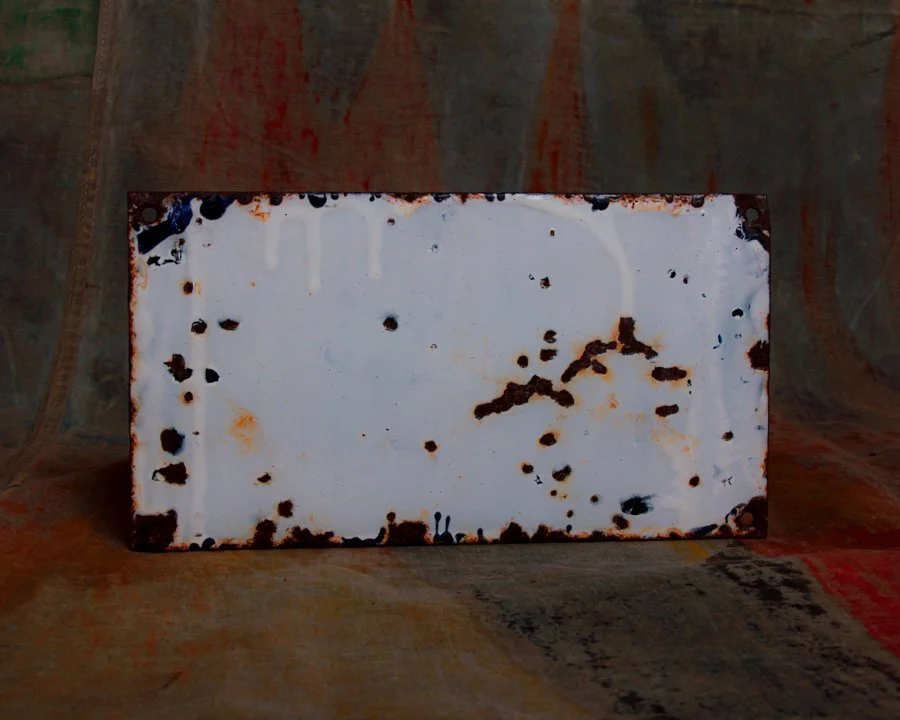
This one has definitely seen some things. The enamel has chipped away in spots, and there's rust where the metal's been exposed, but the type still pops, and the message is mostly intact. It's marked at the bottom by H.M. Rich of Beaver Falls, PA, a company known for producing industrial porcelain signage during that time.
Category History
Early enamel porcelain signs are where durability meets bold messaging. Emerging in the late 19th and early 20th centuries, they were built for the outdoors—gas stations, storefronts, railways—anywhere a message needed to survive weather, time, and a bit of neglect. The process was industrial but surprisingly refined: steel sheets were coated with powdered glass and fired in a kiln, fusing the enamel into a hard, glossy surface that resisted rust and fading.
That technique gave these signs their signature look—deep, saturated color, crisp lettering, and a sheen that still catches light a century later. Layers were often applied in stages, with separate firings for each color, which is why even simple designs can feel so graphic and intentional.
The content ranged from straightforward advertising—oil, tobacco, soda—to practical messaging like safety warnings or directional signs. Either way, the goal was clarity and impact. Big type, strong contrast, no wasted space.
What makes them compelling now is how well they’ve held up. Chips, edge wear, and the occasional rust spot don’t detract—they add texture and proof of life. These signs were made to be seen, not preserved, and that longevity has turned them into objects that feel both industrial and oddly timeless.
This old porcelain sign once laid down the law in no uncertain terms: DO NOT SPIT ON SIDEWALK - FINE $20.
Straightforward, bold, and impossible to ignore, it was part of a public health campaign from the early 1900s aimed at curbing the spread of disease, especially tuberculosis. You'd find signs like this posted around cities as a reminder to keep things clean-and to avoid a hefty fine.
This one has definitely seen some things. The enamel has chipped away in spots, and there's rust where the metal's been exposed, but the type still pops, and the message is mostly intact. It's marked at the bottom by H.M. Rich of Beaver Falls, PA, a company known for producing industrial porcelain signage during that time.
Category History
Early enamel porcelain signs are where durability meets bold messaging. Emerging in the late 19th and early 20th centuries, they were built for the outdoors—gas stations, storefronts, railways—anywhere a message needed to survive weather, time, and a bit of neglect. The process was industrial but surprisingly refined: steel sheets were coated with powdered glass and fired in a kiln, fusing the enamel into a hard, glossy surface that resisted rust and fading.
That technique gave these signs their signature look—deep, saturated color, crisp lettering, and a sheen that still catches light a century later. Layers were often applied in stages, with separate firings for each color, which is why even simple designs can feel so graphic and intentional.
The content ranged from straightforward advertising—oil, tobacco, soda—to practical messaging like safety warnings or directional signs. Either way, the goal was clarity and impact. Big type, strong contrast, no wasted space.
What makes them compelling now is how well they’ve held up. Chips, edge wear, and the occasional rust spot don’t detract—they add texture and proof of life. These signs were made to be seen, not preserved, and that longevity has turned them into objects that feel both industrial and oddly timeless.