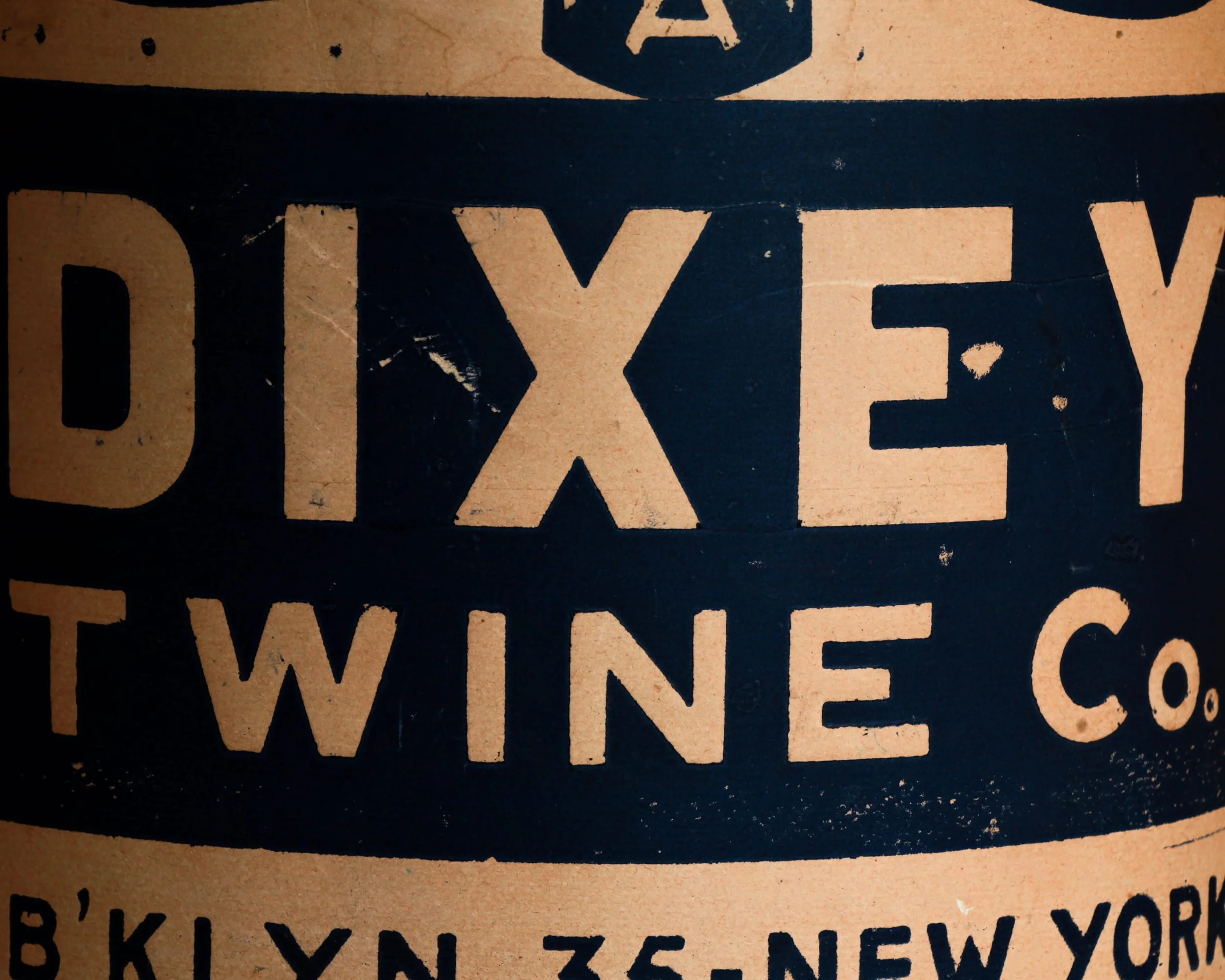
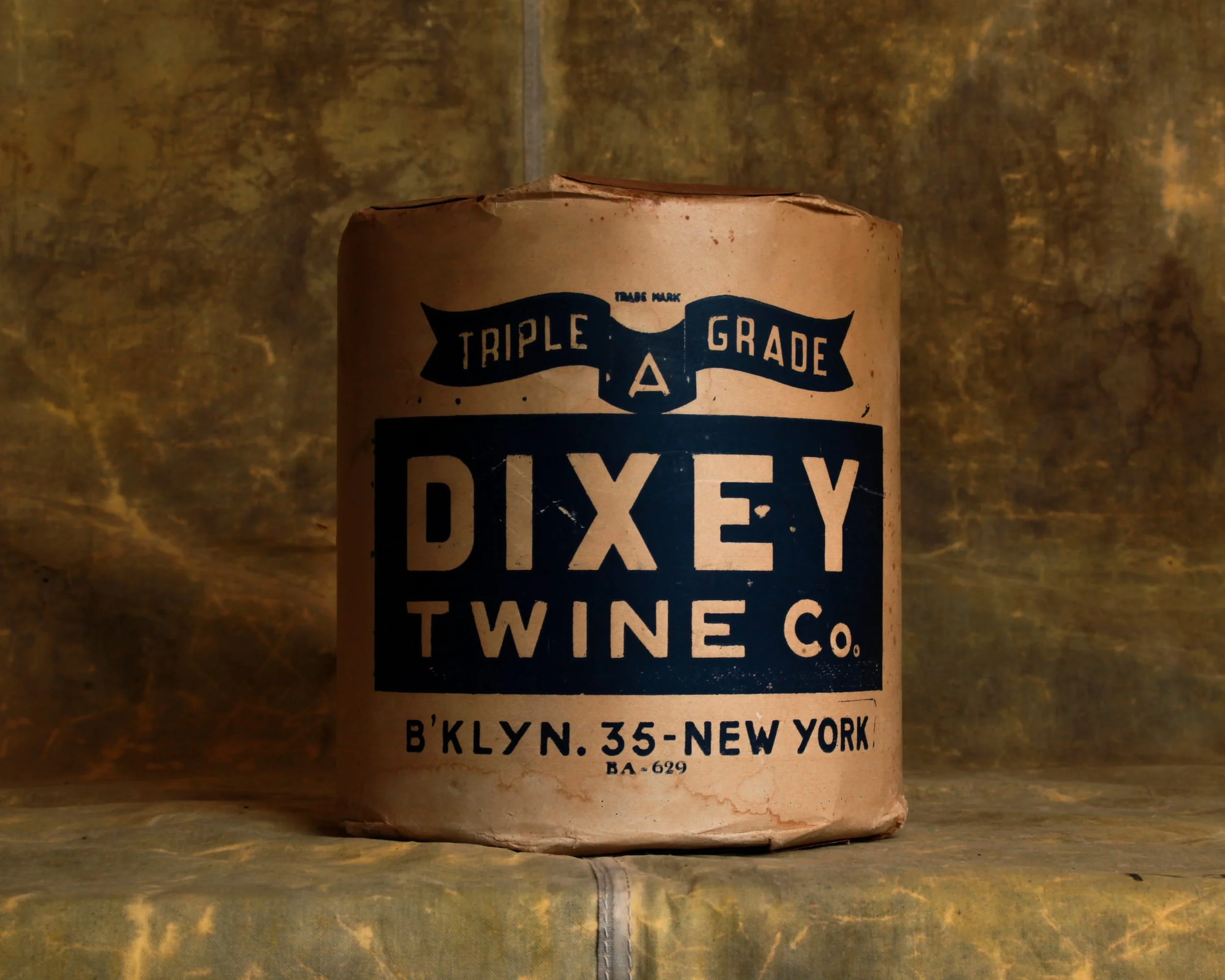
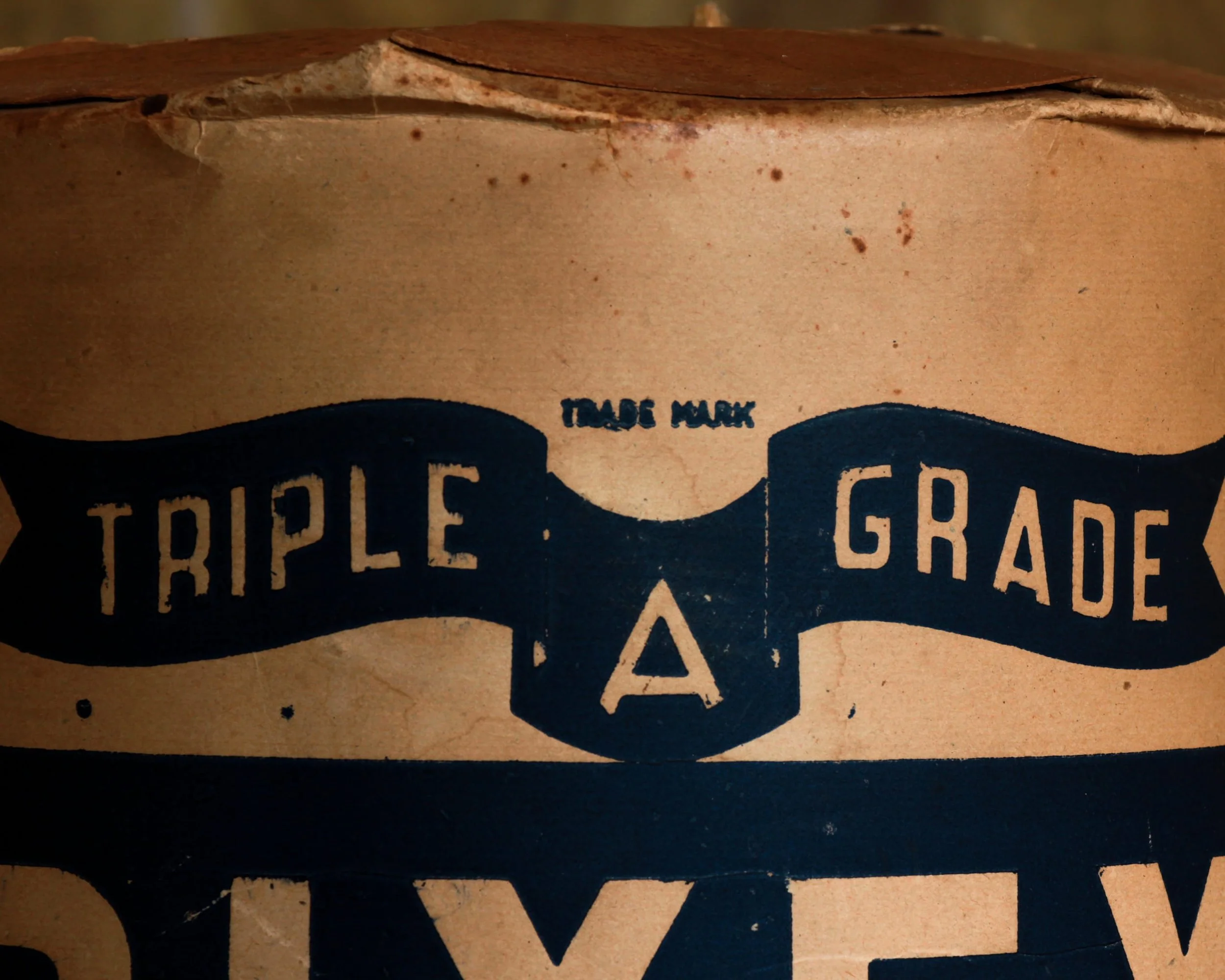
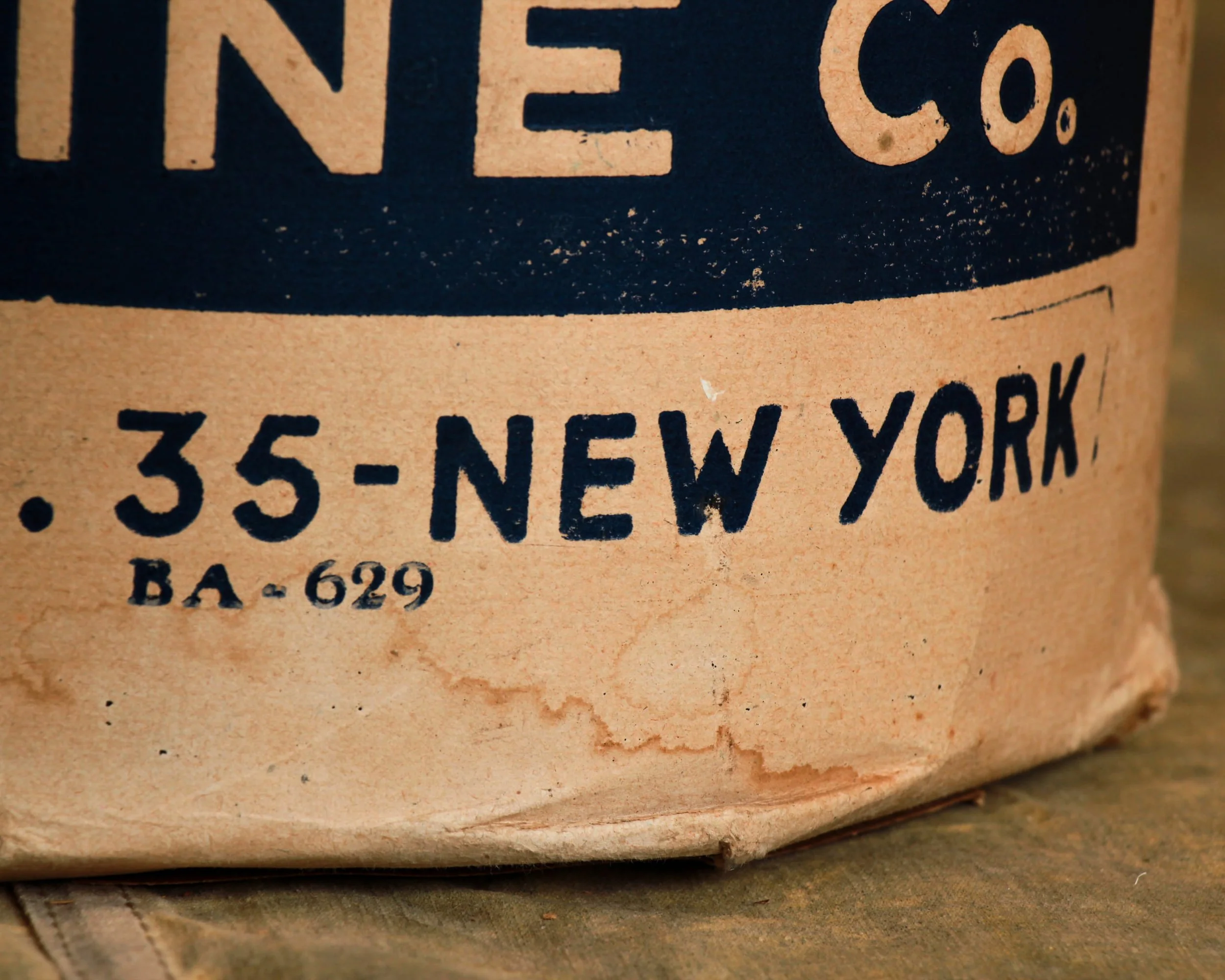
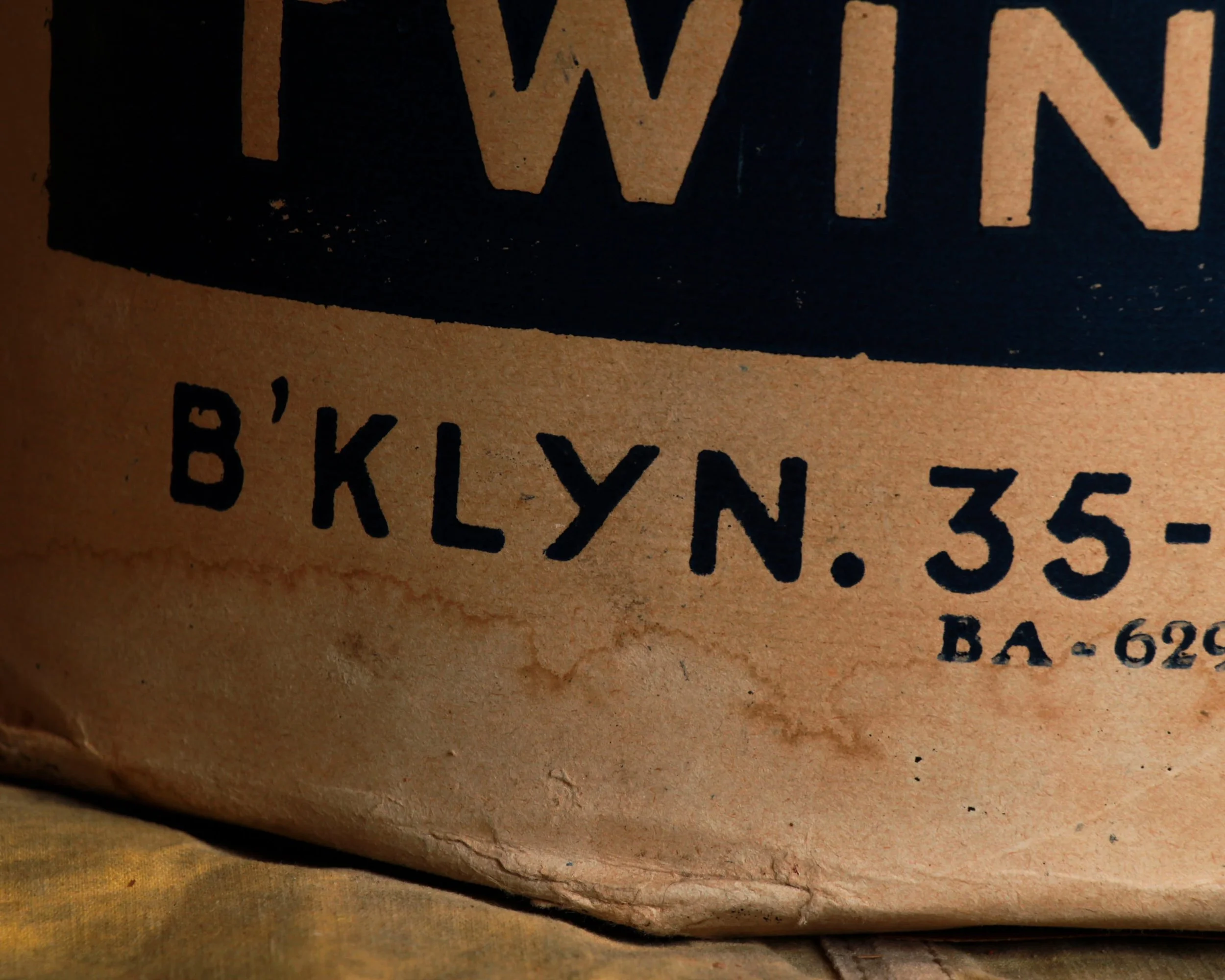
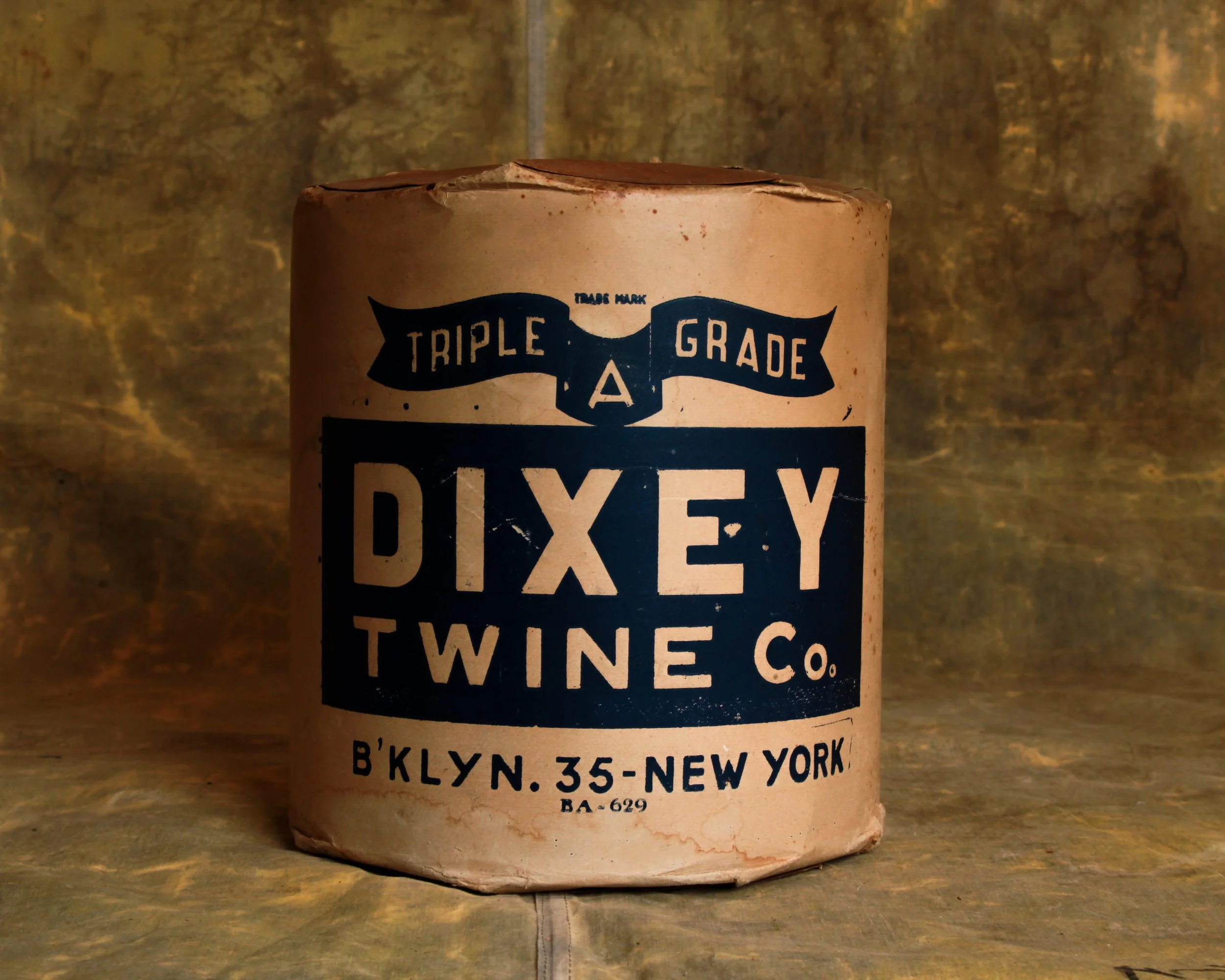
This is a new old stock Dixey Twine Co. spool, still wrapped in its original paper like it’s been waiting a century for instructions. Made in Brooklyn around 1920, it comes from a time when even something as simple as twine carried a bit of graphic confidence. The bold, no-nonsense typography, “Triple A Grade,” “B’KLYN. 35 – New York,” reads less like packaging and more like a statement of intent.
The scale is part of the charm. At over 11 inches tall and a full 10 inches in diameter, this isn’t the kind of twine you toss in a drawer. It was meant for real work, shipping rooms, warehouses, maybe a shop where everything moved by hand and got tied down tight before heading out the door.
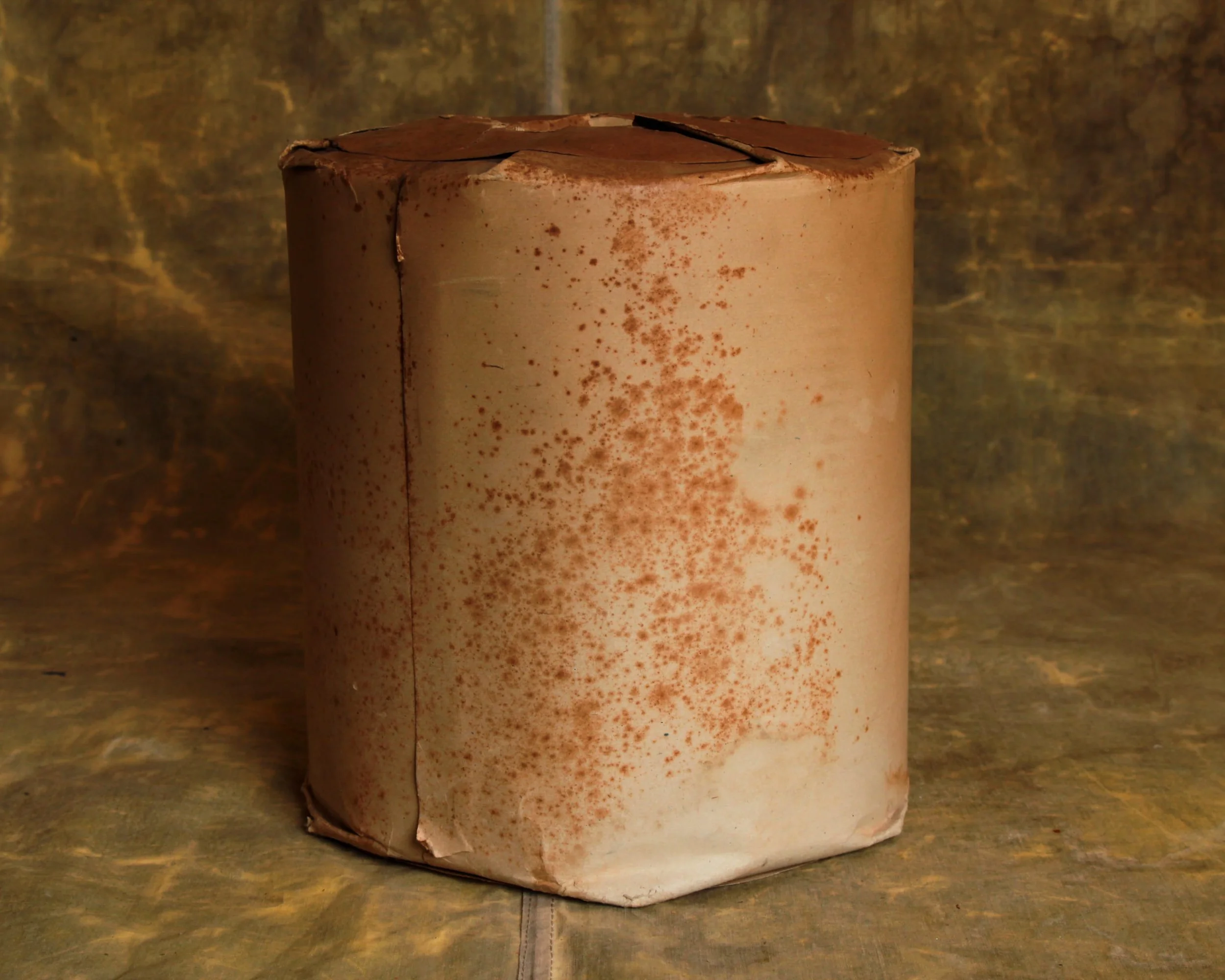
What makes this one special is the fact that it never got there. The paper wrap shows age, spotting, and a bit of wear along the edges, but it’s done its job perfectly, preserving the spool underneath in unused condition. It feels like a small industrial artifact that somehow sidestepped time.
Equal parts packaging, object, and design, it sits somewhere between a utilitarian tool and a piece of early 20th century advertising that just happens to still be intact.
Twine
In the 1920s, twine was everywhere, quietly holding the economy together. Before plastic and synthetic cord, natural fibers like jute, hemp, and cotton were spun into strong, affordable line used across farms, factories, and city shops. It bundled newspapers, tied parcels, secured produce, and kept shipping crates in order as goods moved through an increasingly industrialized world. In agriculture, binder twine was essential for mechanized harvesting, especially with the rise of reapers and balers. In urban settings, it was just as vital, a daily tool of grocers, clerks, and warehouse workers. Twine wasn’t glamorous, but it was constant, practical, and indispensable.
This is a new old stock Dixey Twine Co. spool, still wrapped in its original paper like it’s been waiting a century for instructions. Made in Brooklyn around 1920, it comes from a time when even something as simple as twine carried a bit of graphic confidence. The bold, no-nonsense typography, “Triple A Grade,” “B’KLYN. 35 – New York,” reads less like packaging and more like a statement of intent.
The scale is part of the charm. At over 11 inches tall and a full 10 inches in diameter, this isn’t the kind of twine you toss in a drawer. It was meant for real work, shipping rooms, warehouses, maybe a shop where everything moved by hand and got tied down tight before heading out the door.
What makes this one special is the fact that it never got there. The paper wrap shows age, spotting, and a bit of wear along the edges, but it’s done its job perfectly, preserving the spool underneath in unused condition. It feels like a small industrial artifact that somehow sidestepped time.
Equal parts packaging, object, and design, it sits somewhere between a utilitarian tool and a piece of early 20th century advertising that just happens to still be intact.
Twine
In the 1920s, twine was everywhere, quietly holding the economy together. Before plastic and synthetic cord, natural fibers like jute, hemp, and cotton were spun into strong, affordable line used across farms, factories, and city shops. It bundled newspapers, tied parcels, secured produce, and kept shipping crates in order as goods moved through an increasingly industrialized world. In agriculture, binder twine was essential for mechanized harvesting, especially with the rise of reapers and balers. In urban settings, it was just as vital, a daily tool of grocers, clerks, and warehouse workers. Twine wasn’t glamorous, but it was constant, practical, and indispensable.