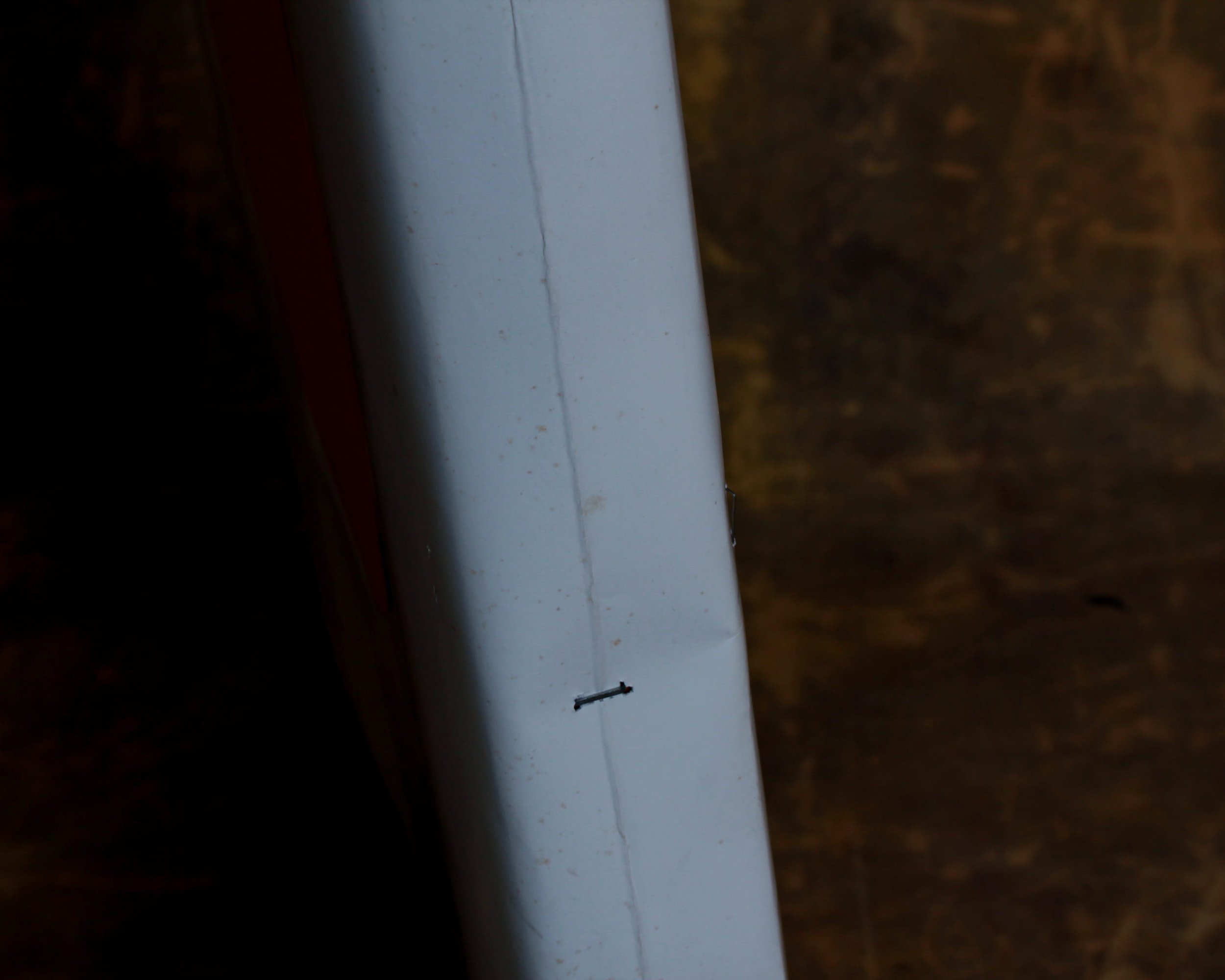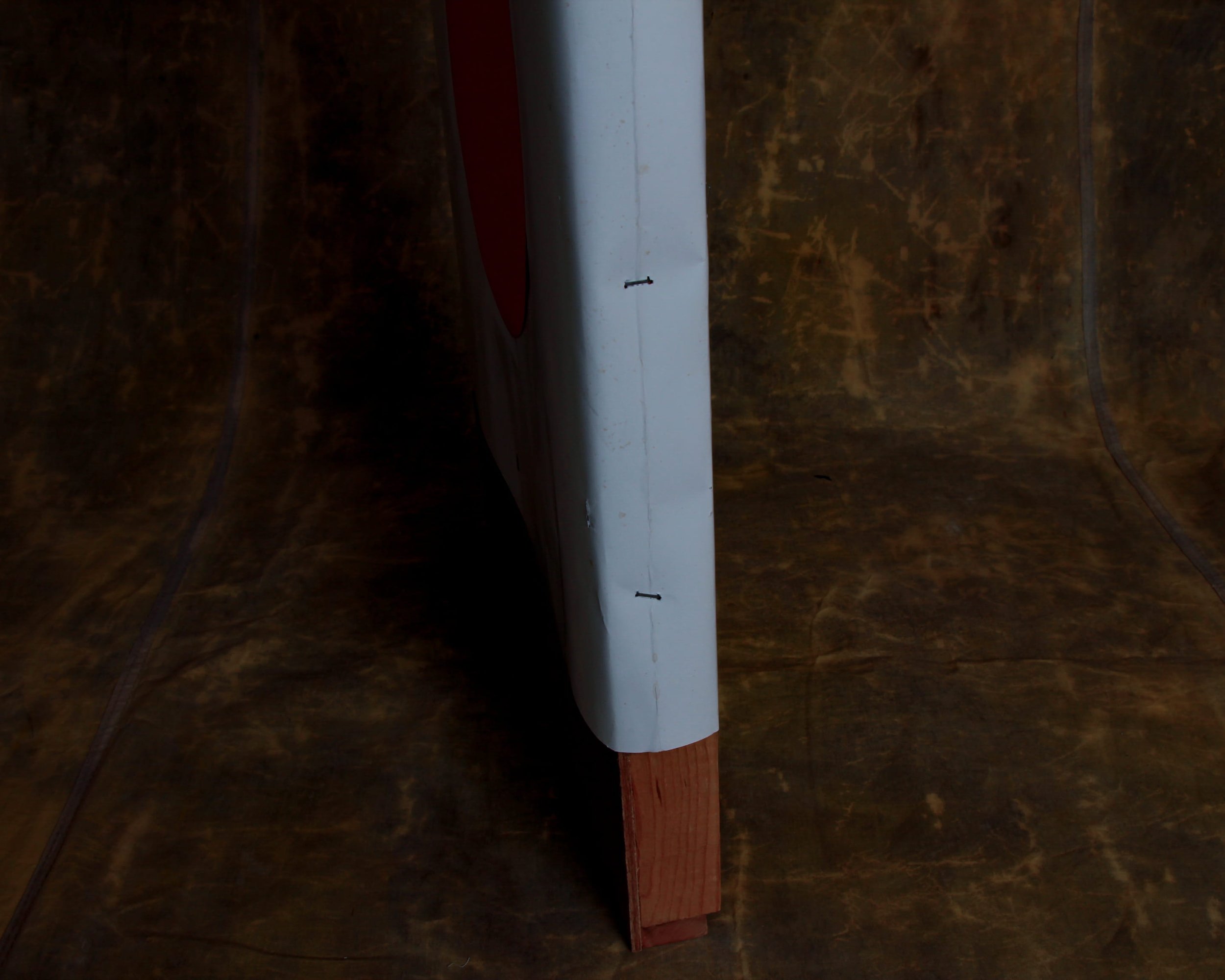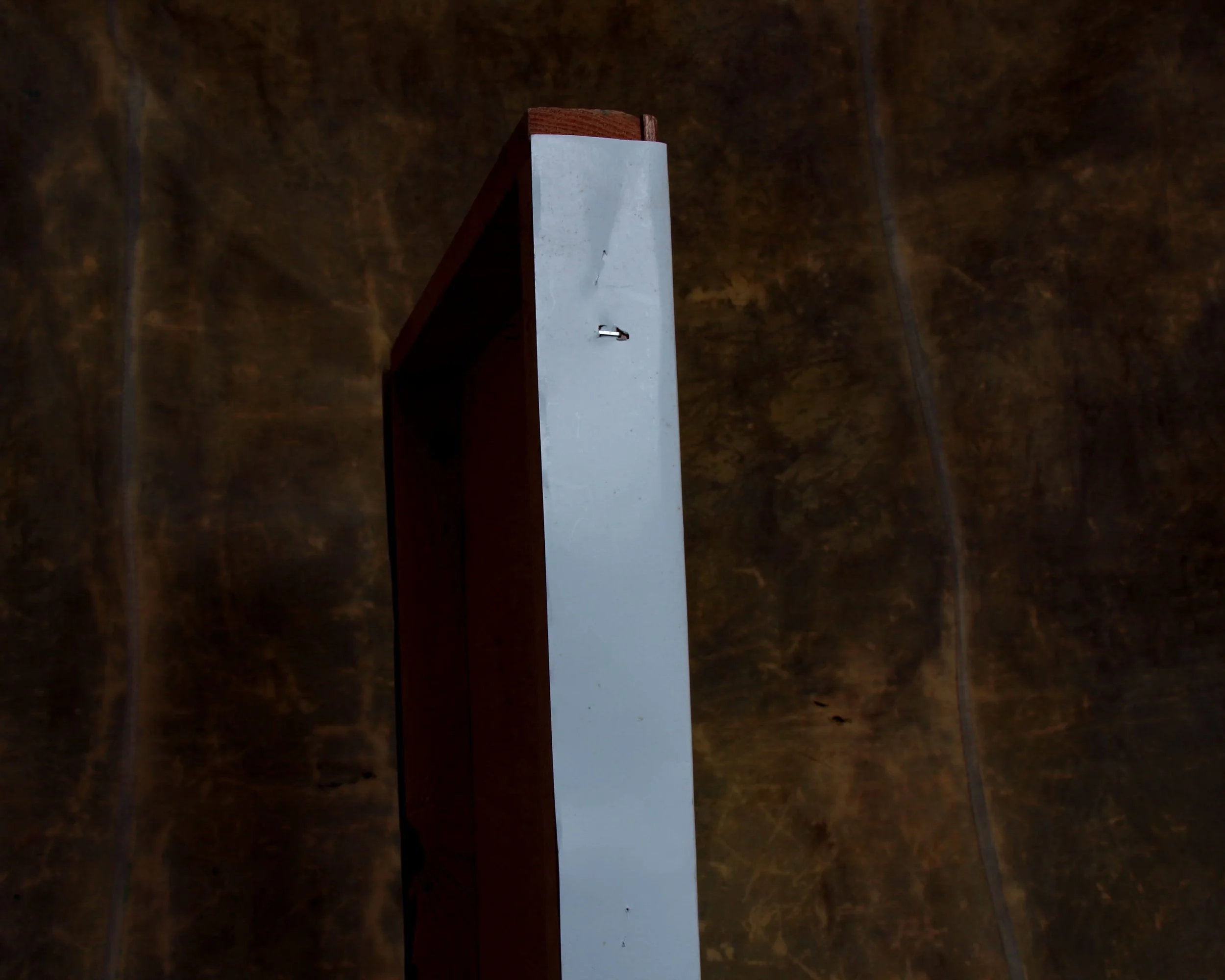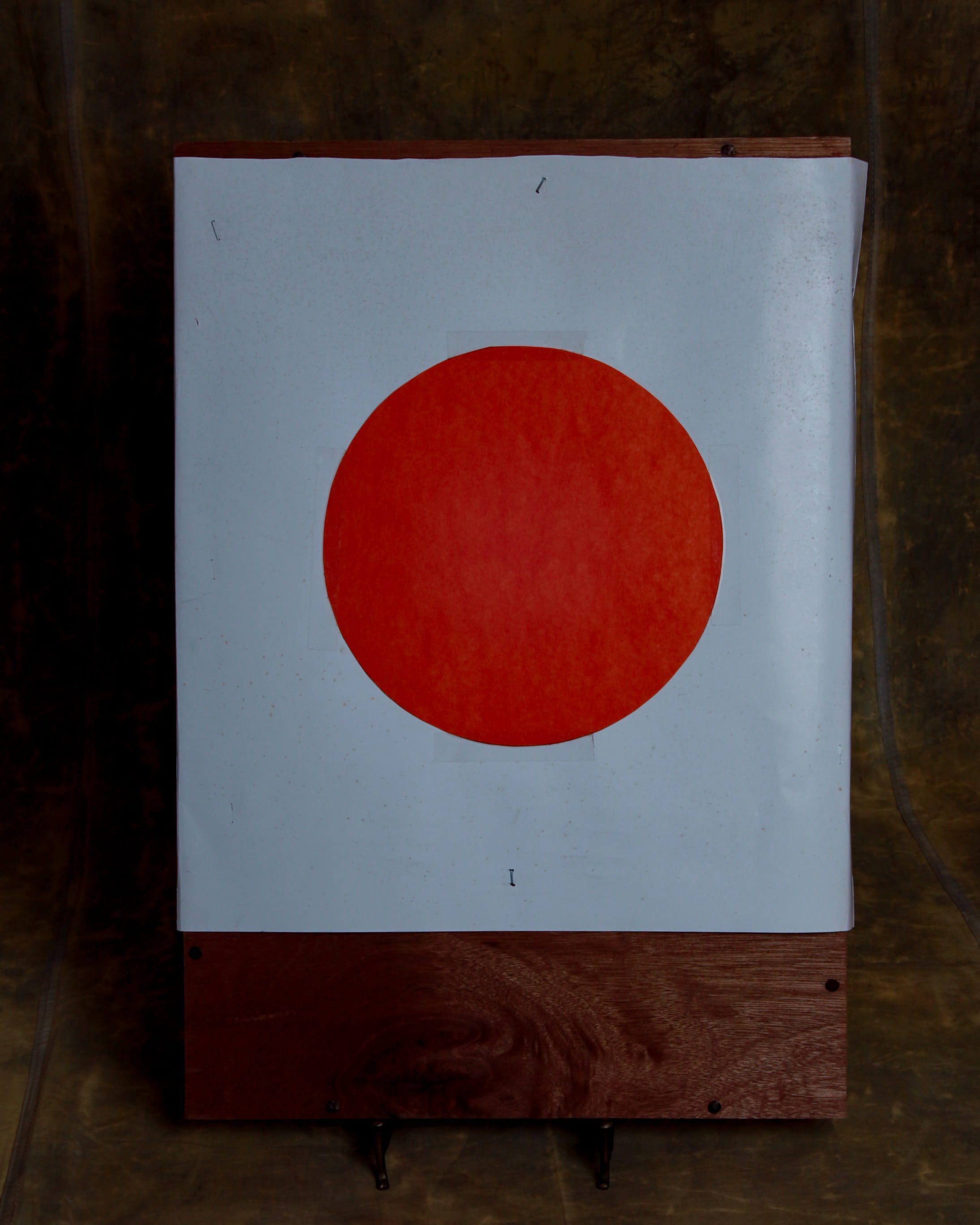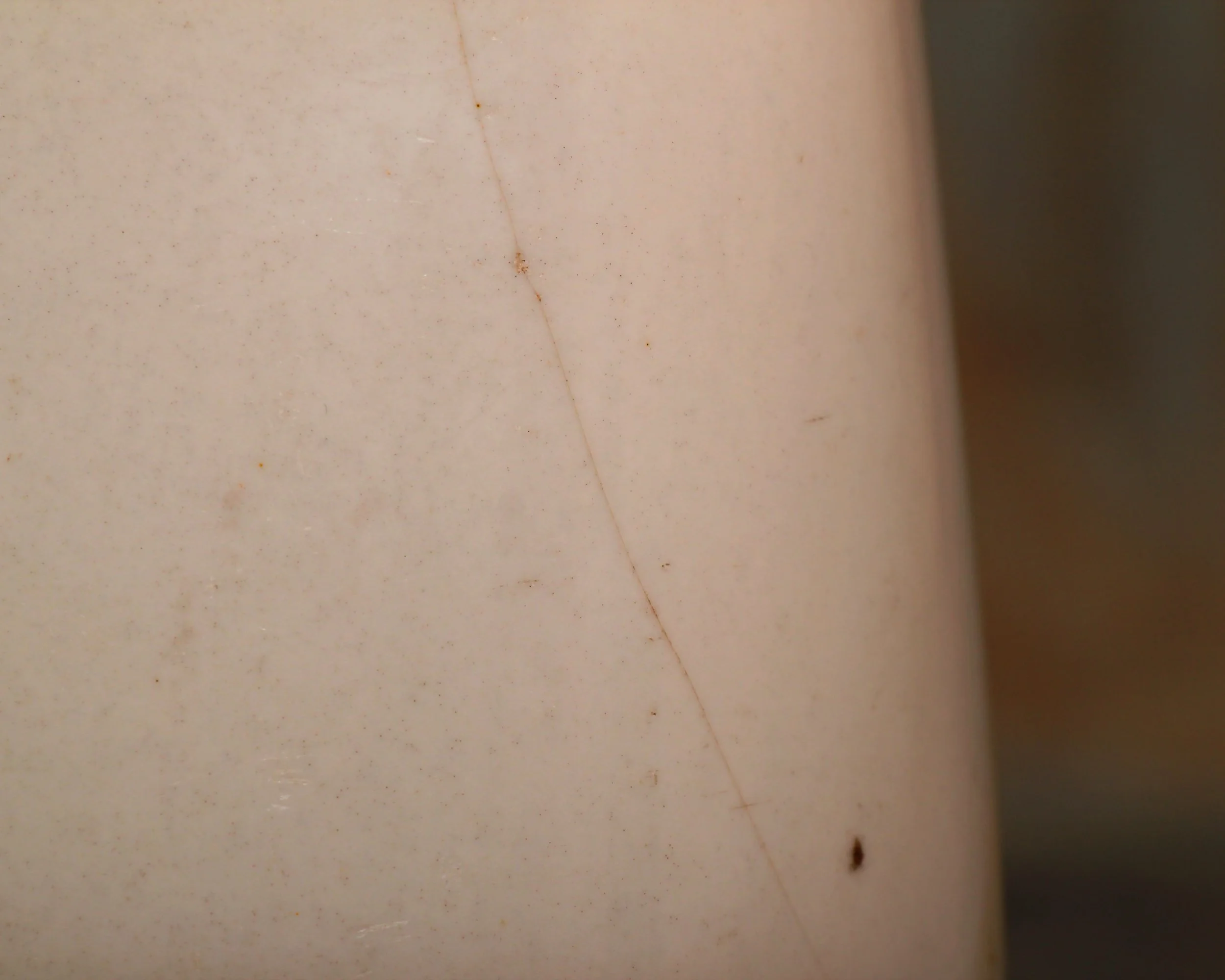
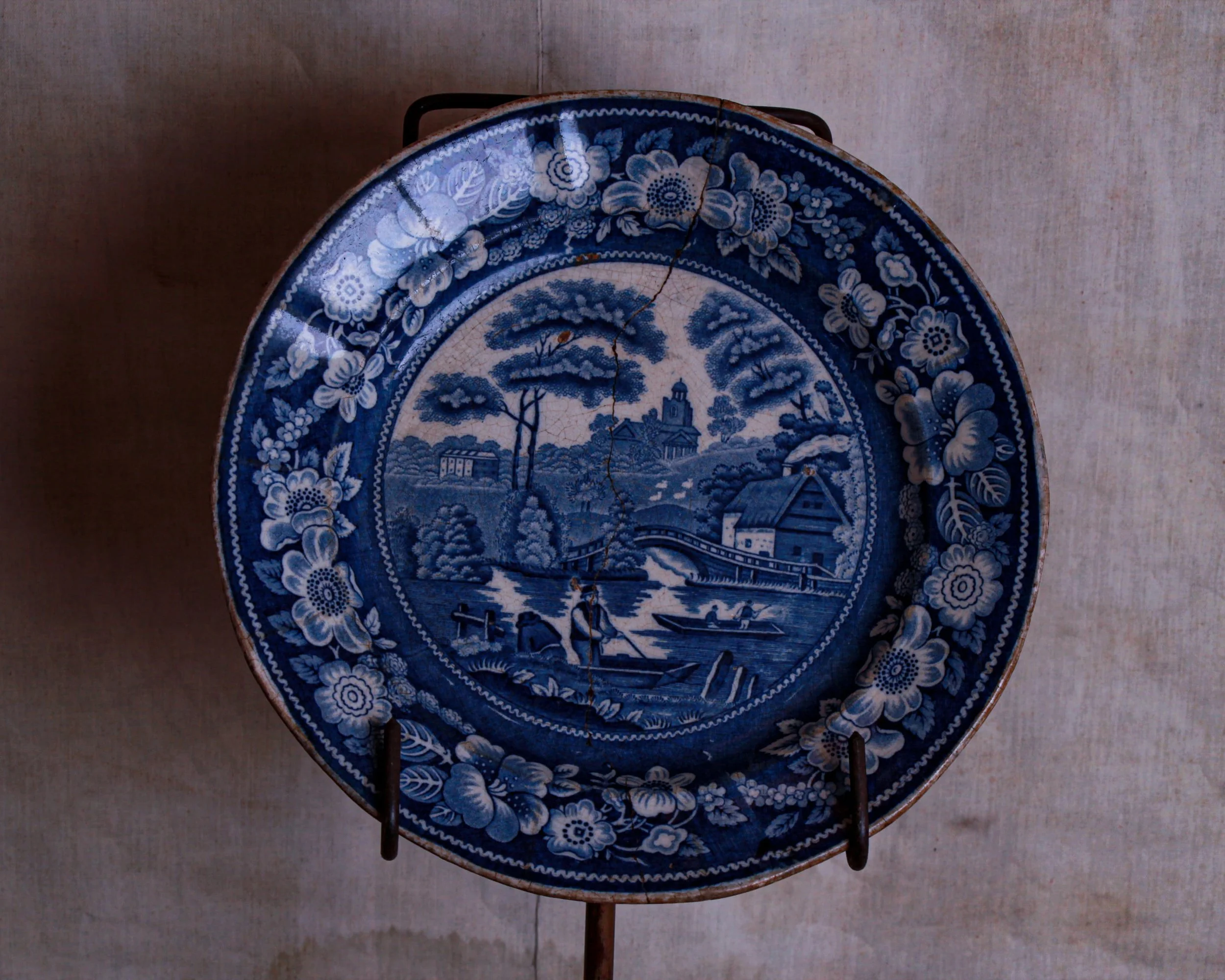
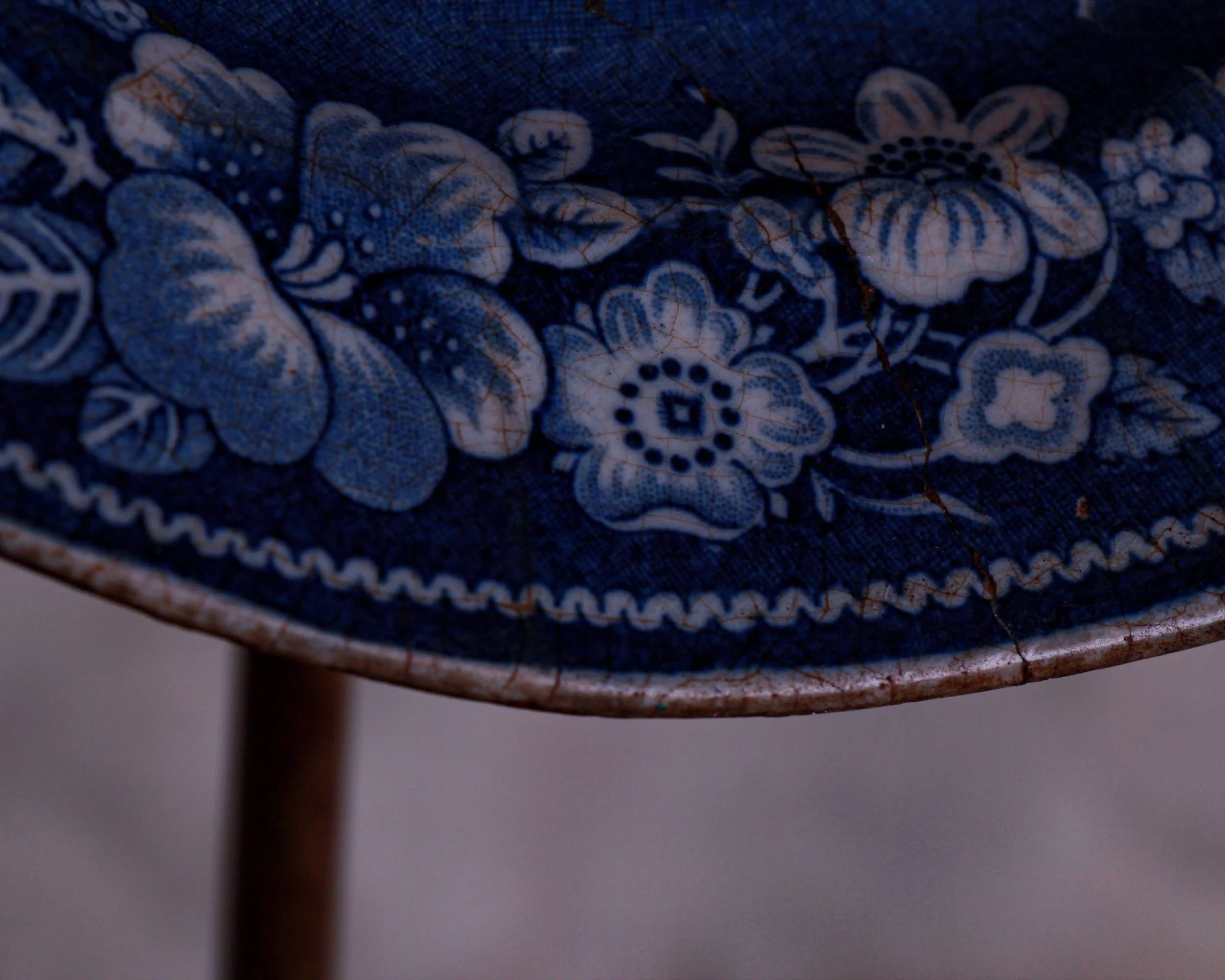

Ceramic dinner plate depicting beautiful blue graphics of a village and flowers—you can clearly see a large crack that goes the entire length of the plate.
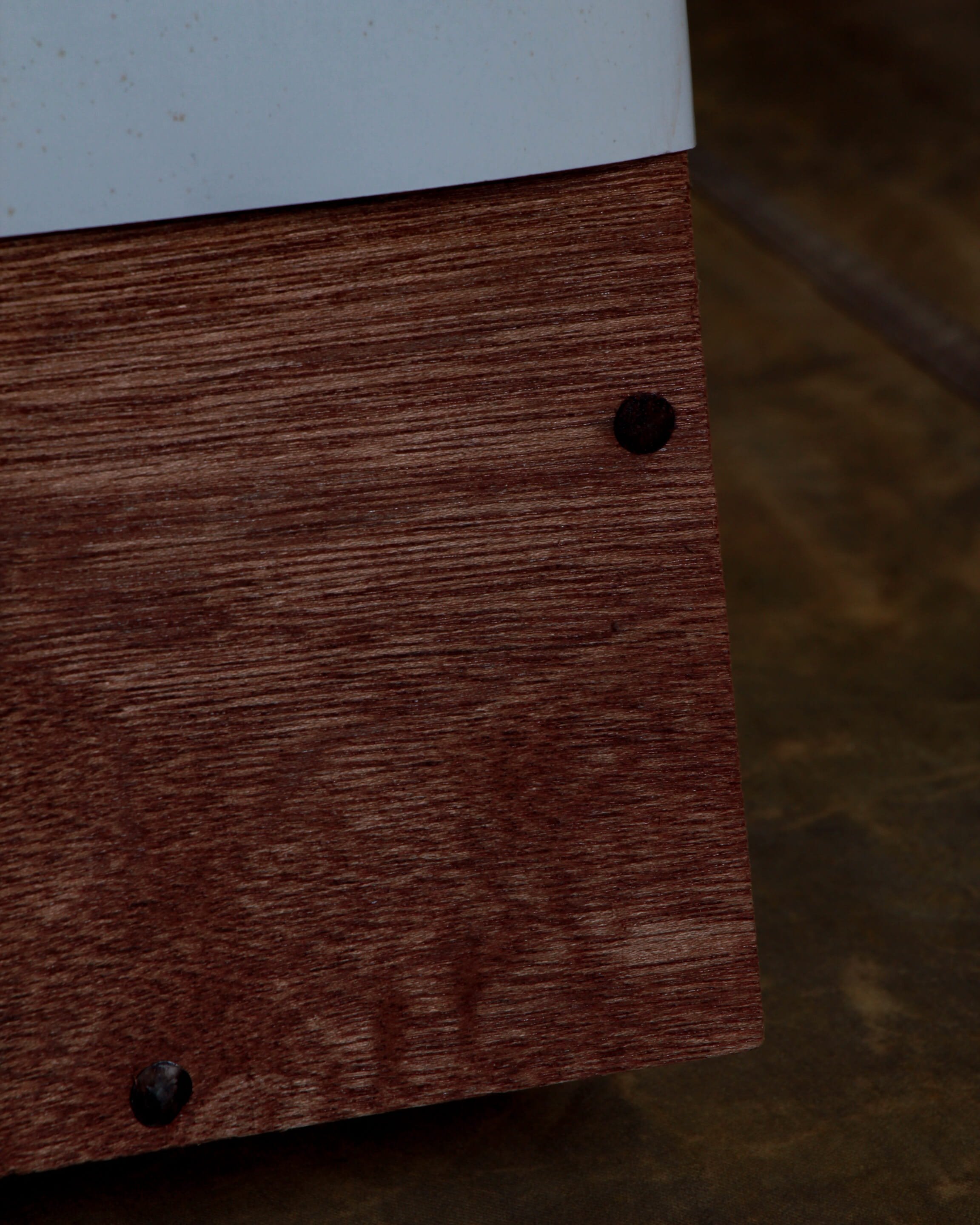
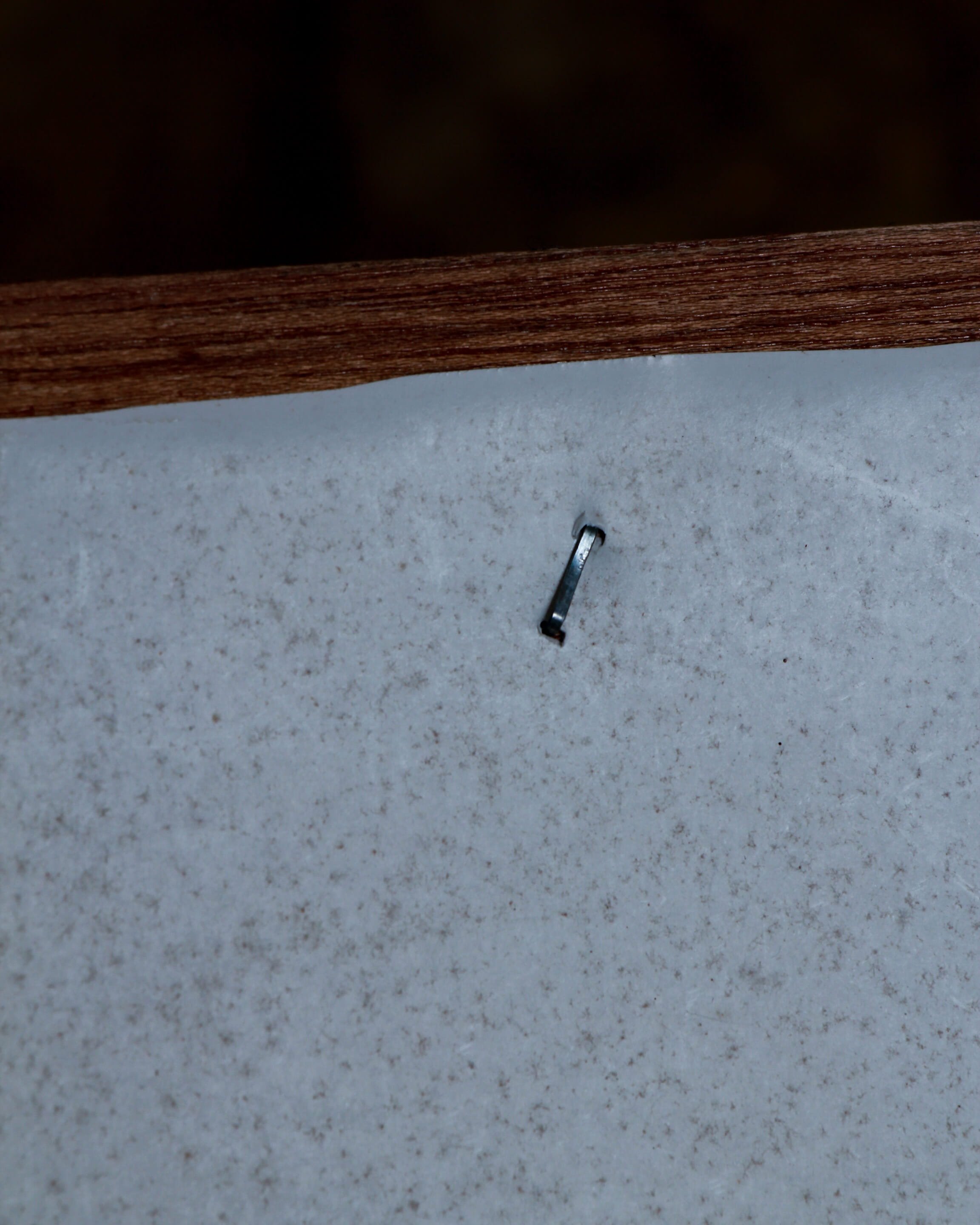
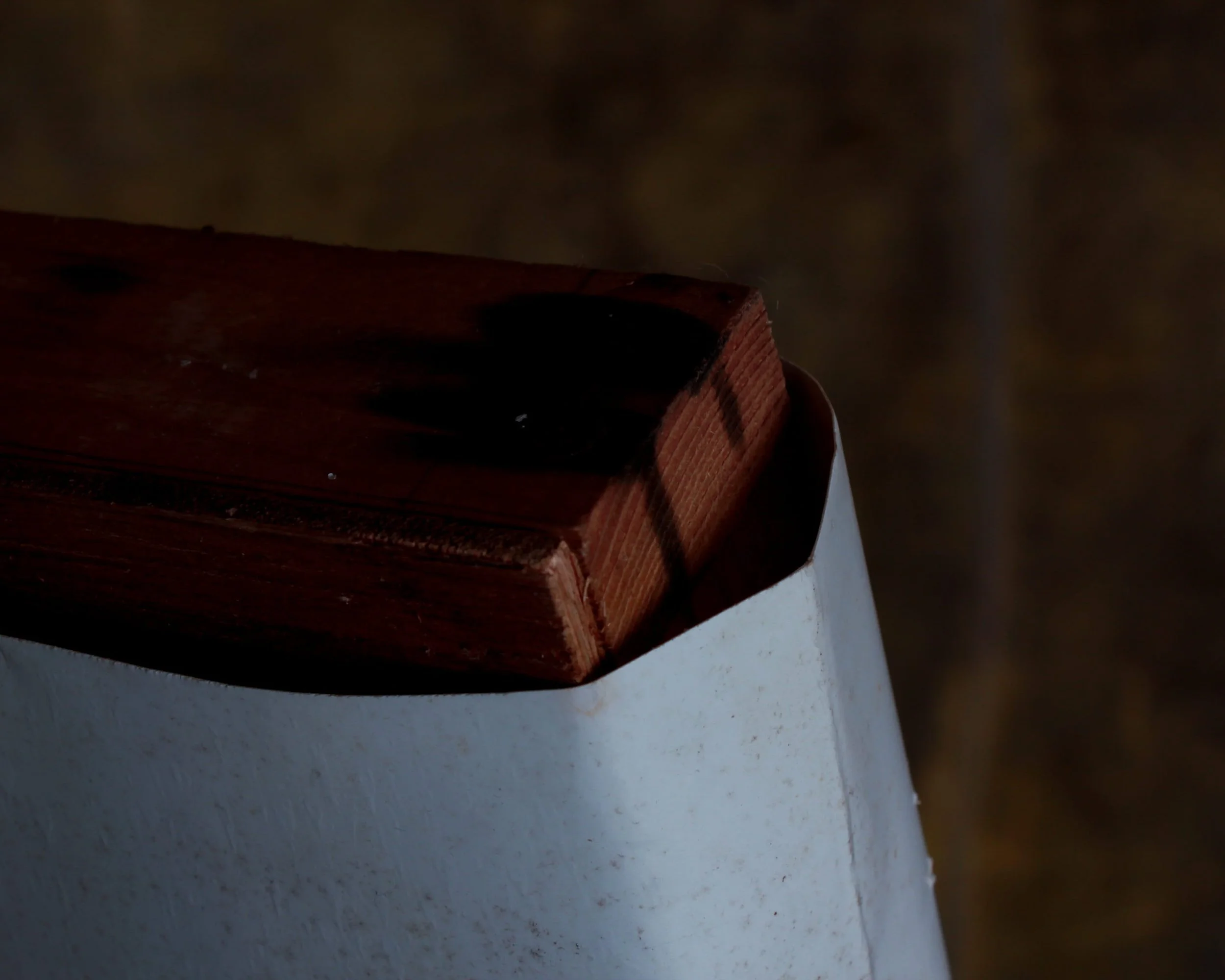
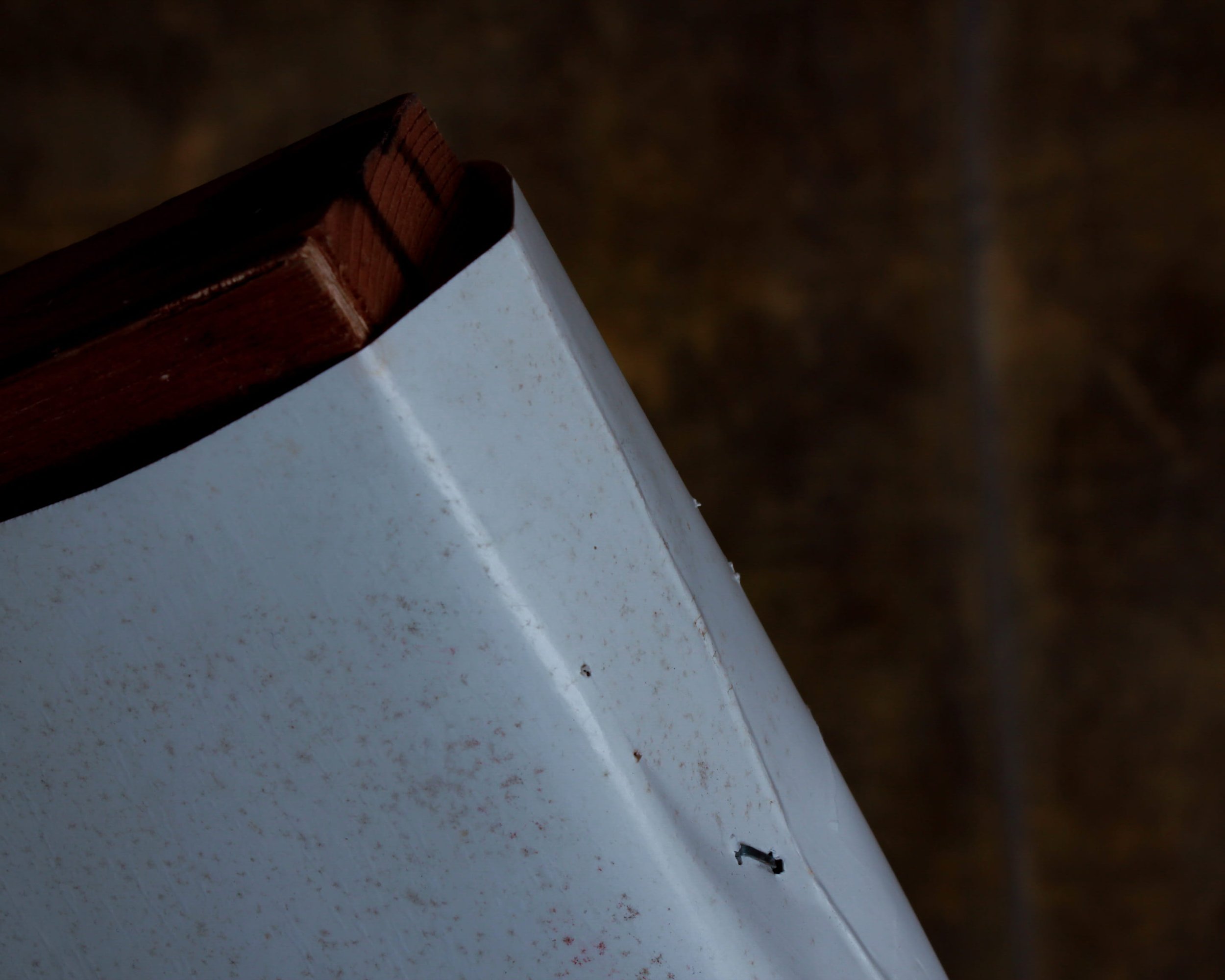
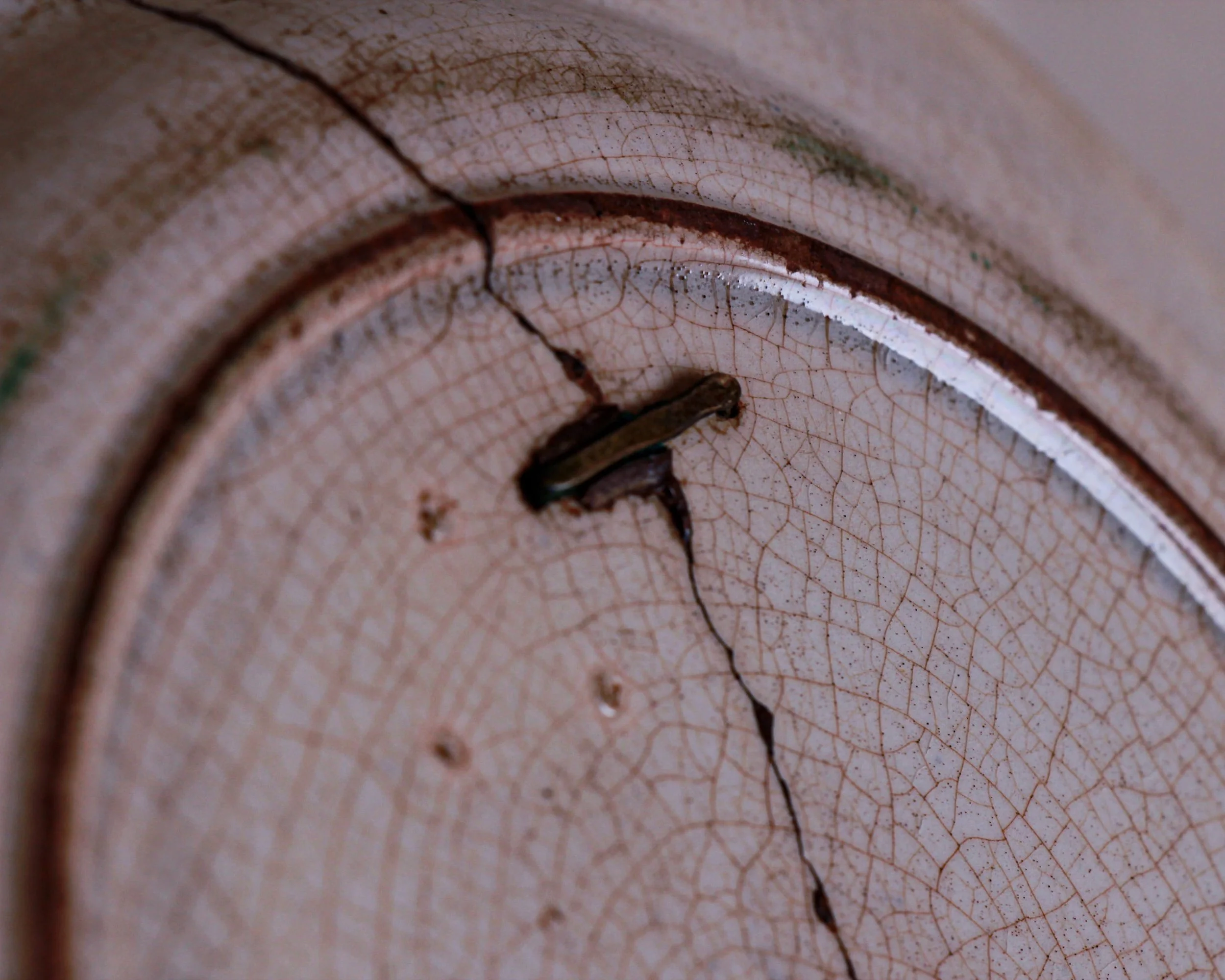
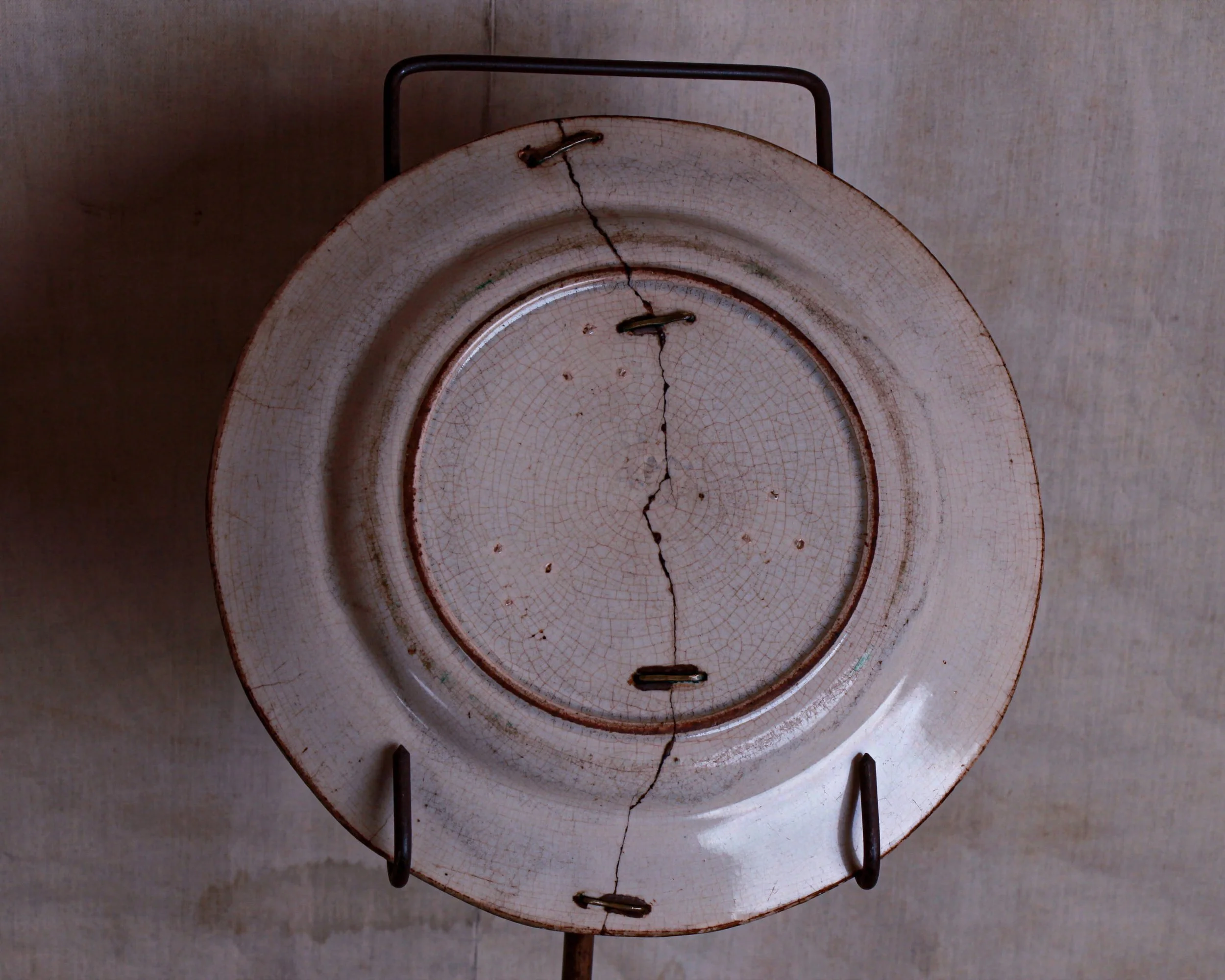
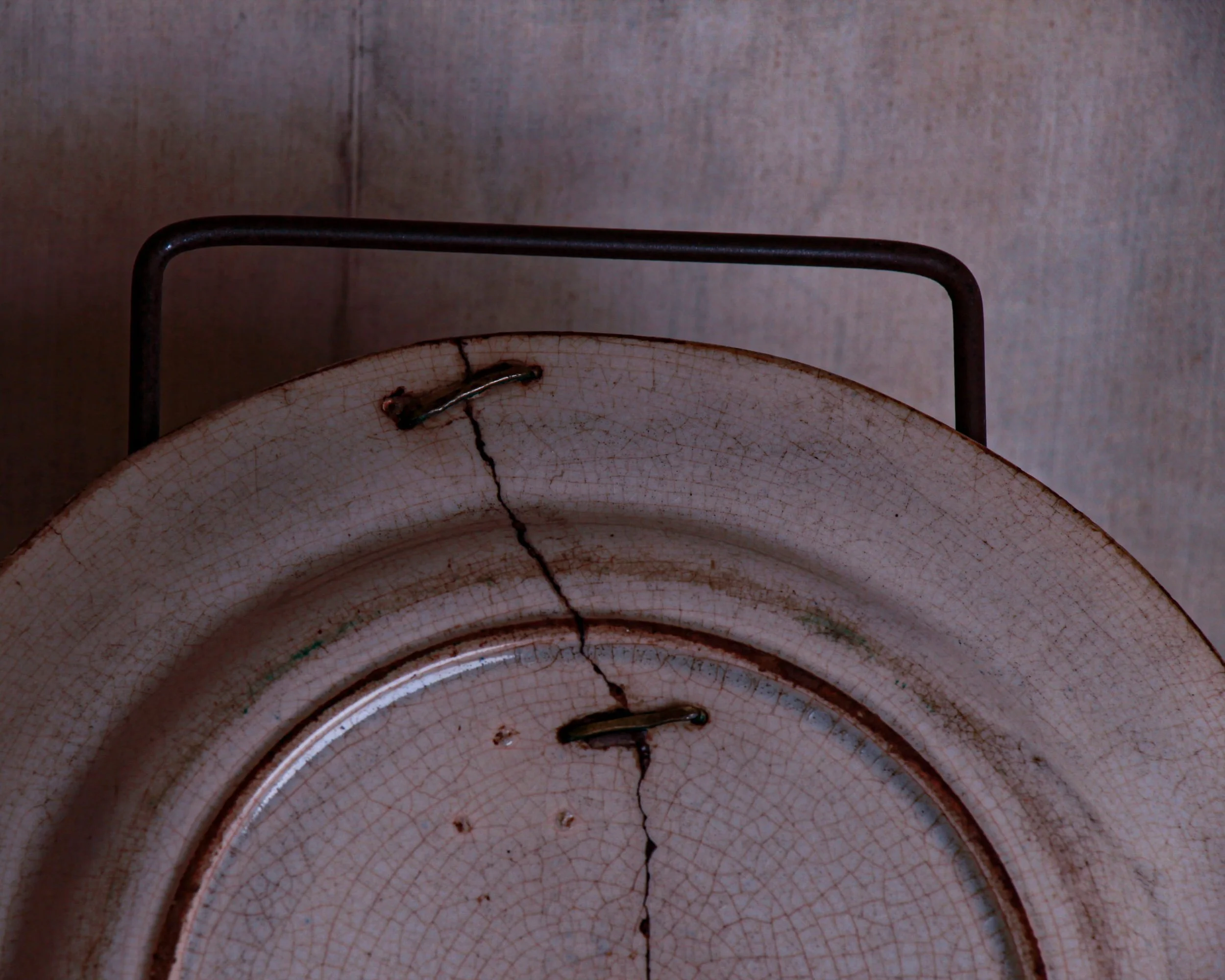
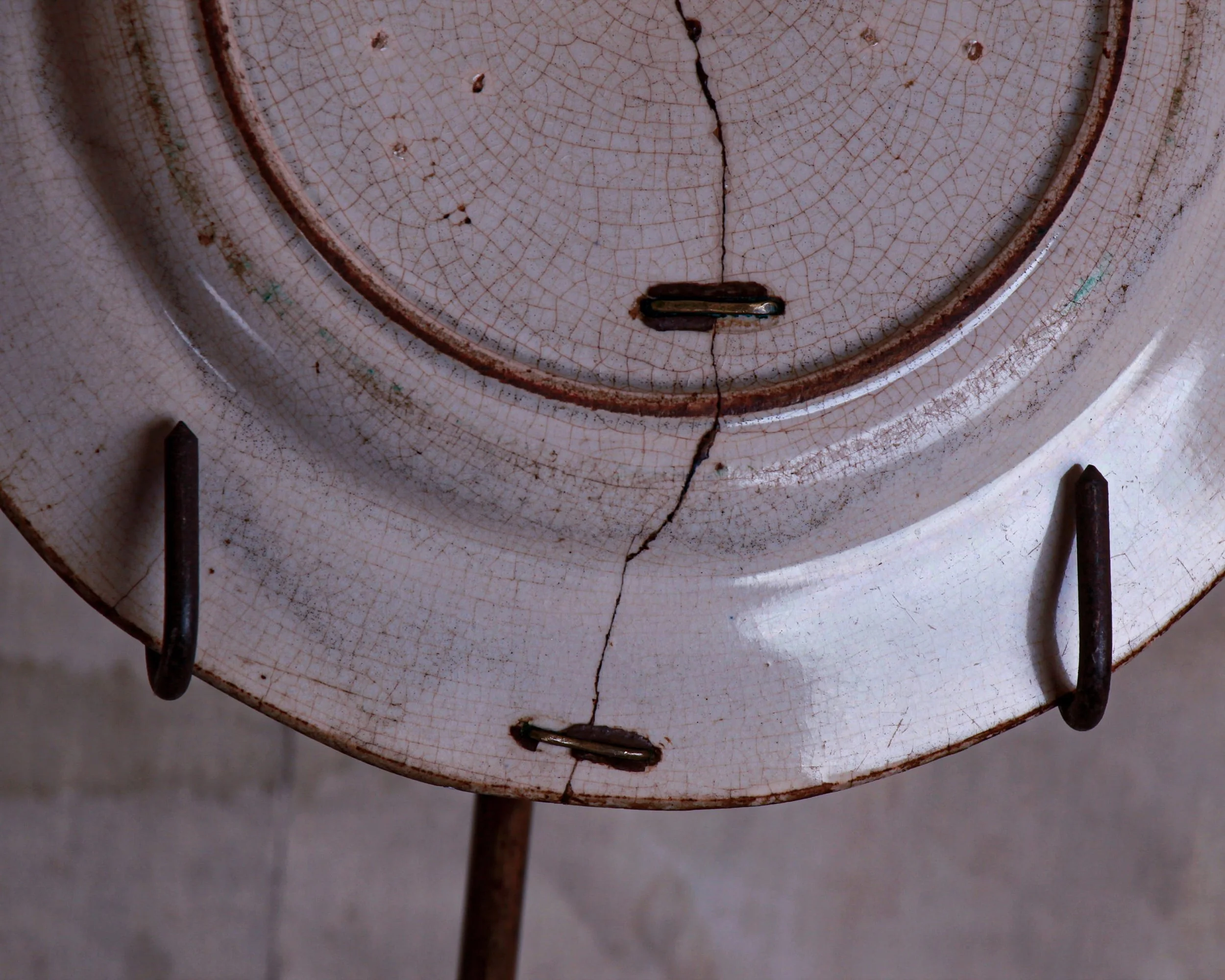
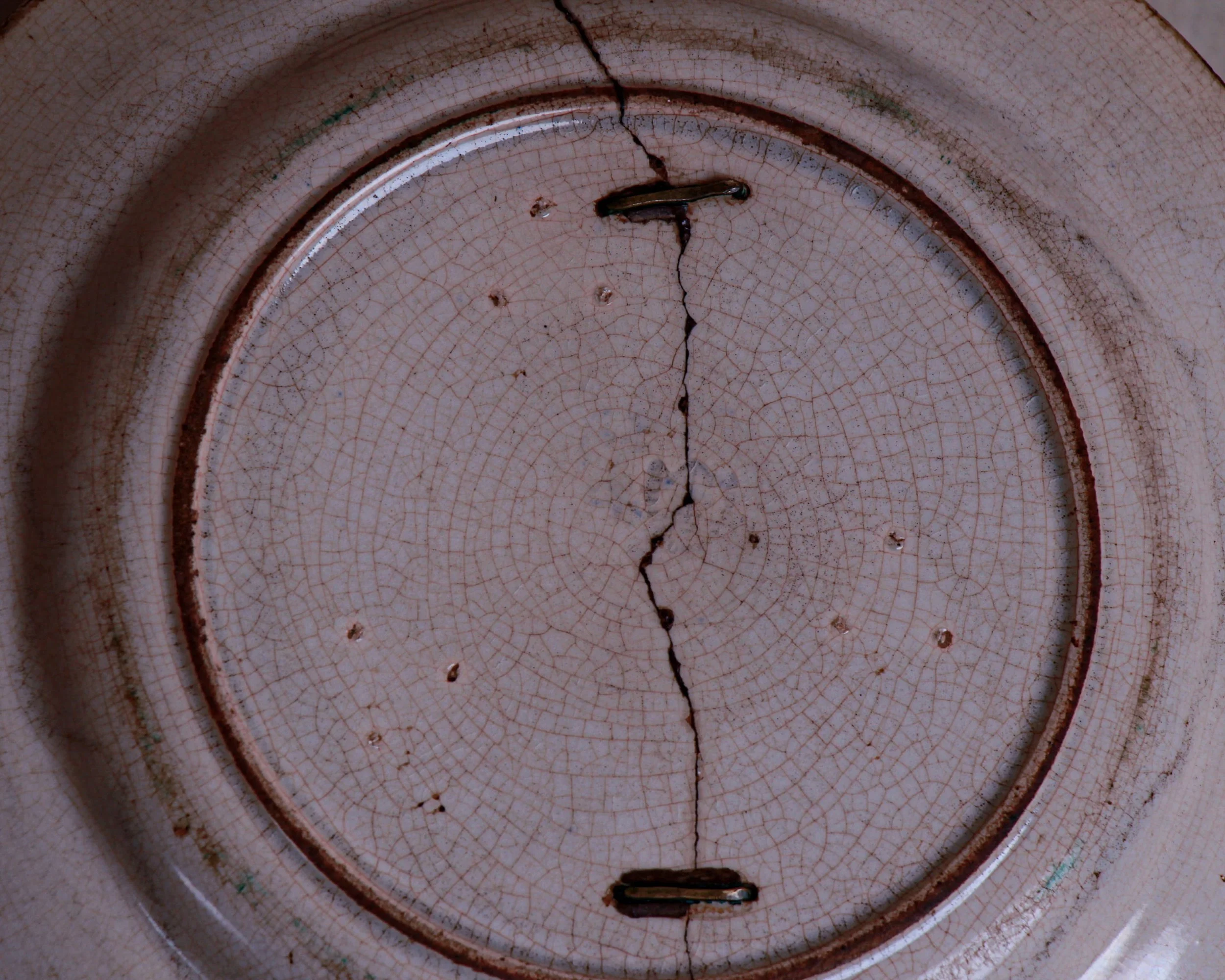
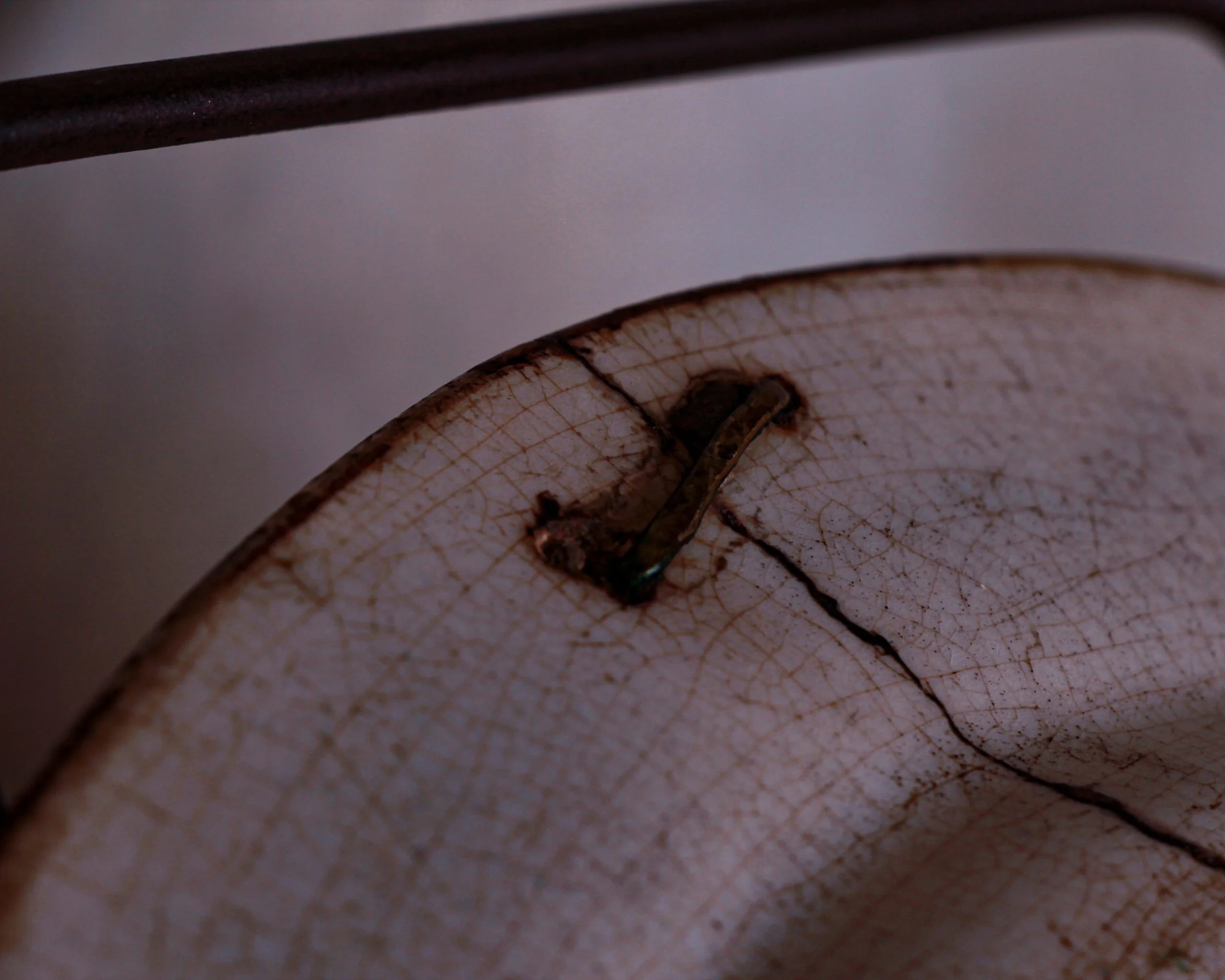
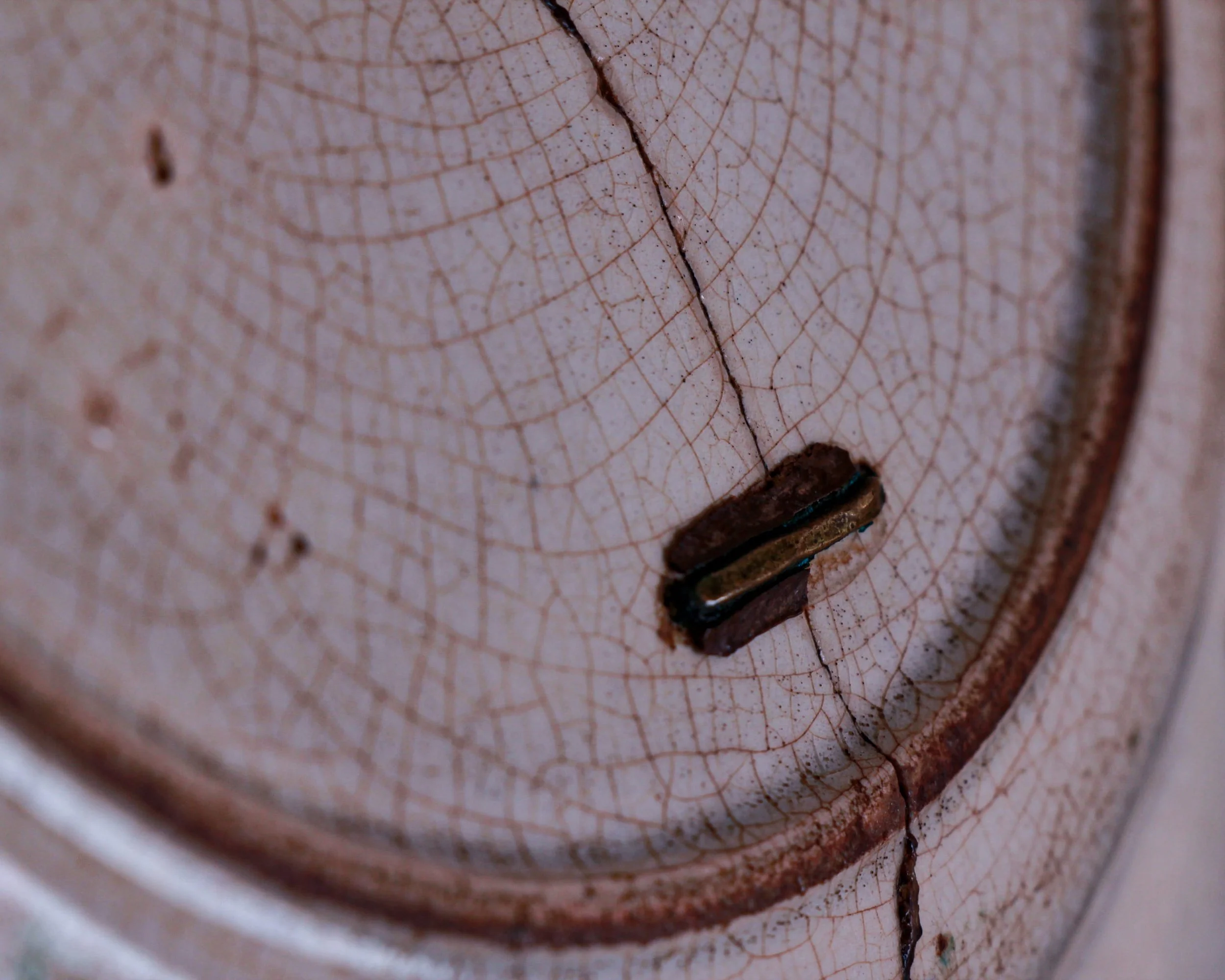
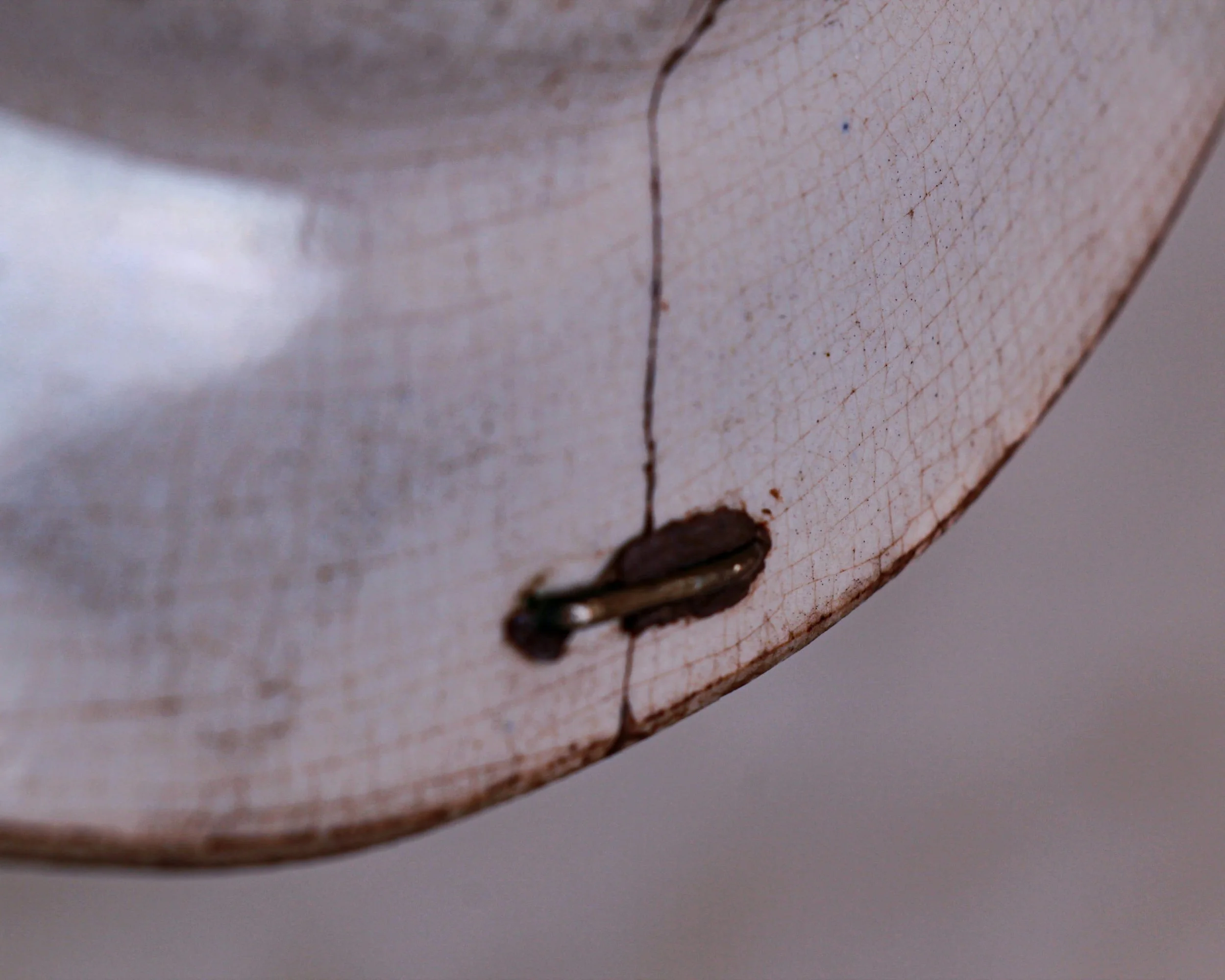
The back of the plate reveals 4 staples stabilizing the crack. This was a popular method used to repair treasured porcelain in the days before glue. The plate would have probably been taken to a jeweler or metal smith to be restored. Holes were drilled in the plate using a rod of metal dipped in diamond dust, the holes were used for the metal staples. This favored technique of mending porcelain dates back to the 17th century. It was an elaborate way of reassembling pieces together, so it was usually reserved for expensive china or china with sentimental value.
Circa late 19th c. to early 20th.
Category History
Some of the best objects aren’t the ones that stayed perfect—they’re the ones that refused to quit. Old make-do repairs show up everywhere: a cracked handle stitched with wire, a split board held together with mismatched nails, a ceramic vessel patched with a strip of tin. These fixes weren’t about aesthetics or preservation in the modern sense—they were about getting something back into service, quickly and with whatever was on hand.
There’s a certain logic to them. Repairs often reveal how the object failed and how someone chose to outsmart that failure. A brace added where stress collected, a patch layered over a weak spot, a join reinforced in a way the original maker never intended. It’s problem-solving in real time.
What’s compelling now is the honesty. Nothing is hidden. The repair becomes part of the object’s identity, sometimes more interesting than the original form. You’re seeing two makers at once—the person who made it, and the person who kept it going.
They carry a quiet resilience. Not pristine, not precious—just useful, adapted, and still here.
Ceramic dinner plate depicting beautiful blue graphics of a village and flowers—you can clearly see a large crack that goes the entire length of the plate.
The back of the plate reveals 4 staples stabilizing the crack. This was a popular method used to repair treasured porcelain in the days before glue. The plate would have probably been taken to a jeweler or metal smith to be restored. Holes were drilled in the plate using a rod of metal dipped in diamond dust, the holes were used for the metal staples. This favored technique of mending porcelain dates back to the 17th century. It was an elaborate way of reassembling pieces together, so it was usually reserved for expensive china or china with sentimental value.
Circa late 19th c. to early 20th.
Category History
Some of the best objects aren’t the ones that stayed perfect—they’re the ones that refused to quit. Old make-do repairs show up everywhere: a cracked handle stitched with wire, a split board held together with mismatched nails, a ceramic vessel patched with a strip of tin. These fixes weren’t about aesthetics or preservation in the modern sense—they were about getting something back into service, quickly and with whatever was on hand.
There’s a certain logic to them. Repairs often reveal how the object failed and how someone chose to outsmart that failure. A brace added where stress collected, a patch layered over a weak spot, a join reinforced in a way the original maker never intended. It’s problem-solving in real time.
What’s compelling now is the honesty. Nothing is hidden. The repair becomes part of the object’s identity, sometimes more interesting than the original form. You’re seeing two makers at once—the person who made it, and the person who kept it going.
They carry a quiet resilience. Not pristine, not precious—just useful, adapted, and still here.