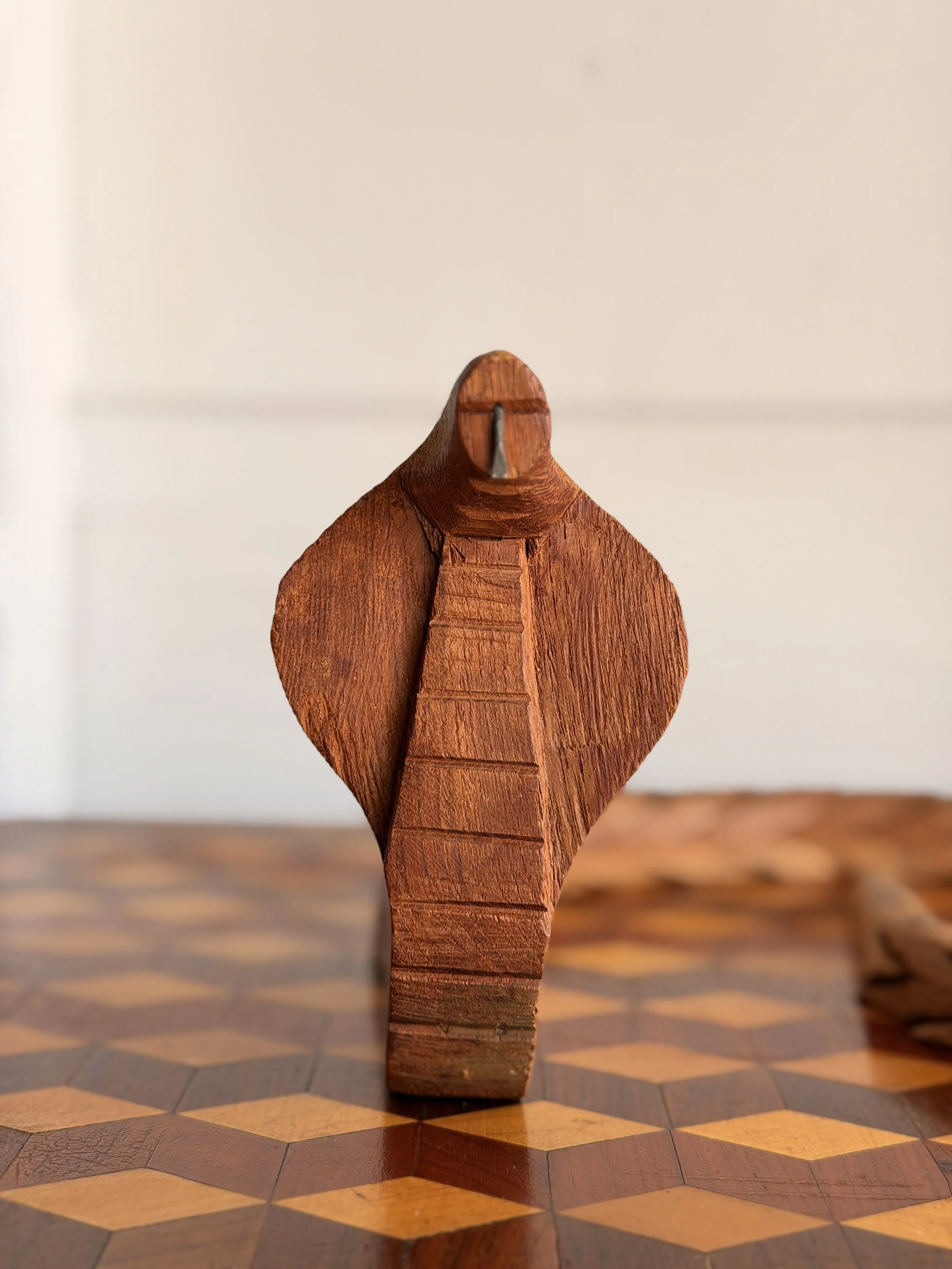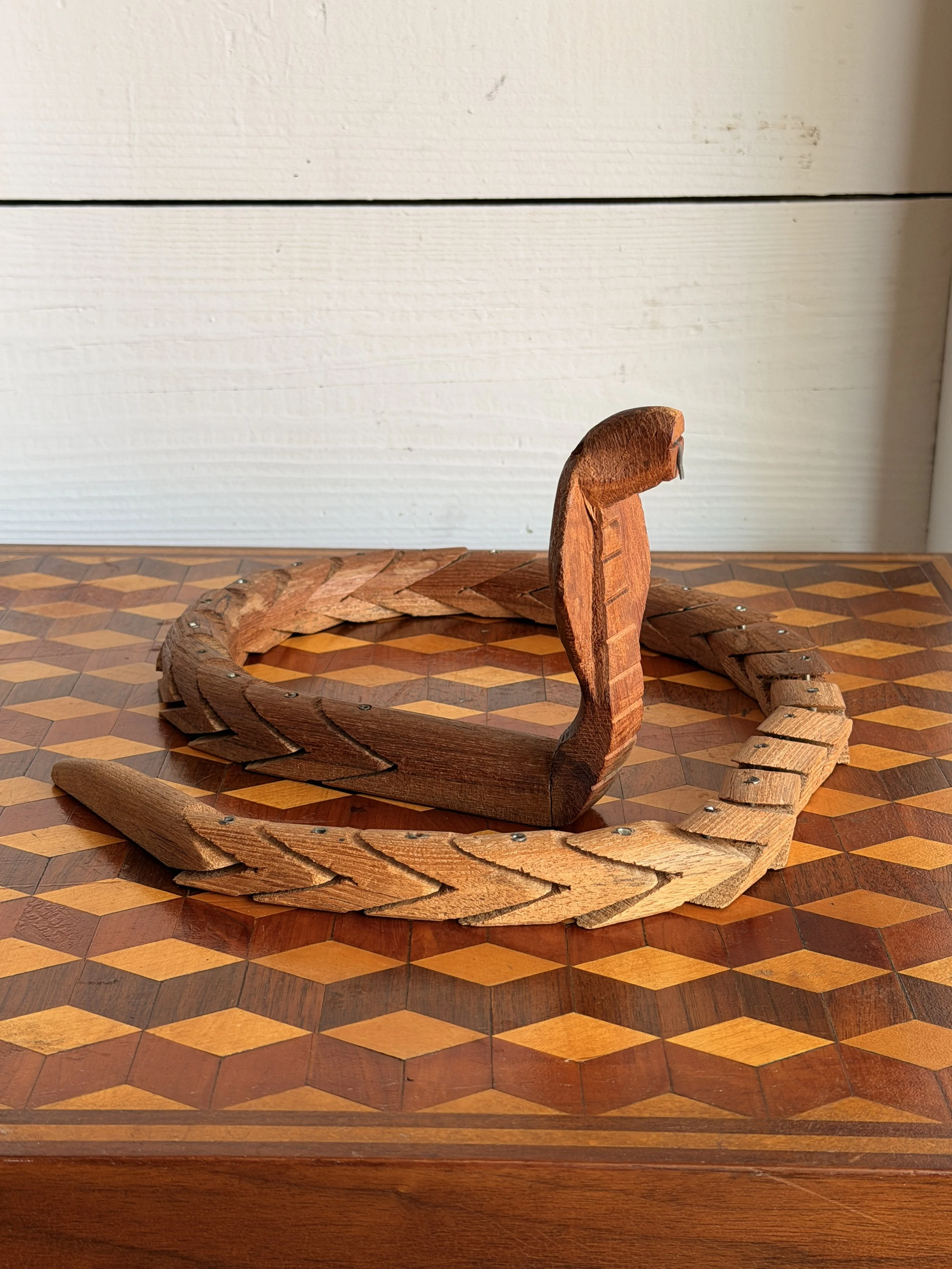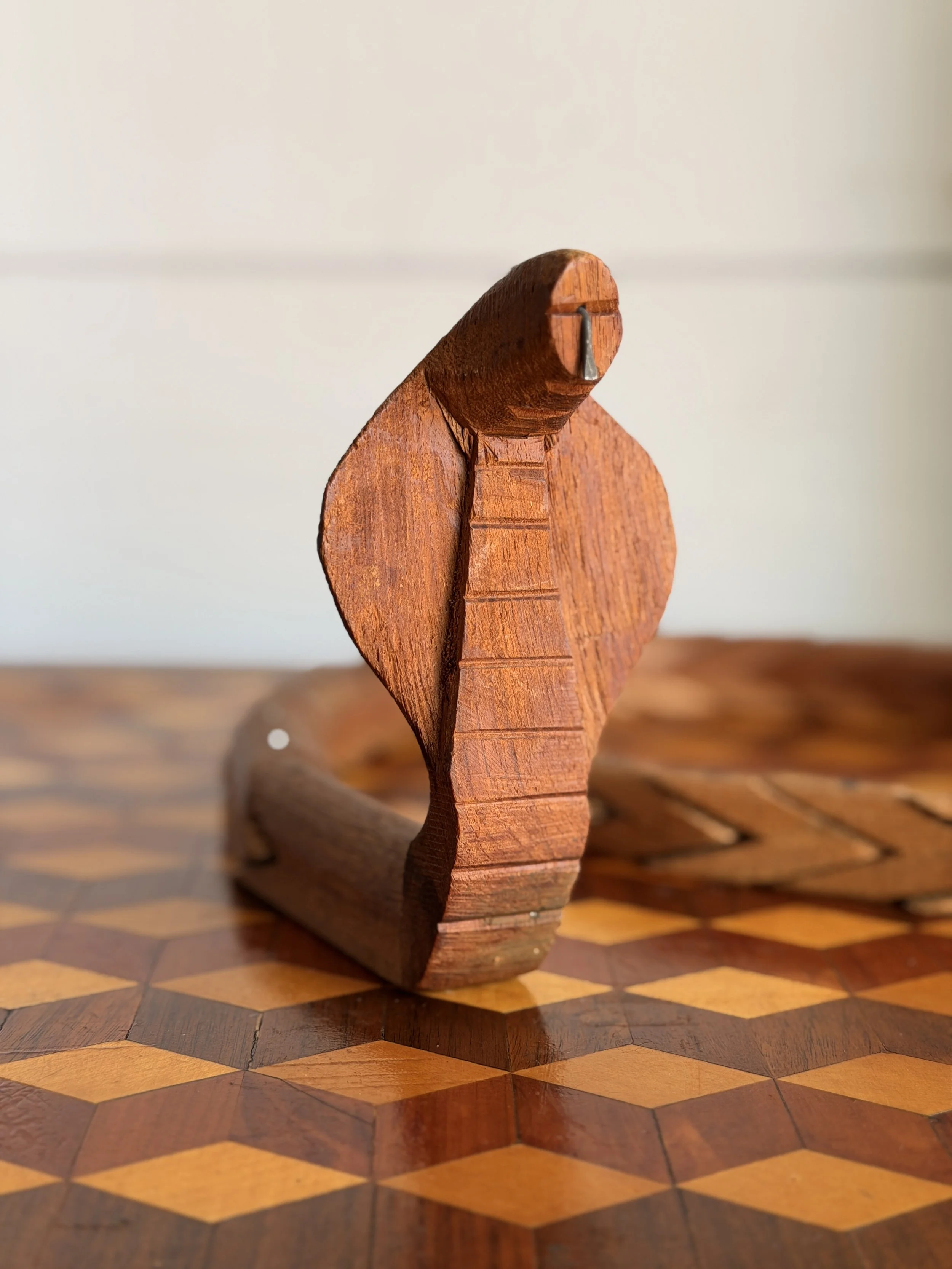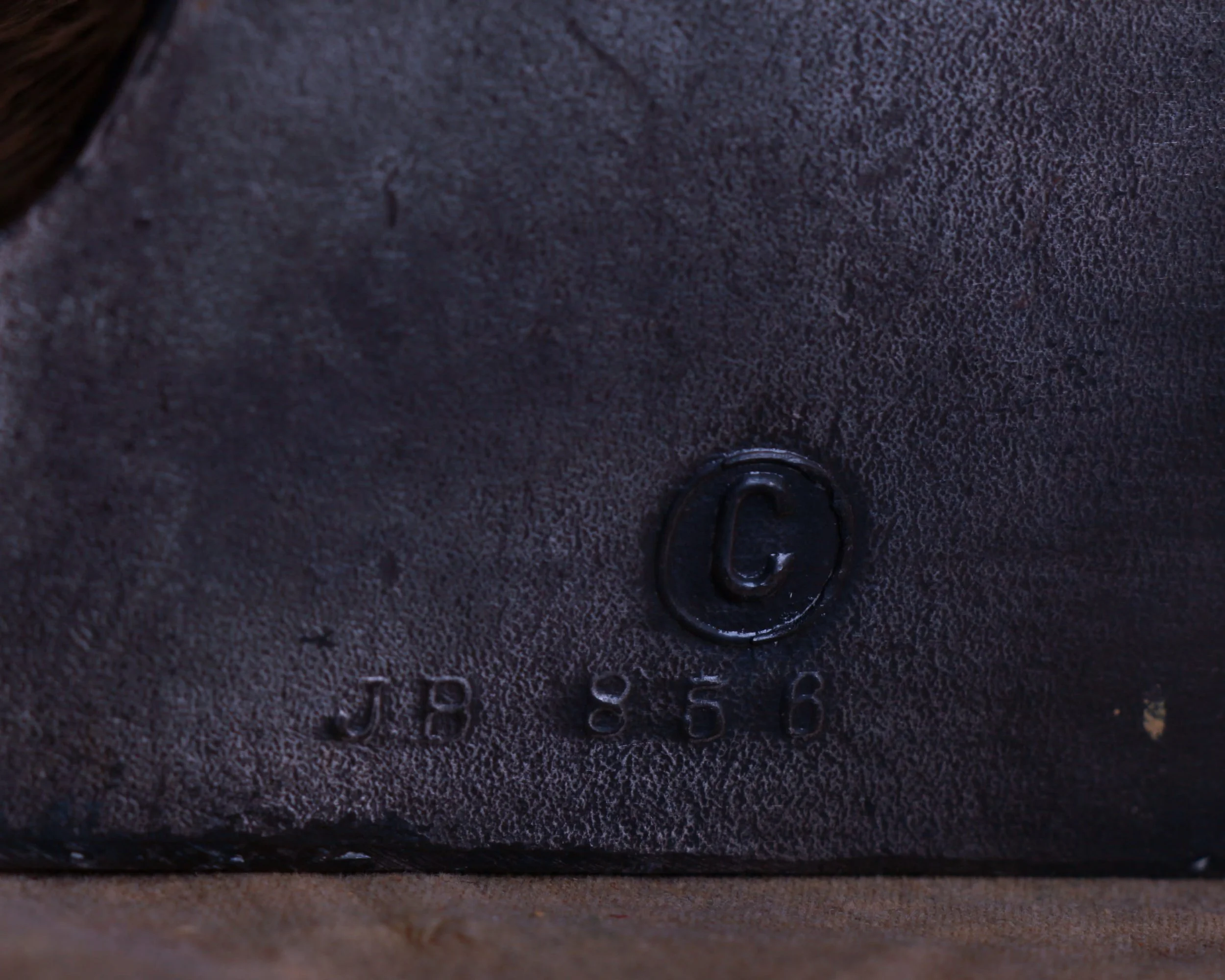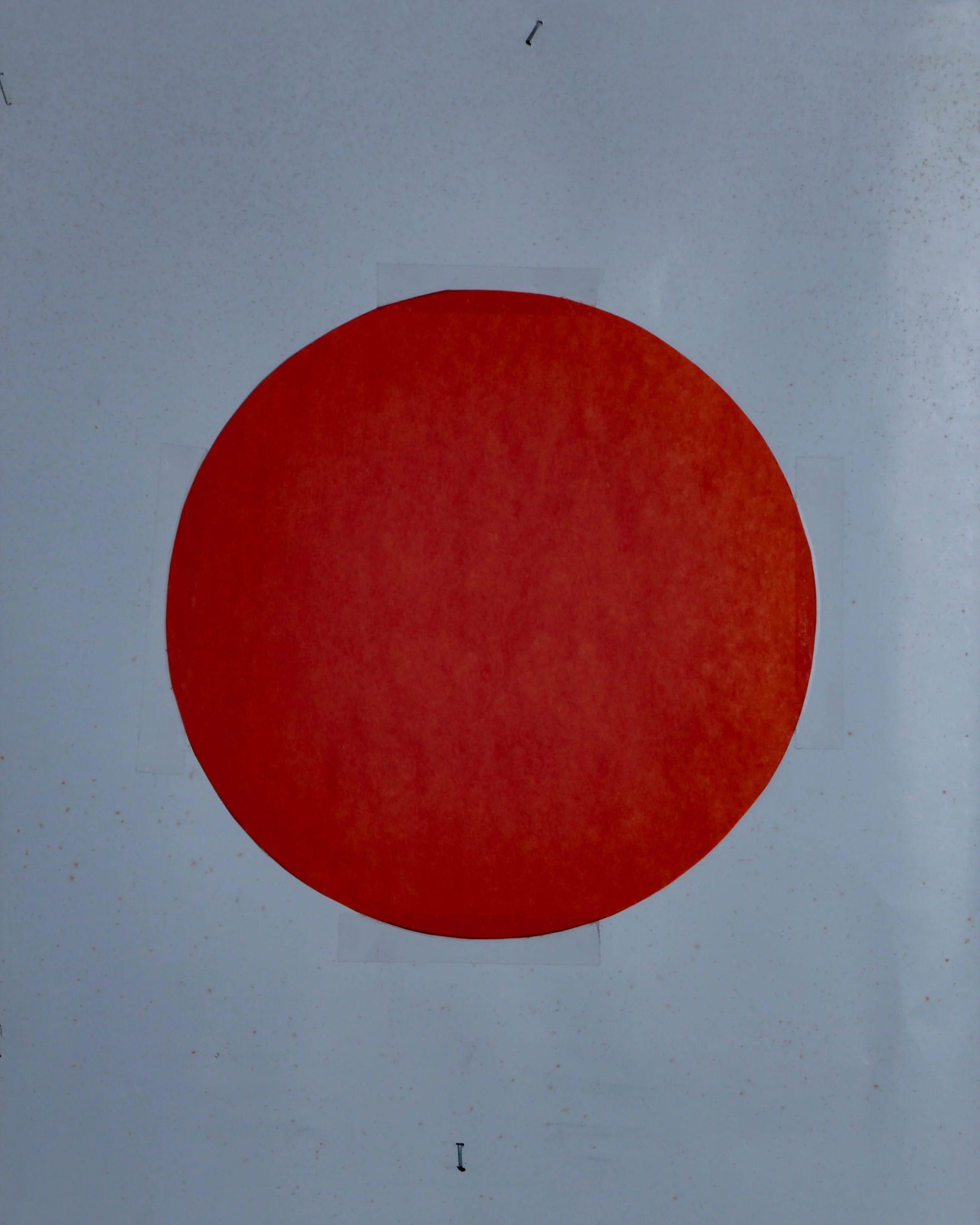
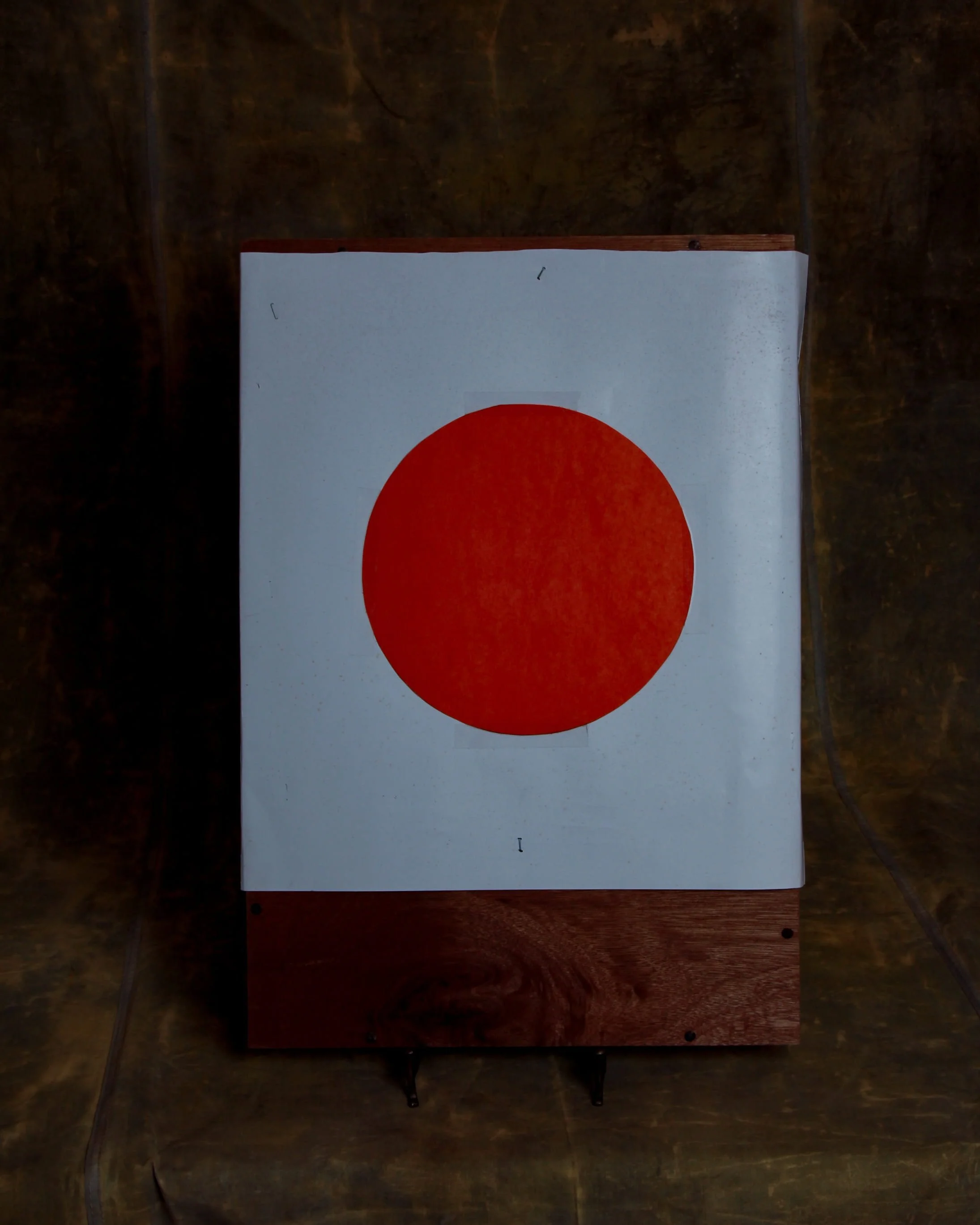
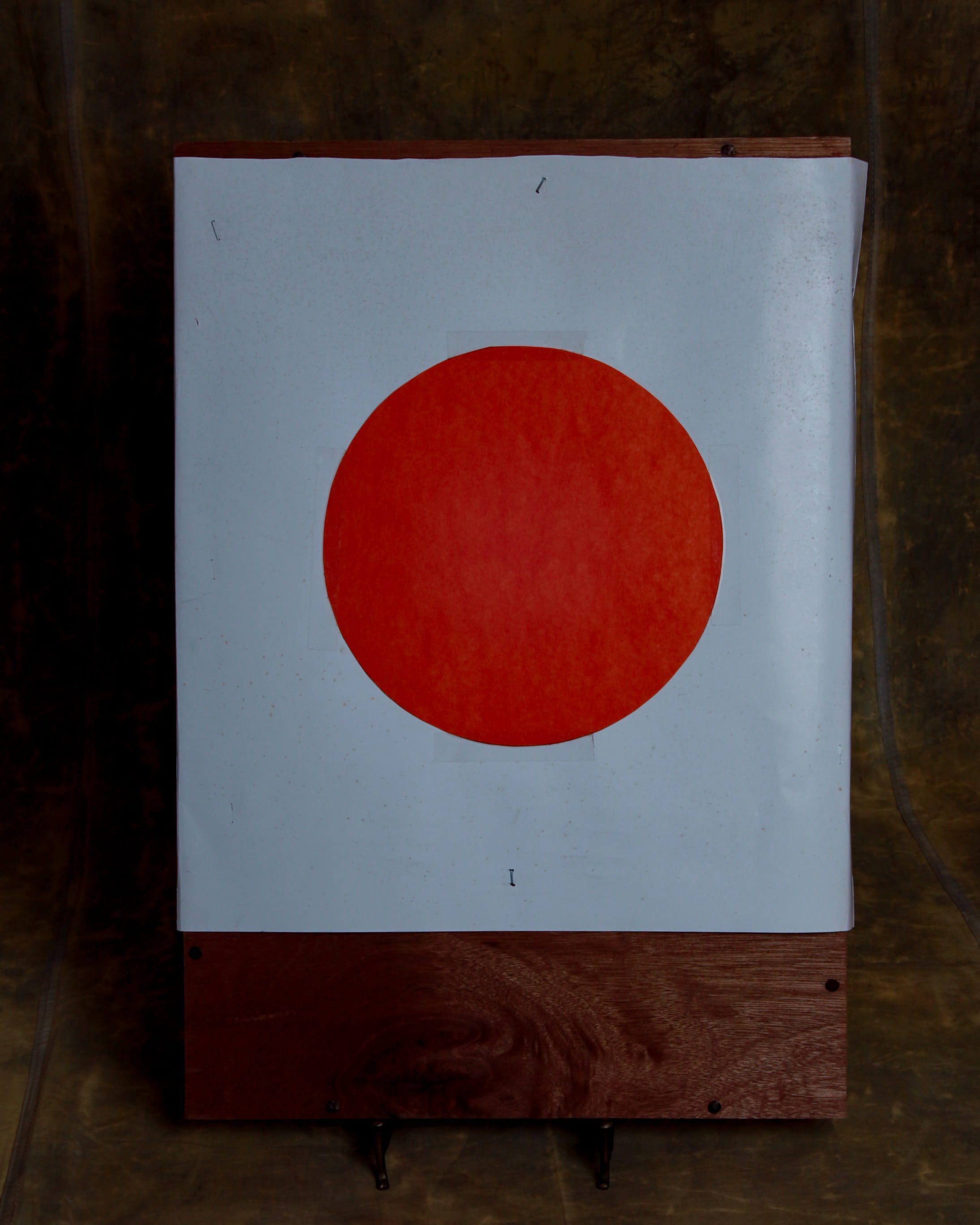
This homemade shooting target stencil, likely dating to the 1950s, is a perfect example of that kind of honest utility. What makes this piece especially appealing today is its graphic simplicity. The red circle against the white field has a striking, almost modernist quality. No extra graphics, no decoration, just the unmistakable symbol of a target that can be seen from a distance.
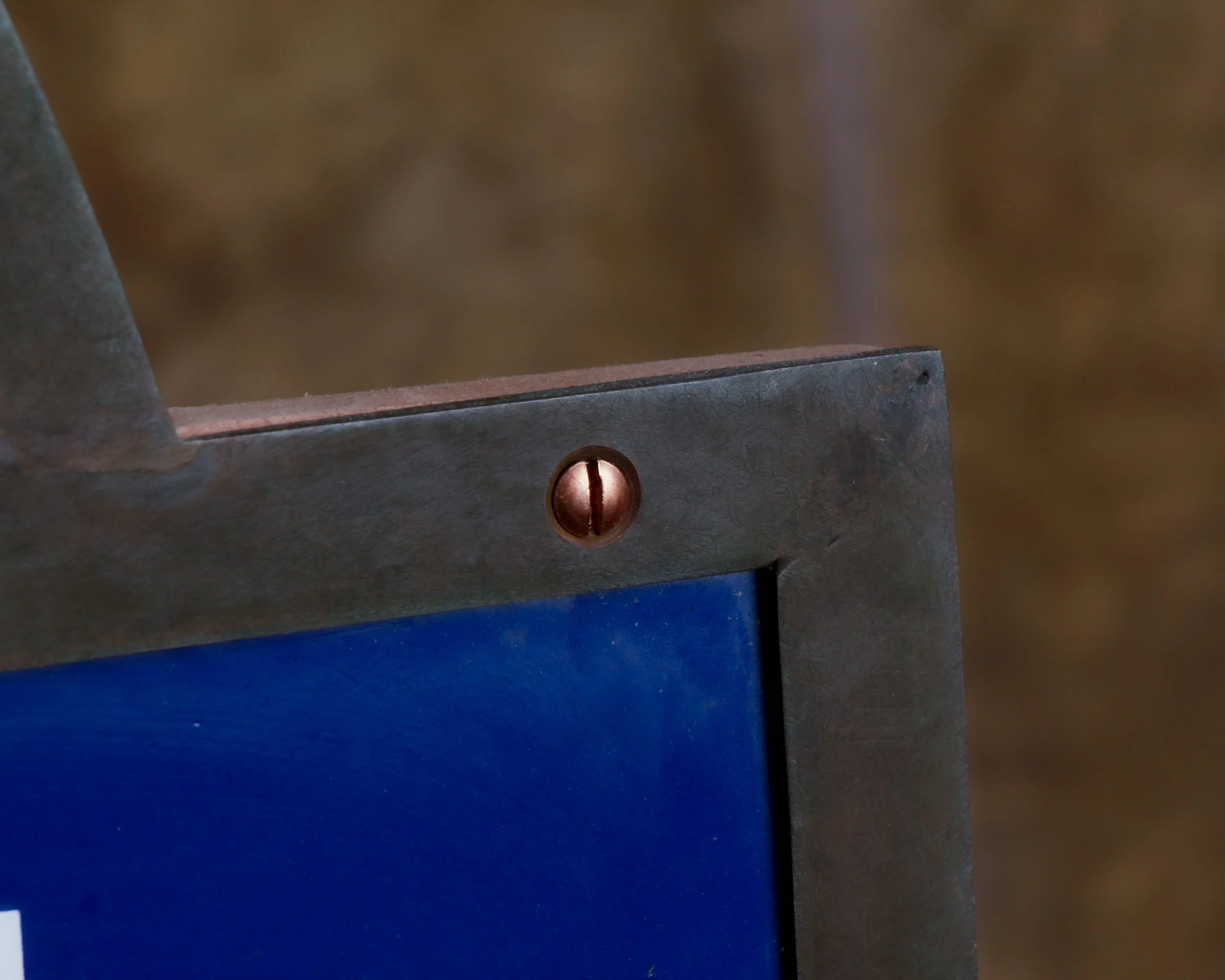
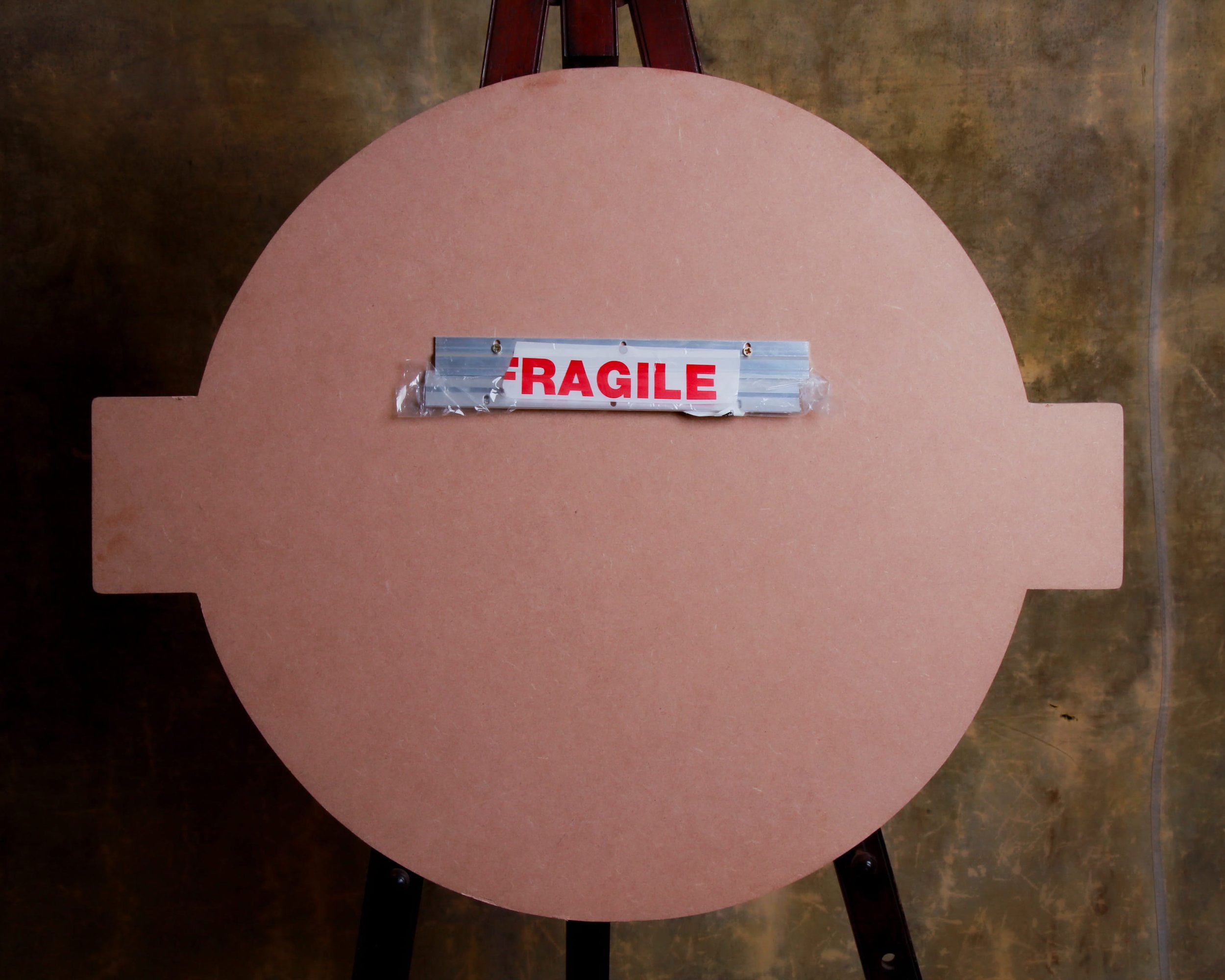
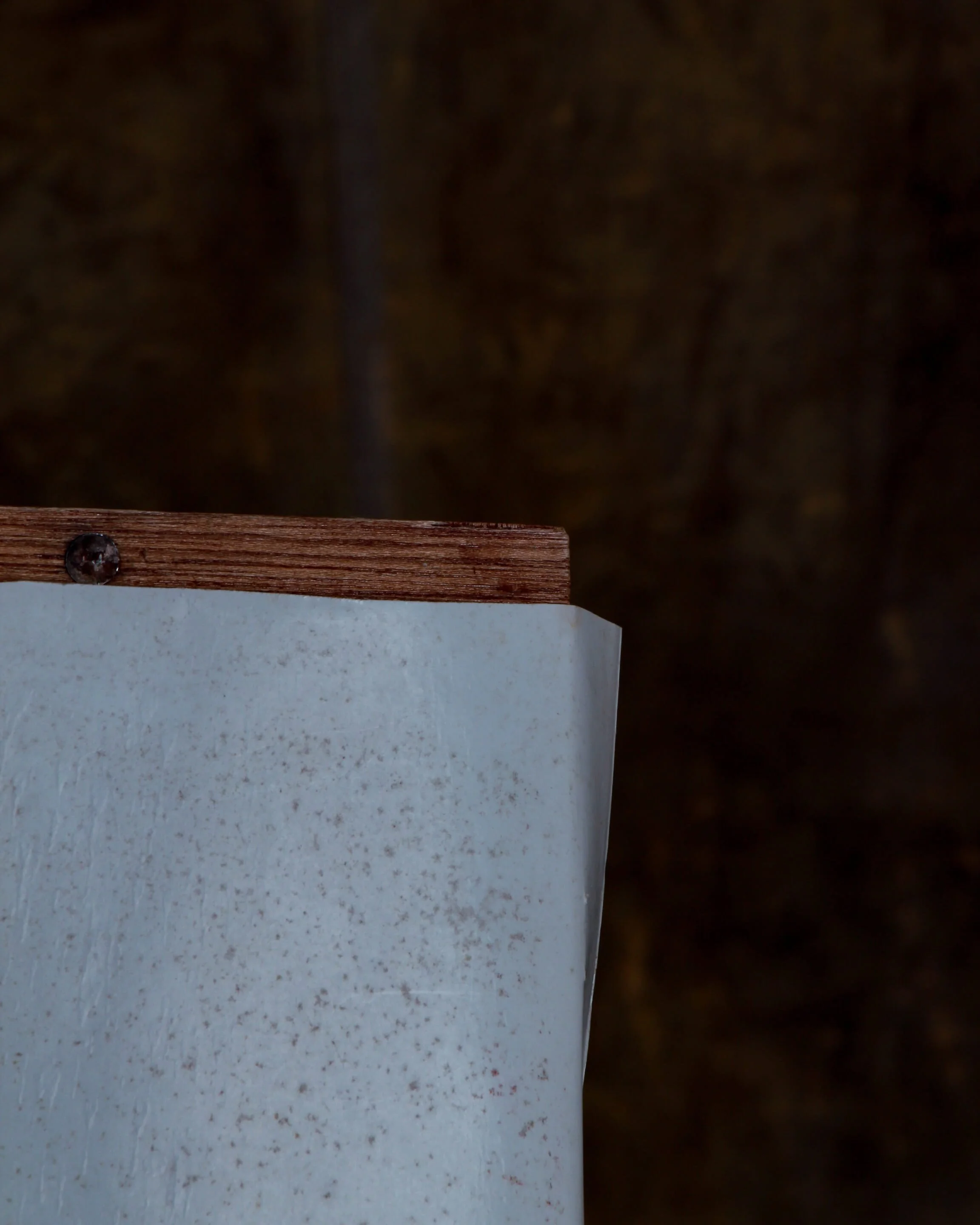
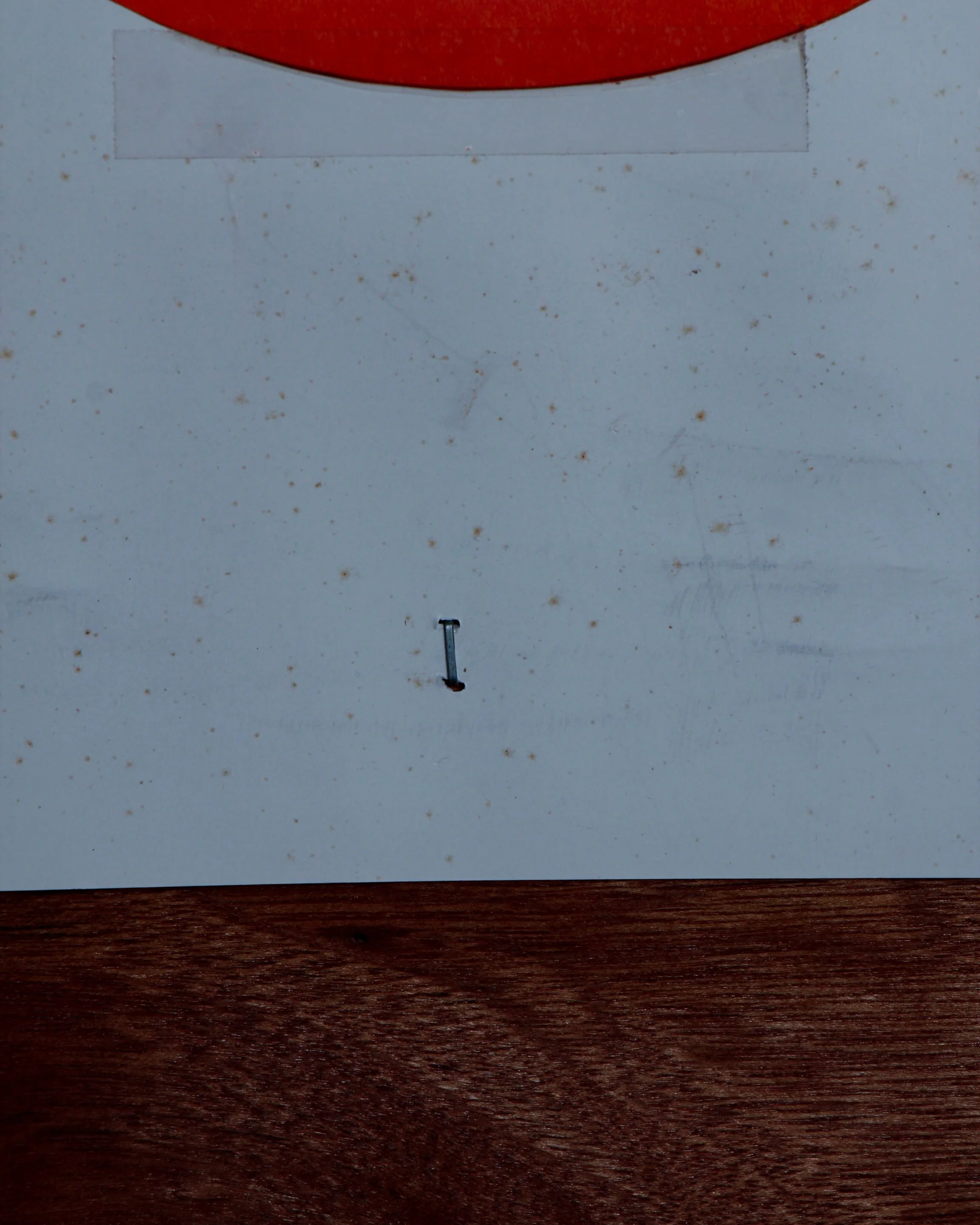
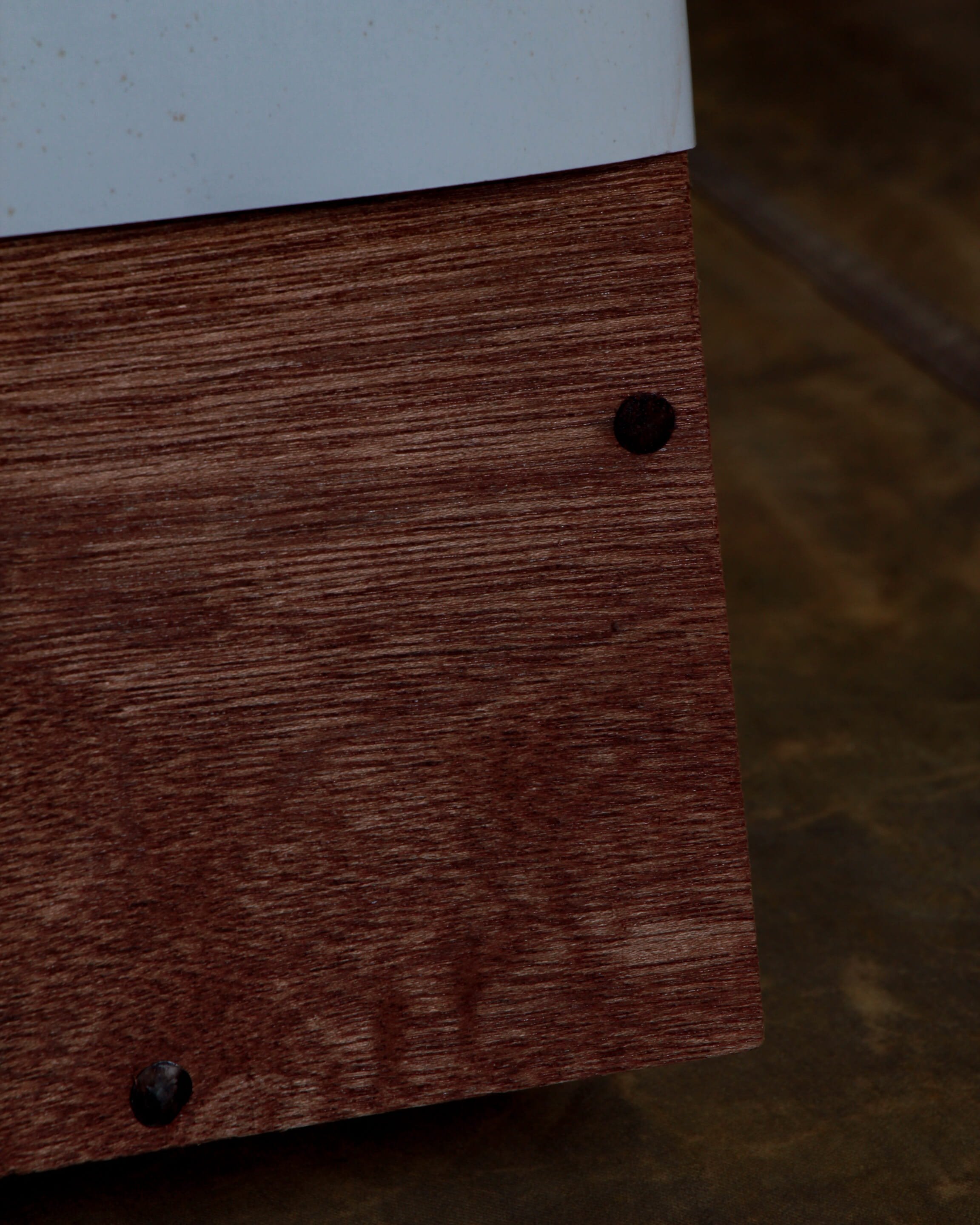
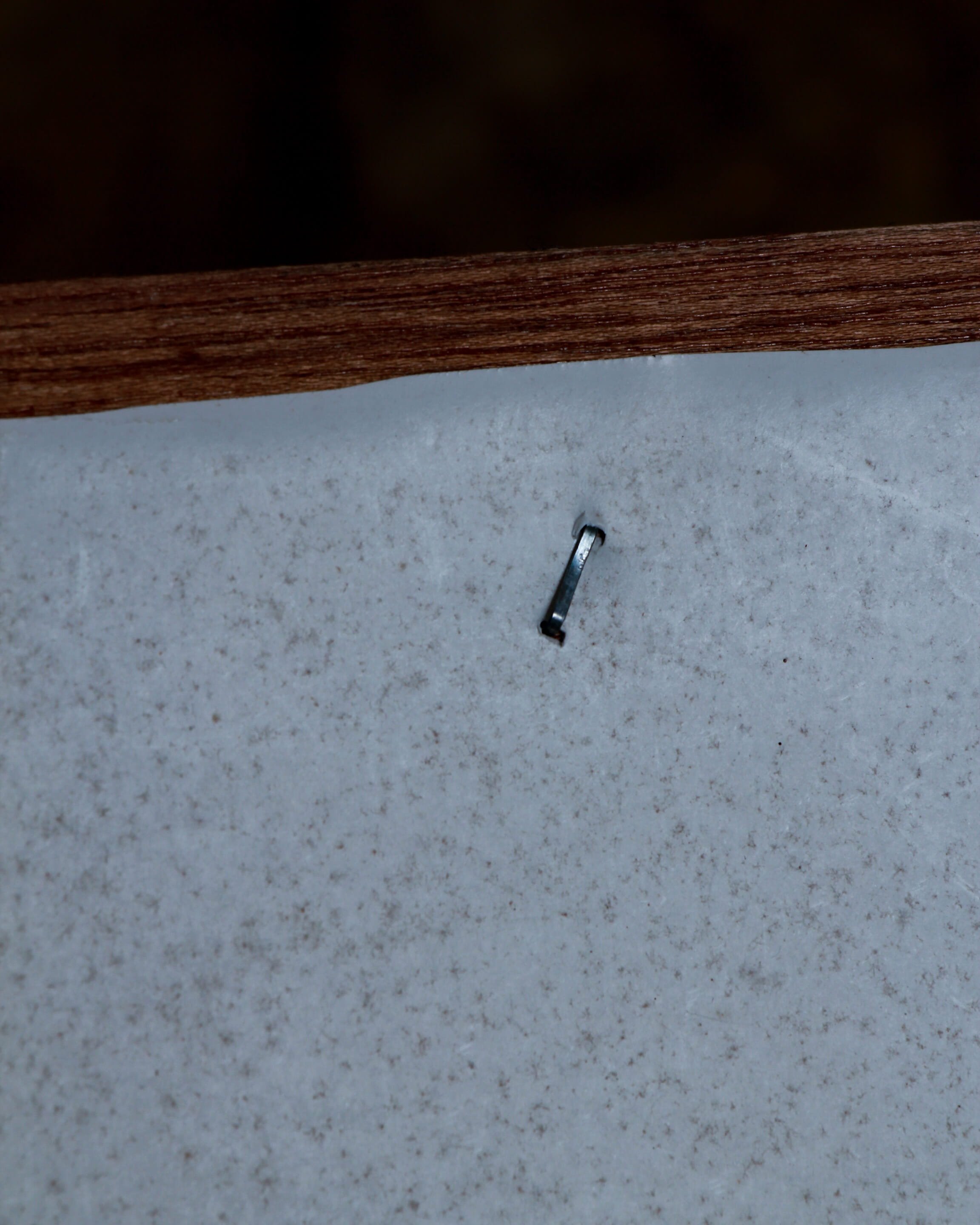
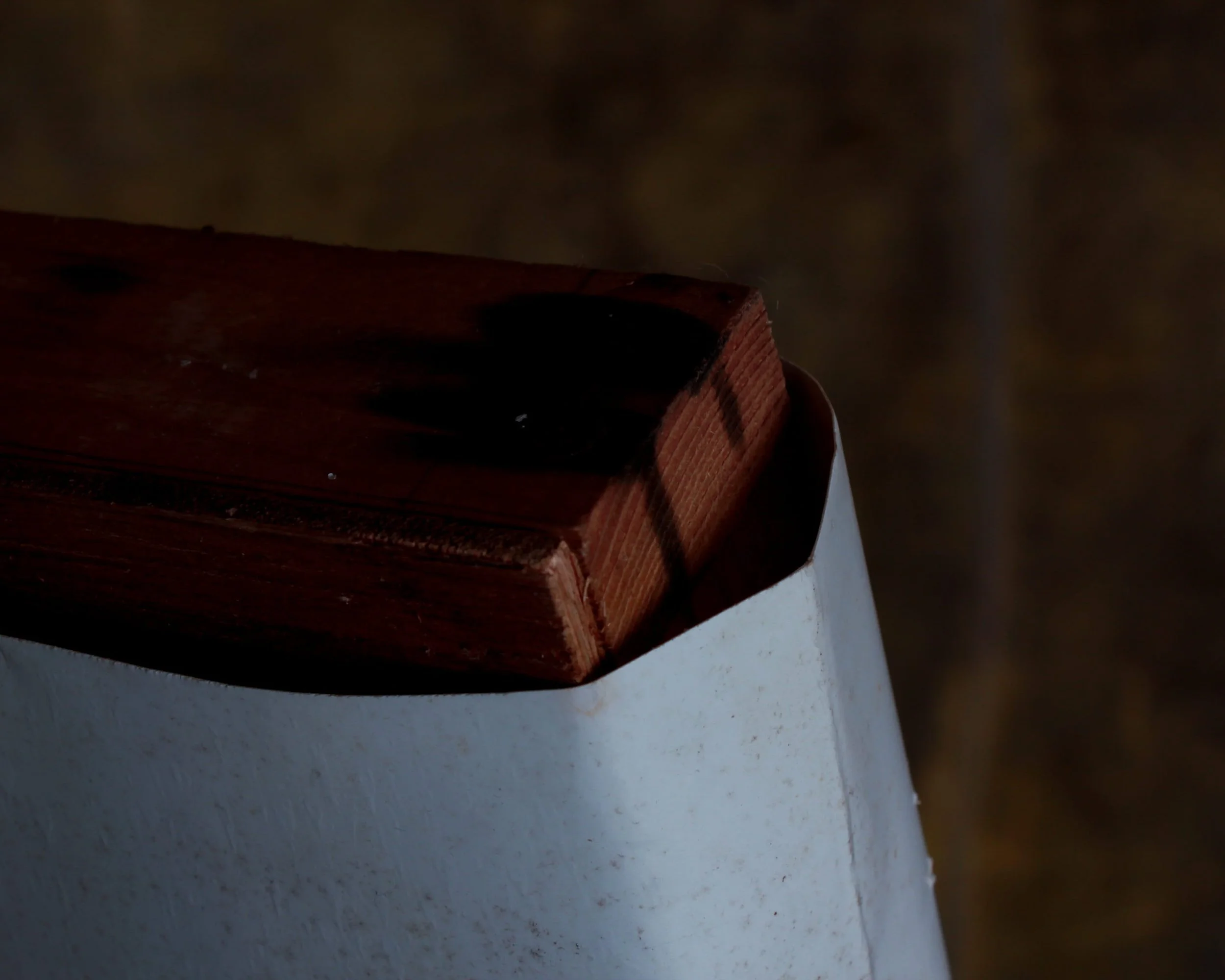
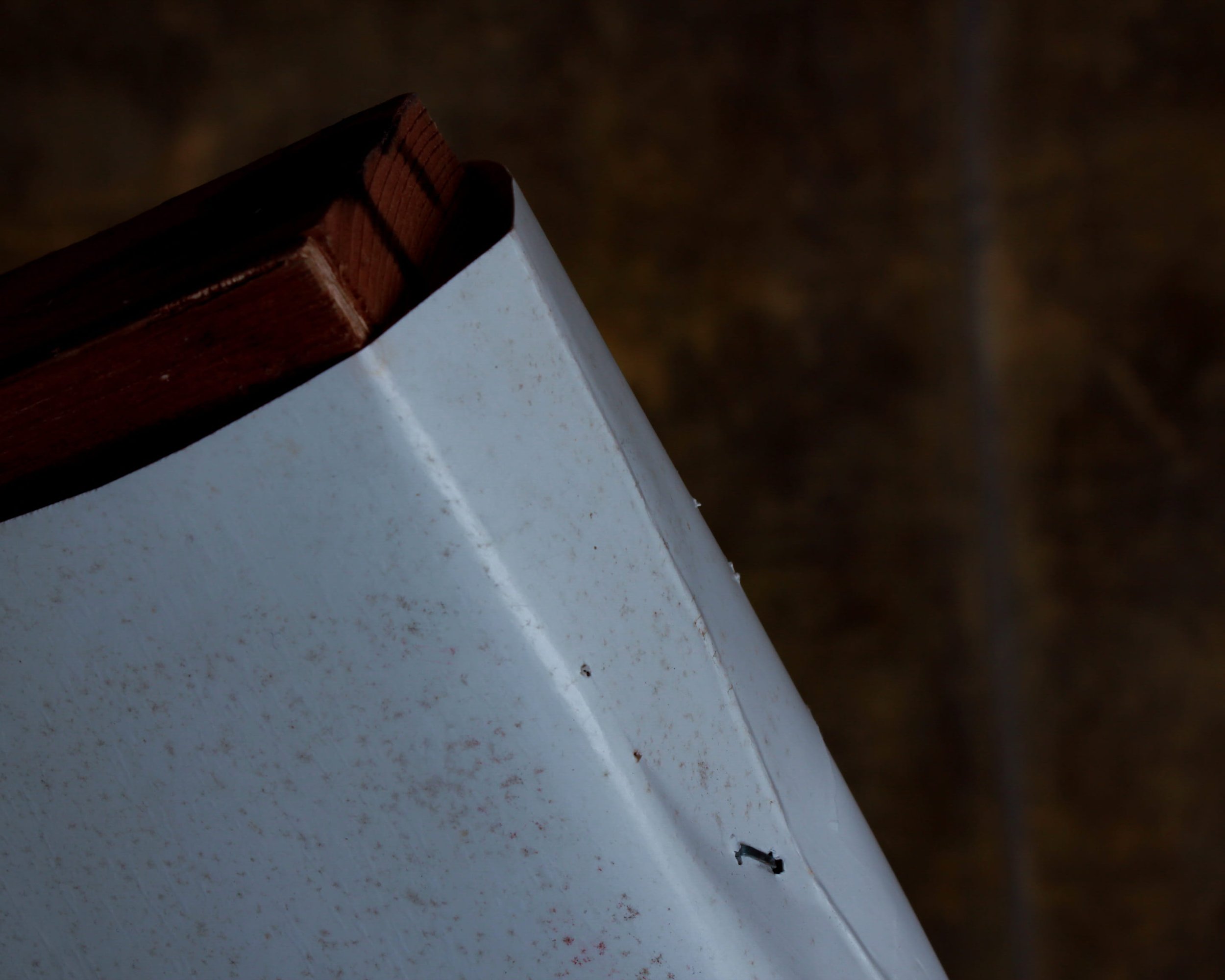
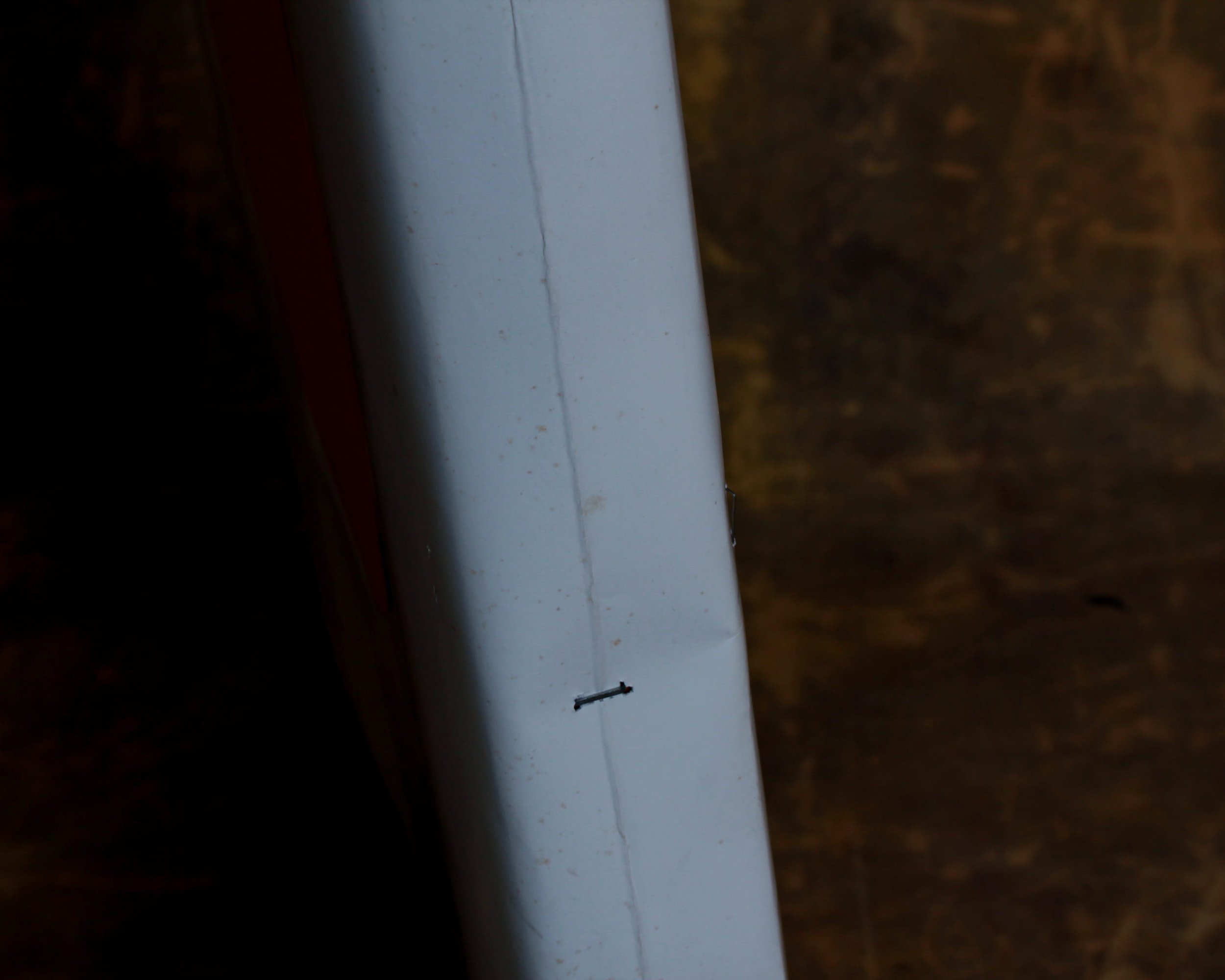
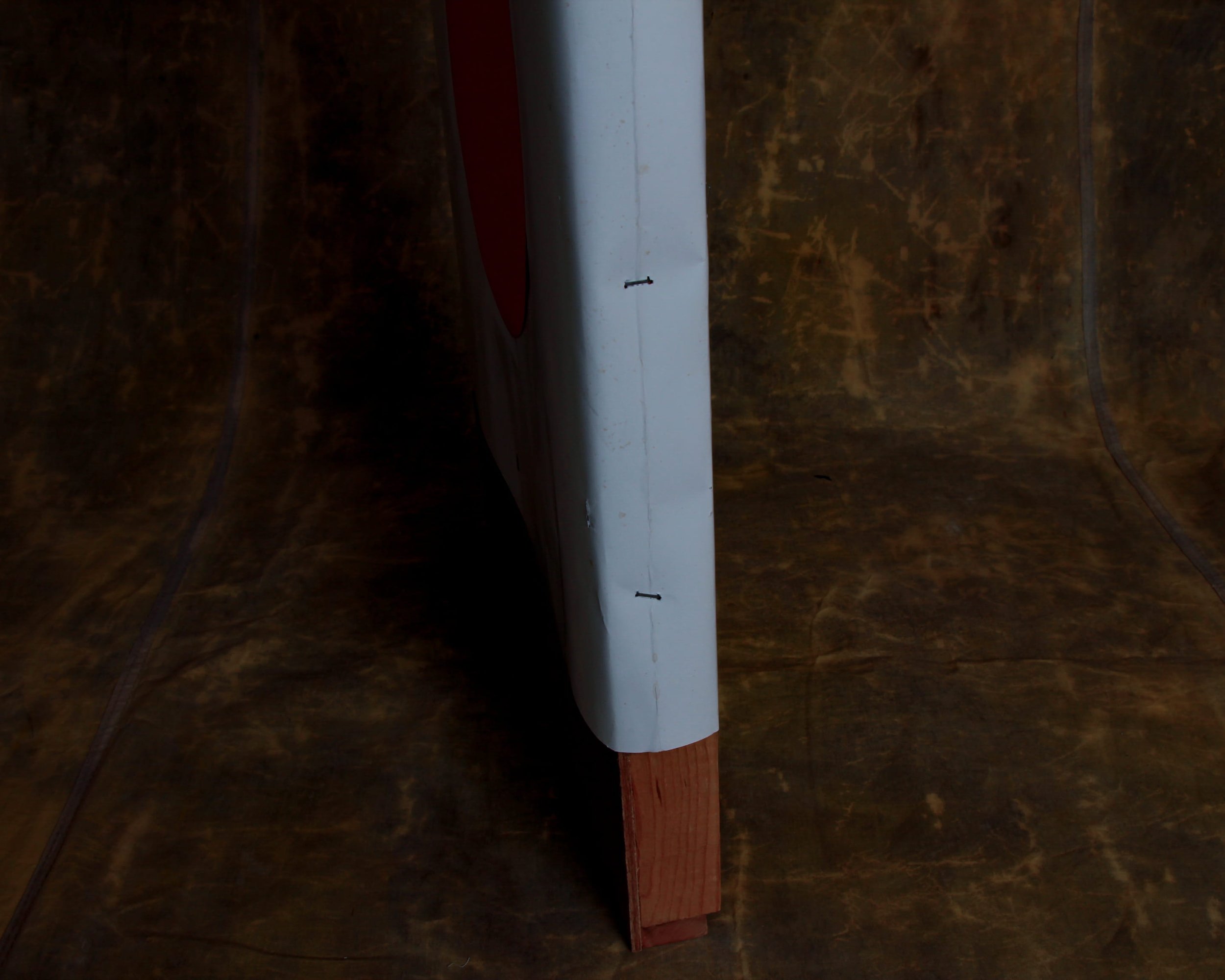
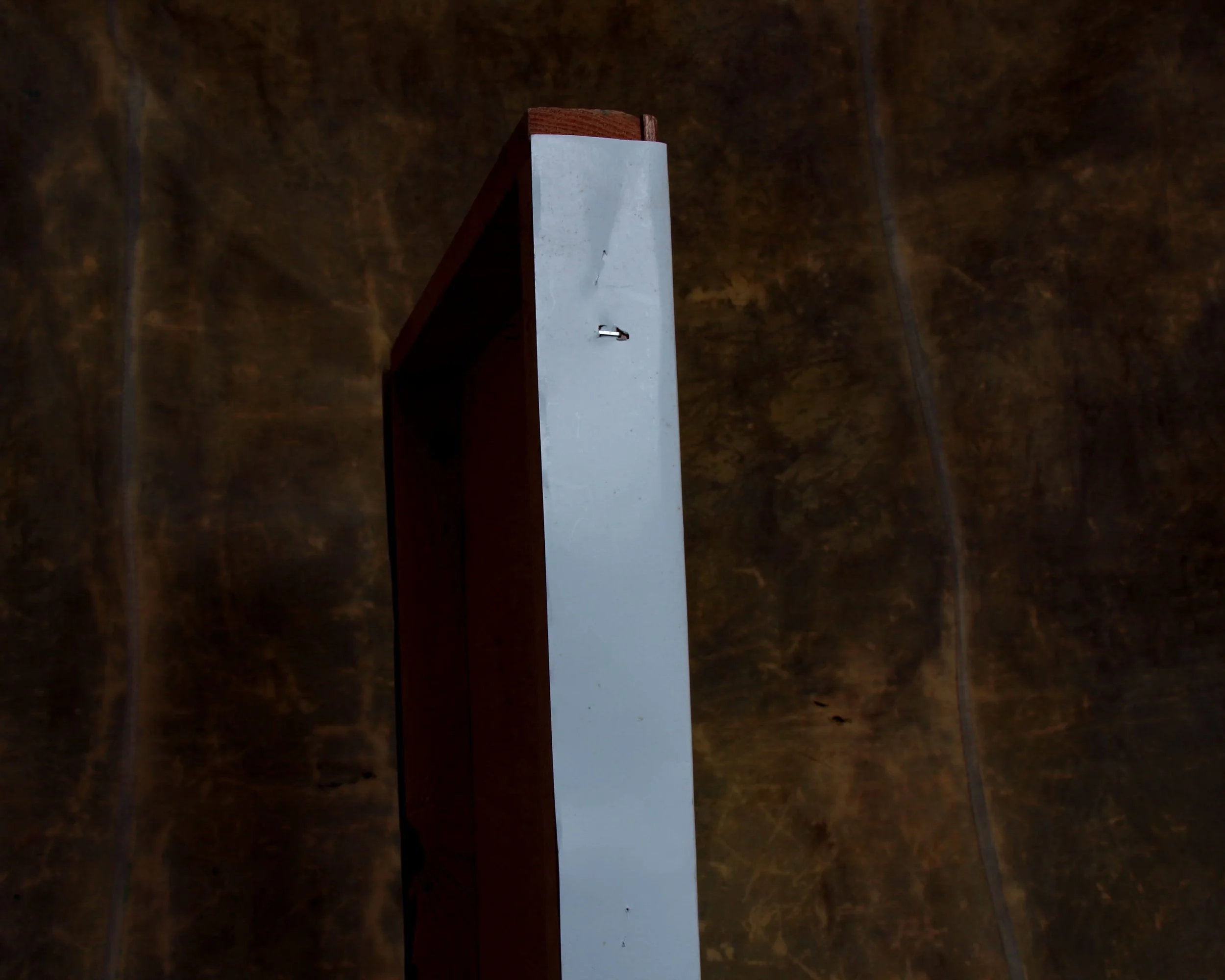
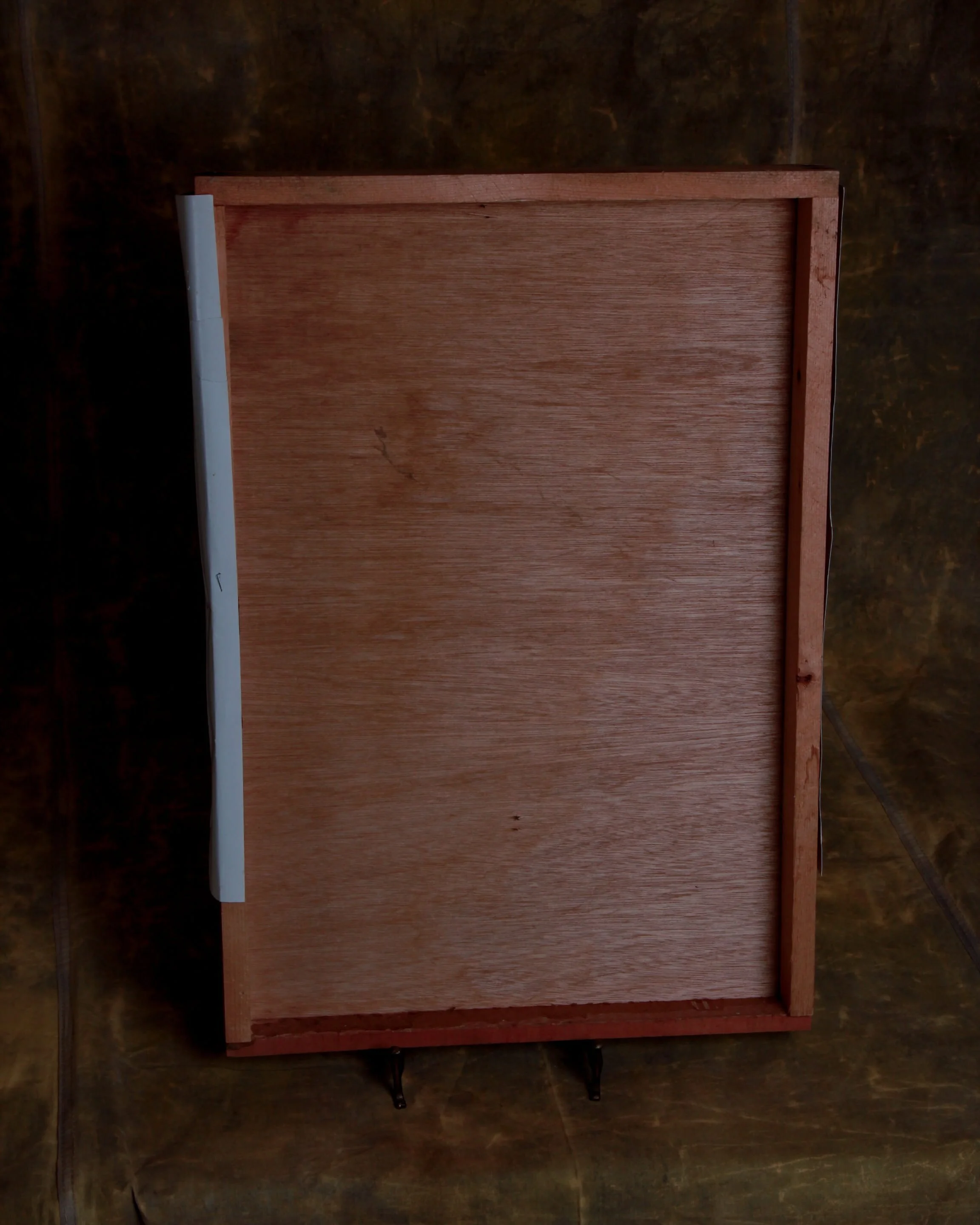
The stencil itself appears to be cut from thin metal and mounted to a simple wooden frame. The construction is straightforward and practical, the kind of thing someone put together in a garage or workshop with the tools they had on hand. Small nails hold the sheet in place, and the wood backing gives the whole piece rigidity so it could be reused again and again.
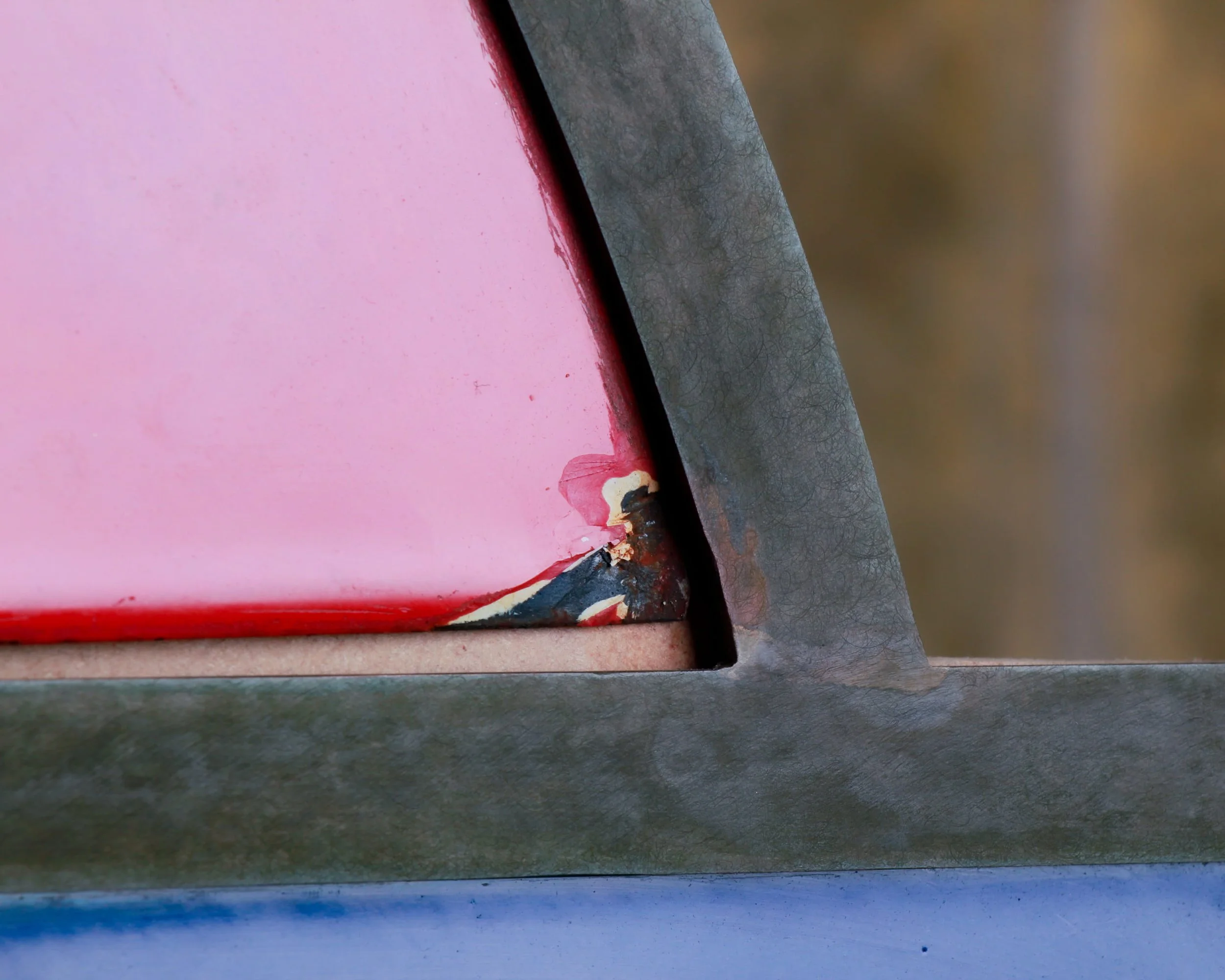
The surface shows scattered age spots, slightly uneven edges, light wear, and small imperfections that only add to its character.
Probably used at a small shooting range, hunting club, or even by an individual who wanted to make their own targets rather than buying them.
Category History
Shooting target signs have always walked a line between utility and graphic design. Originally made for ranges, fairs, and training grounds, they were designed to do one thing well—give you something clear to aim at. Bold concentric circles, stark silhouettes, or human-shaped outlines all served the same purpose: instant readability from a distance.
Materials varied—paper for temporary use, tin or steel for repeated shooting—but the visual language stayed consistent. High contrast, simple forms, no ambiguity. Some even doubled as advertising pieces, incorporating brand names or slogans into the design without distracting from function.
What makes them interesting now is how they change with use. Bullet holes, dents, and wear become part of the composition, turning a clean graphic into something layered and unpredictable.
They start as precise tools, but over time, they pick up a kind of accidental abstraction—marks of aim, misses, and repetition, all recorded right on the surface.
This homemade shooting target stencil, likely dating to the 1950s, is a perfect example of that kind of honest utility. What makes this piece especially appealing today is its graphic simplicity. The red circle against the white field has a striking, almost modernist quality. No extra graphics, no decoration, just the unmistakable symbol of a target that can be seen from a distance.
The stencil itself appears to be cut from thin metal and mounted to a simple wooden frame. The construction is straightforward and practical, the kind of thing someone put together in a garage or workshop with the tools they had on hand. Small nails hold the sheet in place, and the wood backing gives the whole piece rigidity so it could be reused again and again.
The surface shows scattered age spots, slightly uneven edges, light wear, and small imperfections that only add to its character.
Probably used at a small shooting range, hunting club, or even by an individual who wanted to make their own targets rather than buying them.
Category History
Shooting target signs have always walked a line between utility and graphic design. Originally made for ranges, fairs, and training grounds, they were designed to do one thing well—give you something clear to aim at. Bold concentric circles, stark silhouettes, or human-shaped outlines all served the same purpose: instant readability from a distance.
Materials varied—paper for temporary use, tin or steel for repeated shooting—but the visual language stayed consistent. High contrast, simple forms, no ambiguity. Some even doubled as advertising pieces, incorporating brand names or slogans into the design without distracting from function.
What makes them interesting now is how they change with use. Bullet holes, dents, and wear become part of the composition, turning a clean graphic into something layered and unpredictable.
They start as precise tools, but over time, they pick up a kind of accidental abstraction—marks of aim, misses, and repetition, all recorded right on the surface.