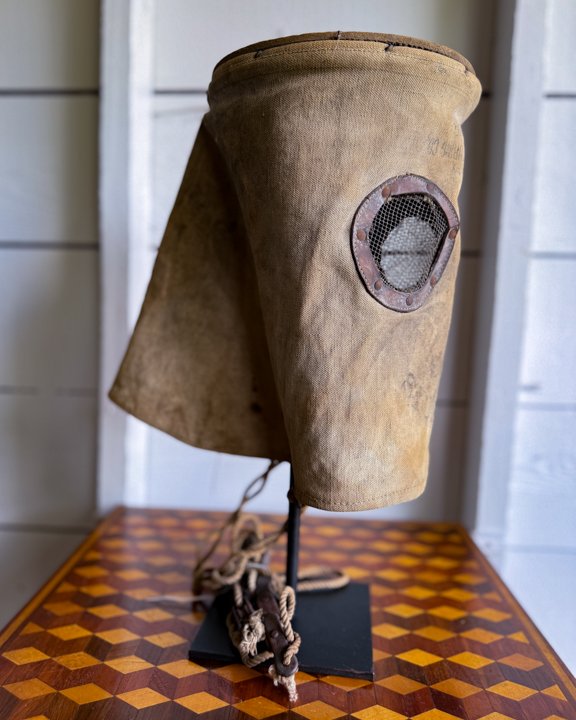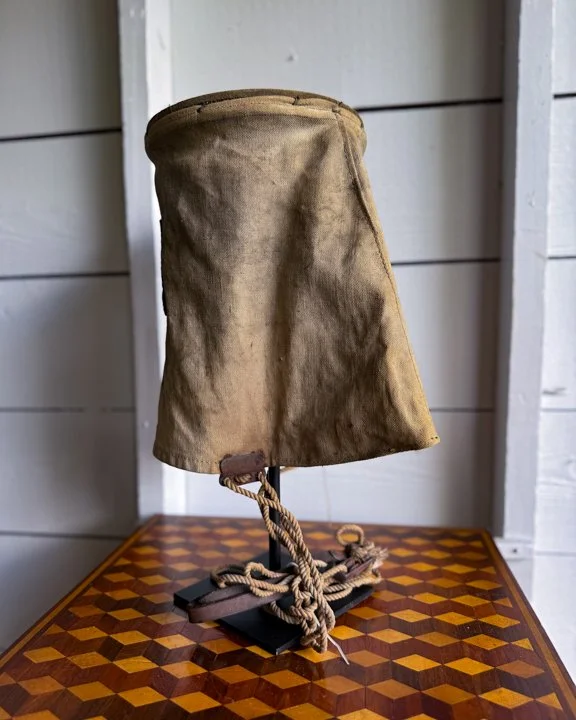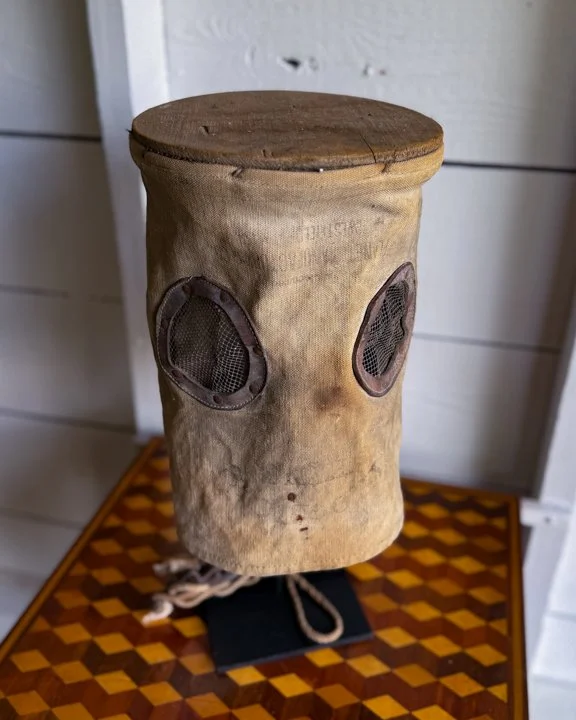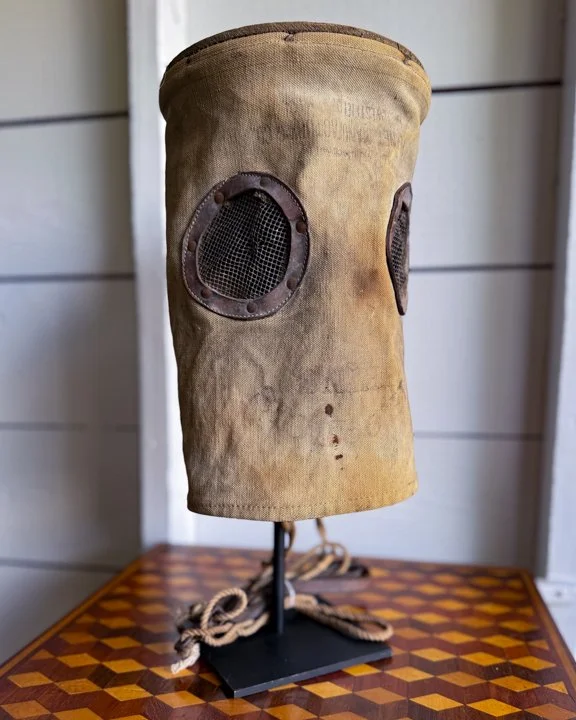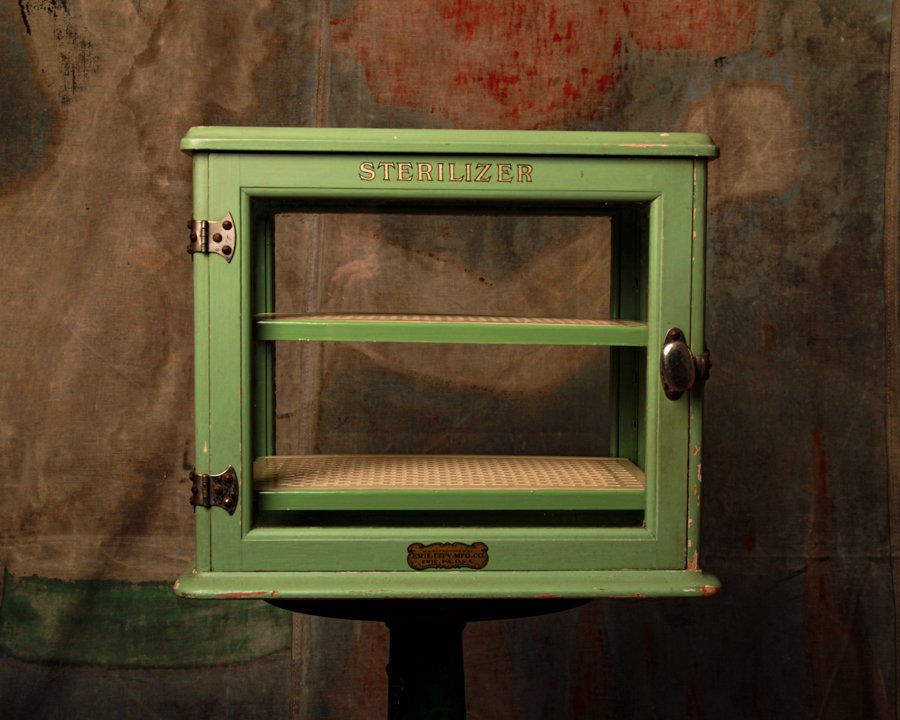
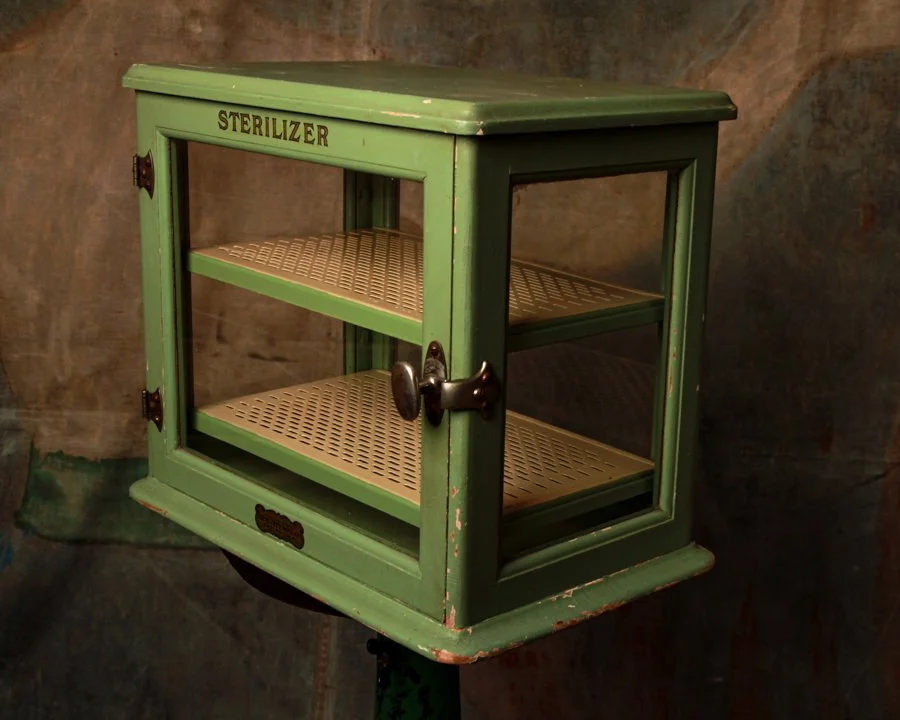
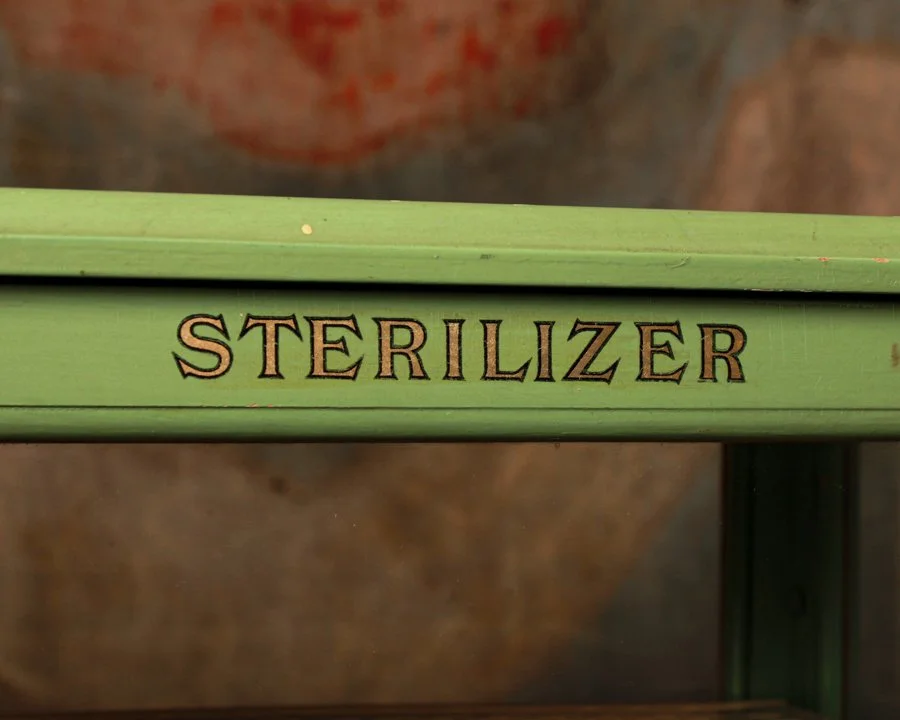
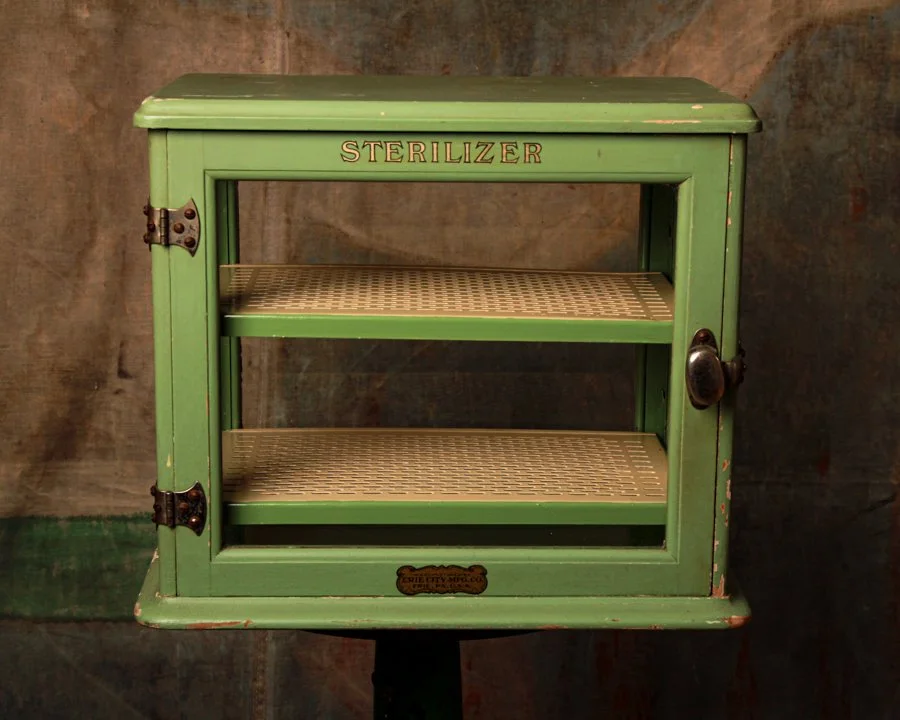
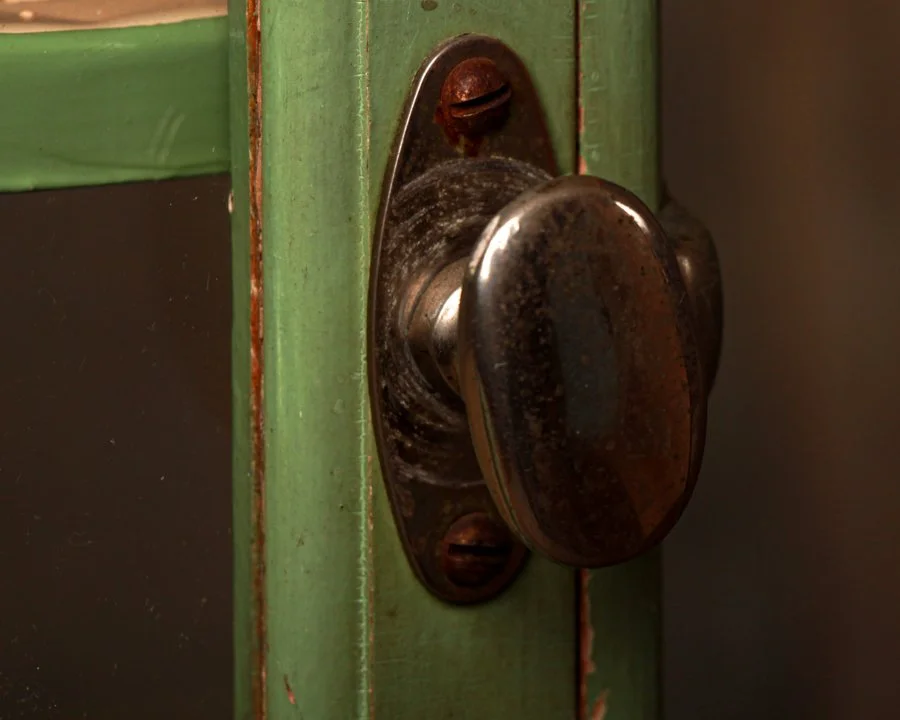
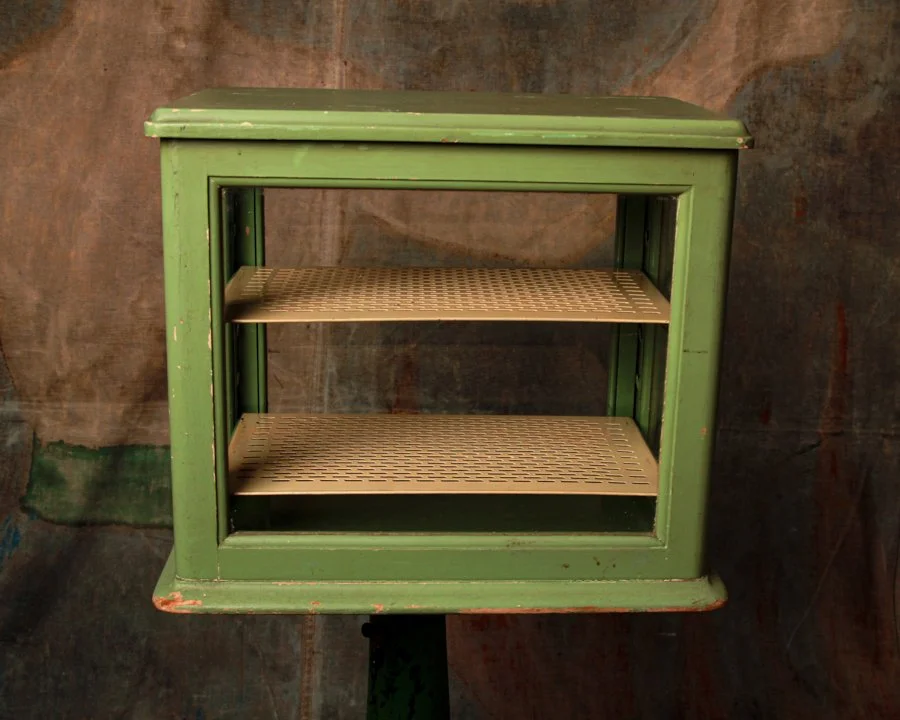
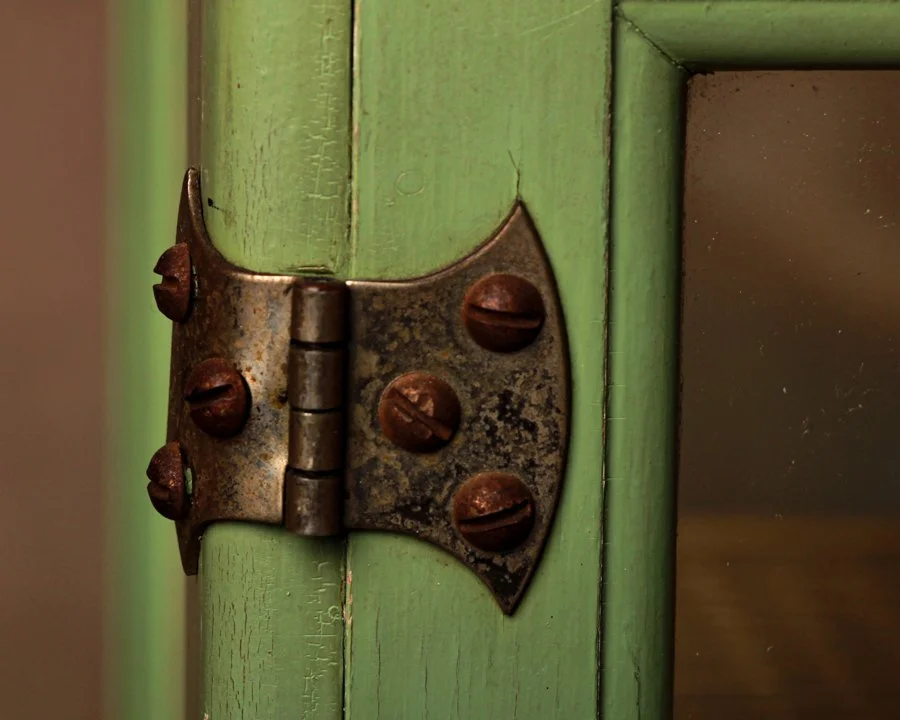
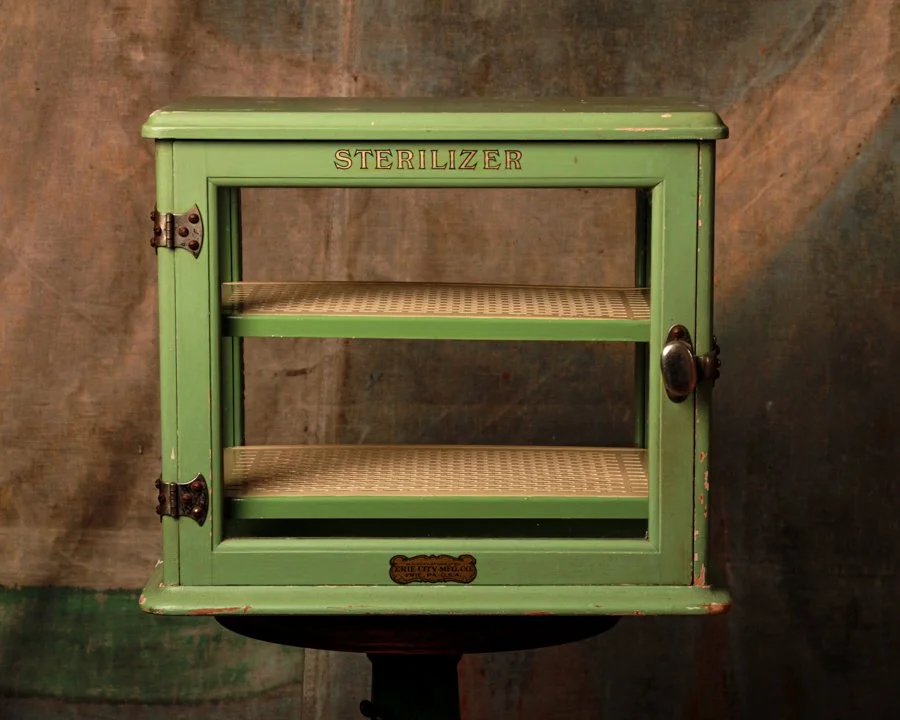
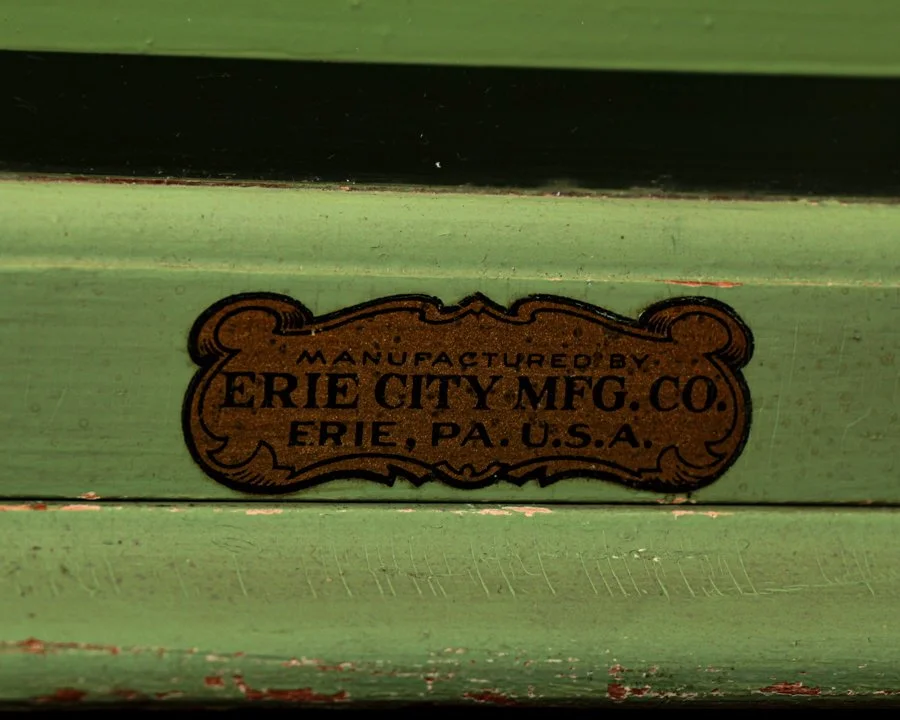

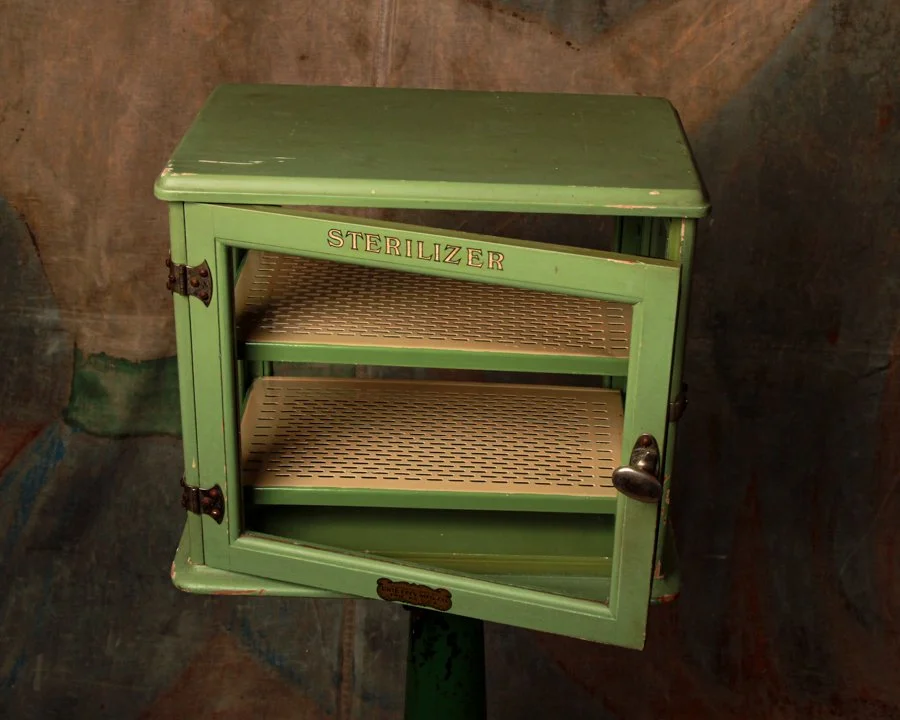
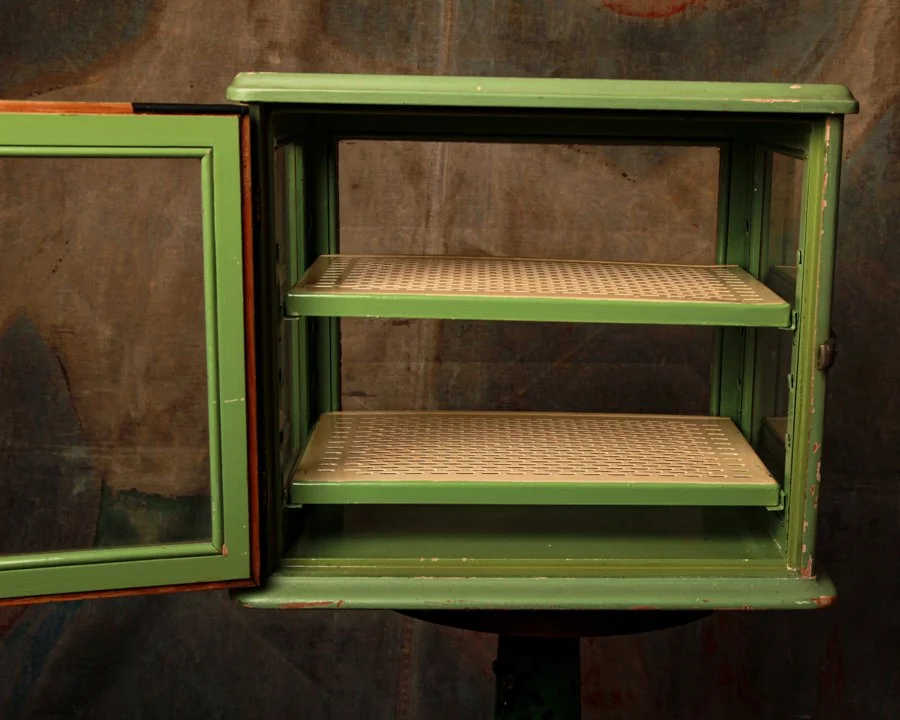
This 1930s sterilizer cabinet by Erie City Mfg. Co. is as charming as it is functional—a perfect blend of early American industry and soft-serve soda fountain color palette. Originally built to keep medical tools germ-free, it now makes a surprisingly handsome display case. It's painted in a lovely seafoam green and the front reads "STERILIZER" in bold, no-nonsense lettering, with original nickel hardware that's aged beautifully. It opens with a chunky turn-latch that feels satisfyingly sturdy and features two perforated metal shelves inside, both intact and ready to serve. Manufactured in Erie, Pennsylvania, this little cabinet still proudly wears its maker's label like a badge of honor.
Category History
Old display cases are where objects learned how to present themselves. From the late 19th into the early 20th century, they showed up in shops, museums, and exhibitions as quiet frames for attention—glass, wood, and joinery working together to hold and highlight what mattered.
Most were built with purpose in mind. Retail cases prioritized visibility and access—hinged lids, sliding doors, mirrored backs—while museum versions leaned toward protection and order. Materials were chosen for both durability and clarity: hardwood frames, thick glass panels, sometimes lined interiors to soften the presentation.
What makes them interesting now is how much thought went into what you don’t immediately notice. The proportions, the way light moves through the glass, the height relative to the viewer—all designed to guide the eye without calling attention to themselves.
Over time, they pick up a quiet patina. Scratches in the glass, worn edges on the wood, small repairs that hint at long use. They weren’t static; they were opened, rearranged, cleaned, used daily.
Today, they read as both furniture and stage. Not just containers, but collaborators—objects that understand how to show something at its best without getting in the way.
This 1930s sterilizer cabinet by Erie City Mfg. Co. is as charming as it is functional—a perfect blend of early American industry and soft-serve soda fountain color palette. Originally built to keep medical tools germ-free, it now makes a surprisingly handsome display case. It's painted in a lovely seafoam green and the front reads "STERILIZER" in bold, no-nonsense lettering, with original nickel hardware that's aged beautifully. It opens with a chunky turn-latch that feels satisfyingly sturdy and features two perforated metal shelves inside, both intact and ready to serve. Manufactured in Erie, Pennsylvania, this little cabinet still proudly wears its maker's label like a badge of honor.
Category History
Old display cases are where objects learned how to present themselves. From the late 19th into the early 20th century, they showed up in shops, museums, and exhibitions as quiet frames for attention—glass, wood, and joinery working together to hold and highlight what mattered.
Most were built with purpose in mind. Retail cases prioritized visibility and access—hinged lids, sliding doors, mirrored backs—while museum versions leaned toward protection and order. Materials were chosen for both durability and clarity: hardwood frames, thick glass panels, sometimes lined interiors to soften the presentation.
What makes them interesting now is how much thought went into what you don’t immediately notice. The proportions, the way light moves through the glass, the height relative to the viewer—all designed to guide the eye without calling attention to themselves.
Over time, they pick up a quiet patina. Scratches in the glass, worn edges on the wood, small repairs that hint at long use. They weren’t static; they were opened, rearranged, cleaned, used daily.
Today, they read as both furniture and stage. Not just containers, but collaborators—objects that understand how to show something at its best without getting in the way.