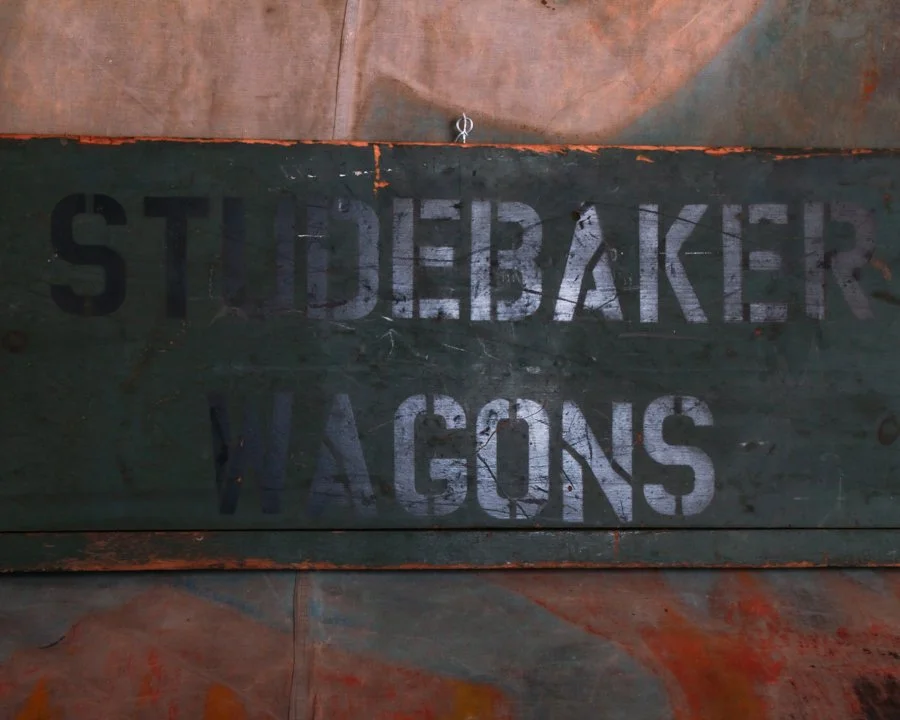
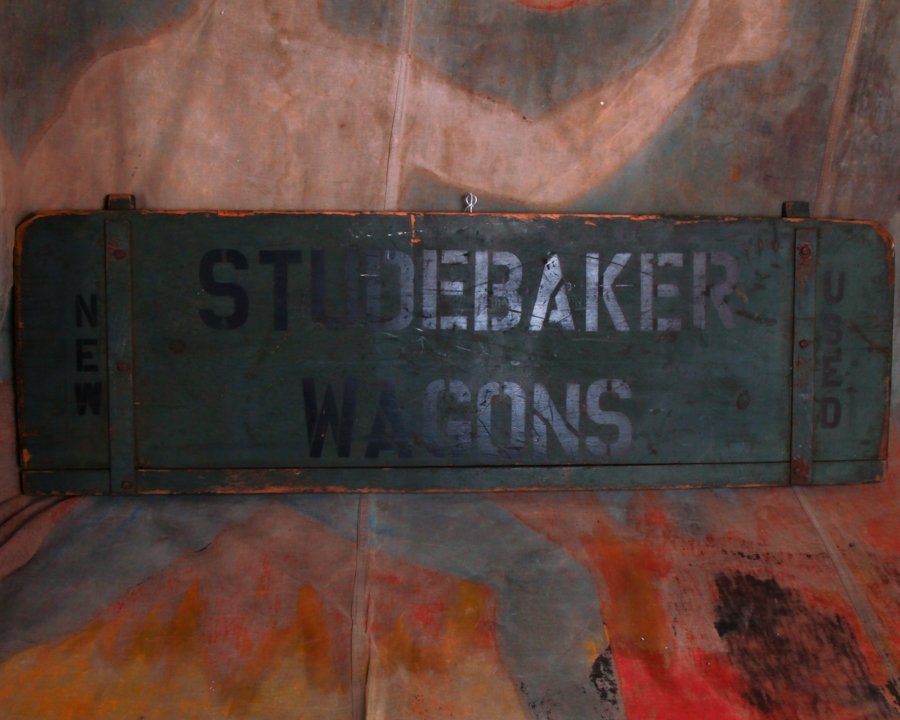
An original Studebaker wagon sign, hand-painted on wood and built for a working shop sometime in the 1930s, it carries the kind of straightforward confidence that defined early American advertising. No slogans to decode, no clever phrasing. Just the essentials, laid out in bold stencil: “Studebaker Wagons” across the center, with “New” on one end and “Used” on the other. It did its job in a glance.
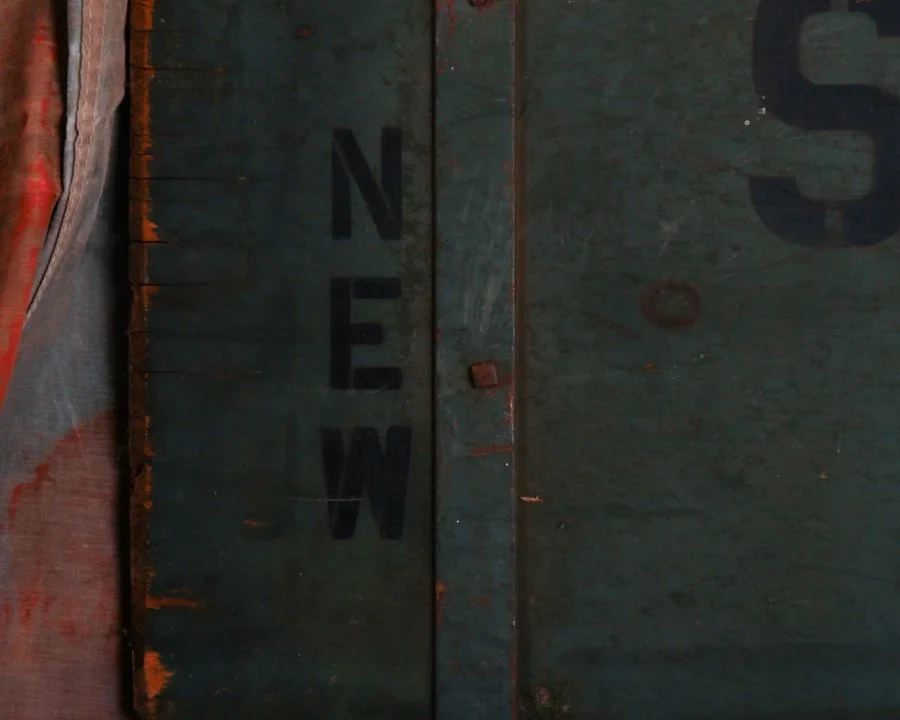
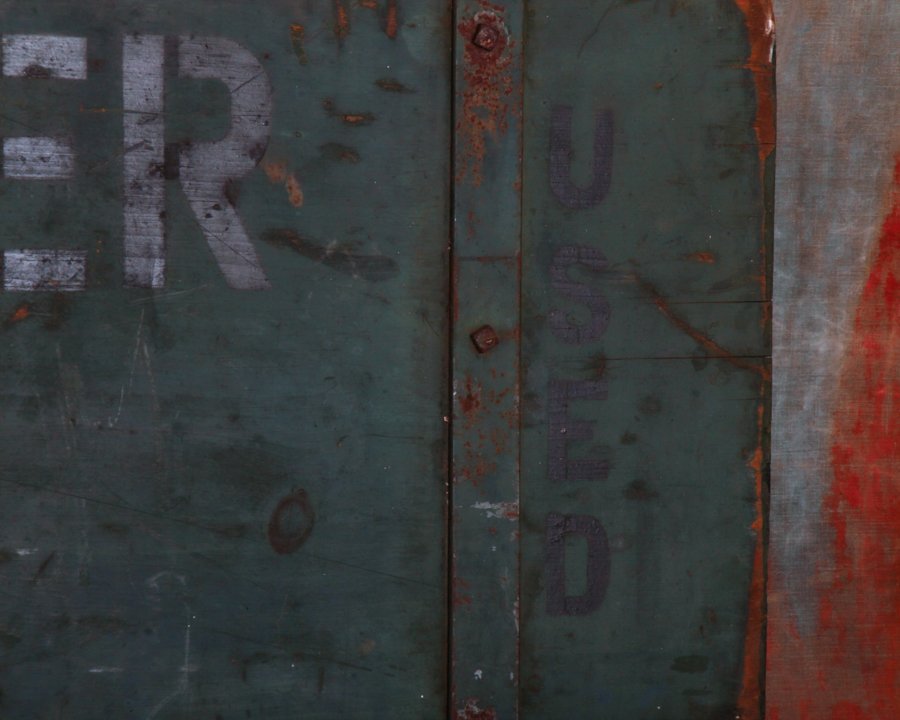
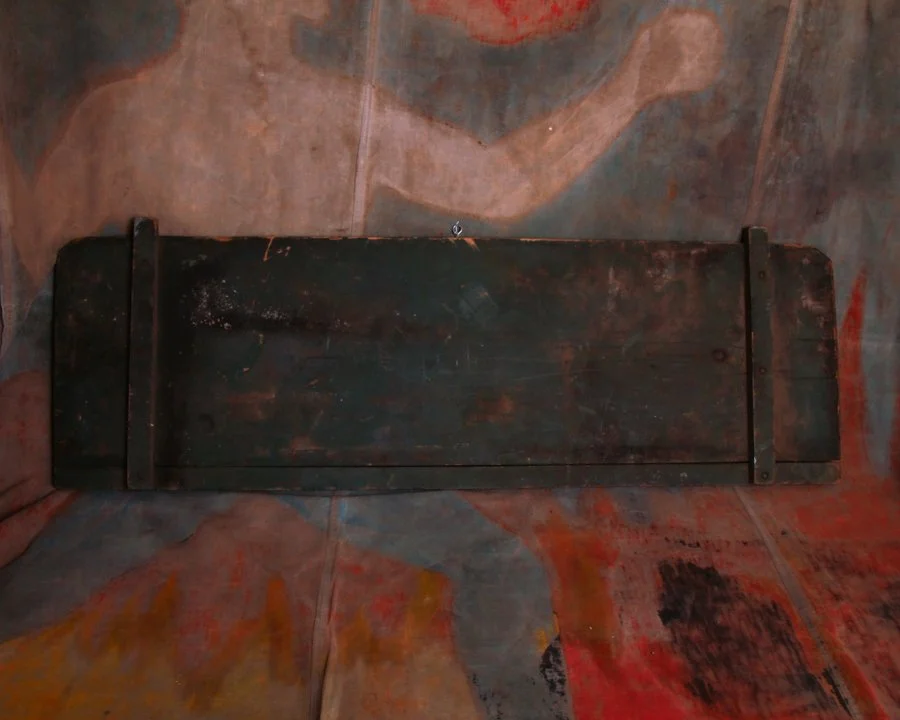
The paint has settled into the wood over time, softening at the edges, thinning in places, and giving way to a mix of exposed grain, scratches, and oxidation. That deep, weathered green has taken on a life of its own, somewhere between industrial and agricultural, with flashes of rust and wear that feel earned rather than decorative. The lettering still holds strong, slightly uneven in that hand-done way, with just enough variation to remind you there was a brush involved, not a machine.
Studebaker, of course, built its reputation on wagons long before automobiles took over the road. By the 1930s, they were straddling both worlds, and pieces like this sit right at that intersection. A quiet nod to a time when horse-drawn transport was still very much part of daily life, even as the future was already rolling in on four rubber tires.
What’s left now is the surface, and it’s a good one. Honest wear, layered history, and a graphic presence that doesn’t need polishing up. It reads clearly from across the room, but rewards a closer look with all the small imperfections that make it feel real.
A working sign that’s outlived the work, and landed somewhere better.
Wagons
By the 1930s, wagons hadn’t disappeared, they’d just shifted roles. While automobiles took over roads, wagons remained essential on farms and in small towns, handling hauling, deliveries, and daily work, bridging the gap between horse power and the fast-approaching motor age.
An original Studebaker wagon sign, hand-painted on wood and built for a working shop sometime in the 1930s, it carries the kind of straightforward confidence that defined early American advertising. No slogans to decode, no clever phrasing. Just the essentials, laid out in bold stencil: “Studebaker Wagons” across the center, with “New” on one end and “Used” on the other. It did its job in a glance.
The paint has settled into the wood over time, softening at the edges, thinning in places, and giving way to a mix of exposed grain, scratches, and oxidation. That deep, weathered green has taken on a life of its own, somewhere between industrial and agricultural, with flashes of rust and wear that feel earned rather than decorative. The lettering still holds strong, slightly uneven in that hand-done way, with just enough variation to remind you there was a brush involved, not a machine.
Studebaker, of course, built its reputation on wagons long before automobiles took over the road. By the 1930s, they were straddling both worlds, and pieces like this sit right at that intersection. A quiet nod to a time when horse-drawn transport was still very much part of daily life, even as the future was already rolling in on four rubber tires.
What’s left now is the surface, and it’s a good one. Honest wear, layered history, and a graphic presence that doesn’t need polishing up. It reads clearly from across the room, but rewards a closer look with all the small imperfections that make it feel real.
A working sign that’s outlived the work, and landed somewhere better.
Wagons
By the 1930s, wagons hadn’t disappeared, they’d just shifted roles. While automobiles took over roads, wagons remained essential on farms and in small towns, handling hauling, deliveries, and daily work, bridging the gap between horse power and the fast-approaching motor age.