ITEM NOT AVAILABLE IMMEDIATELY—INQUIRE IF INTERESTED hello@heimweeantiques.com
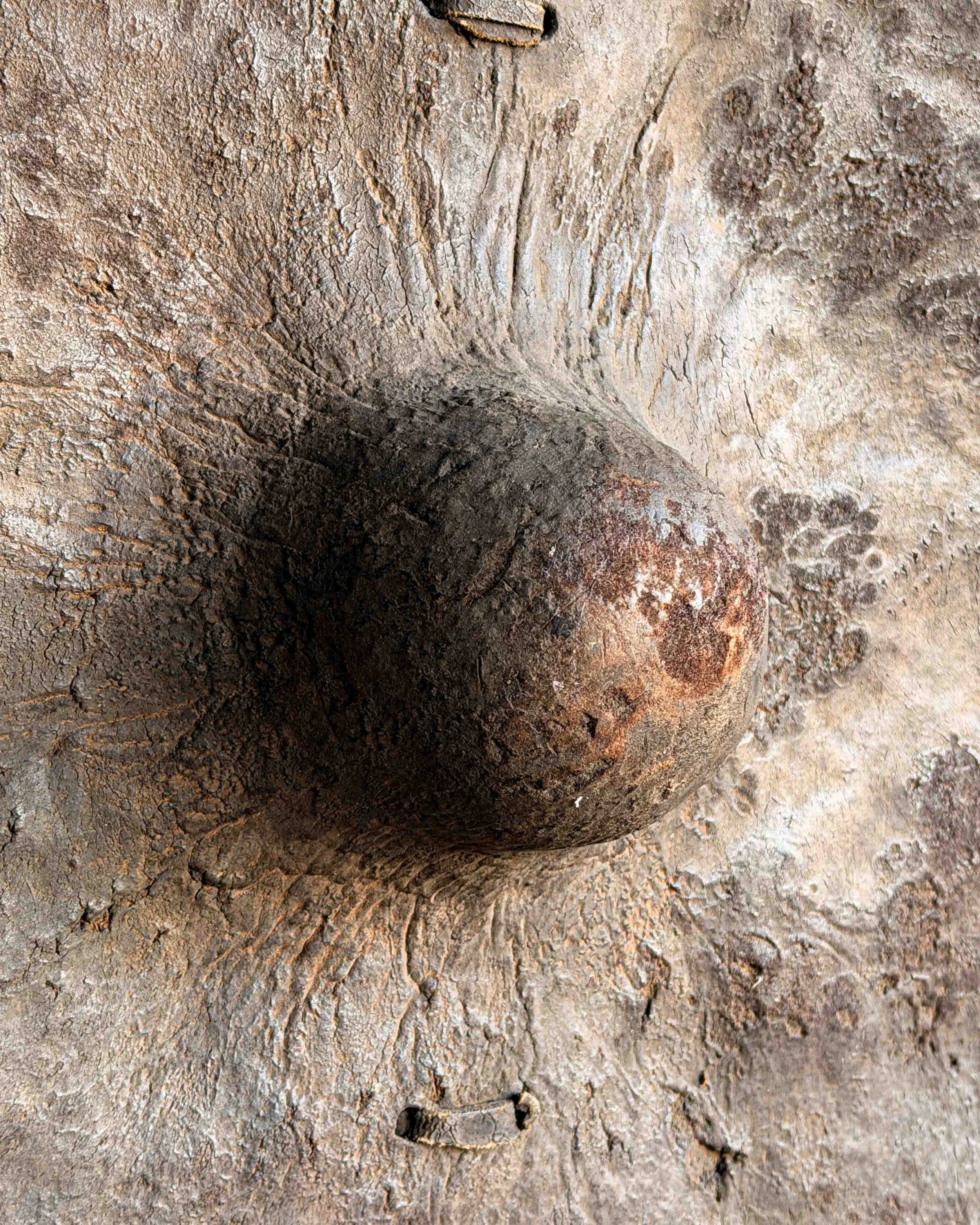
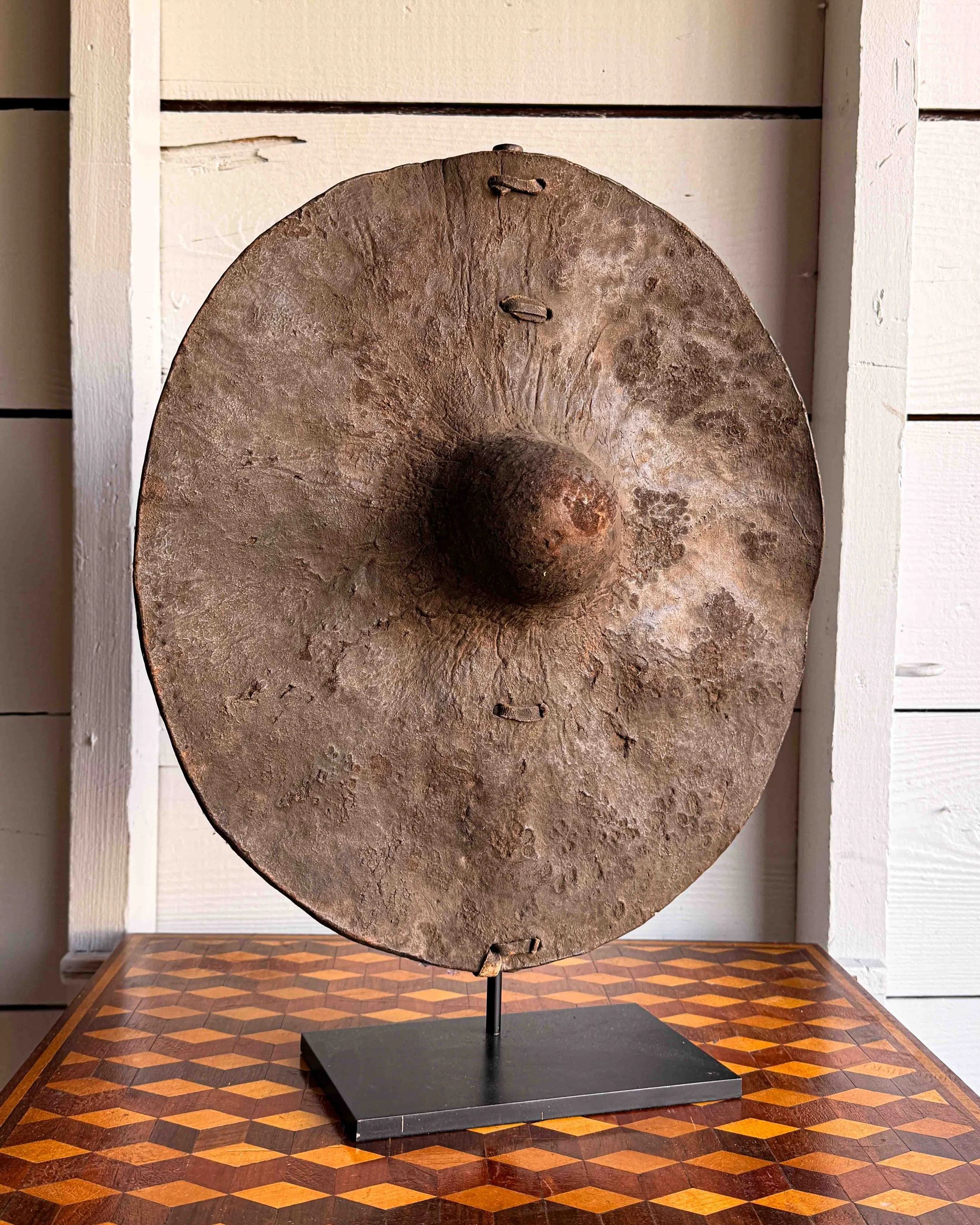
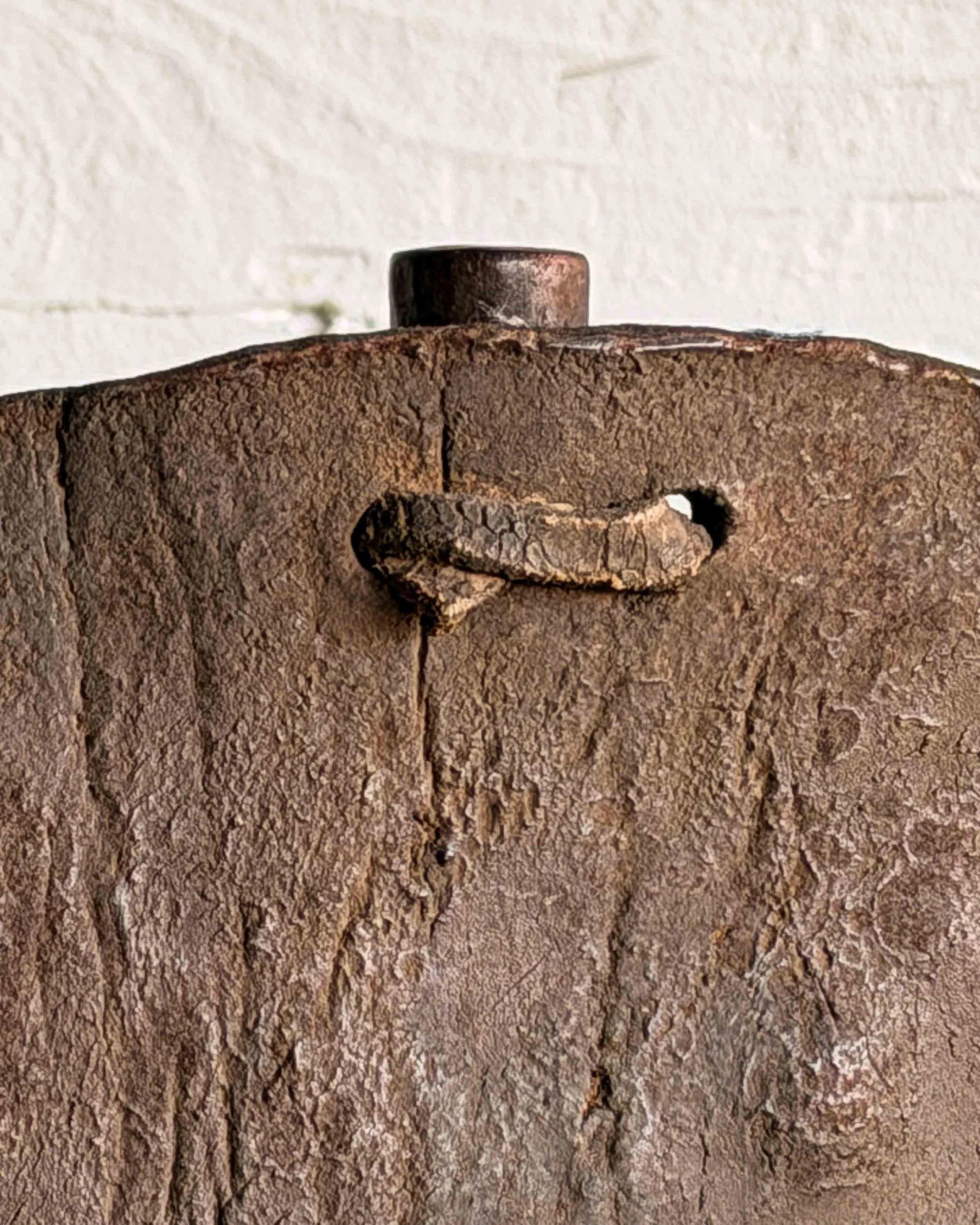
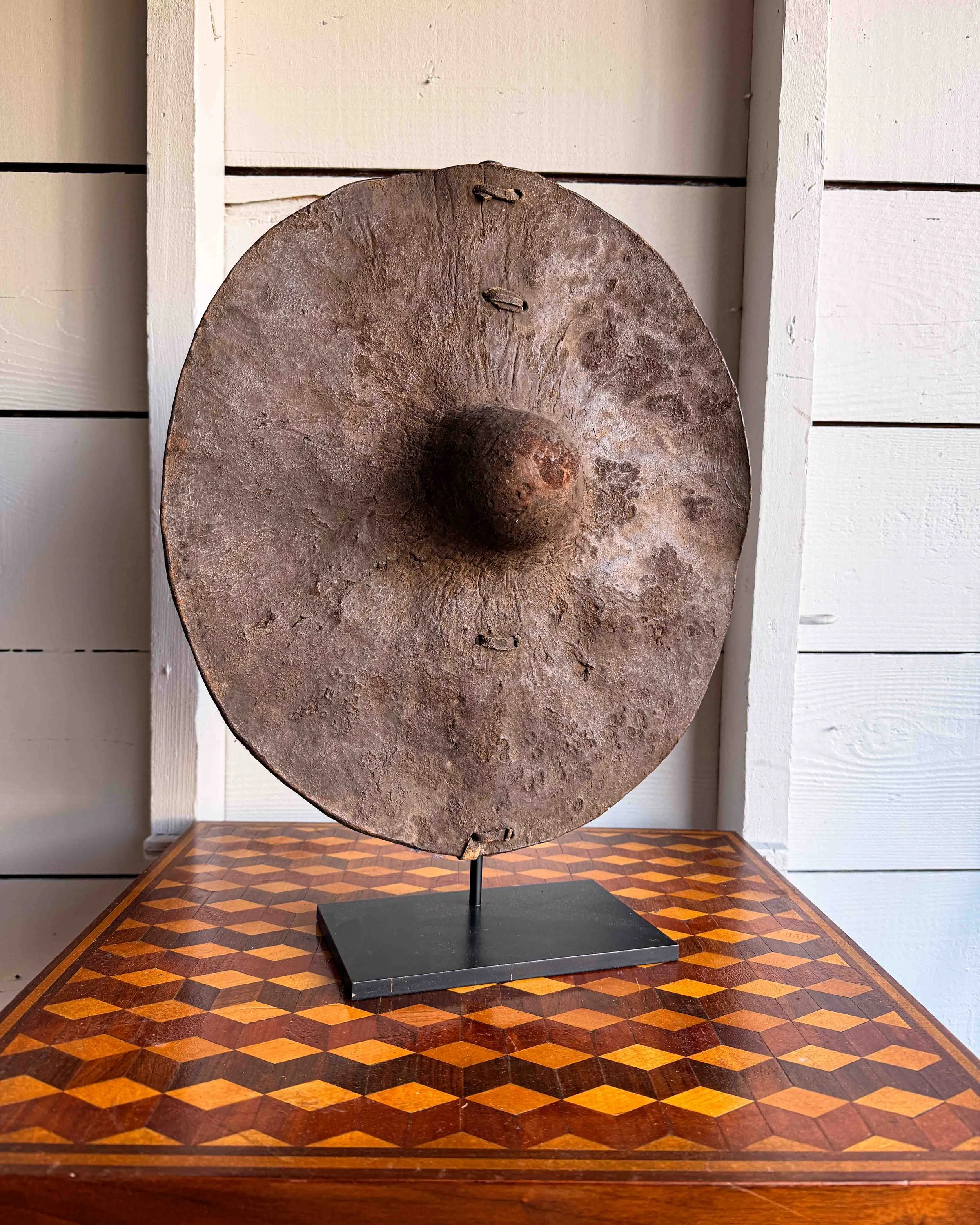
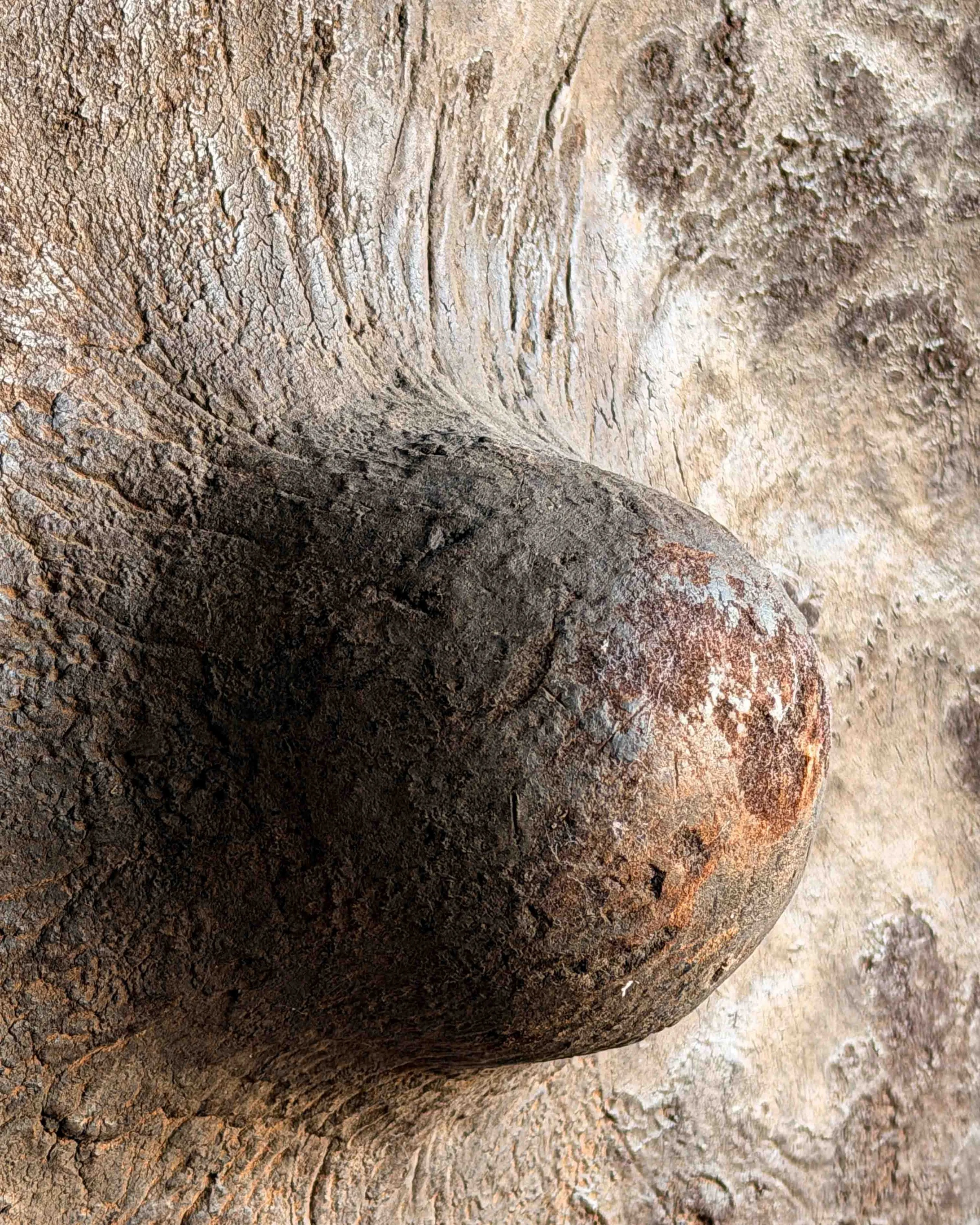
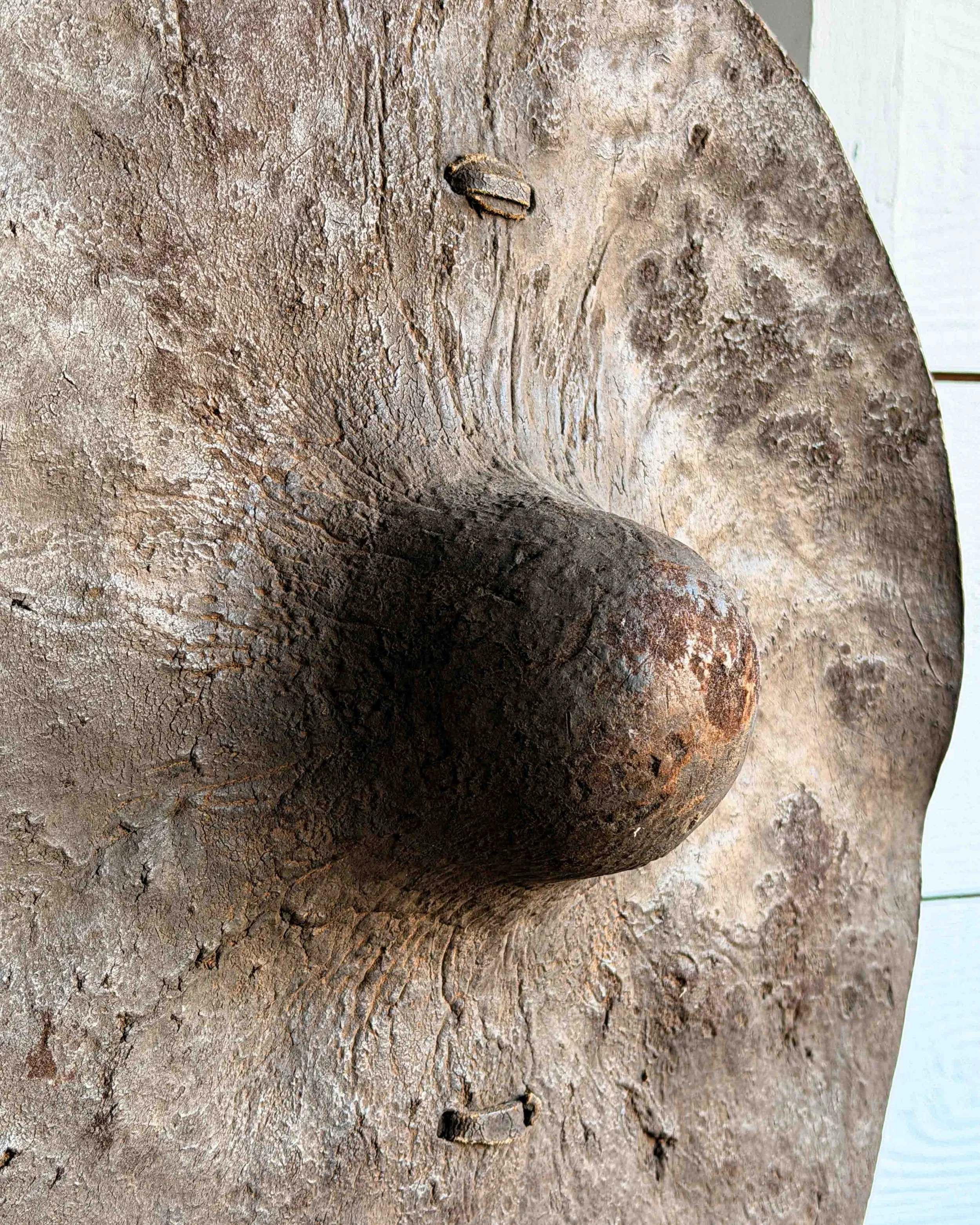
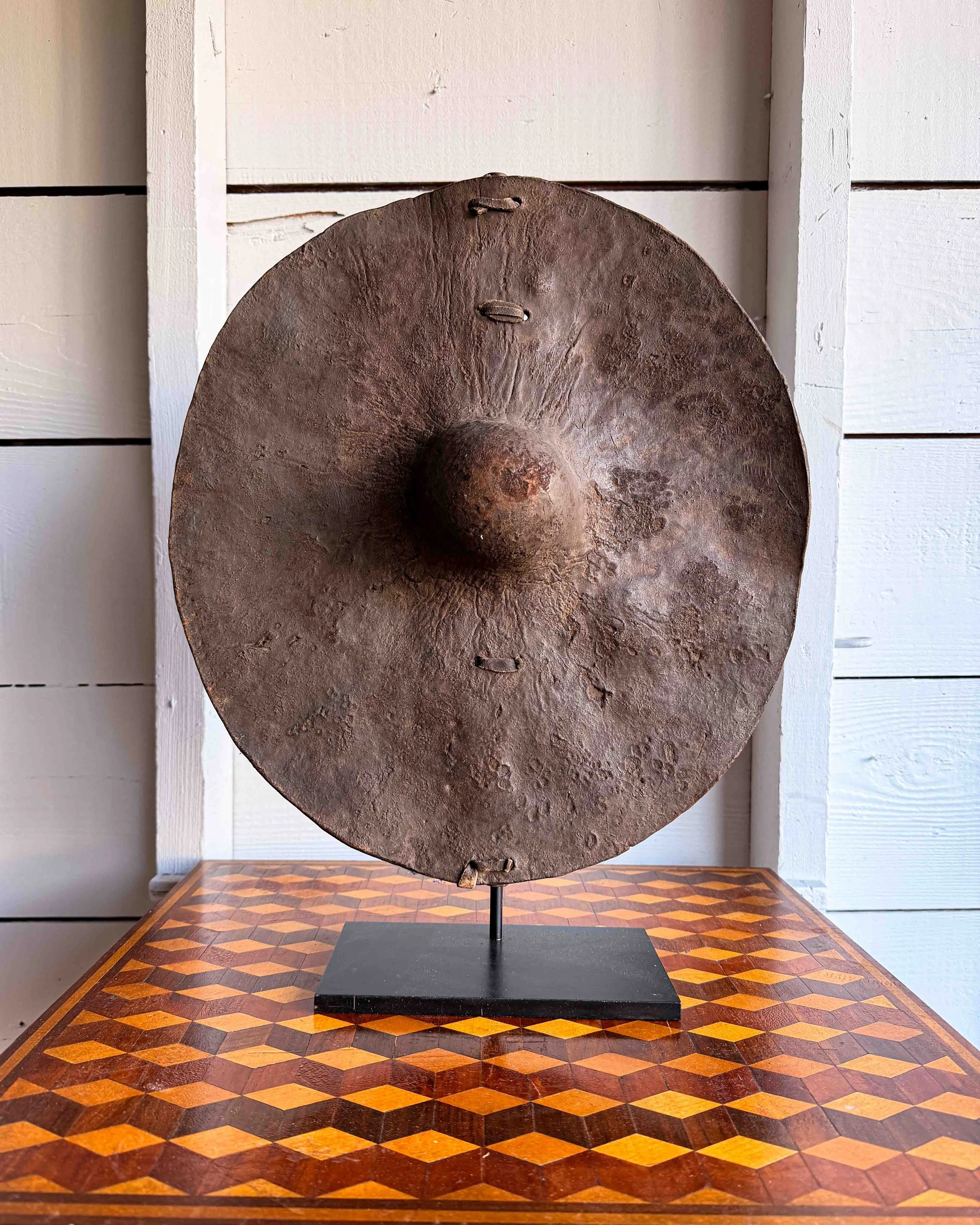
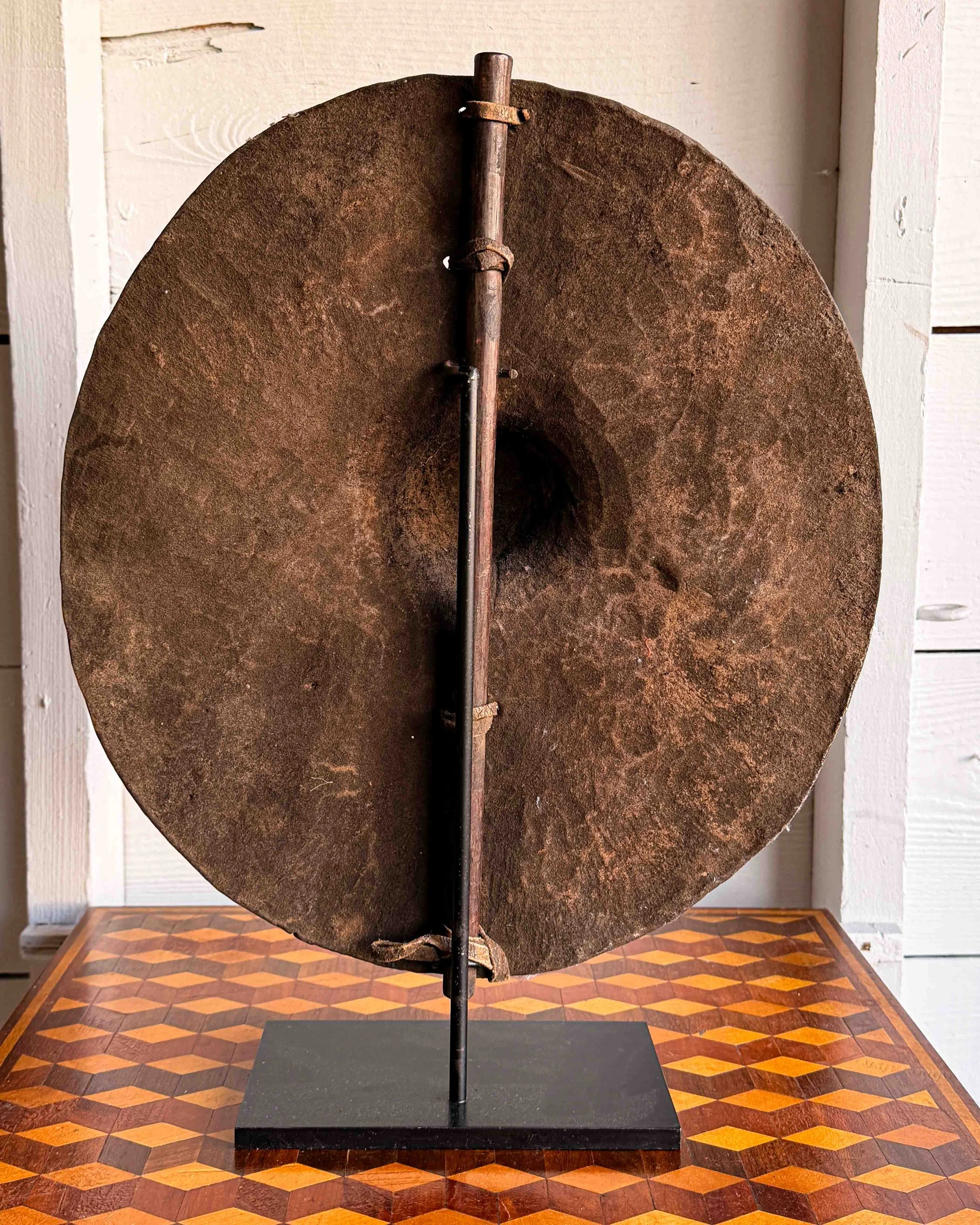
Early 20th-century Sukuma shield from Tanzania, crafted out of thick buffalo hide. The hide is worked into a broad, almost disc-like form with subtle side indentations and a proud raised boss at its center—both a functional deflector and a visual marker of strength. On the reverse sits a sturdy wooden handle, secured with leather bindings that have aged into a deep, earthy tone. Shields like this weren’t just practical armor; carried by Niatura warriors, they were symbols of identity and power, doubling as ritual objects in ceremonies long after the battle dust had settled. Mounted on a stand, it’s as much a sculpture as it is an artifact.
Category History
The Sukuma of northwestern Tanzania, centered around Lake Victoria, are often described through their balance of farming, cattle keeping, and performance traditions—but there’s also a more specialized layer within that world: the Niatura warrior societies. These groups functioned less like standing armies and more like organized bands of young men trained for protection, cattle defense, and, at times, raiding.
What makes the Niatura interesting is how structured they were. Membership, hierarchy, and ritual all played a role. Strength and agility mattered, but so did discipline and identity. Distinctive regalia—feathered headdresses, animal skins, and decorated shields—helped signal both status and presence, especially during gatherings or performances.
And that’s where the line blurs. Among the Sukuma, movement, rhythm, and display are central to cultural expression, so elements of warrior identity often carried into dance and competition. The same physicality used in defense translated into performance, where stamina and coordination became a form of prestige.
Cattle remained the underlying thread. Protecting herds meant protecting wealth, family, and standing within the community.
What emerges is a layered system—practical, symbolic, and social all at once. The Niatura weren’t separate from Sukuma life; they were one of its more focused expressions of strength, responsibility, and collective identity.
ITEM NOT AVAILABLE IMMEDIATELY—INQUIRE IF INTERESTED hello@heimweeantiques.com
Early 20th-century Sukuma shield from Tanzania, crafted out of thick buffalo hide. The hide is worked into a broad, almost disc-like form with subtle side indentations and a proud raised boss at its center—both a functional deflector and a visual marker of strength. On the reverse sits a sturdy wooden handle, secured with leather bindings that have aged into a deep, earthy tone. Shields like this weren’t just practical armor; carried by Niatura warriors, they were symbols of identity and power, doubling as ritual objects in ceremonies long after the battle dust had settled. Mounted on a stand, it’s as much a sculpture as it is an artifact.
Category History
The Sukuma of northwestern Tanzania, centered around Lake Victoria, are often described through their balance of farming, cattle keeping, and performance traditions—but there’s also a more specialized layer within that world: the Niatura warrior societies. These groups functioned less like standing armies and more like organized bands of young men trained for protection, cattle defense, and, at times, raiding.
What makes the Niatura interesting is how structured they were. Membership, hierarchy, and ritual all played a role. Strength and agility mattered, but so did discipline and identity. Distinctive regalia—feathered headdresses, animal skins, and decorated shields—helped signal both status and presence, especially during gatherings or performances.
And that’s where the line blurs. Among the Sukuma, movement, rhythm, and display are central to cultural expression, so elements of warrior identity often carried into dance and competition. The same physicality used in defense translated into performance, where stamina and coordination became a form of prestige.
Cattle remained the underlying thread. Protecting herds meant protecting wealth, family, and standing within the community.
What emerges is a layered system—practical, symbolic, and social all at once. The Niatura weren’t separate from Sukuma life; they were one of its more focused expressions of strength, responsibility, and collective identity.