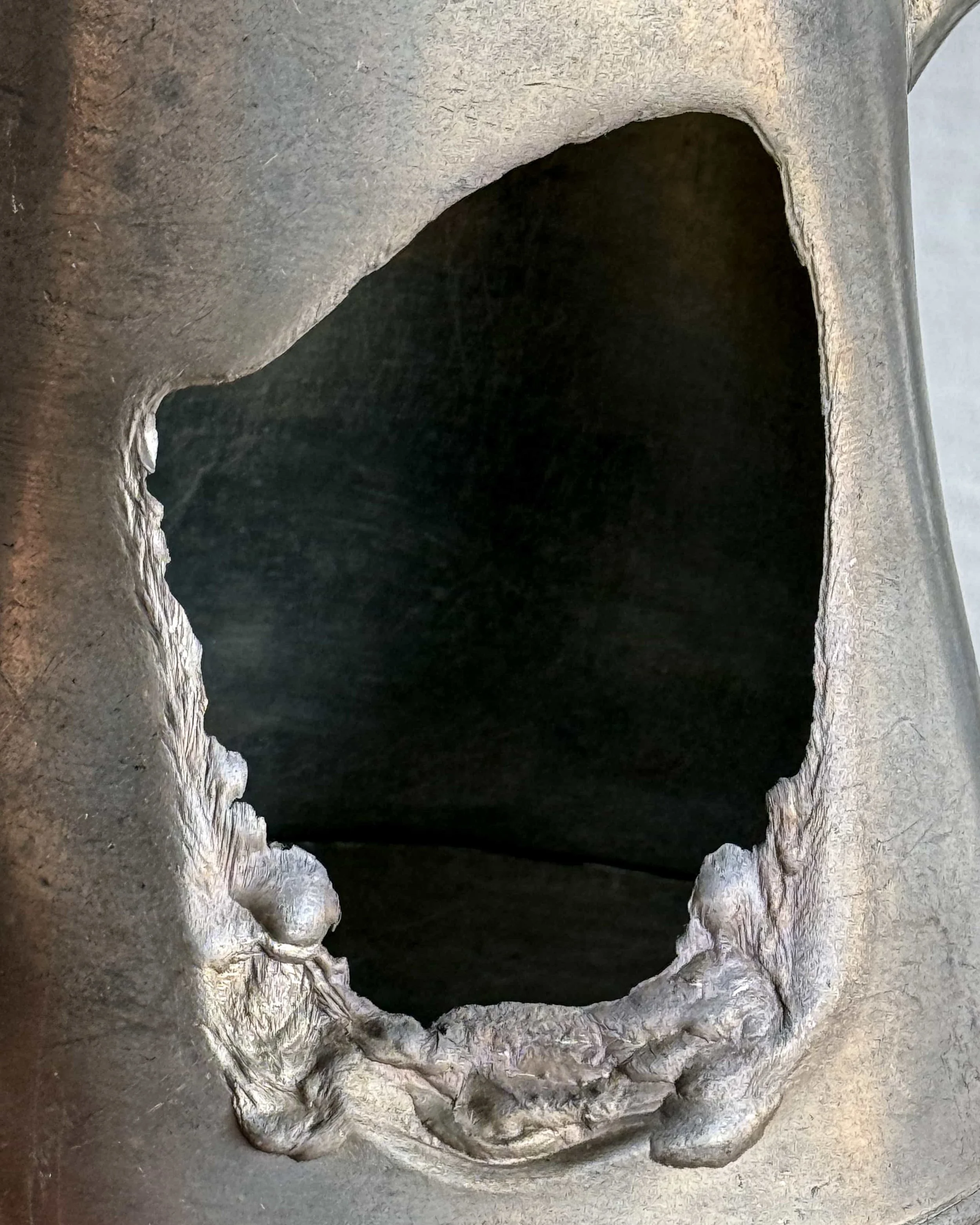
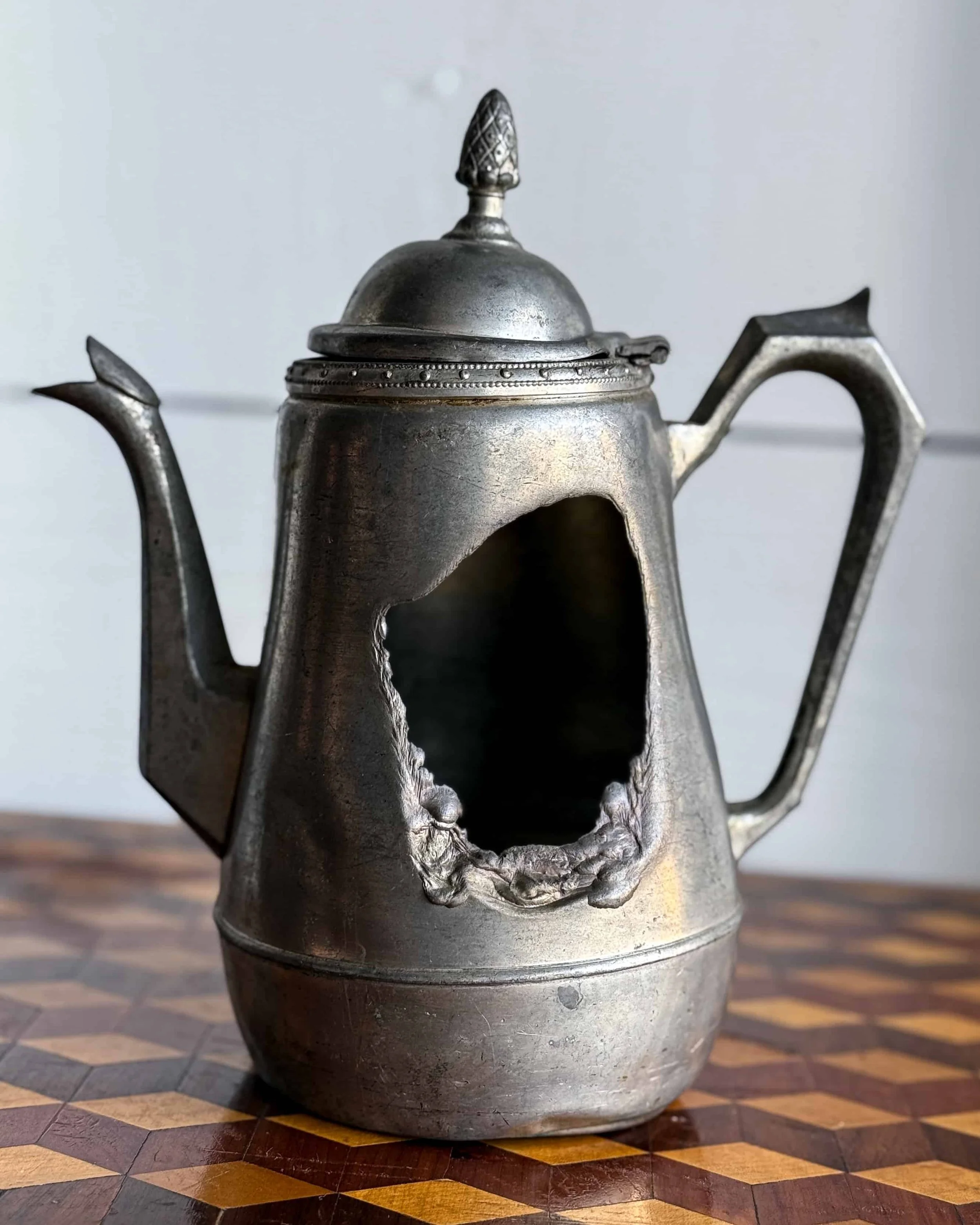

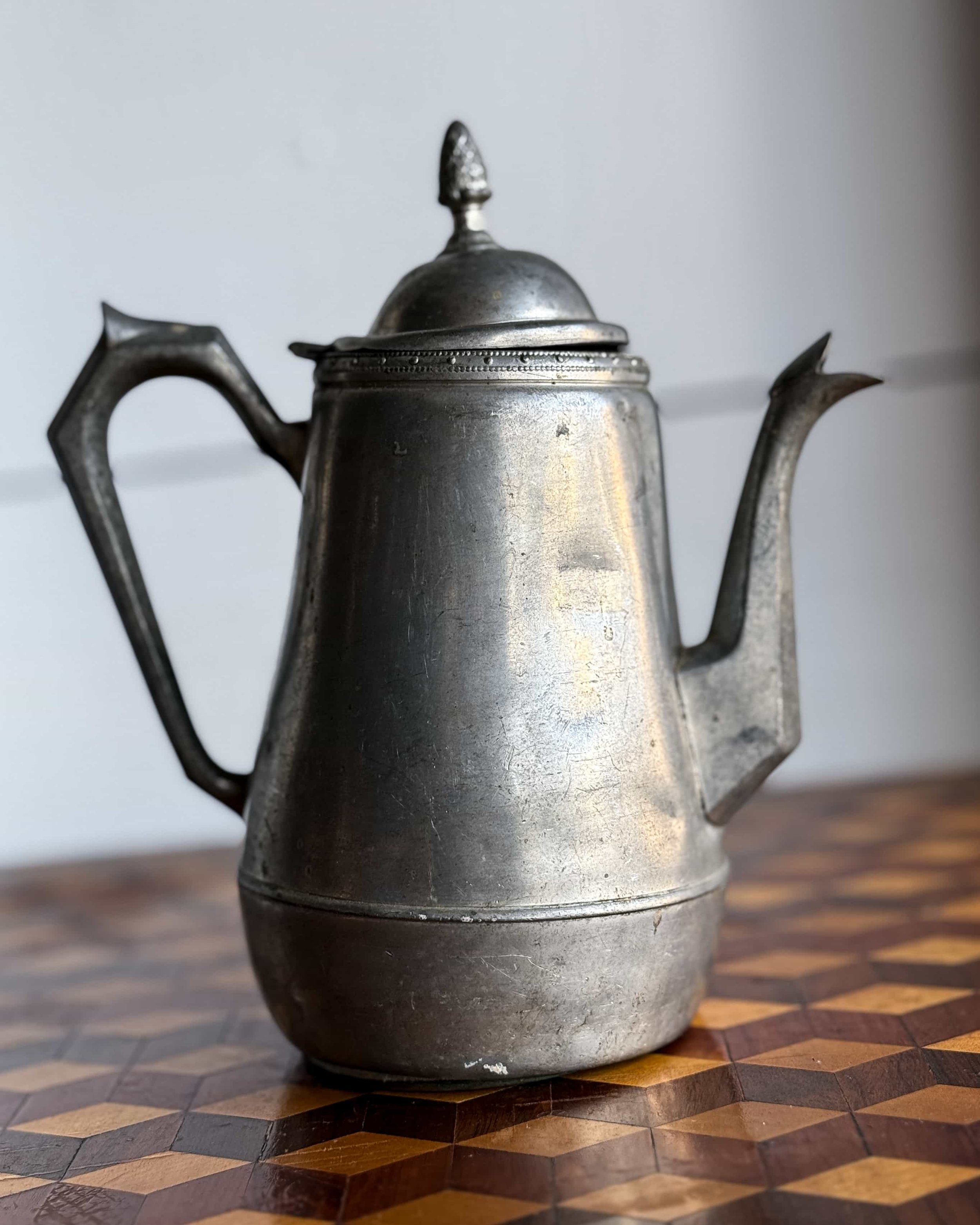
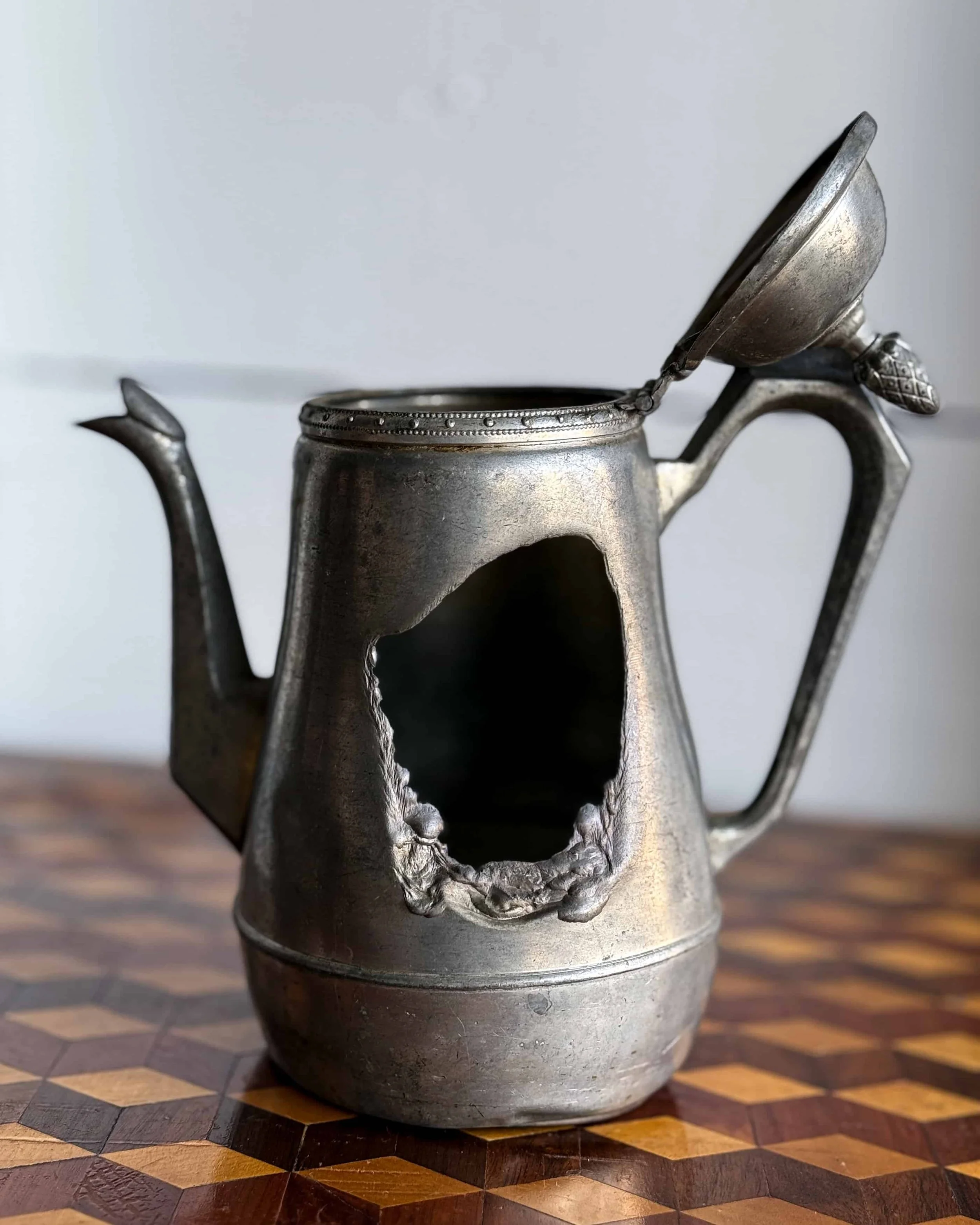
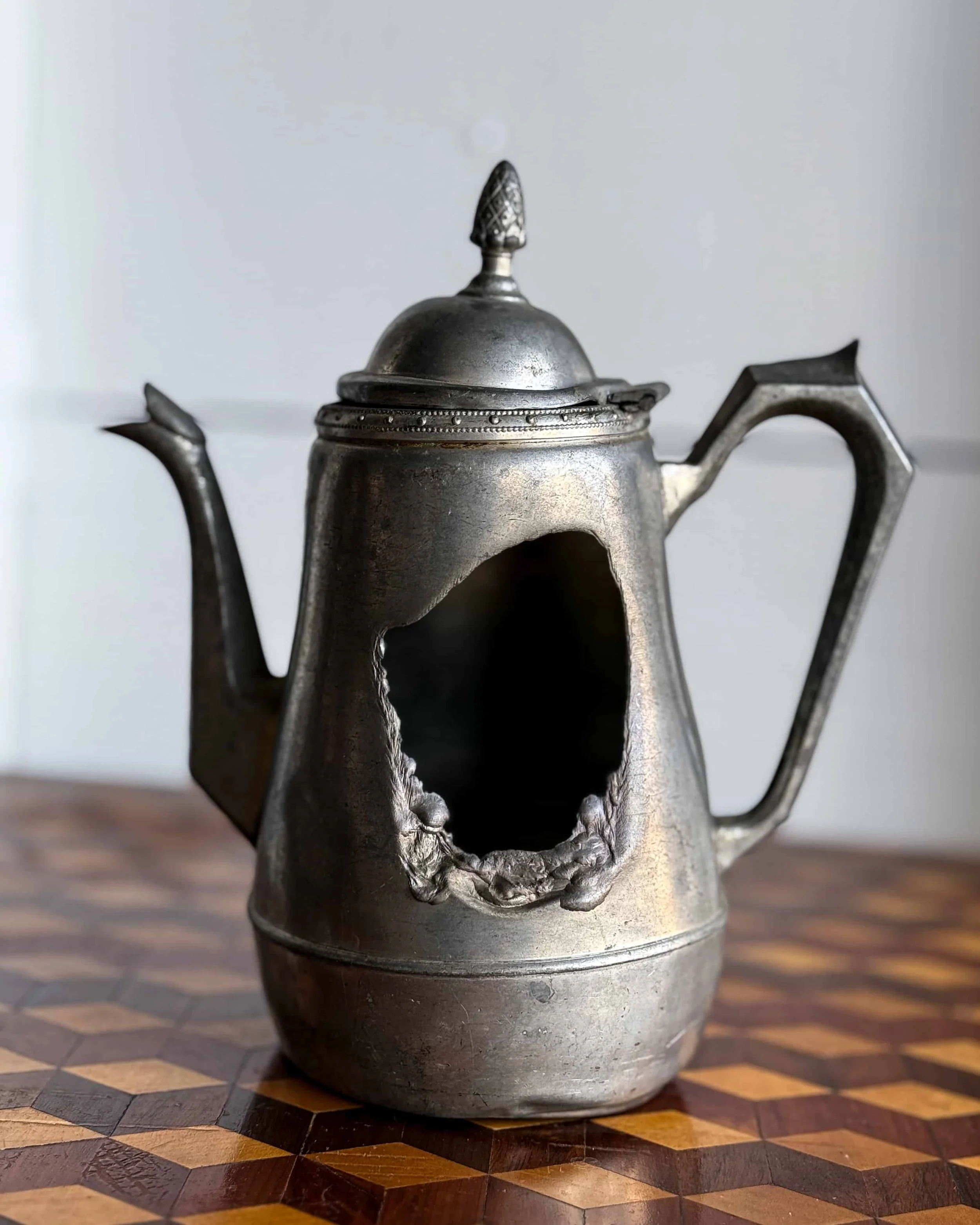
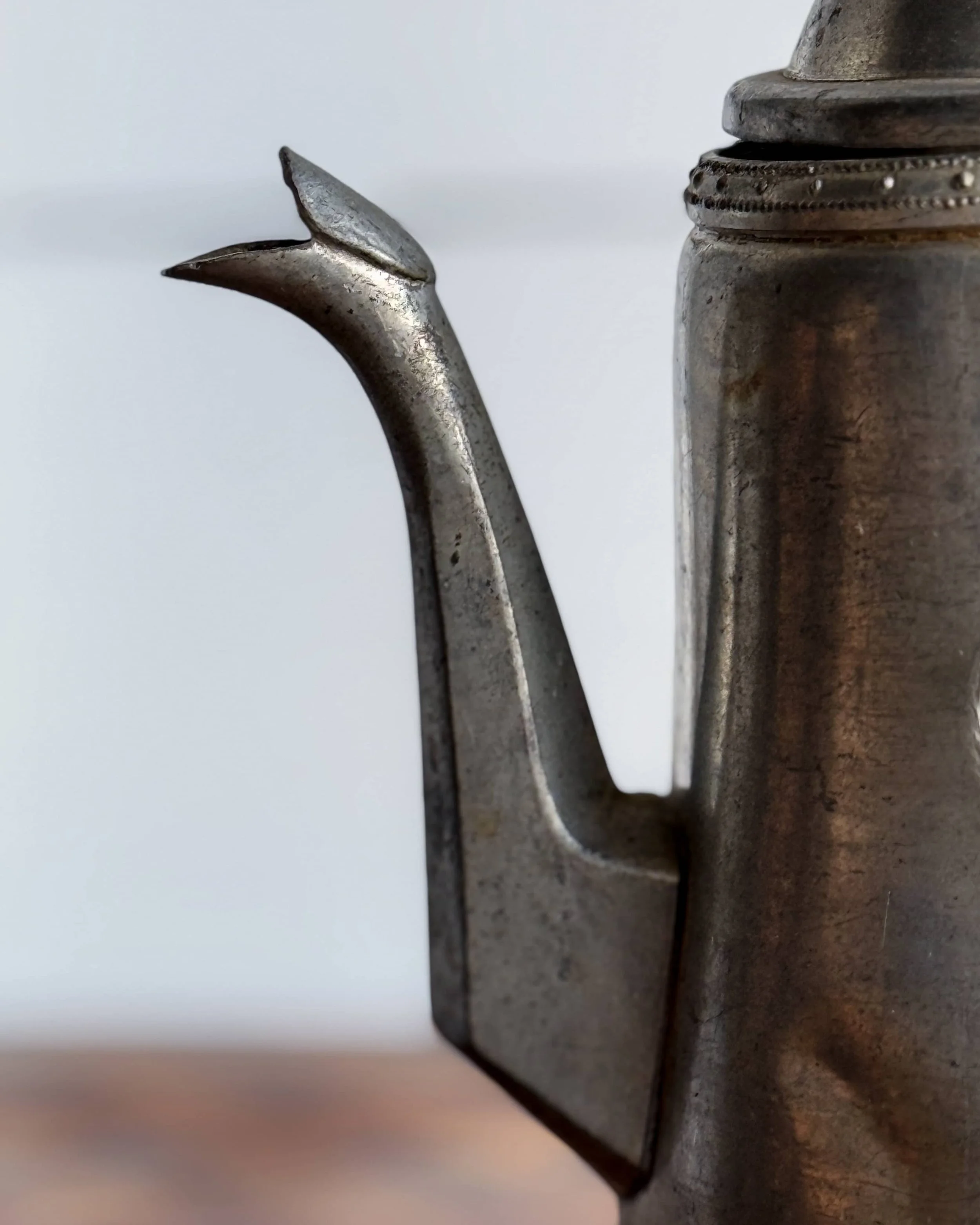
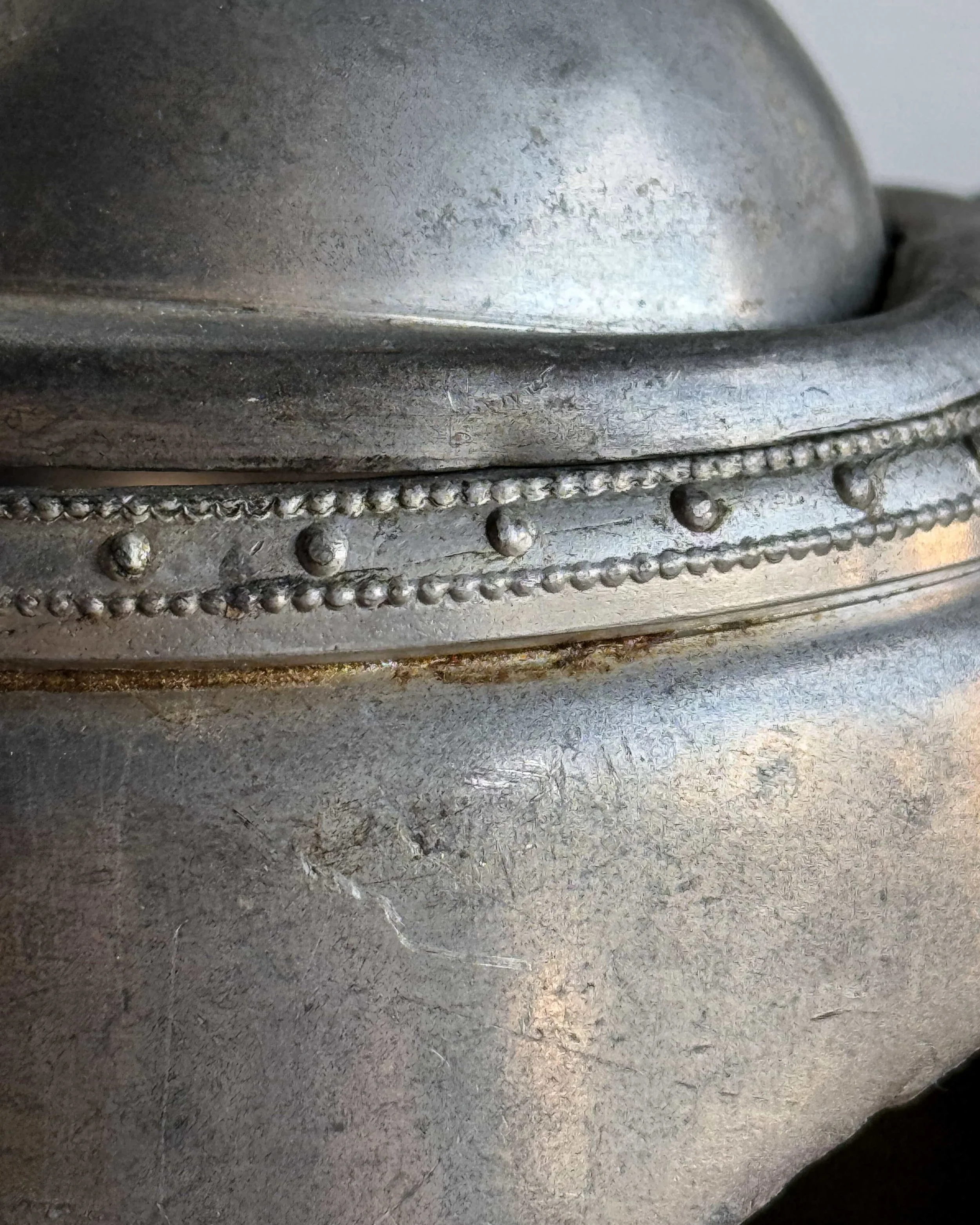
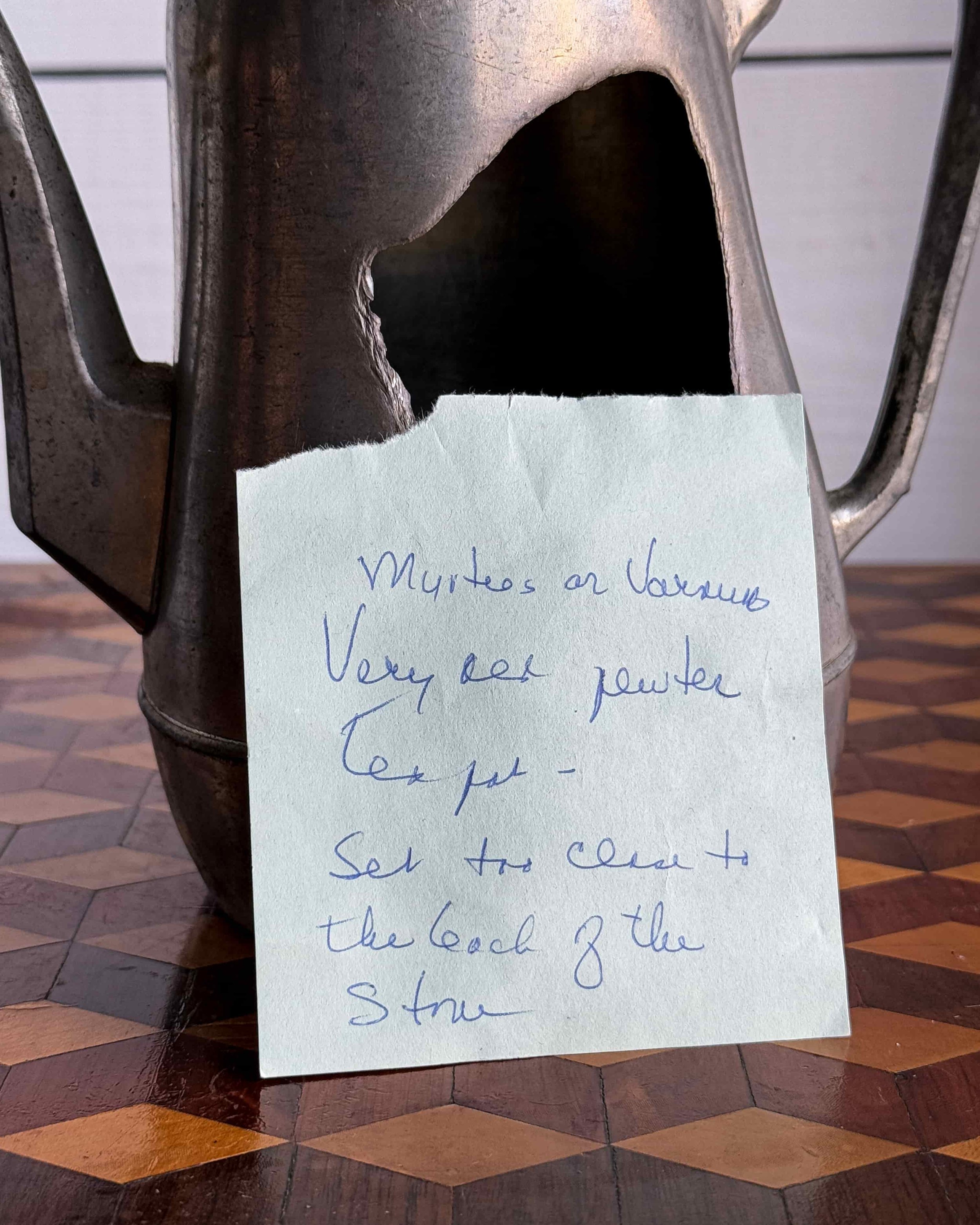
This pewter teapot has definitely lived a life — and it shows it proudly. Once a proper piece of table service with its acorn finial and delicate beaded trim, it apparently spent a little too much time cozied up to the back of a hot stove. The result? A gloriously irregular hole melted right through its side, leaving behind a jagged wreath-like edge that almost feels sculptural. The spout is still sharp and angular, the lid still hinges neatly, and the handle keeps its bold, faceted lines, but that missing panel transforms it from functional vessel to conversation piece. It’s part relic, part accidental artwork — a teapot that will never pour tea again, but has plenty of stories left to serve.
Pewter Pot
A vintage pewter teapot sits comfortably between utility and quiet ceremony. Pewter—an alloy primarily of tin with small amounts of other metals—was widely used from the 18th through early 20th centuries as an affordable alternative to silver. It had a similar soft luster but was far more accessible, making it a staple in everyday households.
Teapots in pewter were built with practicality in mind. The material retains heat well, and its malleability allowed makers to form clean, balanced shapes—rounded bodies, simple spouts, sturdy handles. Many examples lean toward restraint rather than ornament, with just enough detail in the lid or handle to keep things interesting.
What makes them compelling now is how they age. Pewter develops a muted, matte patina over time, softening from its original shine into something more understated. Small dents, light scratches, and wear around the handle tell the story of use rather than display.
They’re not flashy objects, but they carry a sense of continuity. Made to be handled daily, filled, poured, and passed around, they reflect a slower rhythm—one where function and form worked quietly together without needing attention.
This pewter teapot has definitely lived a life — and it shows it proudly. Once a proper piece of table service with its acorn finial and delicate beaded trim, it apparently spent a little too much time cozied up to the back of a hot stove. The result? A gloriously irregular hole melted right through its side, leaving behind a jagged wreath-like edge that almost feels sculptural. The spout is still sharp and angular, the lid still hinges neatly, and the handle keeps its bold, faceted lines, but that missing panel transforms it from functional vessel to conversation piece. It’s part relic, part accidental artwork — a teapot that will never pour tea again, but has plenty of stories left to serve.
Pewter Pot
A vintage pewter teapot sits comfortably between utility and quiet ceremony. Pewter—an alloy primarily of tin with small amounts of other metals—was widely used from the 18th through early 20th centuries as an affordable alternative to silver. It had a similar soft luster but was far more accessible, making it a staple in everyday households.
Teapots in pewter were built with practicality in mind. The material retains heat well, and its malleability allowed makers to form clean, balanced shapes—rounded bodies, simple spouts, sturdy handles. Many examples lean toward restraint rather than ornament, with just enough detail in the lid or handle to keep things interesting.
What makes them compelling now is how they age. Pewter develops a muted, matte patina over time, softening from its original shine into something more understated. Small dents, light scratches, and wear around the handle tell the story of use rather than display.
They’re not flashy objects, but they carry a sense of continuity. Made to be handled daily, filled, poured, and passed around, they reflect a slower rhythm—one where function and form worked quietly together without needing attention.