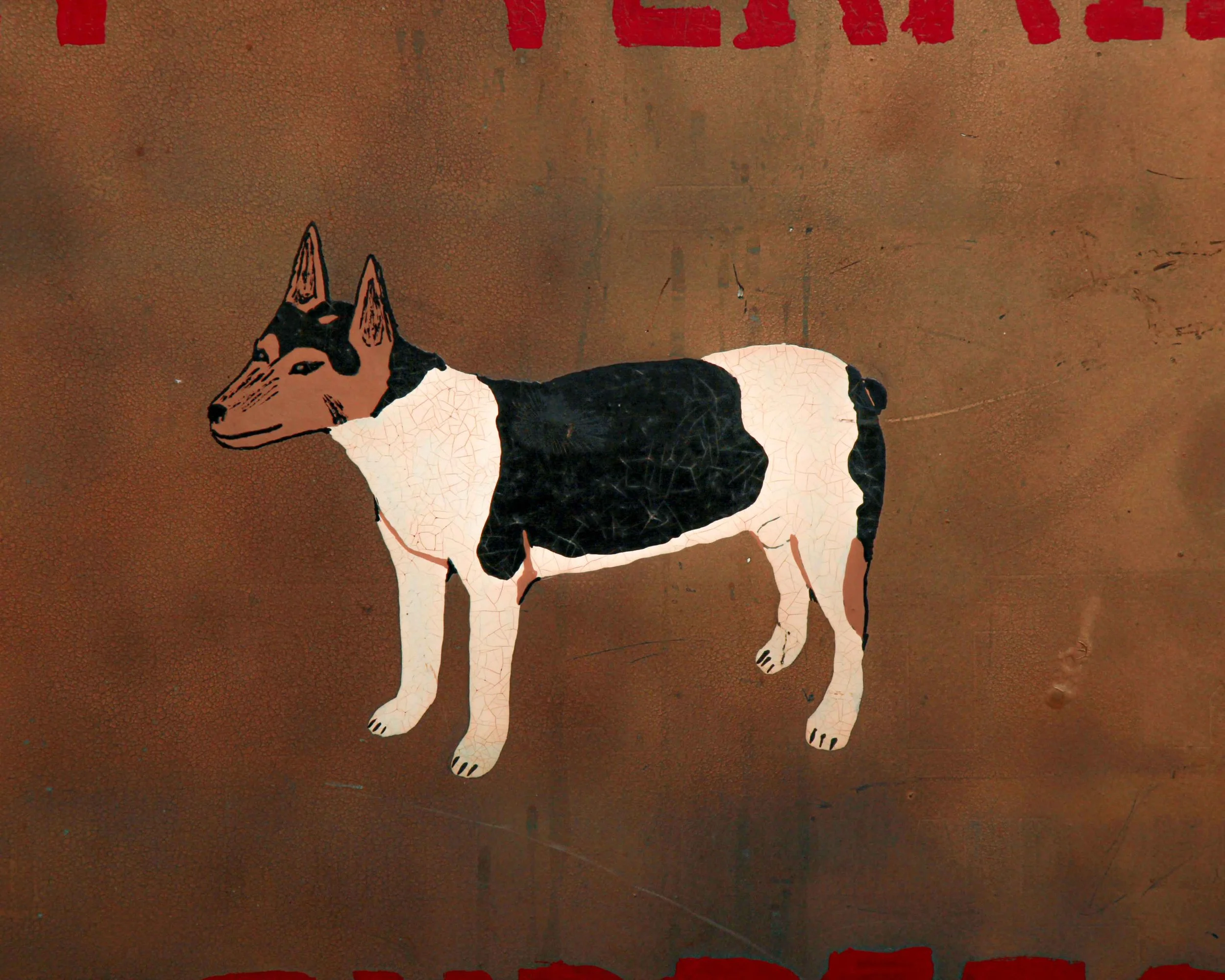
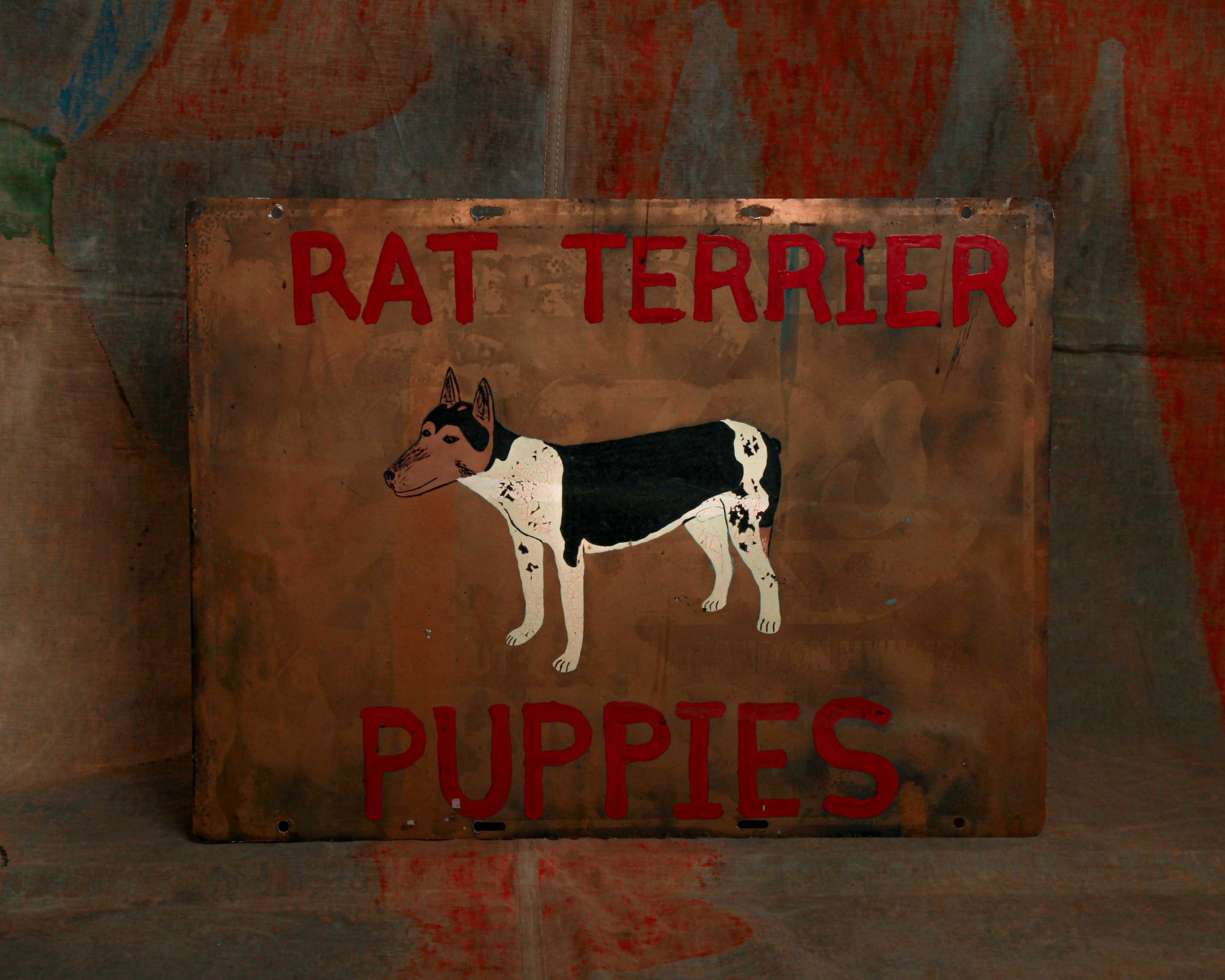
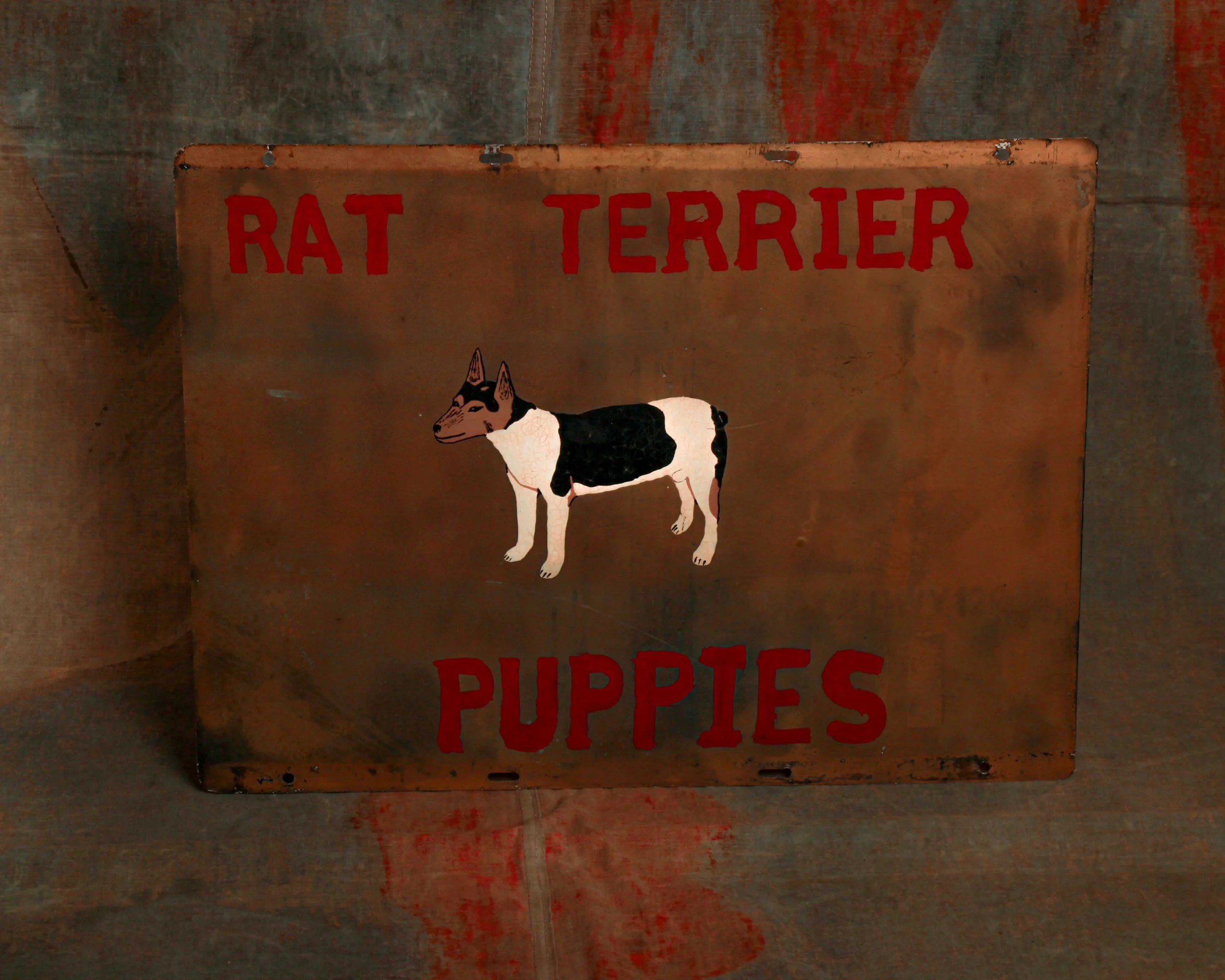
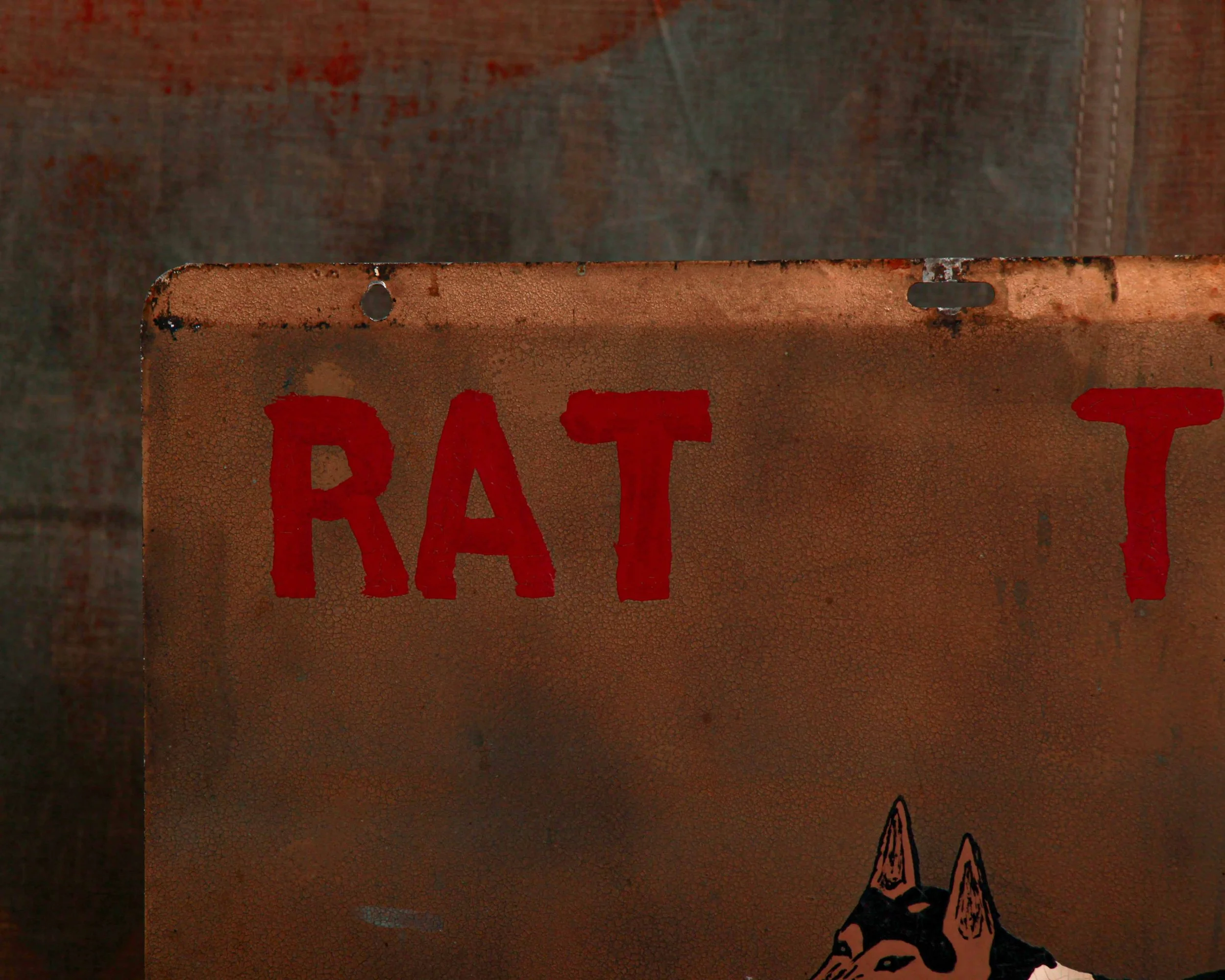
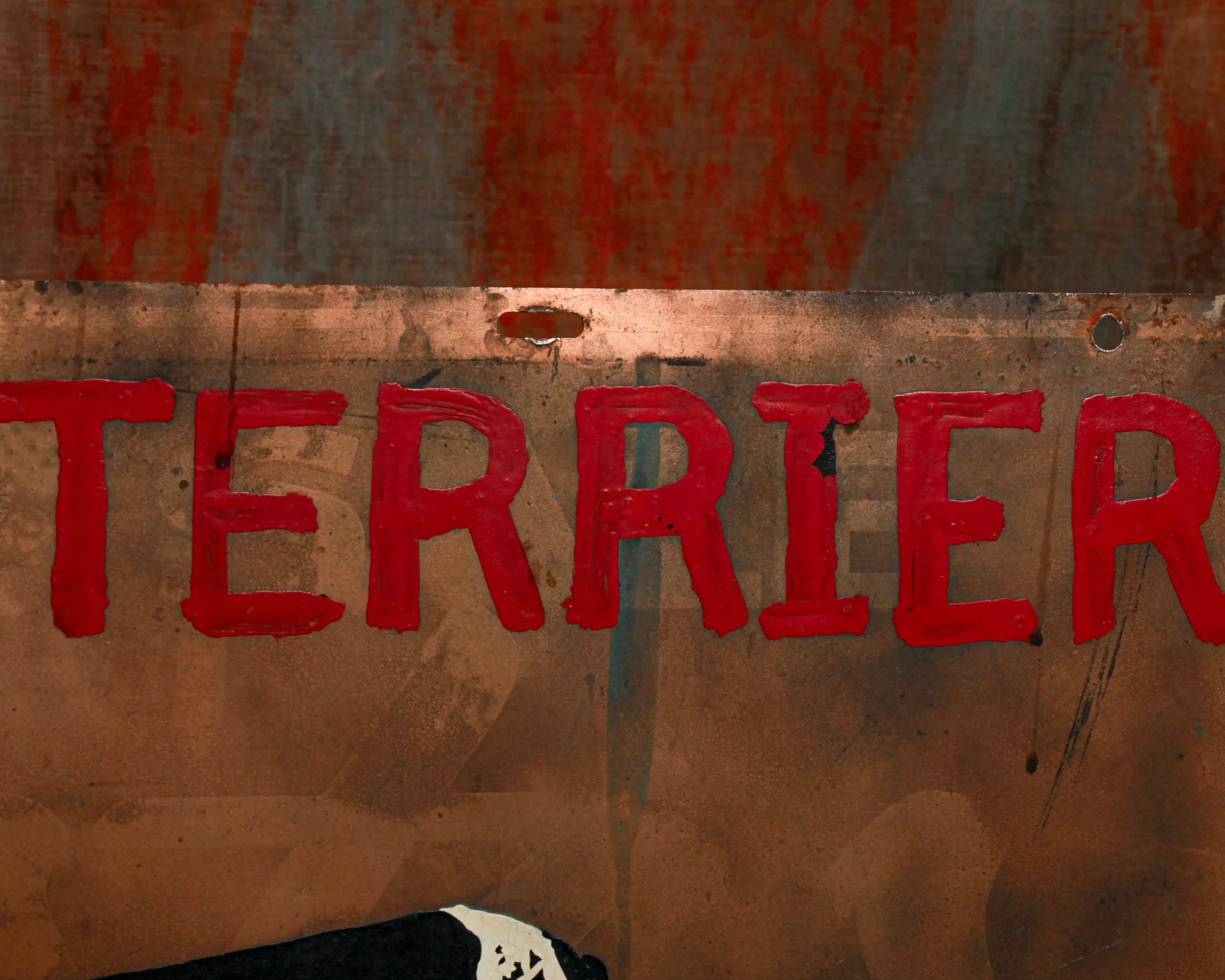
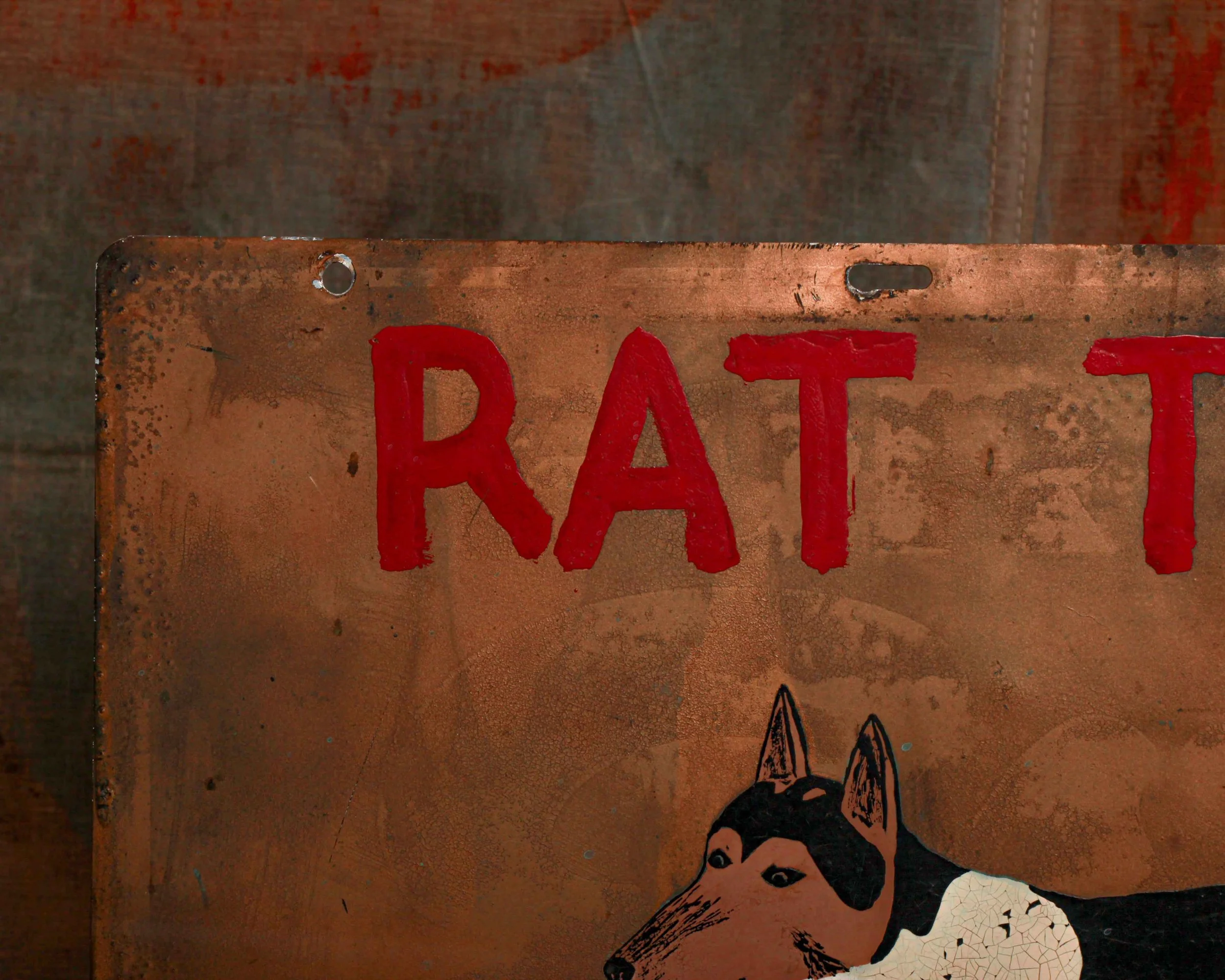
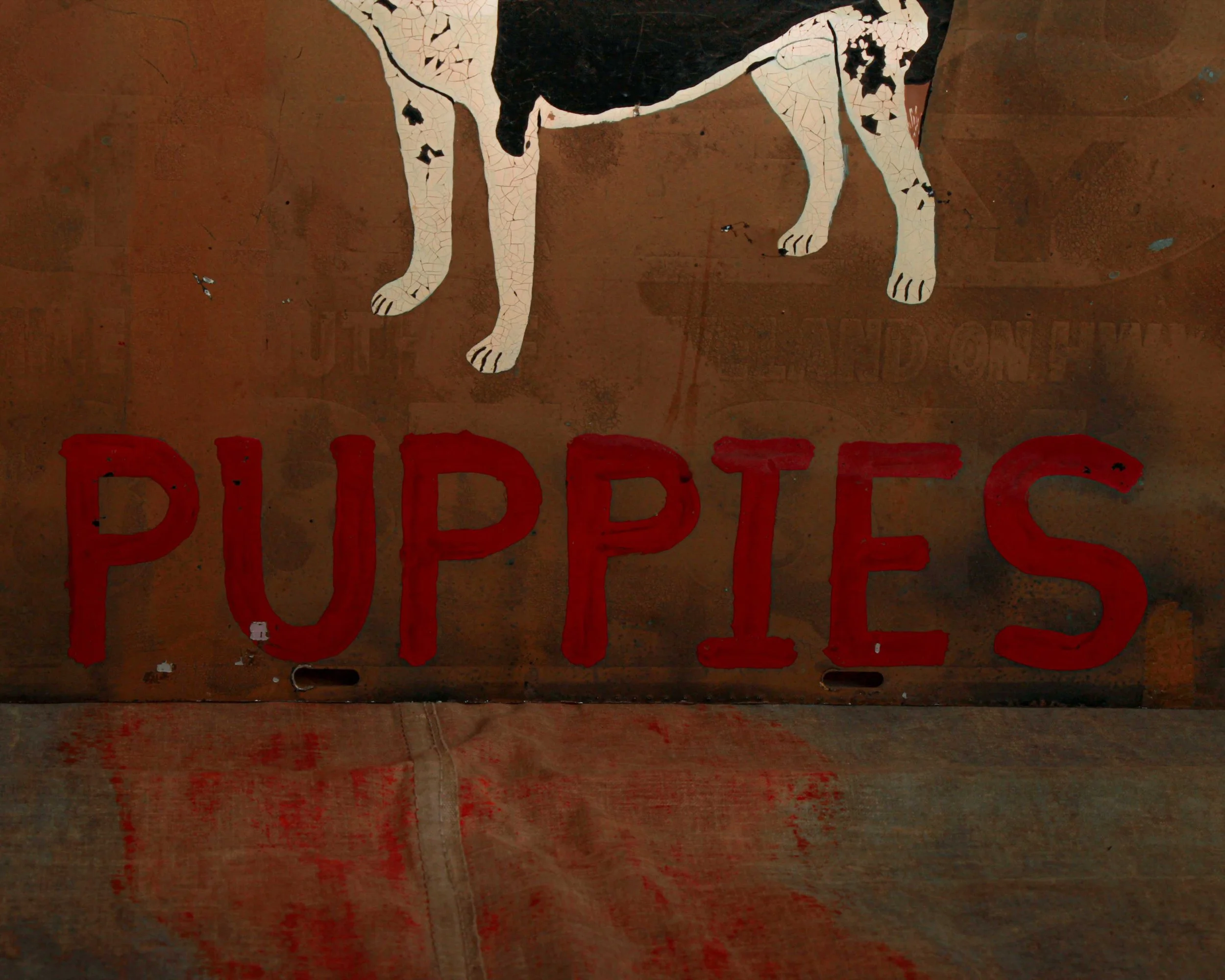
There’s no soft sell here. Just straight to the point: “RAT TERRIER PUPPIES,” loud, clear, and impossible to ignore.
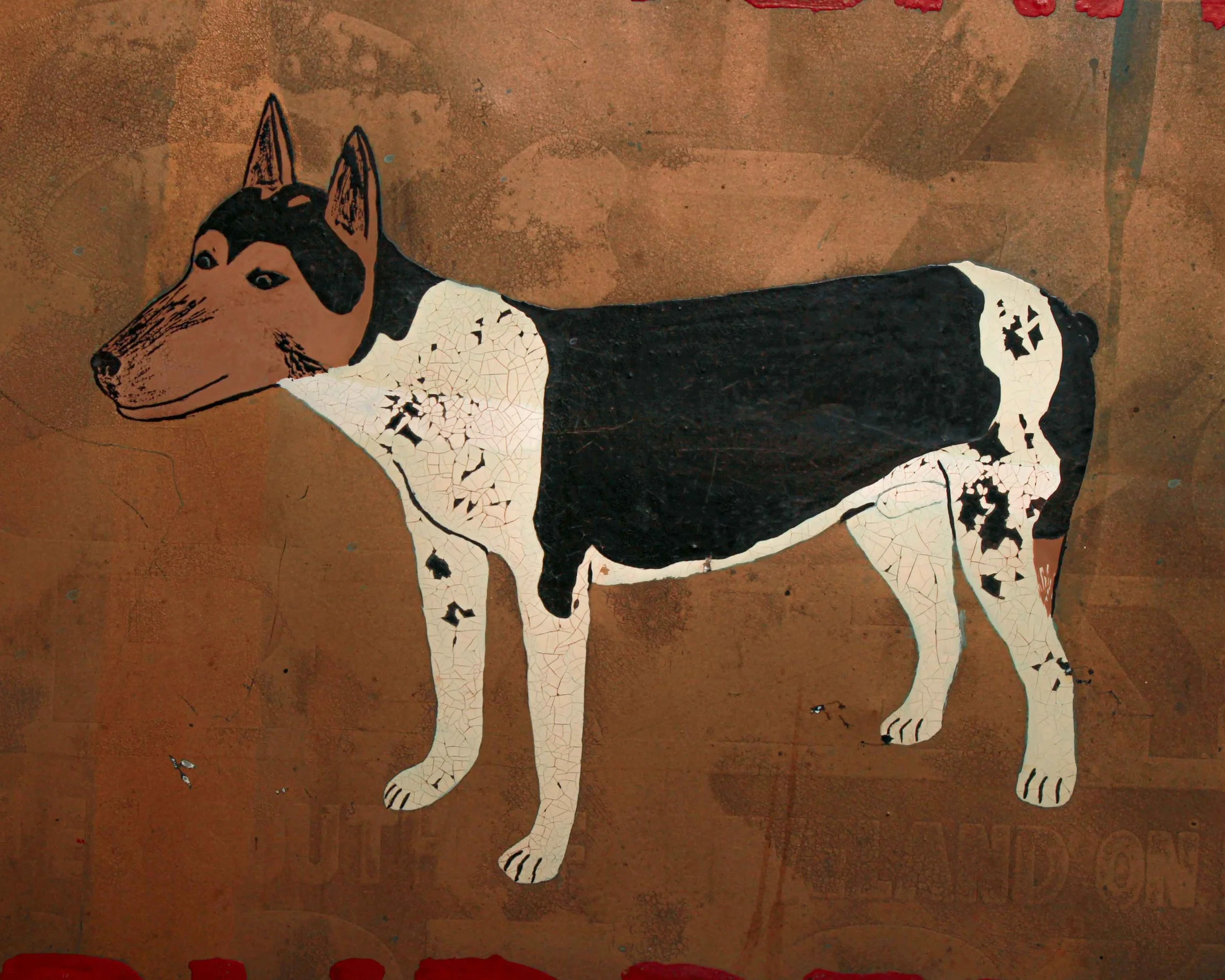
This double-sided tin sign feels like it came from a place where utility mattered more than polish. Likely hung roadside or outside a kennel, it did its job from both directions, catching passing eyes whether you were coming or going. The hand-painted terrier at center has that perfect folk quality, a little stiff, a little charming, all character. You can tell it wasn’t about getting every detail right, just getting the idea across fast.
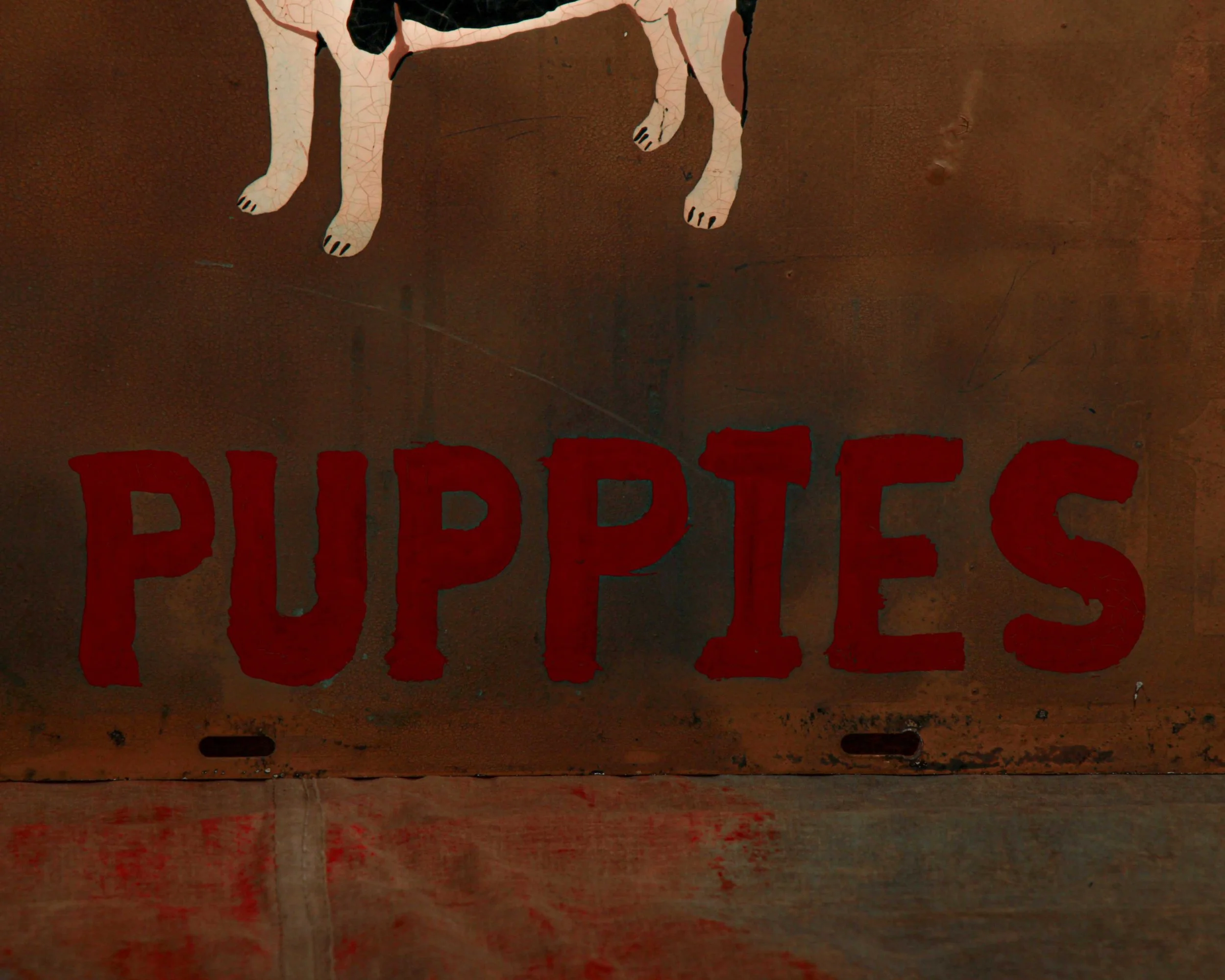
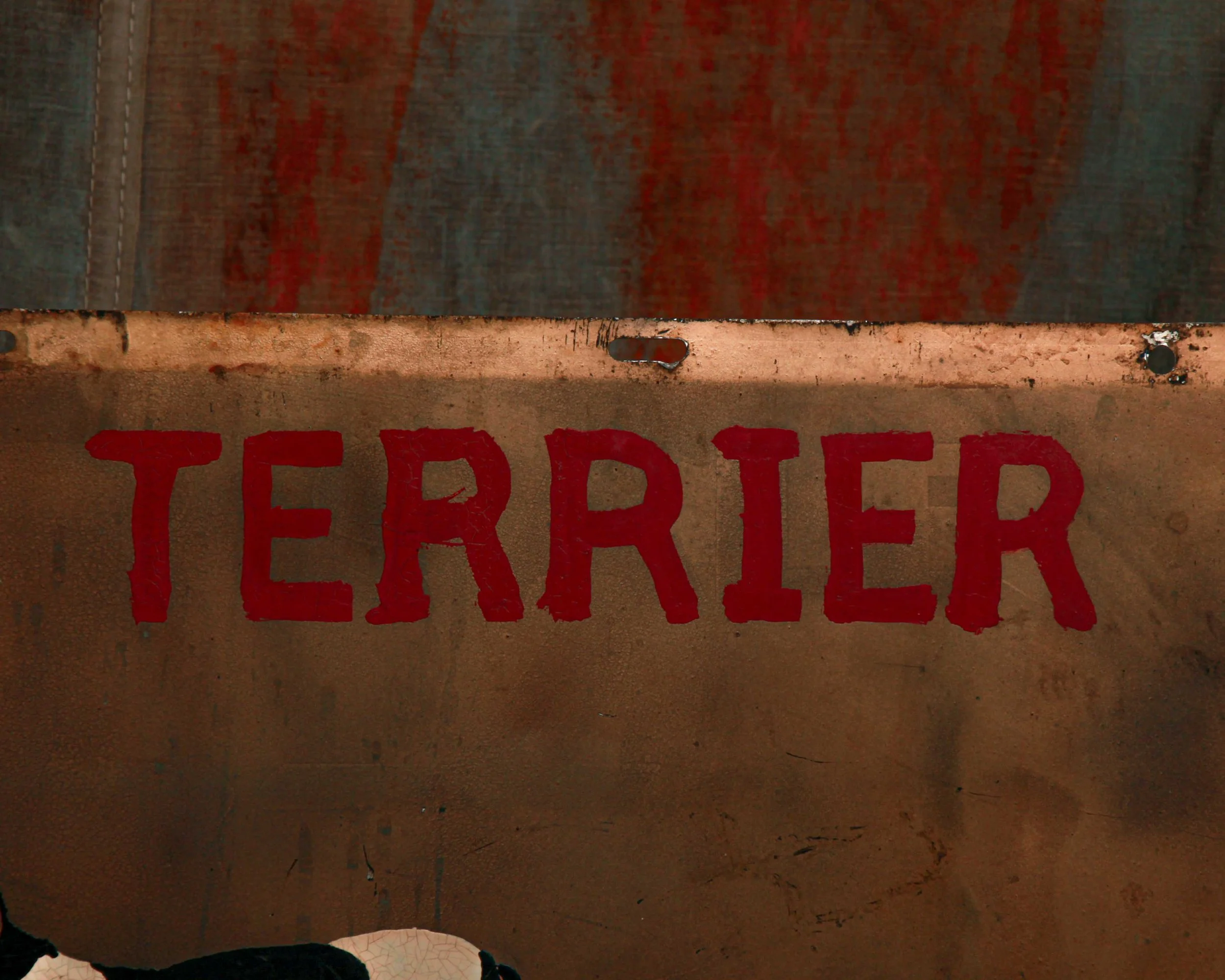
The surface has aged exactly the way you’d hope. Oxidation, scuffs, and a soft, even wear that takes the edge off the metal without dulling it. The red lettering still hits hard against that muted ground, and the craquelure in the painted dog adds just enough texture to remind you this wasn’t made yesterday.
What makes it work is the honesty. No branding, no extra flourish, just a sign that existed to connect a buyer with a dog. Simple as that. And somehow, that simplicity is what gives it presence now.
Terrier Breeding in America
Terrier breeding in America has always been a practical story before it became a polished one. These weren’t dogs developed for show rings at first, they were working animals, brought over by European immigrants who needed something small, fast, and fearless enough to handle vermin on farms, in barns, and around growing towns. The word “terrier” itself comes from “terra,” meaning earth, which says a lot about their job, going to ground after rats, foxes, and anything else that burrowed.
By the late 19th and early 20th centuries, American breeders began shaping their own versions of these dogs. They weren’t always following strict bloodlines, they were breeding for performance. Speed, grit, intelligence, and a certain stubborn independence mattered more than pedigree papers. This is how distinctly American types like the Rat Terrier came into their own, often crossed with other breeds like Whippets or Beagles to refine their abilities.
As the country modernized, the role of terriers shifted. Fewer farms needed ratters, and more people began to appreciate these dogs as companions. That’s when formal breed standards and kennel clubs stepped in, turning what had been a loose, working tradition into something more codified. Still, even today, you can feel that original purpose in them. Terriers don’t really forget what they were made to do.
There’s no soft sell here. Just straight to the point: “RAT TERRIER PUPPIES,” loud, clear, and impossible to ignore.
This double-sided tin sign feels like it came from a place where utility mattered more than polish. Likely hung roadside or outside a kennel, it did its job from both directions, catching passing eyes whether you were coming or going. The hand-painted terrier at center has that perfect folk quality, a little stiff, a little charming, all character. You can tell it wasn’t about getting every detail right, just getting the idea across fast.
The surface has aged exactly the way you’d hope. Oxidation, scuffs, and a soft, even wear that takes the edge off the metal without dulling it. The red lettering still hits hard against that muted ground, and the craquelure in the painted dog adds just enough texture to remind you this wasn’t made yesterday.
What makes it work is the honesty. No branding, no extra flourish, just a sign that existed to connect a buyer with a dog. Simple as that. And somehow, that simplicity is what gives it presence now.
Terrier Breeding in America
Terrier breeding in America has always been a practical story before it became a polished one. These weren’t dogs developed for show rings at first, they were working animals, brought over by European immigrants who needed something small, fast, and fearless enough to handle vermin on farms, in barns, and around growing towns. The word “terrier” itself comes from “terra,” meaning earth, which says a lot about their job, going to ground after rats, foxes, and anything else that burrowed.
By the late 19th and early 20th centuries, American breeders began shaping their own versions of these dogs. They weren’t always following strict bloodlines, they were breeding for performance. Speed, grit, intelligence, and a certain stubborn independence mattered more than pedigree papers. This is how distinctly American types like the Rat Terrier came into their own, often crossed with other breeds like Whippets or Beagles to refine their abilities.
As the country modernized, the role of terriers shifted. Fewer farms needed ratters, and more people began to appreciate these dogs as companions. That’s when formal breed standards and kennel clubs stepped in, turning what had been a loose, working tradition into something more codified. Still, even today, you can feel that original purpose in them. Terriers don’t really forget what they were made to do.