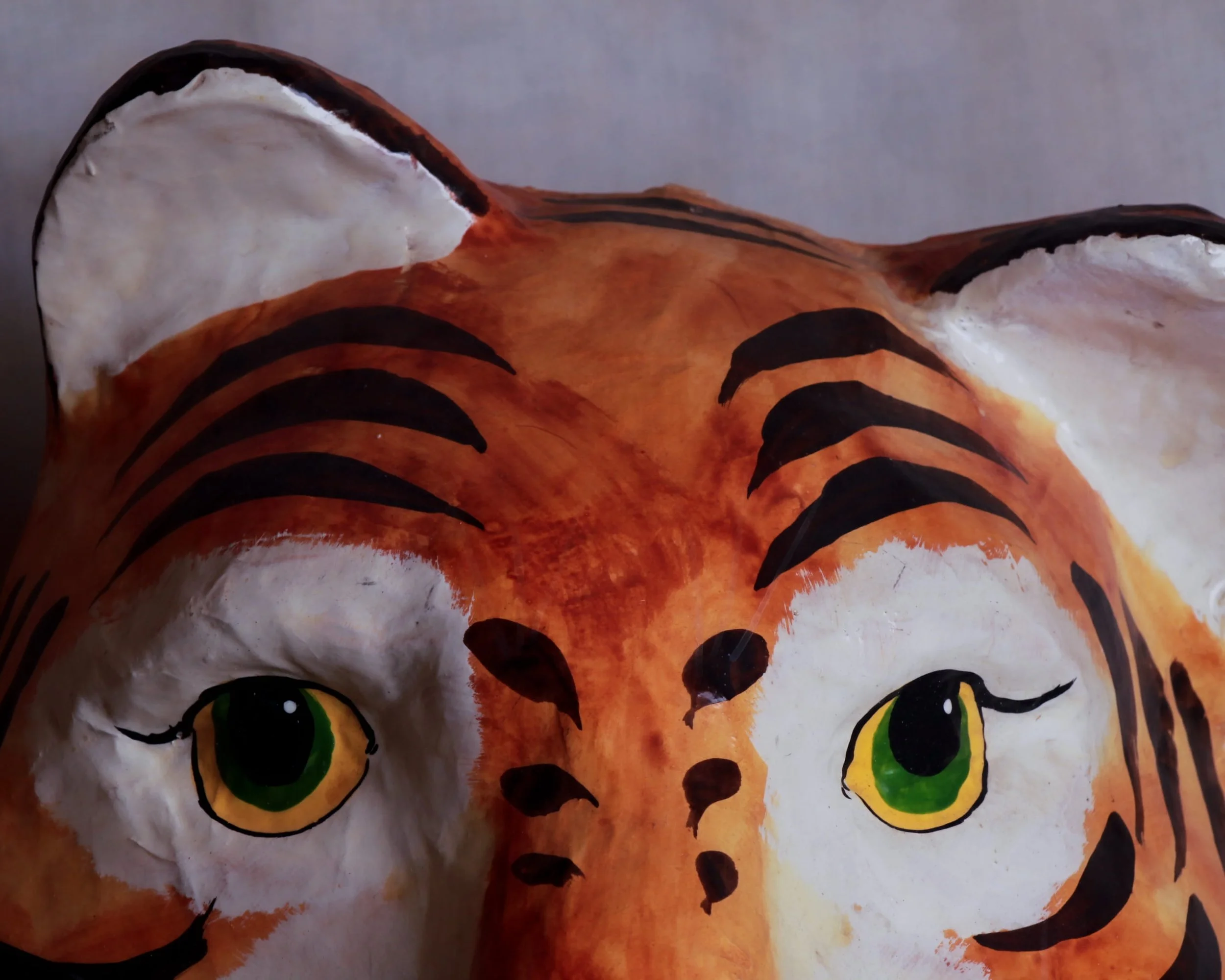
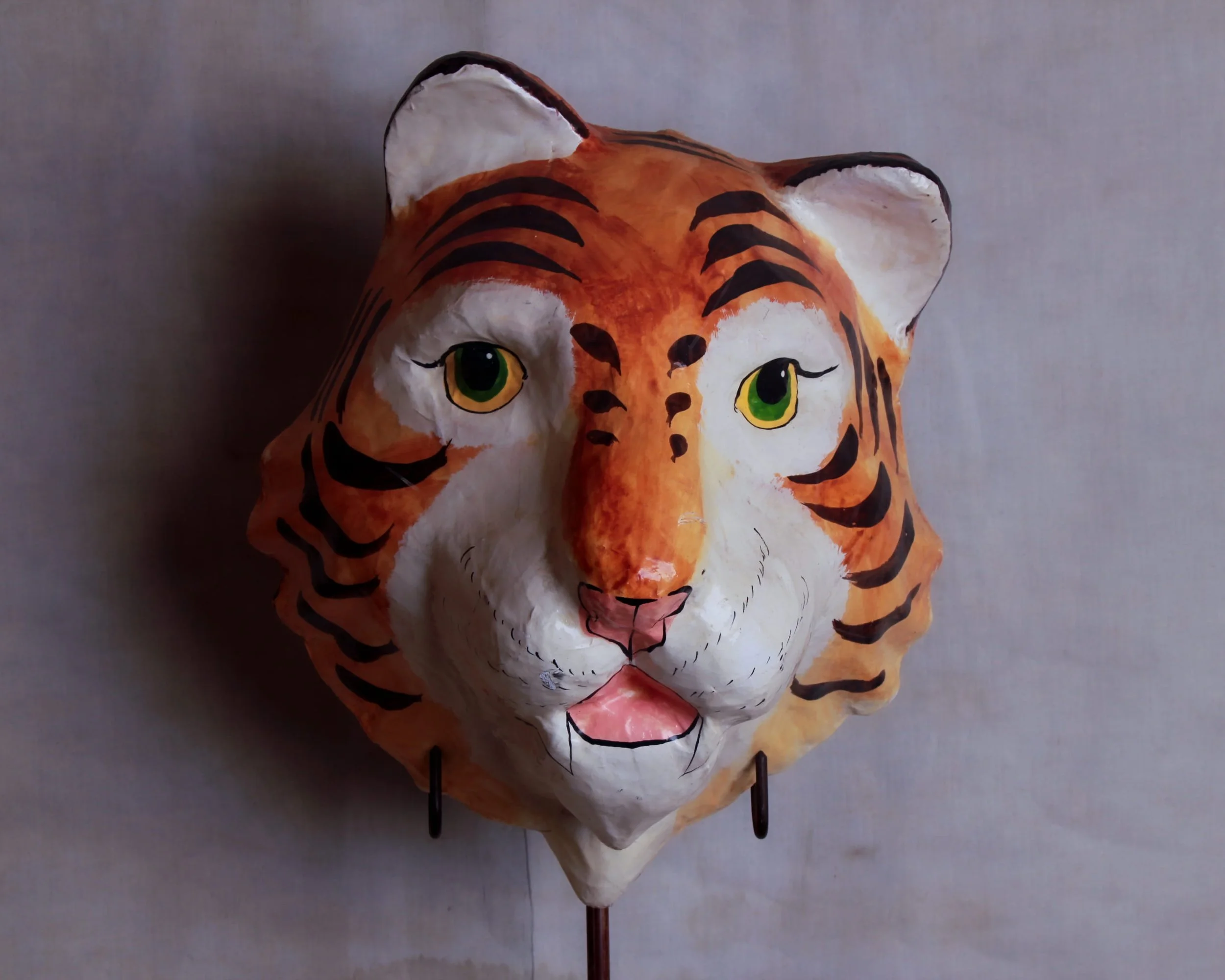
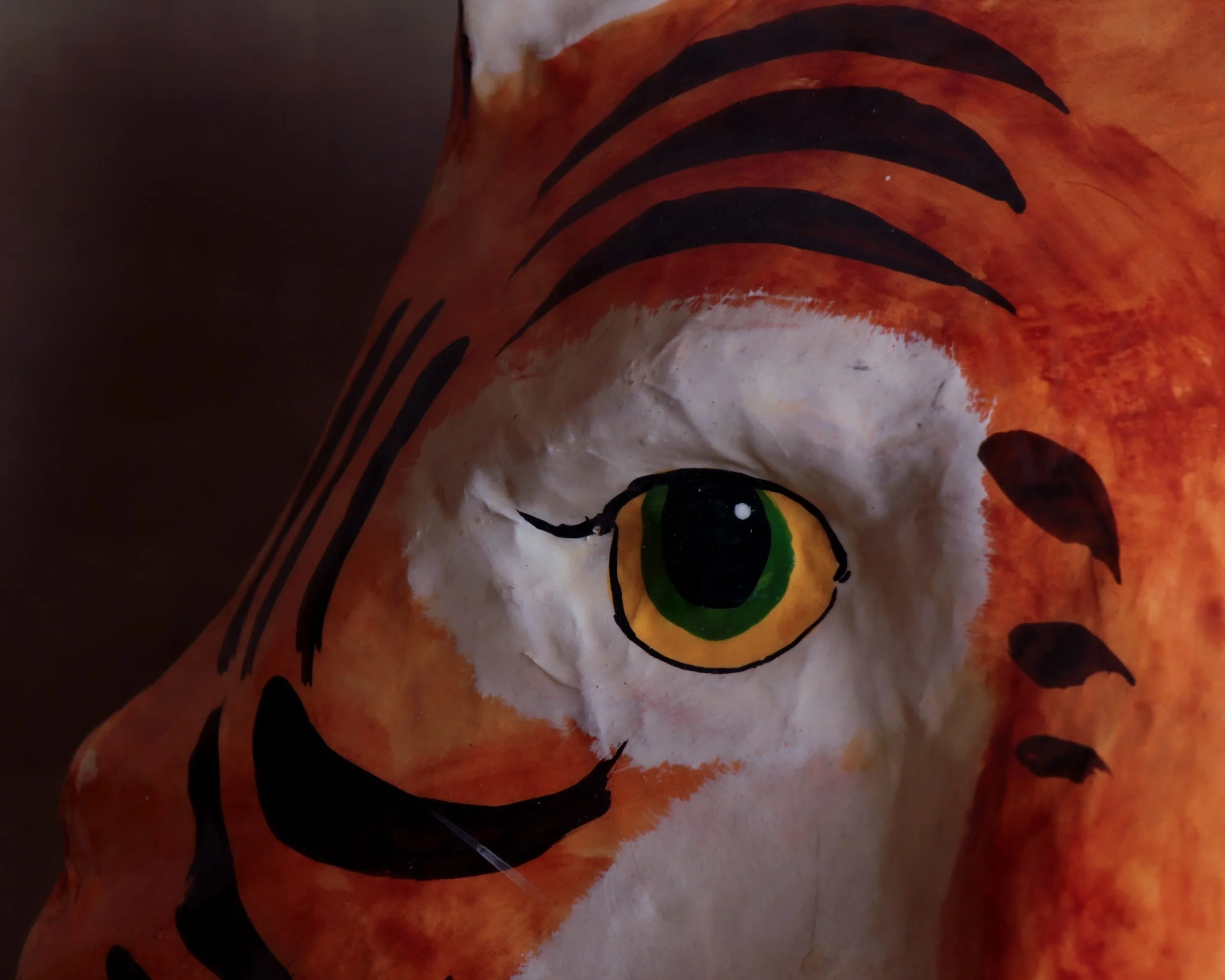
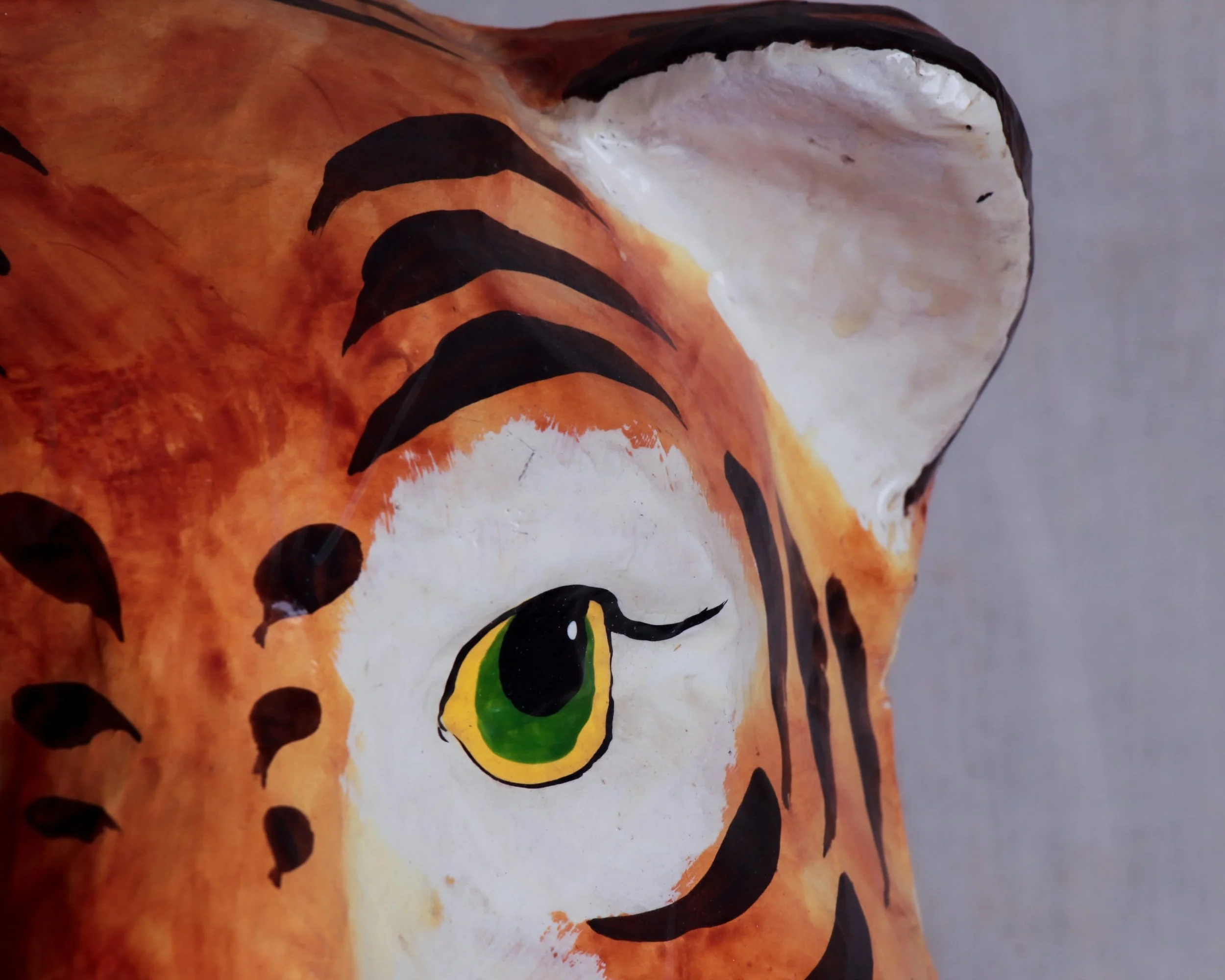
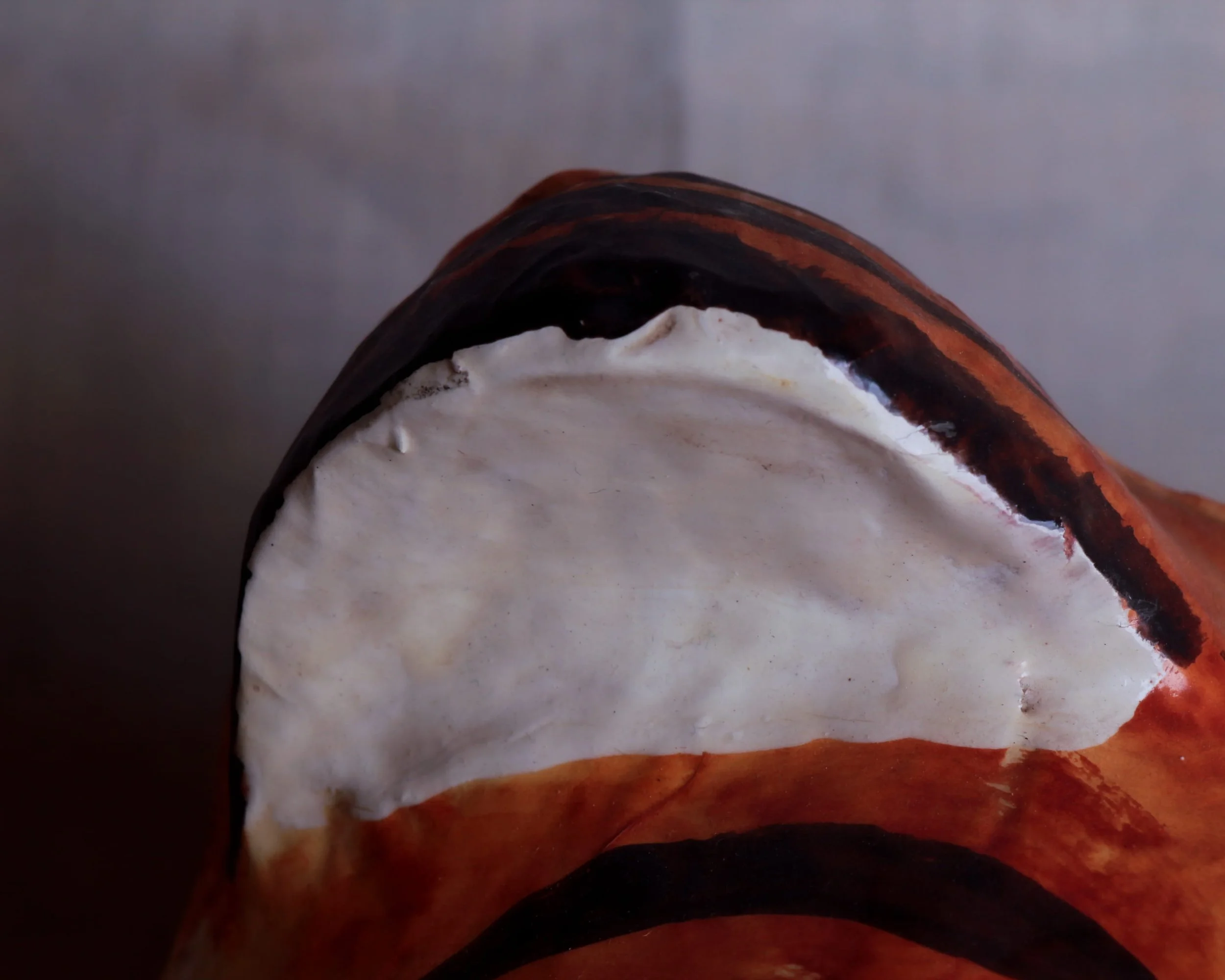
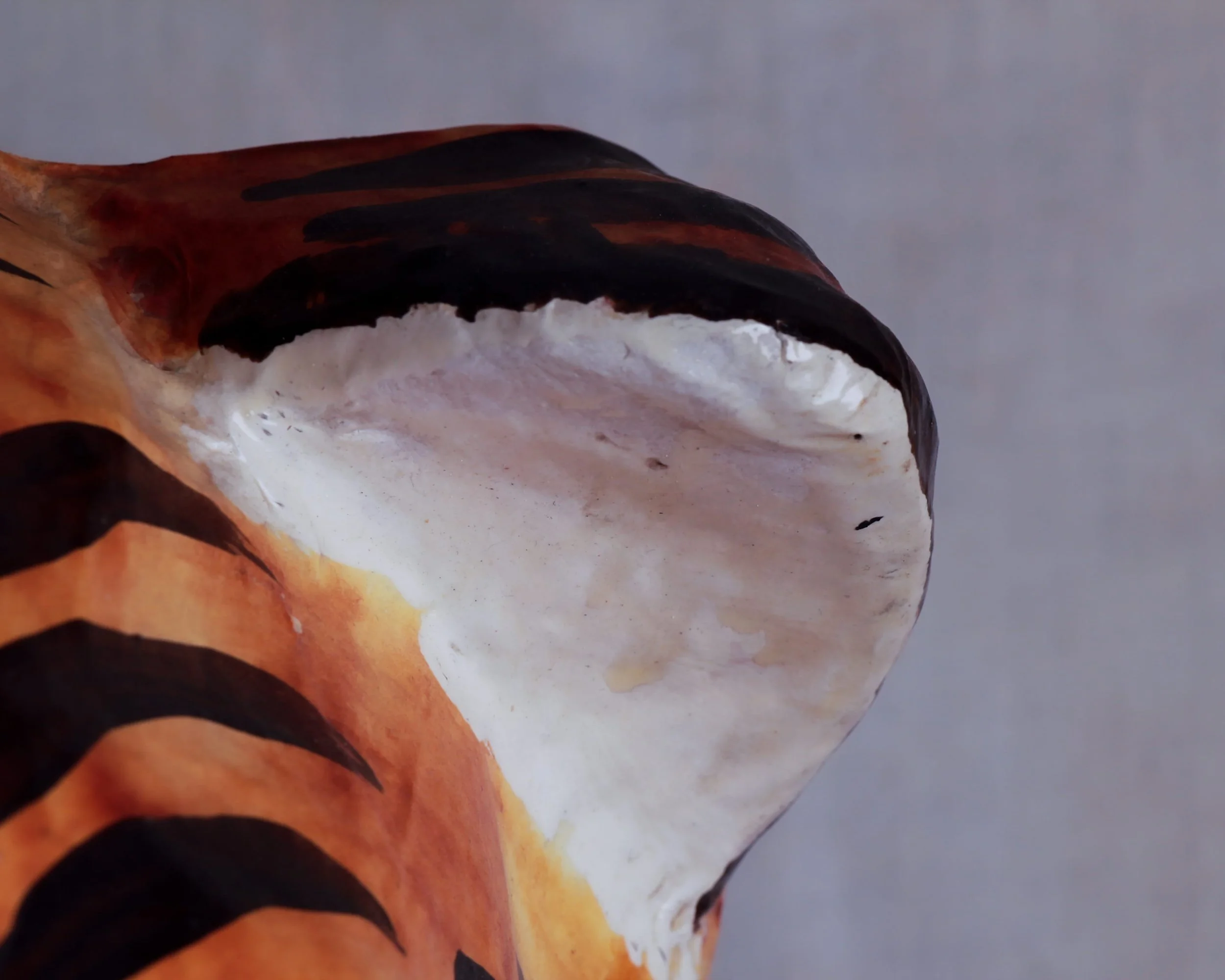
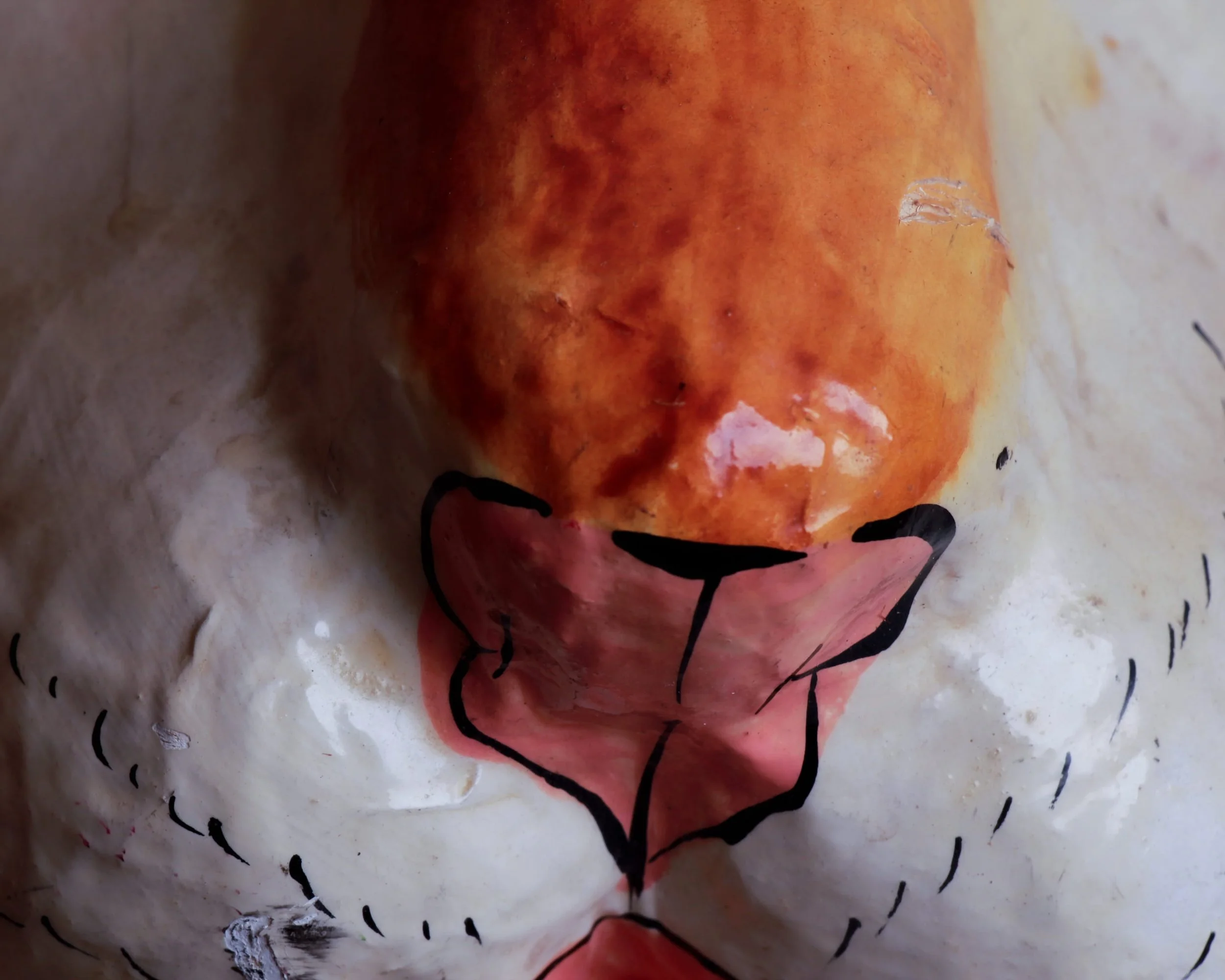
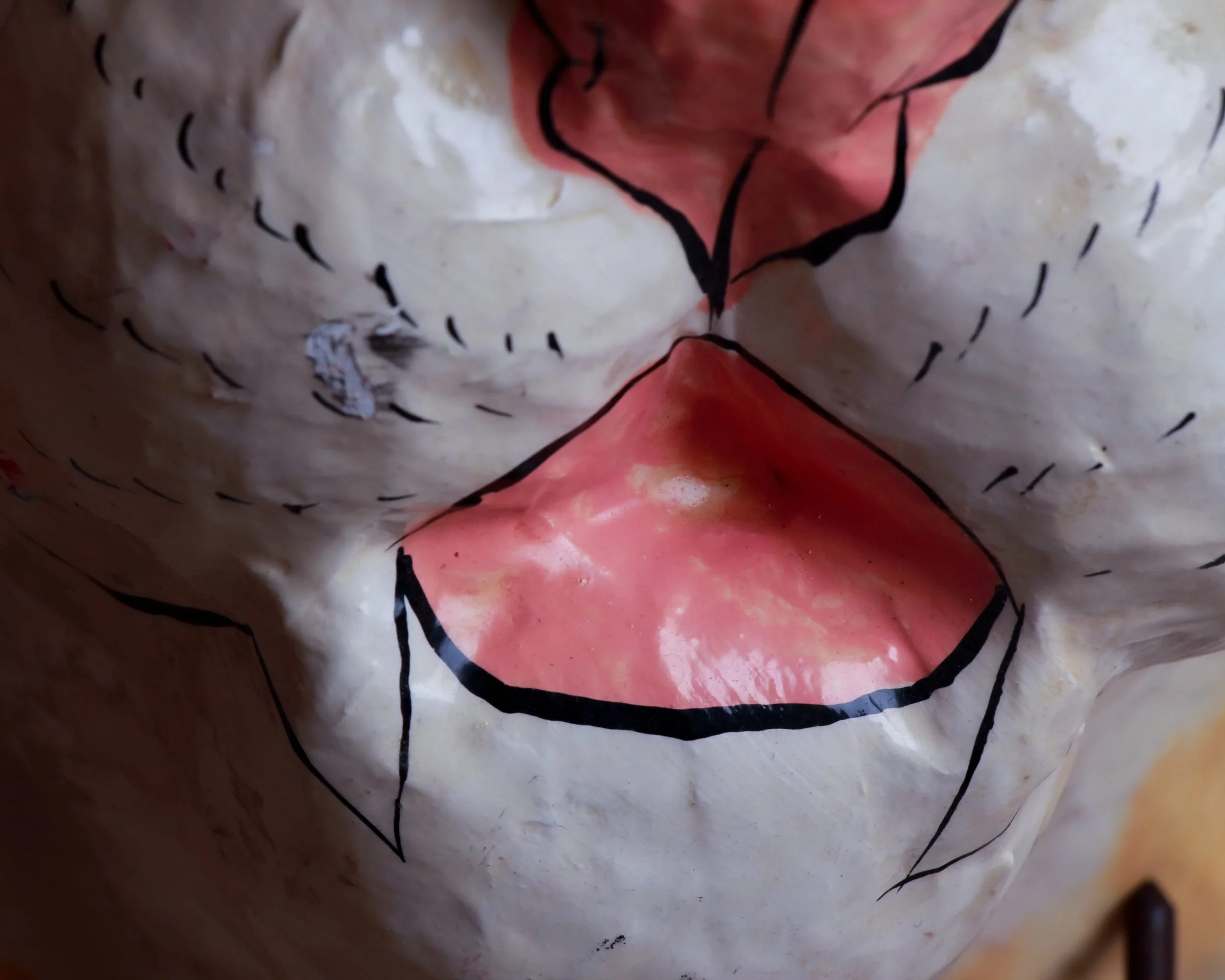
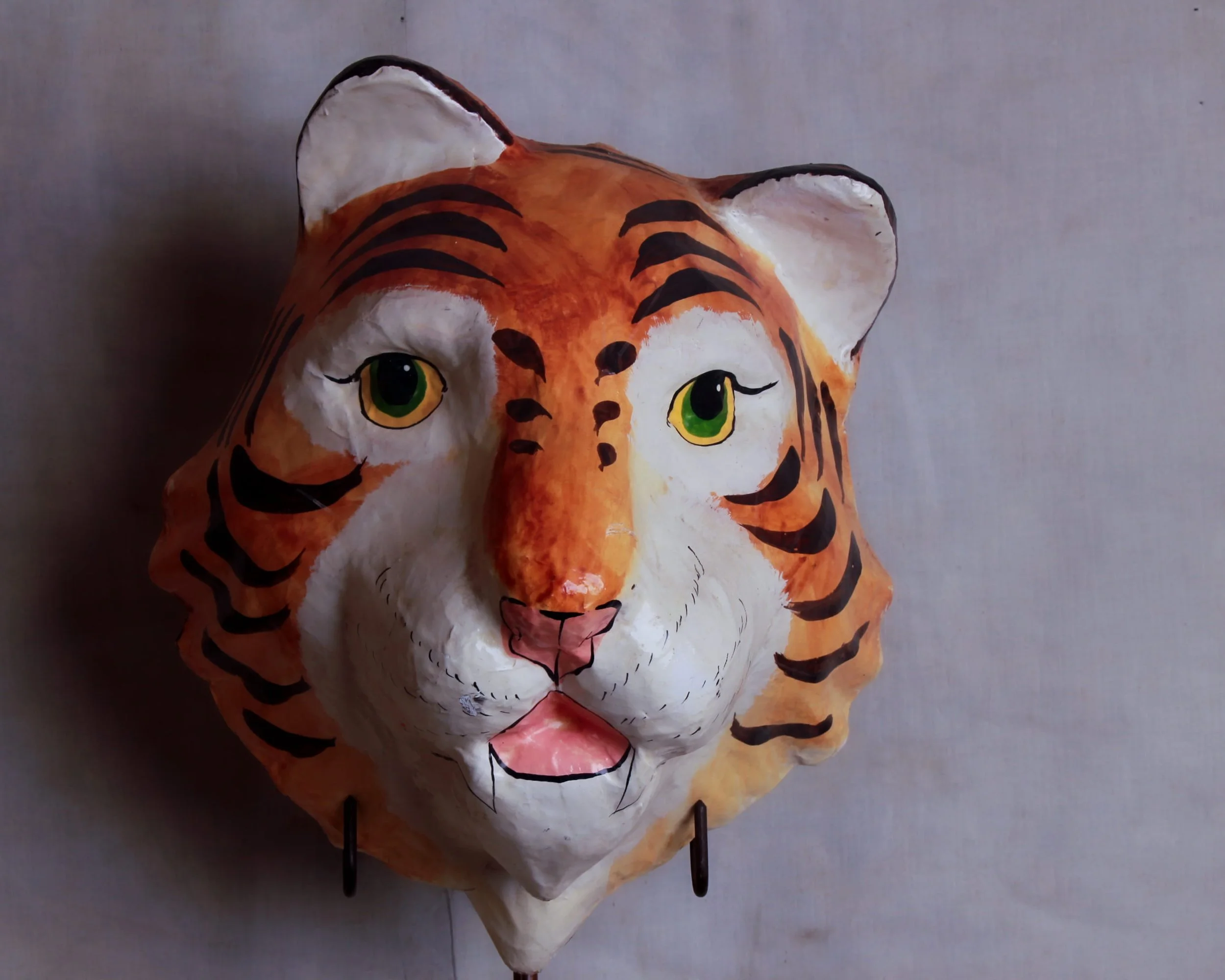
This papier-mâché tiger mask has that wonderful handmade quality that immediately tells you it wasn’t churned out by a factory line. It was shaped, painted, and brought to life by someone with a brush in one hand and a good imagination in the other.
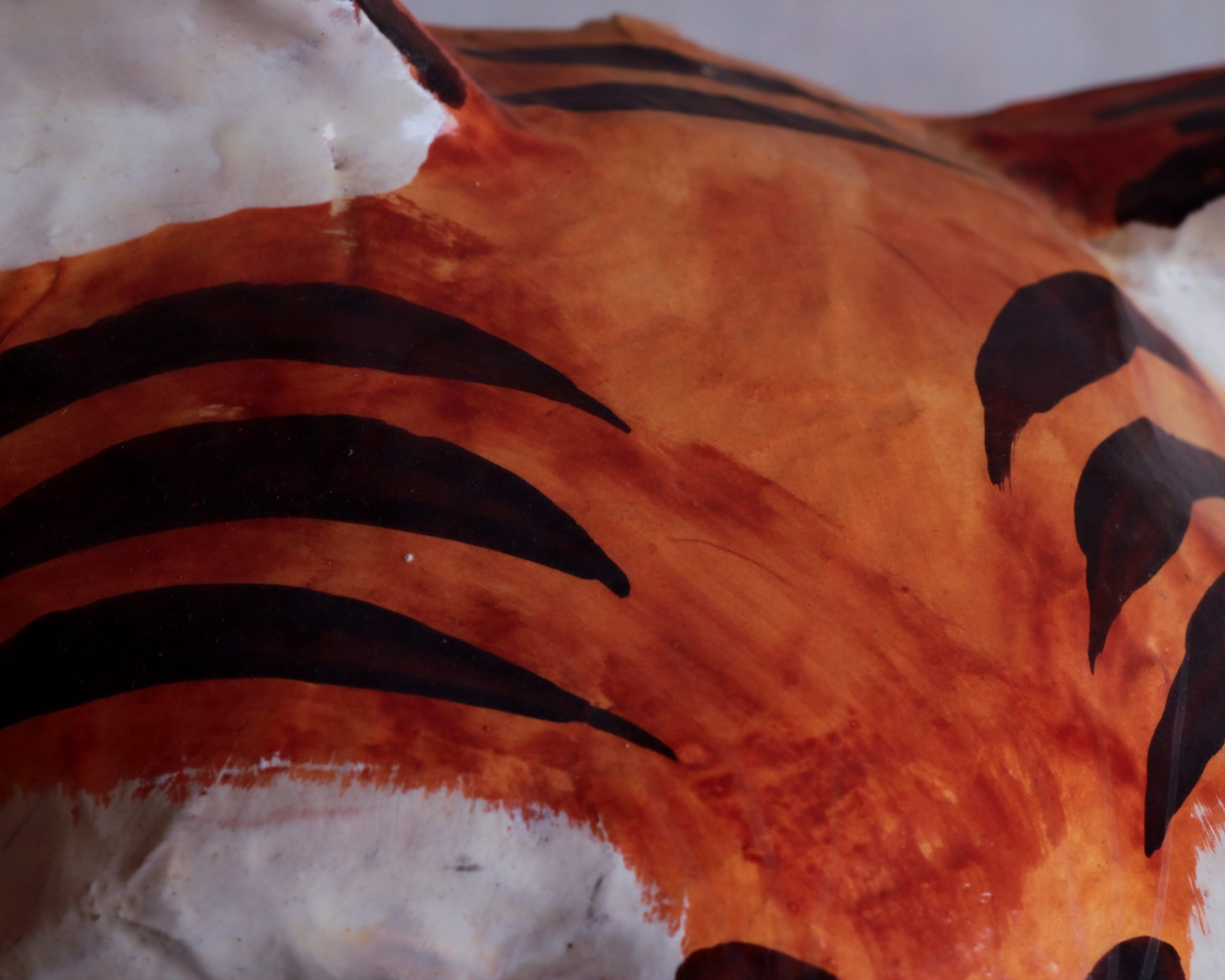
The face has a wonderfully docile personality. There’s an innocent little snarl, but the wide, slightly playful eyes give the whole thing a friendly, almost mischievous expression. The painted stripes are applied with confident brushwork, adding texture and movement to the surface while letting the sculpted papier-mâché form do the heavy lifting.
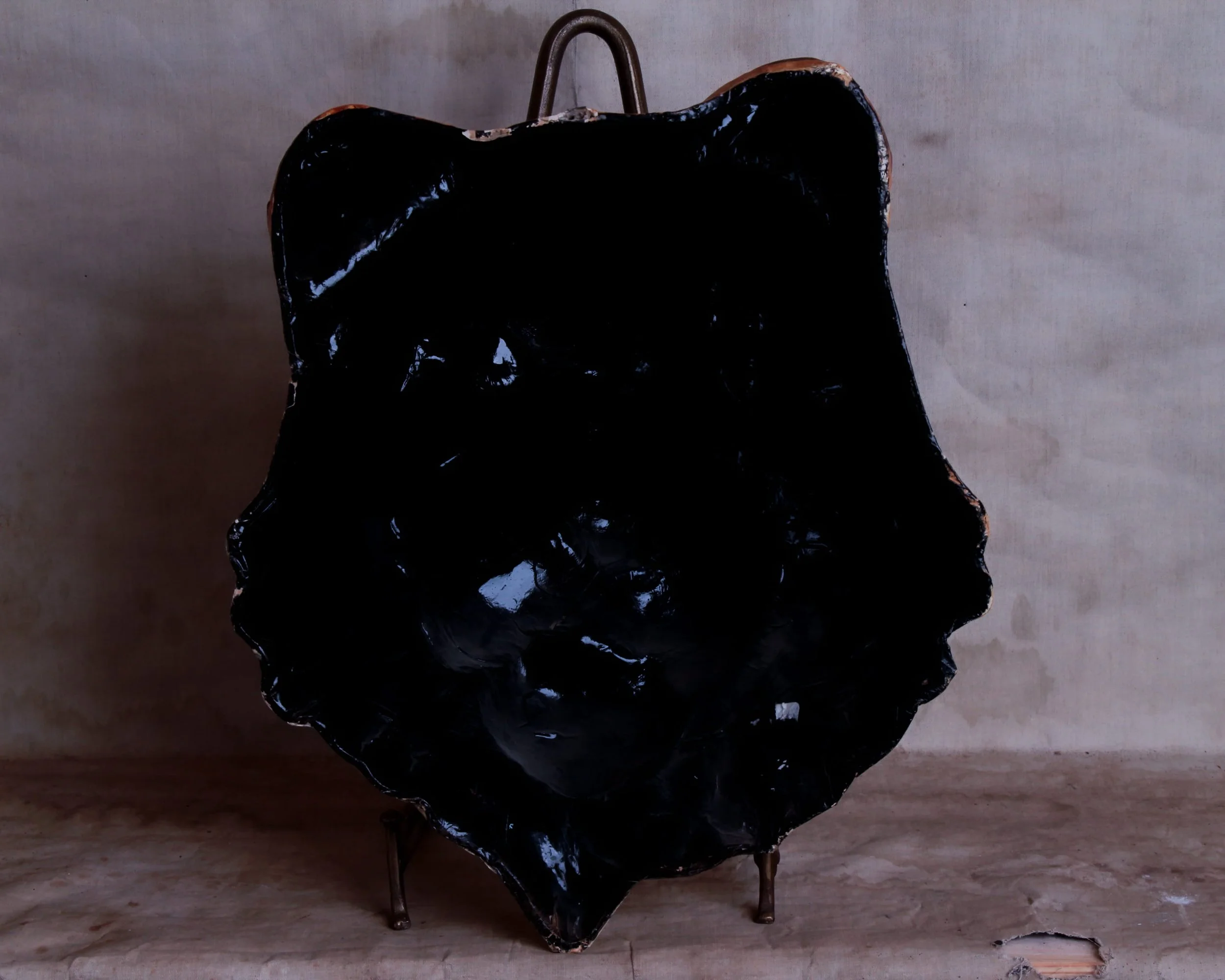
Measuring 11 inches wide, 8 inches deep, and 12 inches high, it’s a great size for display.
Category History
Paper mâché masks from the 1930s through the 1960s sit right at the intersection of craft, costume, and early mass culture. Made by layering paper pulp or strips over molds, then painted by hand or stencil, they were lightweight, inexpensive, and expressive enough to transform a face in seconds. Perfect for Halloween, school plays, parades, and small-town theater.
The designs leaned bold. Features were exaggerated—wide eyes, sharp noses, heavy outlines—so the character read clearly even from a distance. As film and television grew, familiar faces began to appear: clowns, monsters, cowboys, and eventually licensed characters. Some were factory-produced in large numbers, others came from smaller workshops where variation was part of the charm.
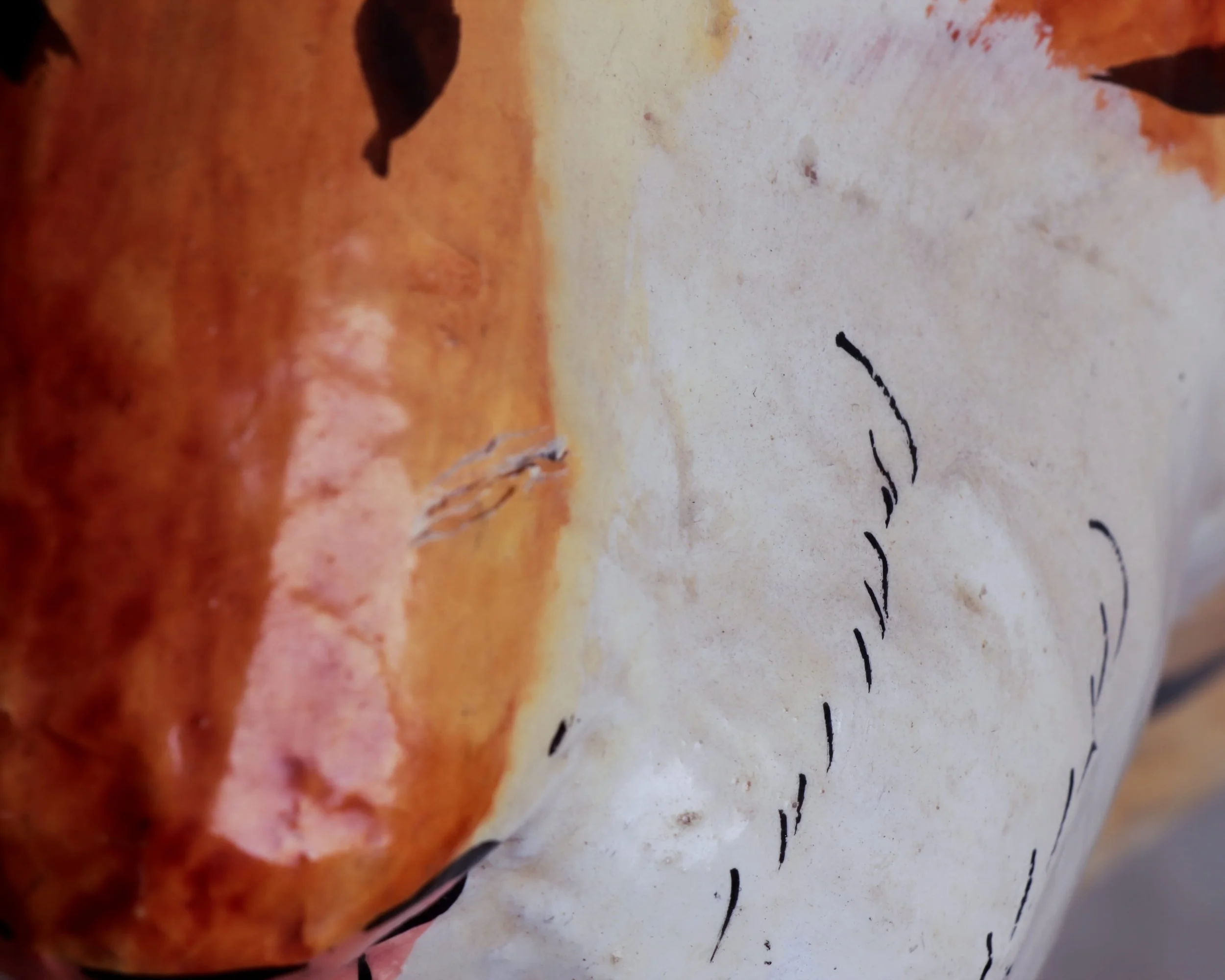
What makes them compelling now is their fragility and personality. They weren’t built to last. Elastic straps snapped, edges softened, paint chipped with use. Surviving examples often carry those marks—creases, touch-ups, small repairs—that feel honest rather than worn out.
They sit somewhere between folk object and early pop artifact. Simple materials, direct execution, and just enough imagination to do the rest. Even now, they hold a certain presence—slightly theatrical, slightly uncanny, and unmistakably human-made.
This papier-mâché tiger mask has that wonderful handmade quality that immediately tells you it wasn’t churned out by a factory line. It was shaped, painted, and brought to life by someone with a brush in one hand and a good imagination in the other.
The face has a wonderfully docile personality. There’s an innocent little snarl, but the wide, slightly playful eyes give the whole thing a friendly, almost mischievous expression. The painted stripes are applied with confident brushwork, adding texture and movement to the surface while letting the sculpted papier-mâché form do the heavy lifting.
Measuring 11 inches wide, 8 inches deep, and 12 inches high, it’s a great size for display.
Category History
Paper mâché masks from the 1930s through the 1960s sit right at the intersection of craft, costume, and early mass culture. Made by layering paper pulp or strips over molds, then painted by hand or stencil, they were lightweight, inexpensive, and expressive enough to transform a face in seconds. Perfect for Halloween, school plays, parades, and small-town theater.
The designs leaned bold. Features were exaggerated—wide eyes, sharp noses, heavy outlines—so the character read clearly even from a distance. As film and television grew, familiar faces began to appear: clowns, monsters, cowboys, and eventually licensed characters. Some were factory-produced in large numbers, others came from smaller workshops where variation was part of the charm.
What makes them compelling now is their fragility and personality. They weren’t built to last. Elastic straps snapped, edges softened, paint chipped with use. Surviving examples often carry those marks—creases, touch-ups, small repairs—that feel honest rather than worn out.
They sit somewhere between folk object and early pop artifact. Simple materials, direct execution, and just enough imagination to do the rest. Even now, they hold a certain presence—slightly theatrical, slightly uncanny, and unmistakably human-made.