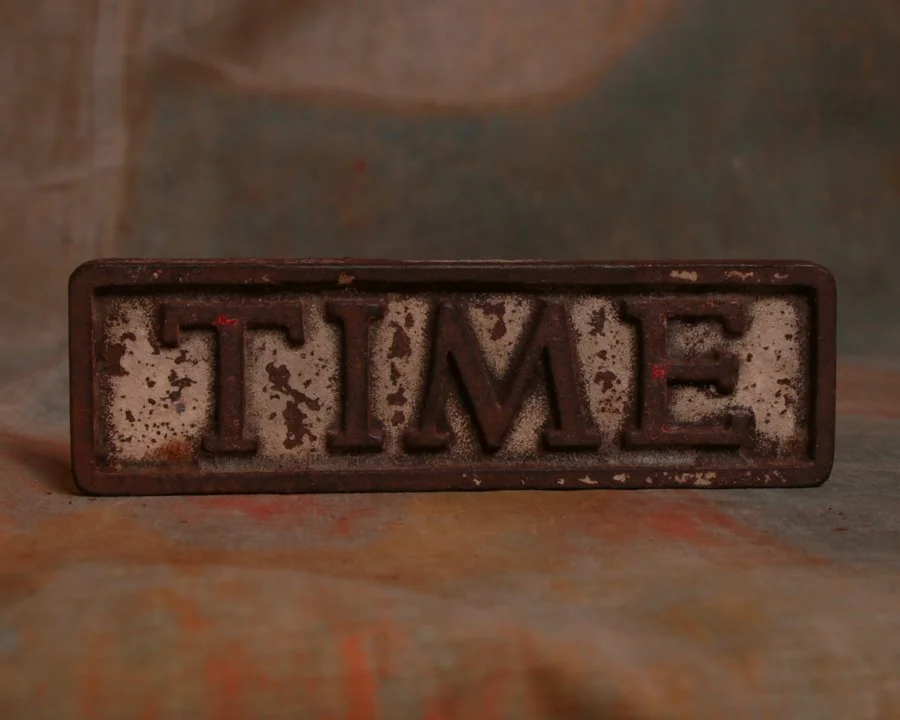

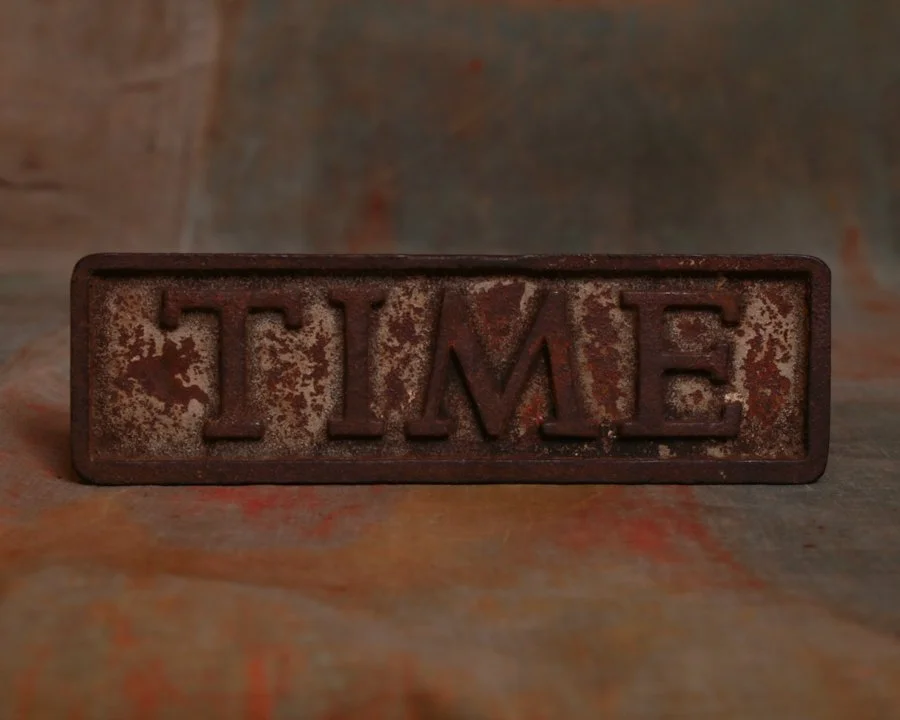
This double-sided cast iron TIME magazine newsstand paperweight is a relic from the golden age of print media, when magazine vendors needed something sturdy to keep their stacks from flying away on a windy street corner. Measuring 8 inches long by 2 inches high and 7/16 inches thick, this solid hunk of metal is both functional and visually striking.
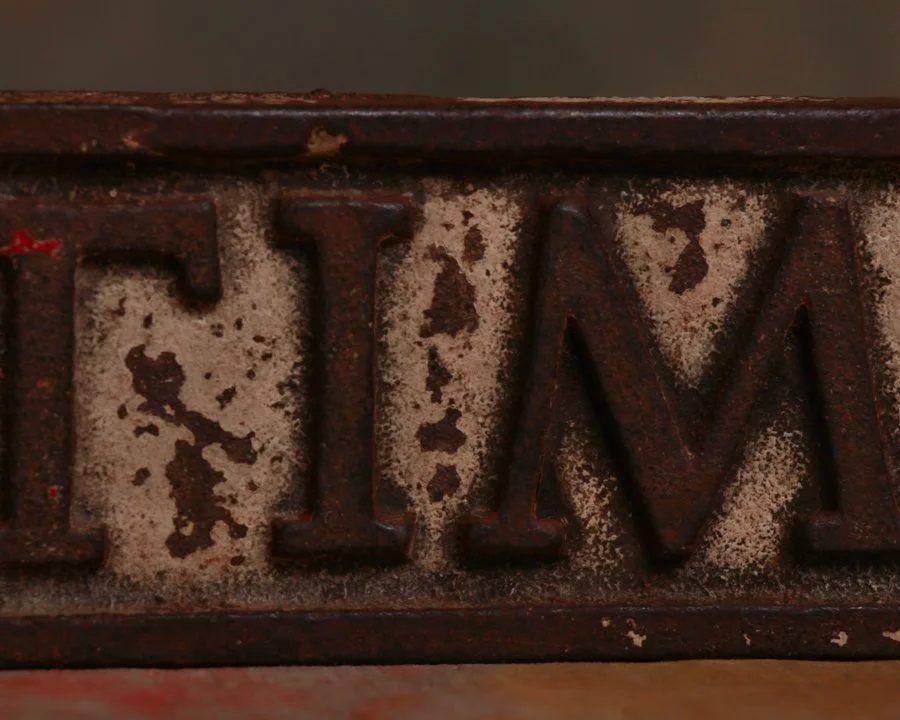
The design is simple yet bold: raised, embossed letters spelling "TIME" stand out against a slightly recessed, textured background, all framed within a thick border. The cast iron has aged beautifully, showing a mix of original paint remnants, surface rust, and the natural patina of decades in the elements.
Distributed to vendors in the first half of the 20th century, this piece would have been a fixture at bustling newsstands, sitting atop stacks of TIME magazines, ensuring they stayed put against sudden gusts or passing traffic.
Category History
Early cast iron paperweights made for magazine and newspaper stands were less about decoration and more about keeping order in a windy, high-traffic world. Found in train stations, hotel lobbies, newsstands, and corner shops, they were built to pin down stacks of daily papers that were constantly being flipped through, rearranged, and restocked.
Most were cast in simple, functional forms—arched bars, handled weights, or flat, elongated shapes that could span across a stack. Many carried embossed names of publications, distributors, or local businesses, doubling as subtle advertising while doing their job. Produced by the same foundries turning out industrial hardware, they have that same no-nonsense construction—solid, heavy, and made to last.
Years of use left their mark. Worn edges, softened lettering, and a darkened surface from constant handling give them a kind of quiet authority. They weren’t meant to stand out, but to work.
Today, they read as small pieces of everyday infrastructure—objects that kept information in place before everything went digital. Practical, durable, and surprisingly graphic in their simplicity.
This double-sided cast iron TIME magazine newsstand paperweight is a relic from the golden age of print media, when magazine vendors needed something sturdy to keep their stacks from flying away on a windy street corner. Measuring 8 inches long by 2 inches high and 7/16 inches thick, this solid hunk of metal is both functional and visually striking.
The design is simple yet bold: raised, embossed letters spelling "TIME" stand out against a slightly recessed, textured background, all framed within a thick border. The cast iron has aged beautifully, showing a mix of original paint remnants, surface rust, and the natural patina of decades in the elements.
Distributed to vendors in the first half of the 20th century, this piece would have been a fixture at bustling newsstands, sitting atop stacks of TIME magazines, ensuring they stayed put against sudden gusts or passing traffic.
Category History
Early cast iron paperweights made for magazine and newspaper stands were less about decoration and more about keeping order in a windy, high-traffic world. Found in train stations, hotel lobbies, newsstands, and corner shops, they were built to pin down stacks of daily papers that were constantly being flipped through, rearranged, and restocked.
Most were cast in simple, functional forms—arched bars, handled weights, or flat, elongated shapes that could span across a stack. Many carried embossed names of publications, distributors, or local businesses, doubling as subtle advertising while doing their job. Produced by the same foundries turning out industrial hardware, they have that same no-nonsense construction—solid, heavy, and made to last.
Years of use left their mark. Worn edges, softened lettering, and a darkened surface from constant handling give them a kind of quiet authority. They weren’t meant to stand out, but to work.
Today, they read as small pieces of everyday infrastructure—objects that kept information in place before everything went digital. Practical, durable, and surprisingly graphic in their simplicity.