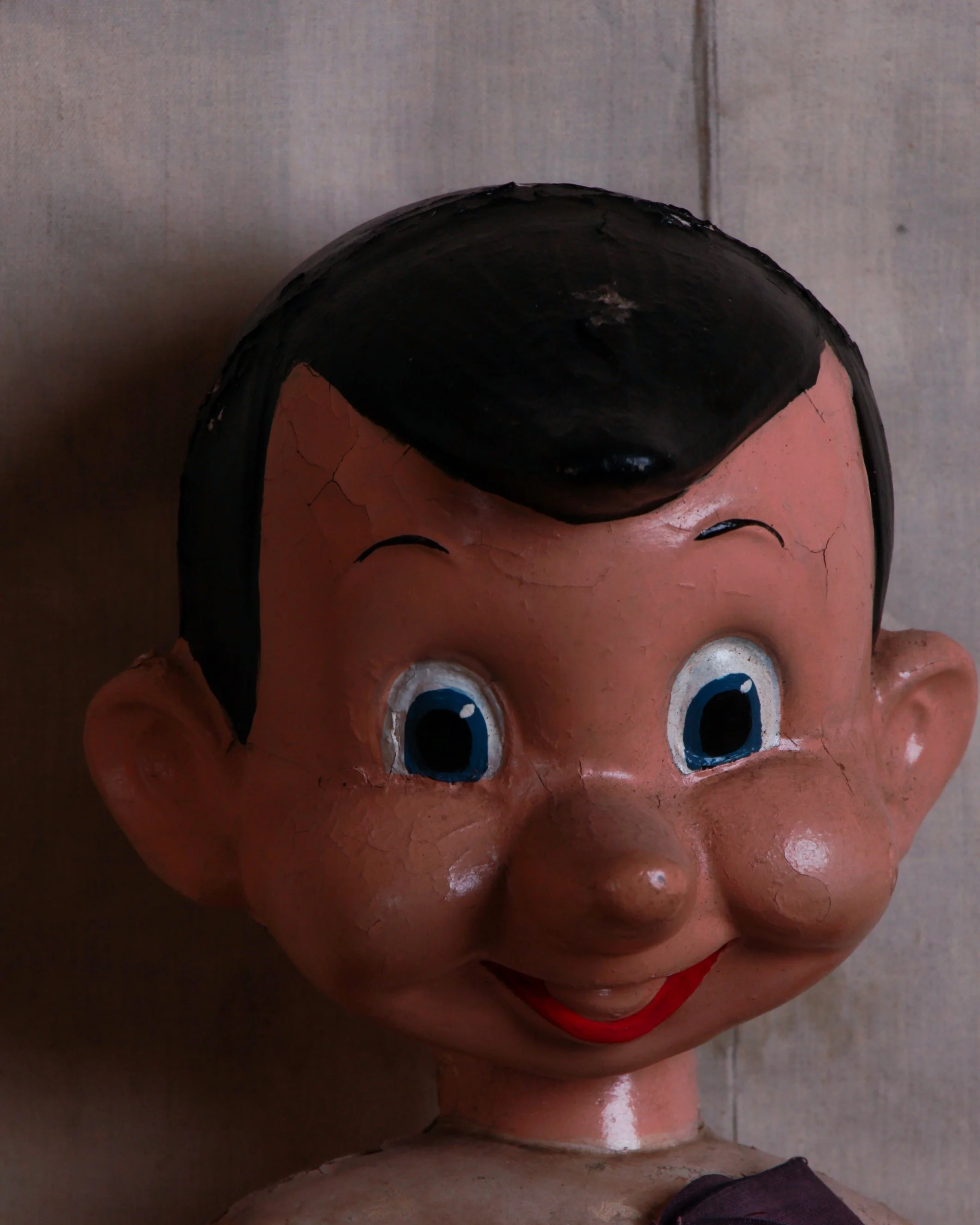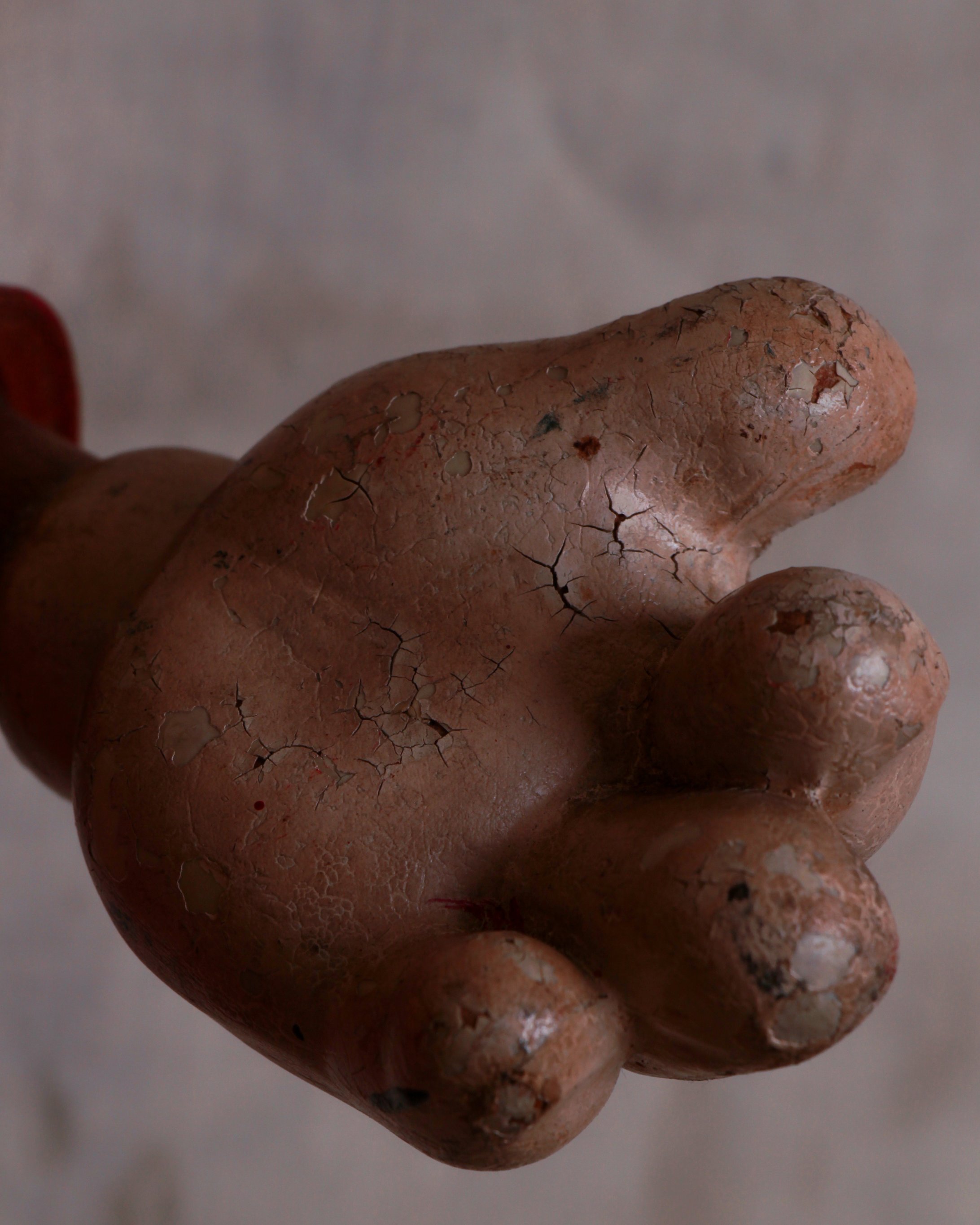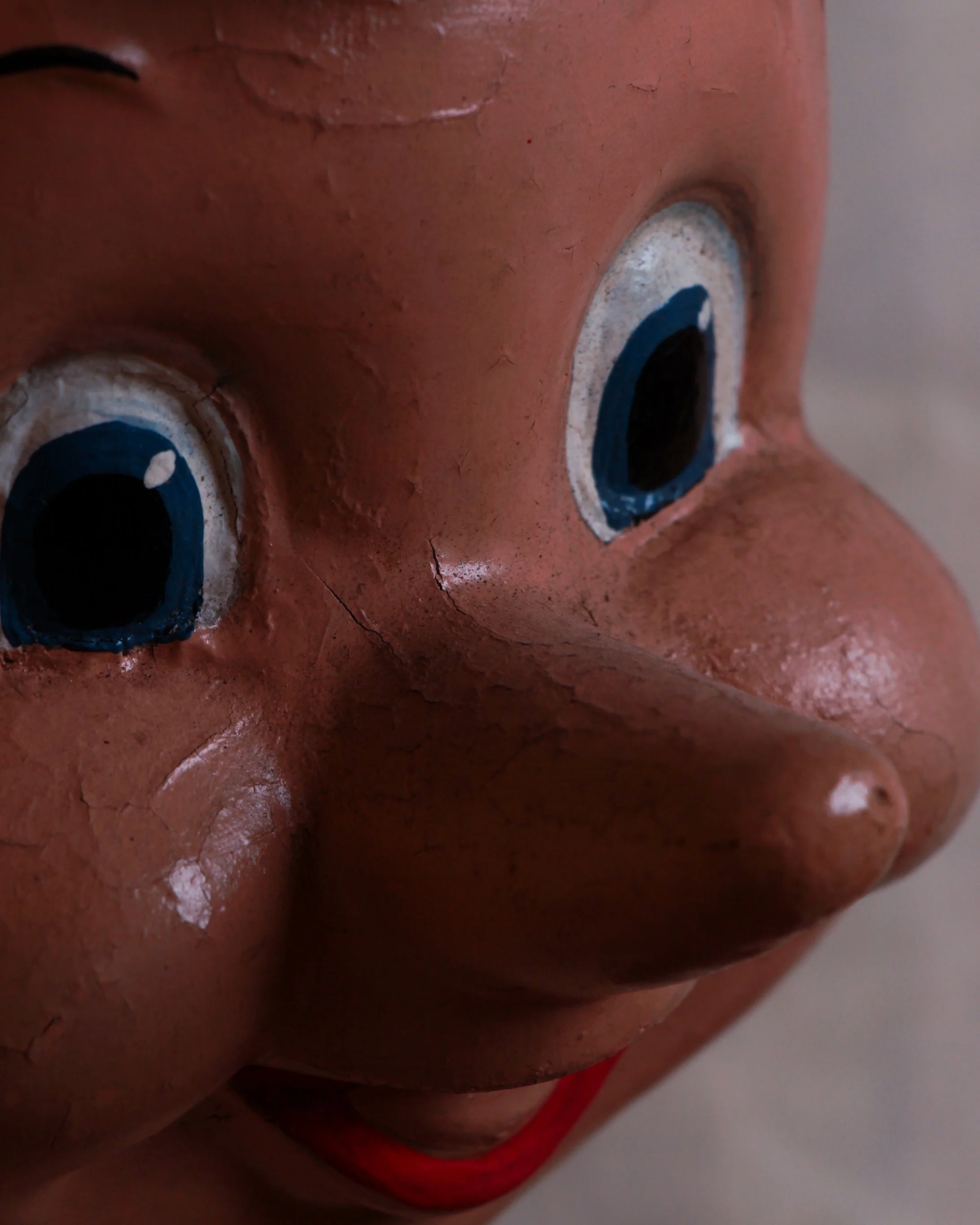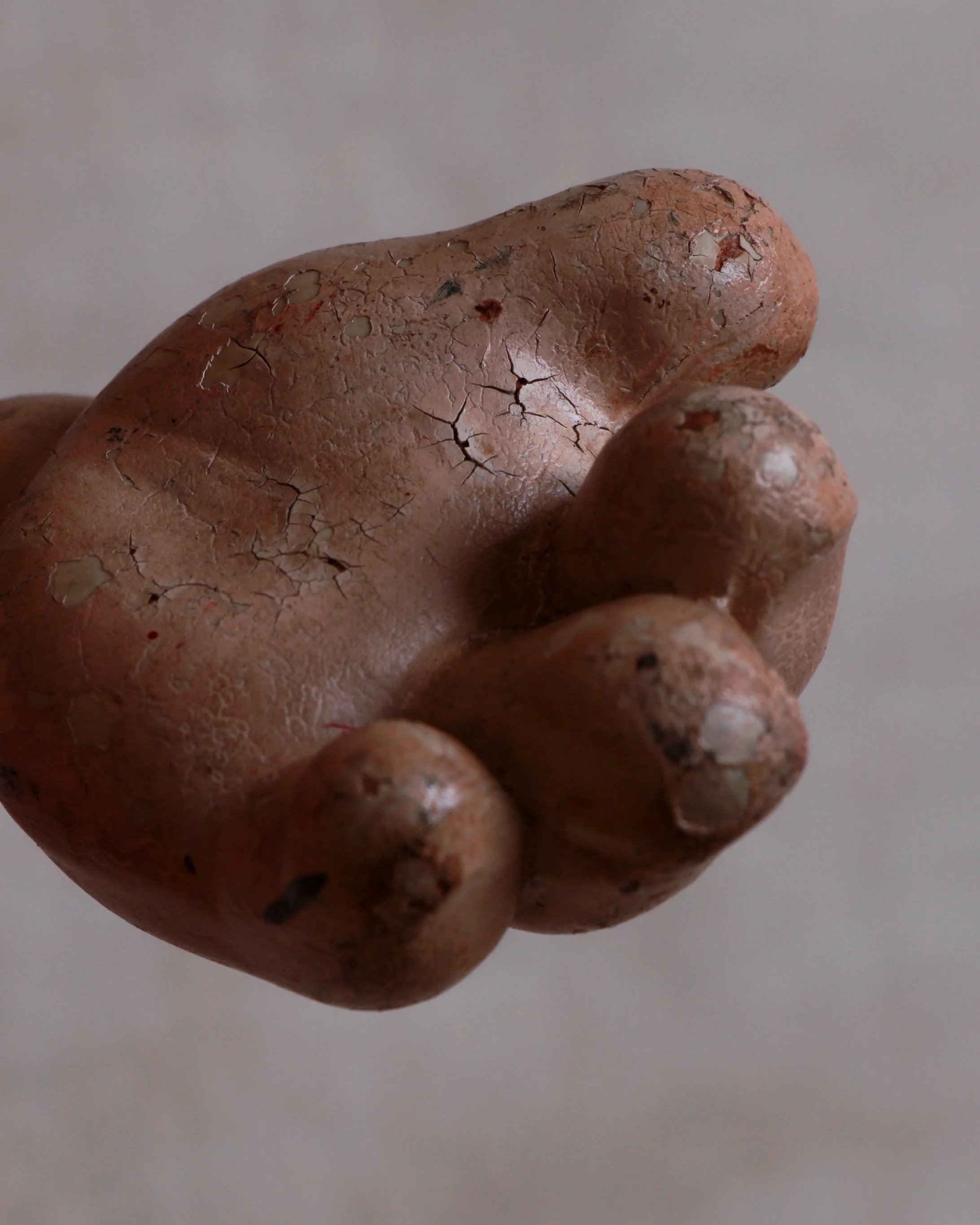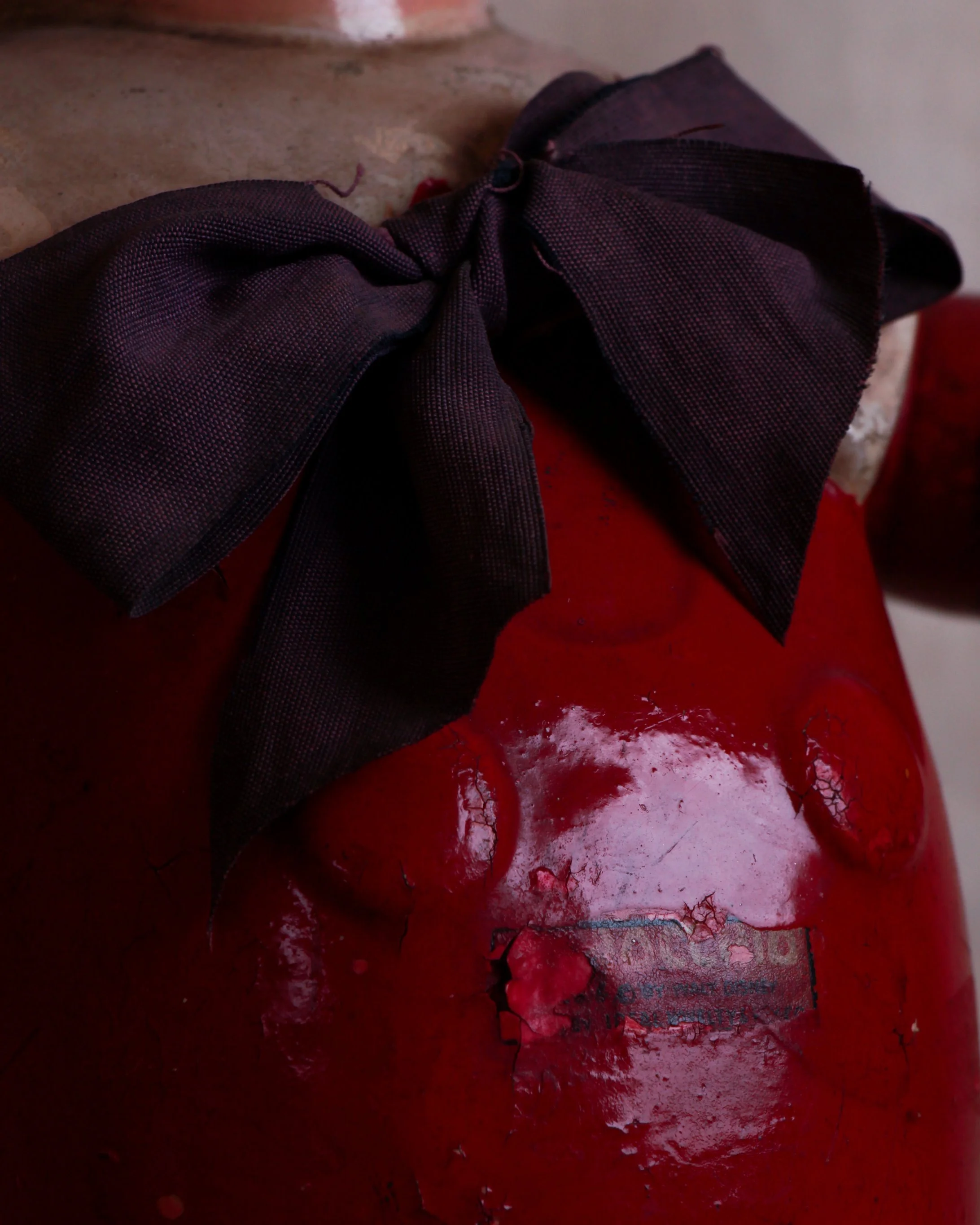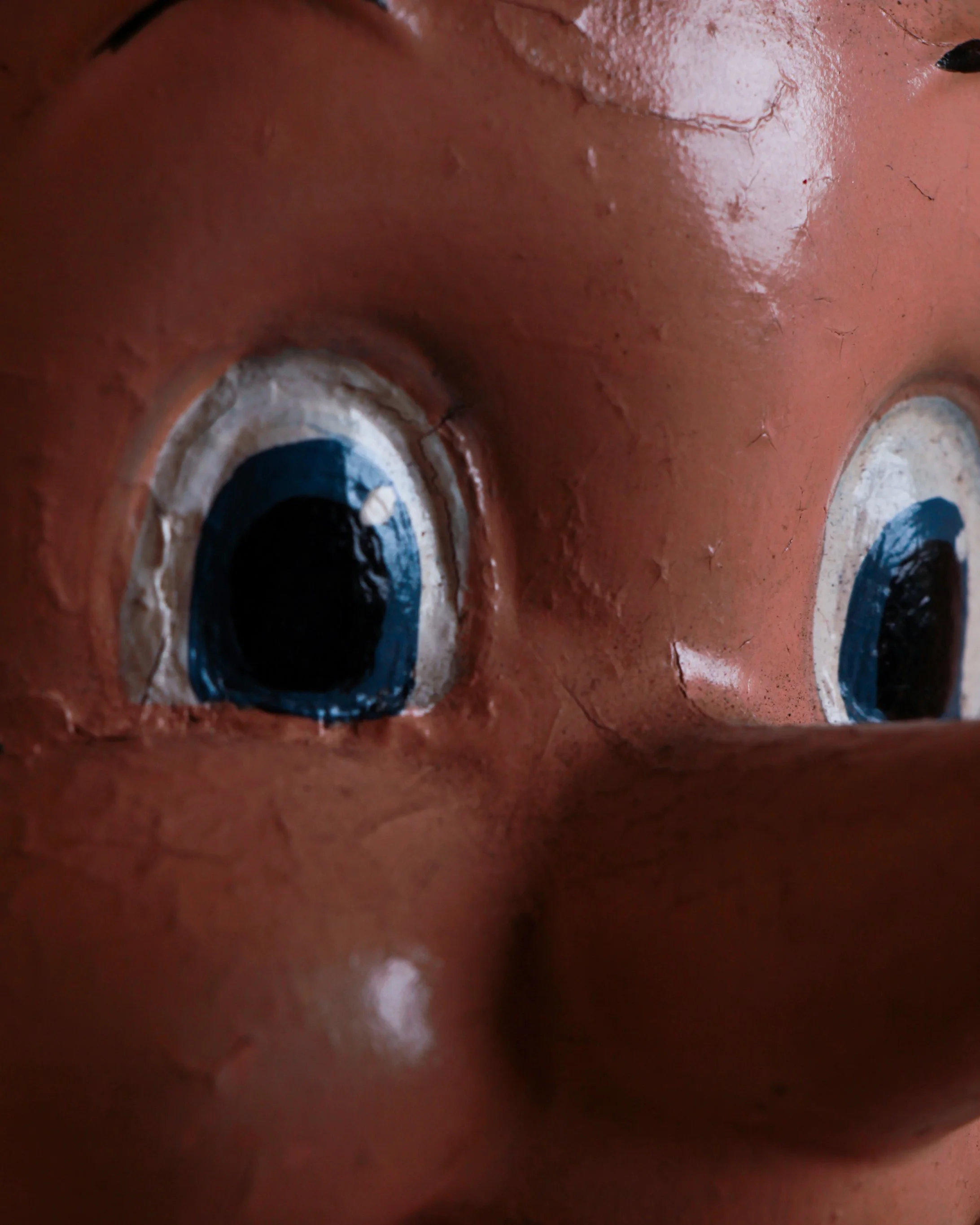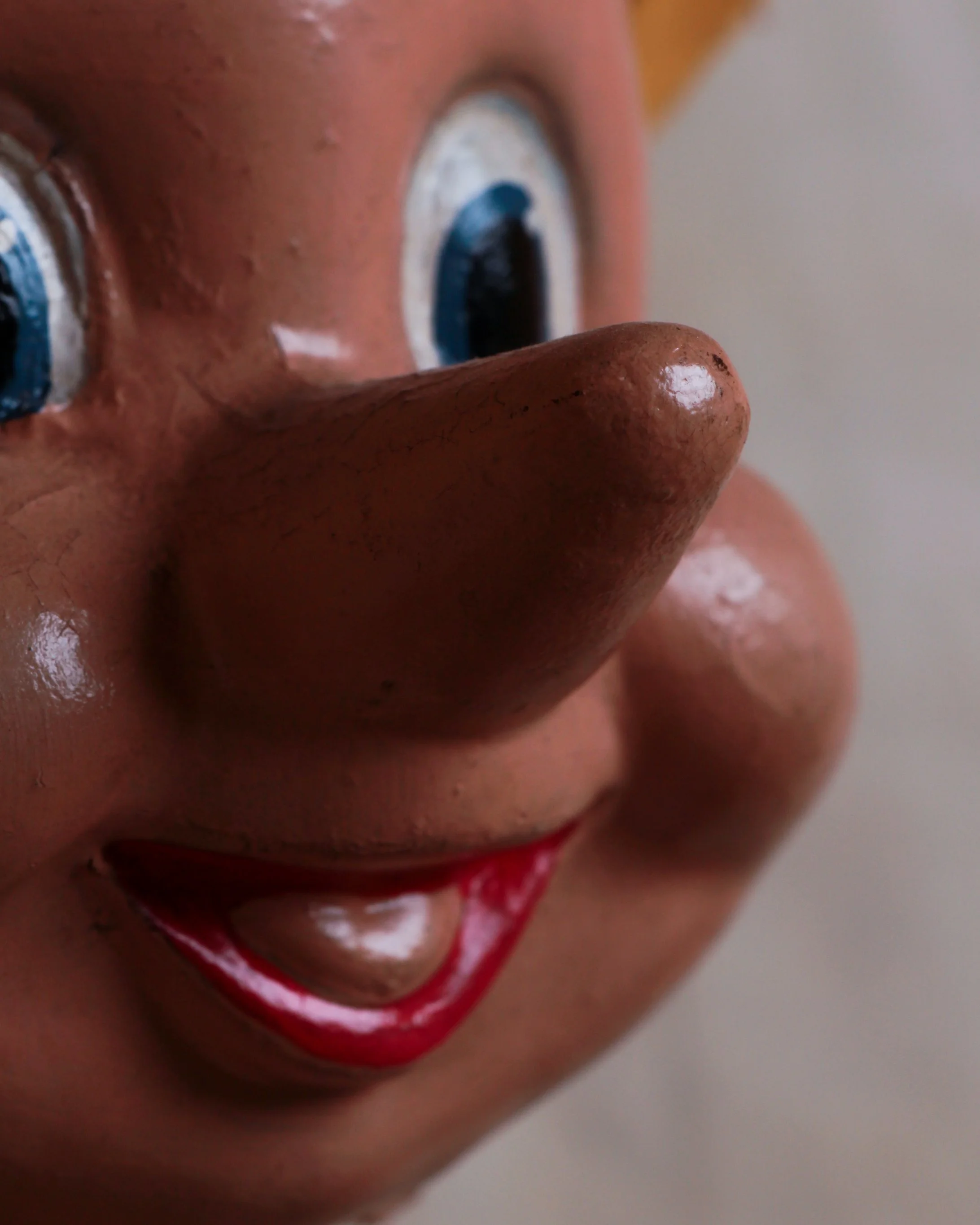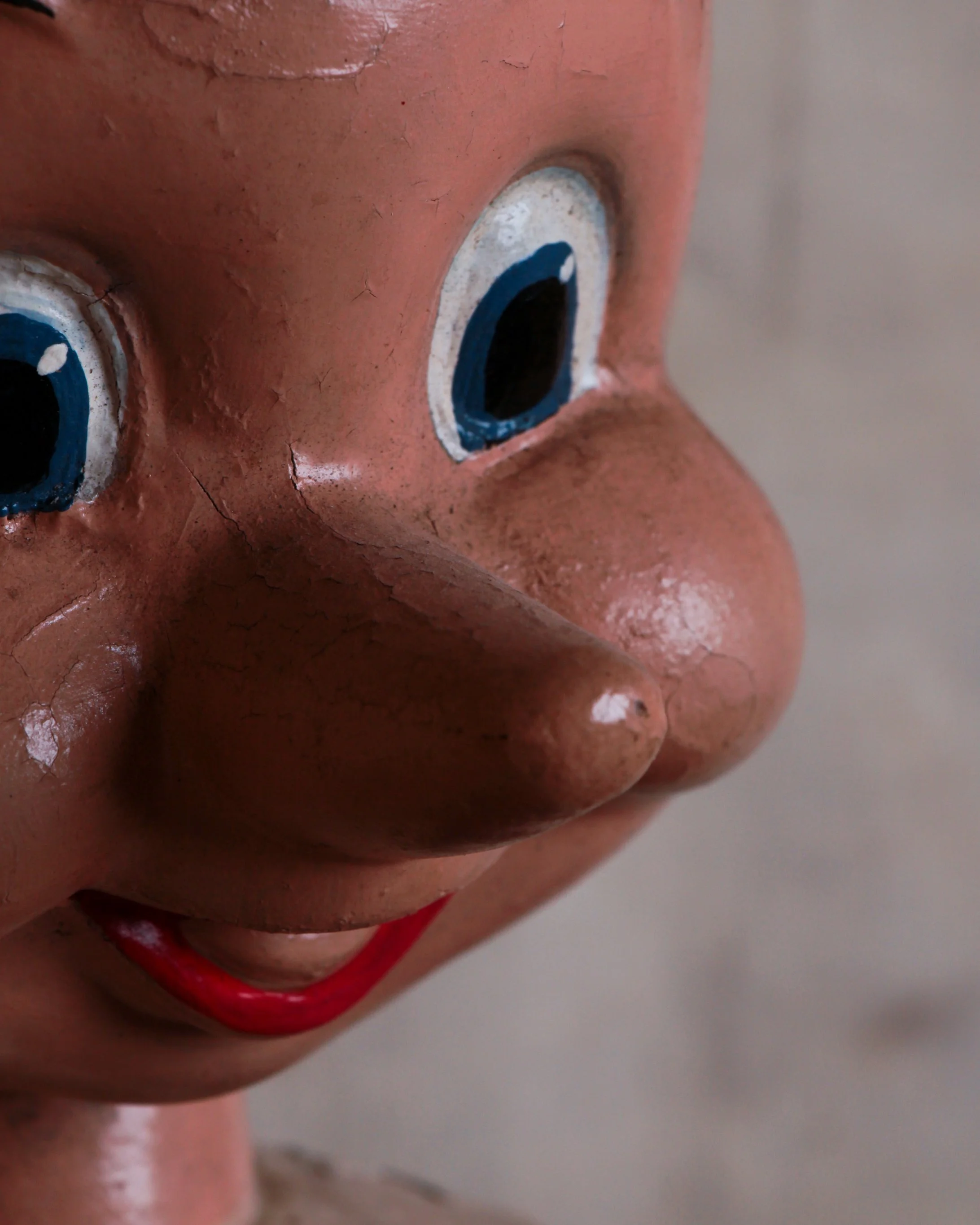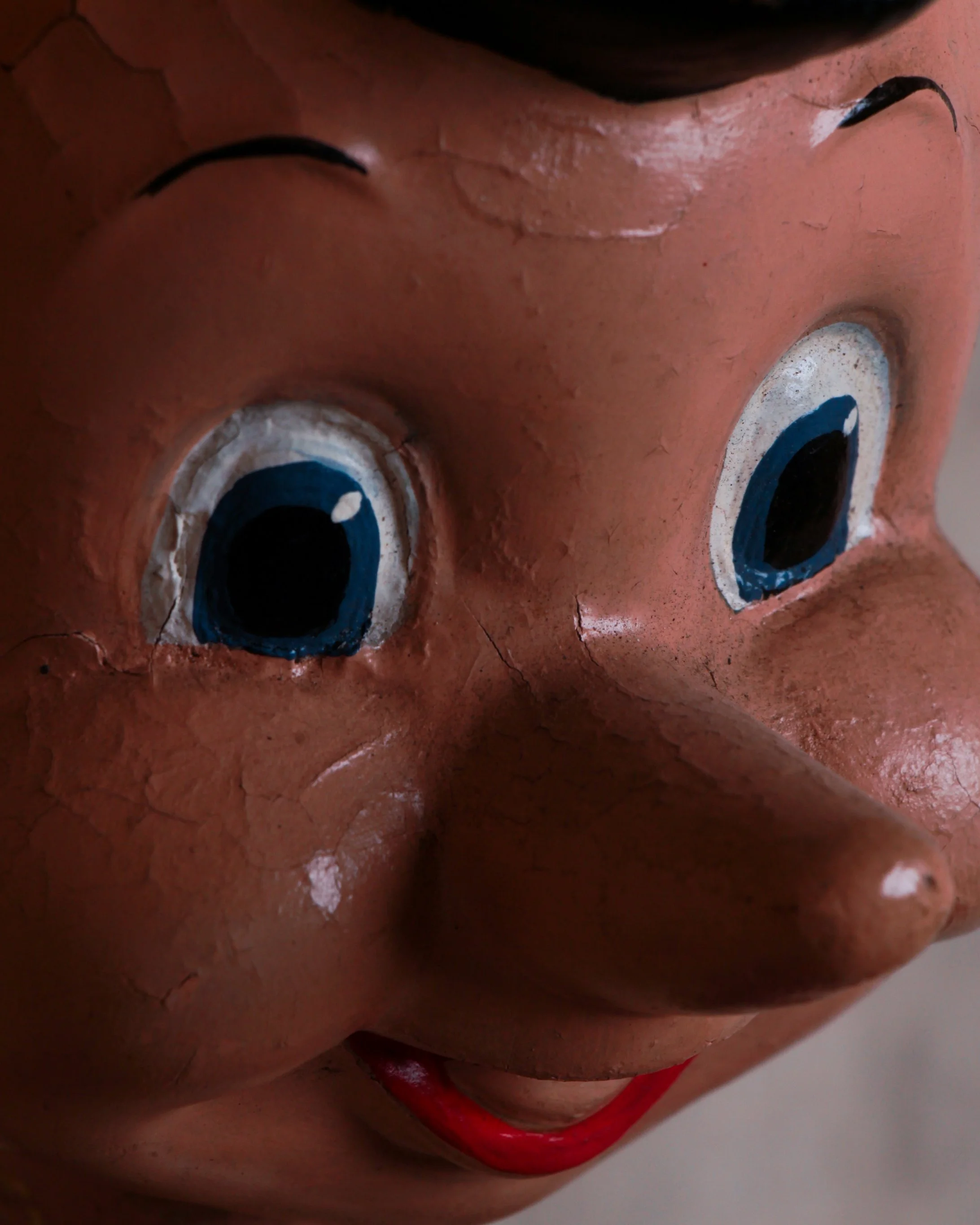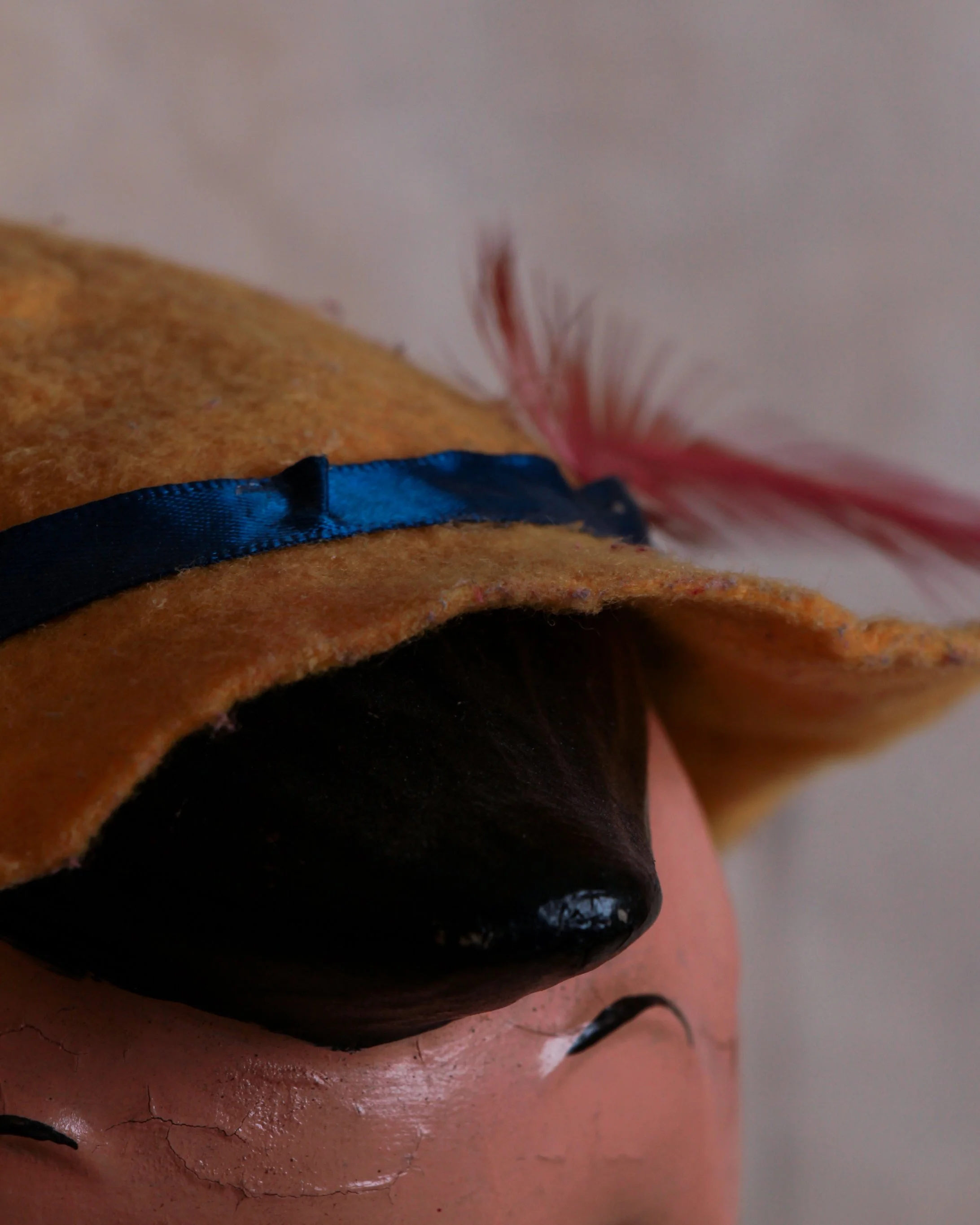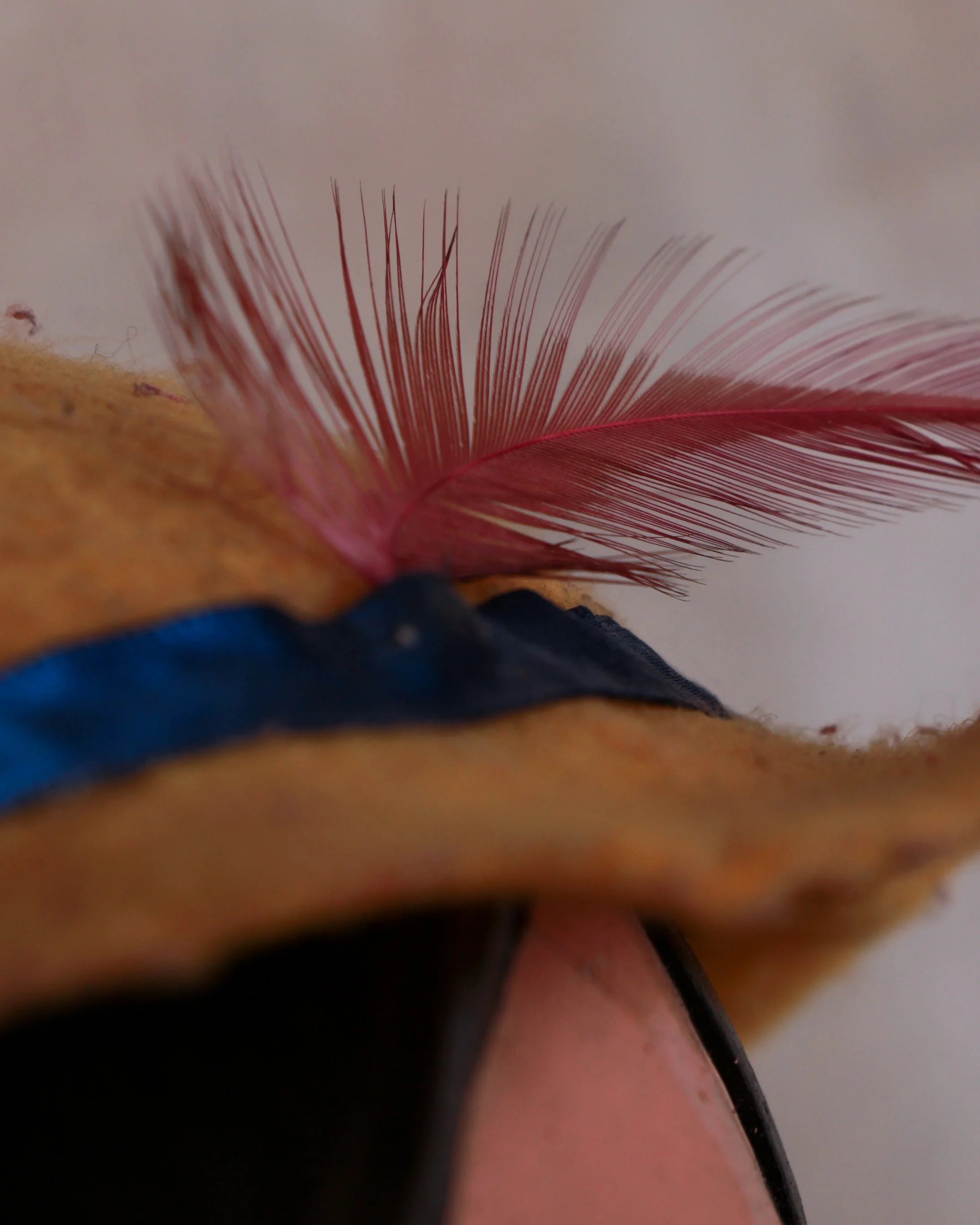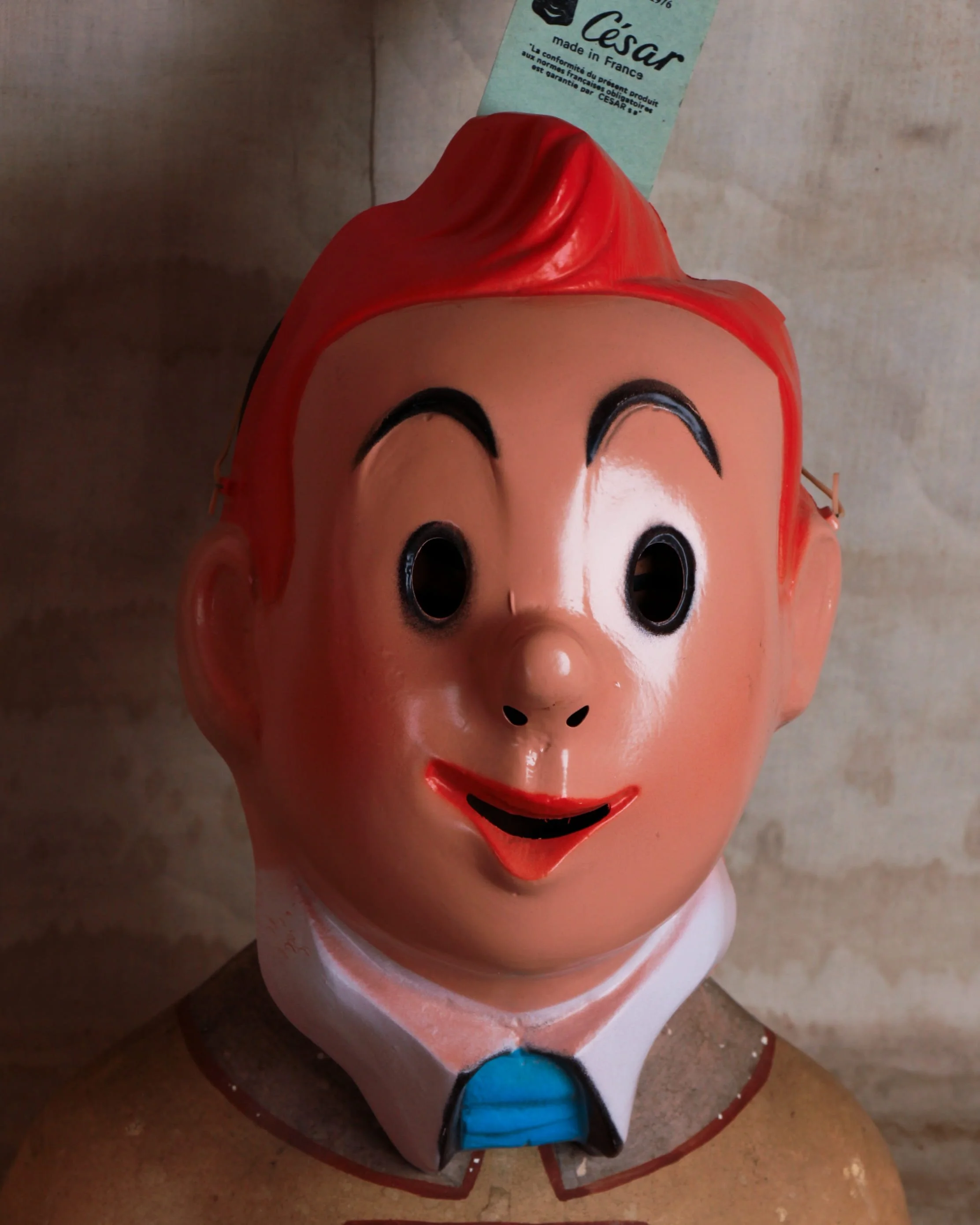
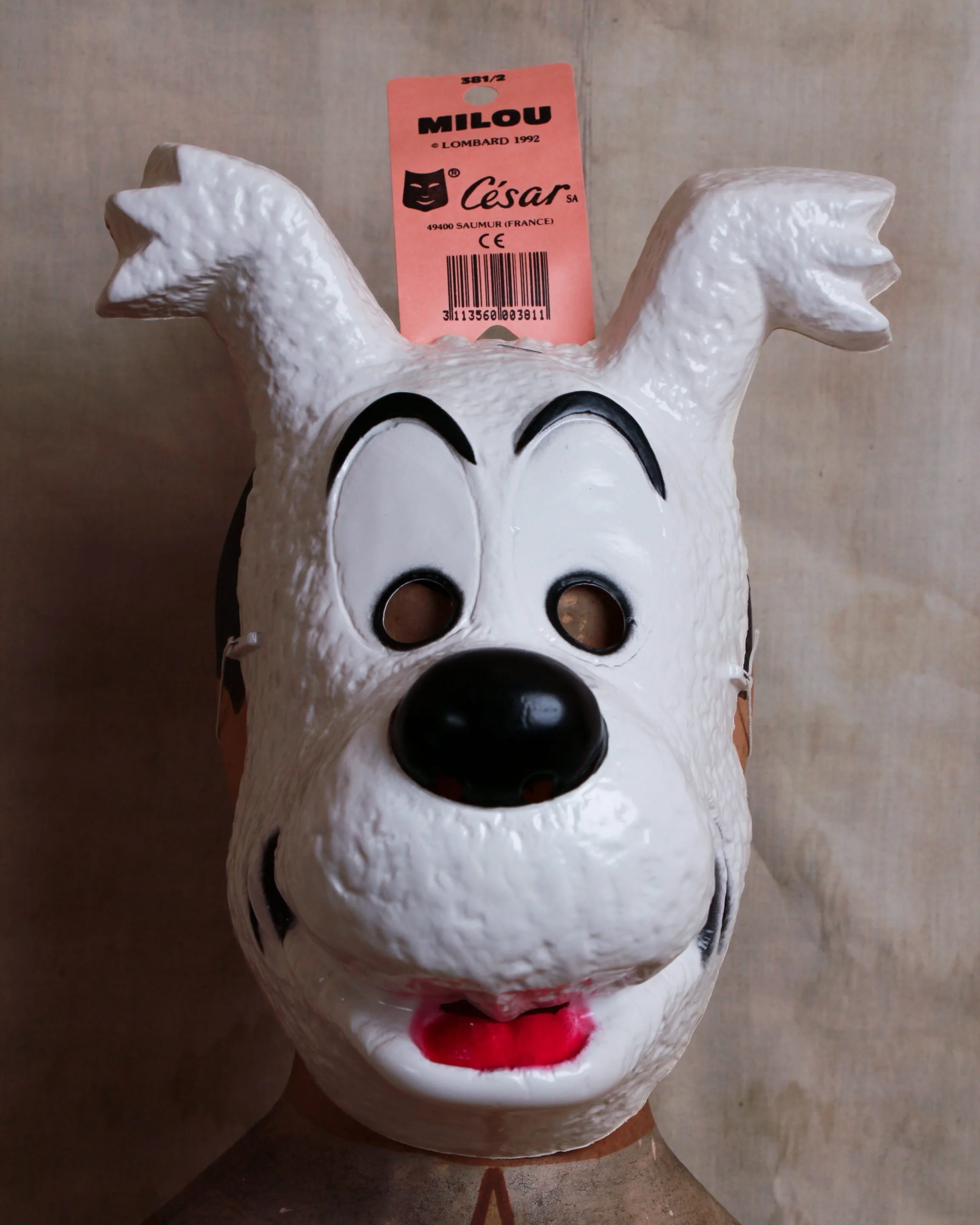
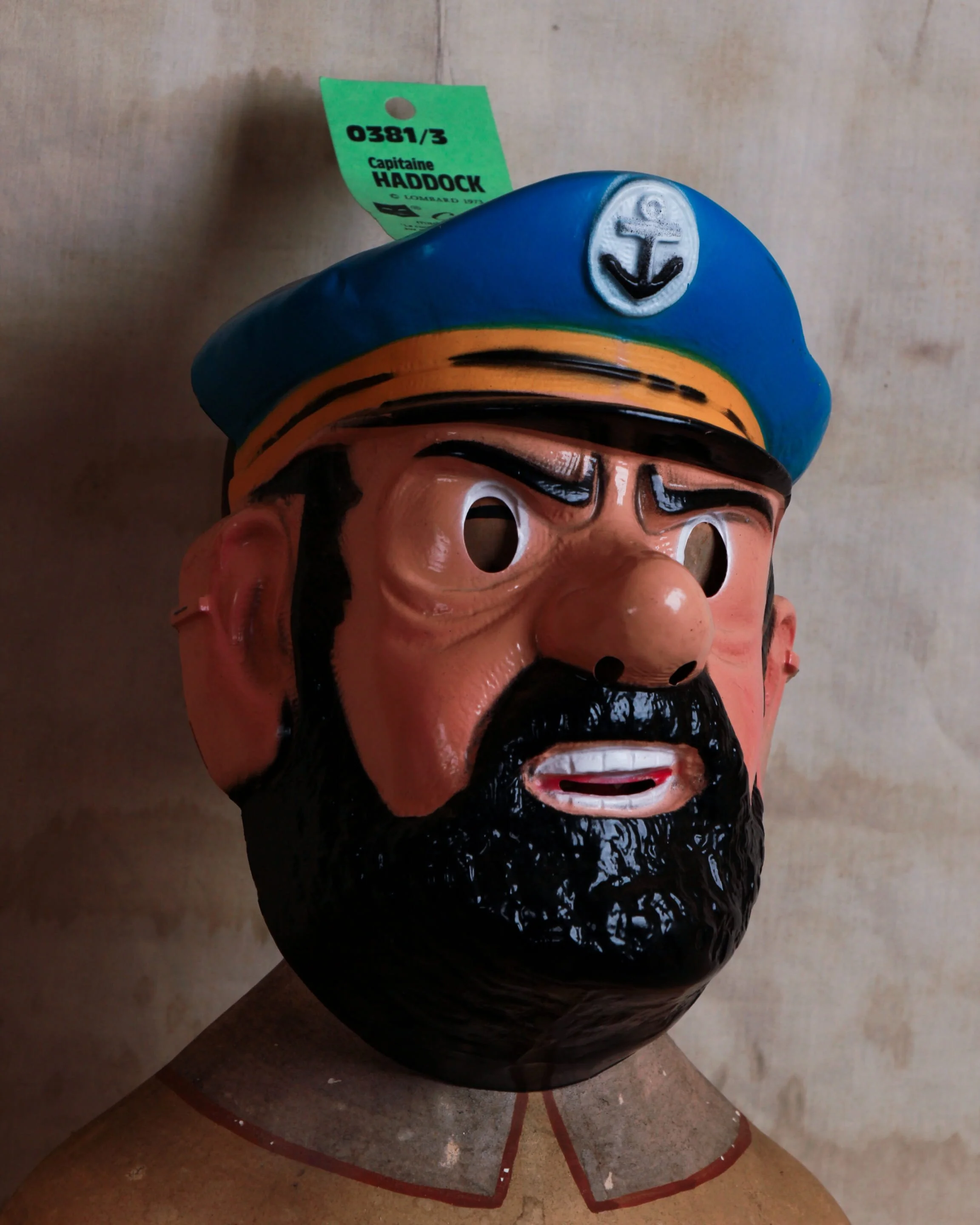
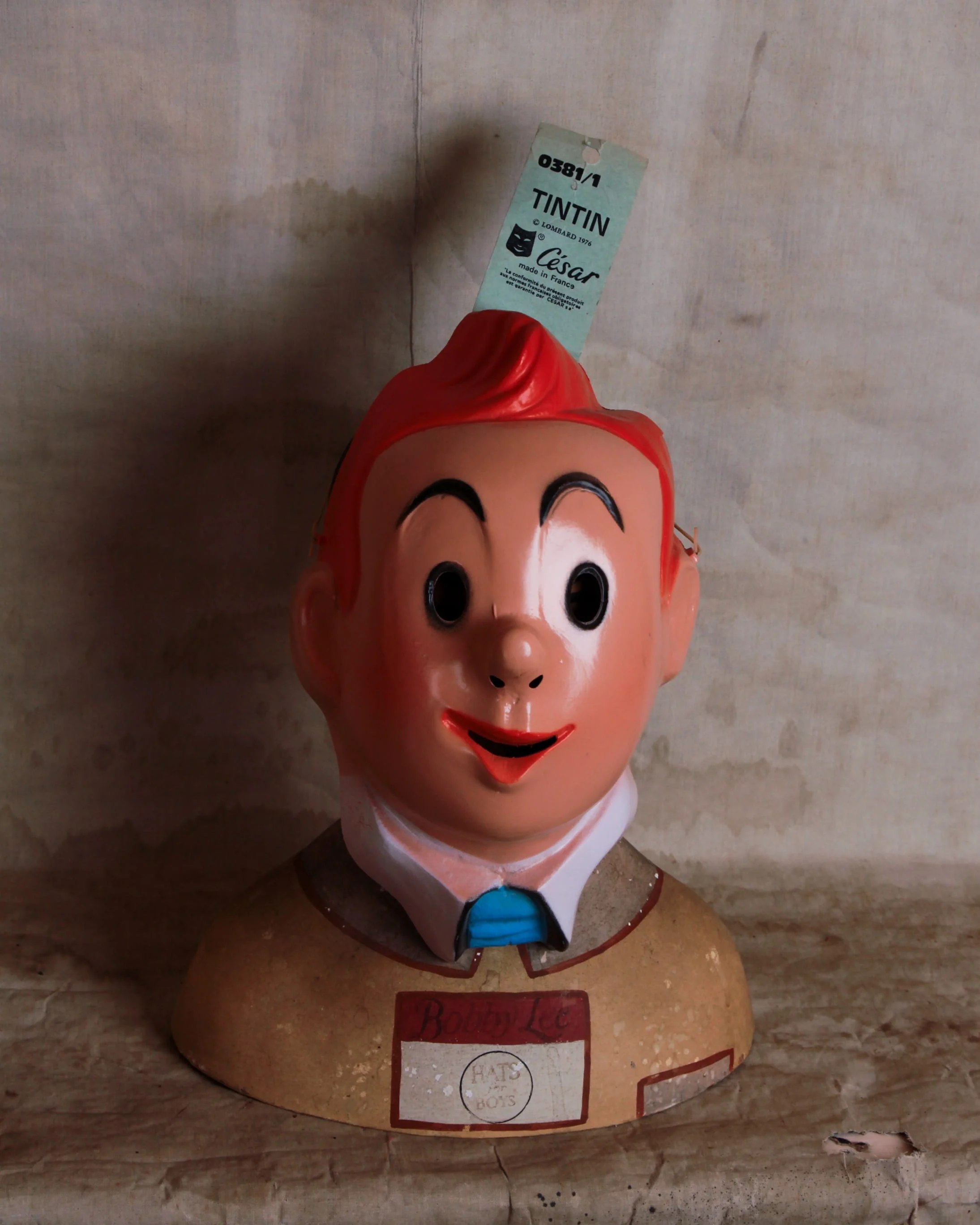
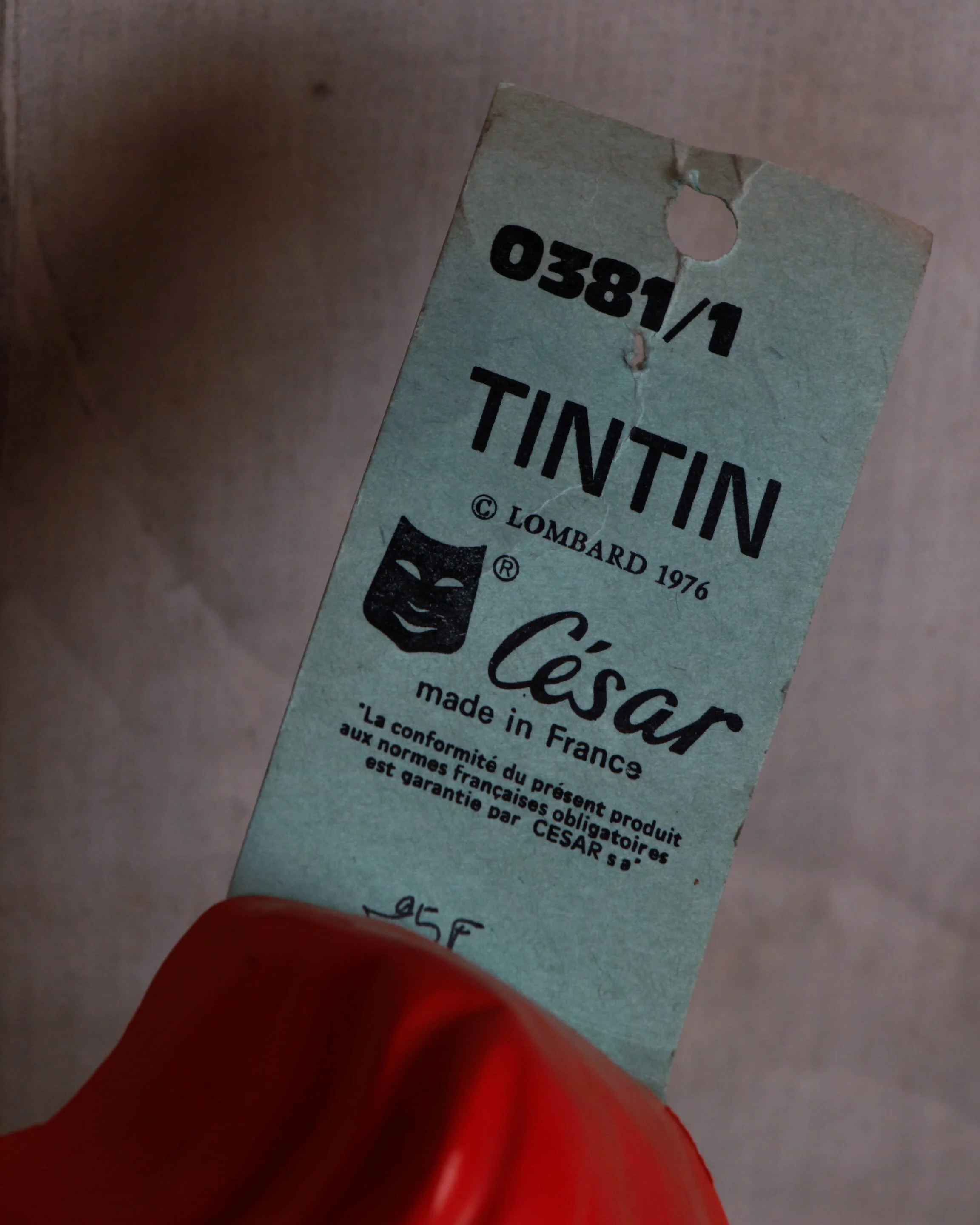
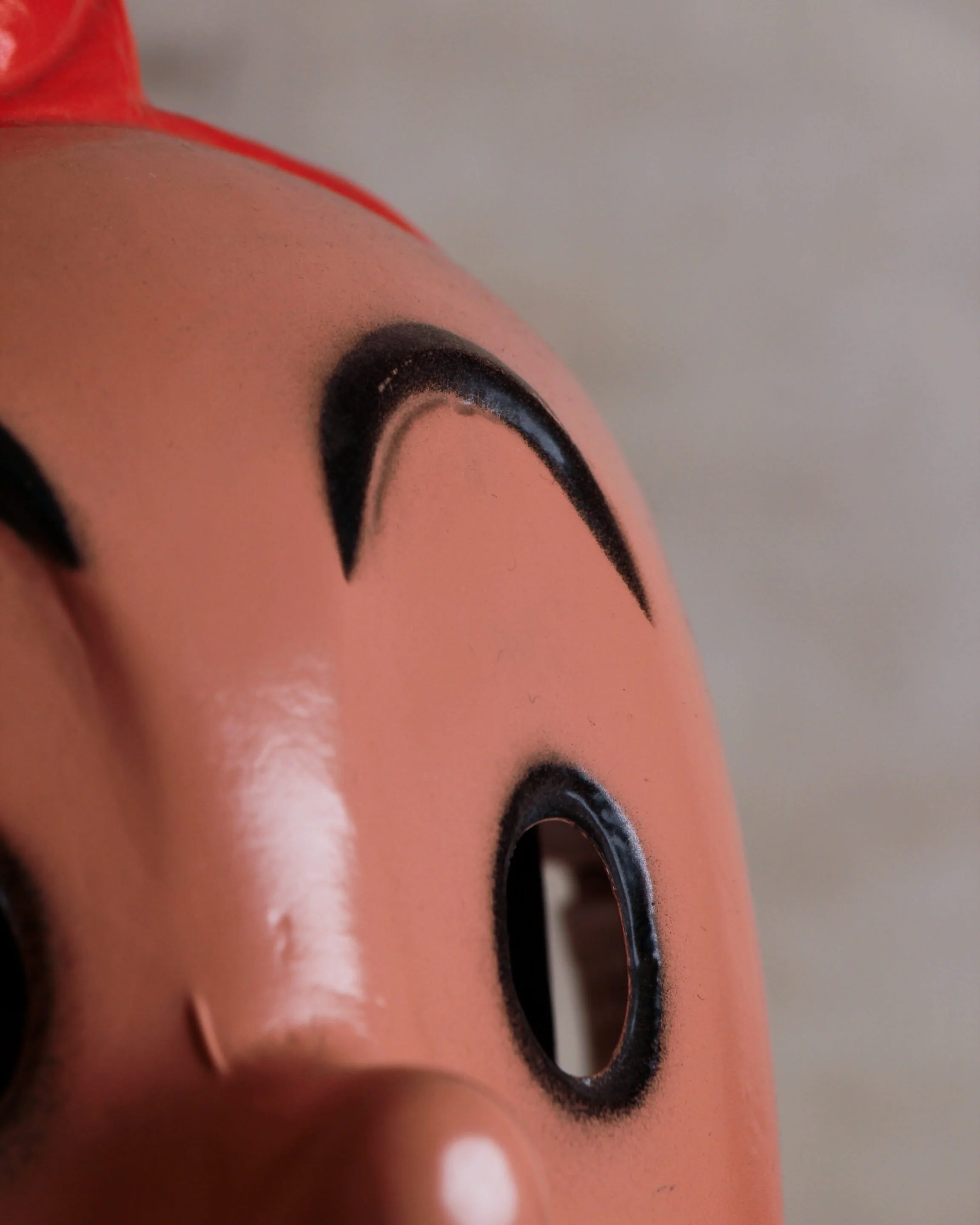
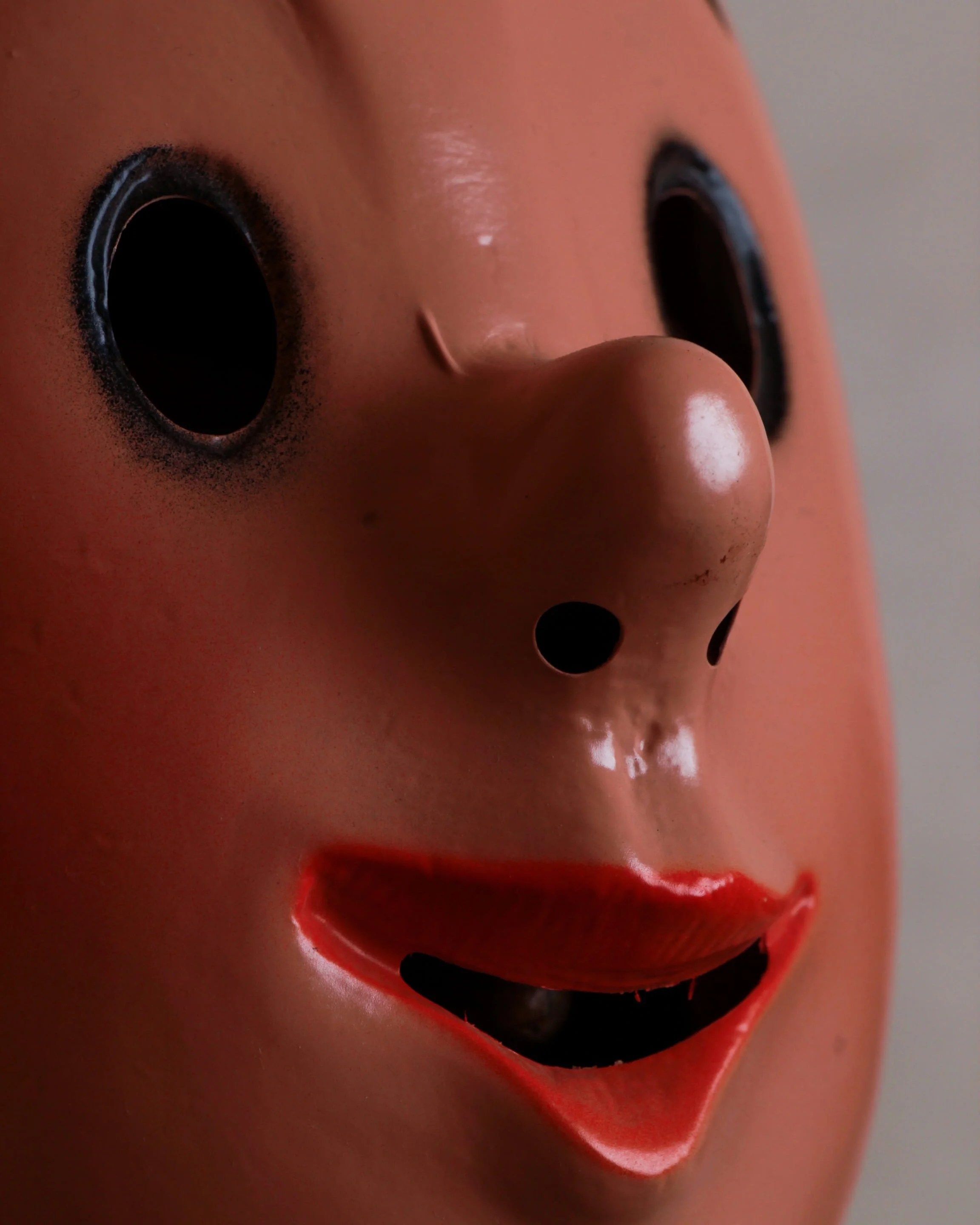
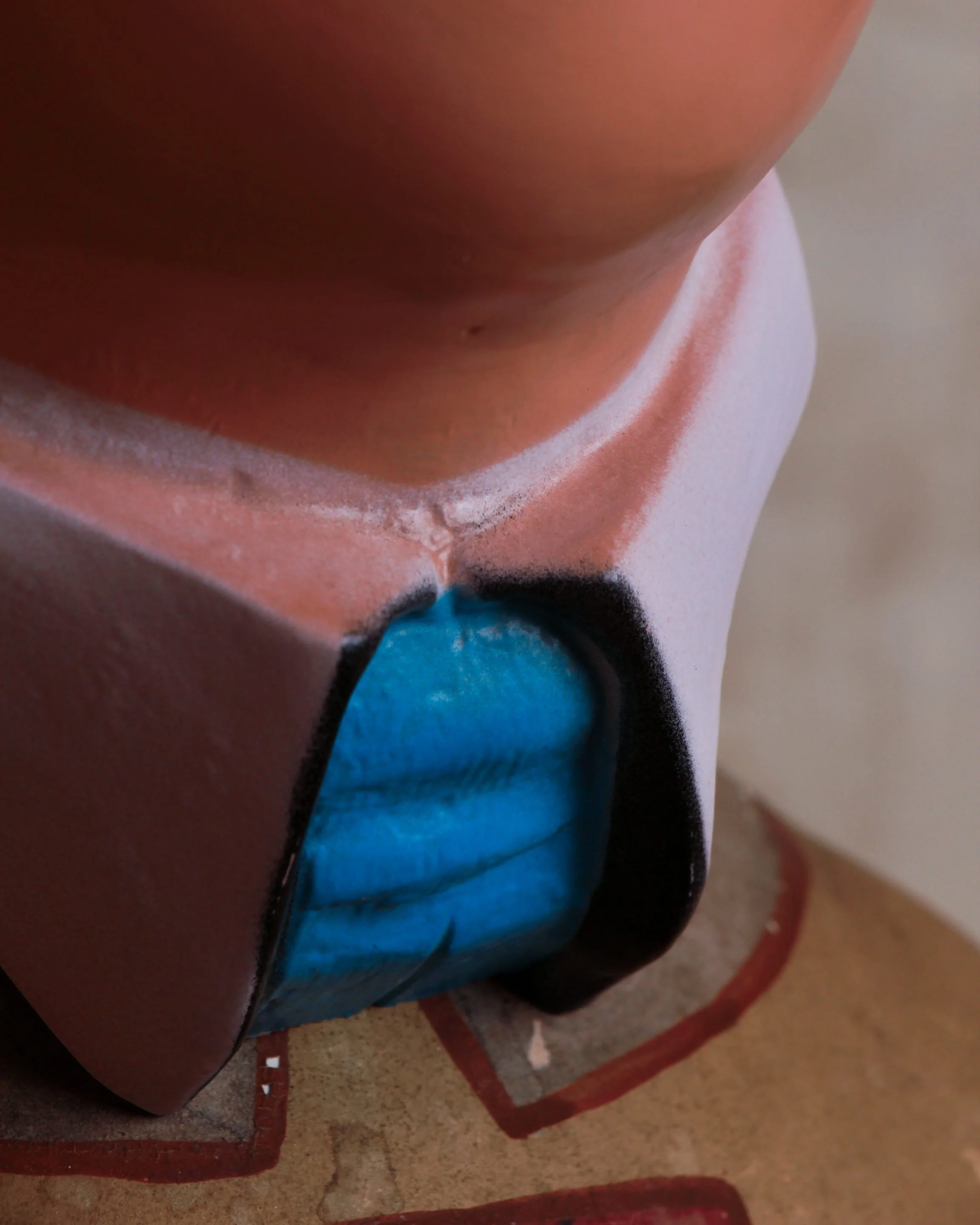
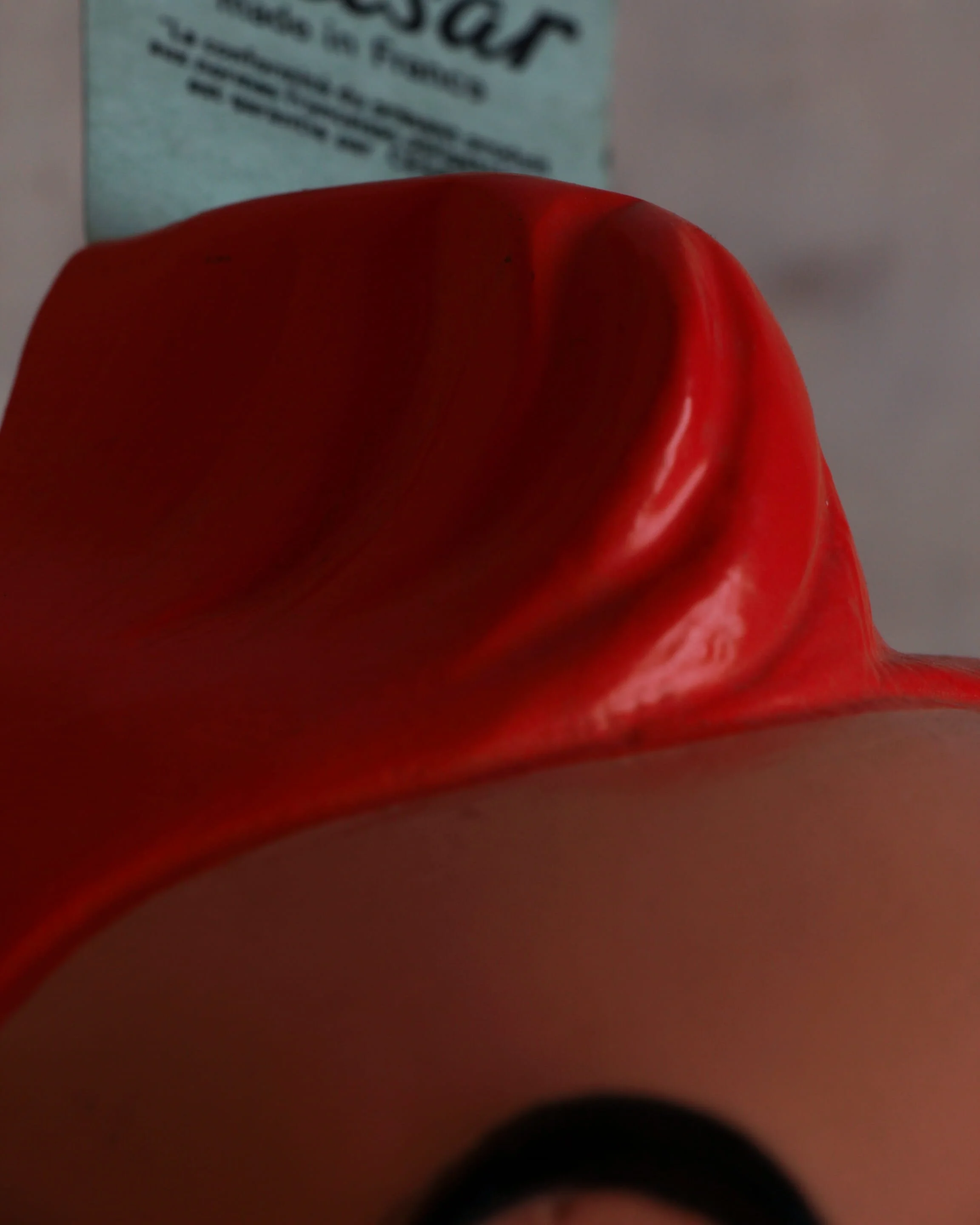
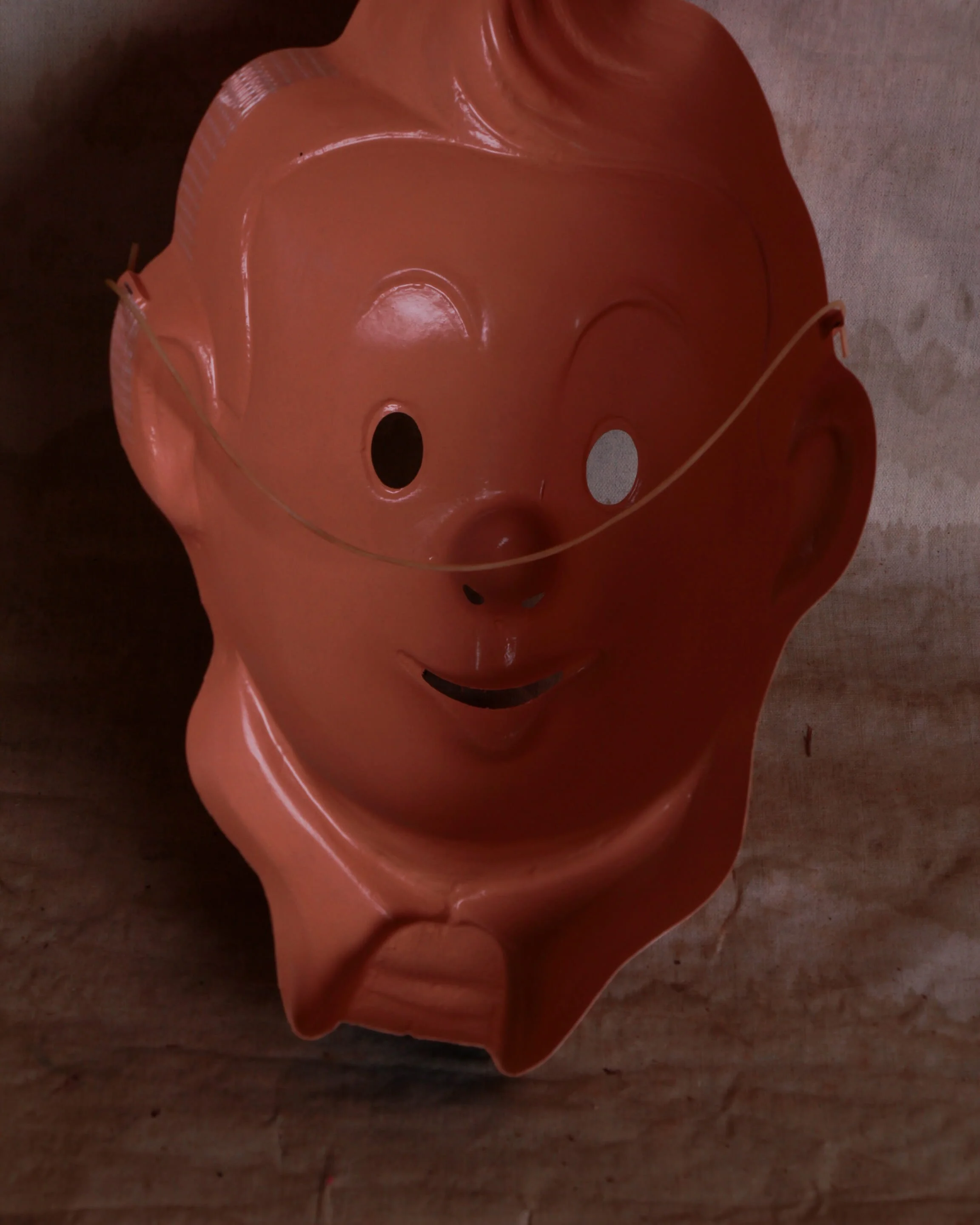
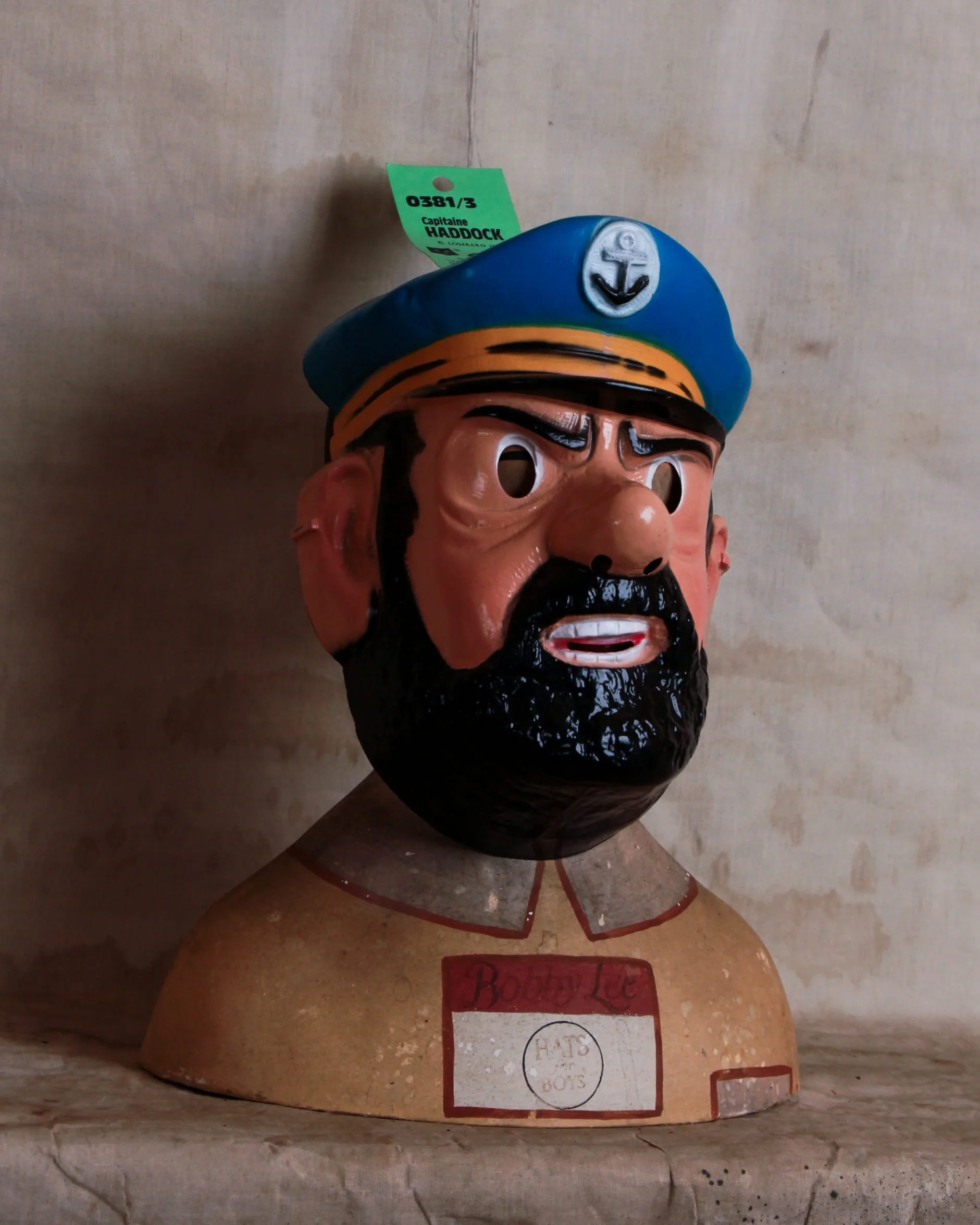
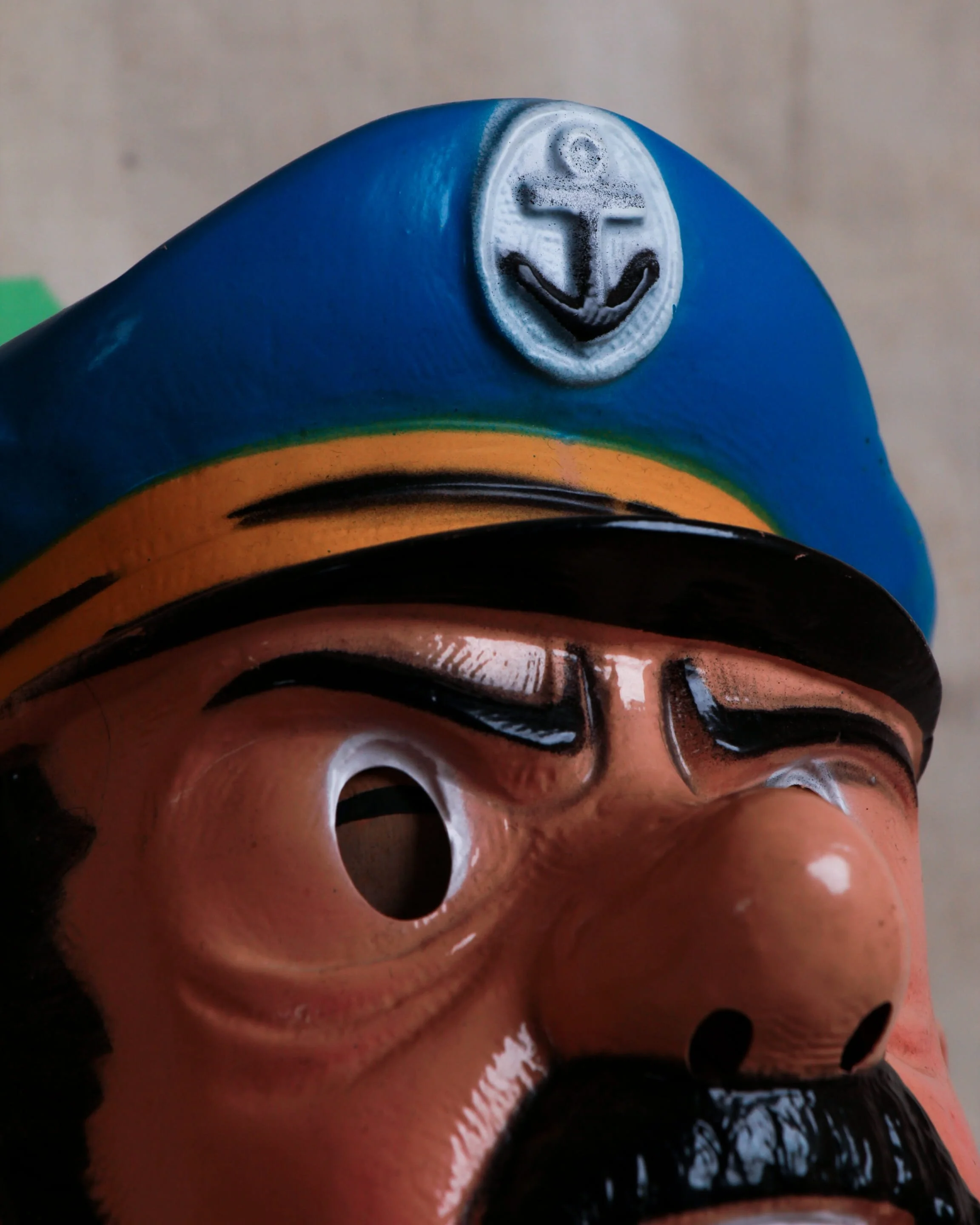
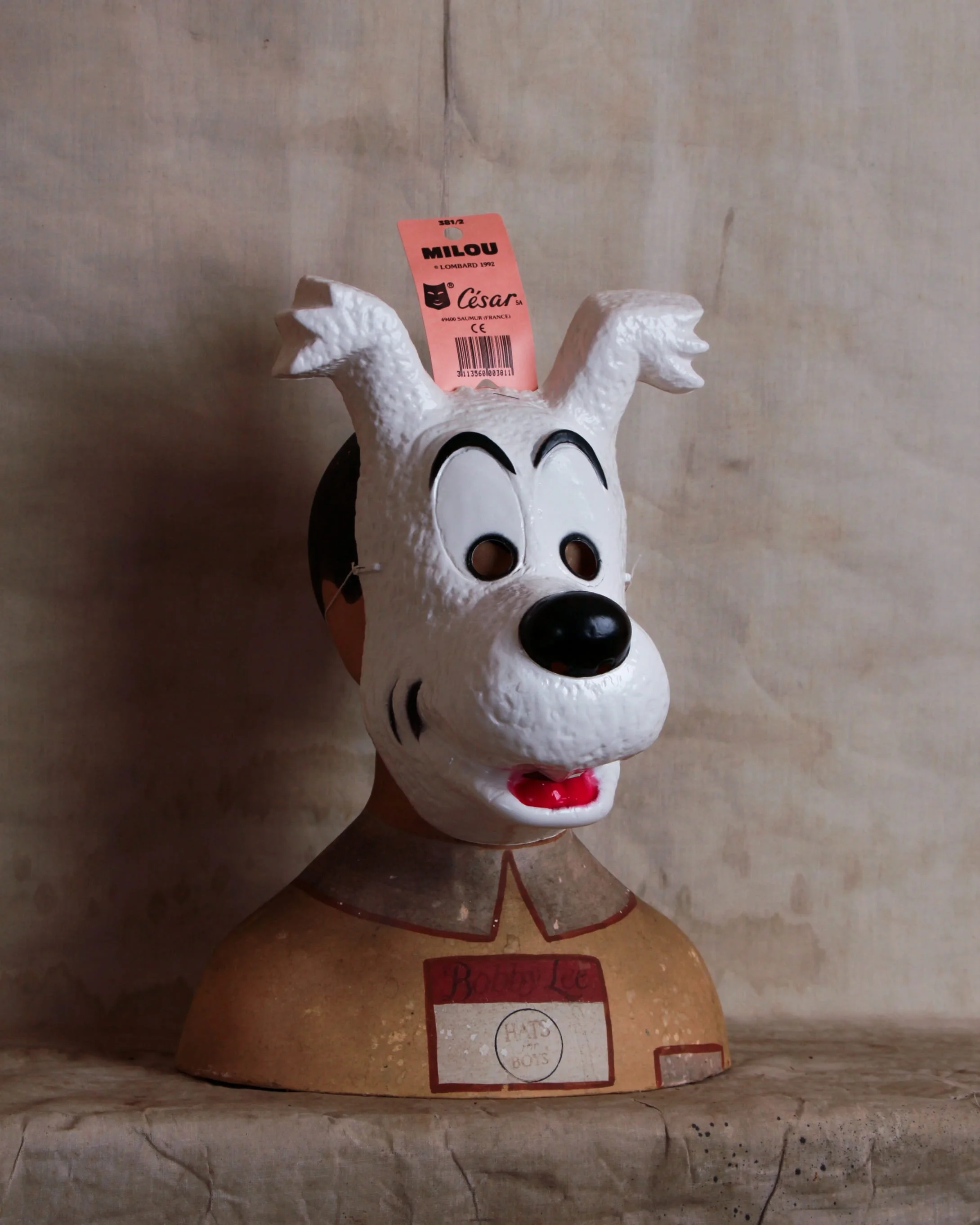
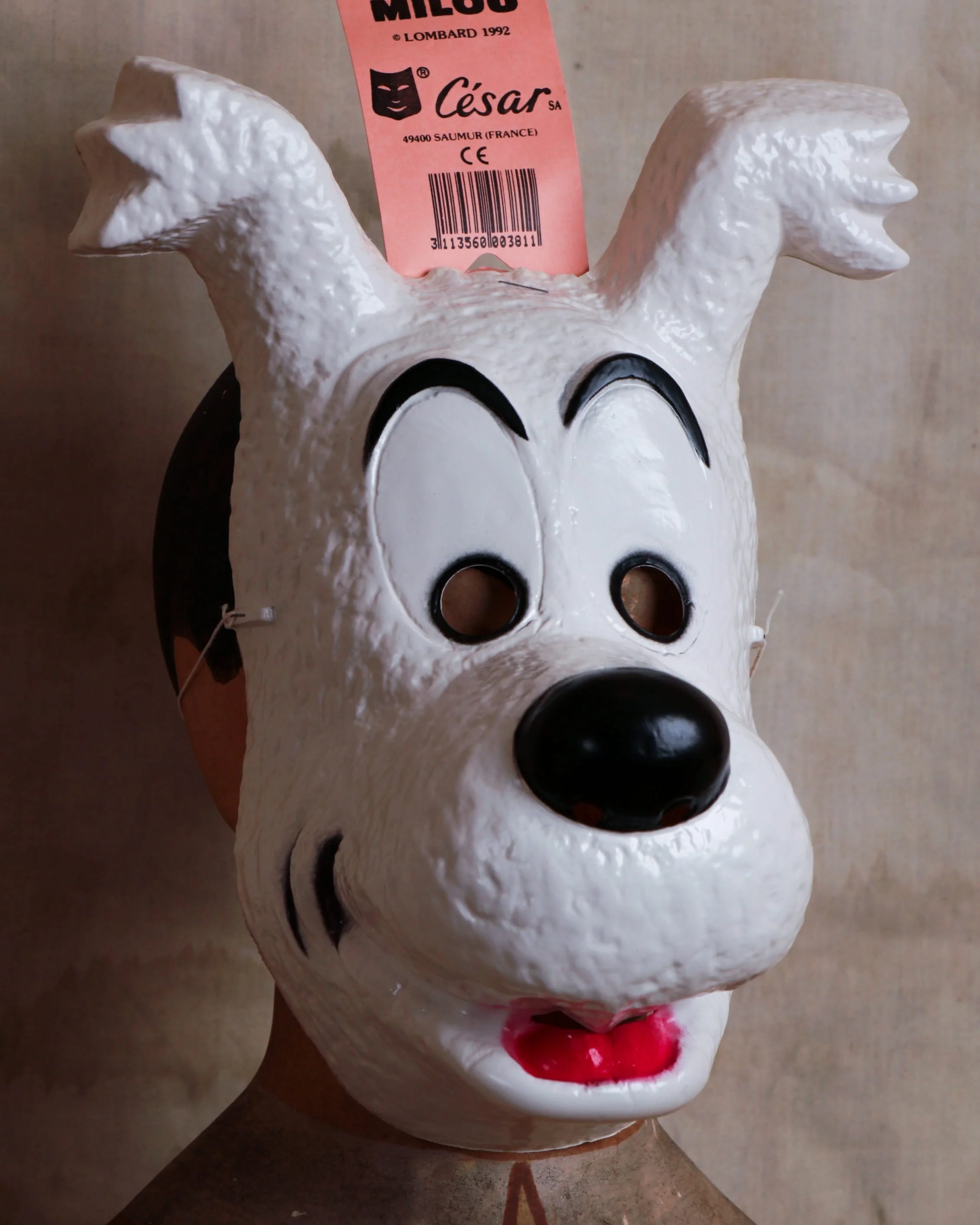
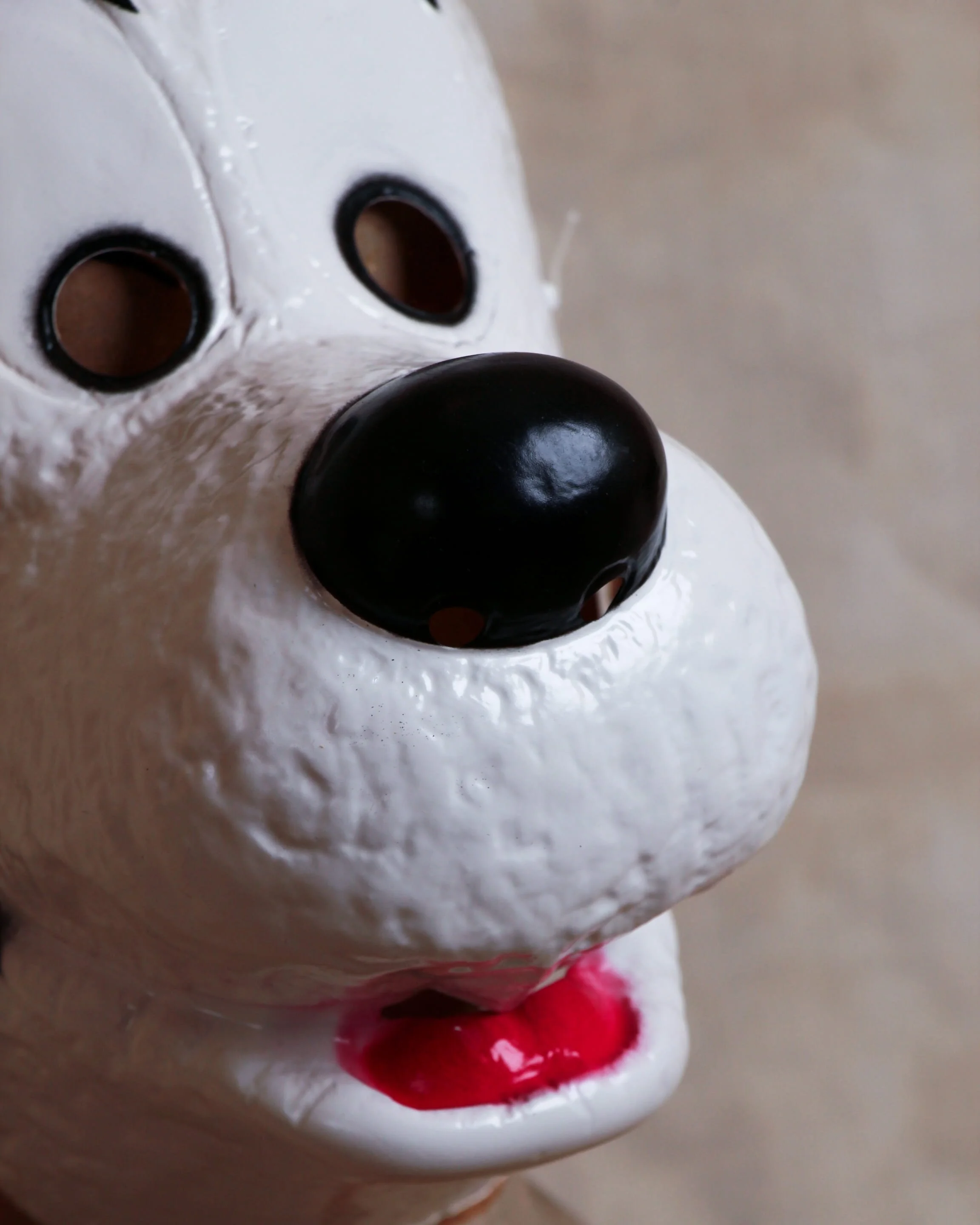
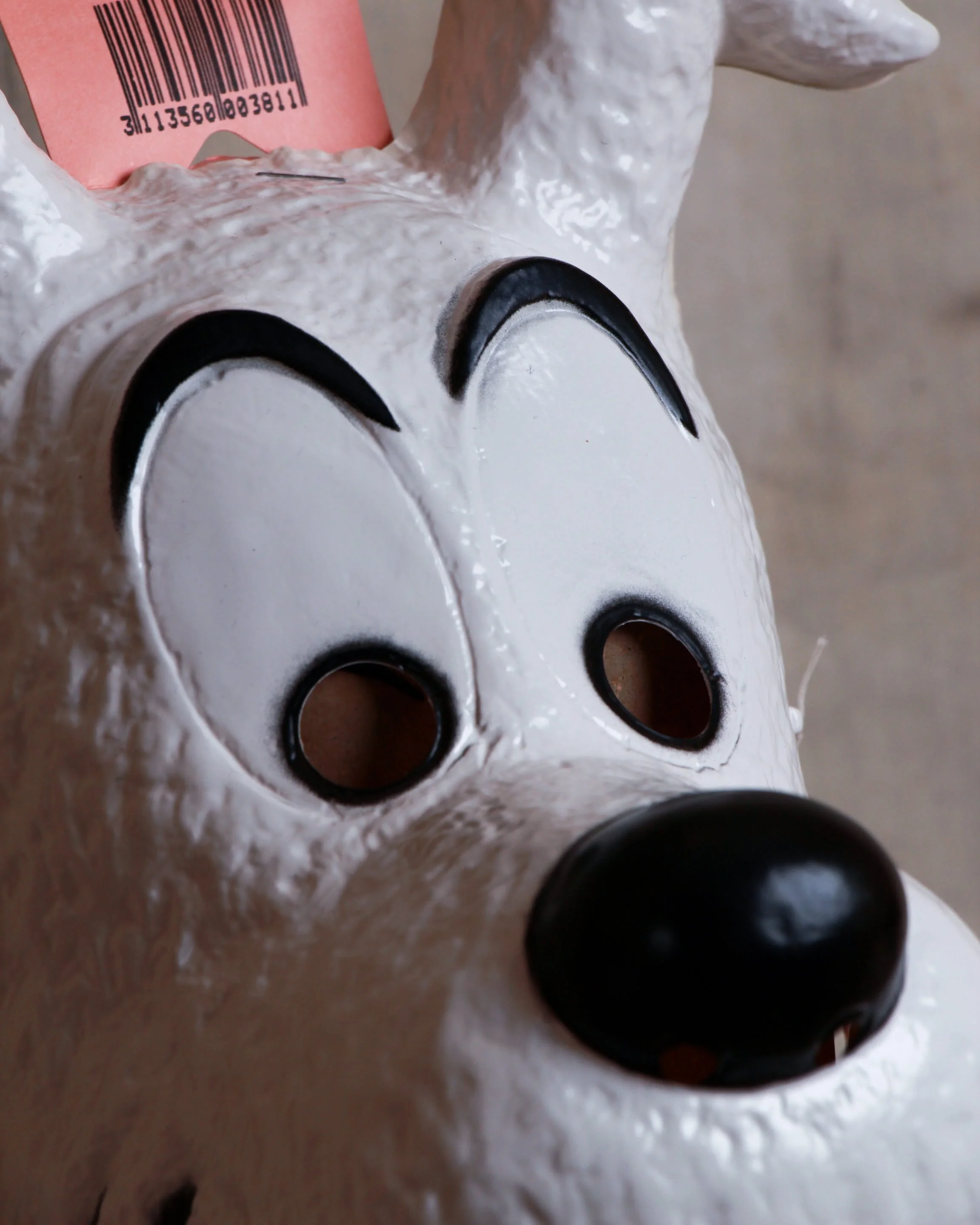
A full cast, frozen somewhere between childhood play and quiet display—this set of three original 1970s Tintin masks by French maker Cesar brings together Tintin, Milou, and Captain Haddock in all their slightly uncanny, wonderfully graphic charm. Bright molded plastic, bold lines, and those unmistakable faces that feel pulled straight from the page.
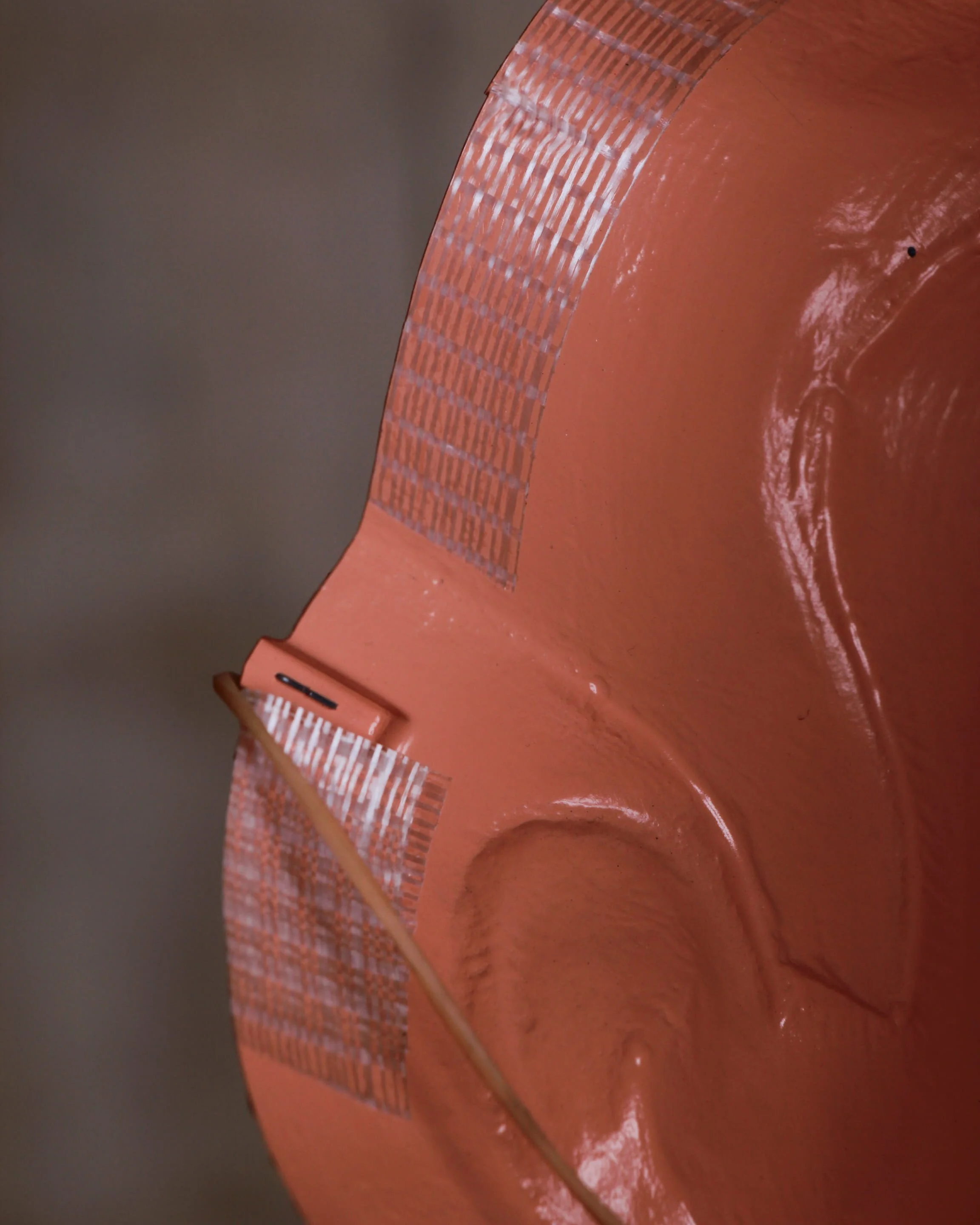
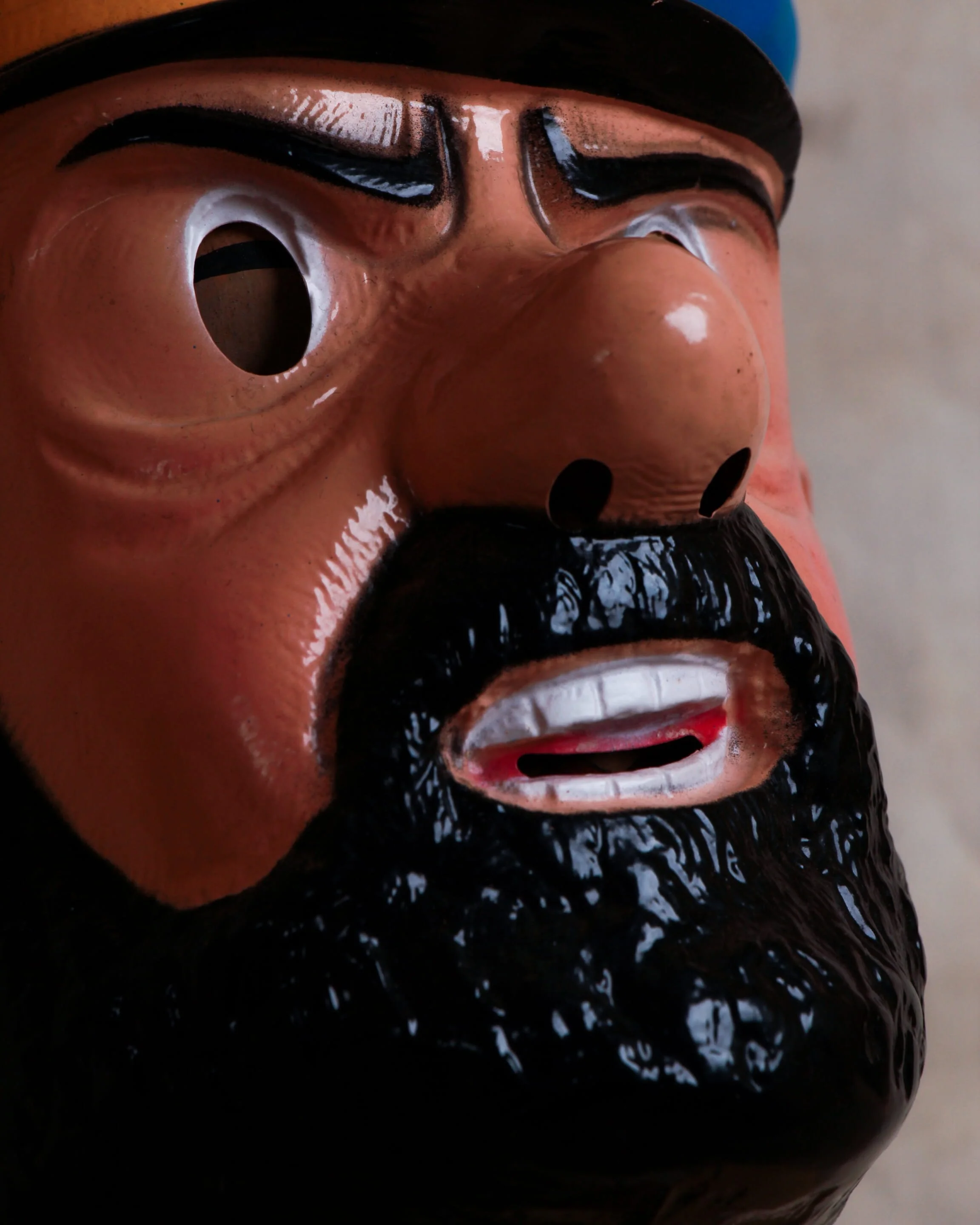
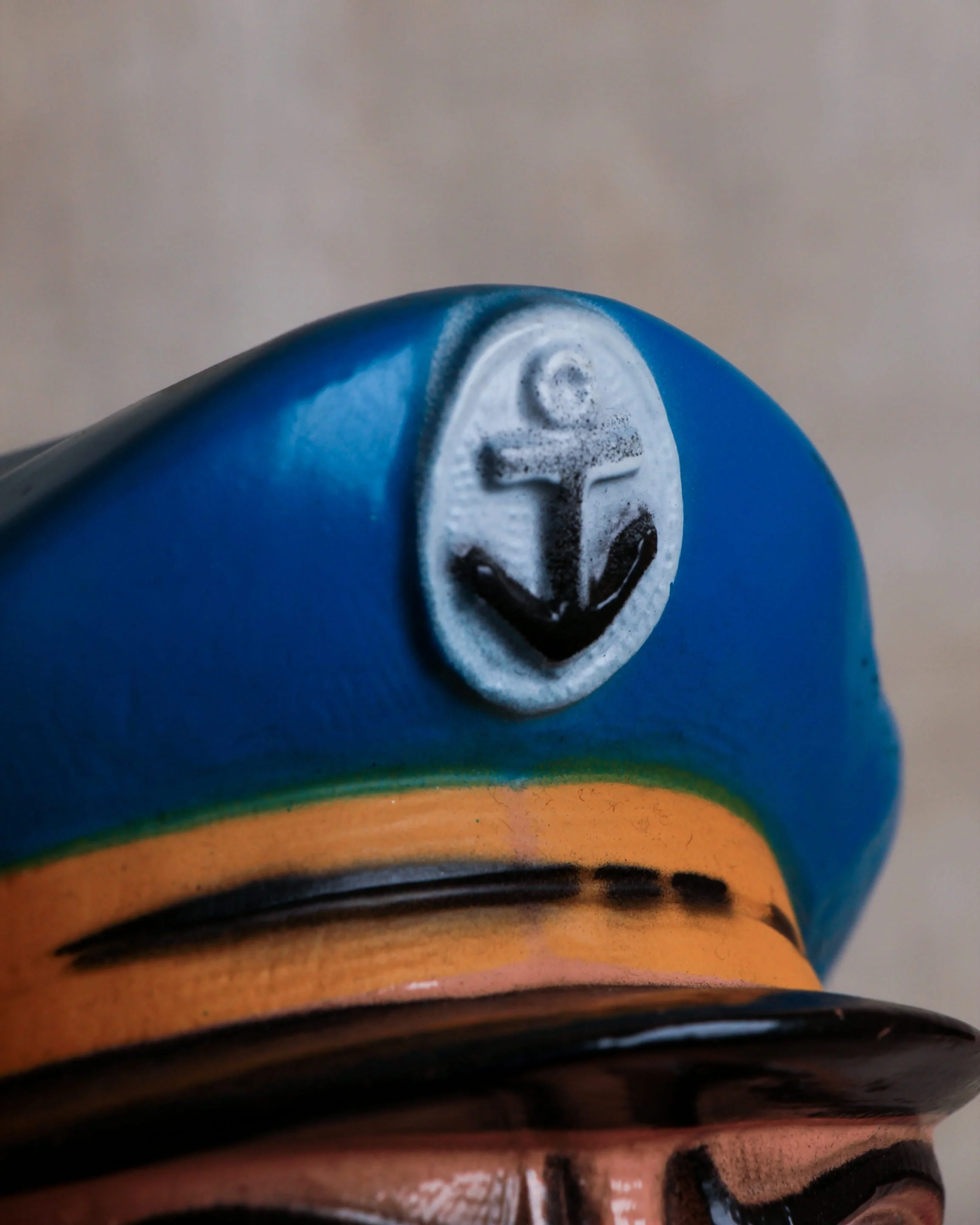
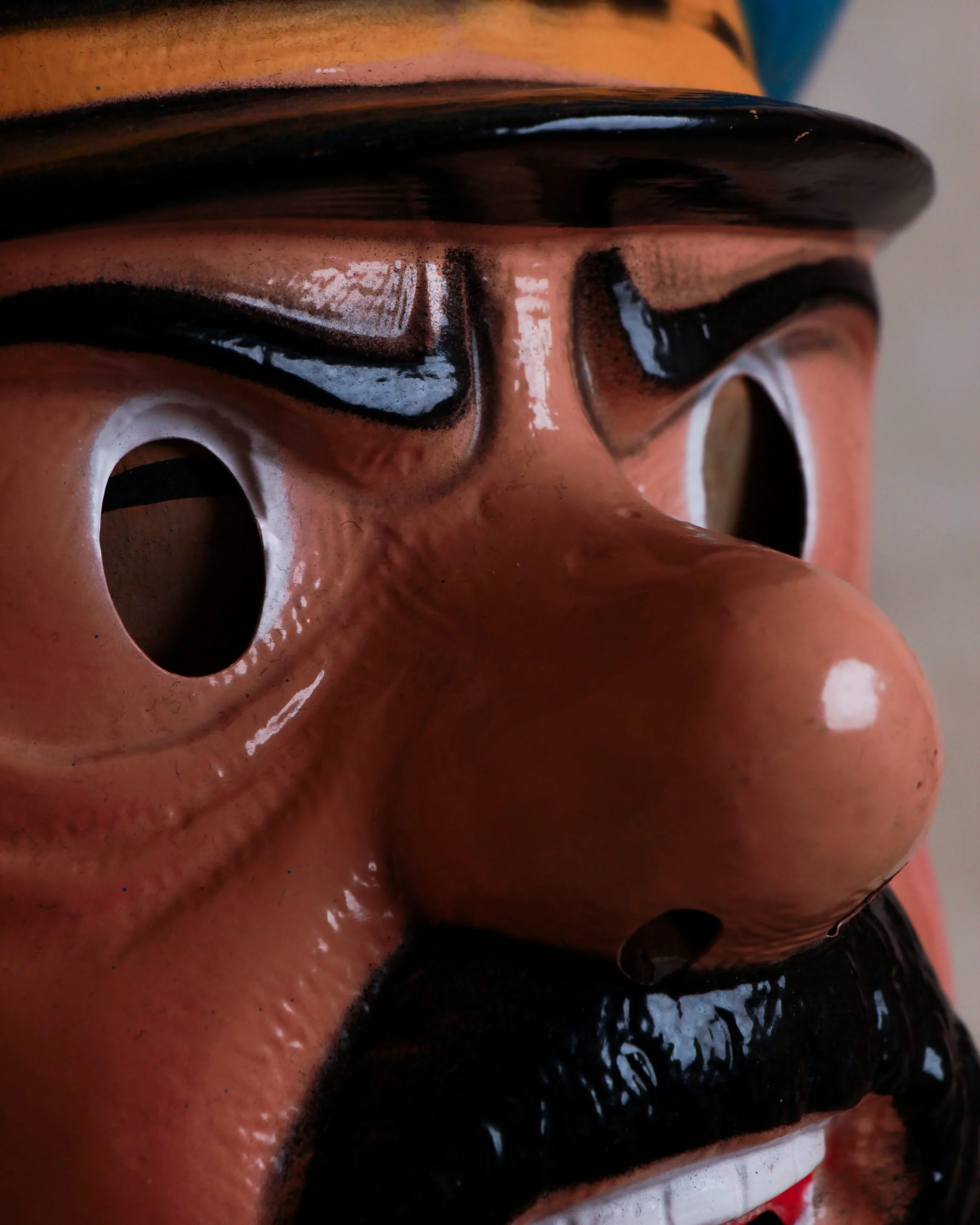
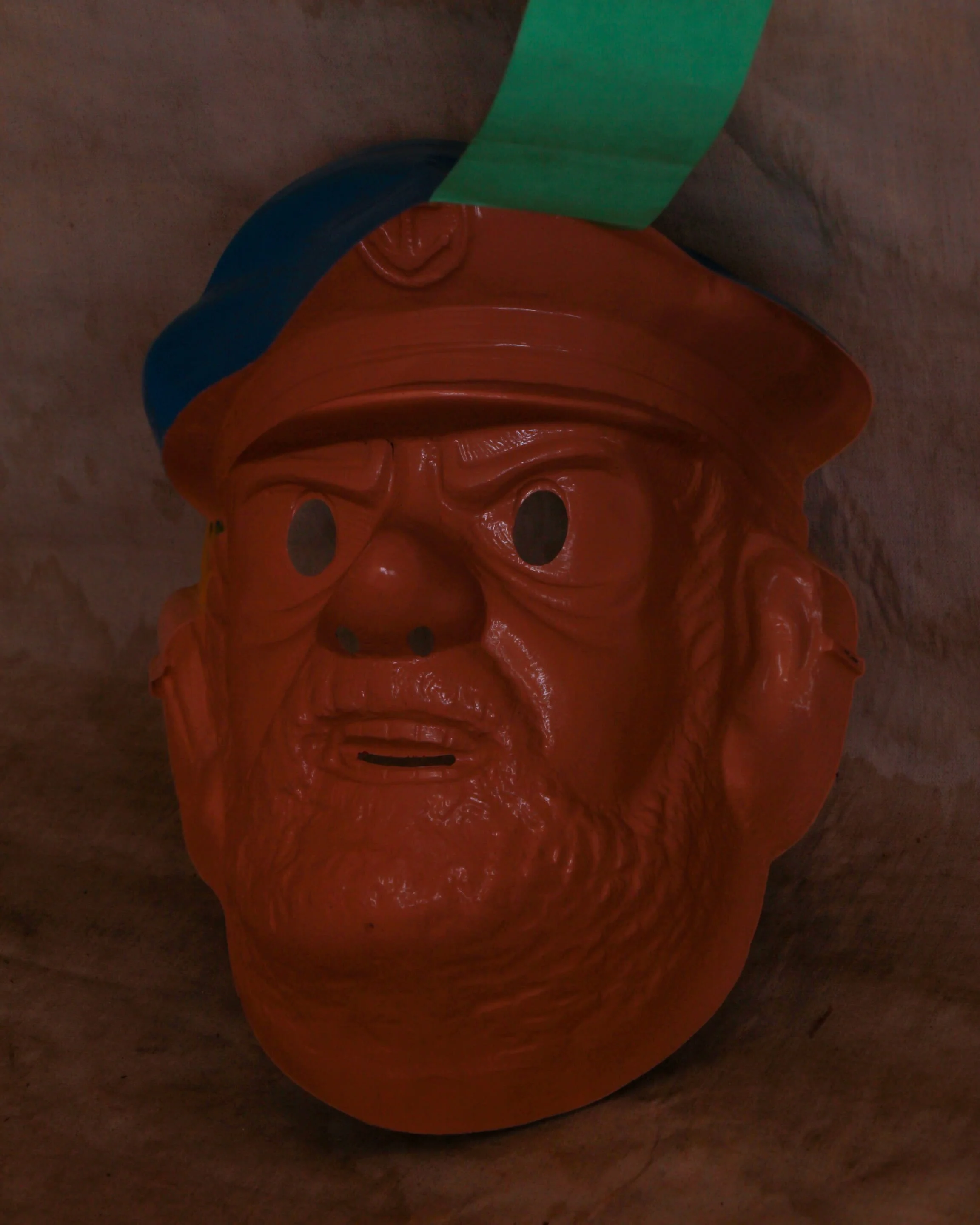
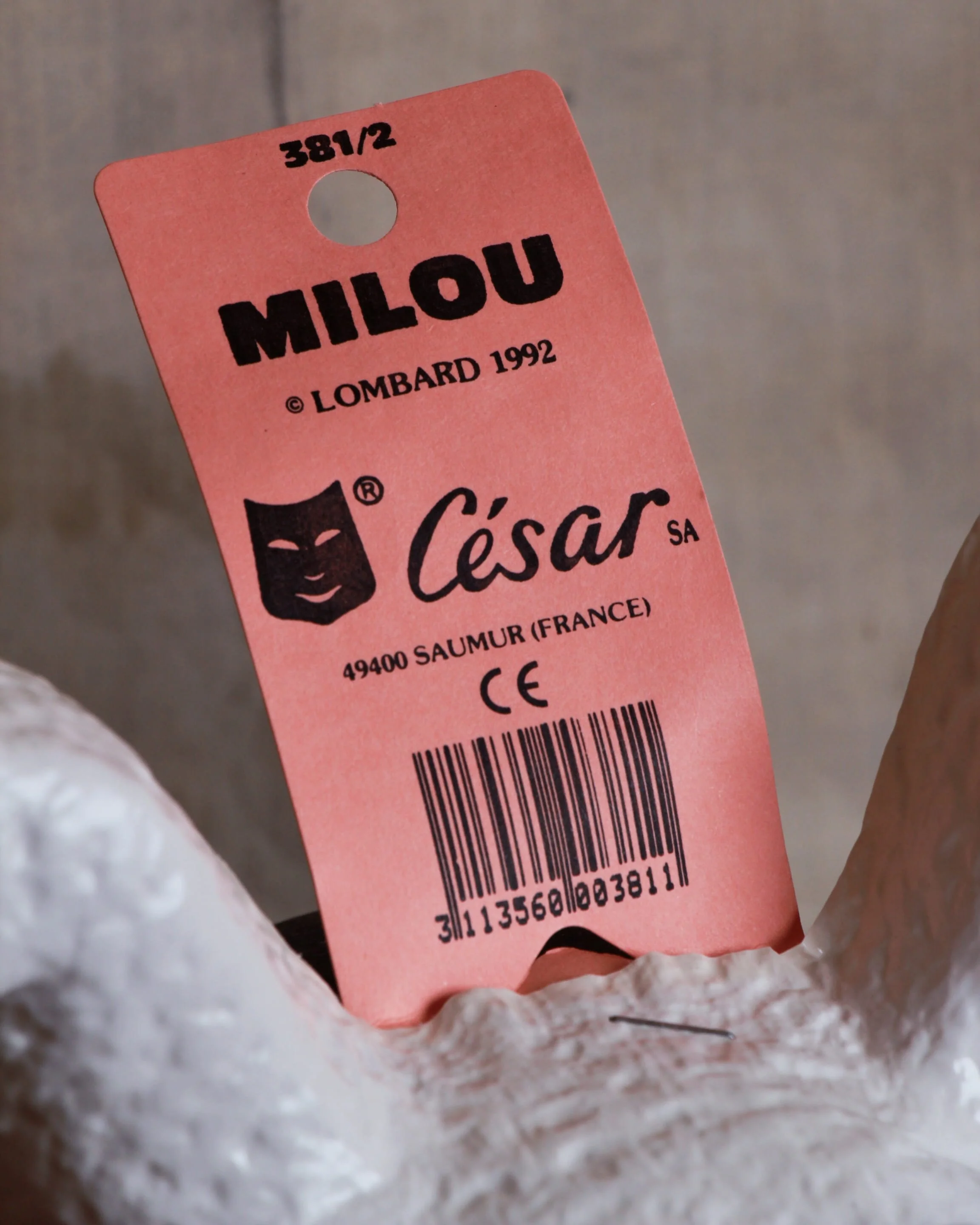
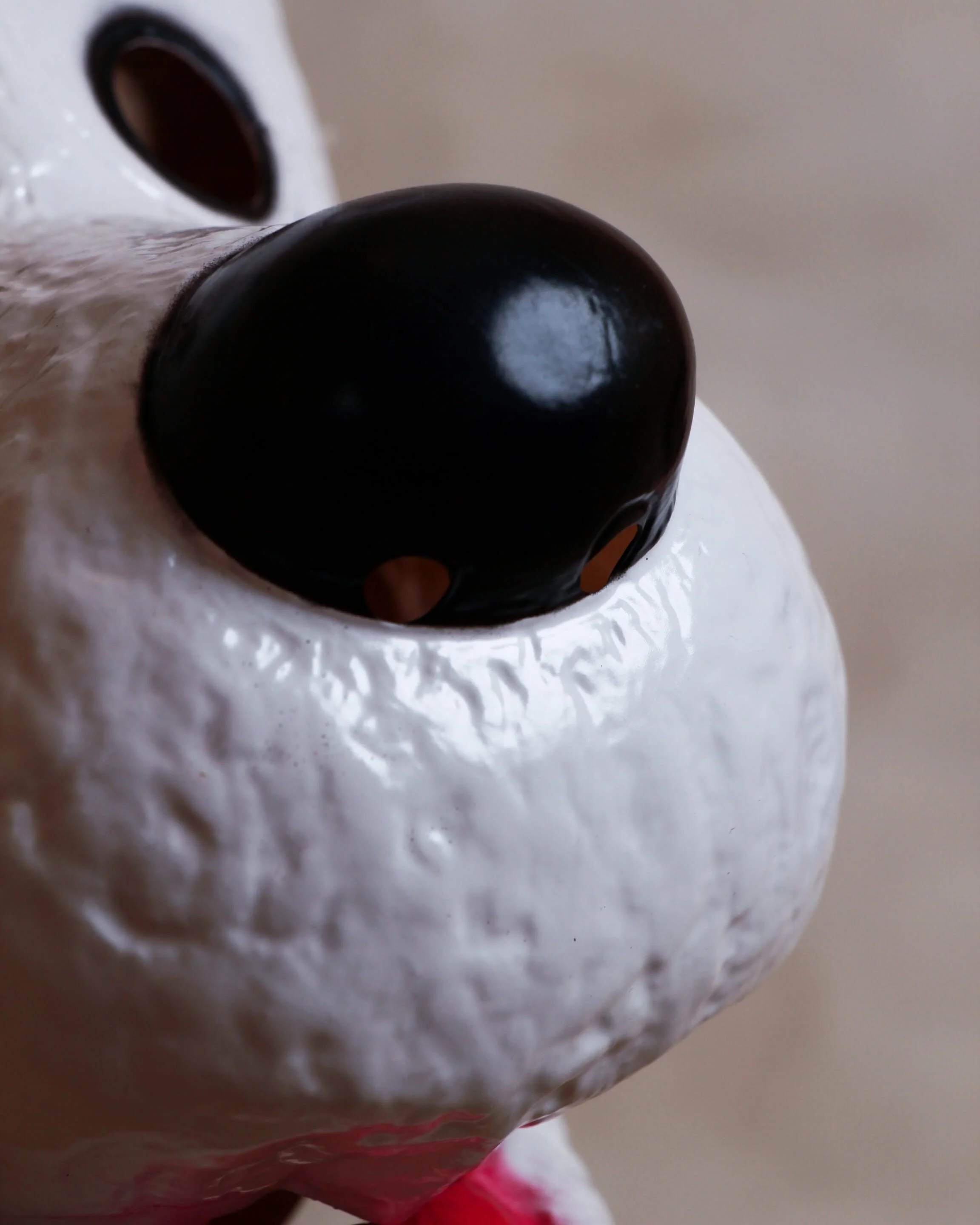
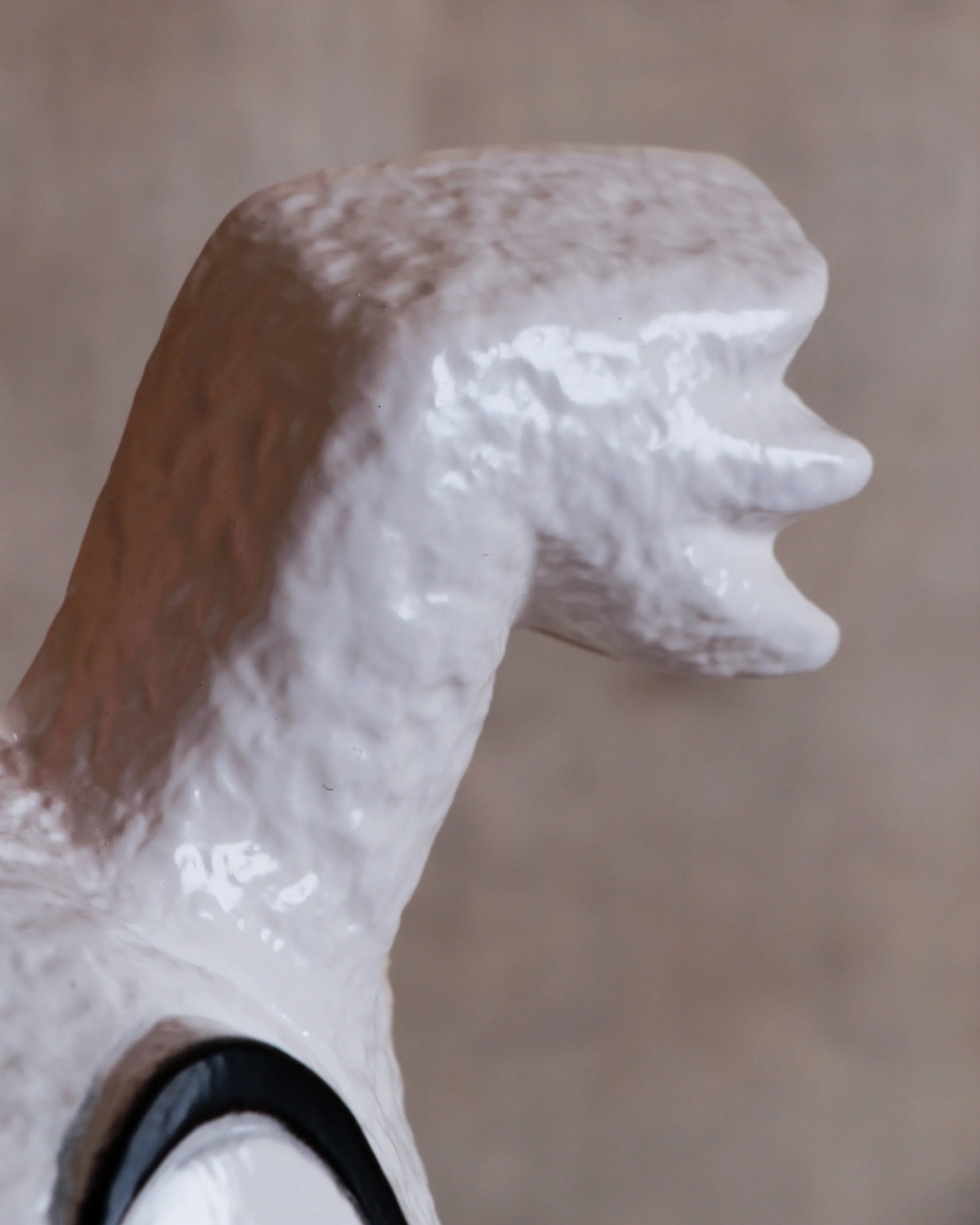
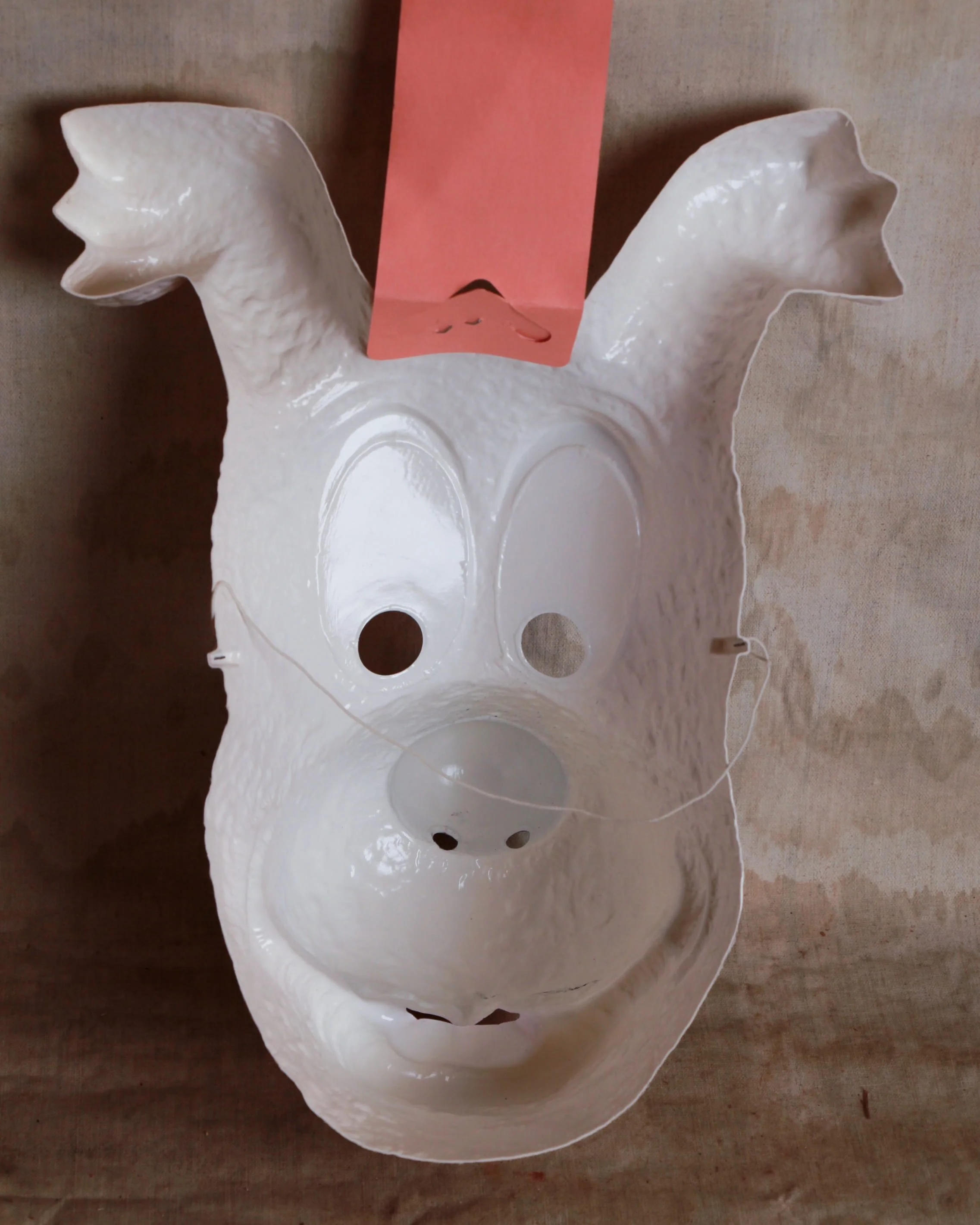
Tintin still wears his signature quiff and comes with visible interior tape repairs—honest fixes that keep him intact without pretending otherwise. Milou is the cleanest of the bunch, with crisp detail and strong presence. Captain Haddock, ever a bit rough around the edges, is missing his elastic but otherwise holds his gruff expression just fine.
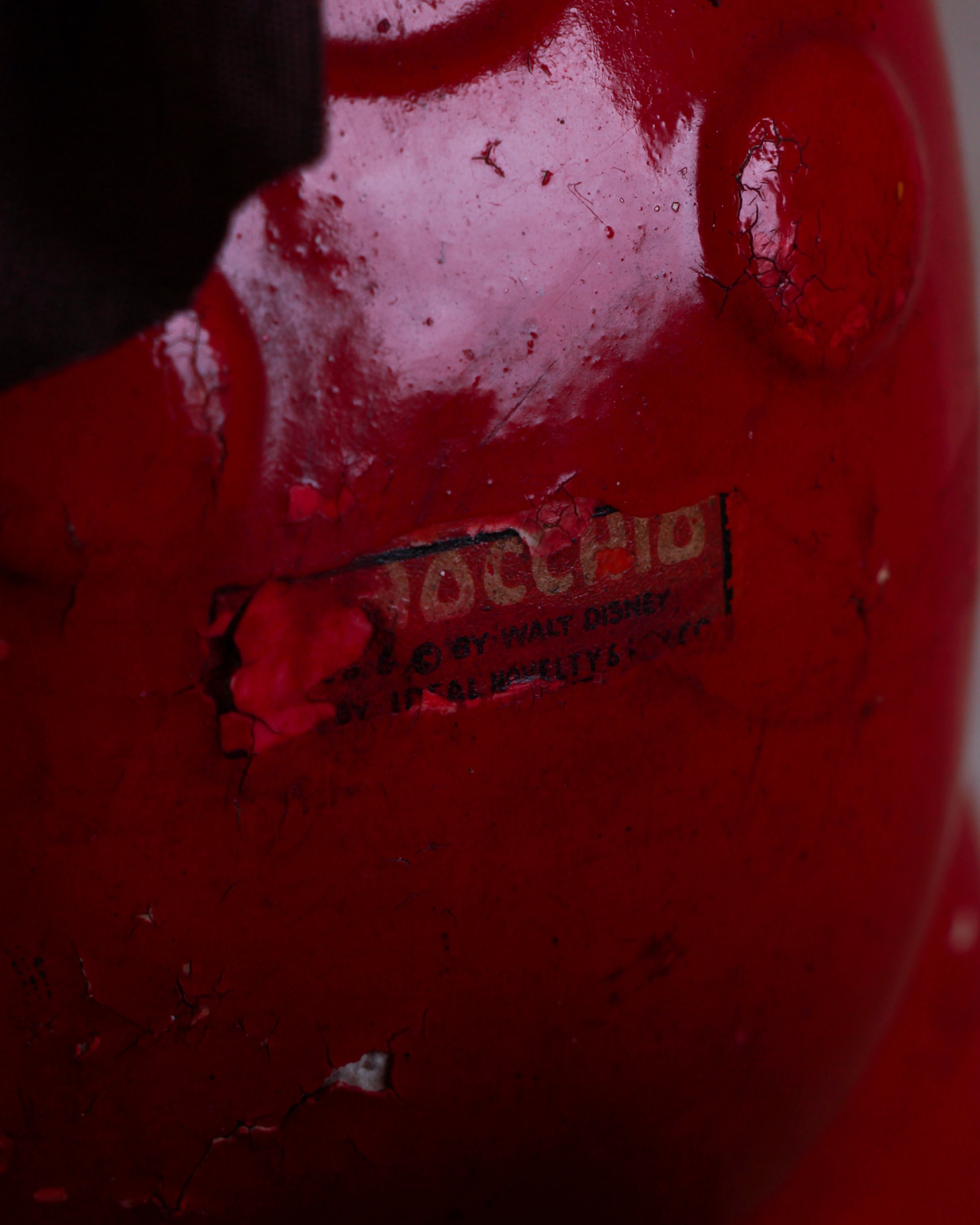
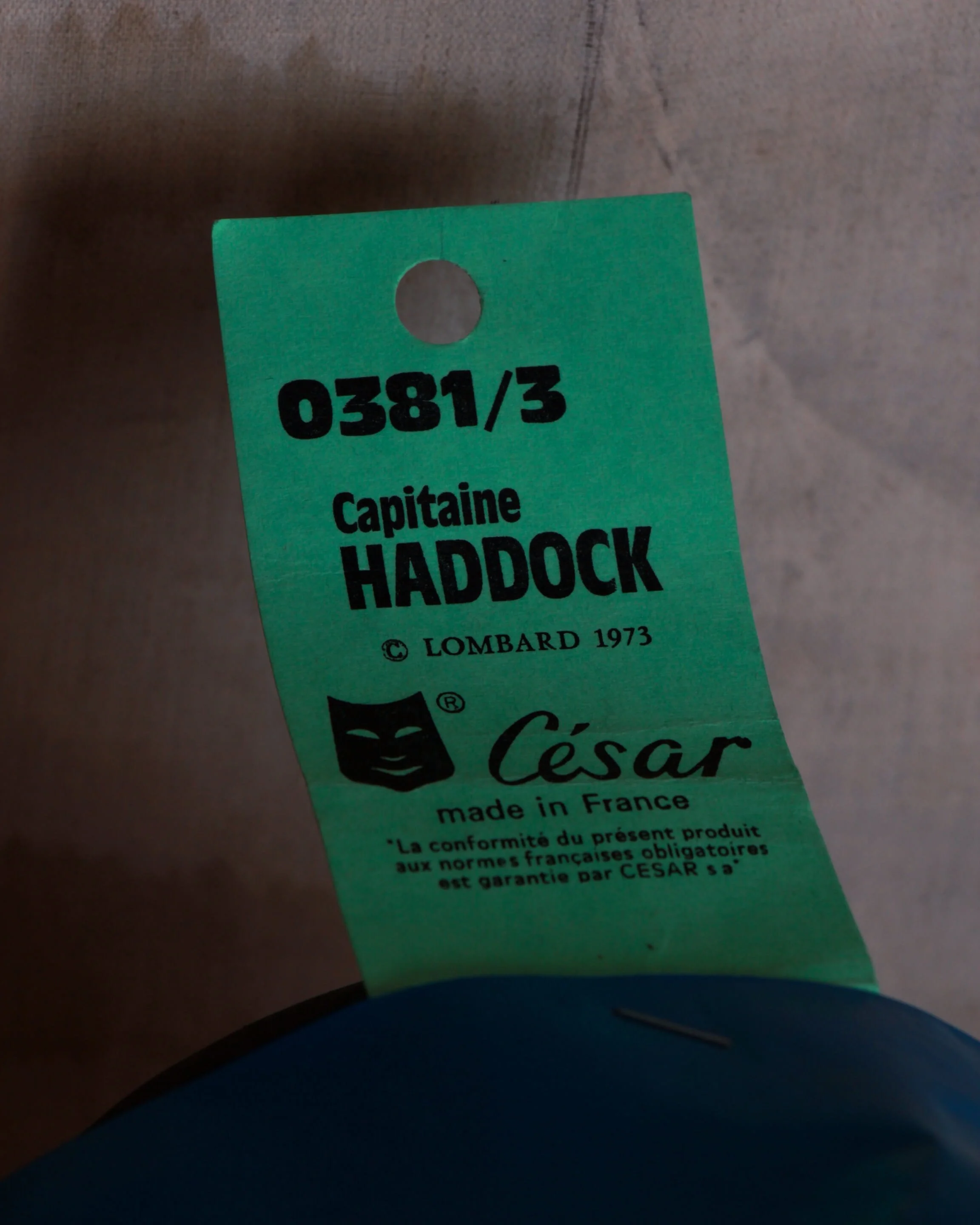
They’re getting harder to find as a group, especially with original tags still present. More sculptural than wearable at this point.
Mannequin bust not included.
Tintin
Tintin begins with a clean line and a curious mind. Created in 1929 by Hergé, the character is a young reporter who seems less interested in writing stories than in chasing them. Each adventure moves quickly—travel, mystery, danger—yet the storytelling is tightly controlled.
Visually, Tintin is defined by the “ligne claire” style: clear outlines, flat colors, minimal shading. It keeps everything readable, almost deceptively simple, while allowing complex scenes to unfold without clutter. The precision extends to settings too—cars, ships, cities—all rendered with careful attention.
What makes Tintin interesting is the balance between realism and imagination. The stories often draw from real-world events and places, but they’re filtered through a sense of adventure that keeps them light on their feet.
Over time, the series expanded into a cast of characters—Captain Haddock, Snowy, Professor Calculus—each adding texture and humor.
It’s a world that feels orderly, even when things go off track. Direct, visual, and consistently paced, Tintin holds its shape—clear, confident, and built to move.
A full cast, frozen somewhere between childhood play and quiet display—this set of three original 1970s Tintin masks by French maker Cesar brings together Tintin, Milou, and Captain Haddock in all their slightly uncanny, wonderfully graphic charm. Bright molded plastic, bold lines, and those unmistakable faces that feel pulled straight from the page.
Tintin still wears his signature quiff and comes with visible interior tape repairs—honest fixes that keep him intact without pretending otherwise. Milou is the cleanest of the bunch, with crisp detail and strong presence. Captain Haddock, ever a bit rough around the edges, is missing his elastic but otherwise holds his gruff expression just fine.
They’re getting harder to find as a group, especially with original tags still present. More sculptural than wearable at this point.
Mannequin bust not included.
Tintin
Tintin begins with a clean line and a curious mind. Created in 1929 by Hergé, the character is a young reporter who seems less interested in writing stories than in chasing them. Each adventure moves quickly—travel, mystery, danger—yet the storytelling is tightly controlled.
Visually, Tintin is defined by the “ligne claire” style: clear outlines, flat colors, minimal shading. It keeps everything readable, almost deceptively simple, while allowing complex scenes to unfold without clutter. The precision extends to settings too—cars, ships, cities—all rendered with careful attention.
What makes Tintin interesting is the balance between realism and imagination. The stories often draw from real-world events and places, but they’re filtered through a sense of adventure that keeps them light on their feet.
Over time, the series expanded into a cast of characters—Captain Haddock, Snowy, Professor Calculus—each adding texture and humor.
It’s a world that feels orderly, even when things go off track. Direct, visual, and consistently paced, Tintin holds its shape—clear, confident, and built to move.