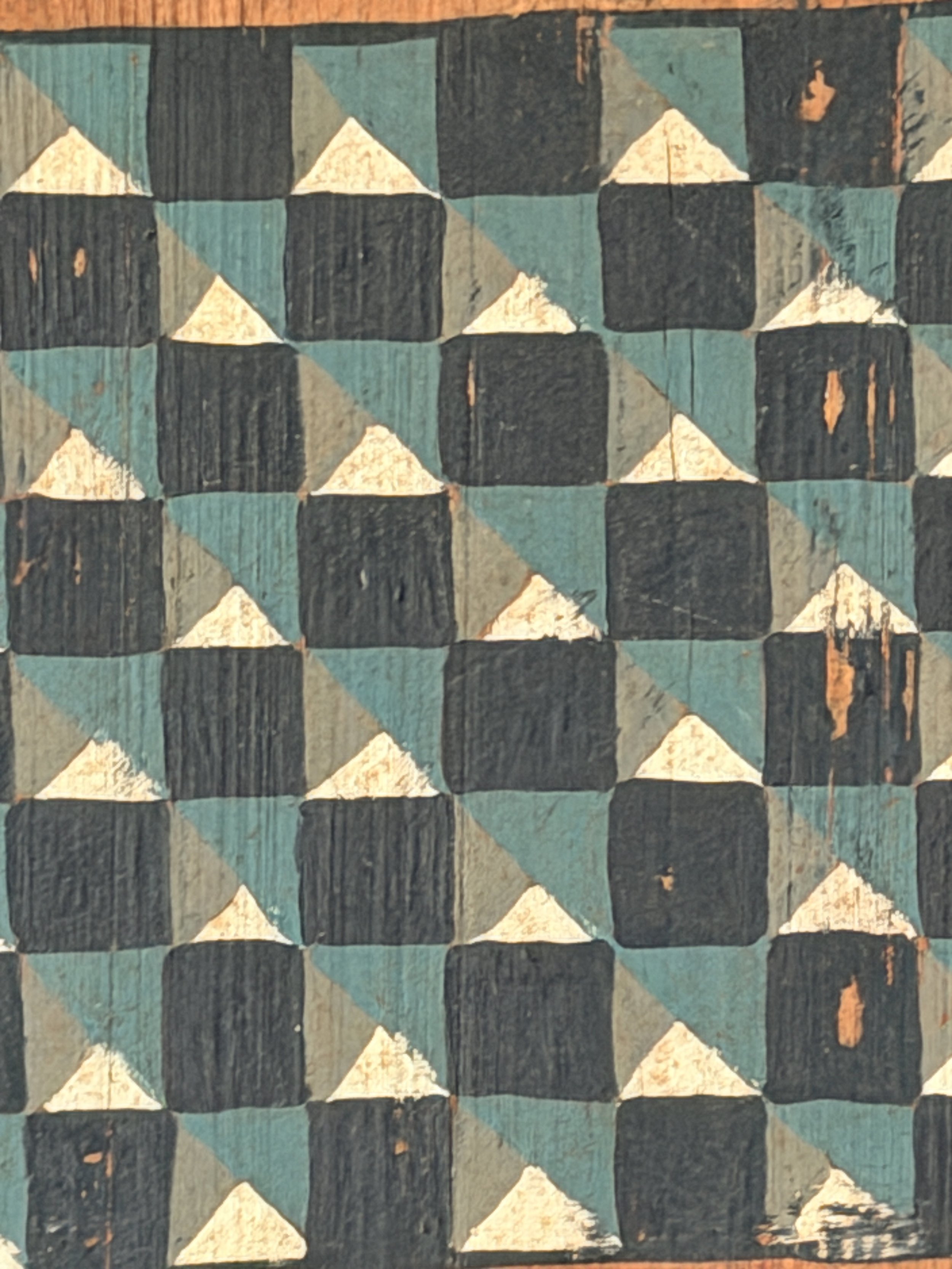
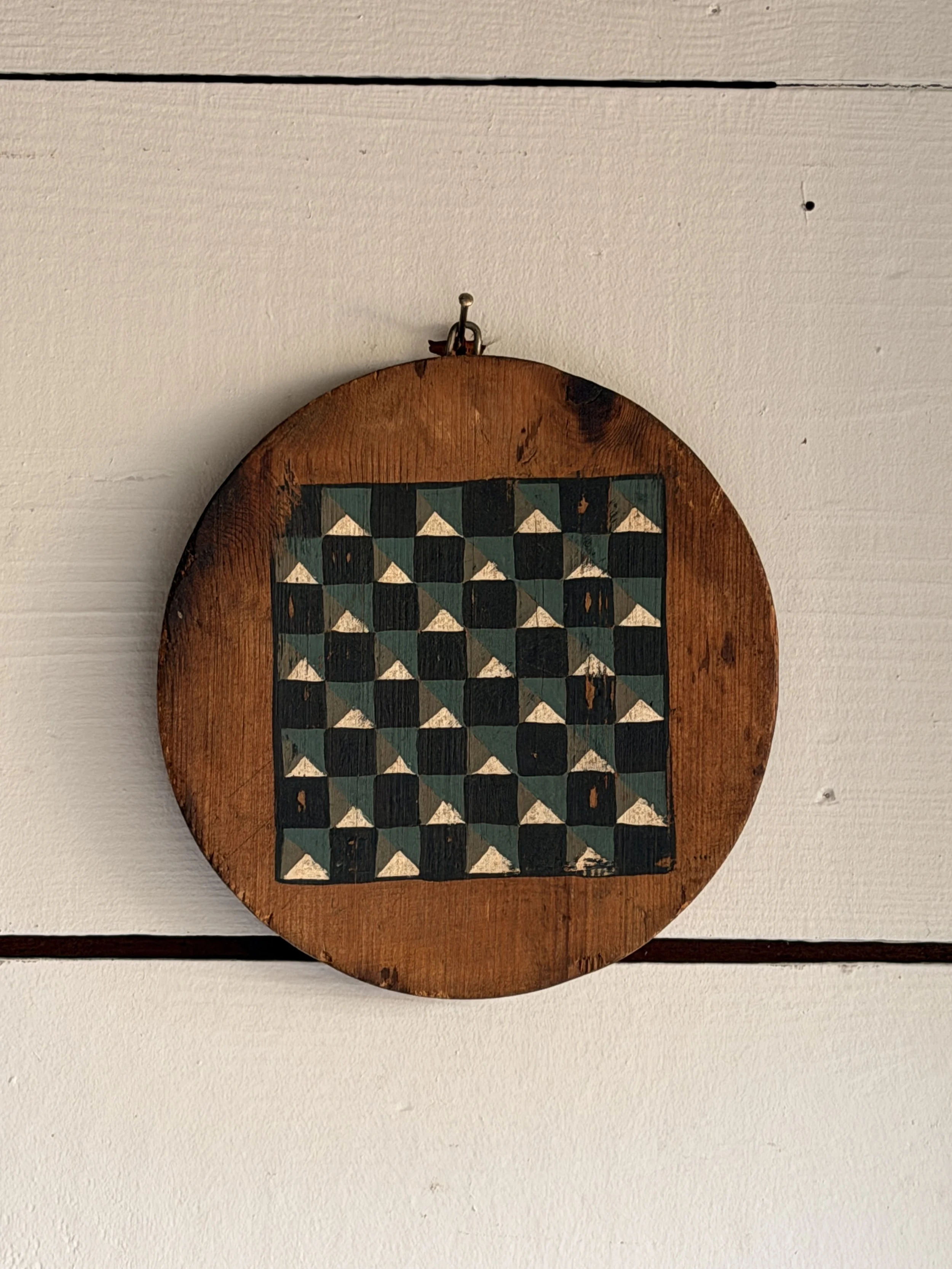
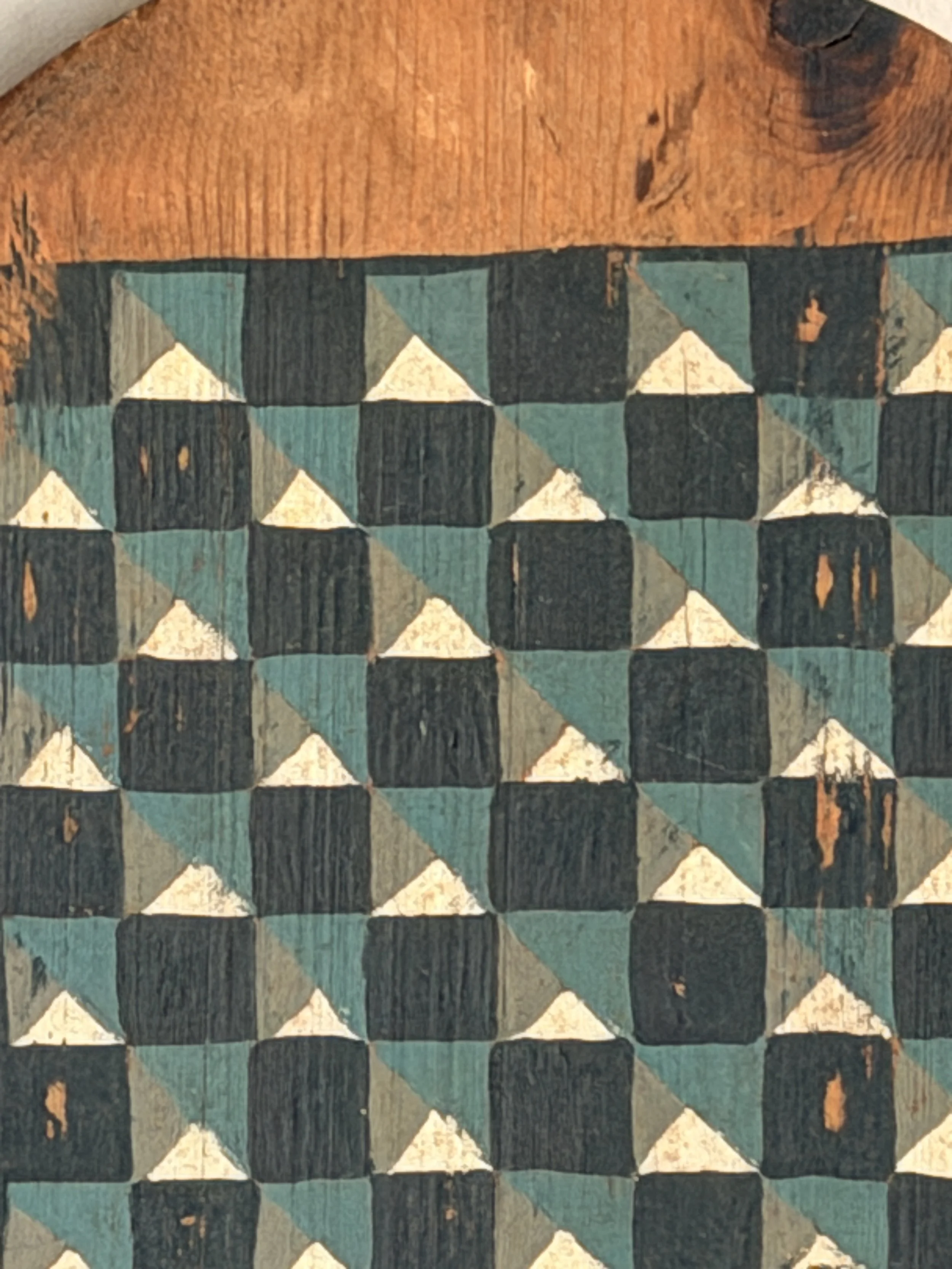
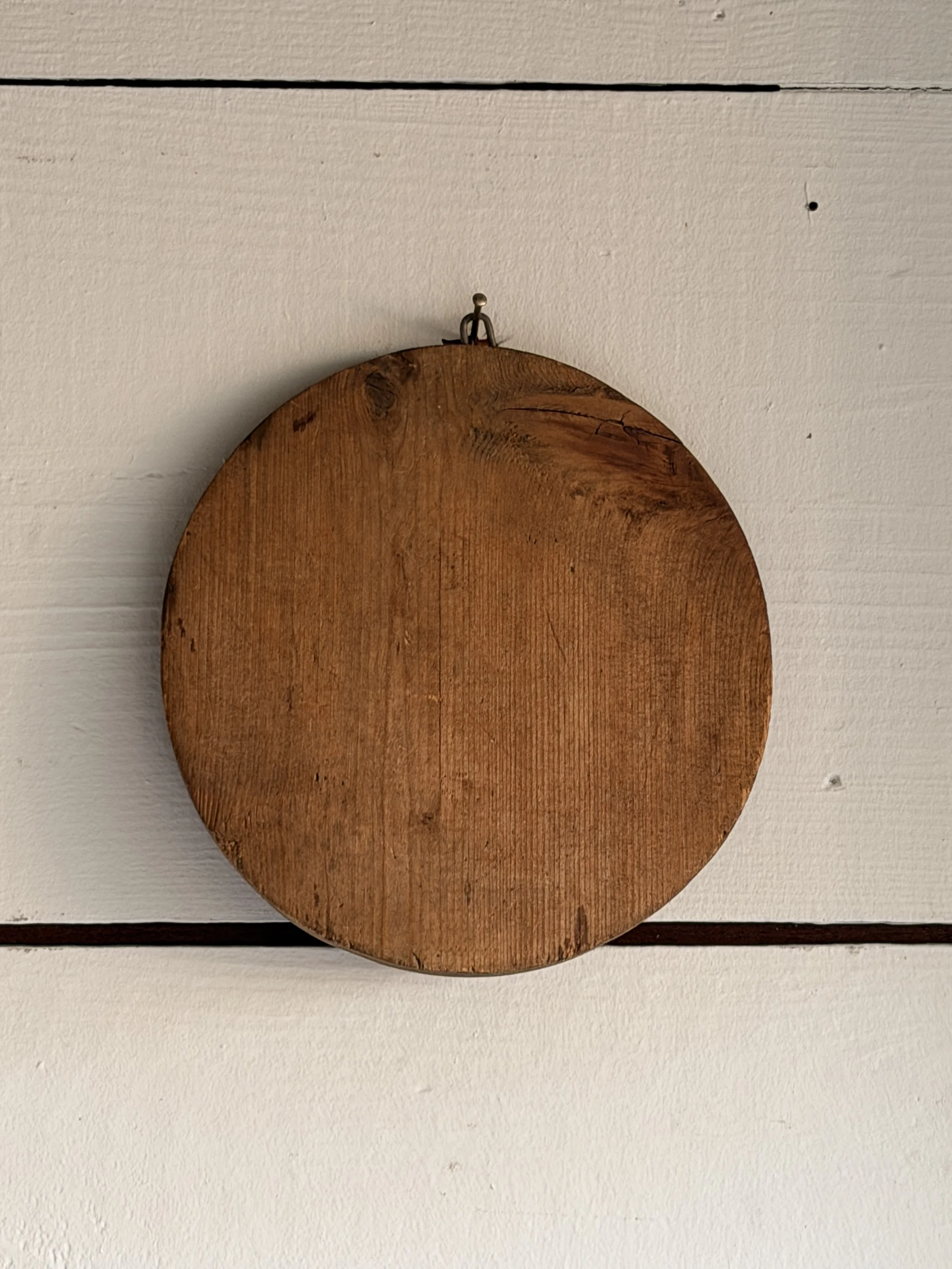
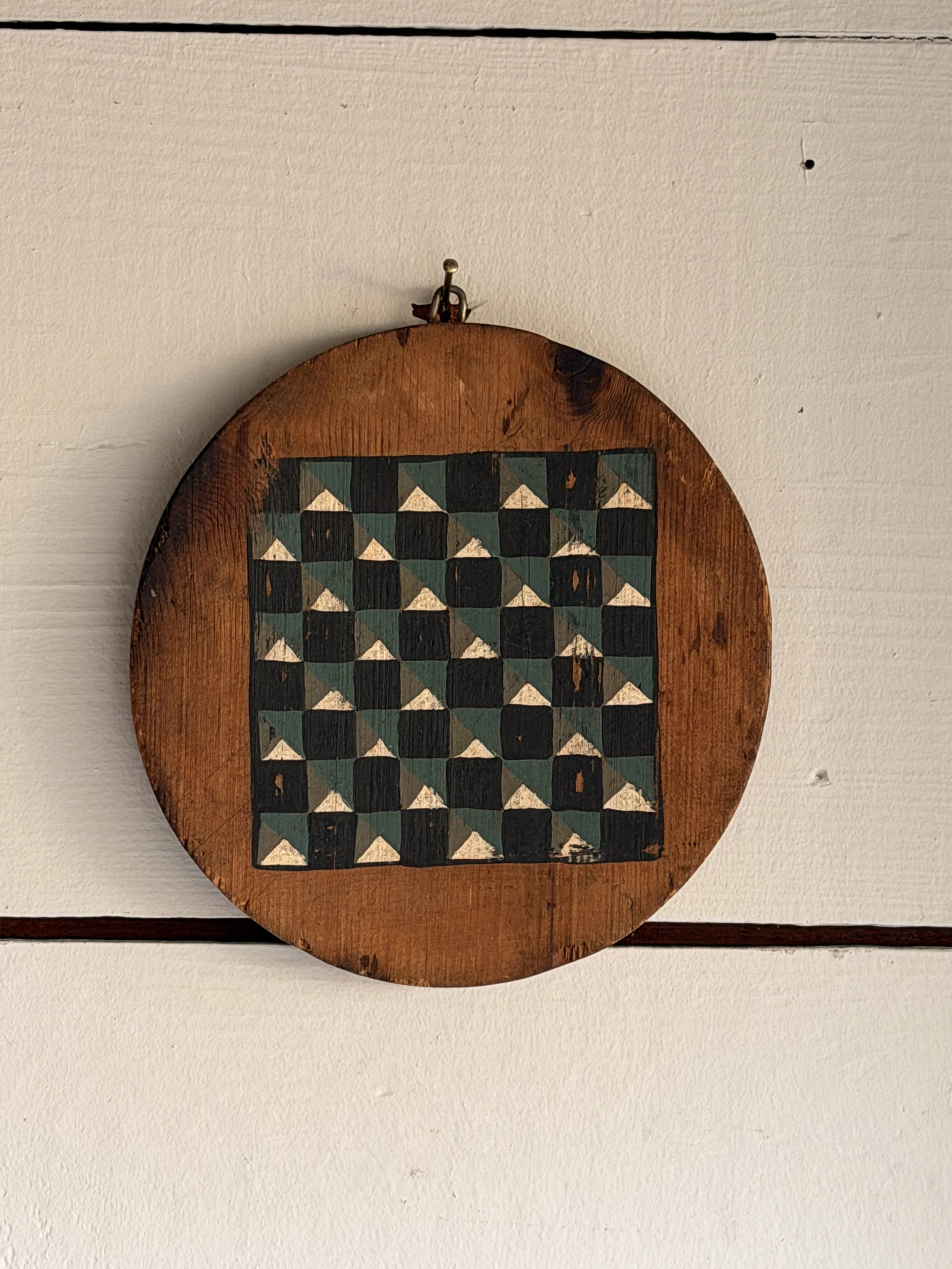
An unusual antique handmade wooden game board, measuring 7 inches in diameter, featuring a hand-painted geometric playing surface in black, muted green, gray, and cream. The square pattern is centered on a circular wooden board, with alternating dark squares and small triangular shapes creating an almost optical effect. The painted surface shows considerable wear, with areas of missing paint, scratches, and exposed wood grain. A simple metal hanging loop is attached at the top. Its exact game and age are uncertain, but its homemade construction gives it a distinctly American folk art character.
Homemade board games were a common part of everyday entertainment throughout the 19th and early 20th centuries, particularly in households where commercially manufactured games were expensive or difficult to obtain.
Using whatever materials were available, people made their own versions of familiar games such as checkers, chess, and Nine Men's Morris, often painting the playing surfaces directly onto pieces of wood.
These boards were usually practical objects, made for family gatherings, evenings at home, or informal competitions among friends. Some were constructed by skilled woodworkers, while others were created by amateurs using leftover lumber and ordinary household paints.
During the 1800s, commercially produced games became increasingly affordable, particularly with the growth of companies such as Milton Bradley and McLoughlin Brothers. Nevertheless, homemade boards remained popular well into the 20th century.
Over time, these everyday objects developed a second identity as examples of American folk art. Collectors began appreciating their unusual shapes, hand-painted patterns, imperfect geometry, and individual craftsmanship.
Unlike factory-produced games, homemade boards often followed no fixed design standards, giving their makers considerable freedom to experiment with colors, layouts, and decorative details.