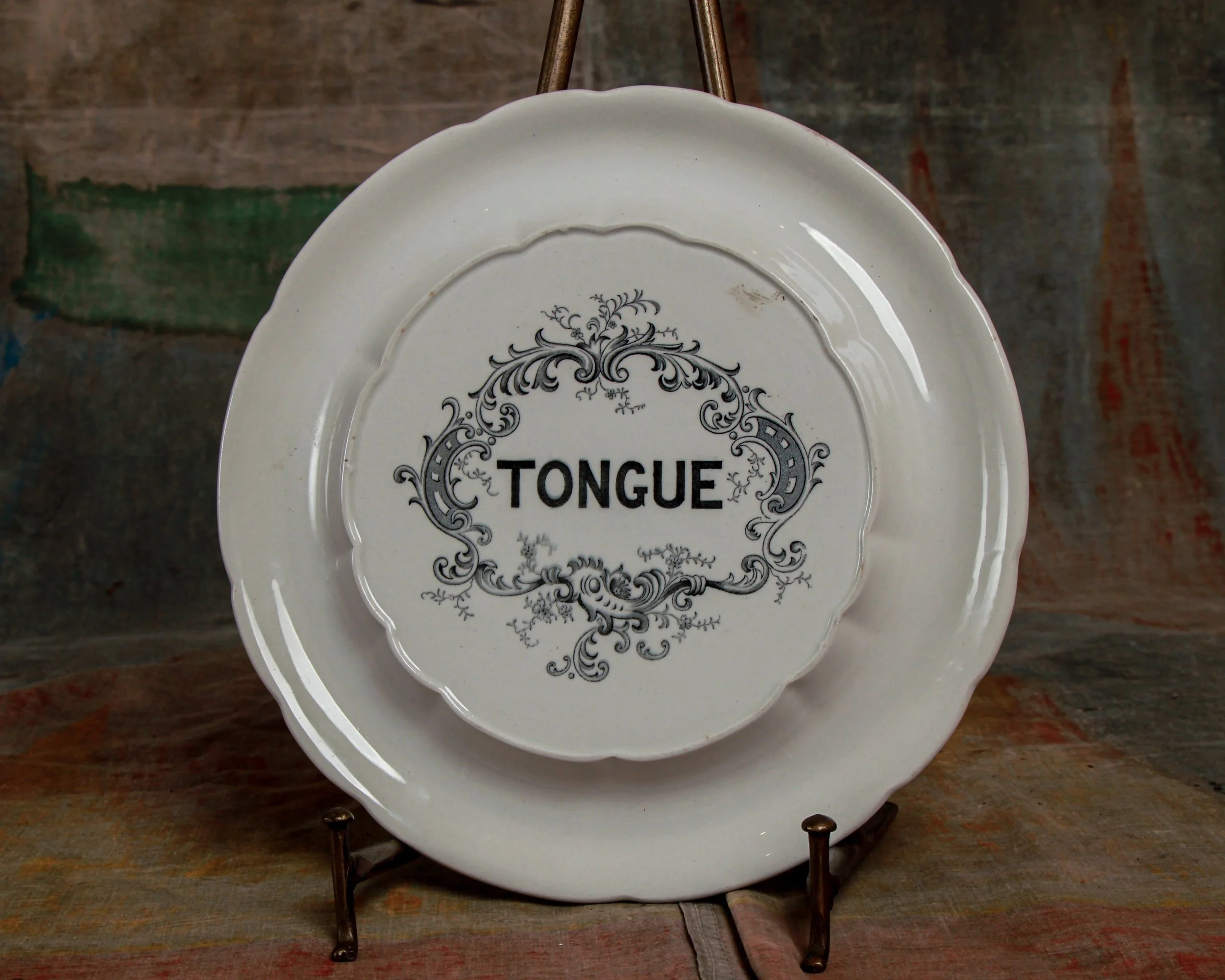
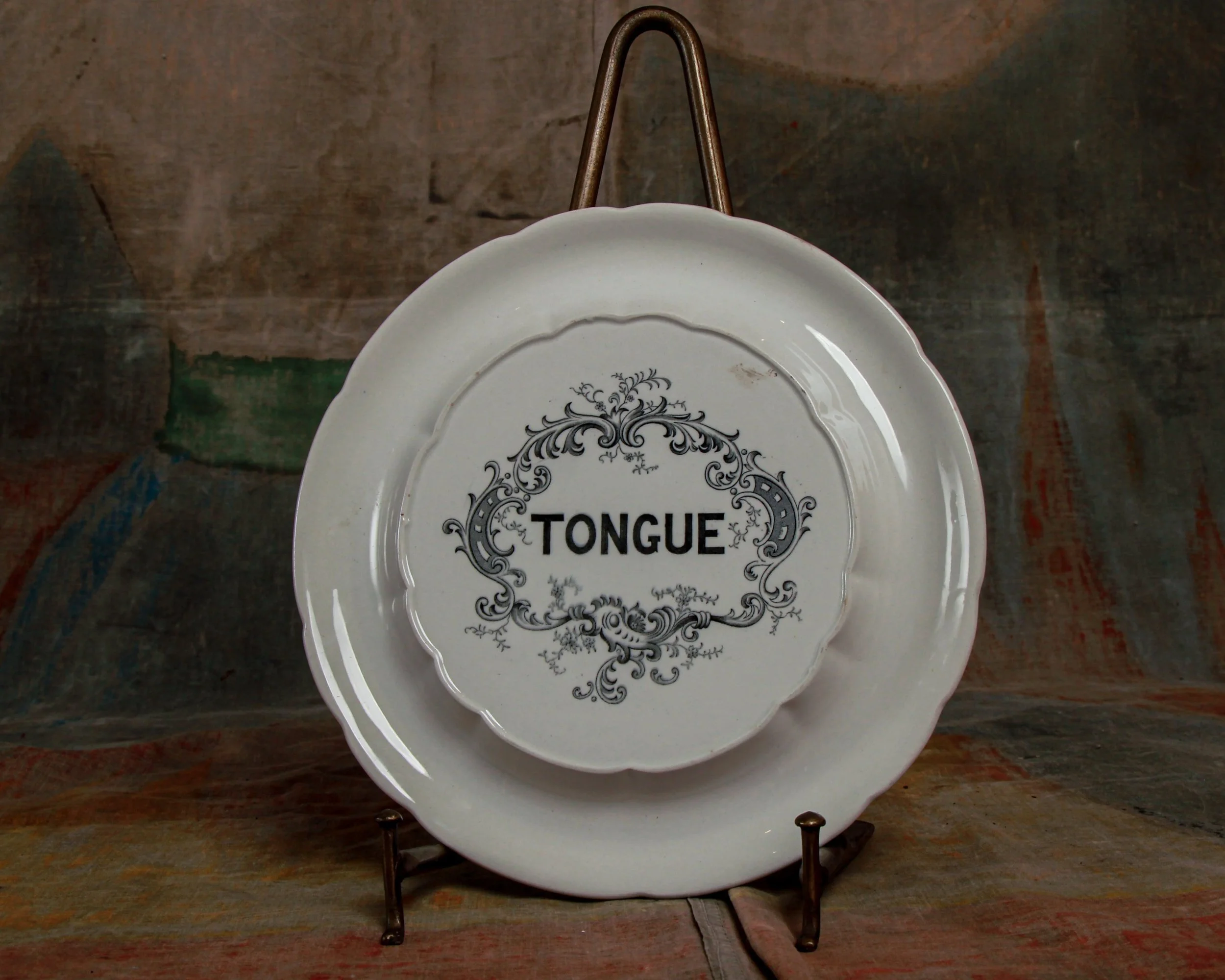
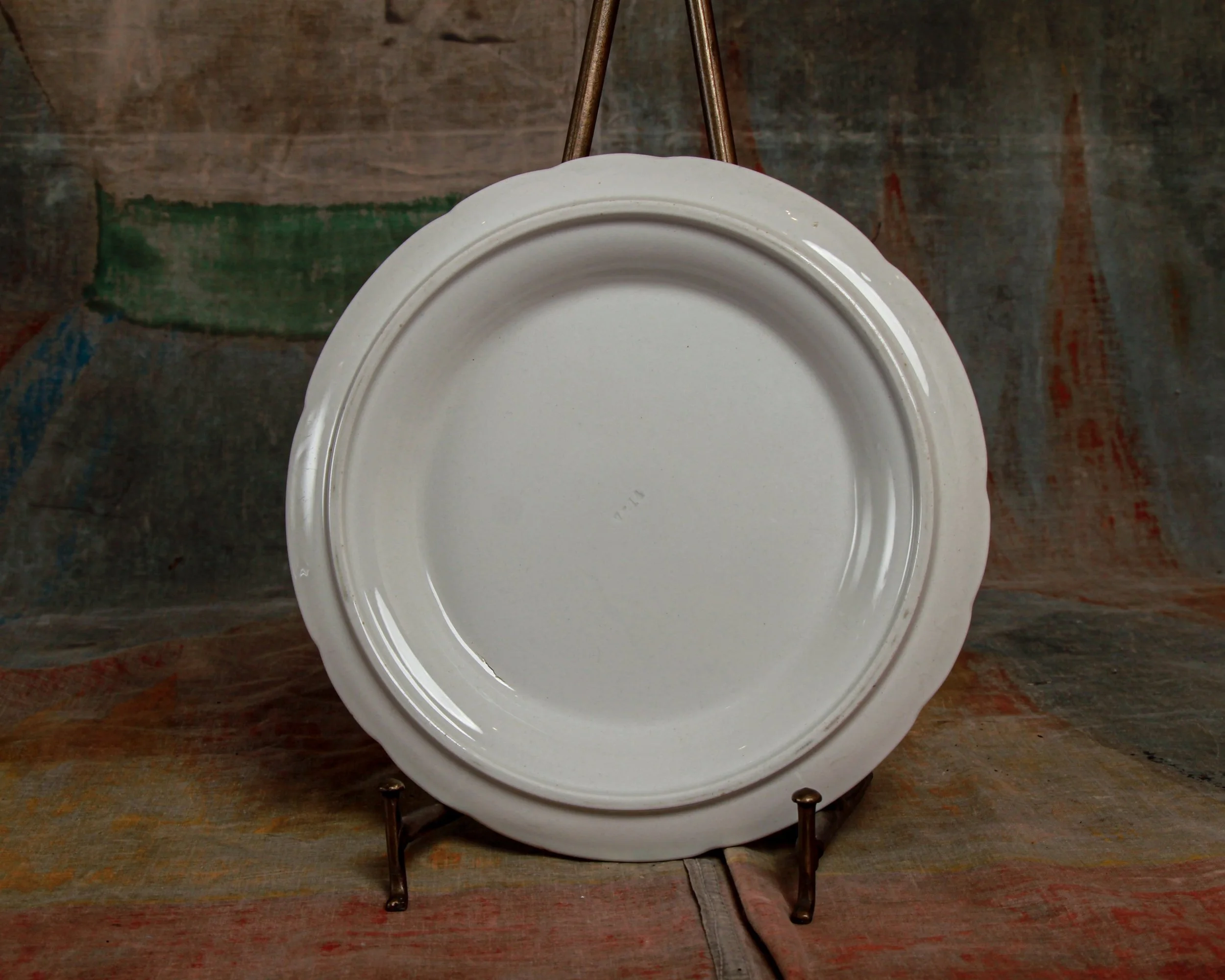

Here’s a piece that proves Victorian dinnerware didn’t shy away from being blunt. This 19th-century English transfer-ware platter, boldly labeled “TONGUE,” is as practical as it is charming. Made of sturdy white ironstone with a scalloped edge and decorated in an ornate black scroll border, it was designed to sit proudly on a sideboard or table, announcing its culinary contents without a hint of mystery. Measuring a classic serving size, it’s stamped on the reverse with an impressed “7-18,” further marking its 19th-century roots. Once part of a full service where each dish had its role—beef, mutton, ham, and in this case, tongue—it’s a glimpse into a time when formality met function in the dining room.
Category History
Cow tongue in the 1800s wasn’t a curiosity—it was practical eating. In both Europe and the United States, nose-to-tail use of the animal was standard, not a trend. Nothing went to waste, and the tongue, with its dense muscle and rich flavor, earned its place at the table.
Preparation took patience. The tongue was typically simmered for hours to tenderize it, then peeled to remove the tough outer skin. From there, it could be sliced, pressed, or served cold with mustard, sauces, or aspic. In some kitchens, it was cured or pickled, extending its shelf life and adding another layer of flavor.
What makes it interesting is how it sits between everyday food and something slightly formal. It was common, but when prepared well, it could also feel like a centerpiece—neatly sliced, carefully arranged, and served with intention.
These dishes reflect a different relationship to food—one built on resourcefulness and familiarity with the whole animal. Today, it reads as both traditional and a bit surprising, but in its time, it was simply good cooking: deliberate, economical, and grounded in making the most of what you had.
Here’s a piece that proves Victorian dinnerware didn’t shy away from being blunt. This 19th-century English transfer-ware platter, boldly labeled “TONGUE,” is as practical as it is charming. Made of sturdy white ironstone with a scalloped edge and decorated in an ornate black scroll border, it was designed to sit proudly on a sideboard or table, announcing its culinary contents without a hint of mystery. Measuring a classic serving size, it’s stamped on the reverse with an impressed “7-18,” further marking its 19th-century roots. Once part of a full service where each dish had its role—beef, mutton, ham, and in this case, tongue—it’s a glimpse into a time when formality met function in the dining room.
Category History
Cow tongue in the 1800s wasn’t a curiosity—it was practical eating. In both Europe and the United States, nose-to-tail use of the animal was standard, not a trend. Nothing went to waste, and the tongue, with its dense muscle and rich flavor, earned its place at the table.
Preparation took patience. The tongue was typically simmered for hours to tenderize it, then peeled to remove the tough outer skin. From there, it could be sliced, pressed, or served cold with mustard, sauces, or aspic. In some kitchens, it was cured or pickled, extending its shelf life and adding another layer of flavor.
What makes it interesting is how it sits between everyday food and something slightly formal. It was common, but when prepared well, it could also feel like a centerpiece—neatly sliced, carefully arranged, and served with intention.
These dishes reflect a different relationship to food—one built on resourcefulness and familiarity with the whole animal. Today, it reads as both traditional and a bit surprising, but in its time, it was simply good cooking: deliberate, economical, and grounded in making the most of what you had.