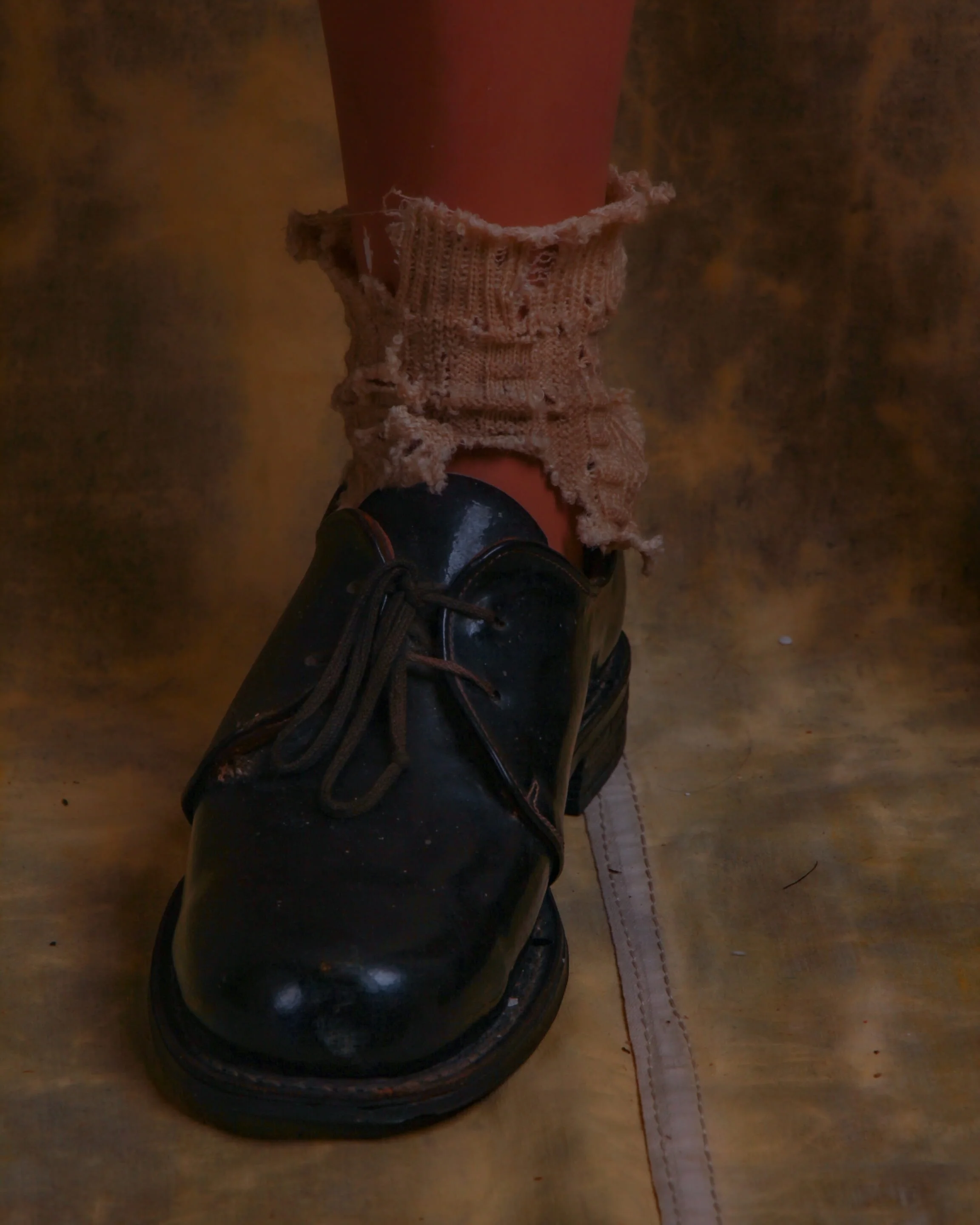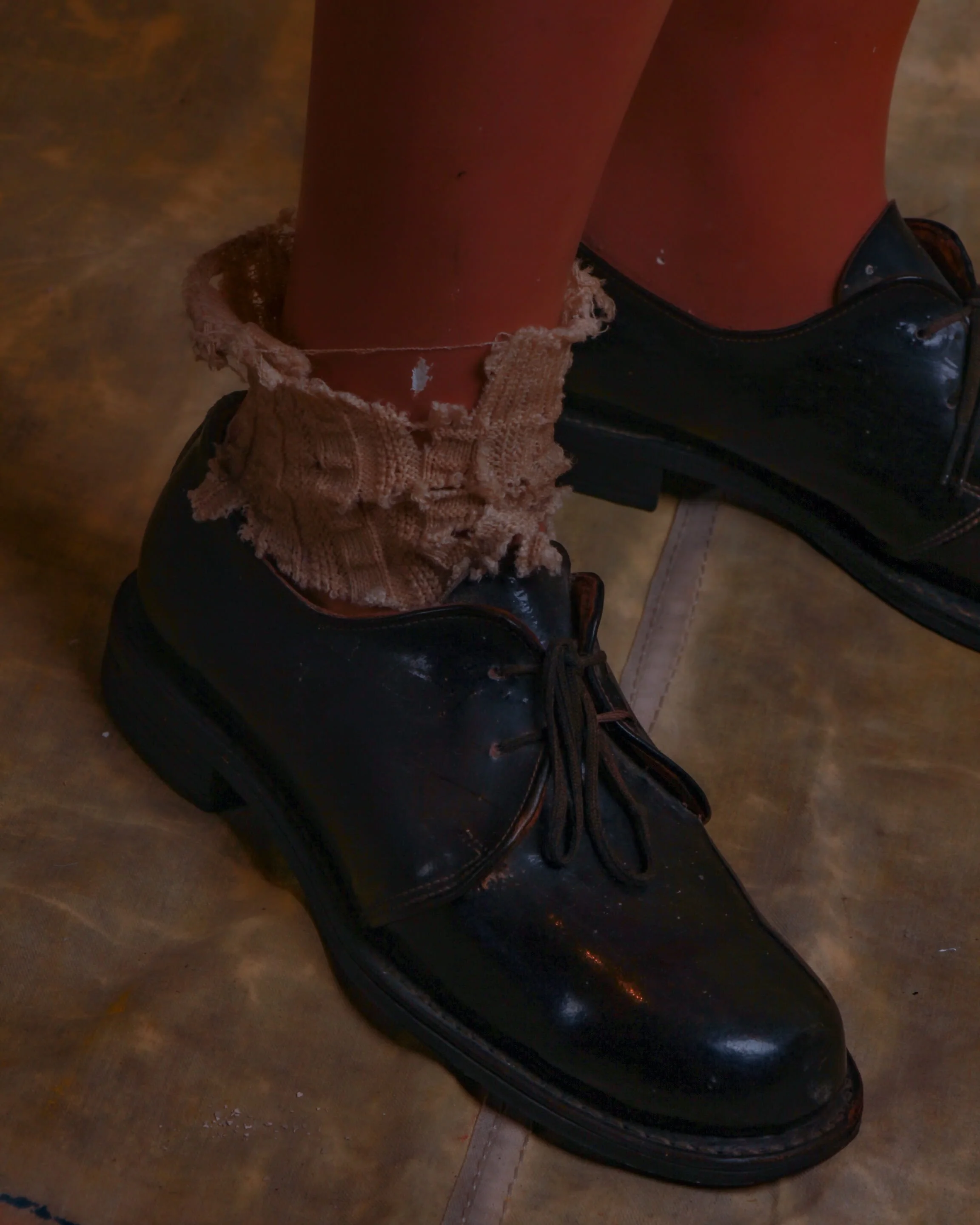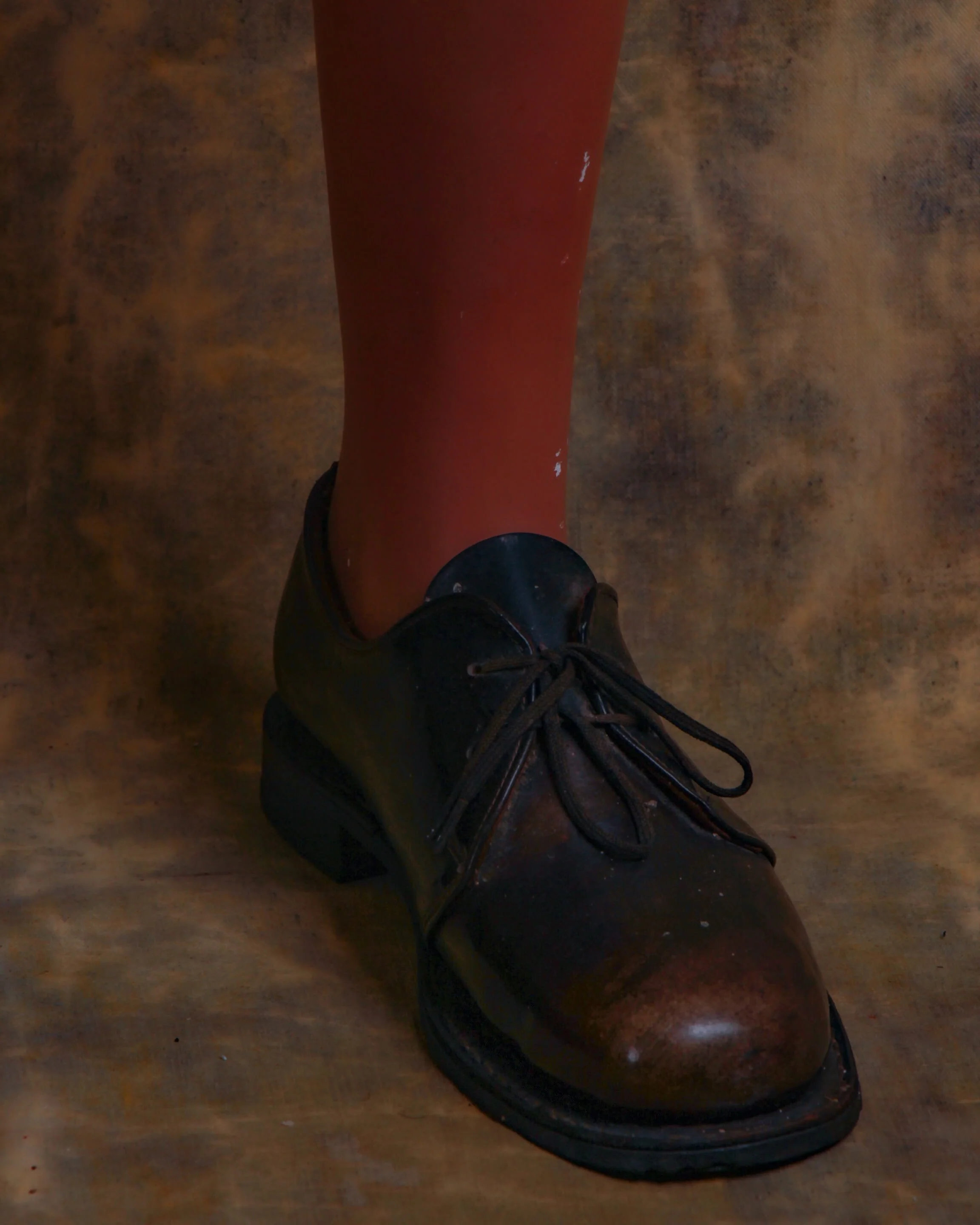
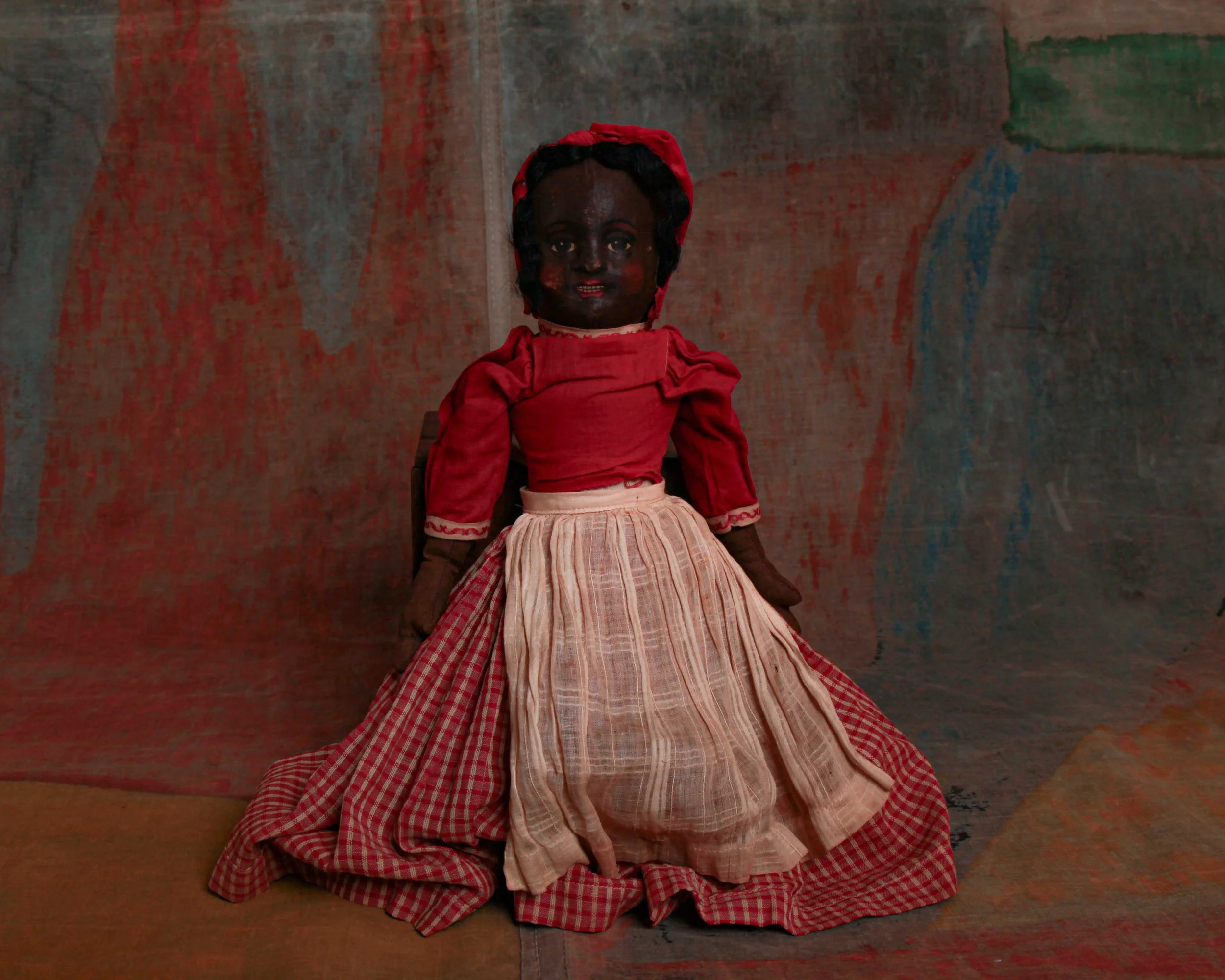
A classic topsy-turvy doll, thoughtfully constructed and quietly complex, designed to flip from one figure to the other with a simple turn of the skirt. Two personalities, one body, stitched together not as a trick, but as a reflection of the world it came from.
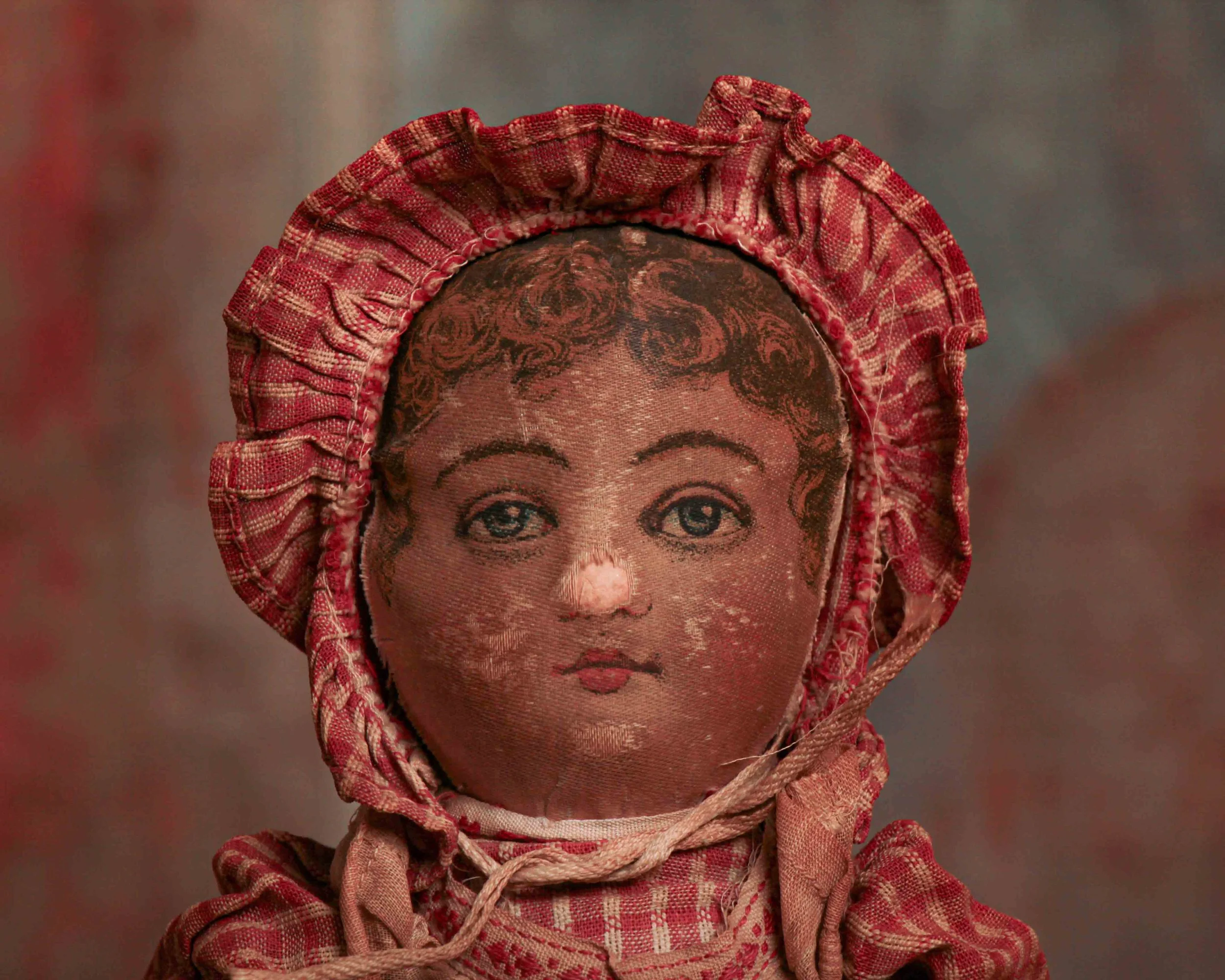
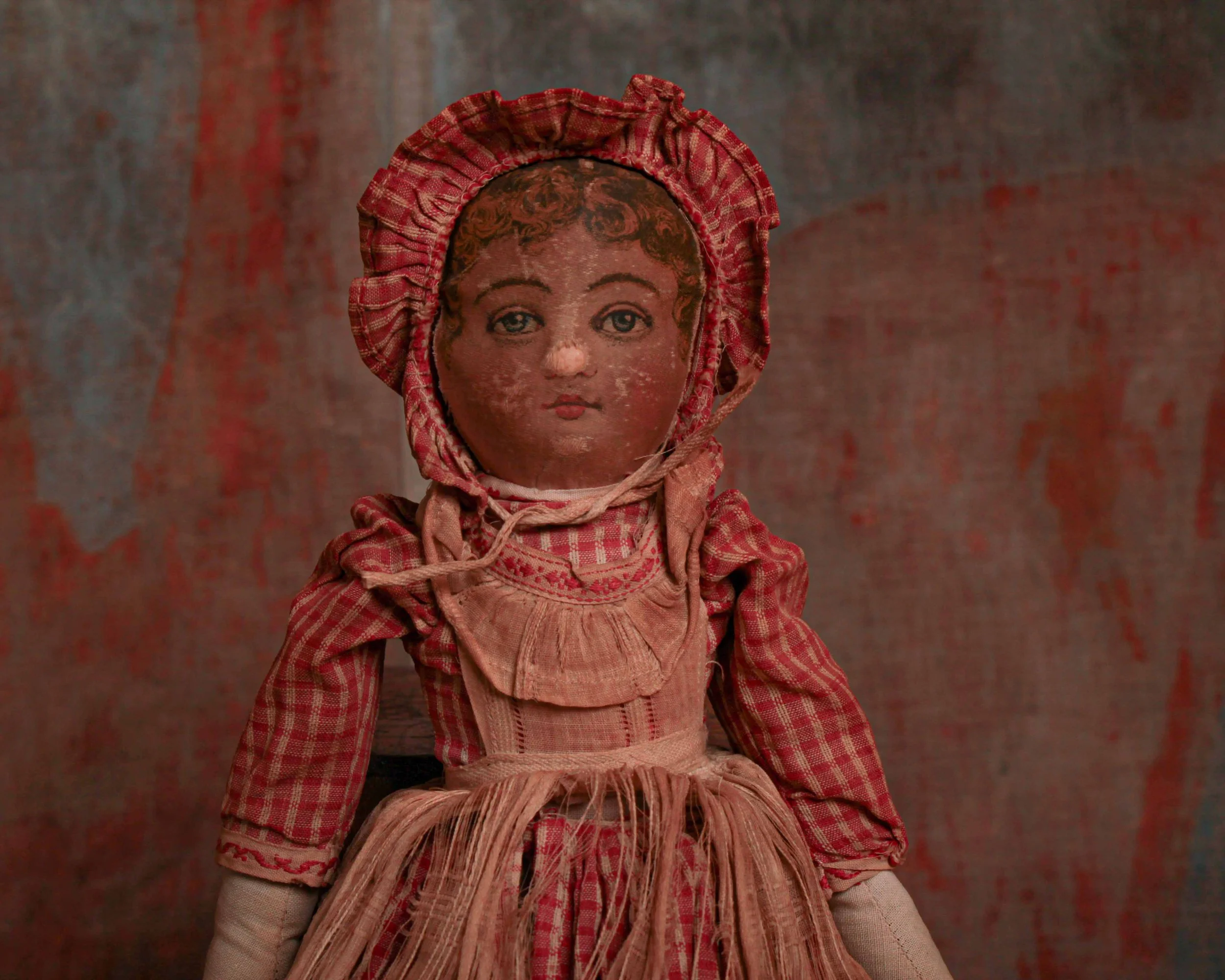
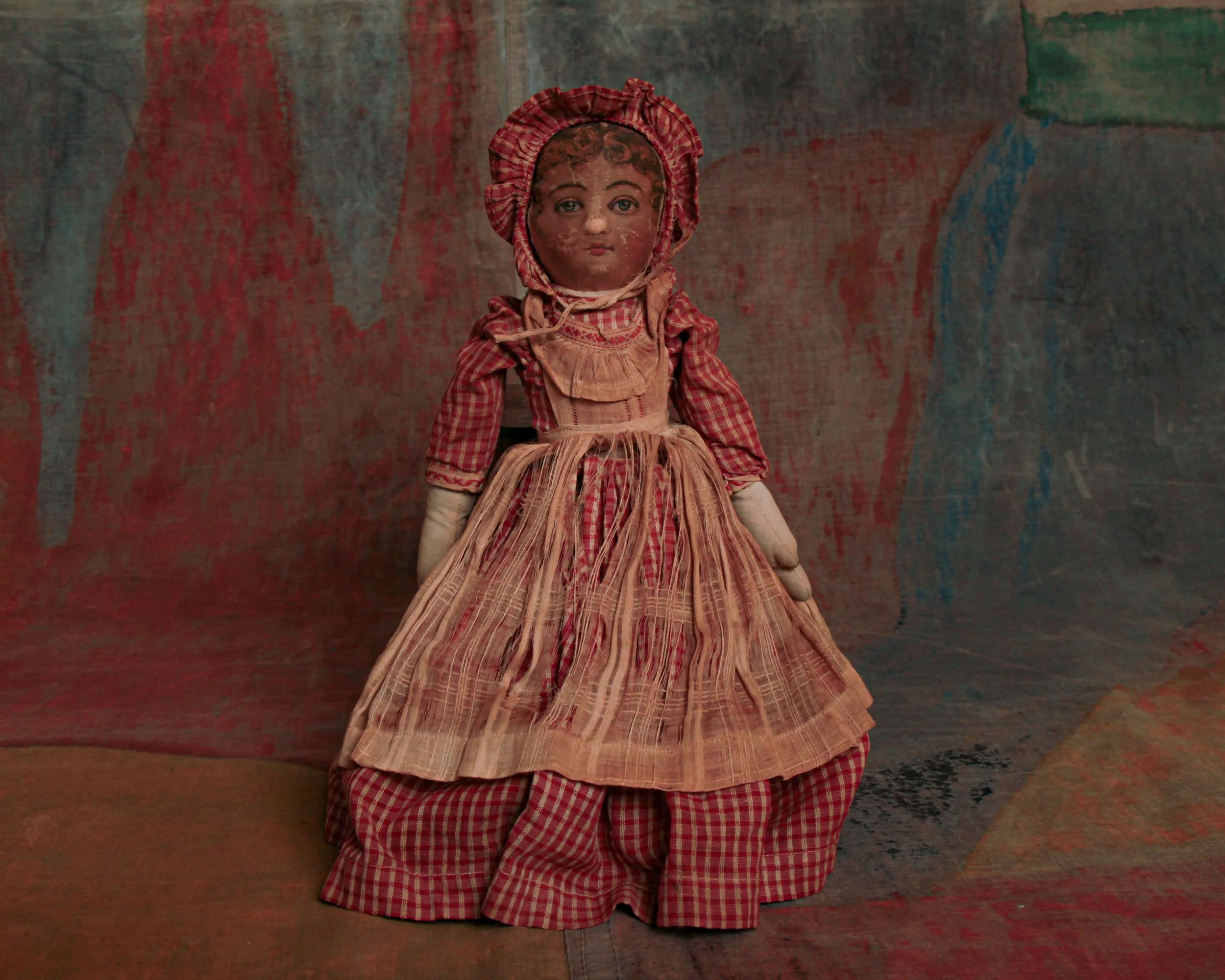
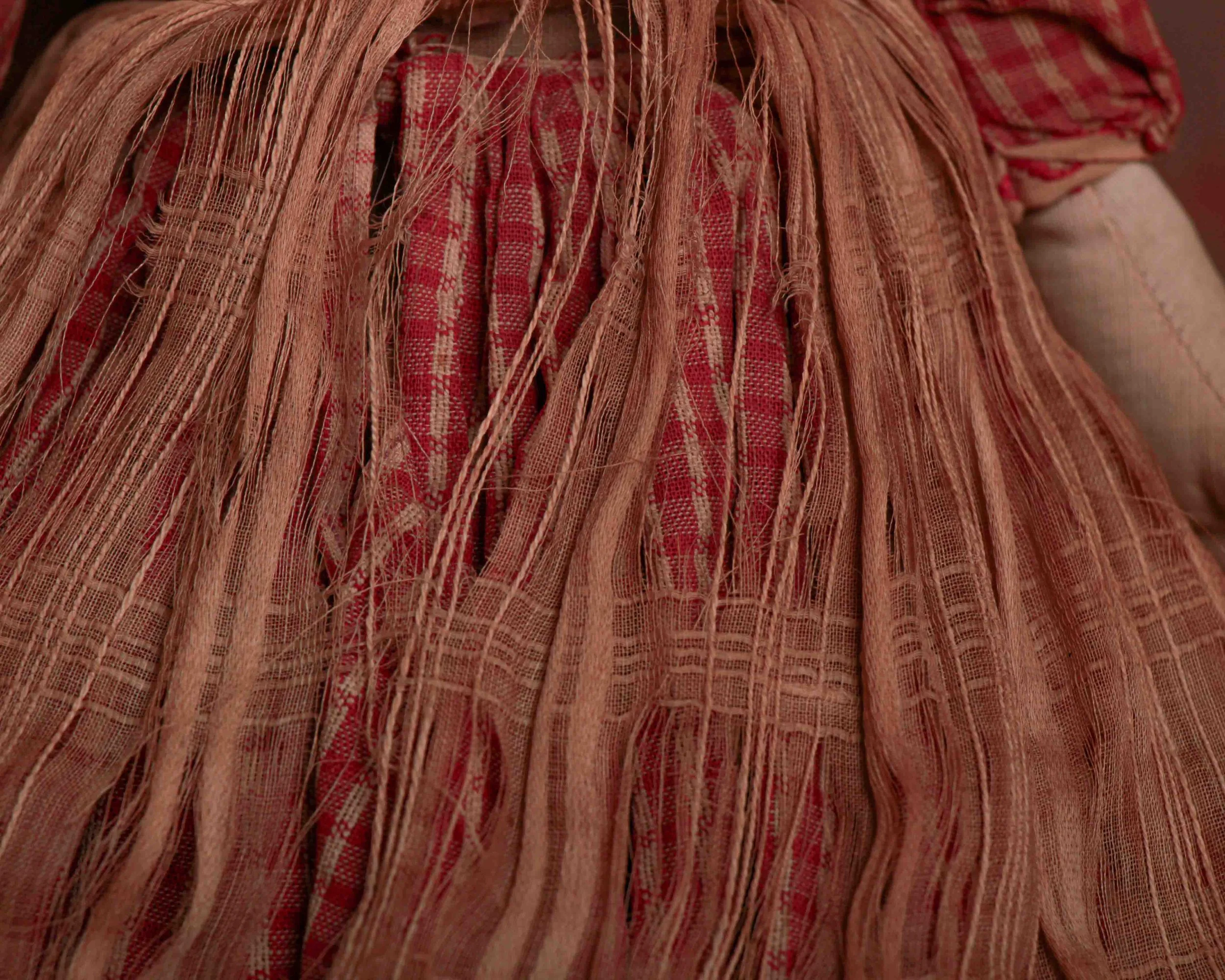
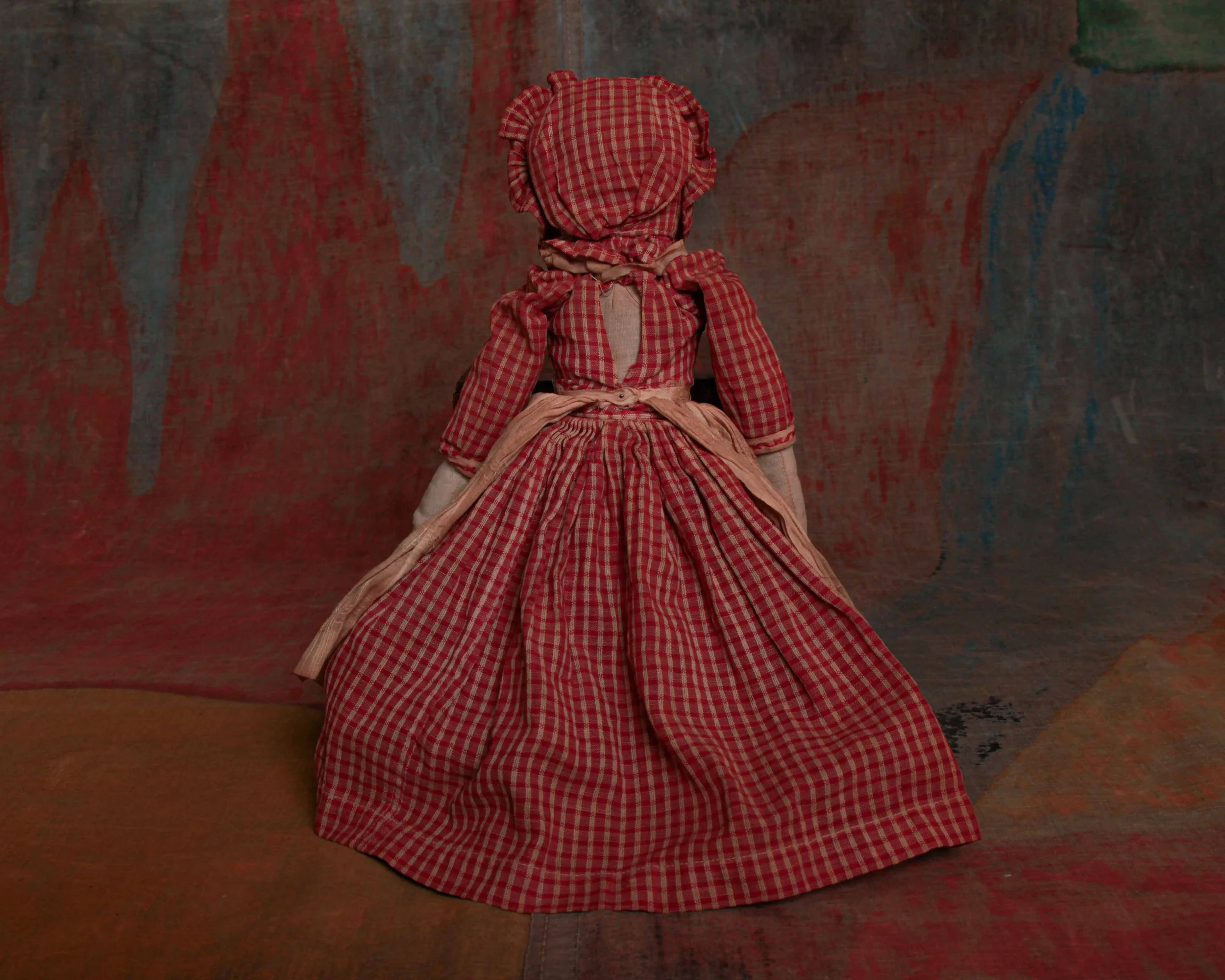
On one side, a young girl dressed in a red gingham dress with a softly gathered skirt and apron, her printed cotton face framed by a matching bonnet. Her expression is calm and steady, with delicately painted features that have mellowed beautifully over time. The fabric shows its age honestly, with gentle fading, soft wear, and the kind of surface texture that only comes from decades of handling.
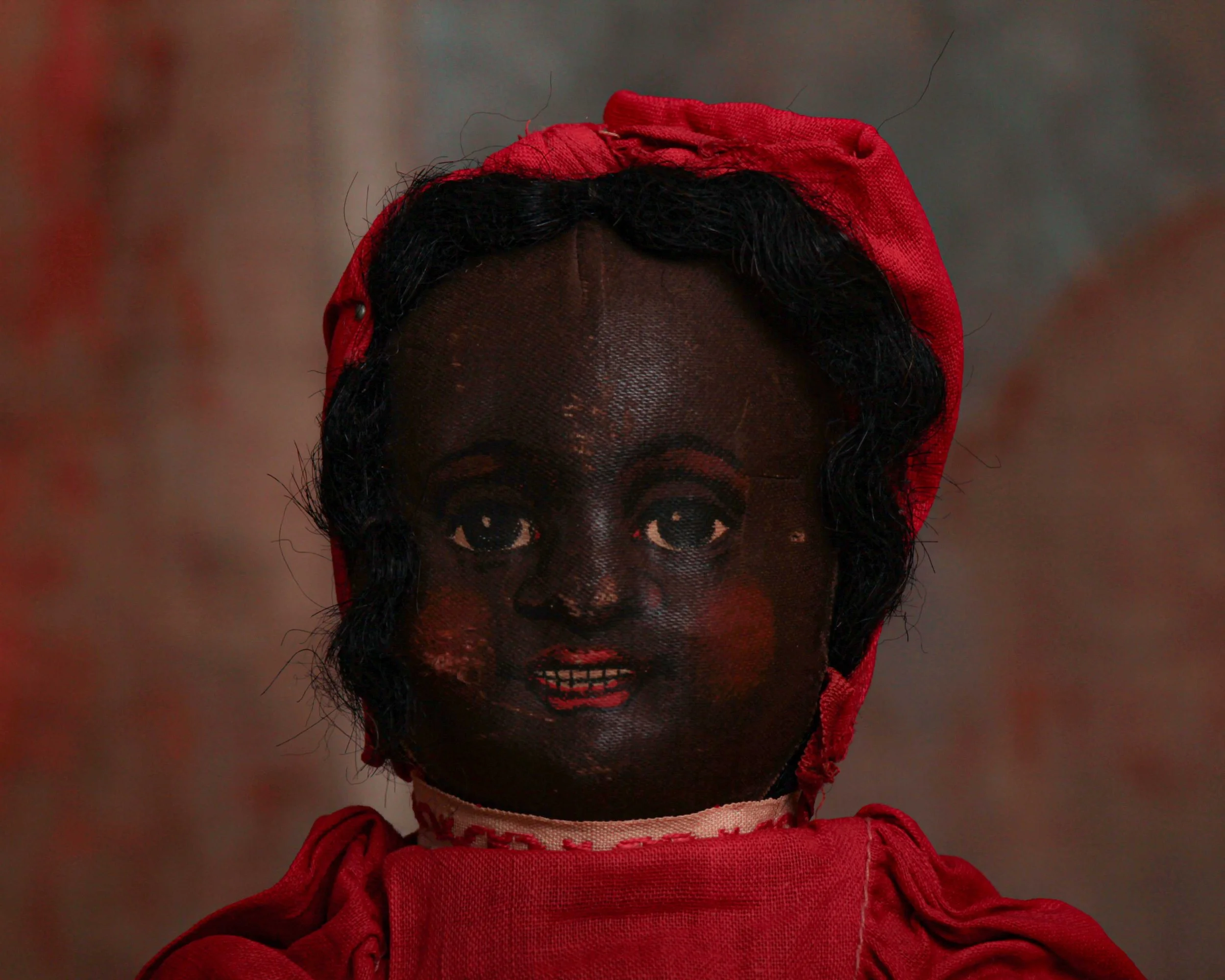
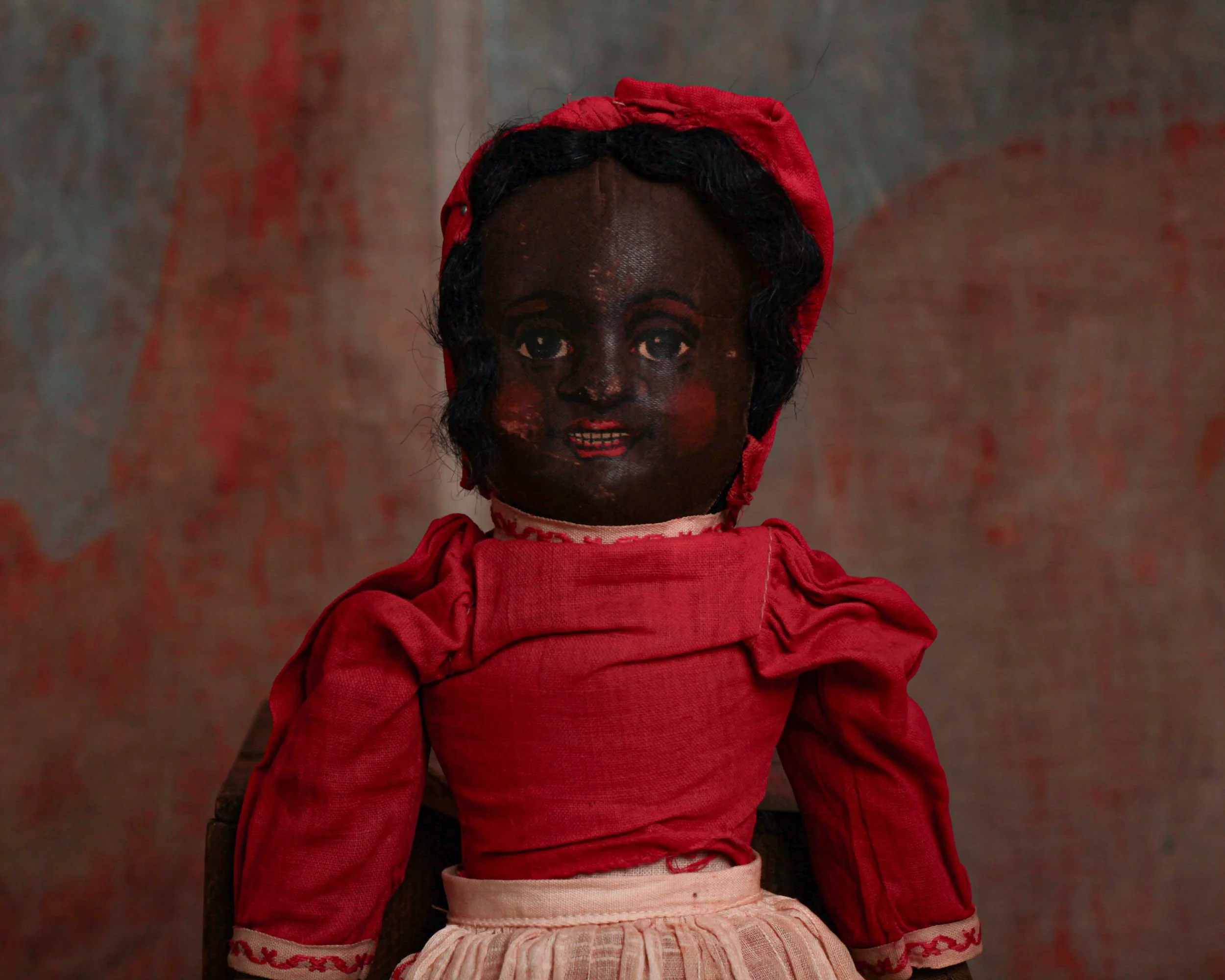
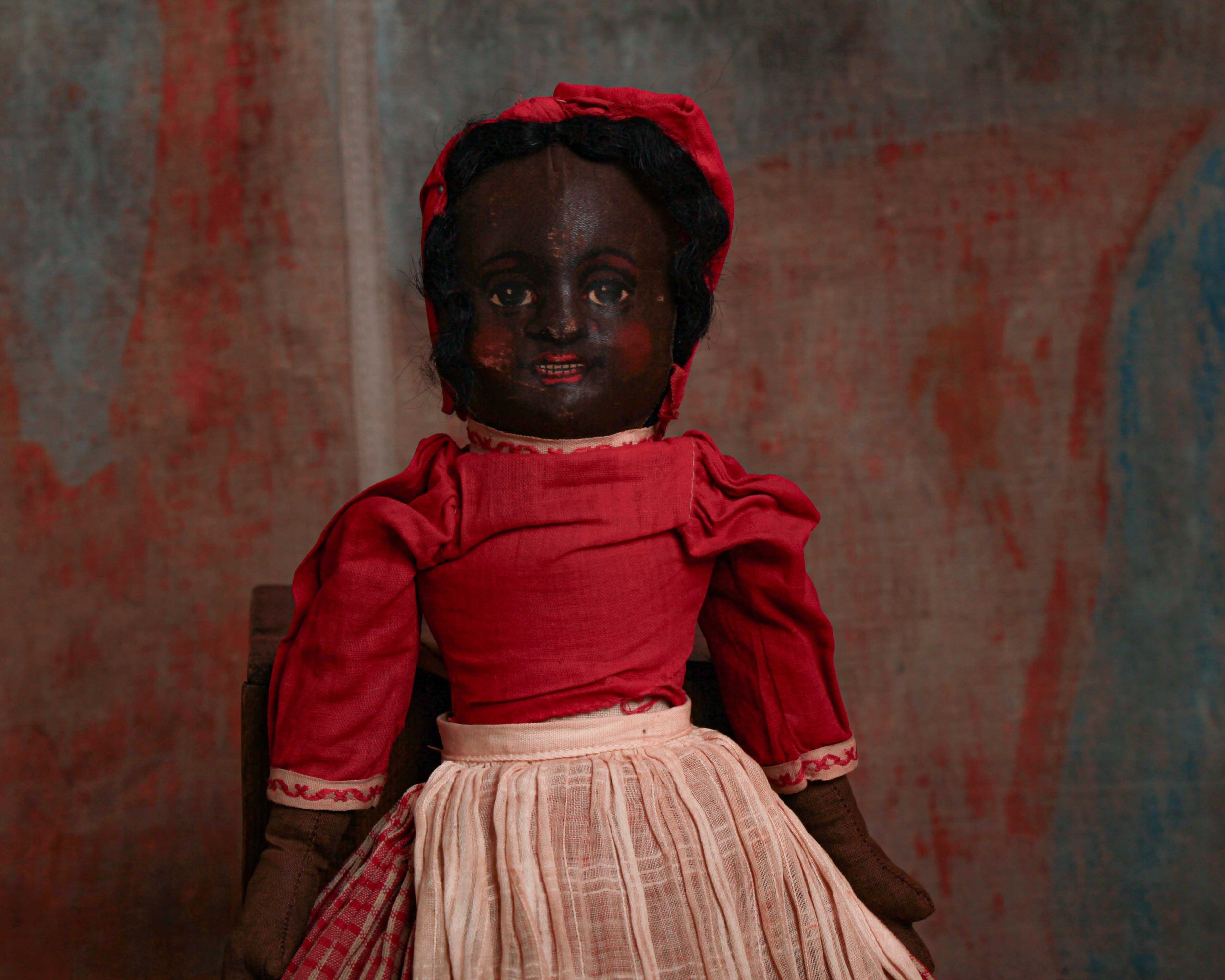
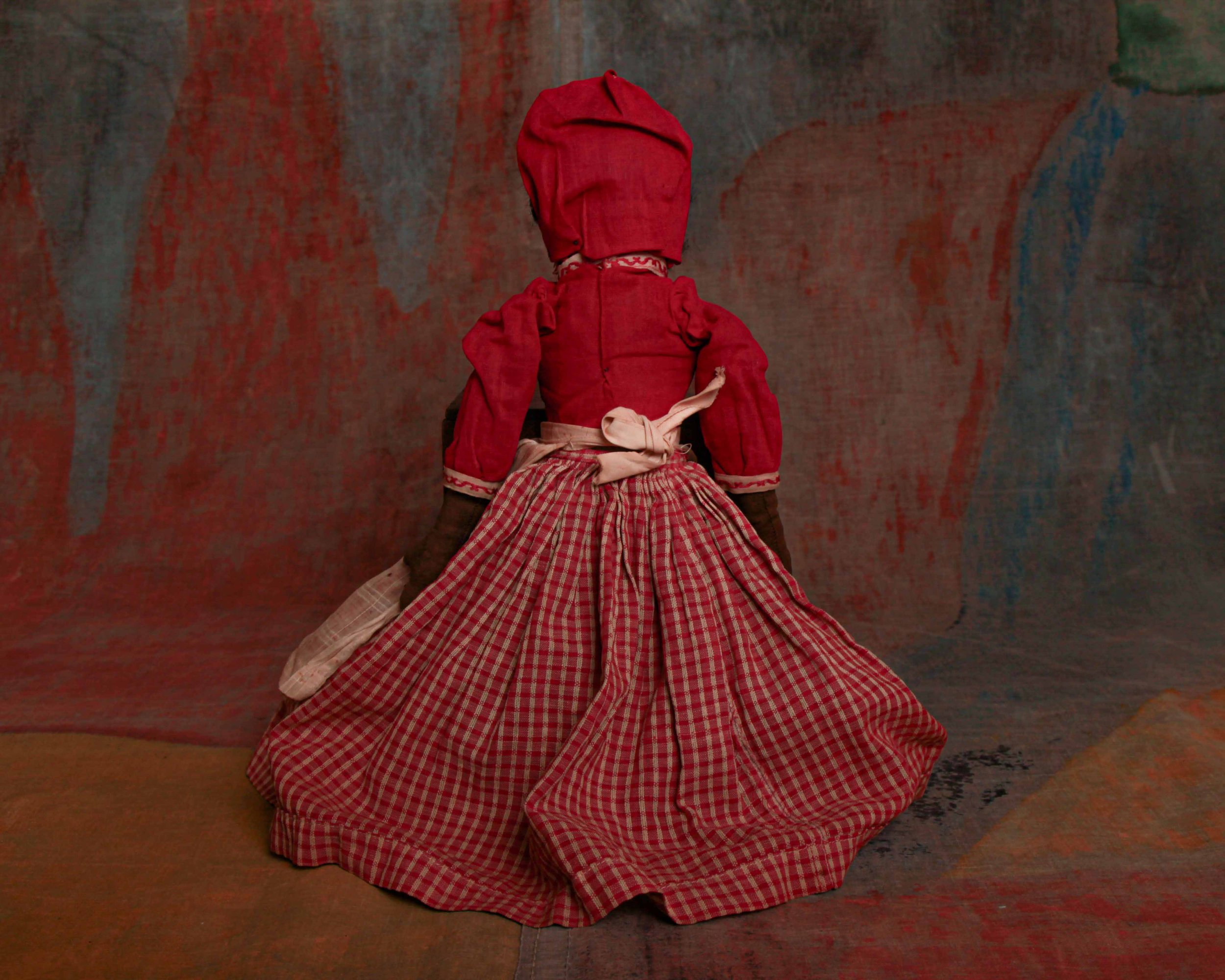
Turn her upside down and the second figure is revealed, emerging from beneath the skirt like a secret kept in plain sight. This figure wears a red dress with puffed sleeves and a matching head covering, the face painted directly onto dark fabric, expressive and direct, with carefully rendered eyes and a small, knowing smile. The contrast between the two figures is striking, and intentionally so, but the craftsmanship remains consistent. Both sides are made with care, balance, and a surprising sense of dignity.
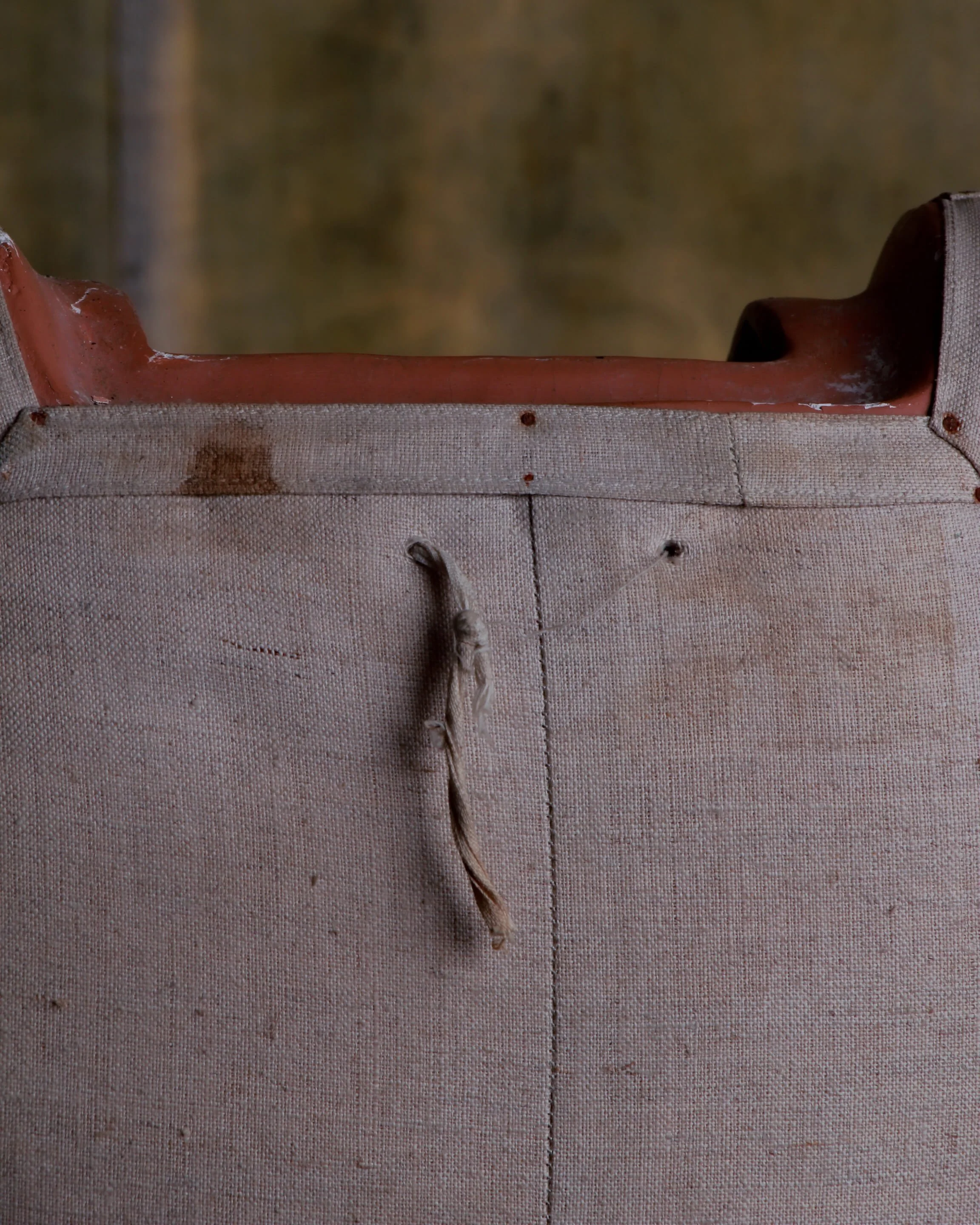
The construction is solid and well thought out. The stitching is sturdy, the proportions pleasing, the transformation seamless. When displayed, it feels sculptural, almost architectural, the skirts pooling naturally and concealing the hidden half until invited to reveal itself. It’s a doll meant to be interacted with, not just observed.
Historically, topsy-turvy dolls occupy a complicated space, blending folk art, childhood play, and social history into a single object.
Category History
The topsy-turvy doll is two dolls in one—flip it over and the character changes. Popular in the 19th century, it’s part toy, part ingenuity, with hidden skirts and dual identities stitched into a single form. Playful on the surface, it often carried deeper cultural and social narratives beneath.
A classic topsy-turvy doll, thoughtfully constructed and quietly complex, designed to flip from one figure to the other with a simple turn of the skirt. Two personalities, one body, stitched together not as a trick, but as a reflection of the world it came from.
On one side, a young girl dressed in a red gingham dress with a softly gathered skirt and apron, her printed cotton face framed by a matching bonnet. Her expression is calm and steady, with delicately painted features that have mellowed beautifully over time. The fabric shows its age honestly, with gentle fading, soft wear, and the kind of surface texture that only comes from decades of handling.
Turn her upside down and the second figure is revealed, emerging from beneath the skirt like a secret kept in plain sight. This figure wears a red dress with puffed sleeves and a matching head covering, the face painted directly onto dark fabric, expressive and direct, with carefully rendered eyes and a small, knowing smile. The contrast between the two figures is striking, and intentionally so, but the craftsmanship remains consistent. Both sides are made with care, balance, and a surprising sense of dignity.
The construction is solid and well thought out. The stitching is sturdy, the proportions pleasing, the transformation seamless. When displayed, it feels sculptural, almost architectural, the skirts pooling naturally and concealing the hidden half until invited to reveal itself. It’s a doll meant to be interacted with, not just observed.
Historically, topsy-turvy dolls occupy a complicated space, blending folk art, childhood play, and social history into a single object.
Category History
The topsy-turvy doll is two dolls in one—flip it over and the character changes. Popular in the 19th century, it’s part toy, part ingenuity, with hidden skirts and dual identities stitched into a single form. Playful on the surface, it often carried deeper cultural and social narratives beneath.