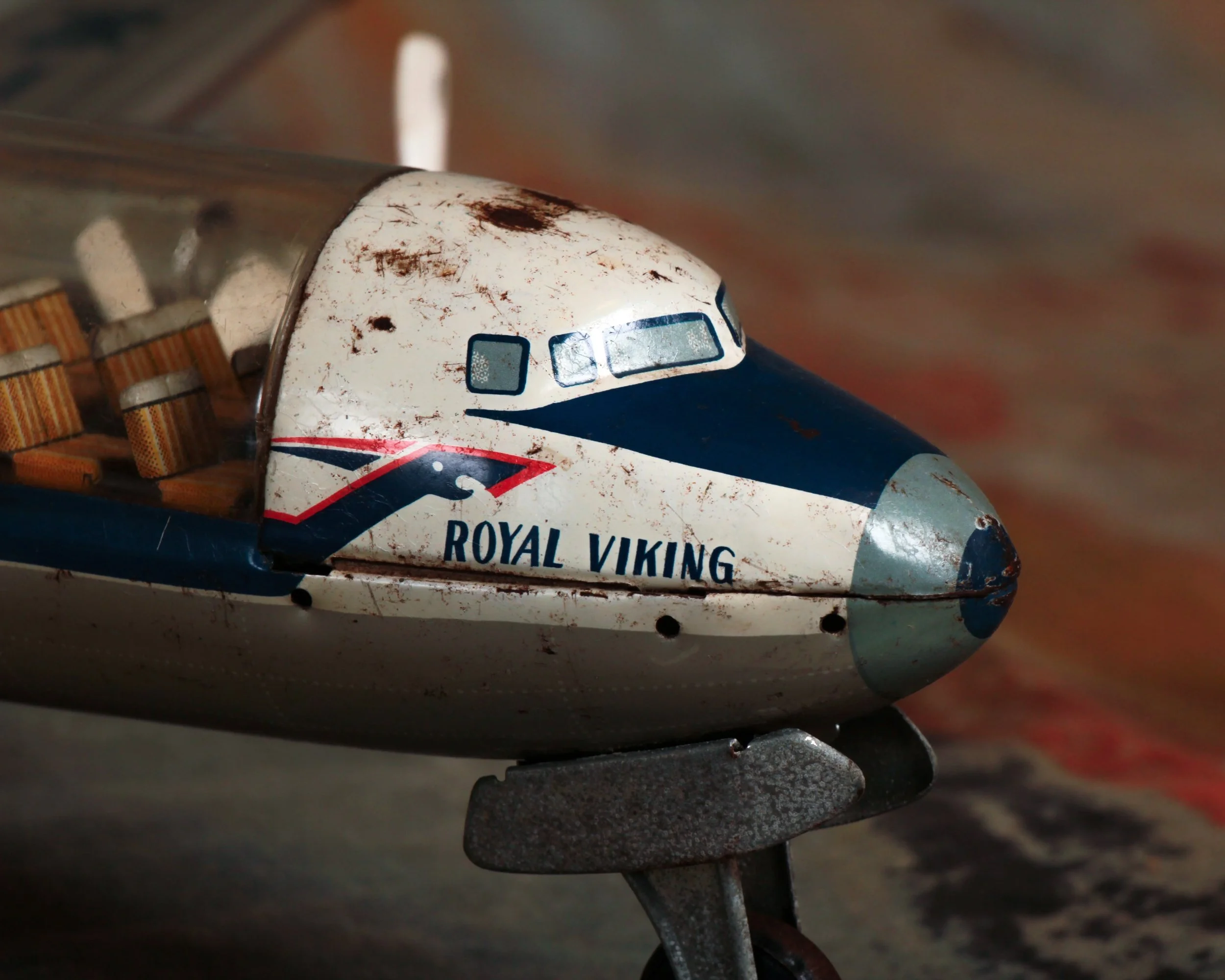
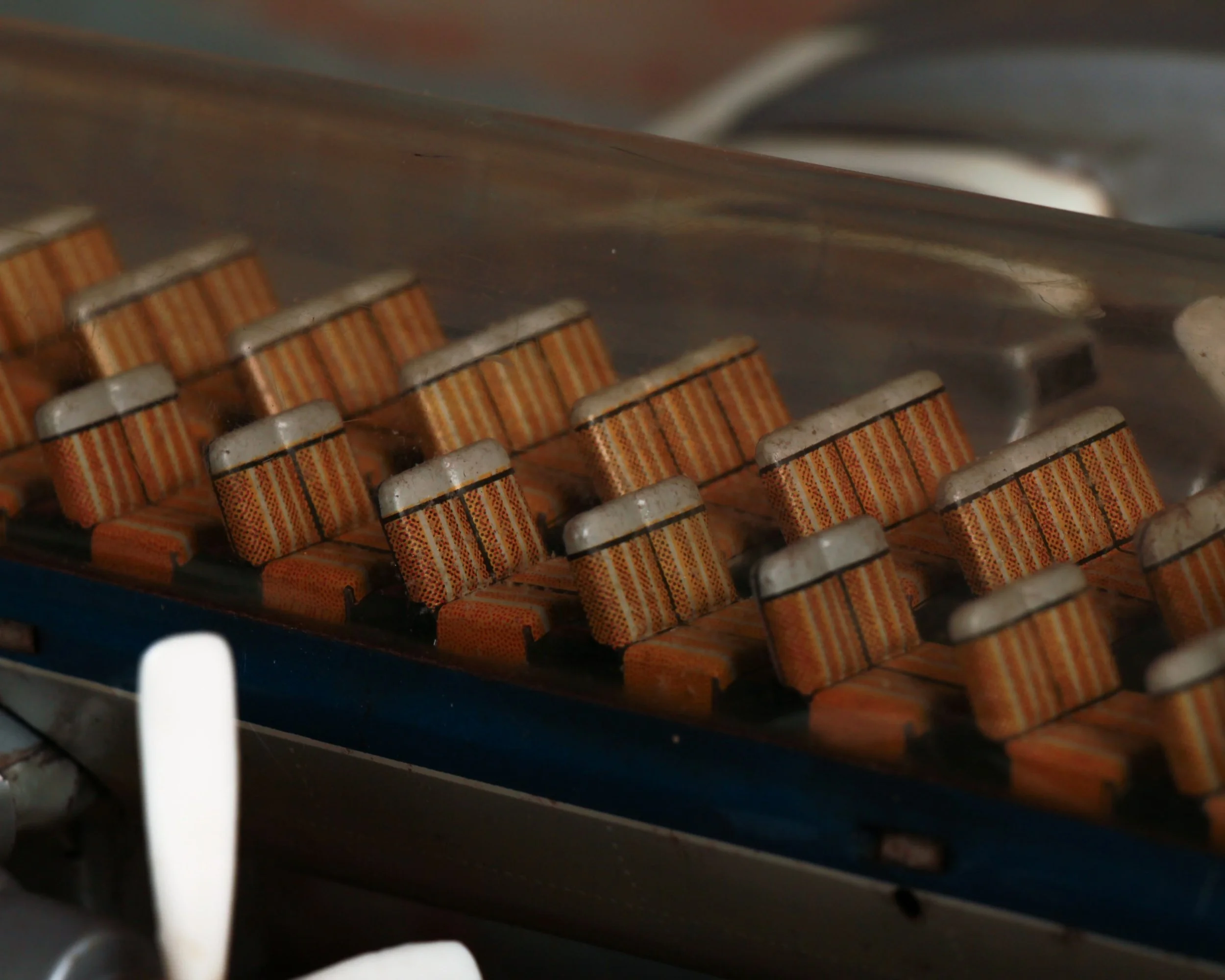
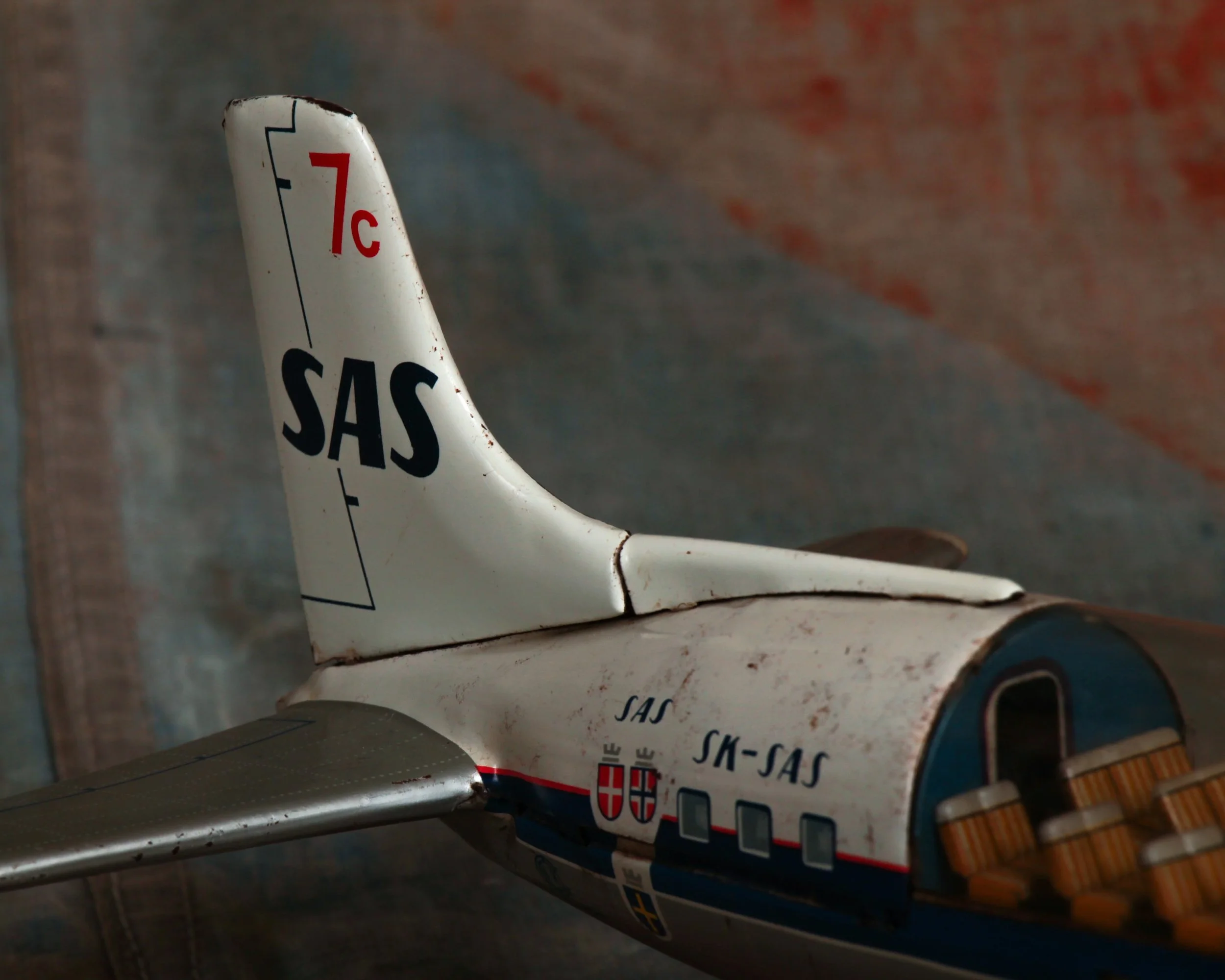

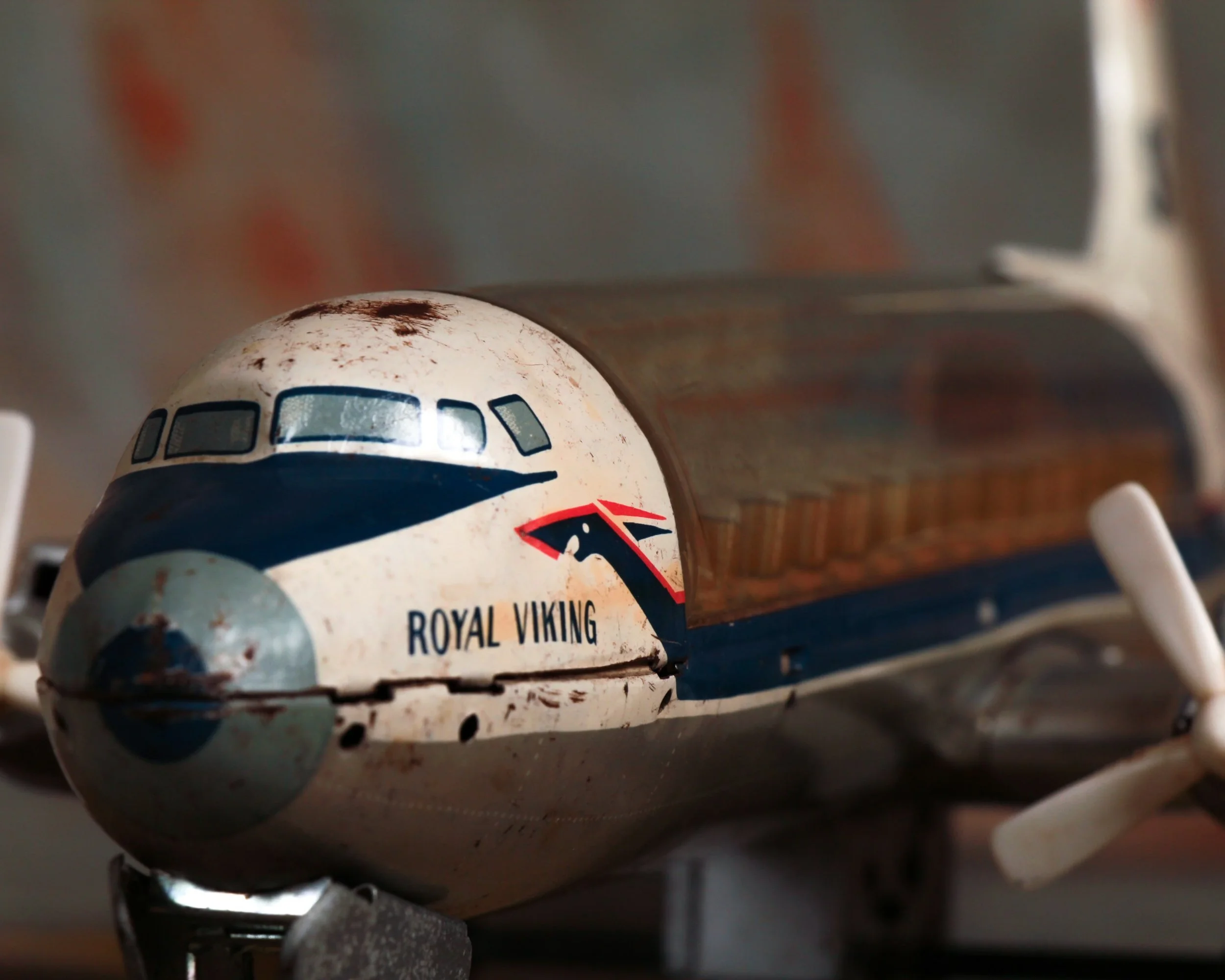
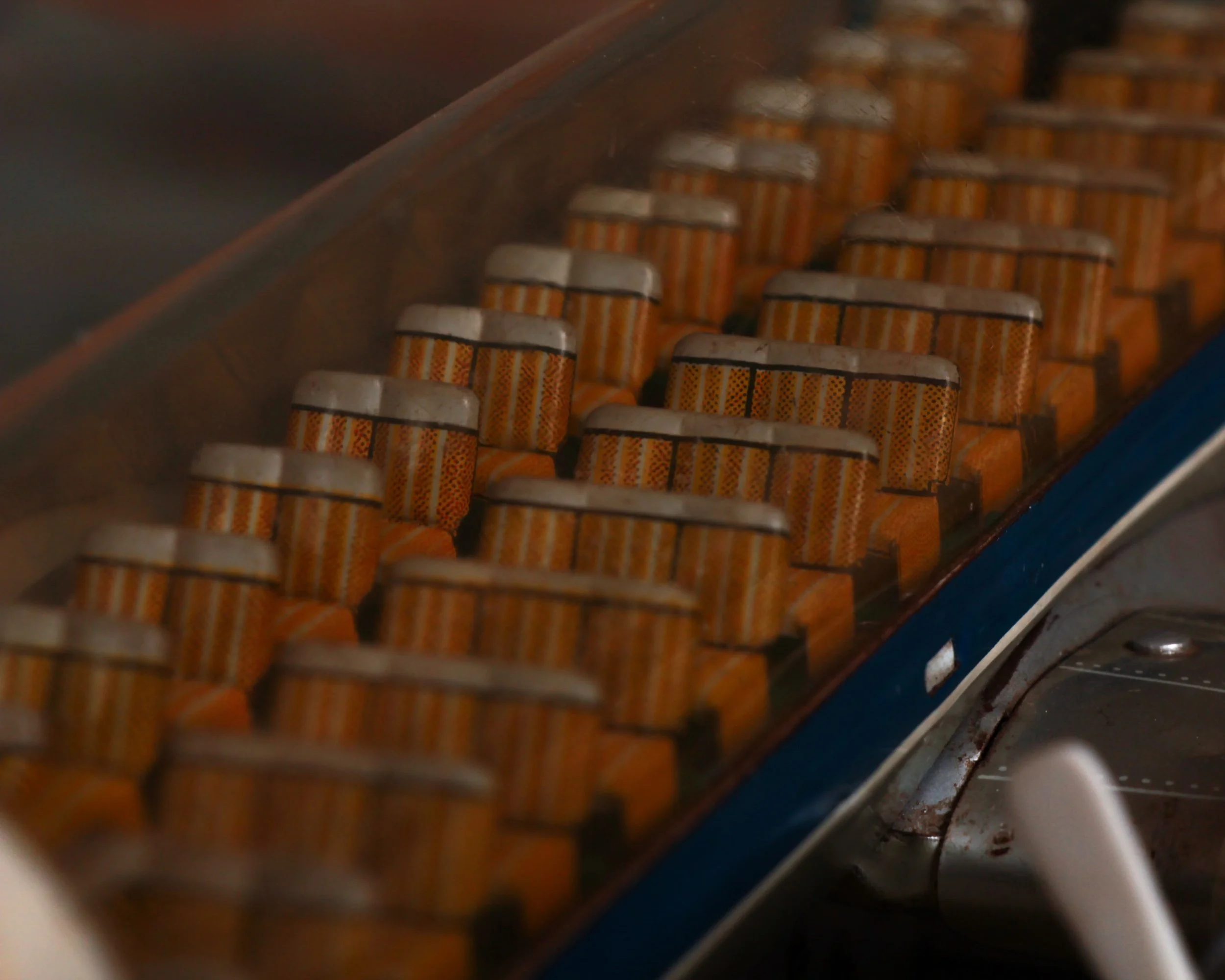

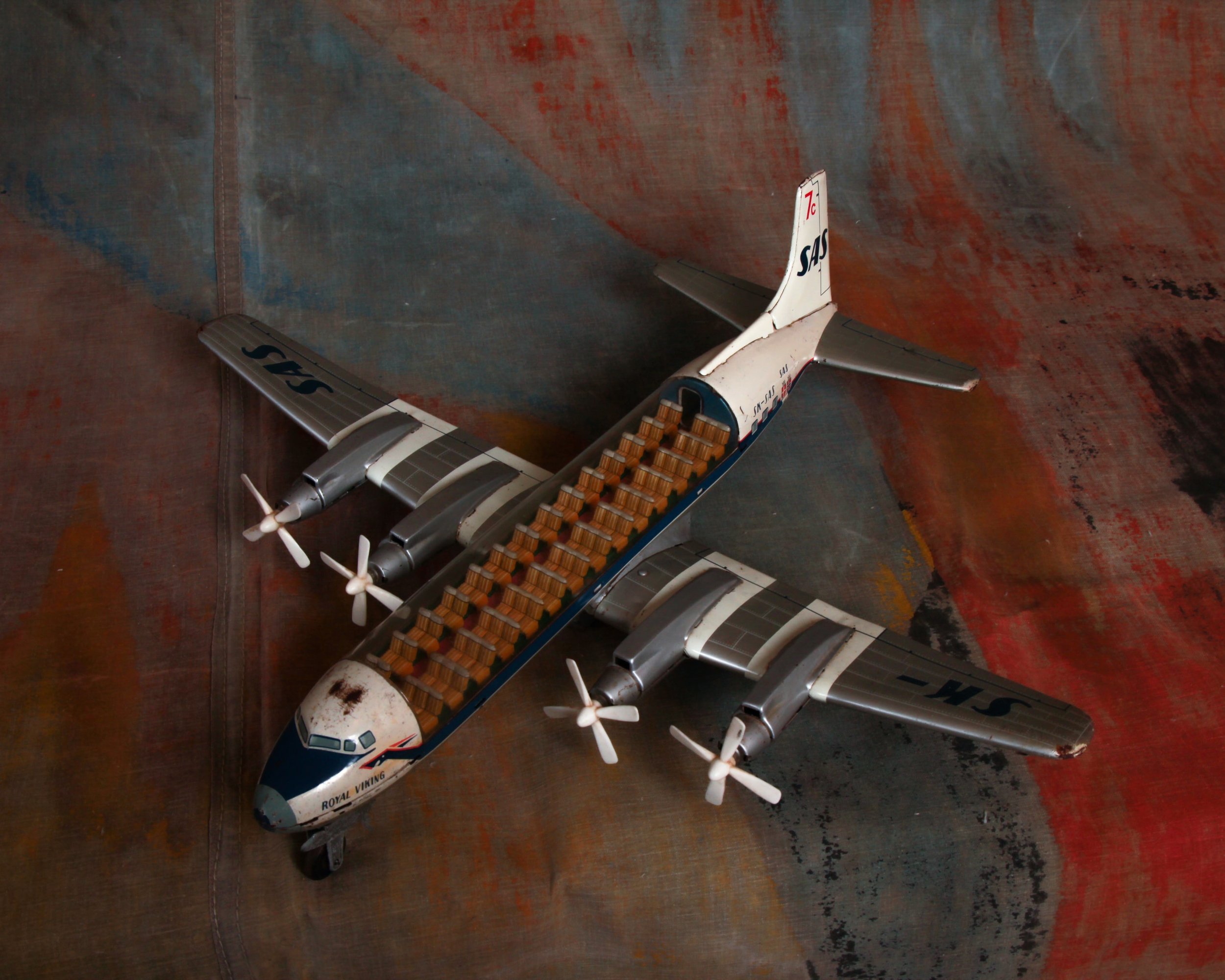

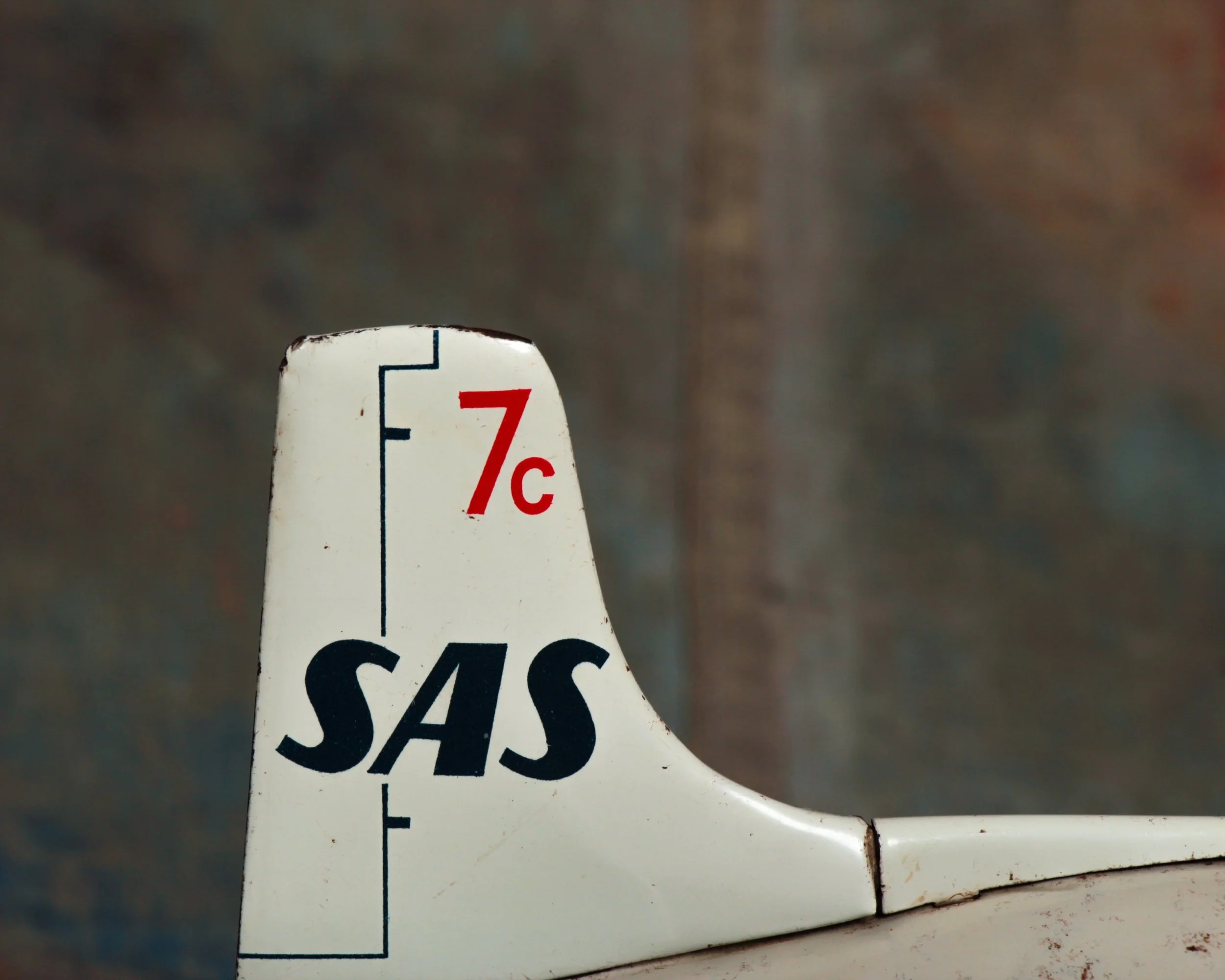
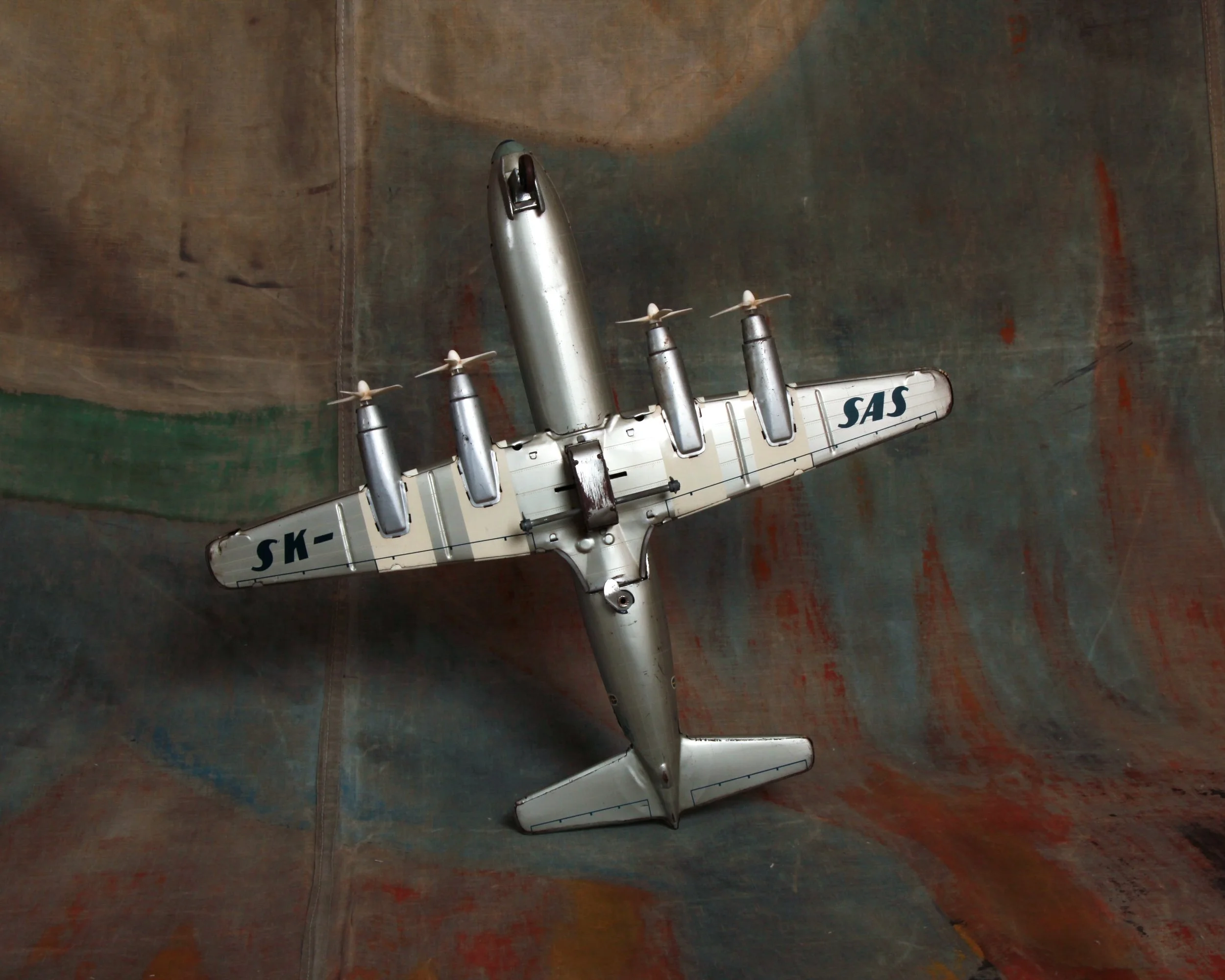
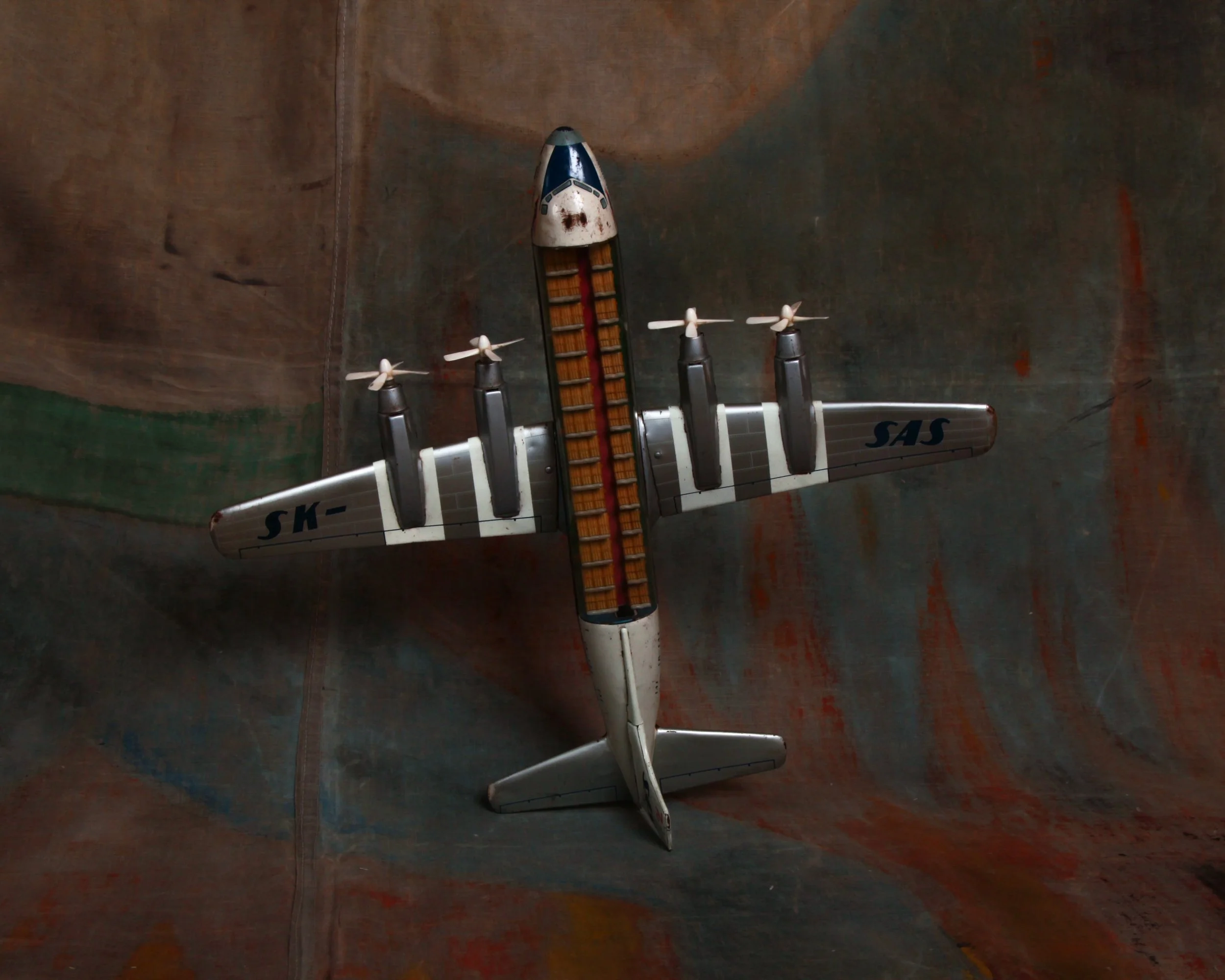
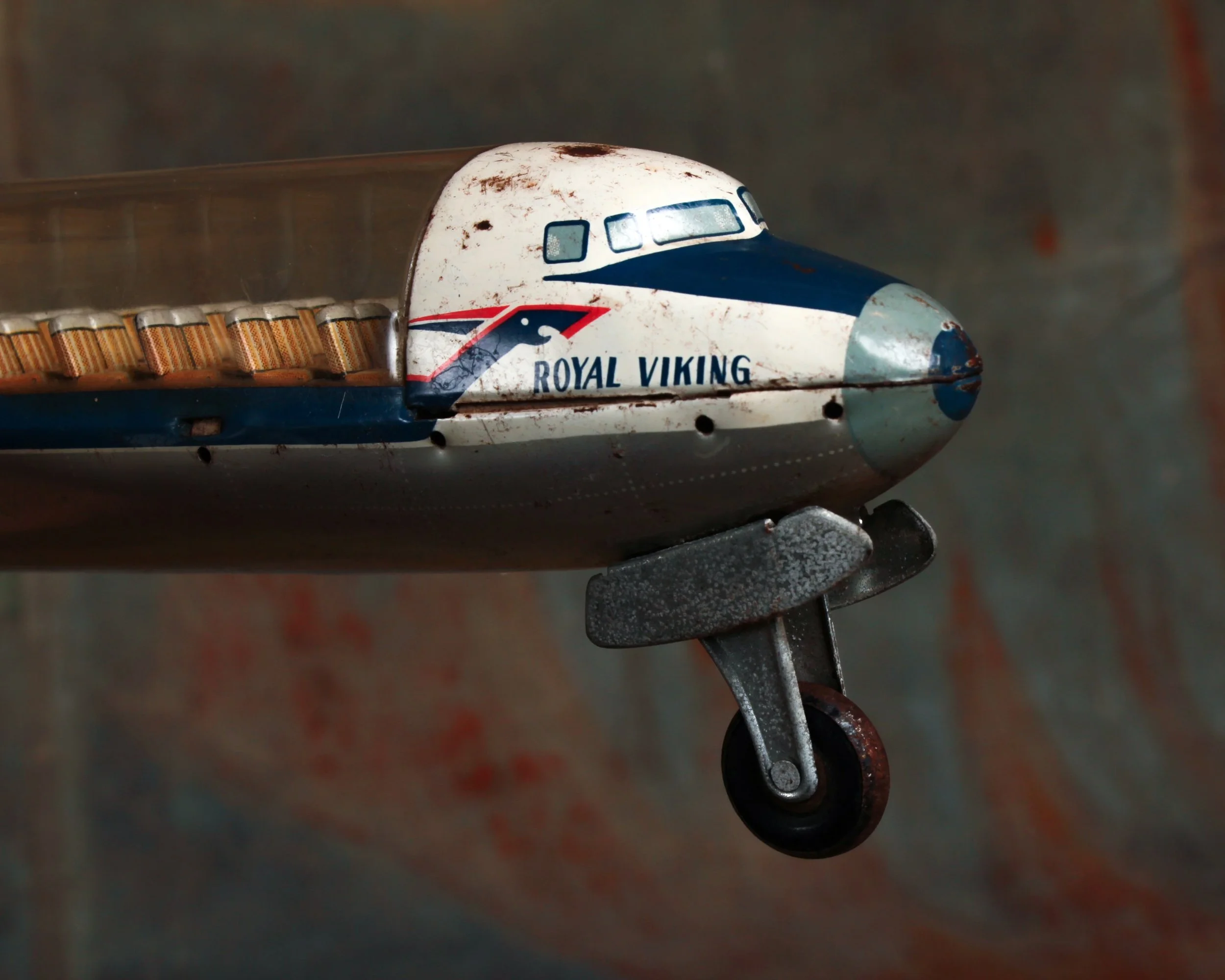
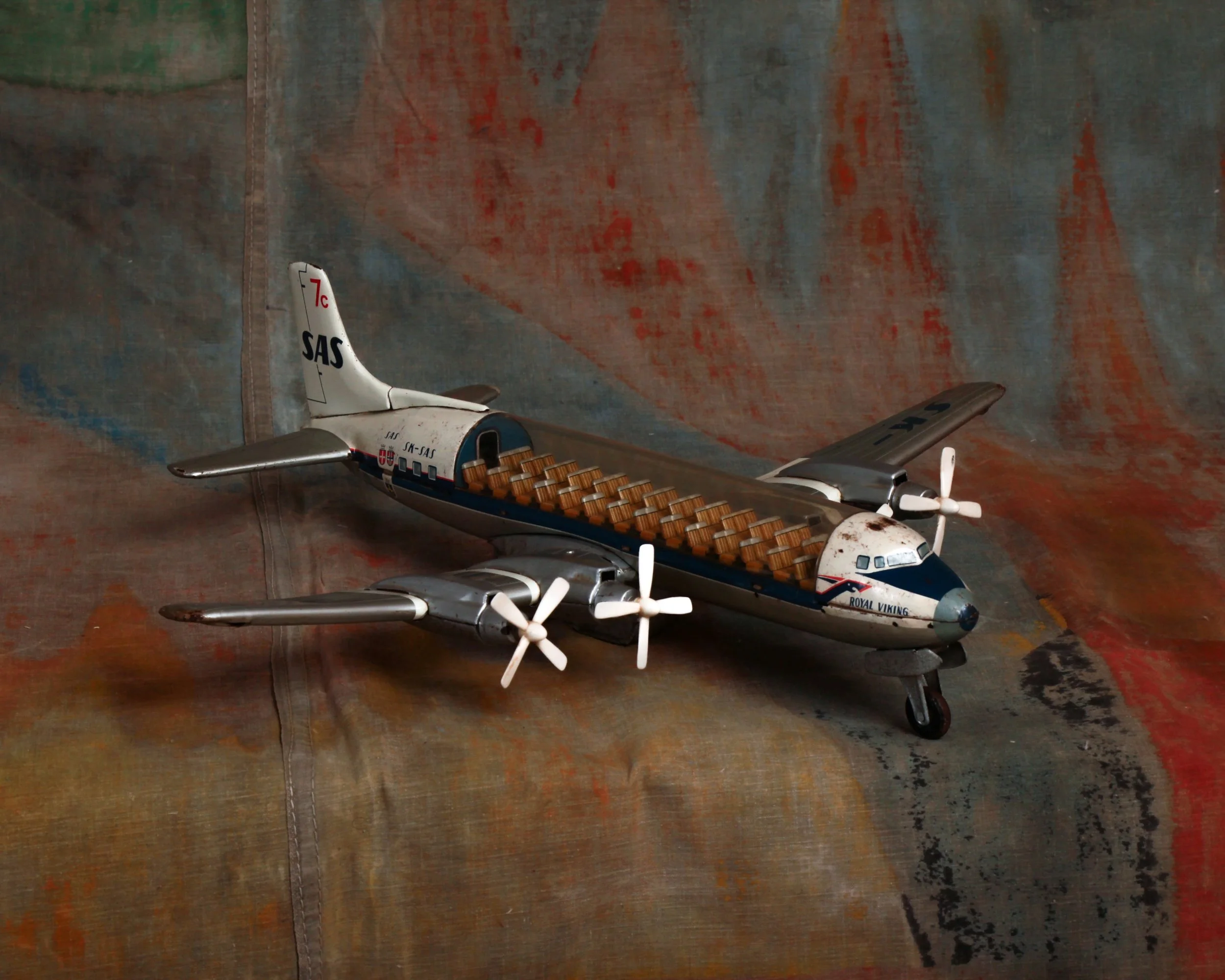
This 1960s Scandinavian Air Service toy airplane is made of tin lithograph with hard plastic elements, it features a detailed cutaway fuselage revealing neat rows of passenger seats, turning a simple toy into a miniature window into mid-century air travel.
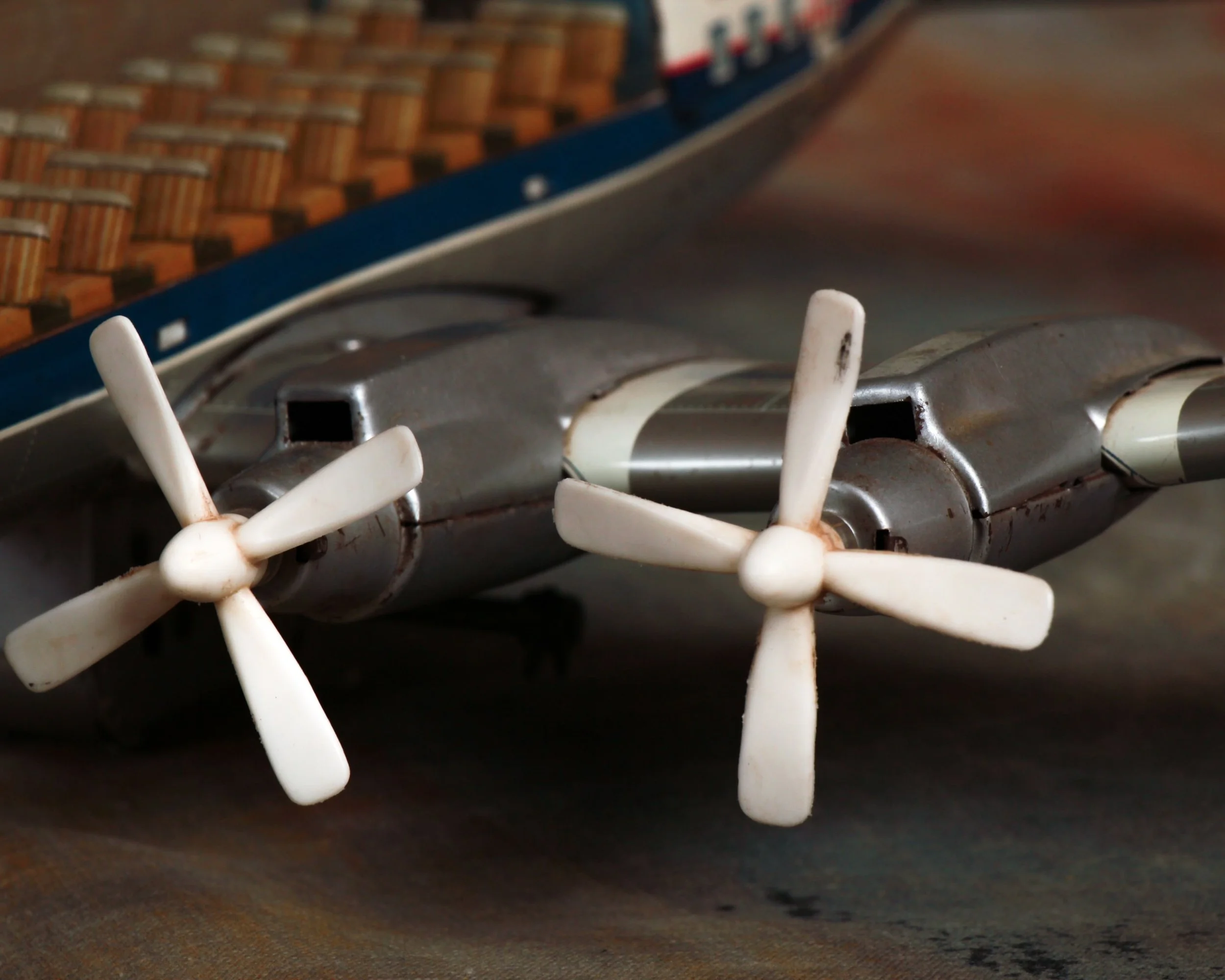
Made in Japan, it carries that perfect balance of playfulness and precision—spinning propellers, crisp graphics, and just enough wear to remind you it’s logged a few imaginary miles. The SAS markings and “Royal Viking” details root it firmly in the golden age of commercial aviation, when flying still felt like an occasion.
Measures 18" wide, 19" deep, and 5.5" high. A standout display piece for anyone drawn to aviation, design, or the quiet romance of a cabin full of tiny passengers heading somewhere far off.
Category History
Mid-century tin lithograph toys are where industry meets imagination at full speed. From the 1930s through the 1960s, makers in Japan, Germany, and the U.S. turned thin sheets of tin into bright, mechanical playthings—cars, robots, airplanes, space gadgets—each brought to life with wind-up keys or simple friction motors.
The magic is in the surface. Lithography allowed for crisp, colorful graphics printed directly onto the metal—logos, gauges, windows, tiny passengers—all rendered with a kind of optimistic precision. Even when the forms are simple, the detail sells the illusion.
Inside, the mechanics are straightforward but satisfying. Gears, springs, and cams translate a twist of the key into movement—rolling wheels, spinning propellers, wobbling figures. Nothing hidden, just a clear cause and effect.
They were built for play, not preservation, so surviving examples often show scratches, dings, and softened edges from years of use. That wear feels right.
What stands out now is their balance of charm and ingenuity. Lightweight, durable, and visually bold, they capture a moment when toys didn’t need batteries—just a little winding and a lot of imagination.
This 1960s Scandinavian Air Service toy airplane is made of tin lithograph with hard plastic elements, it features a detailed cutaway fuselage revealing neat rows of passenger seats, turning a simple toy into a miniature window into mid-century air travel.
Made in Japan, it carries that perfect balance of playfulness and precision—spinning propellers, crisp graphics, and just enough wear to remind you it’s logged a few imaginary miles. The SAS markings and “Royal Viking” details root it firmly in the golden age of commercial aviation, when flying still felt like an occasion.
Measures 18" wide, 19" deep, and 5.5" high. A standout display piece for anyone drawn to aviation, design, or the quiet romance of a cabin full of tiny passengers heading somewhere far off.
Category History
Mid-century tin lithograph toys are where industry meets imagination at full speed. From the 1930s through the 1960s, makers in Japan, Germany, and the U.S. turned thin sheets of tin into bright, mechanical playthings—cars, robots, airplanes, space gadgets—each brought to life with wind-up keys or simple friction motors.
The magic is in the surface. Lithography allowed for crisp, colorful graphics printed directly onto the metal—logos, gauges, windows, tiny passengers—all rendered with a kind of optimistic precision. Even when the forms are simple, the detail sells the illusion.
Inside, the mechanics are straightforward but satisfying. Gears, springs, and cams translate a twist of the key into movement—rolling wheels, spinning propellers, wobbling figures. Nothing hidden, just a clear cause and effect.
They were built for play, not preservation, so surviving examples often show scratches, dings, and softened edges from years of use. That wear feels right.
What stands out now is their balance of charm and ingenuity. Lightweight, durable, and visually bold, they capture a moment when toys didn’t need batteries—just a little winding and a lot of imagination.