ITEM NOT AVAILABLE IMMEDIATELY—INQUIRE IF INTERESTED hello@heimweeantiques.com
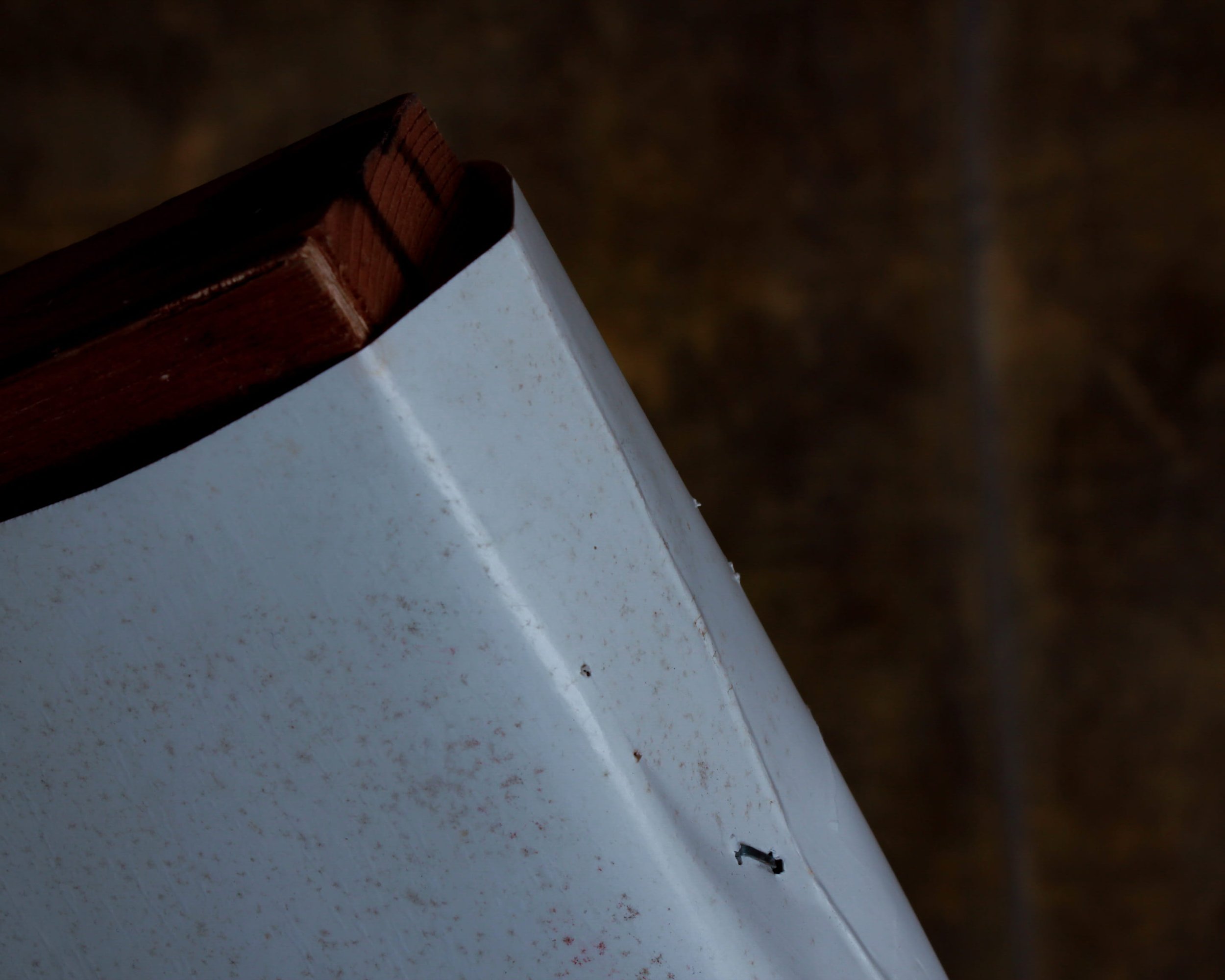
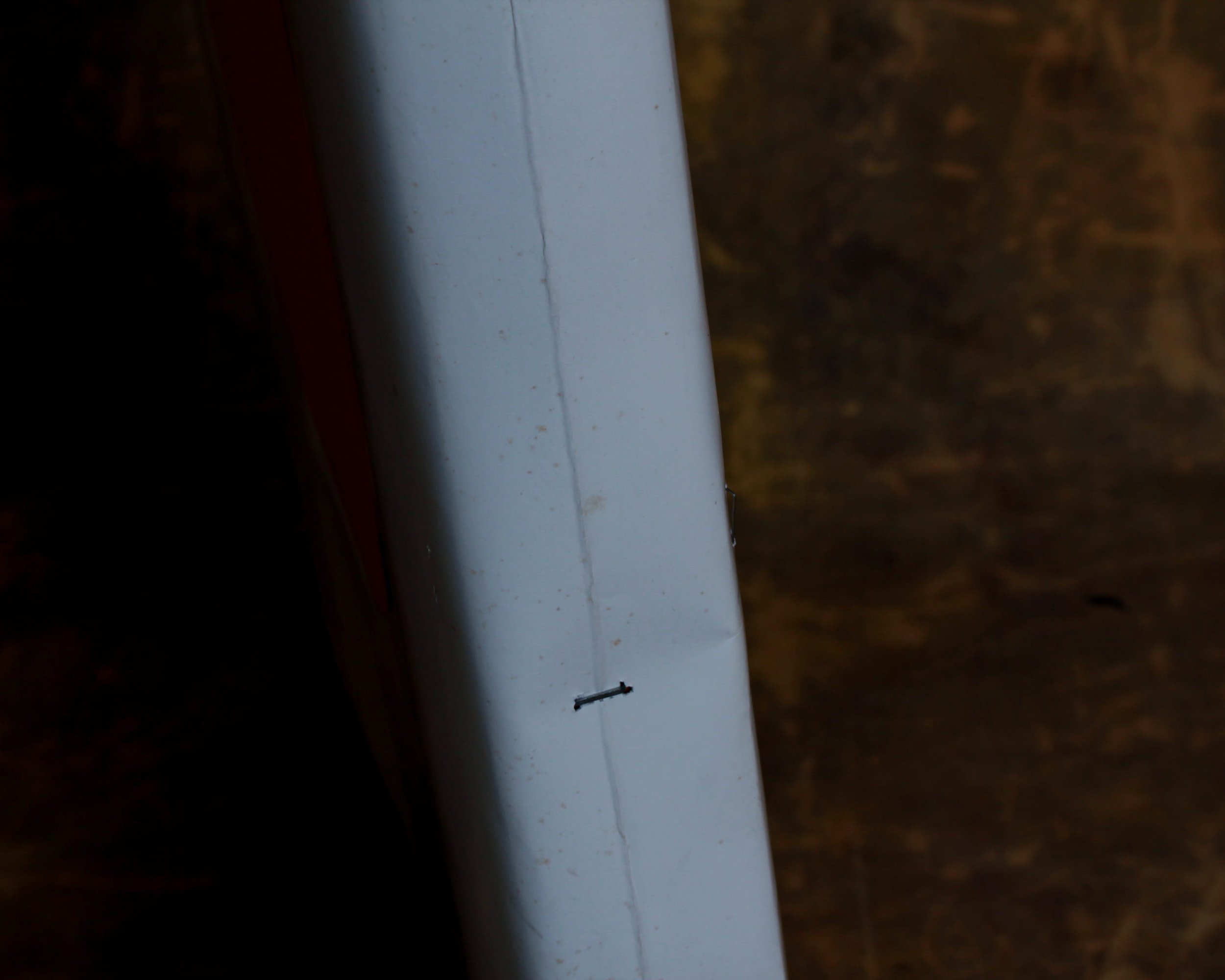
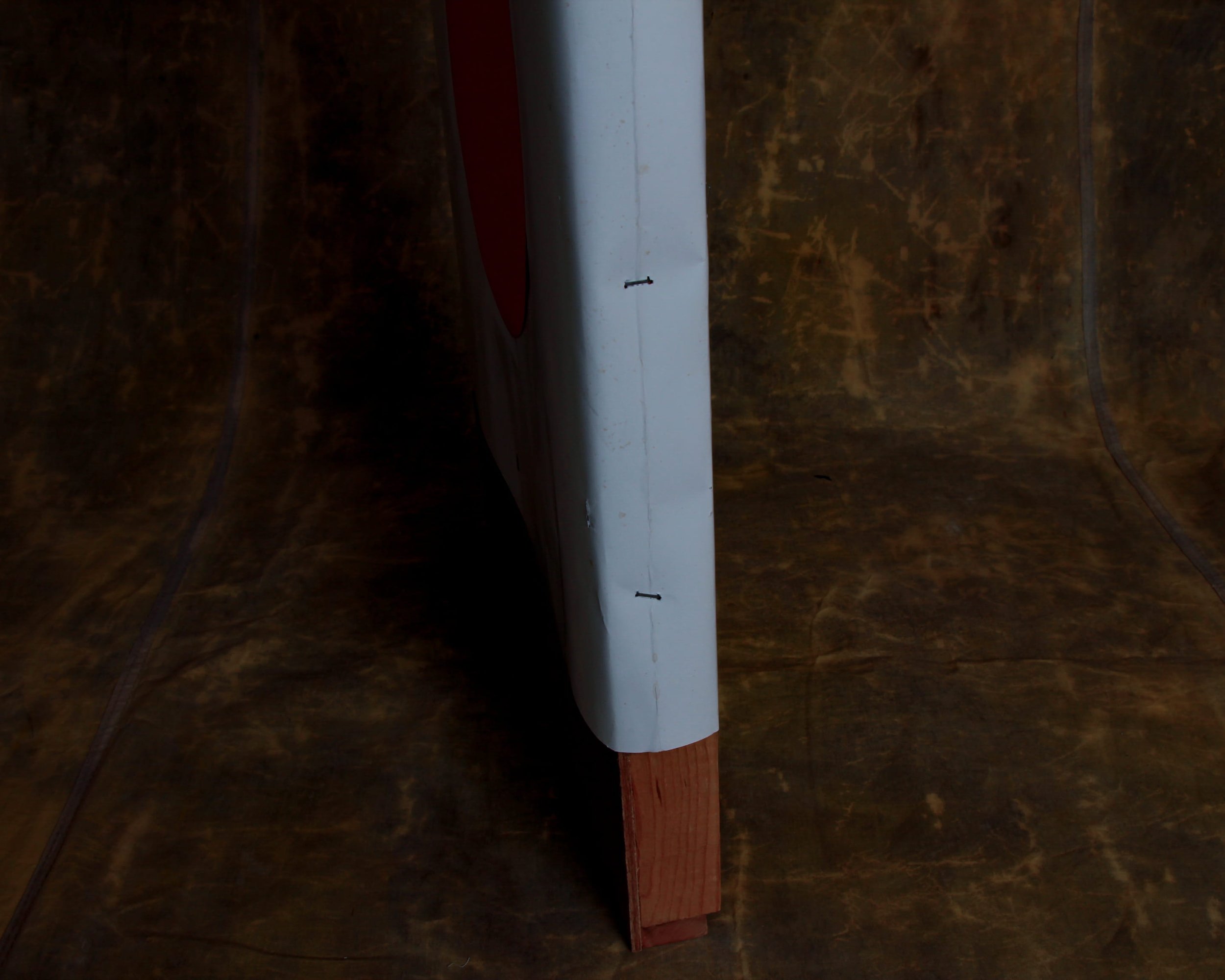
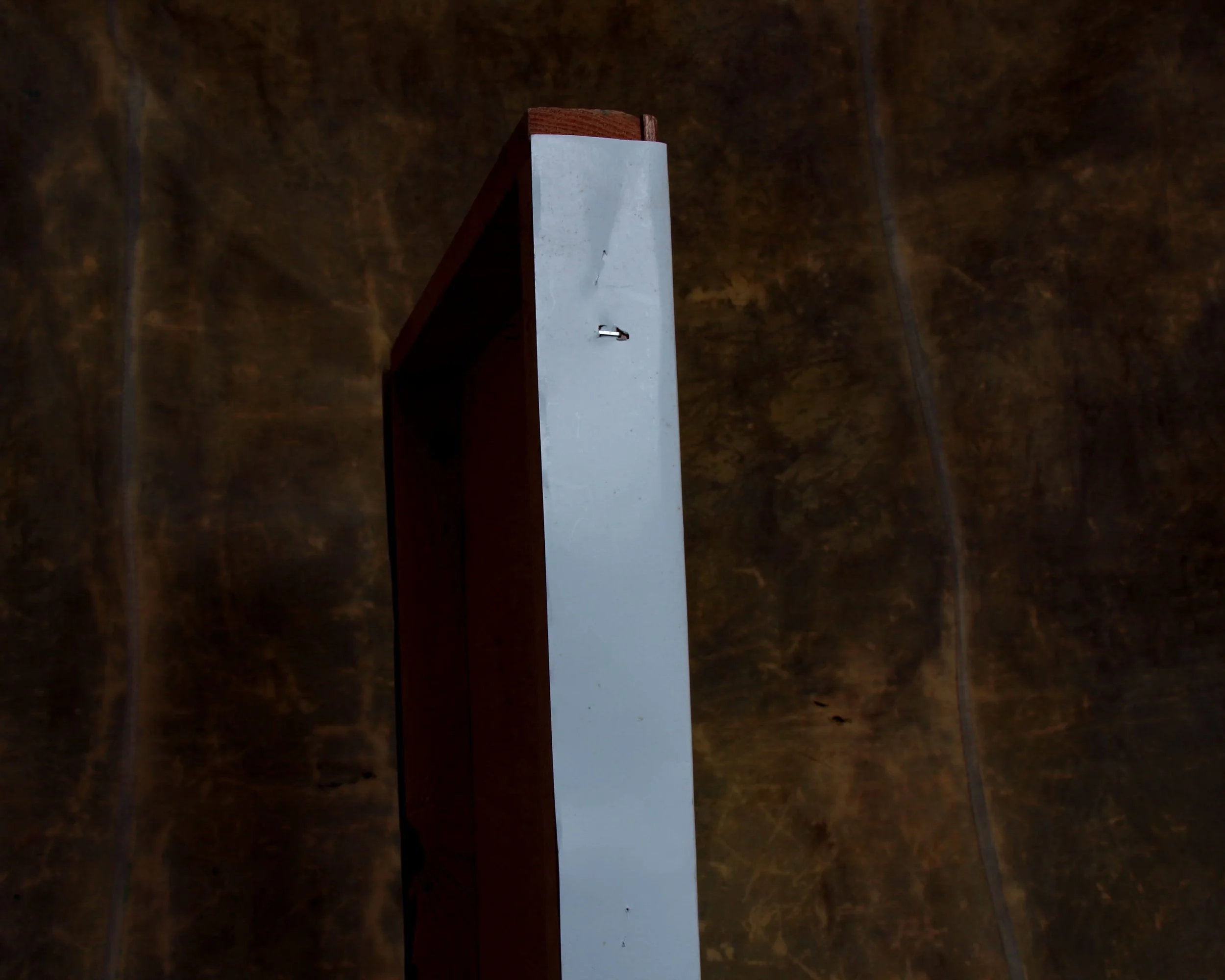
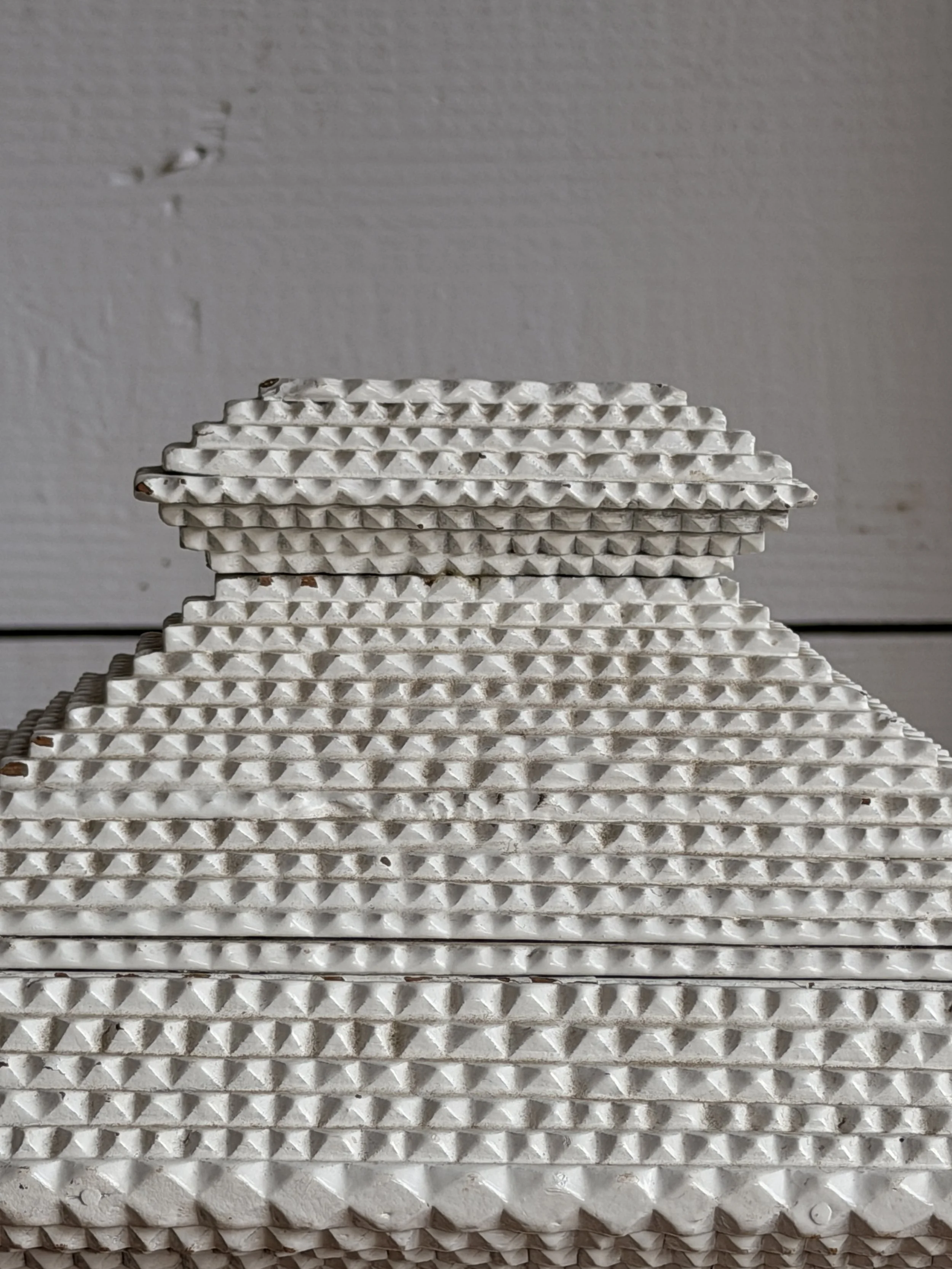
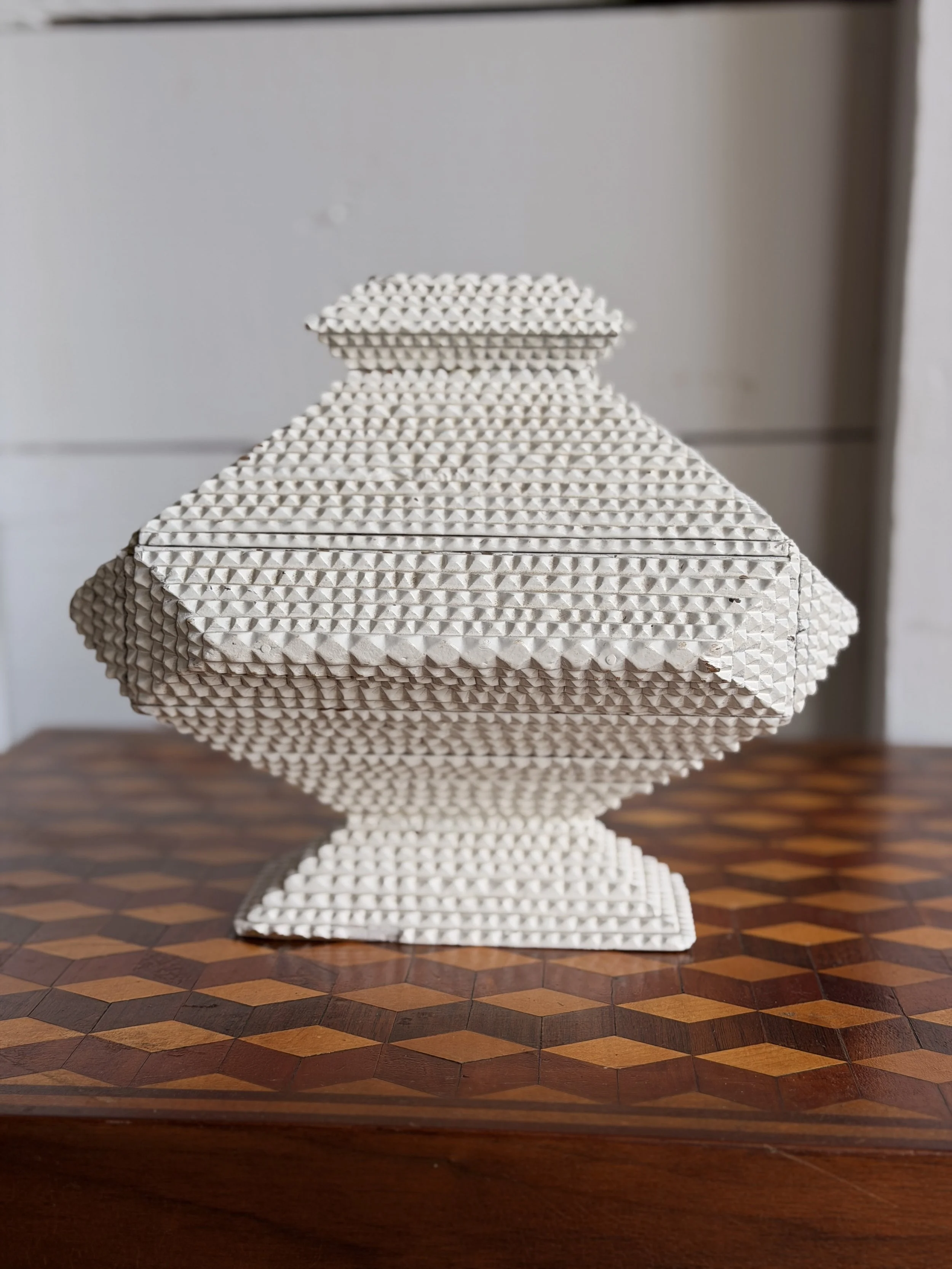
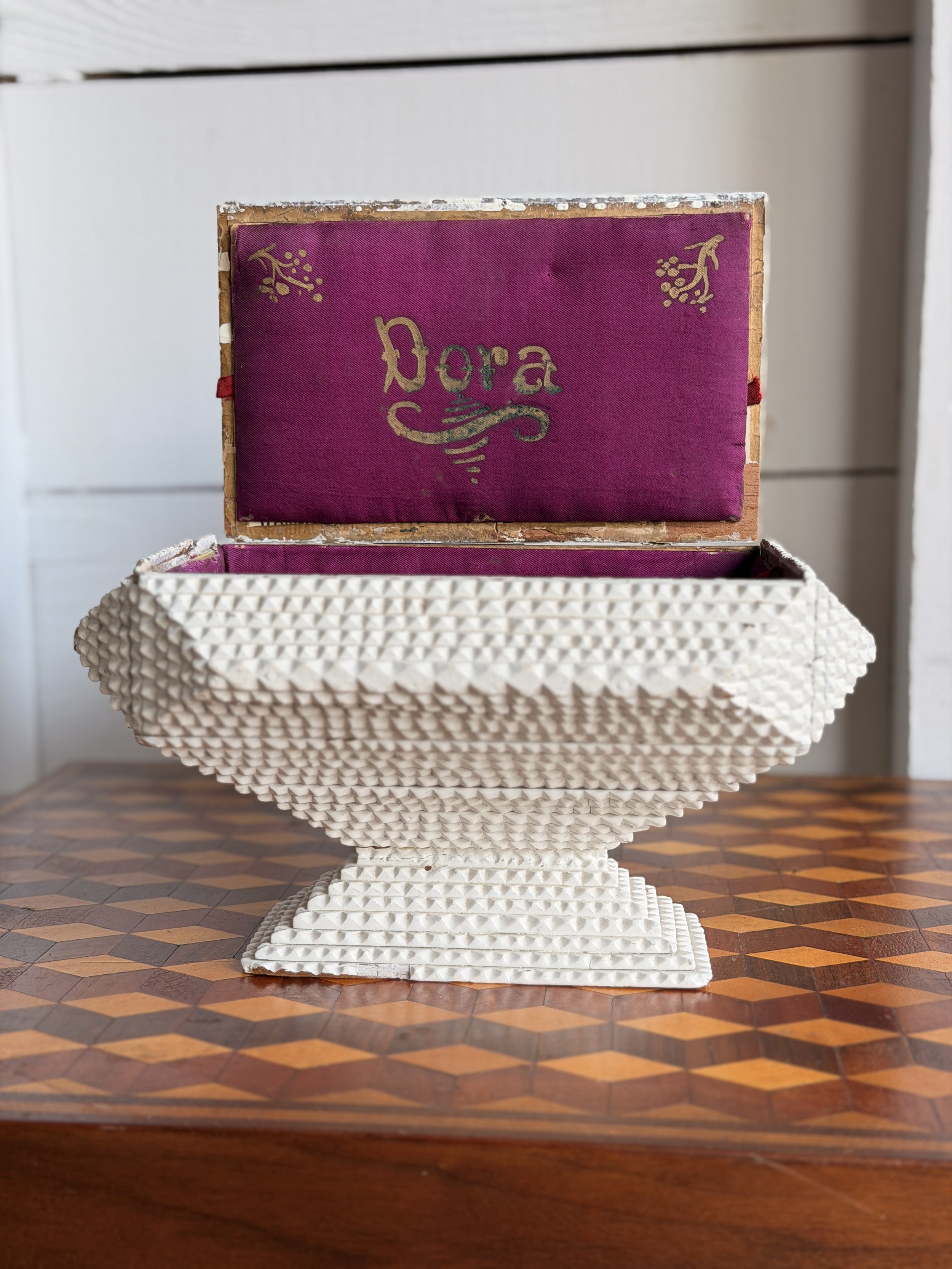
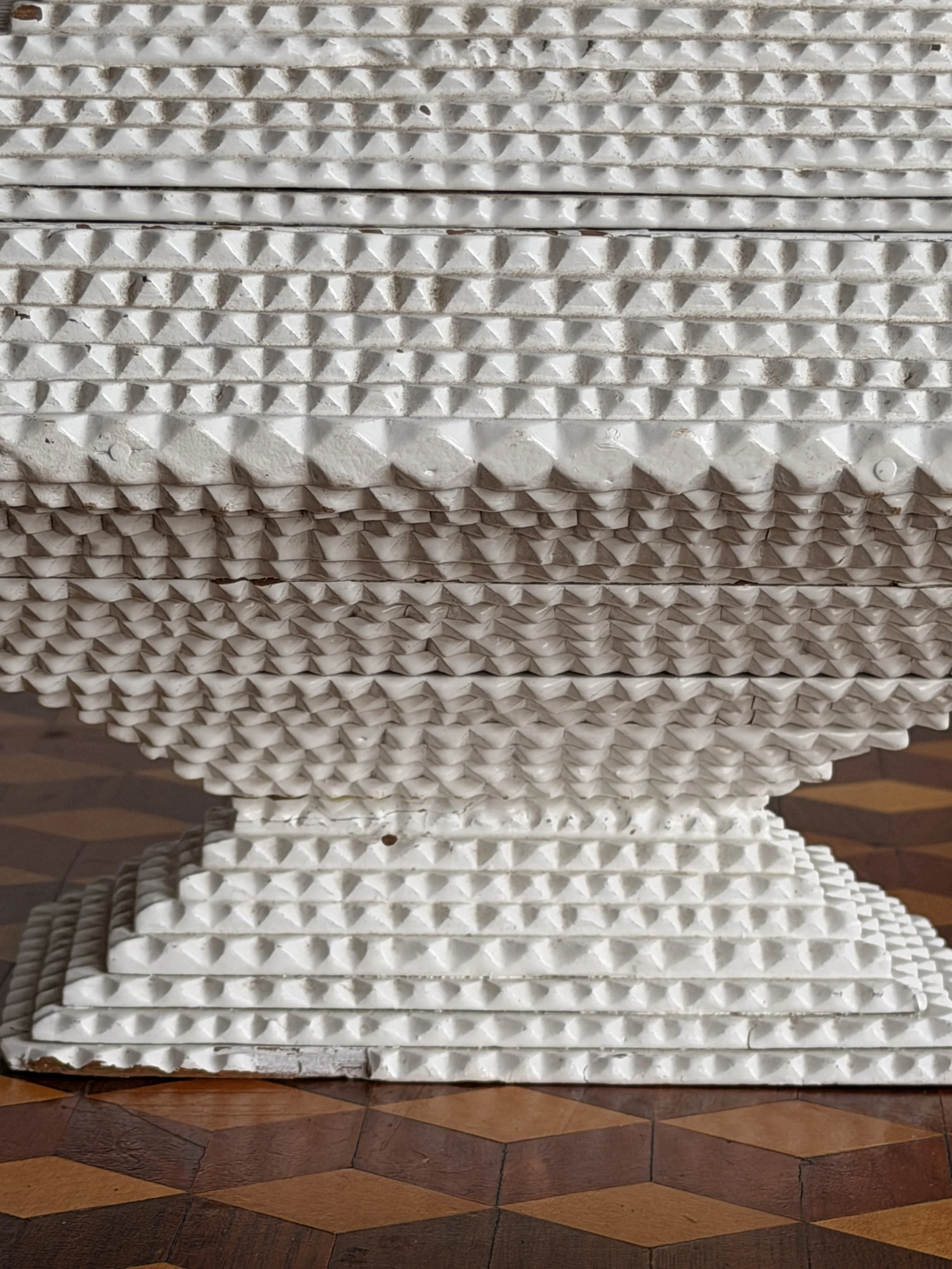
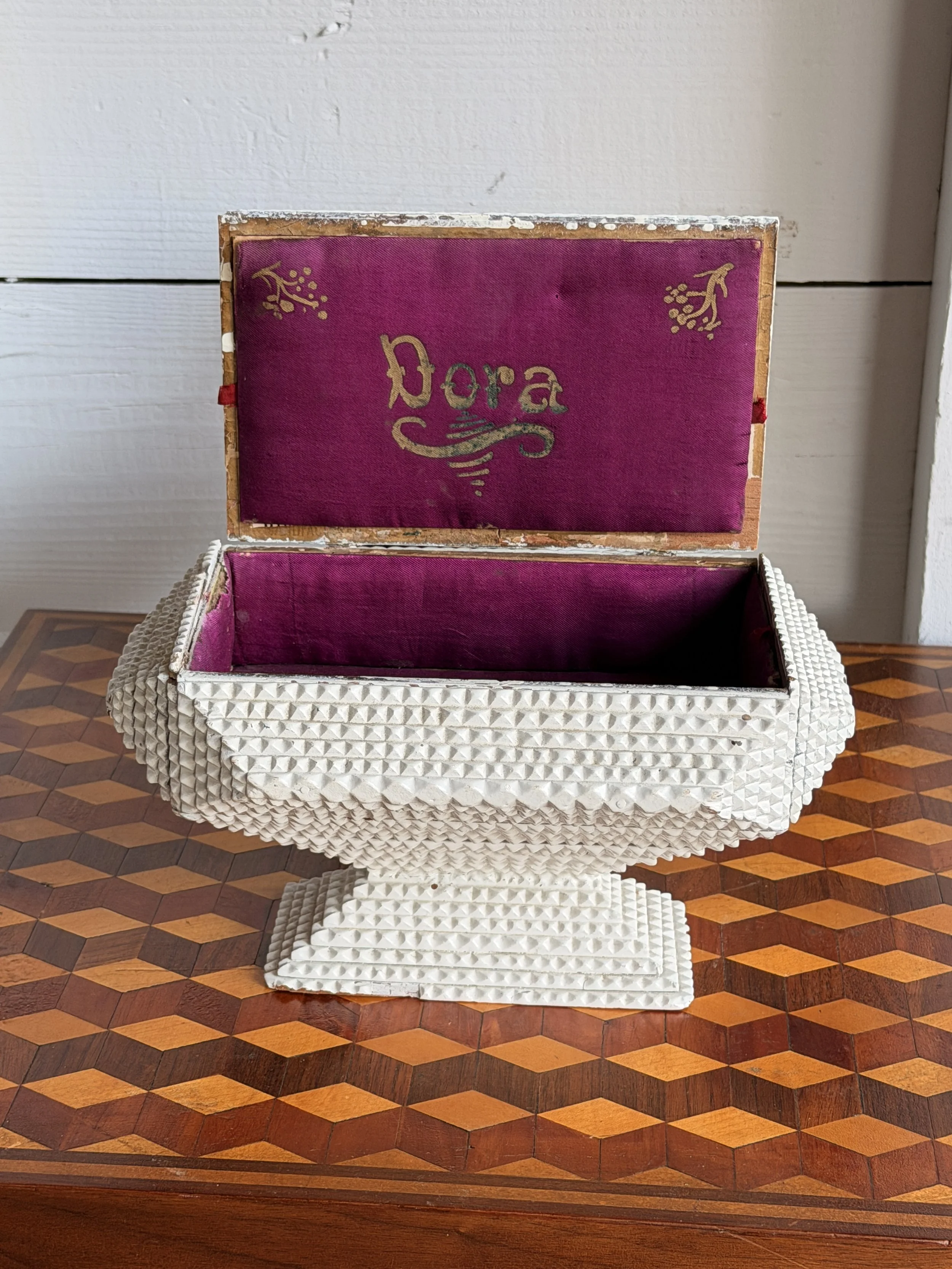
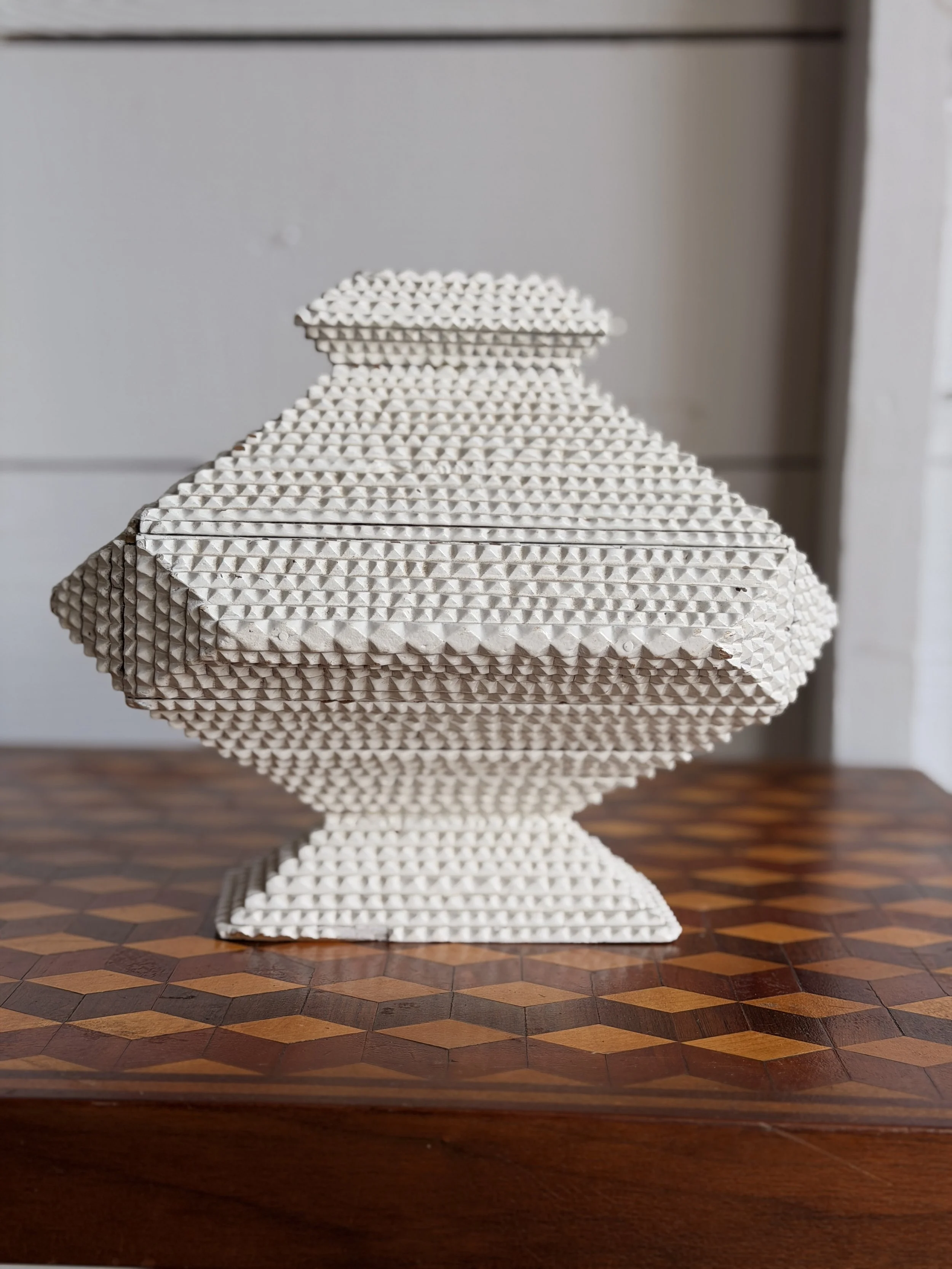
Tramp art box with an architectural, almost urn-like shape, completely covered in hundreds of small hand-cut wooden notches arranged in dense geometric rows. Finished in white paint, the surface has a remarkable texture, with every little chip catching light differently and turning the entire piece into something almost sculptural. The hinged lid opens to reveal a rich magenta fabric-lined interior, with the word “Dora” painted in gold on the underside along with small floral motifs. That personal touch suggests it may have been made as a gift or keepsake rather than simply as a decorative box.
Tramp art is a form of folk woodworking most closely associated with Europe and North America from the late 19th century into the early decades of the 20th century. Despite the name, it was not necessarily made by itinerant or homeless craftsmen. Much of it was produced by working-class makers, immigrants, hobbyists, and home craftsmen using inexpensive, readily available wood.
The technique usually involved cutting discarded cigar-box wood, packing crates, or thin boards into layers, then repeatedly notching the edges with a knife. Those pieces were stacked and built outward to create elaborate frames, boxes, furniture, shrines, and decorative objects. The process required patience more than expensive tools, which is part of the appeal: humble materials transformed through an enormous amount of handwork.
This box is especially unusual for its almost completely textured surface and bold white finish. Its stepped pedestal base and broad, faceted body give it a strong architectural quality, while the magenta interior provides a great surprise when opened.
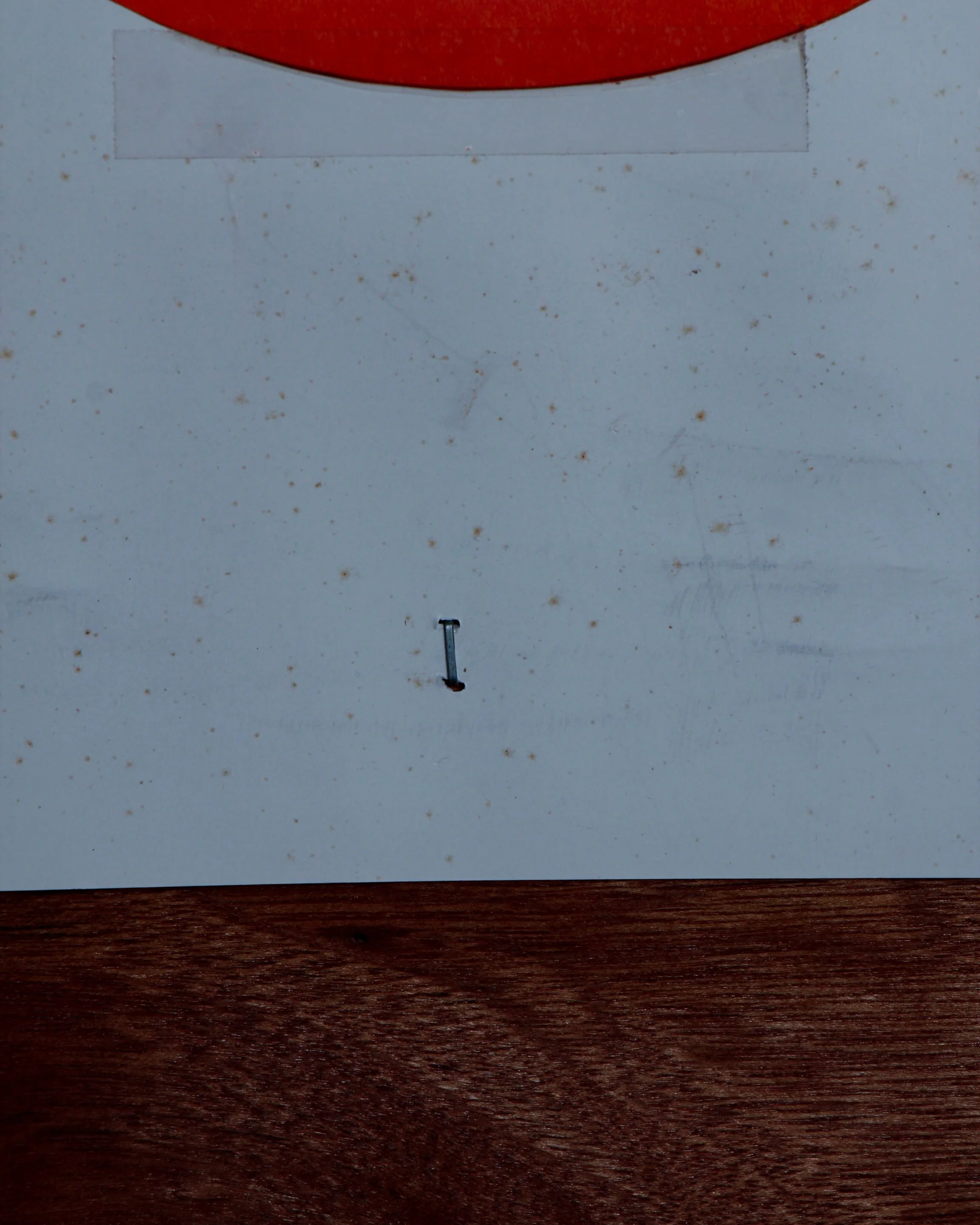
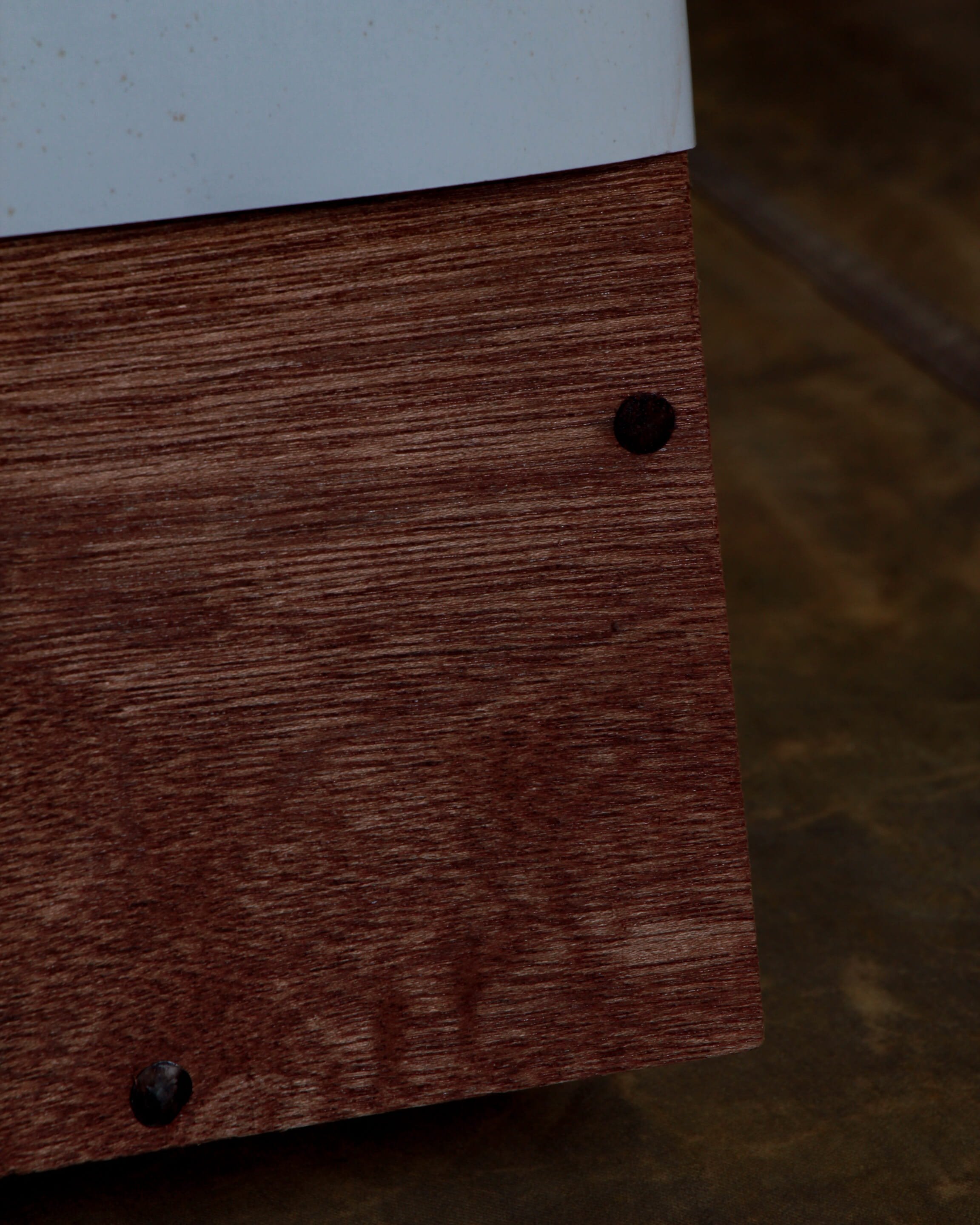
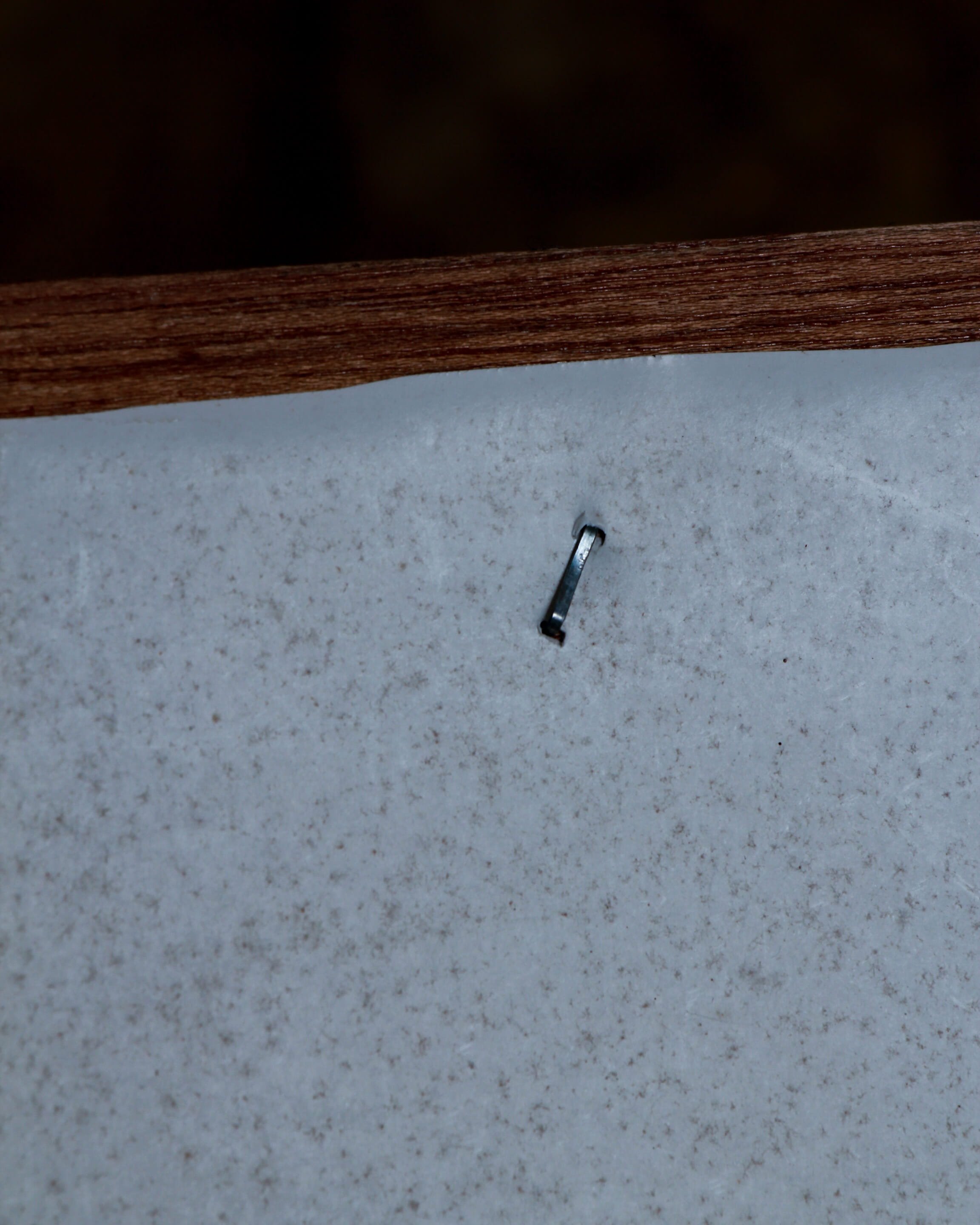
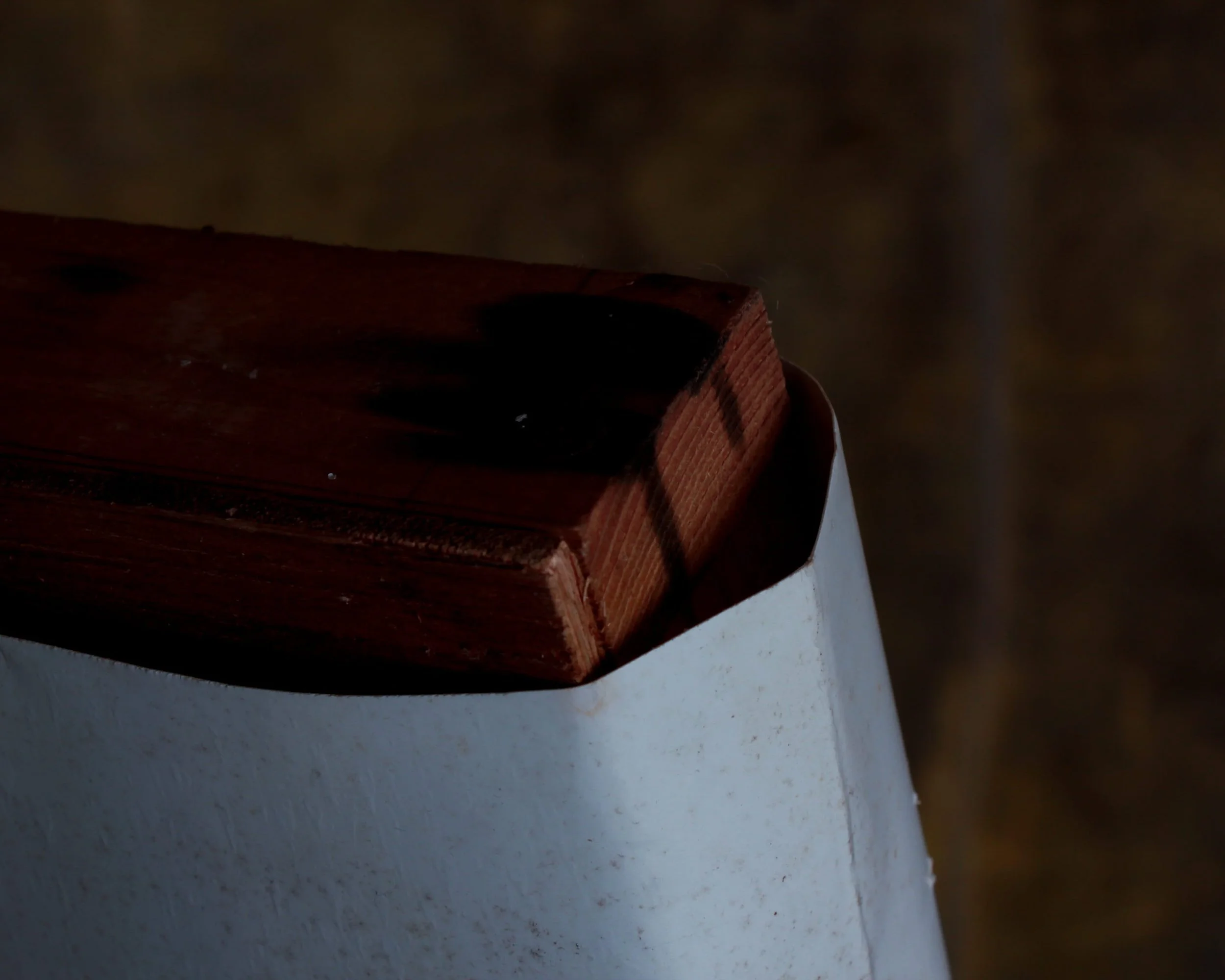
Small chips, paint loss, wear, and irregularities are present throughout, all consistent with age and handmade construction. They fit naturally with the character of a piece that was built one notch at a time.
ITEM NOT AVAILABLE IMMEDIATELY—INQUIRE IF INTERESTED hello@heimweeantiques.com
Tramp art box with an architectural, almost urn-like shape, completely covered in hundreds of small hand-cut wooden notches arranged in dense geometric rows. Finished in white paint, the surface has a remarkable texture, with every little chip catching light differently and turning the entire piece into something almost sculptural. The hinged lid opens to reveal a rich magenta fabric-lined interior, with the word “Dora” painted in gold on the underside along with small floral motifs. That personal touch suggests it may have been made as a gift or keepsake rather than simply as a decorative box.
Tramp art is a form of folk woodworking most closely associated with Europe and North America from the late 19th century into the early decades of the 20th century. Despite the name, it was not necessarily made by itinerant or homeless craftsmen. Much of it was produced by working-class makers, immigrants, hobbyists, and home craftsmen using inexpensive, readily available wood.
The technique usually involved cutting discarded cigar-box wood, packing crates, or thin boards into layers, then repeatedly notching the edges with a knife. Those pieces were stacked and built outward to create elaborate frames, boxes, furniture, shrines, and decorative objects. The process required patience more than expensive tools, which is part of the appeal: humble materials transformed through an enormous amount of handwork.
This box is especially unusual for its almost completely textured surface and bold white finish. Its stepped pedestal base and broad, faceted body give it a strong architectural quality, while the magenta interior provides a great surprise when opened.
Small chips, paint loss, wear, and irregularities are present throughout, all consistent with age and handmade construction. They fit naturally with the character of a piece that was built one notch at a time.