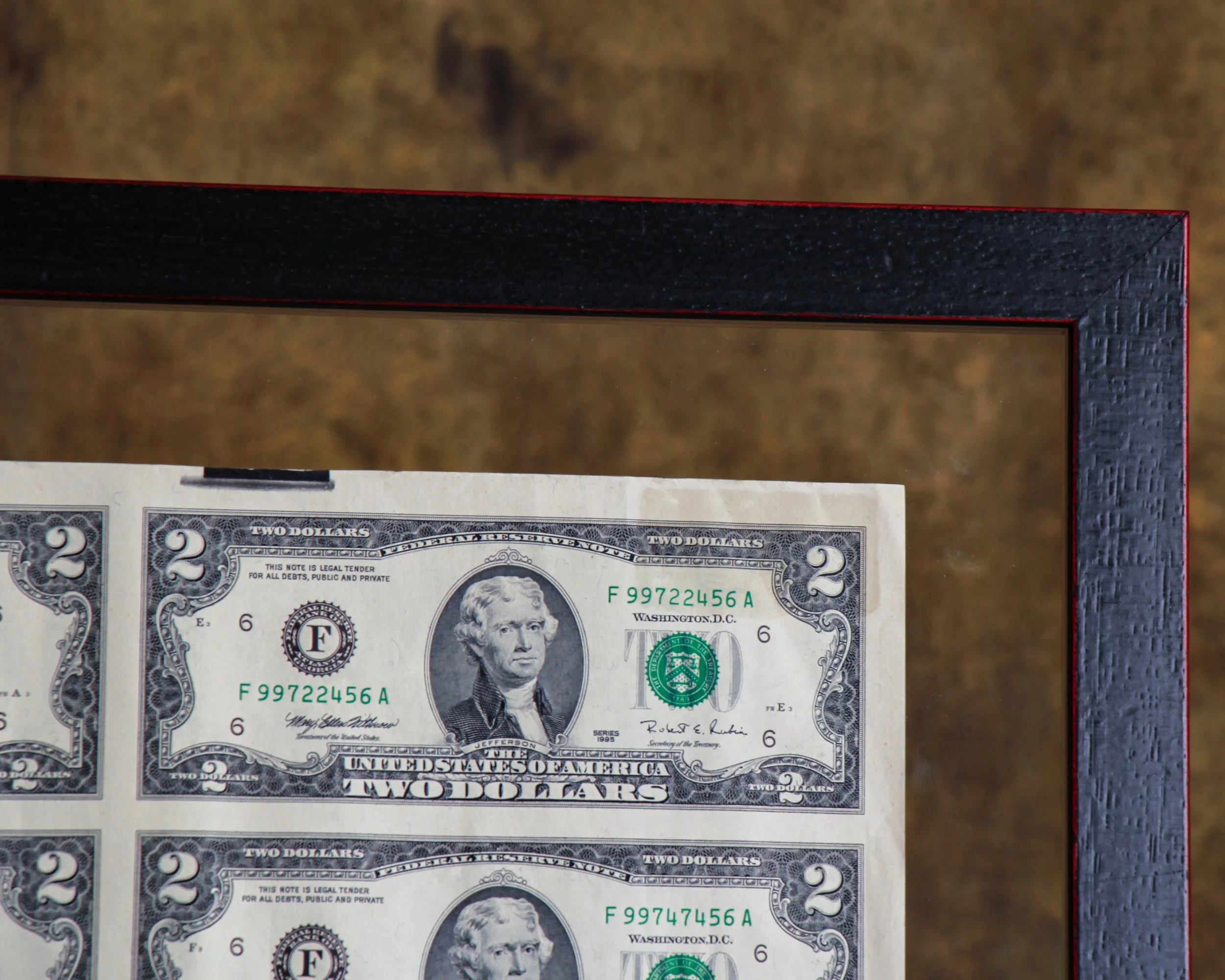
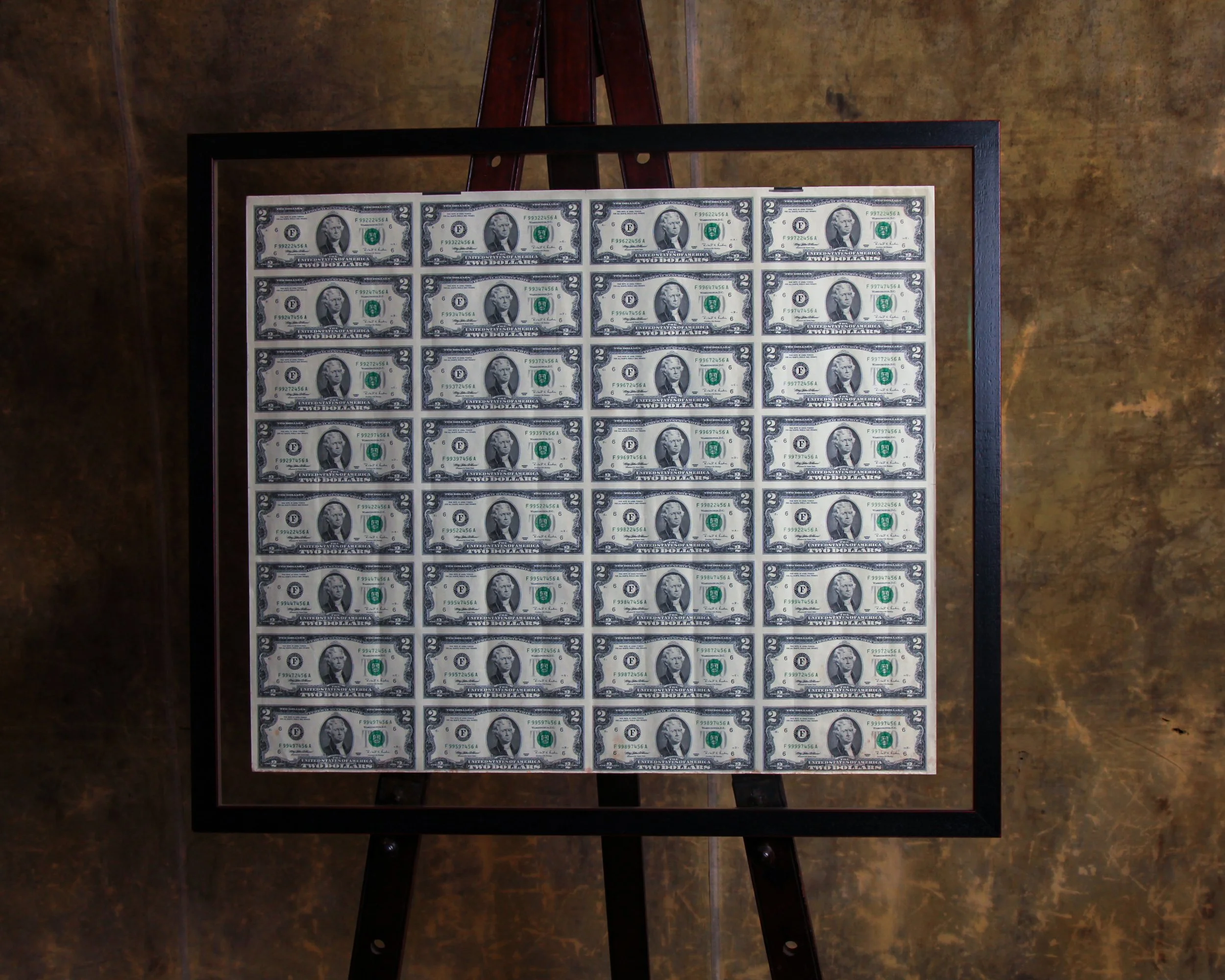
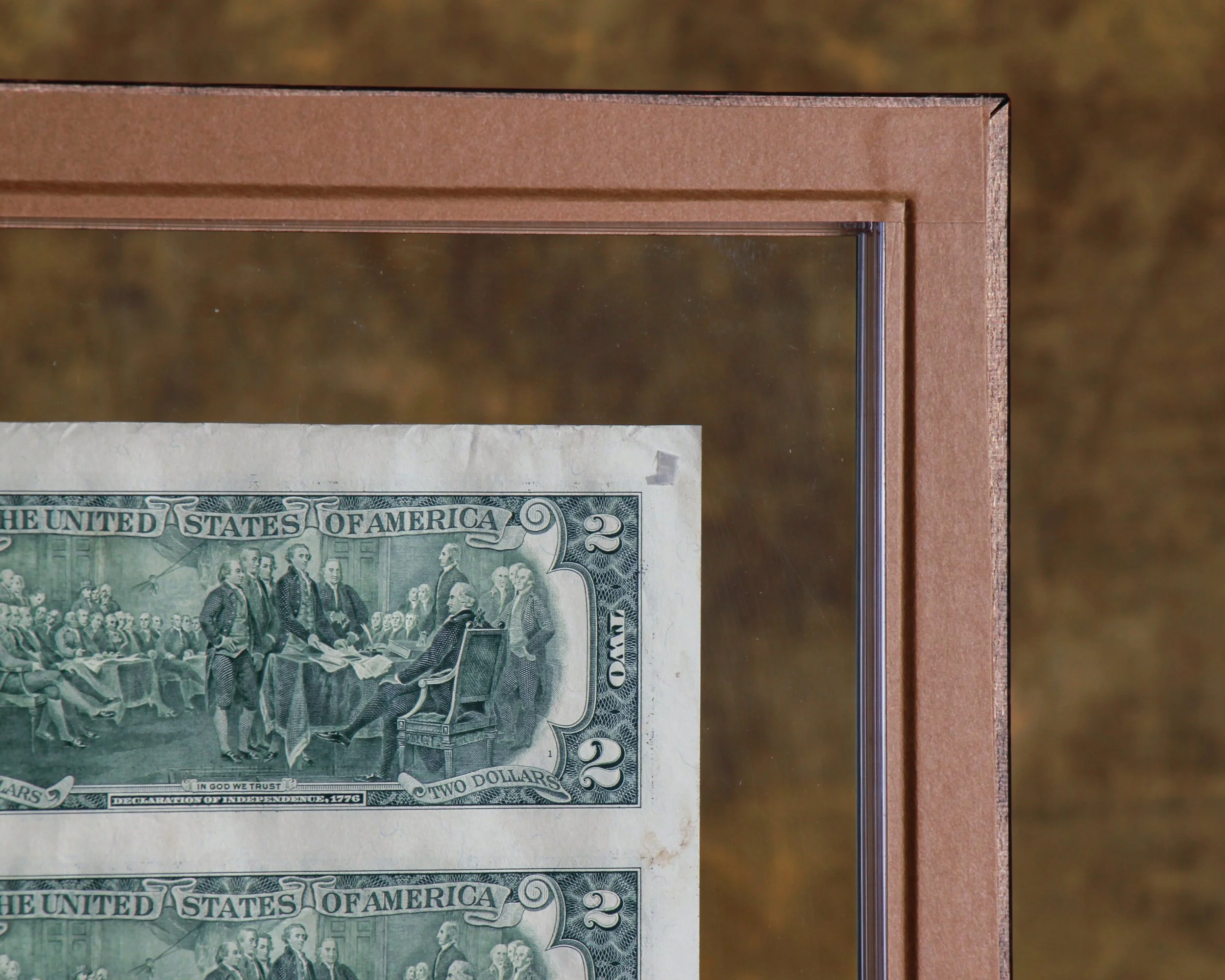
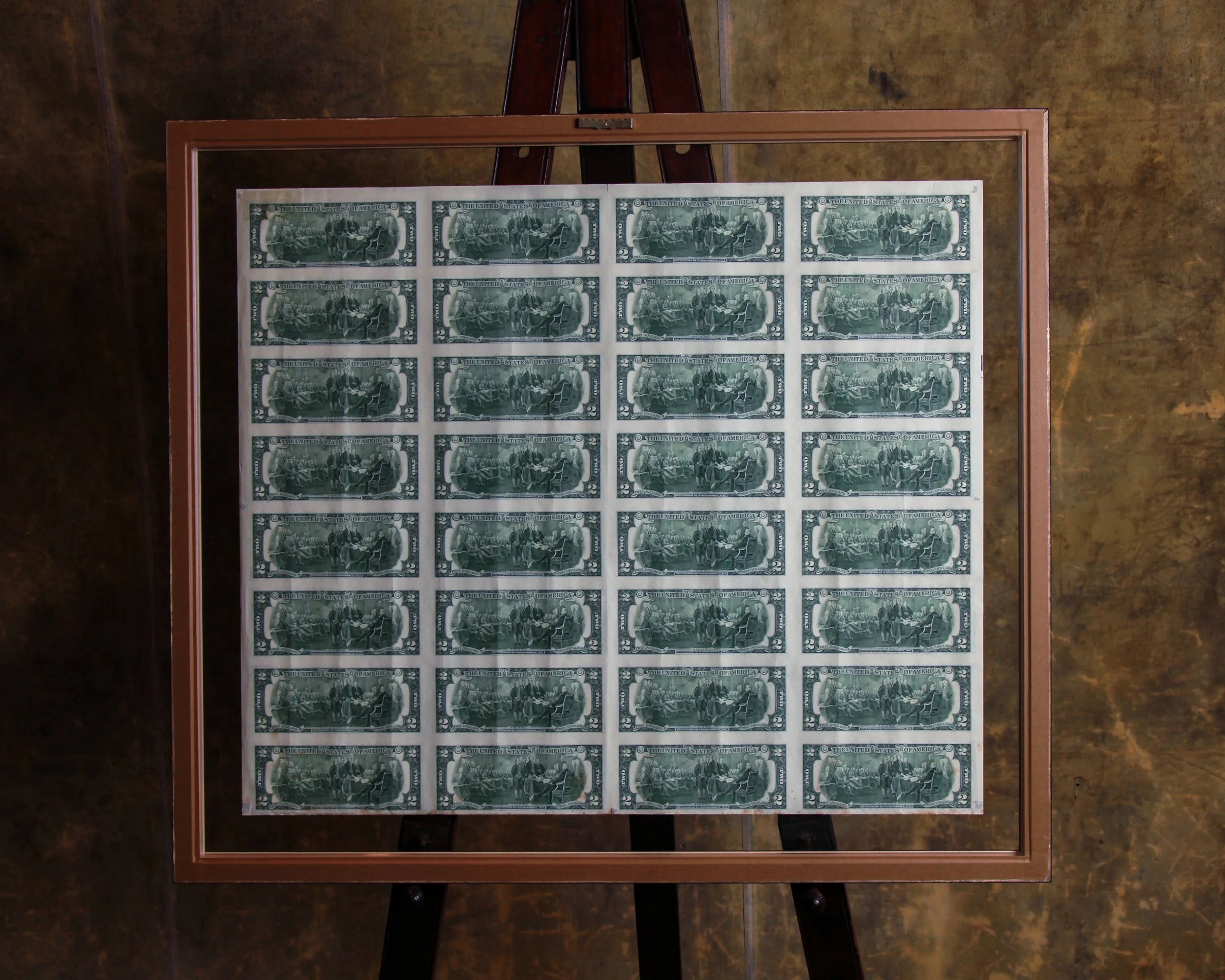
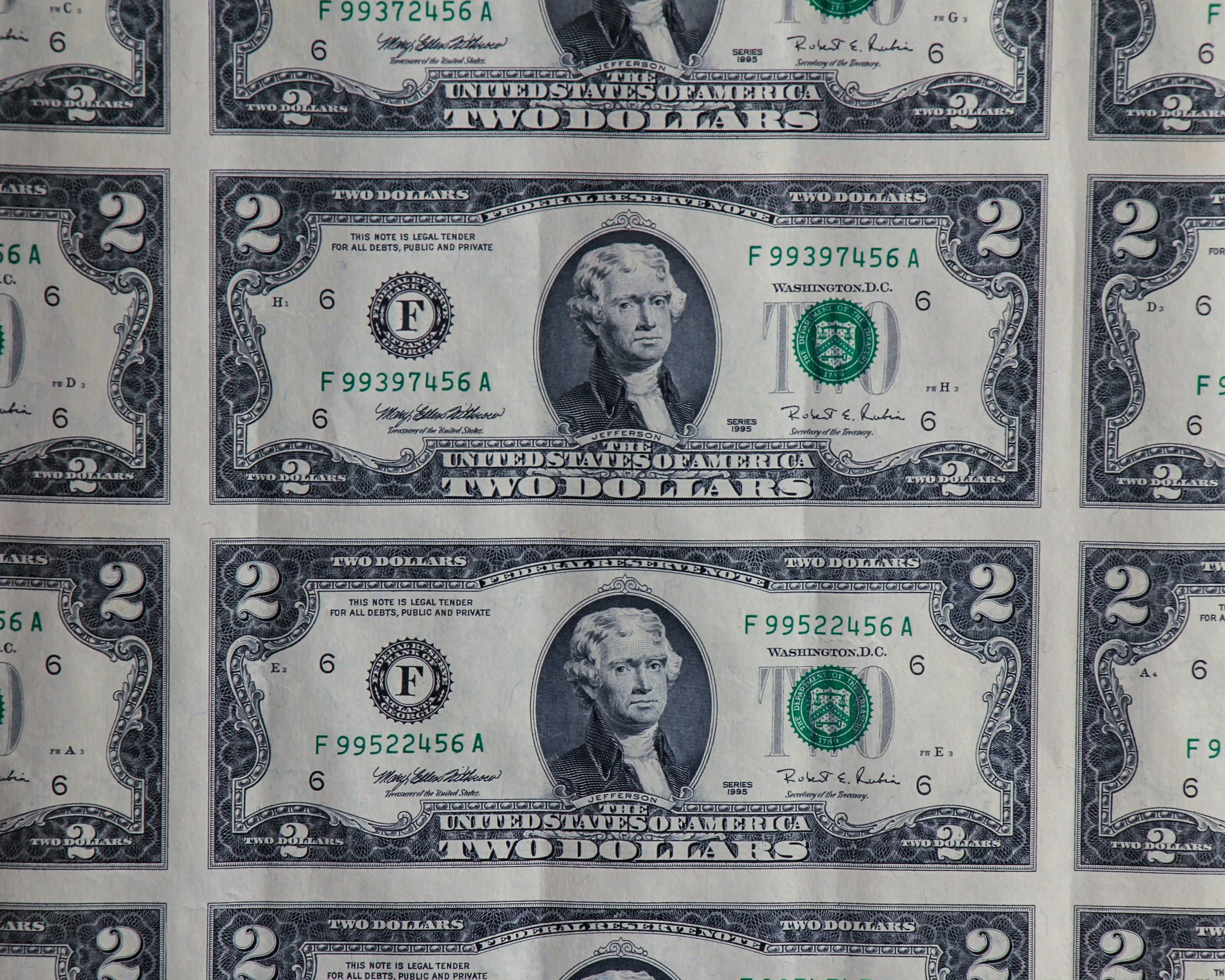
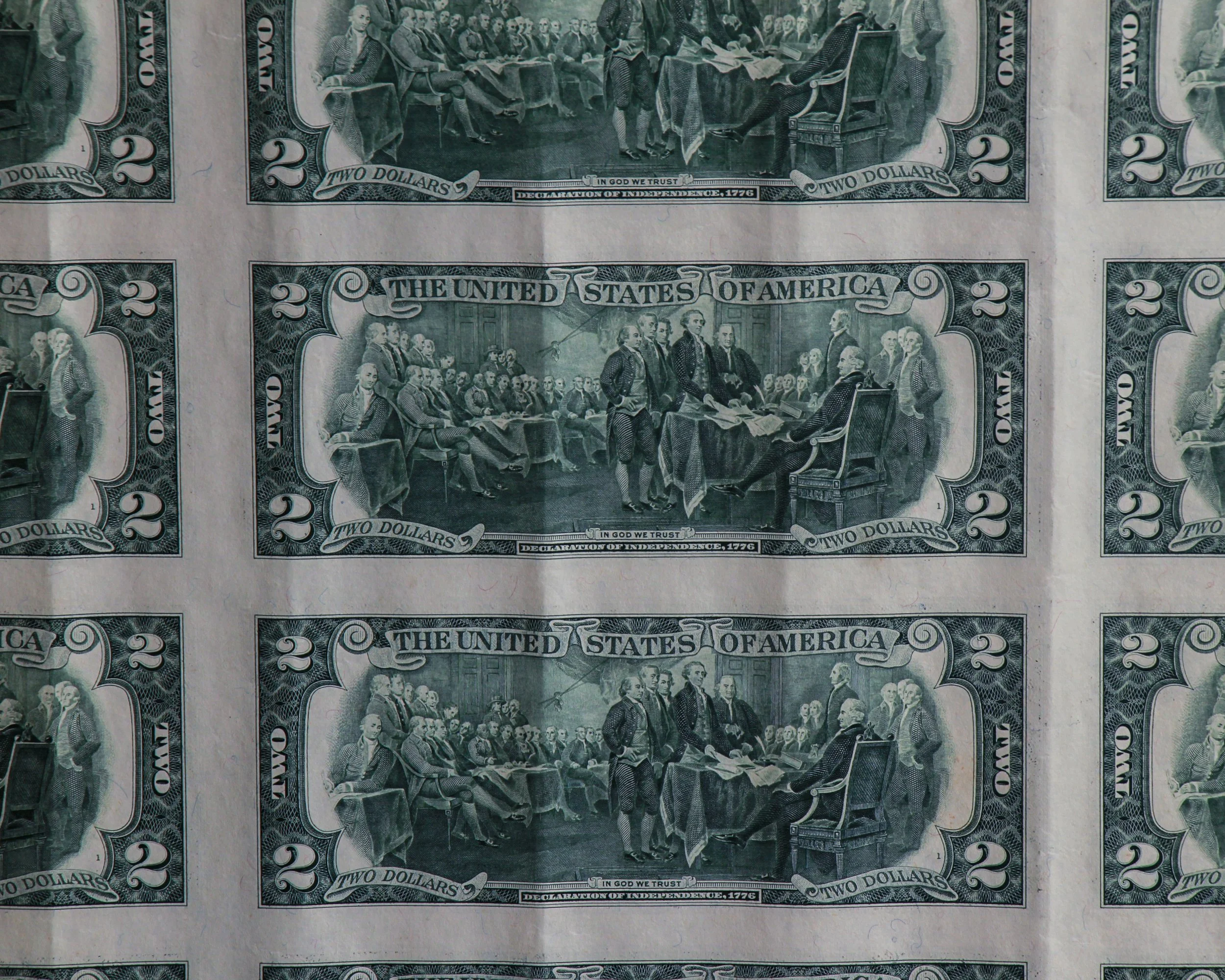
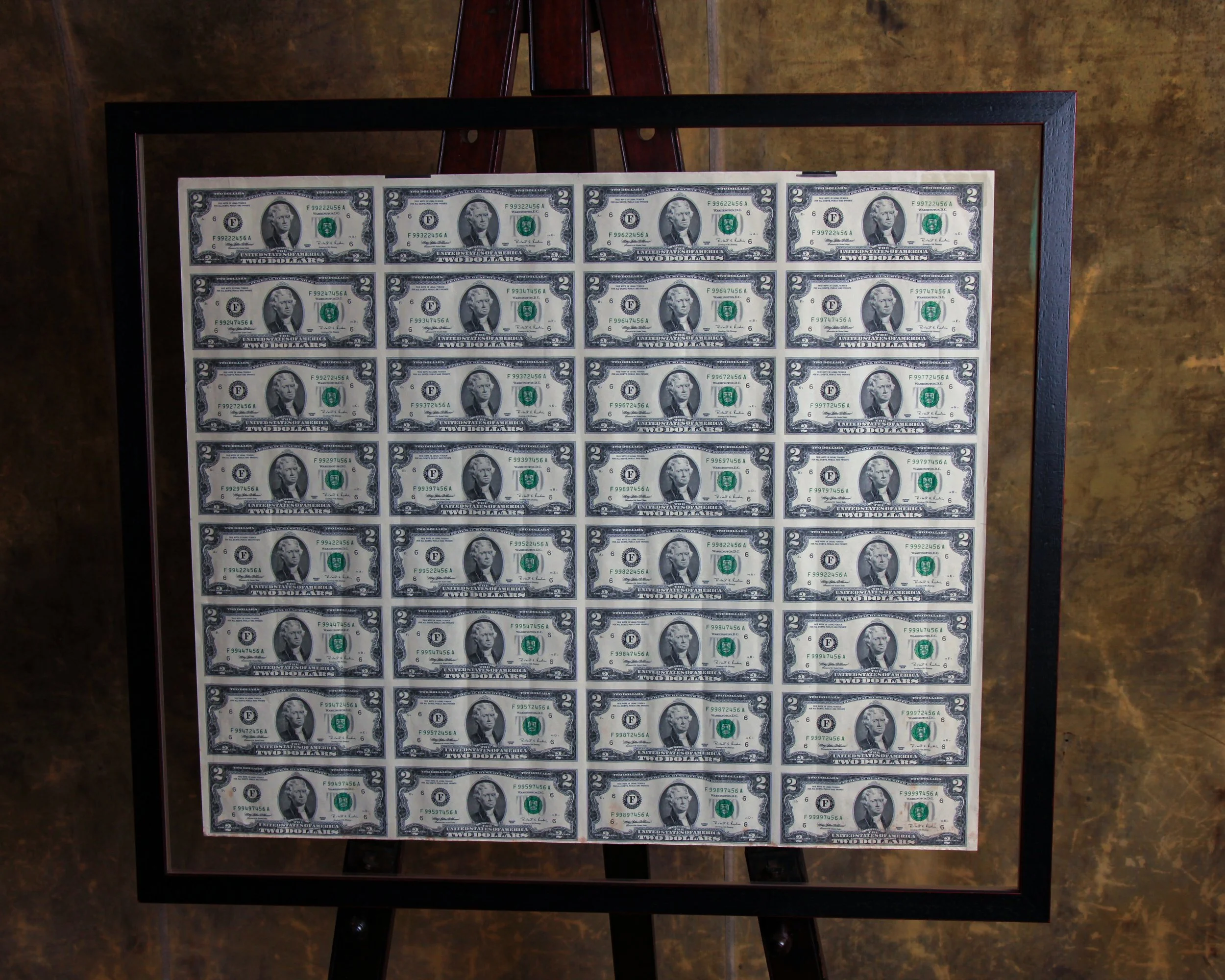
This uncut sheet of thirty-two United States $2 bills is from Series 1995 and presents the denomination in the way it originally existed before individual notes were cut apart for circulation. The full sheet has a wonderfully graphic quality, with Thomas Jefferson’s portrait repeated in a precise grid across the front and John Trumbull’s famous Declaration of Independence scene repeated on the reverse. The serial numbers progress across the sheet, giving it that satisfying mix of bureaucracy, design, and pattern.
The sheet is displayed in a double-sided frame, allowing both sides of the currency to be viewed. It is protected with Tru Vue Optium Museum Acrylic, a high-grade glazing material favored for important works on paper because of its clarity, UV protection, and anti-reflective qualities. The floating presentation also gives the sheet some breathing room and keeps the untrimmed edges visible, which is an important part of its appeal.
The $2 bill has had one of the more curious histories in American currency. The denomination dates back to the 19th century, but it has never circulated as heavily as the $1 or $5 bill. Its relative scarcity in everyday use eventually gave it an almost novelty status, even though it remains legal tender.
The modern $2 Federal Reserve Note was introduced in 1976 as part of the United States Bicentennial. That redesign brought the familiar reverse image of the signing of the Declaration of Independence, adapted from Trumbull’s painting, while Jefferson remained on the face.
Uncut currency sheets occupy a slightly different corner of collecting than ordinary notes. They were sold specifically as collectibles and souvenirs, preserving the bills in their original sheet format before cutting. Seeing thirty-two notes together makes the engraving, repetition, spacing, and printing process much easier to appreciate. Framed this way, the sheet lands somewhere between numismatics, graphic design, and American historical ephemera.
This uncut sheet of thirty-two United States $2 bills is from Series 1995 and presents the denomination in the way it originally existed before individual notes were cut apart for circulation. The full sheet has a wonderfully graphic quality, with Thomas Jefferson’s portrait repeated in a precise grid across the front and John Trumbull’s famous Declaration of Independence scene repeated on the reverse. The serial numbers progress across the sheet, giving it that satisfying mix of bureaucracy, design, and pattern.
The sheet is displayed in a double-sided frame, allowing both sides of the currency to be viewed. It is protected with Tru Vue Optium Museum Acrylic, a high-grade glazing material favored for important works on paper because of its clarity, UV protection, and anti-reflective qualities. The floating presentation also gives the sheet some breathing room and keeps the untrimmed edges visible, which is an important part of its appeal.
The $2 bill has had one of the more curious histories in American currency. The denomination dates back to the 19th century, but it has never circulated as heavily as the $1 or $5 bill. Its relative scarcity in everyday use eventually gave it an almost novelty status, even though it remains legal tender.
The modern $2 Federal Reserve Note was introduced in 1976 as part of the United States Bicentennial. That redesign brought the familiar reverse image of the signing of the Declaration of Independence, adapted from Trumbull’s painting, while Jefferson remained on the face.
Uncut currency sheets occupy a slightly different corner of collecting than ordinary notes. They were sold specifically as collectibles and souvenirs, preserving the bills in their original sheet format before cutting. Seeing thirty-two notes together makes the engraving, repetition, spacing, and printing process much easier to appreciate. Framed this way, the sheet lands somewhere between numismatics, graphic design, and American historical ephemera.