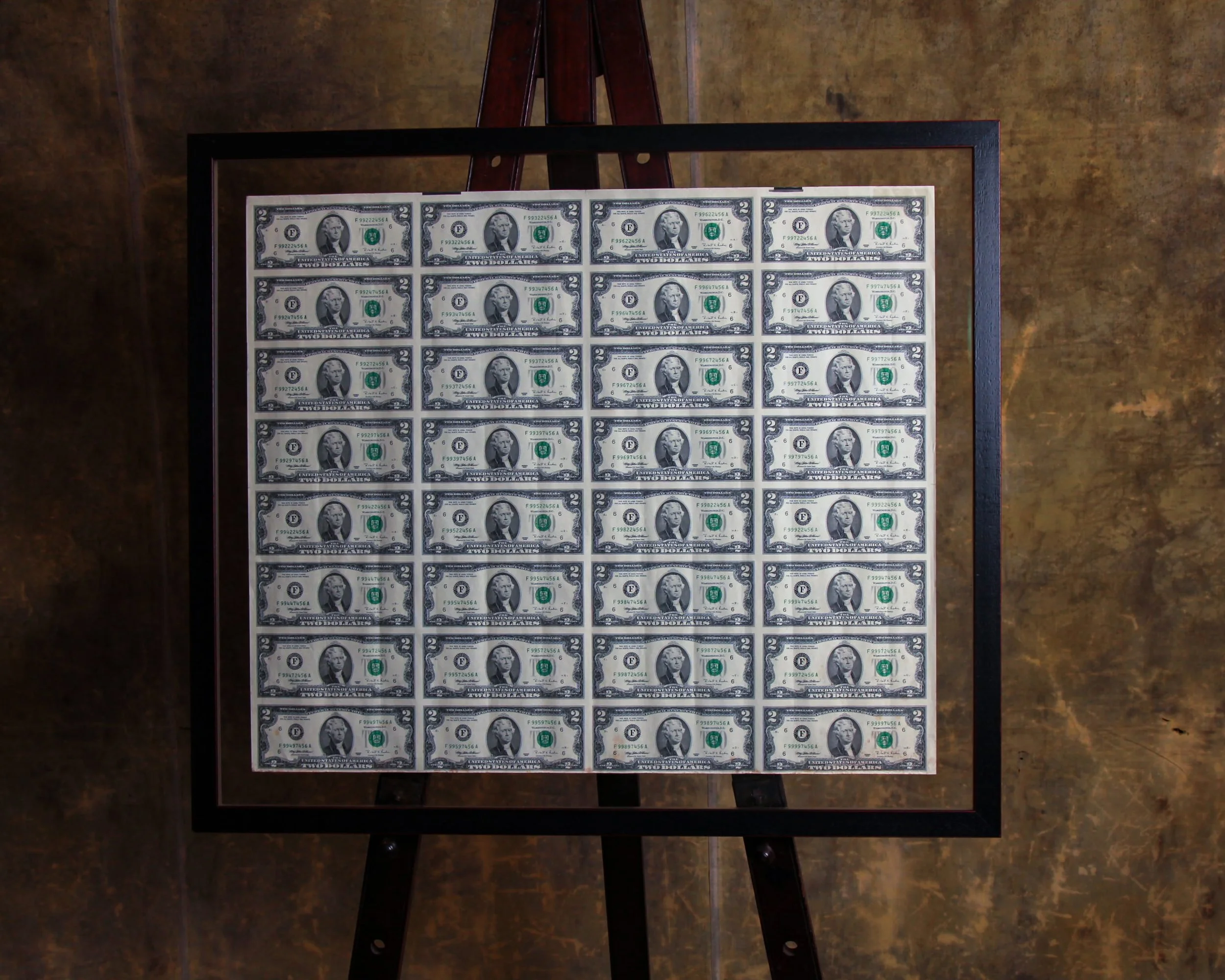
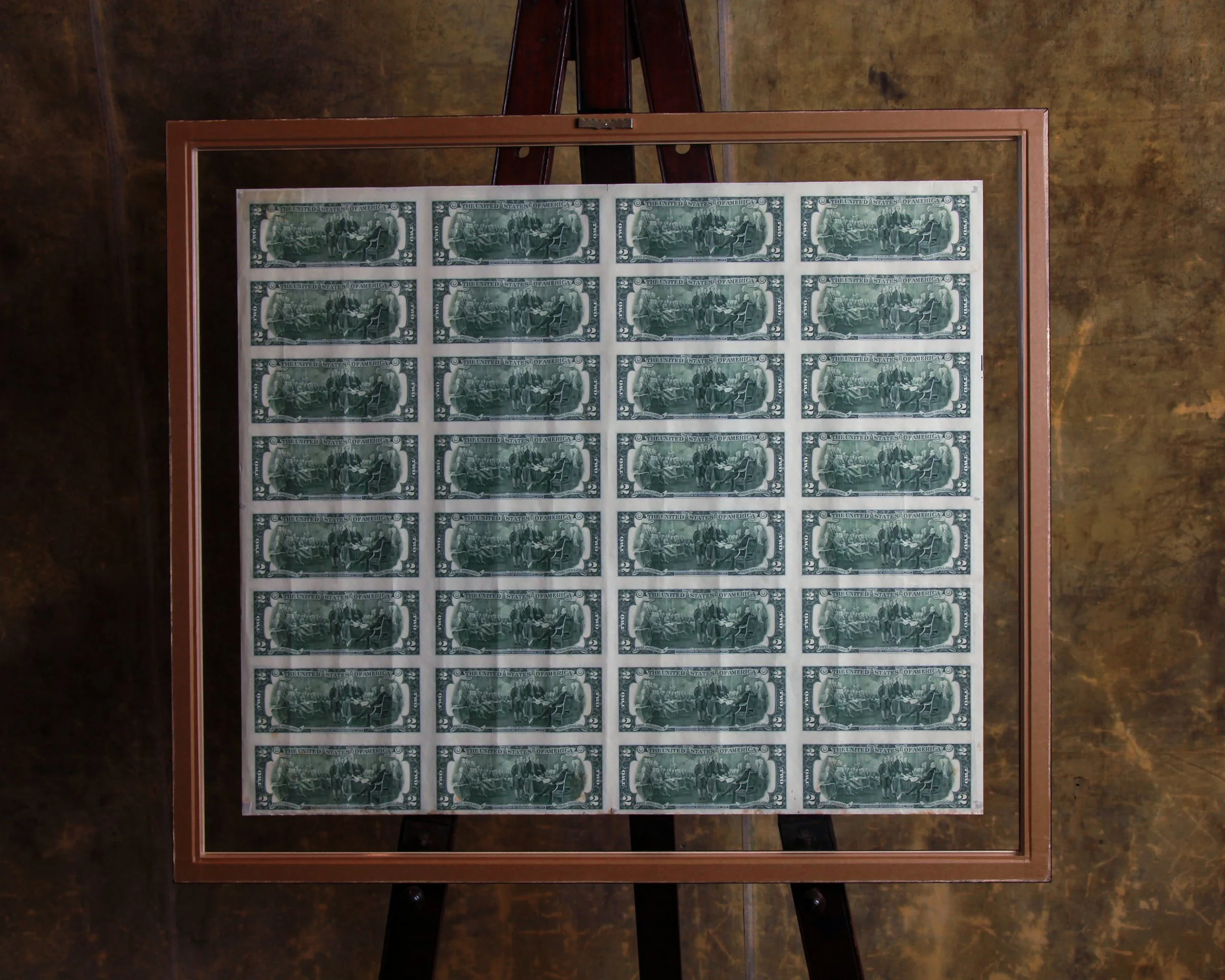
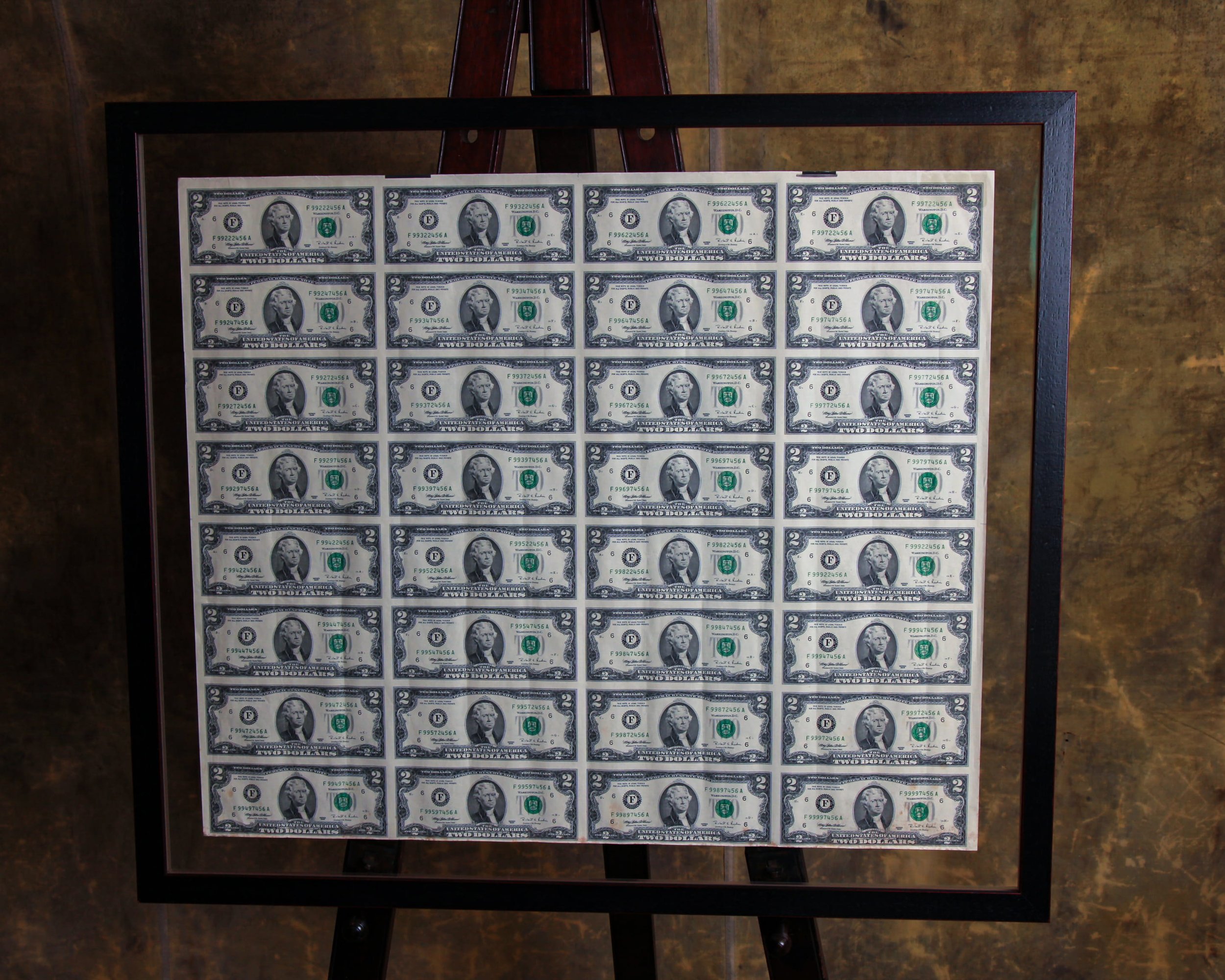
There’s something quietly electric about seeing money before it becomes money. Not a single bill plucked from a wallet, creased and passed along through a hundred anonymous transactions, but the whole idea of currency in its original, untouched state, still arranged exactly as it left the press. This full uncut sheet of thirty-two United States two-dollar bills, issued in 1995, carries that feeling in a way that’s hard to fake.
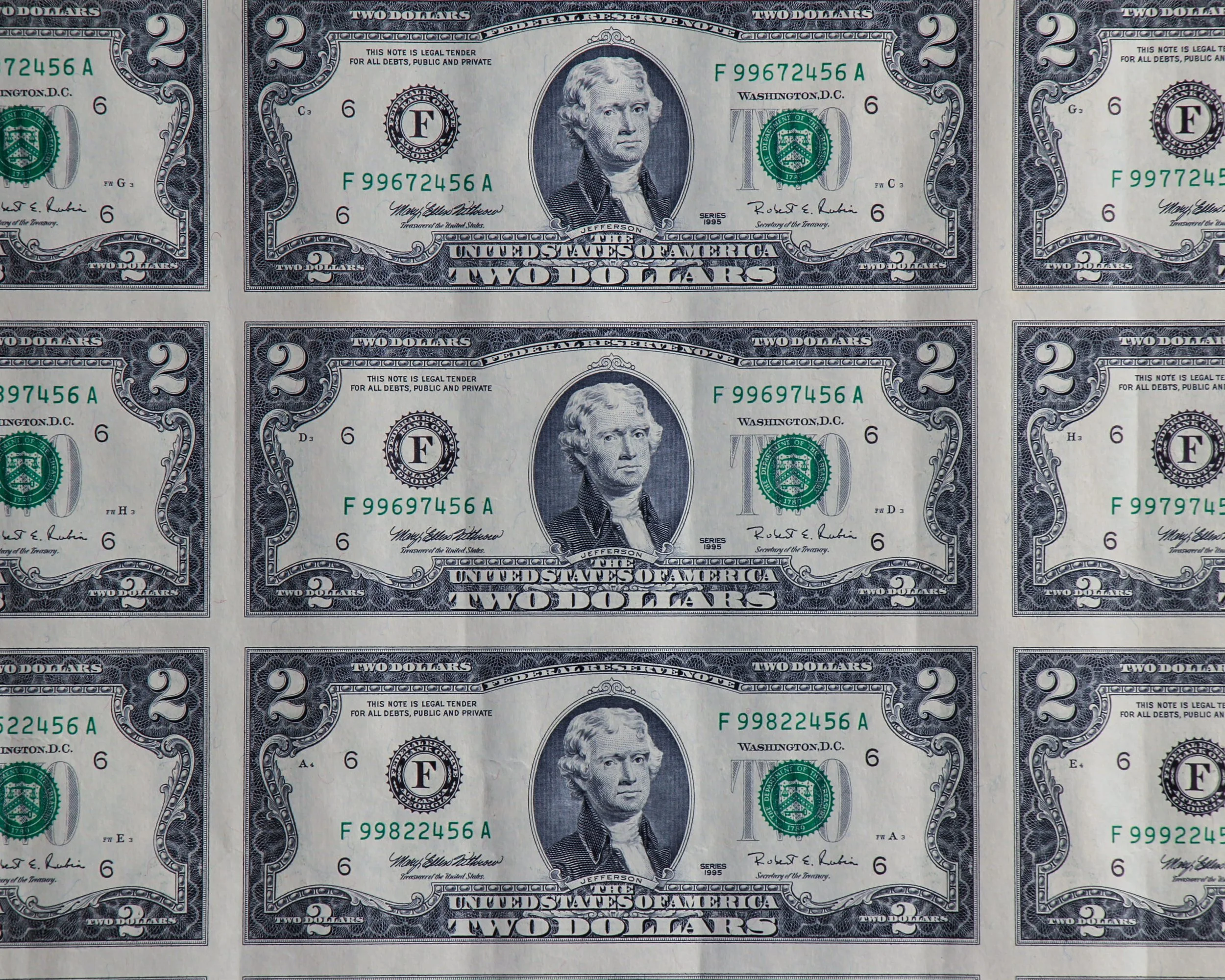
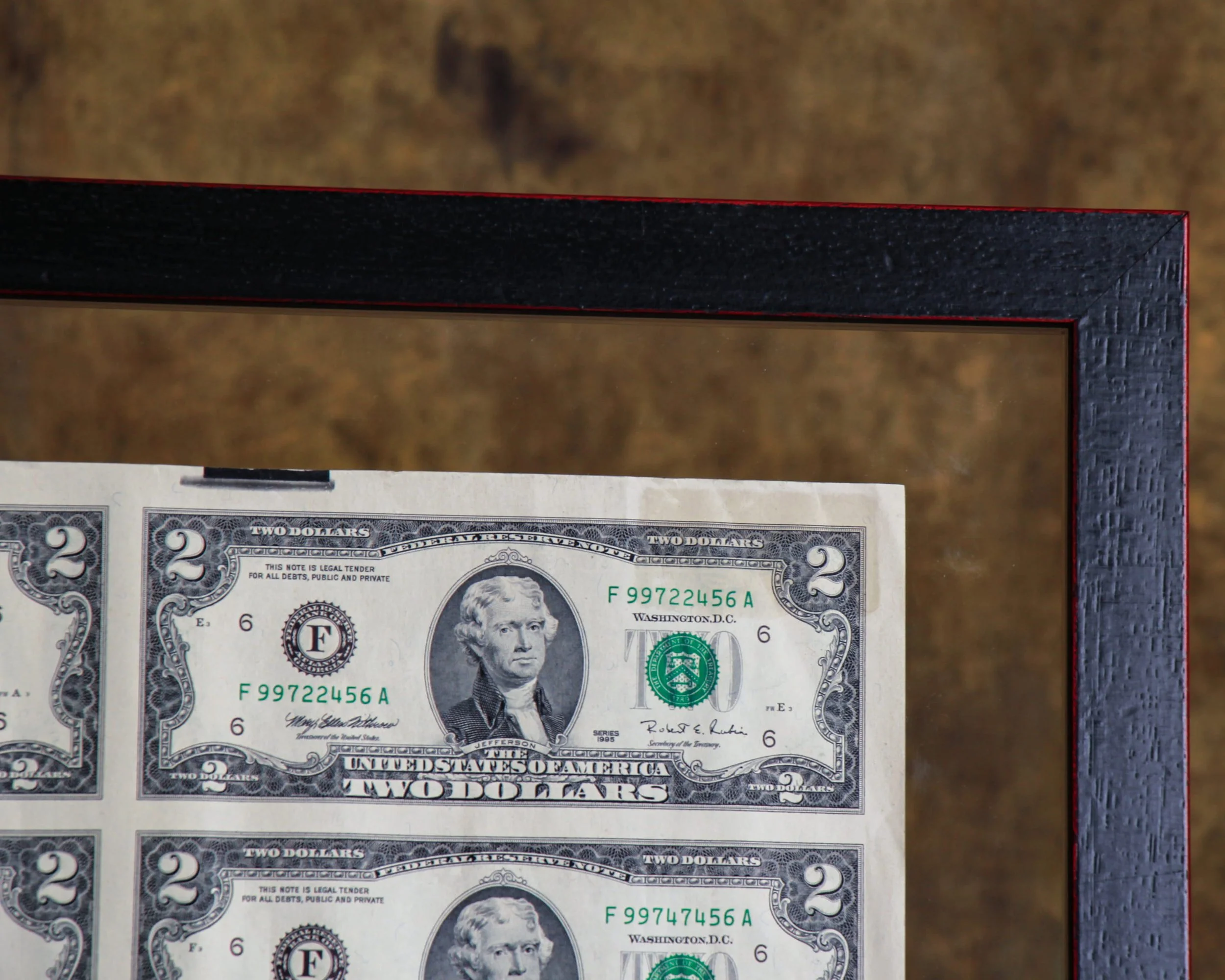
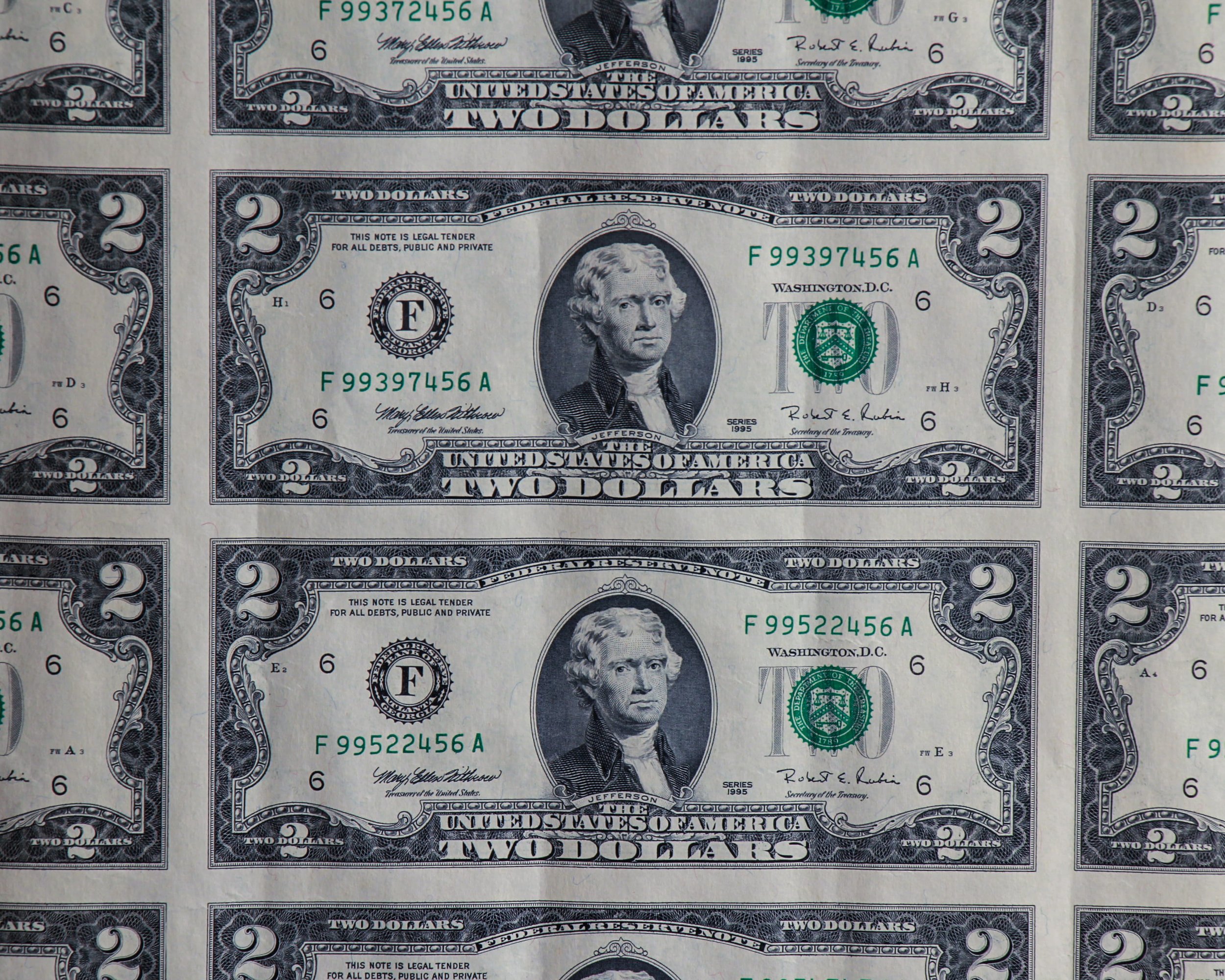
Each note sits in perfect formation, like a grid of small, identical promises. The familiar portrait of Jefferson repeats with a kind of rhythm, and once you notice the serial numbers marching in sequence, it becomes even better. It’s orderly, precise, almost hypnotic. You’re not just looking at money here, you’re looking at the process behind it, the moment before separation, before circulation, before wear turns something official into something ordinary.
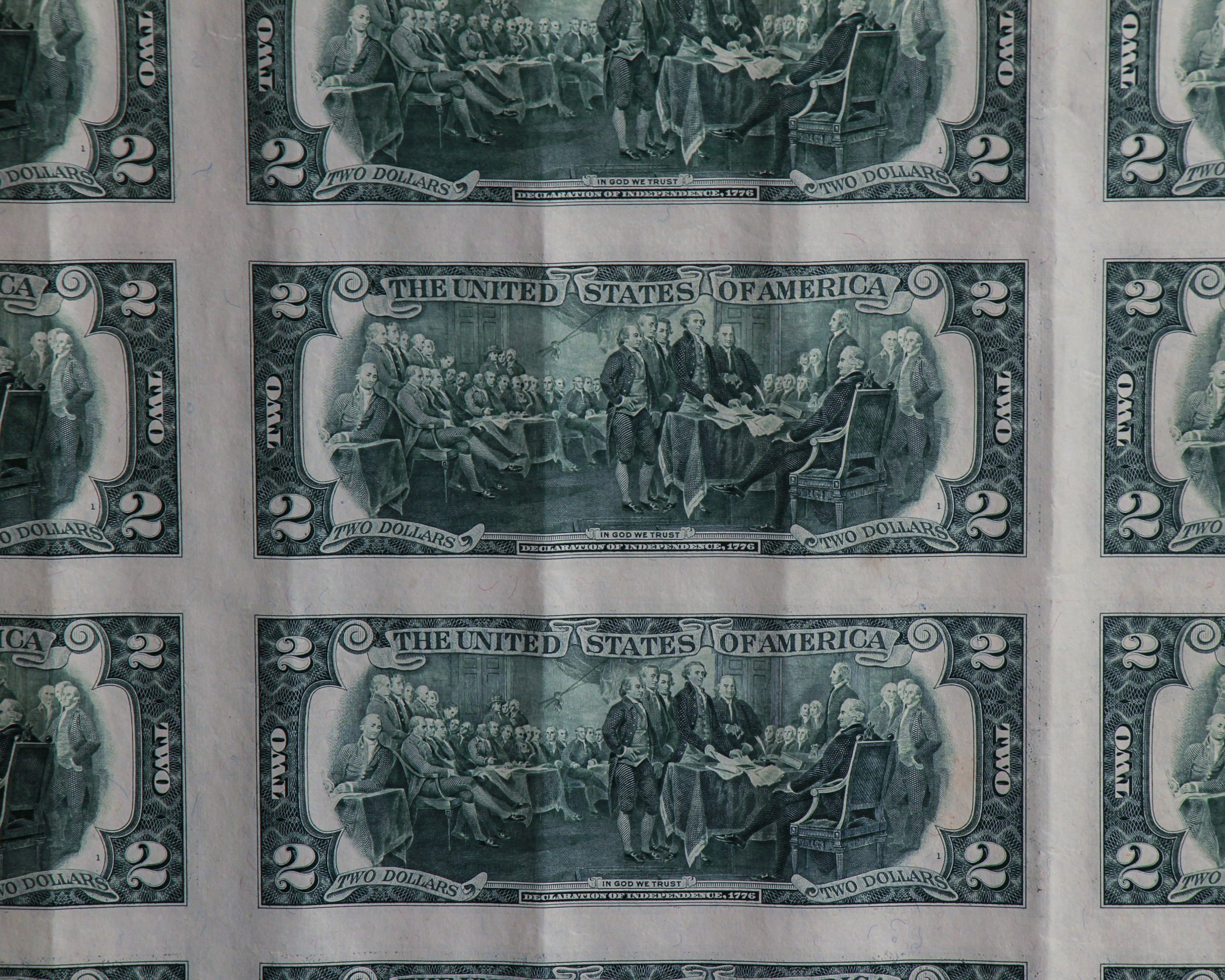
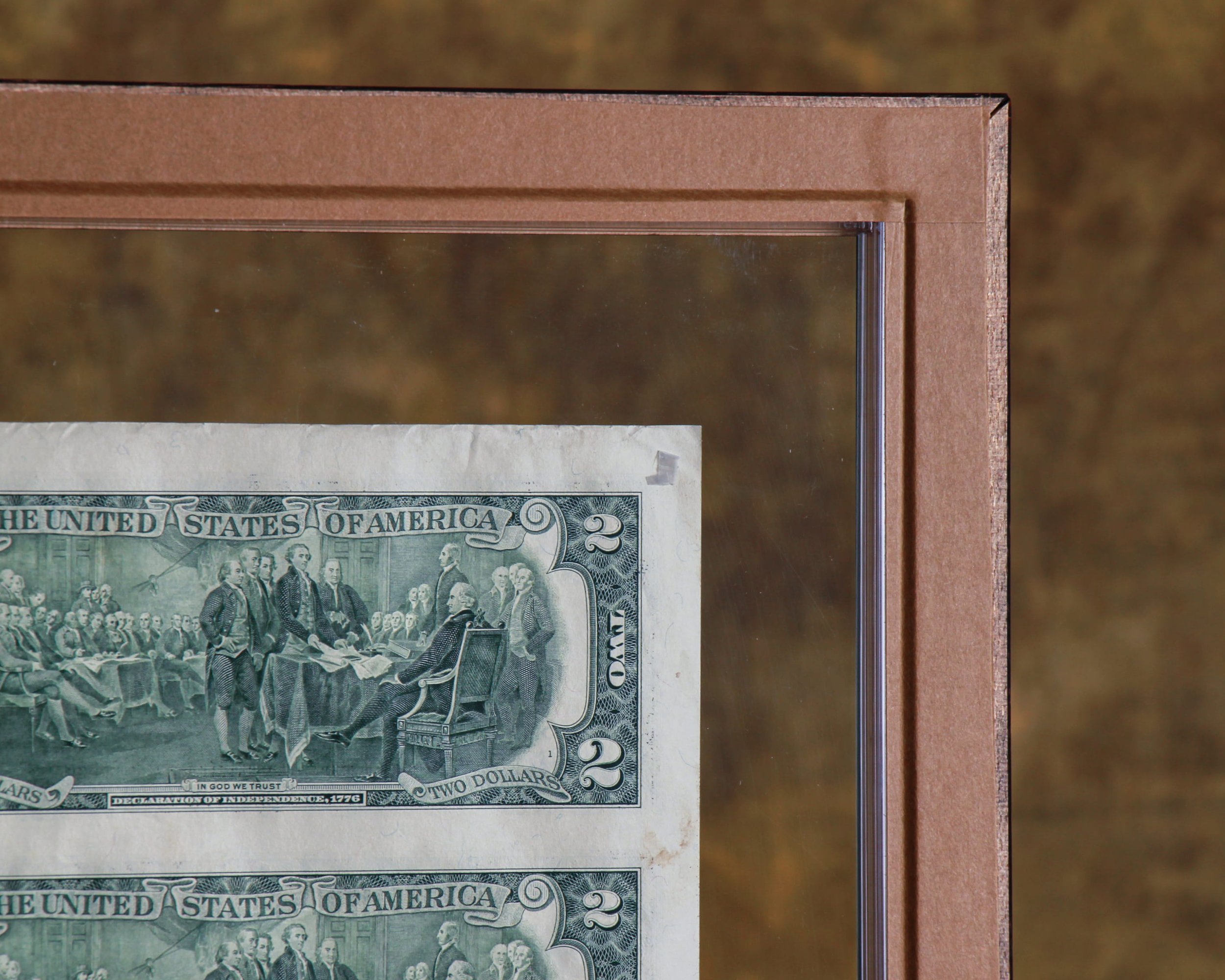
Flip it over and the piece shifts gears entirely. The reverse side, with its engraving of the signing of the Declaration of Independence, reads differently when multiplied thirty-two times. It becomes less of an illustration and more of a pattern, a field of history repeating itself across the sheet. There’s a subtle poetry in that, whether intentional or not.
What really elevates this piece is how it’s been presented. The custom double-sided plexiglass frame feels more like a display case than a frame, giving the sheet a floating quality. Nothing is hidden. You can walk around it, take in both sides, catch the light moving across the surface. It turns what could have been a flat curiosity into something sculptural, almost architectural in presence.
And then there’s the denomination itself. The two-dollar bill has always lived slightly outside the mainstream, familiar but rarely seen, a denomination that feels like a rumor even though it’s very real. In this format, it leans fully into that oddball status. It’s not just uncommon, it’s unapologetically so.
Altogether, it’s a piece that lands somewhere between artifact and conversation starter. Equal parts design, history, and a little bit of quiet rebellion against the everyday. Ready to hang, yes, but more importantly, ready to make people stop and take a second look.
There’s something quietly electric about seeing money before it becomes money. Not a single bill plucked from a wallet, creased and passed along through a hundred anonymous transactions, but the whole idea of currency in its original, untouched state, still arranged exactly as it left the press. This full uncut sheet of thirty-two United States two-dollar bills, issued in 1995, carries that feeling in a way that’s hard to fake.
Each note sits in perfect formation, like a grid of small, identical promises. The familiar portrait of Jefferson repeats with a kind of rhythm, and once you notice the serial numbers marching in sequence, it becomes even better. It’s orderly, precise, almost hypnotic. You’re not just looking at money here, you’re looking at the process behind it, the moment before separation, before circulation, before wear turns something official into something ordinary.
Flip it over and the piece shifts gears entirely. The reverse side, with its engraving of the signing of the Declaration of Independence, reads differently when multiplied thirty-two times. It becomes less of an illustration and more of a pattern, a field of history repeating itself across the sheet. There’s a subtle poetry in that, whether intentional or not.
What really elevates this piece is how it’s been presented. The custom double-sided plexiglass frame feels more like a display case than a frame, giving the sheet a floating quality. Nothing is hidden. You can walk around it, take in both sides, catch the light moving across the surface. It turns what could have been a flat curiosity into something sculptural, almost architectural in presence.
And then there’s the denomination itself. The two-dollar bill has always lived slightly outside the mainstream, familiar but rarely seen, a denomination that feels like a rumor even though it’s very real. In this format, it leans fully into that oddball status. It’s not just uncommon, it’s unapologetically so.
Altogether, it’s a piece that lands somewhere between artifact and conversation starter. Equal parts design, history, and a little bit of quiet rebellion against the everyday. Ready to hang, yes, but more importantly, ready to make people stop and take a second look.