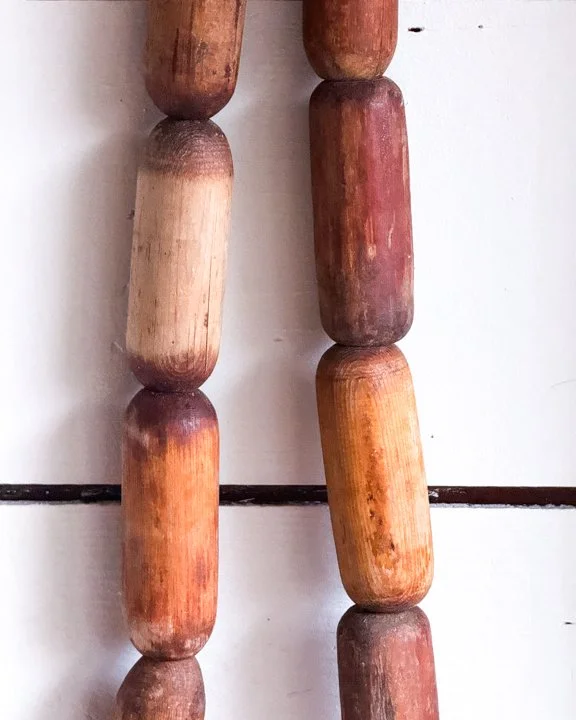
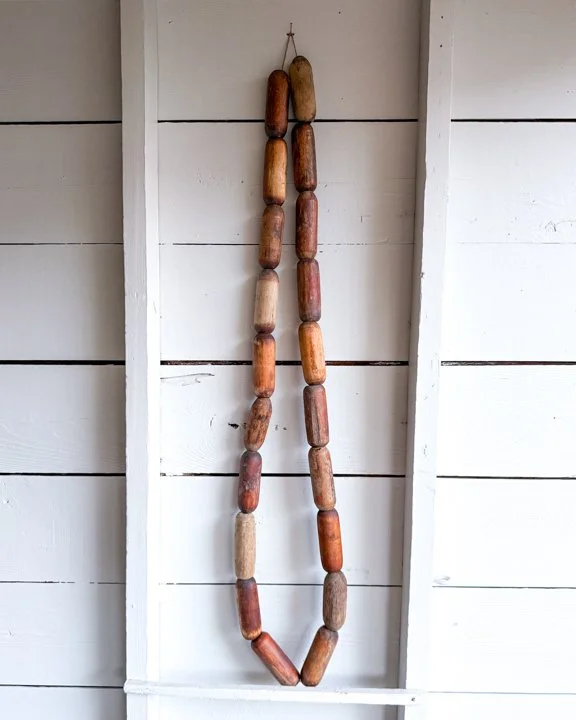
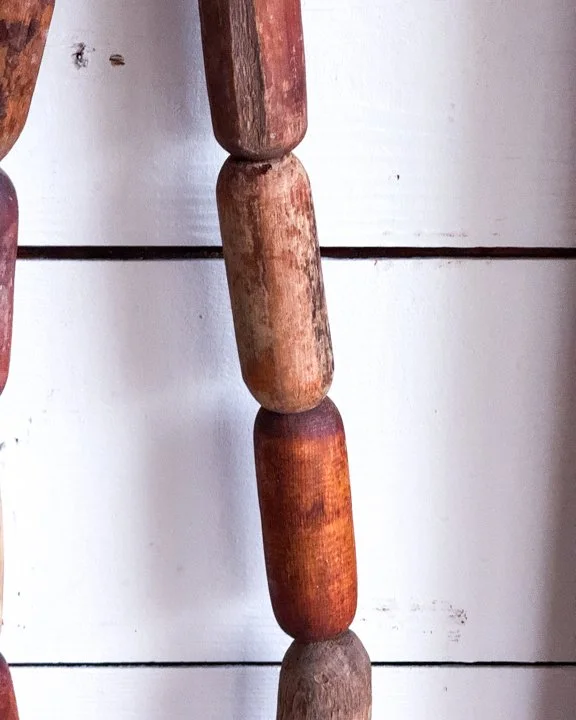
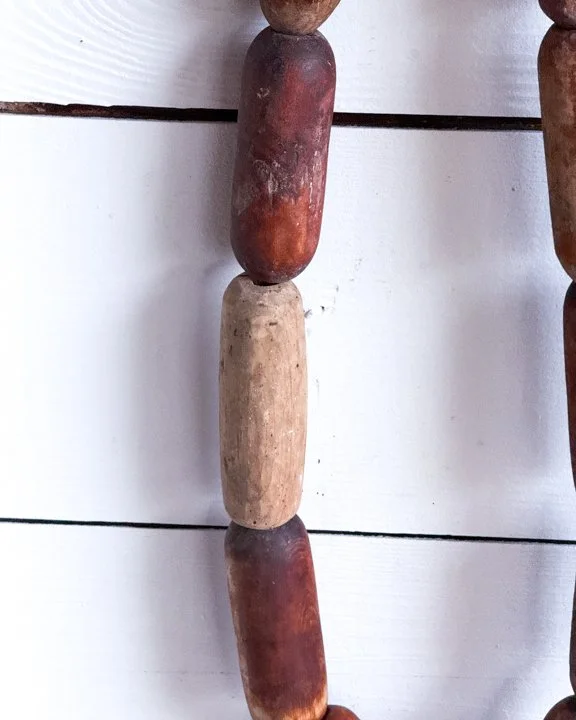
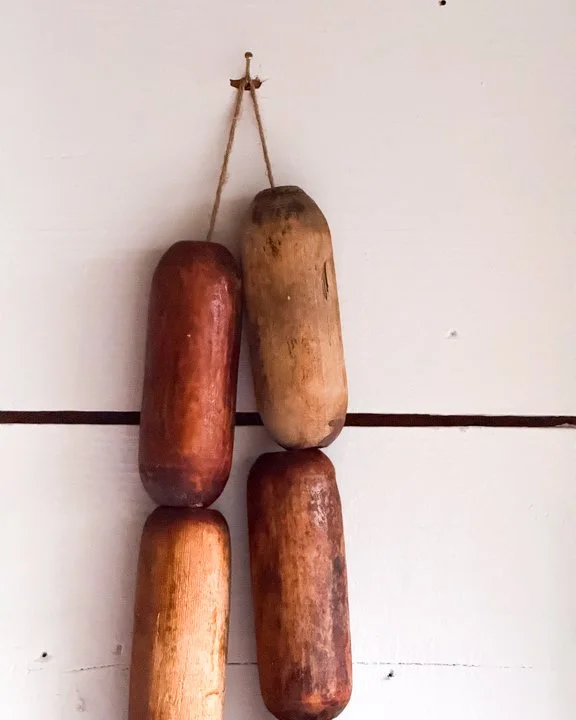

An entire chain of hand-turned wooden floats, once bobbing on the surface of Japan’s coastal waters, keeping fishing nets afloat. Known as ukidama, each piece has its own patina and tone, from pale driftwood to deep reddish brown, smoothed by sea and time. Strung together on old twine, they hang like a necklace of miniature buoys—part tool, part sculpture.
The repetition creates a quiet rhythm, each float slightly different yet working as a whole, carrying the memory of tides, weather, and long days at sea.
Ukidama
Japanese ukidama—those hollow glass fishing floats—are a perfect mix of necessity and quiet beauty. First used in the late 19th and early 20th centuries, they were designed to keep fishing nets buoyant in coastal waters. Before plastics, glass was the answer: durable, reusable, and capable of holding air without leaking.
They were hand-blown, often in small coastal workshops, using recycled glass. You can still see it in the color—soft greens, aquas, sometimes deeper hues depending on what went into the melt. A small sealed nub, where the glass was closed, marks each one as a product of that process.
Function came first. Floats were tied into nets, tossed into the sea, and left to do their job—rising and falling with the water, keeping lines visible and supported. But over time, something else happened. Lost or cut loose, many drifted, carried by currents across the Pacific, eventually washing up on distant shores.
What makes ukidama compelling now is that journey. They weren’t made to be collected, but they found their way into collections anyway. Surfaces show wear—scratches, clouding, the occasional encrustation—evidence of time spent in motion.
They sit somewhere between tool and found object. Simple, spherical, and quietly luminous, holding both the trace of their making and the path they traveled after they were no longer needed.
An entire chain of hand-turned wooden floats, once bobbing on the surface of Japan’s coastal waters, keeping fishing nets afloat. Known as ukidama, each piece has its own patina and tone, from pale driftwood to deep reddish brown, smoothed by sea and time. Strung together on old twine, they hang like a necklace of miniature buoys—part tool, part sculpture.
The repetition creates a quiet rhythm, each float slightly different yet working as a whole, carrying the memory of tides, weather, and long days at sea.
Ukidama
Japanese ukidama—those hollow glass fishing floats—are a perfect mix of necessity and quiet beauty. First used in the late 19th and early 20th centuries, they were designed to keep fishing nets buoyant in coastal waters. Before plastics, glass was the answer: durable, reusable, and capable of holding air without leaking.
They were hand-blown, often in small coastal workshops, using recycled glass. You can still see it in the color—soft greens, aquas, sometimes deeper hues depending on what went into the melt. A small sealed nub, where the glass was closed, marks each one as a product of that process.
Function came first. Floats were tied into nets, tossed into the sea, and left to do their job—rising and falling with the water, keeping lines visible and supported. But over time, something else happened. Lost or cut loose, many drifted, carried by currents across the Pacific, eventually washing up on distant shores.
What makes ukidama compelling now is that journey. They weren’t made to be collected, but they found their way into collections anyway. Surfaces show wear—scratches, clouding, the occasional encrustation—evidence of time spent in motion.
They sit somewhere between tool and found object. Simple, spherical, and quietly luminous, holding both the trace of their making and the path they traveled after they were no longer needed.