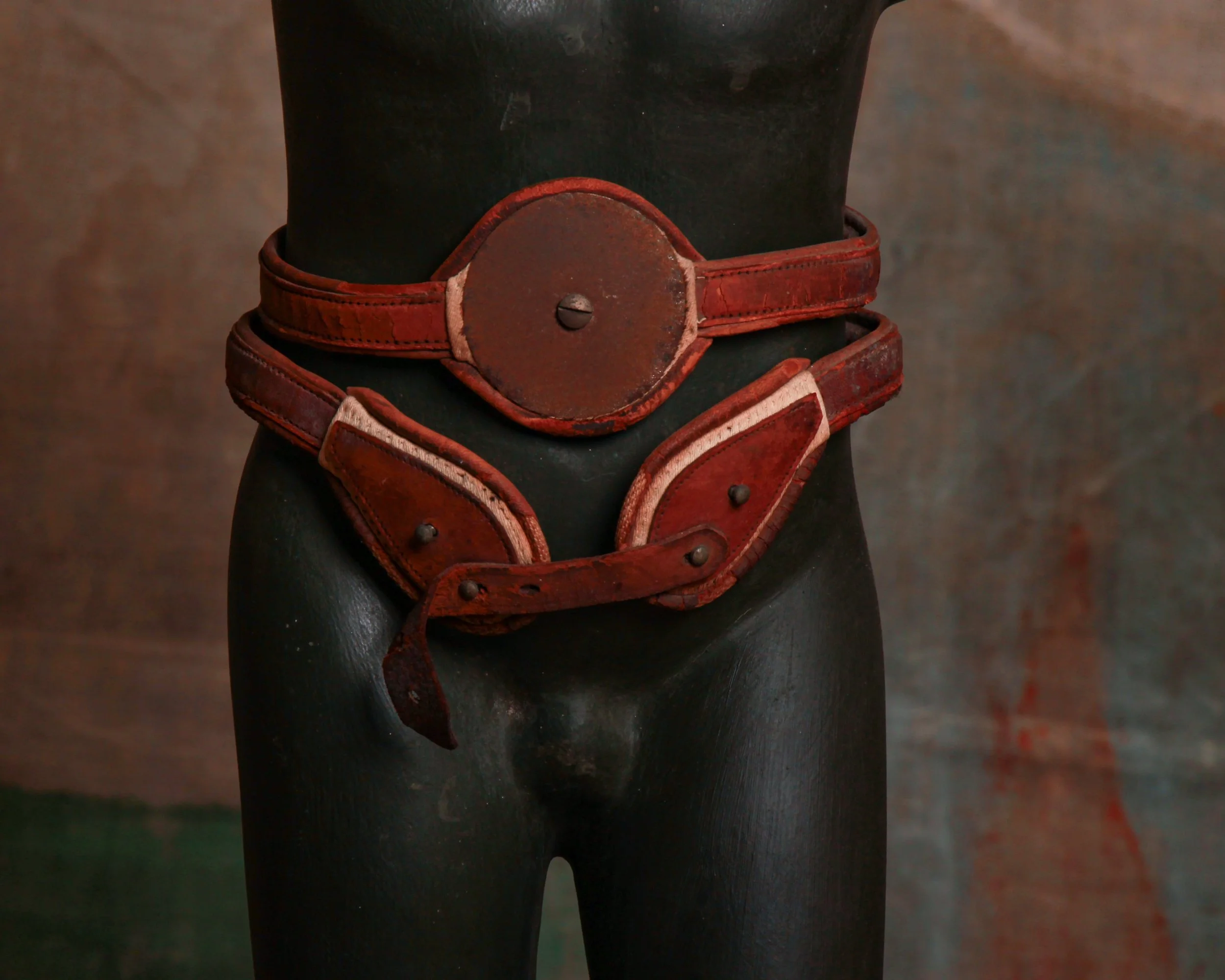
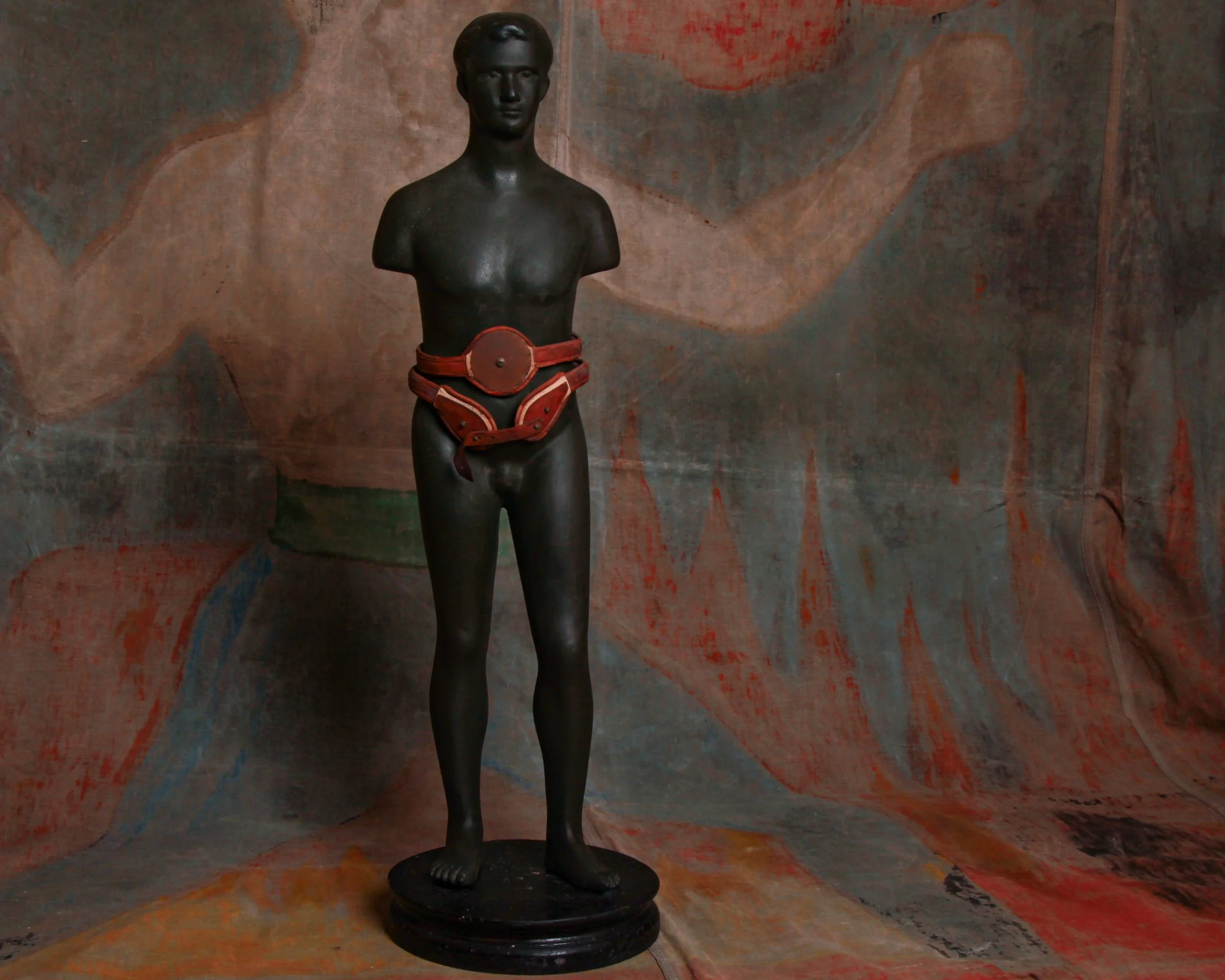
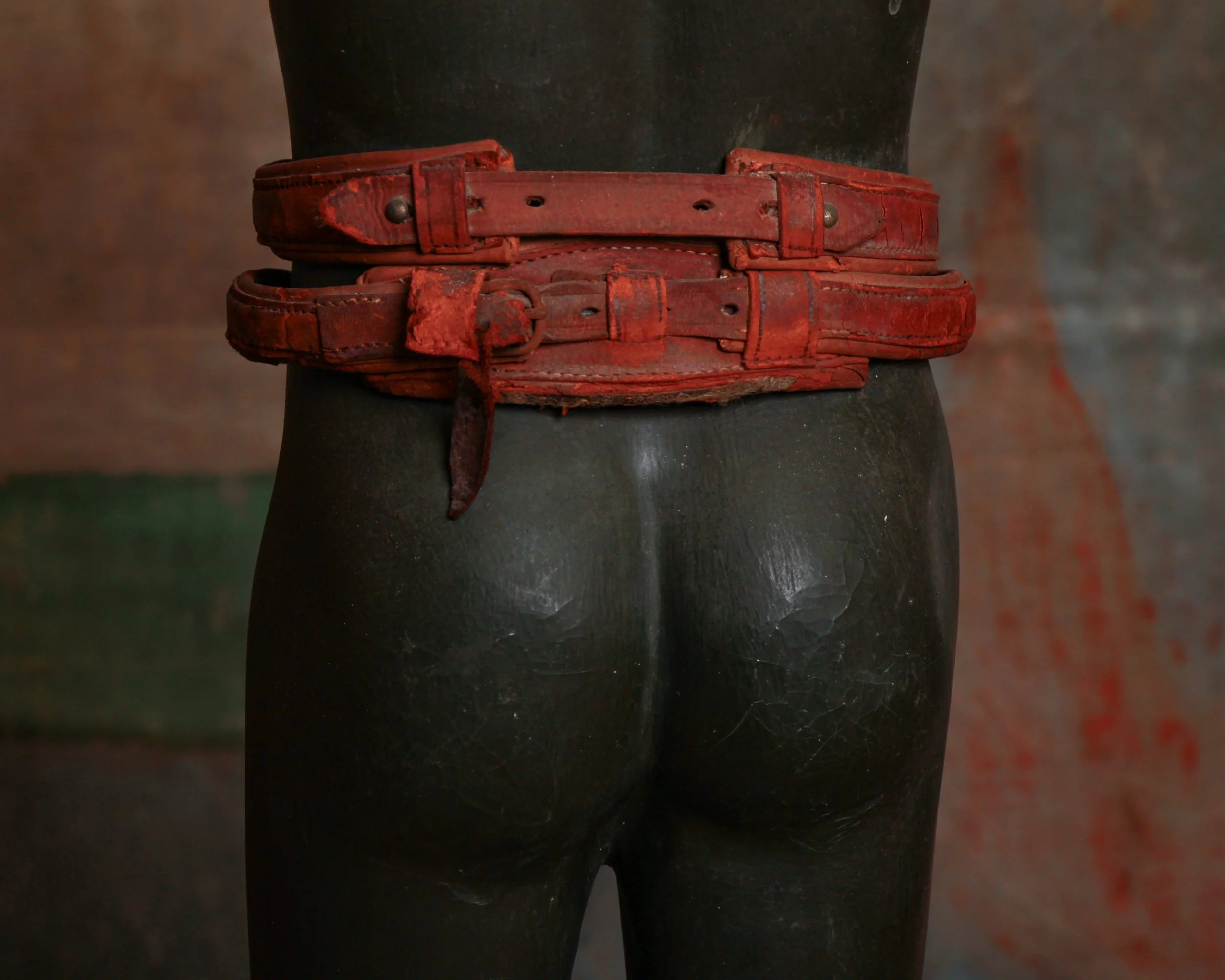
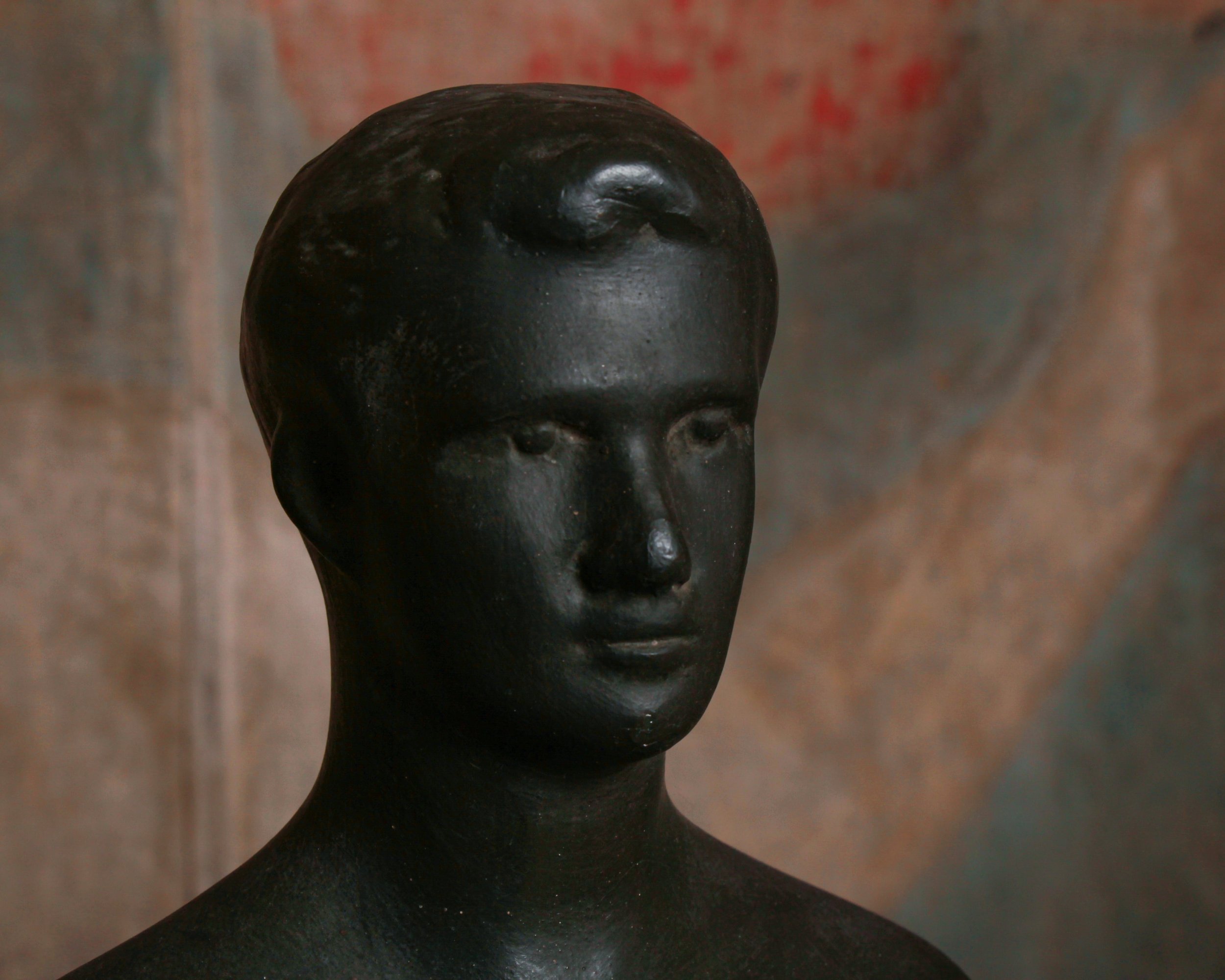
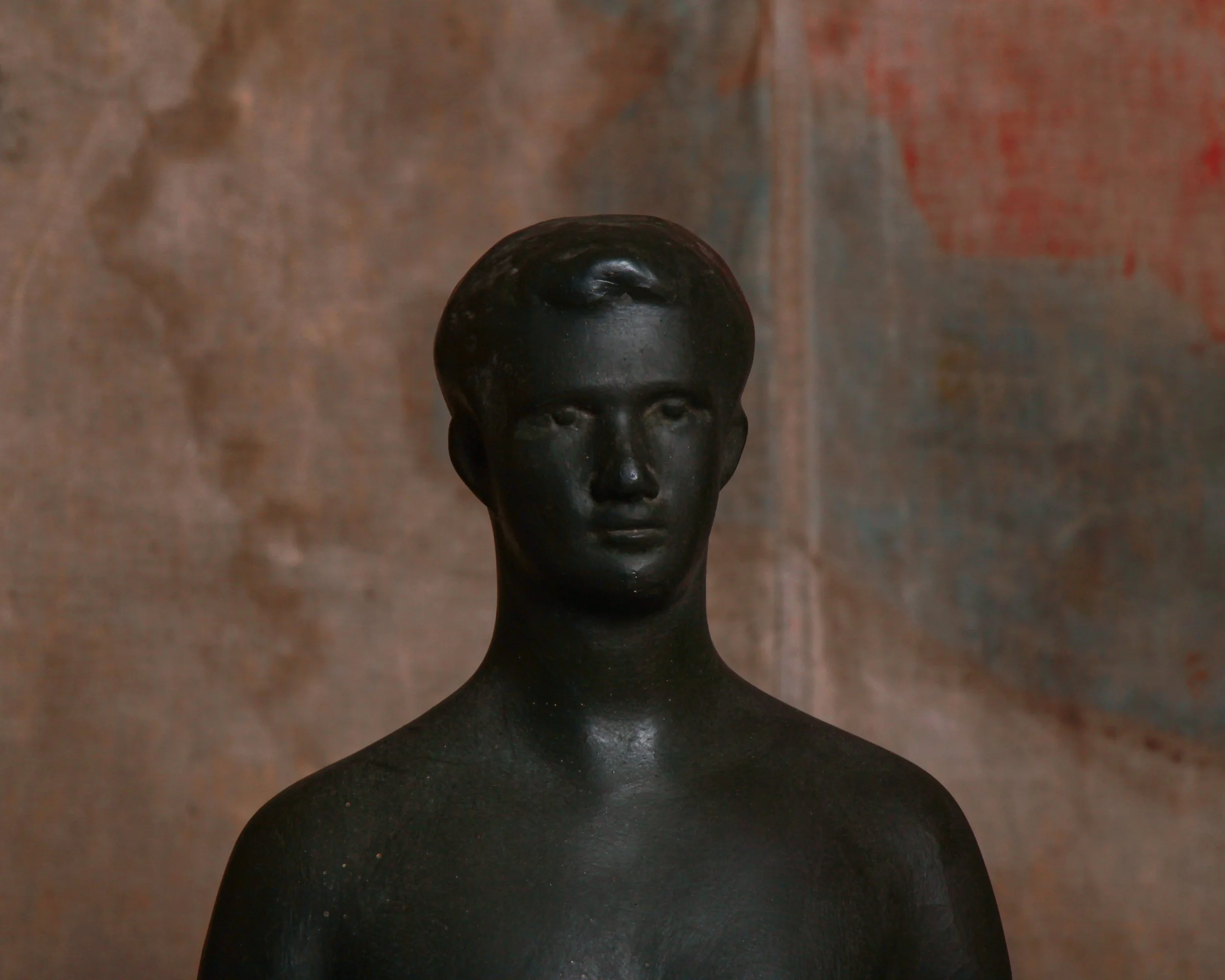
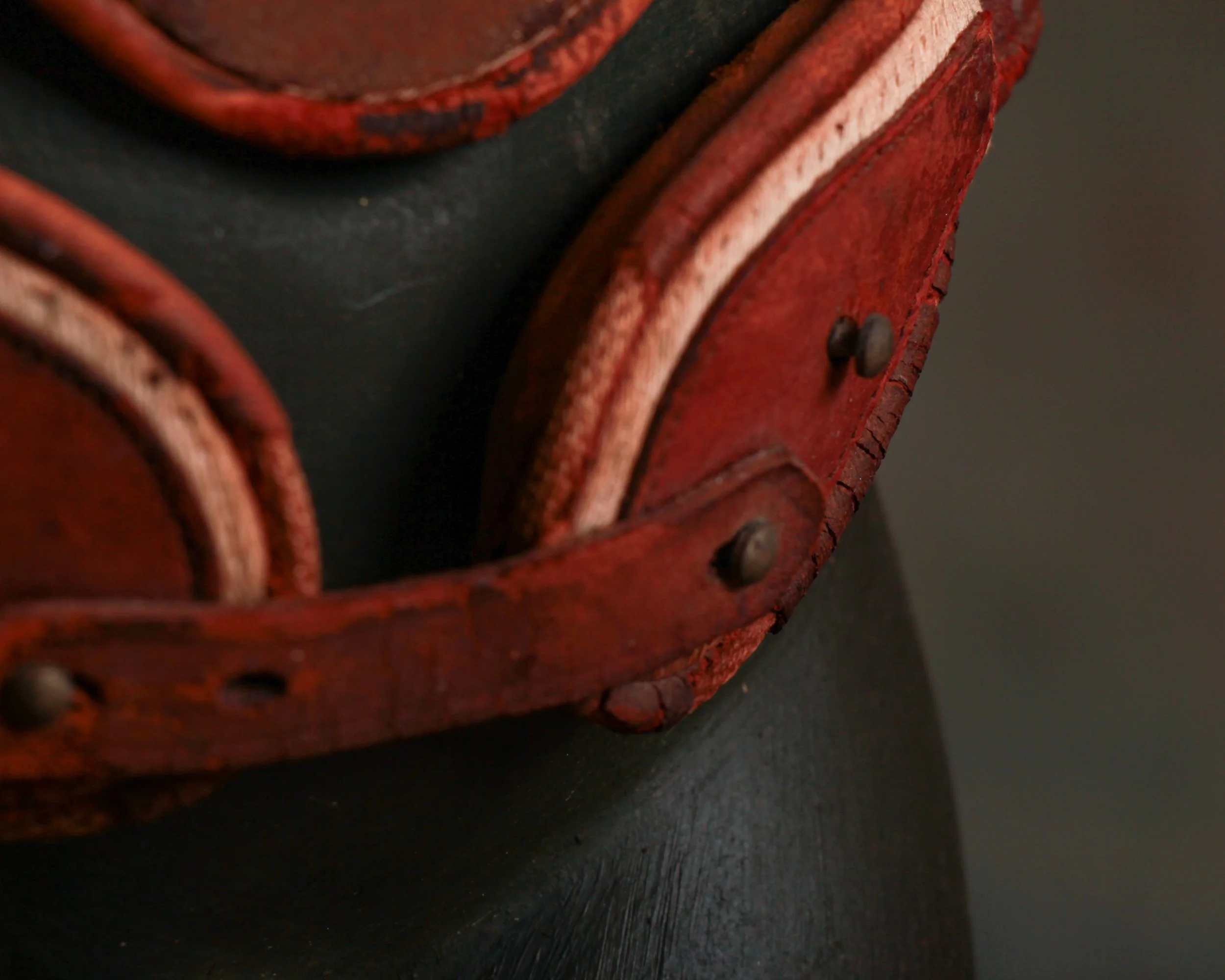
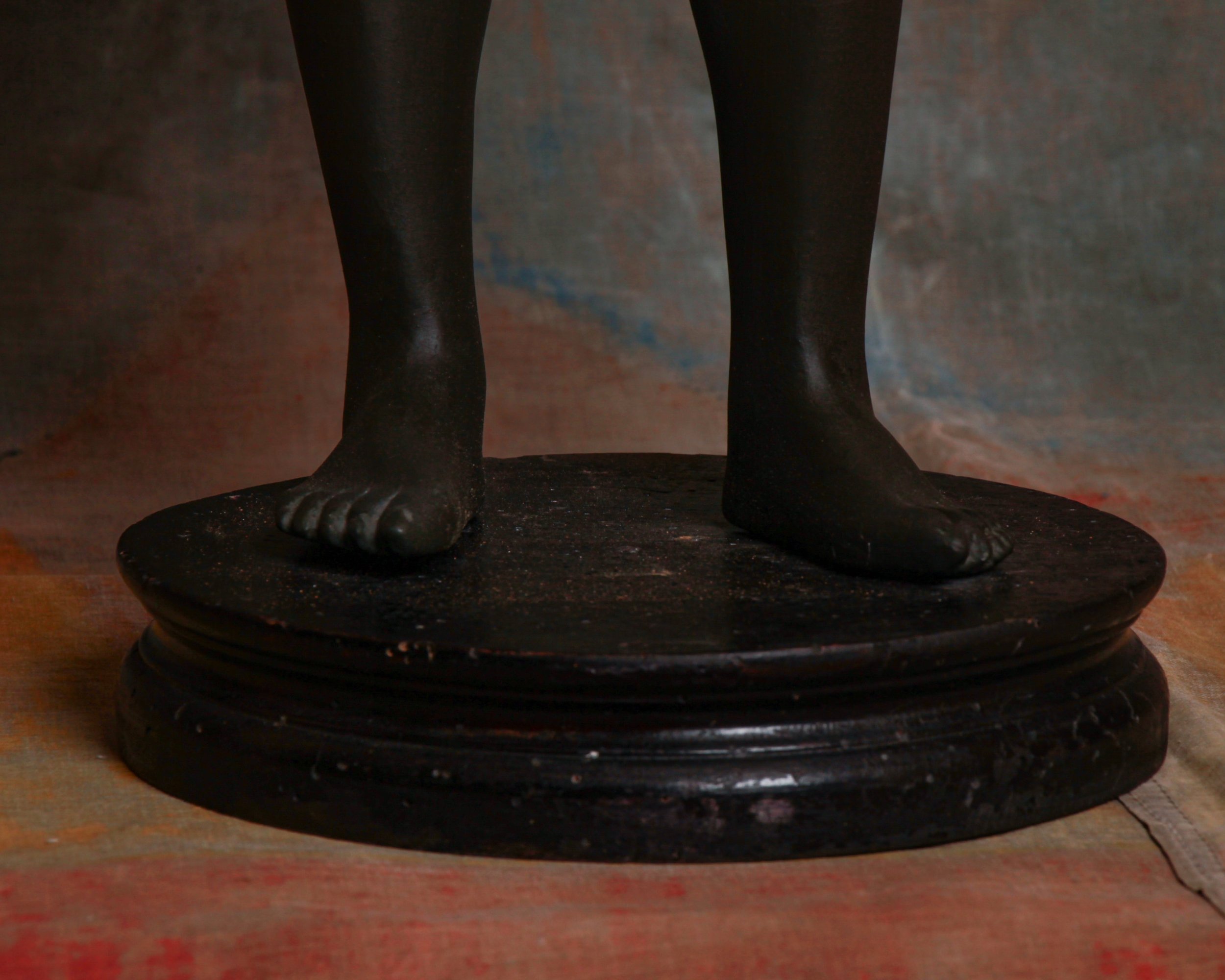
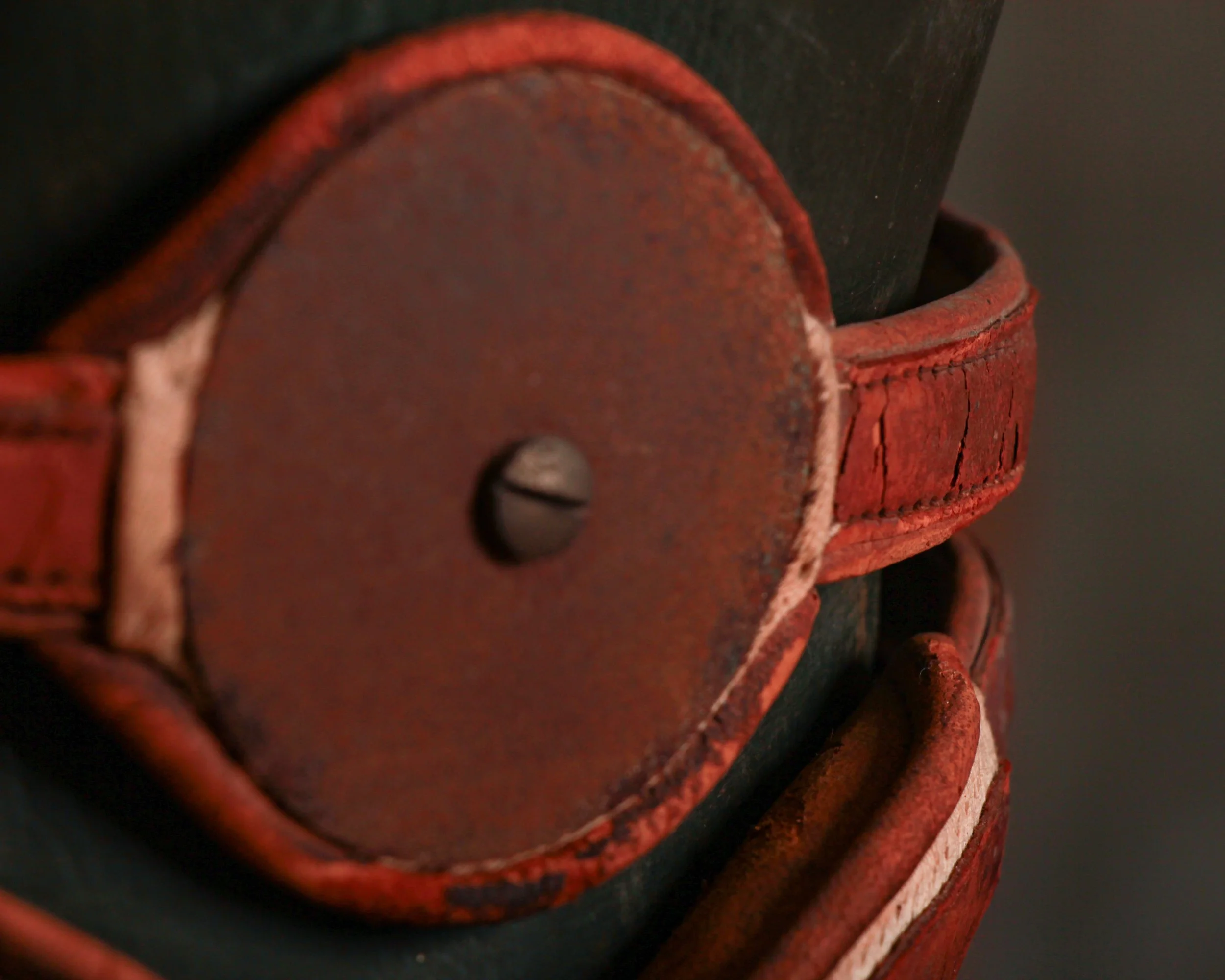
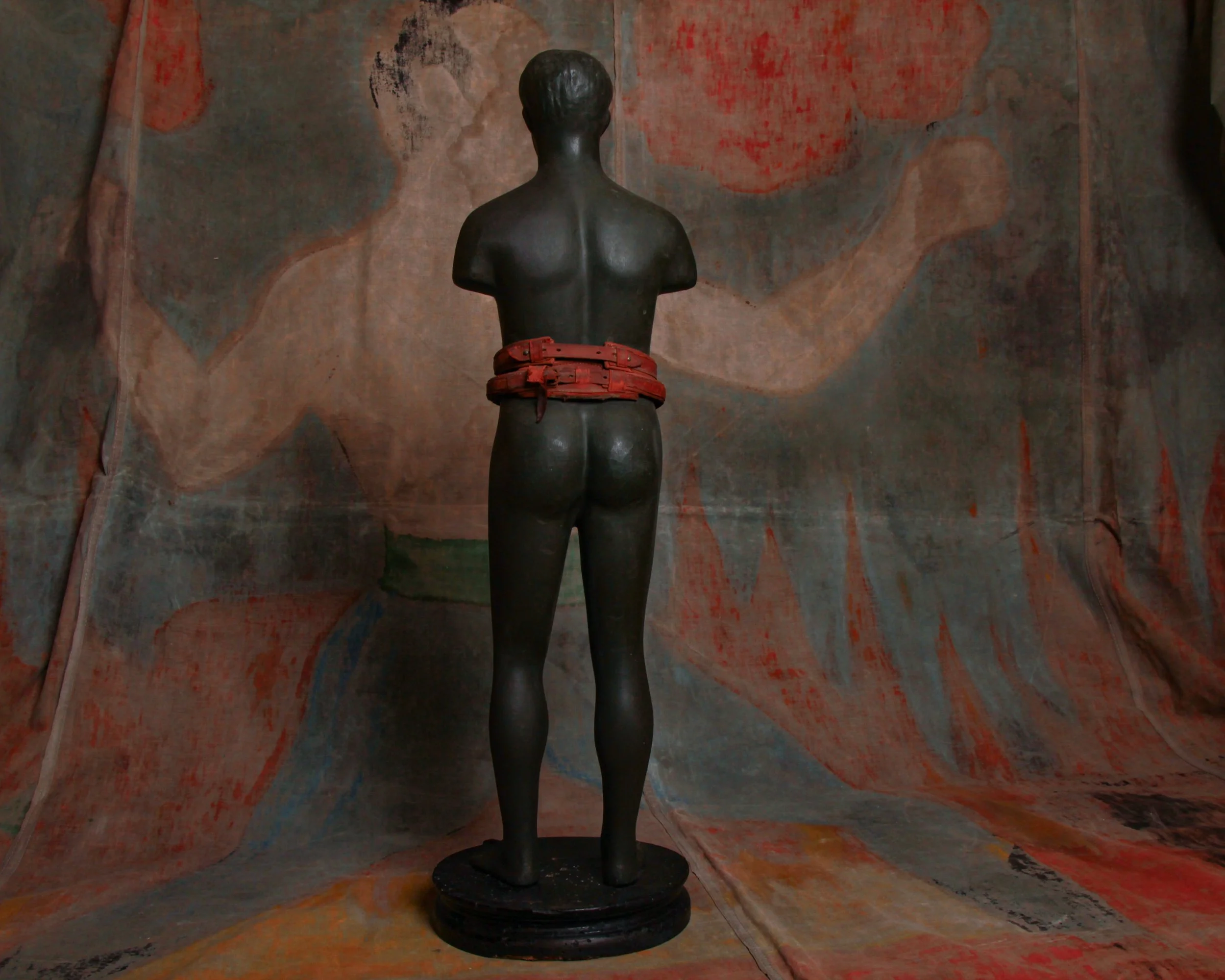

There’s something hauntingly compelling about this French male mannequin, circa 1920s—its stark black finish and classical stance are equal parts elegant and clinical. Designed as an advertising display for orthopedic knitted undergarments and medical containment belts, it manages to straddle the worlds of sculpture, medicine, and commerce all at once. The figure stands 33.75 inches tall on a round wooden base, its posture calm and timeless, yet accented by a strapping leather belt system. The mannequin itself is made from buffed black papier-mâché, a lightweight yet durable material often used in early 20th-century displays, giving it an almost sculptural gravitas. You can almost picture it in the window of a Parisian orthopedic supplier in the 1920s, quietly modeling the latest in therapeutic innovation.
W 10" x D 10" x H 33.75"
Category History
Orthopedic knitted undergarments and containment belts from the 1930s sit in that intersection of medicine, manufacturing, and daily life. Designed to support the body rather than simply clothe it, these pieces were often prescribed for posture correction, abdominal support, hernias, or recovery after injury. They weren’t optional accessories—they were part of a regimen.
Materials tell the story. Knitted cotton, wool, and early elastic fibers allowed for stretch and compression, while maintaining breathability. Construction was deliberate: reinforced panels, stitched channels, adjustable straps, metal clasps. Everything was built to apply pressure where needed and relieve it where it wasn’t.
What’s interesting is how closely they reflect the period’s understanding of the body. Support was external, mechanical, and visible in the structure of the garment itself. There’s no hiding the function—you can read it in the seams.
They were often custom-fitted or sold through medical suppliers, bridging the gap between clothing and equipment. Over time, they pick up wear—stretched fibers, softened edges, repaired closures—evidence of regular use.
Today, they read as both personal and clinical. Not decorative, but carefully made. Objects shaped by necessity, designed to stabilize, correct, and quietly assist the body in doing its work.
There’s something hauntingly compelling about this French male mannequin, circa 1920s—its stark black finish and classical stance are equal parts elegant and clinical. Designed as an advertising display for orthopedic knitted undergarments and medical containment belts, it manages to straddle the worlds of sculpture, medicine, and commerce all at once. The figure stands 33.75 inches tall on a round wooden base, its posture calm and timeless, yet accented by a strapping leather belt system. The mannequin itself is made from buffed black papier-mâché, a lightweight yet durable material often used in early 20th-century displays, giving it an almost sculptural gravitas. You can almost picture it in the window of a Parisian orthopedic supplier in the 1920s, quietly modeling the latest in therapeutic innovation.
W 10" x D 10" x H 33.75"
Category History
Orthopedic knitted undergarments and containment belts from the 1930s sit in that intersection of medicine, manufacturing, and daily life. Designed to support the body rather than simply clothe it, these pieces were often prescribed for posture correction, abdominal support, hernias, or recovery after injury. They weren’t optional accessories—they were part of a regimen.
Materials tell the story. Knitted cotton, wool, and early elastic fibers allowed for stretch and compression, while maintaining breathability. Construction was deliberate: reinforced panels, stitched channels, adjustable straps, metal clasps. Everything was built to apply pressure where needed and relieve it where it wasn’t.
What’s interesting is how closely they reflect the period’s understanding of the body. Support was external, mechanical, and visible in the structure of the garment itself. There’s no hiding the function—you can read it in the seams.
They were often custom-fitted or sold through medical suppliers, bridging the gap between clothing and equipment. Over time, they pick up wear—stretched fibers, softened edges, repaired closures—evidence of regular use.
Today, they read as both personal and clinical. Not decorative, but carefully made. Objects shaped by necessity, designed to stabilize, correct, and quietly assist the body in doing its work.