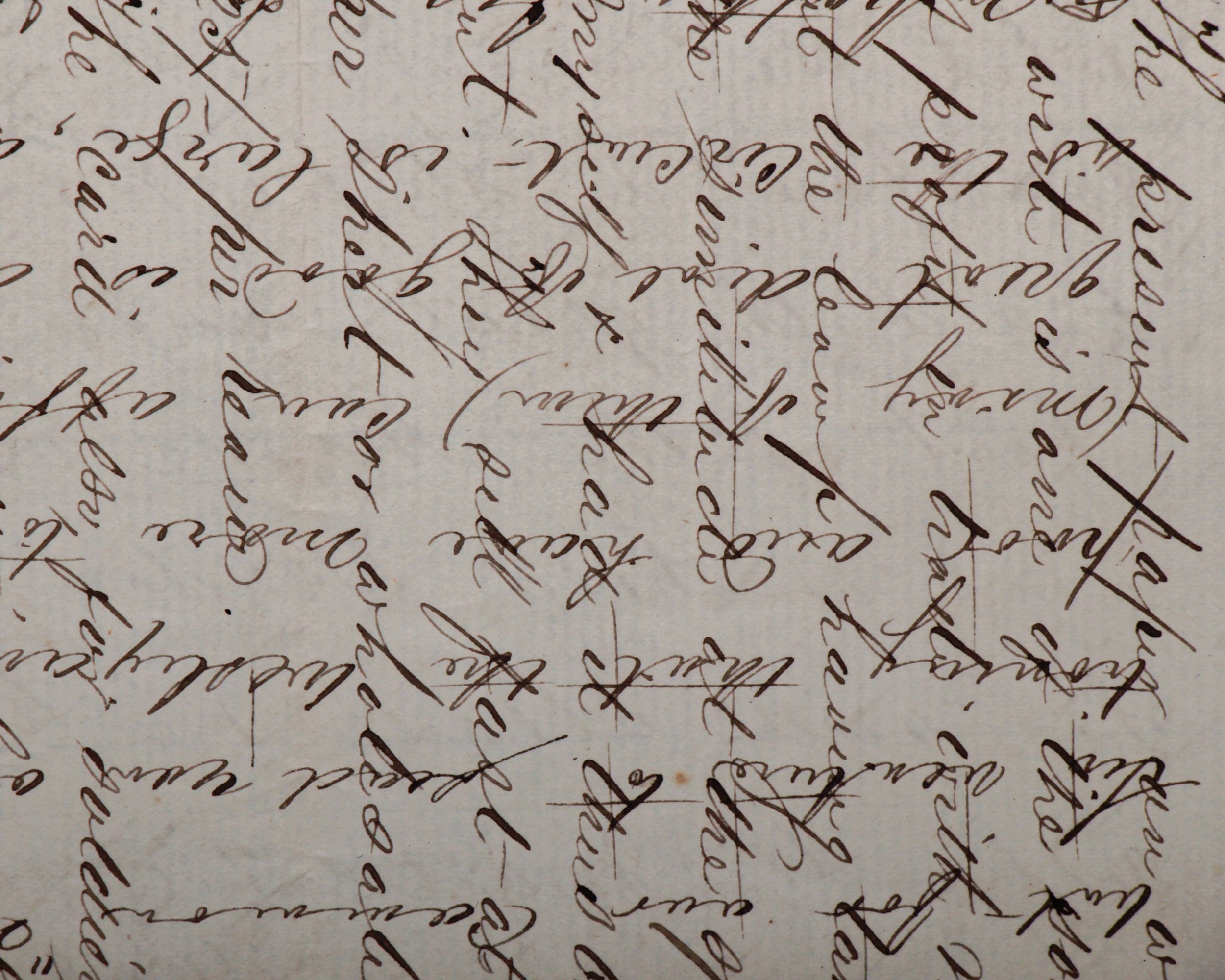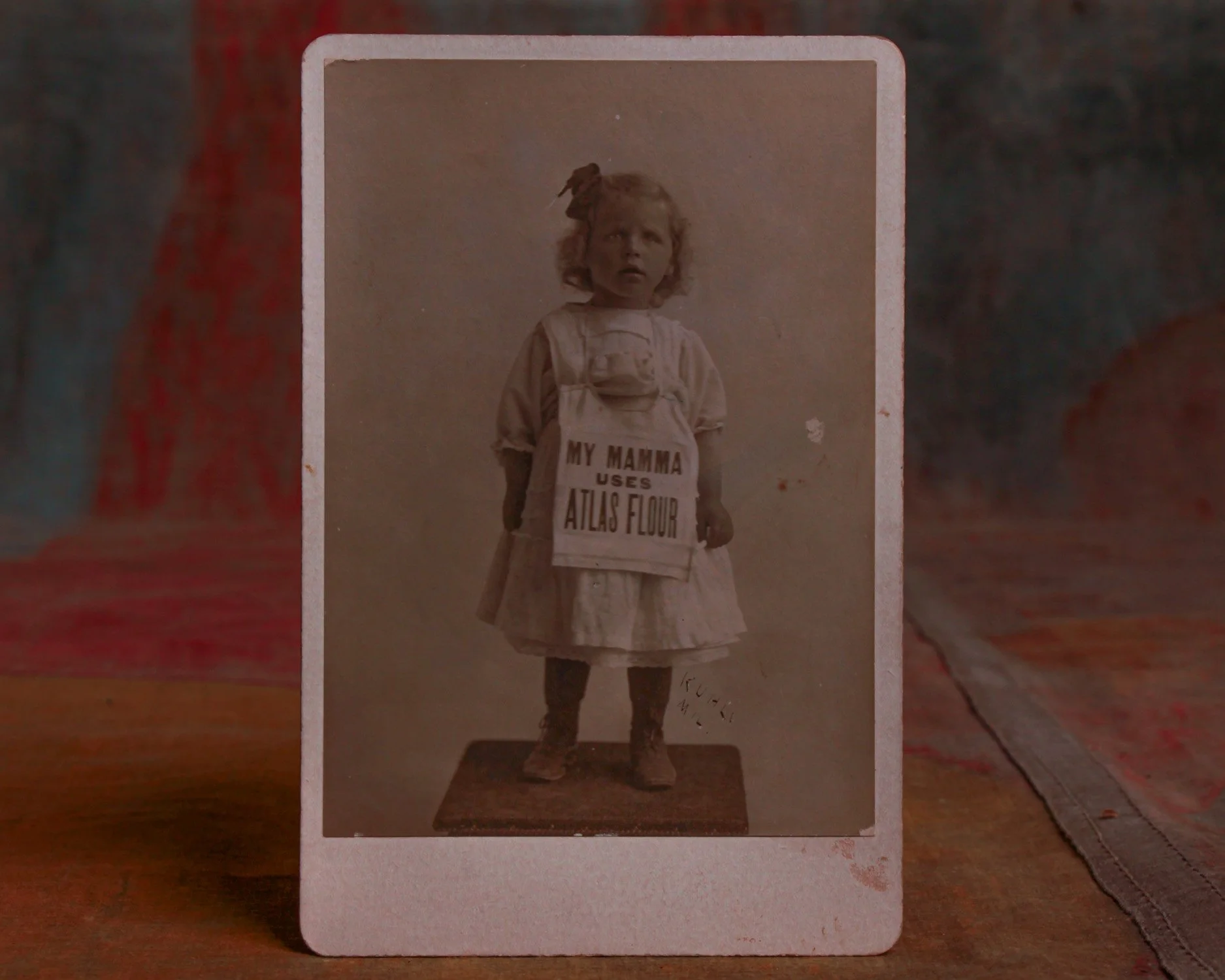
An unusual early 20th century cabinet card photograph featuring a young girl serving as a walking advertisement for Atlas Flour. Dressed in a light-colored dress, lace-up boots, and a large hair bow, she stands on a small platform wearing a promotional apron printed with the words “MY MAMMA USES ATLAS FLOUR.” The photograph has a wonderfully awkward quality, with the child looking slightly puzzled by the whole experience. The reverse bears a handwritten inscription identifying her as “Aunt Margaret.”
Walking advertisements were a popular marketing technique during the late 19th and early 20th centuries, when businesses relied on creative ways to promote their products before the arrival of radio and television advertising.
While sandwich boards and walking billboards were commonly associated with adults advertising shops and services, children were also featured in promotional campaigns, particularly for household products, food, and clothing.
Flour manufacturers competed heavily for customers during this period, as advances in milling technology and transportation allowed companies to distribute their products across increasingly large markets. Advertising became an important way to distinguish one brand from another.
Companies frequently emphasized purity, consistency, and quality, often using images of happy families, mothers, and children to establish trust with consumers. Since women traditionally handled most household baking and food preparation, flour advertisements were commonly directed toward mothers and homemakers.
Promotional aprons, printed clothing, advertising cards, and other inexpensive giveaways helped businesses get their names into homes and public spaces.
Cabinet card photography also played an important role in documenting American life during this period. Introduced in the 1860s, these mounted photographs became a popular format for family portraits, professional advertisements, and unusual novelty images.
By the early 1900s, cabinet cards were gradually being replaced by smaller photographic formats and real photo postcards, although their use continued in some communities for several years.