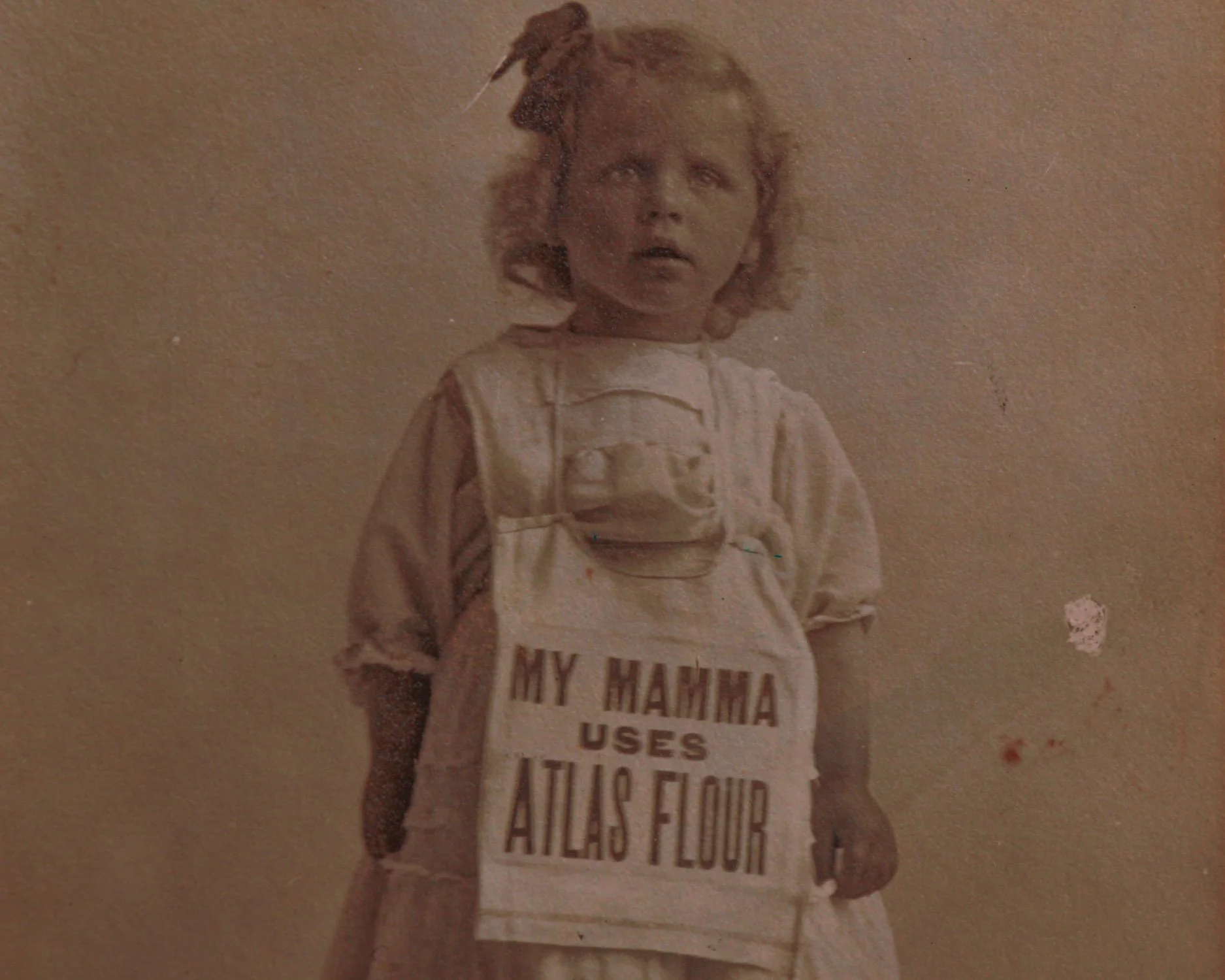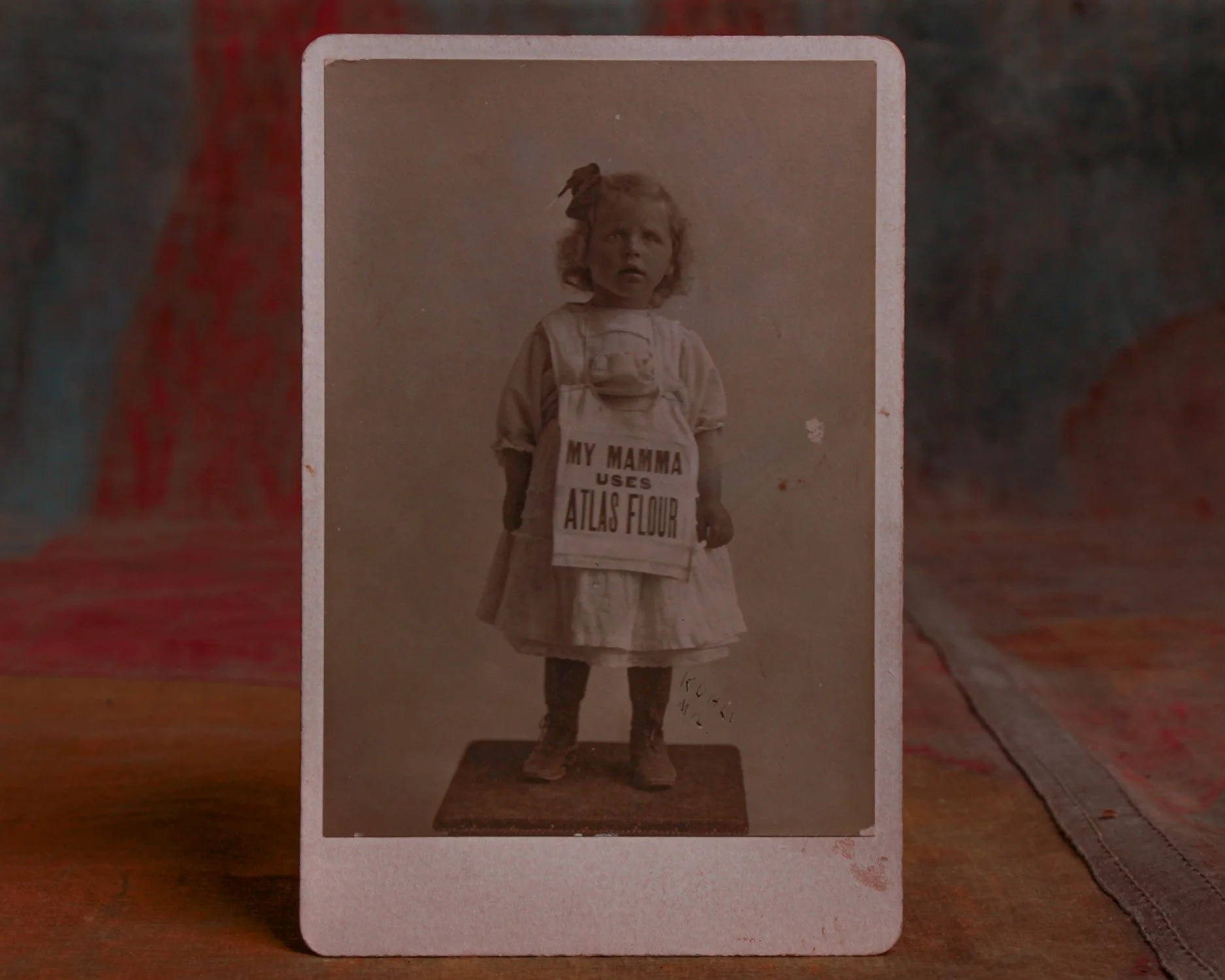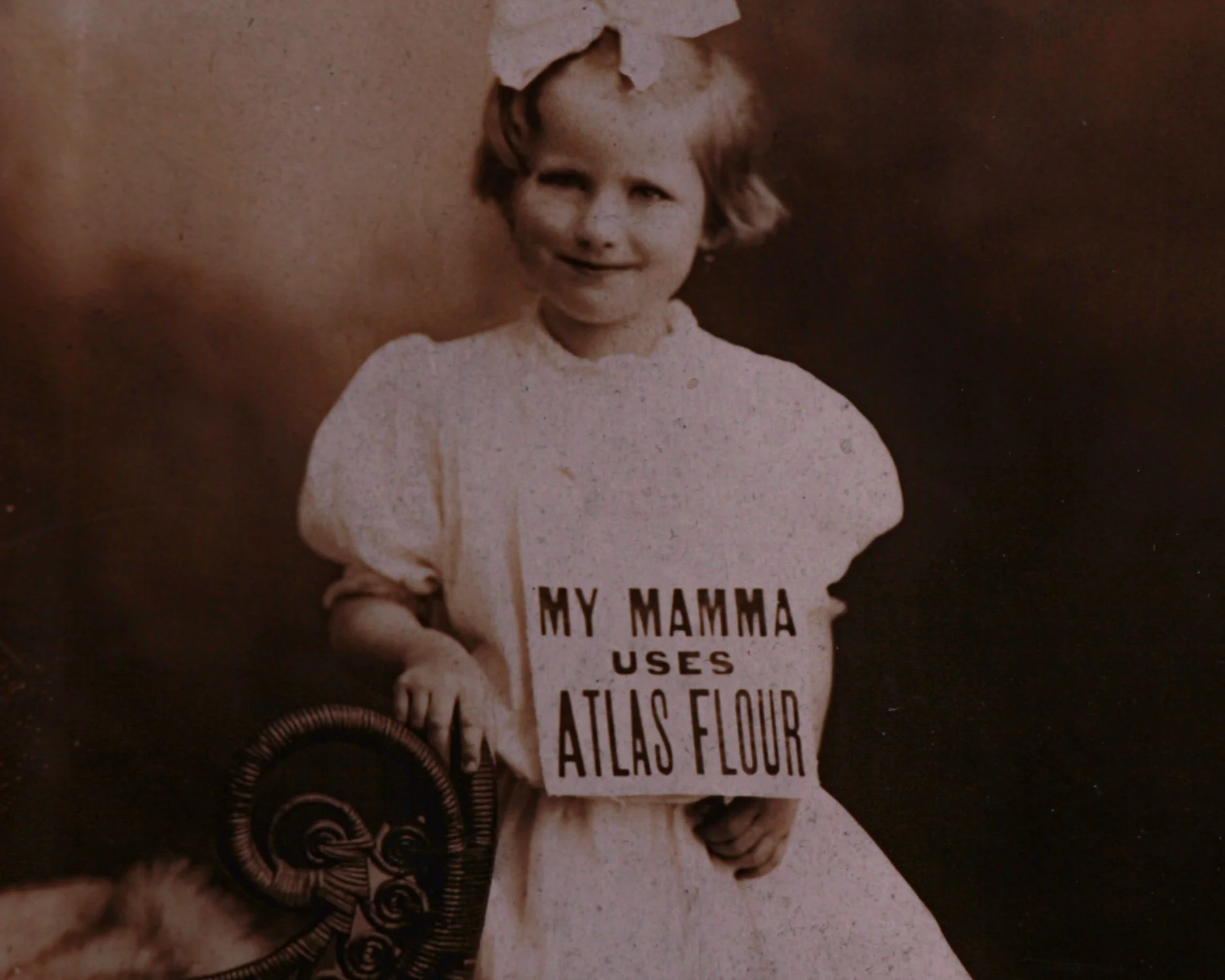
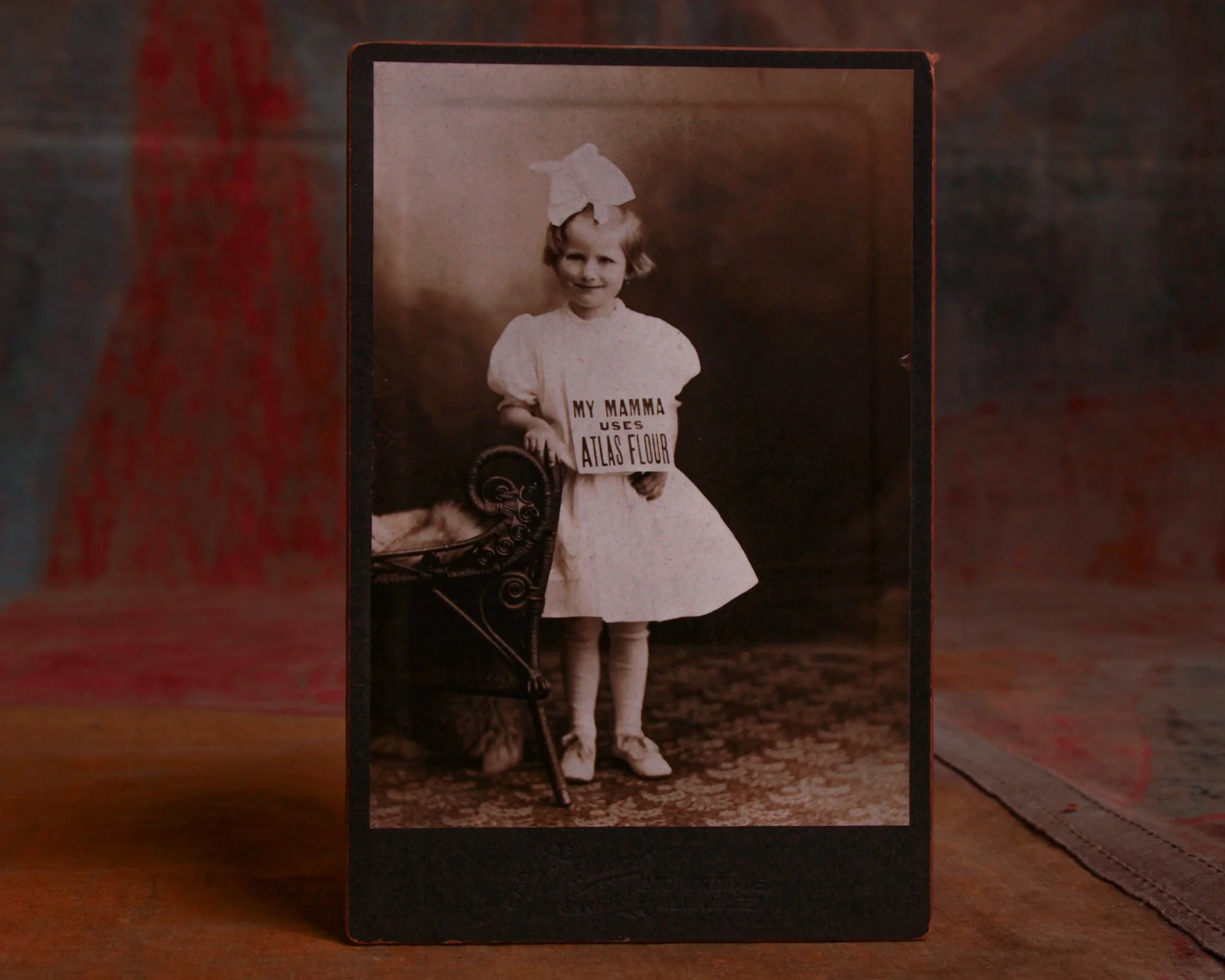
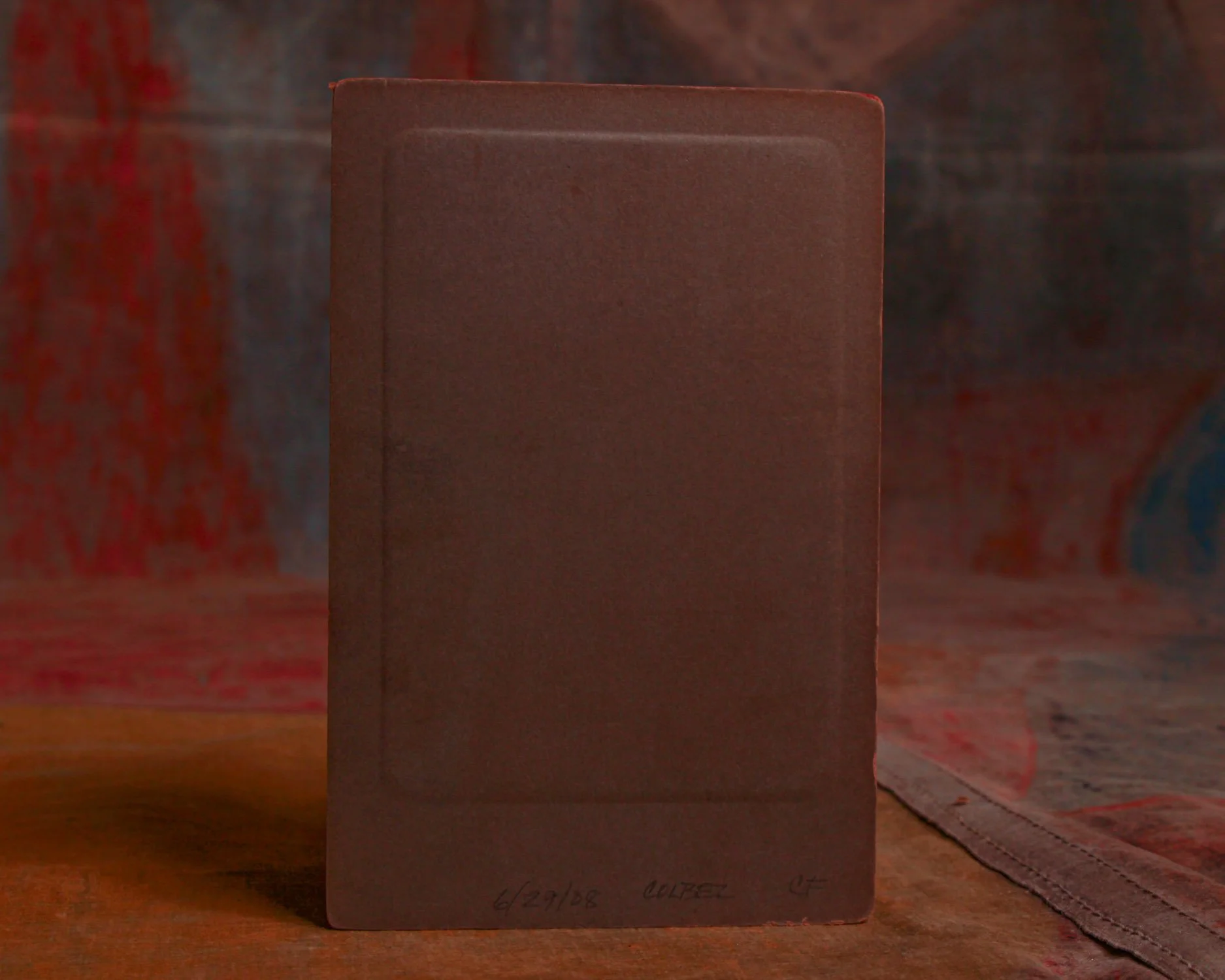
An unusual early 20th century cabinet card photograph featuring a young girl posing as a walking advertisement for Atlas Flour. Dressed in a white dress with puffed sleeves, stockings, and a large hair bow, she stands beside an ornate studio chair wearing a promotional sign reading “MY MAMMA USES ATLAS FLOUR.” Unlike the more serious expressions often found in early studio portraits, the little girl offers a slight smile. The photograph is mounted on dark cardboard with a simple black border, giving it a clean, understated presentation.
During the late 19th and early 20th centuries, businesses increasingly turned to unconventional advertising methods to attract customers. Walking billboards, sandwich boards, promotional costumes, and wearable advertisements became familiar sights in American towns and cities, particularly as competition among manufacturers and retailers grew.
Children were occasionally featured in advertising campaigns, especially those promoting food, household goods, and other everyday necessities. Their presence helped advertisers communicate ideas of family, trust, and domestic life, making products seem familiar and dependable.
Flour was particularly competitive during this period. Improvements in industrial milling, railroad transportation, and packaging allowed manufacturers to sell their products far beyond their local markets. As a result, brand recognition became increasingly important.
Flour companies frequently used images of mothers, children, and home baking to appeal to household shoppers. Advertising slogans emphasized quality, reliability, and the idea that a particular brand was the preferred choice of experienced homemakers.
Promotional clothing and printed advertising signs offered an inexpensive way to spread these messages, turning ordinary people into mobile advertisements.
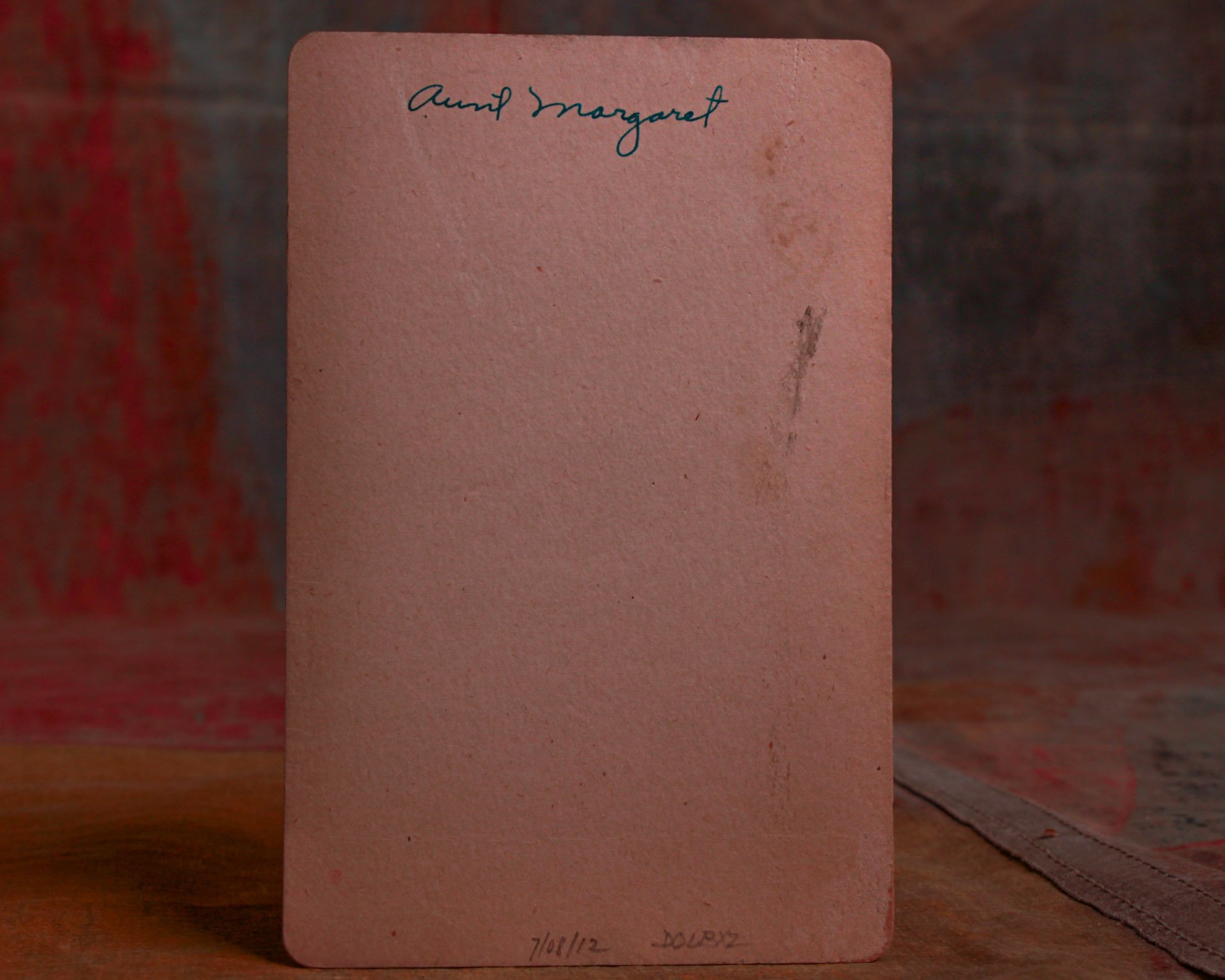
Cabinet card photography, introduced during the 1860s, also played a role in documenting these promotional practices. Mounted on sturdy cardboard, the photographs were commonly exchanged among friends and relatives, preserving everything from formal family portraits to unusual commercial subjects.
By the early 20th century, cabinet cards were gradually giving way to photographic postcards and smaller, more affordable print formats.