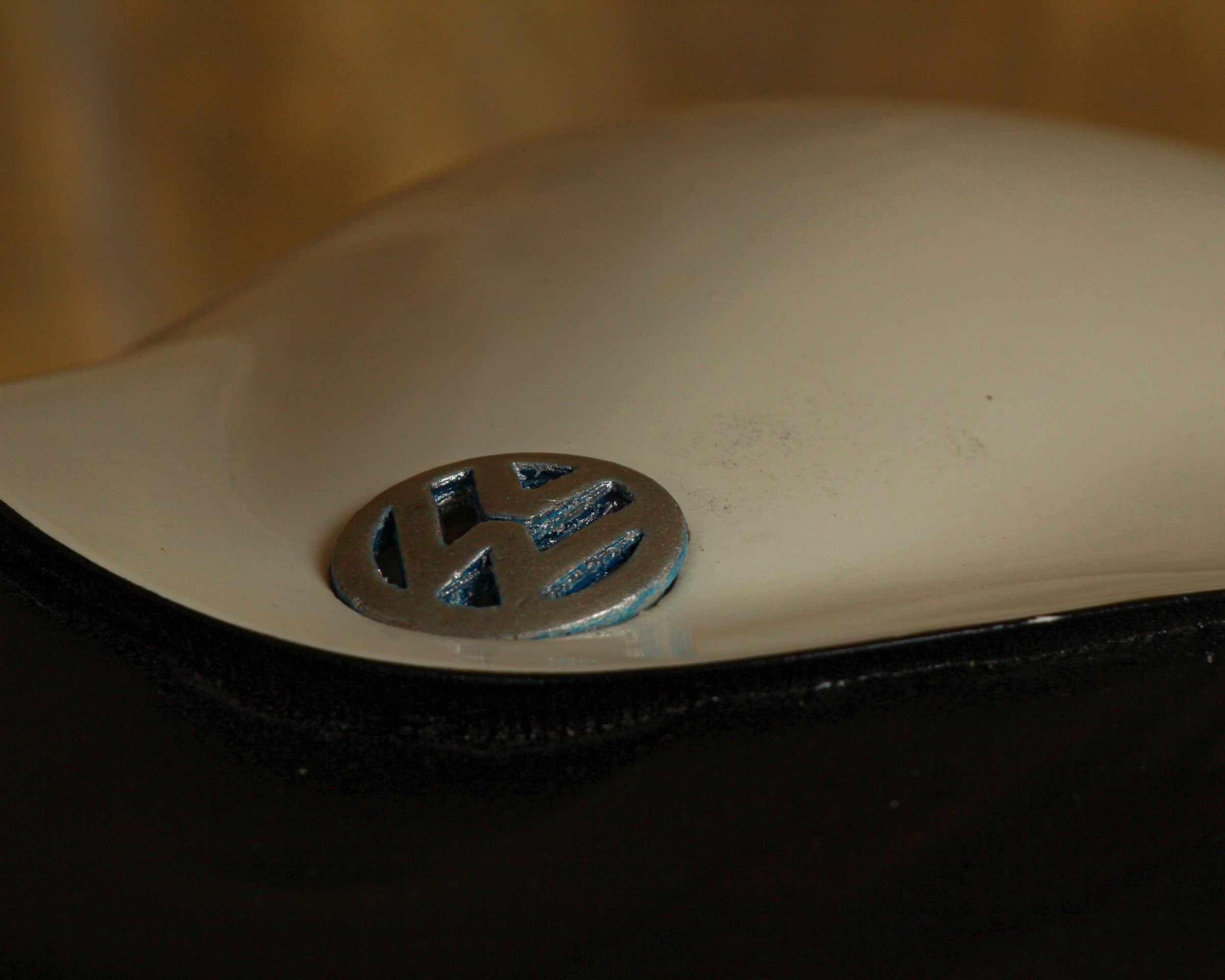
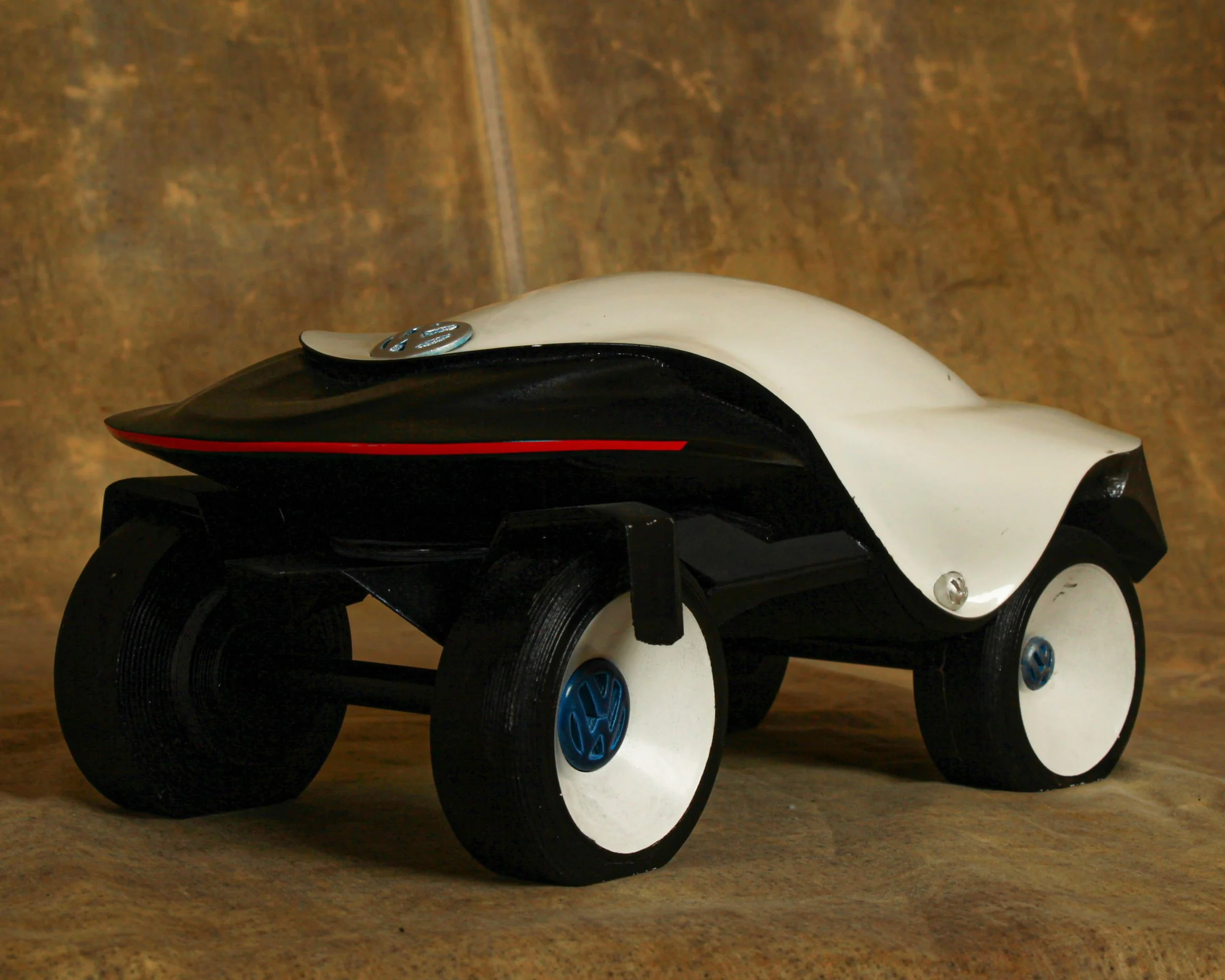
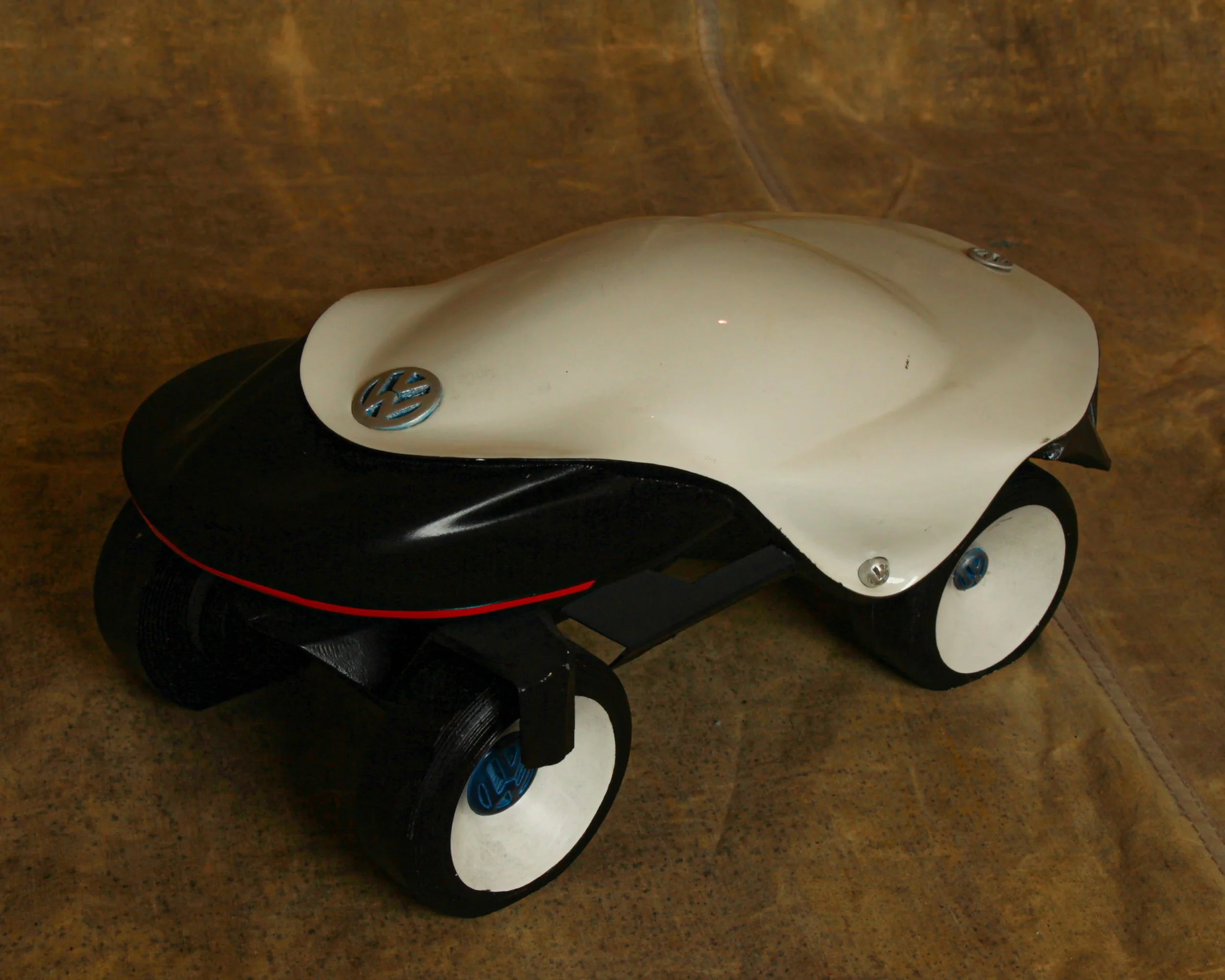
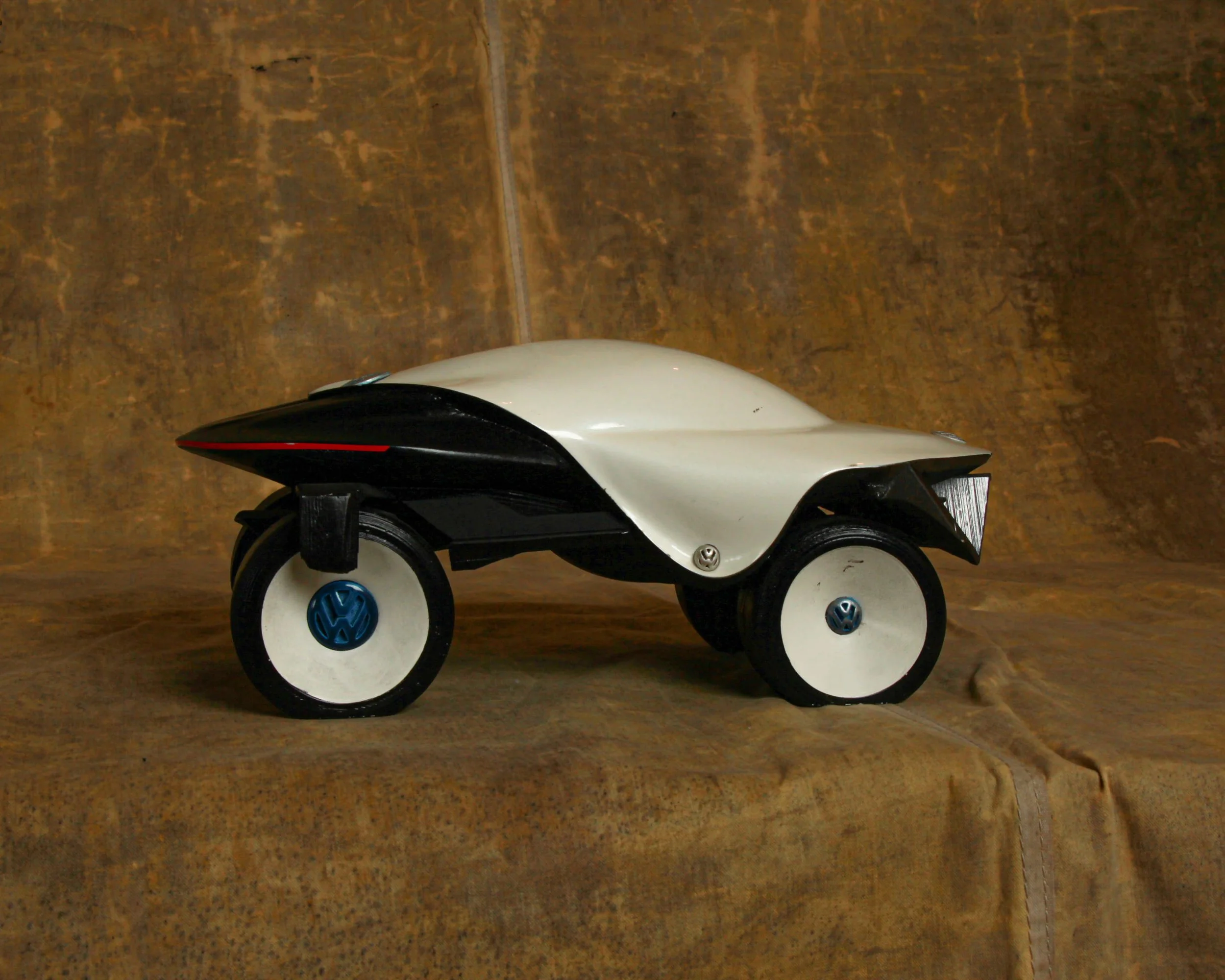
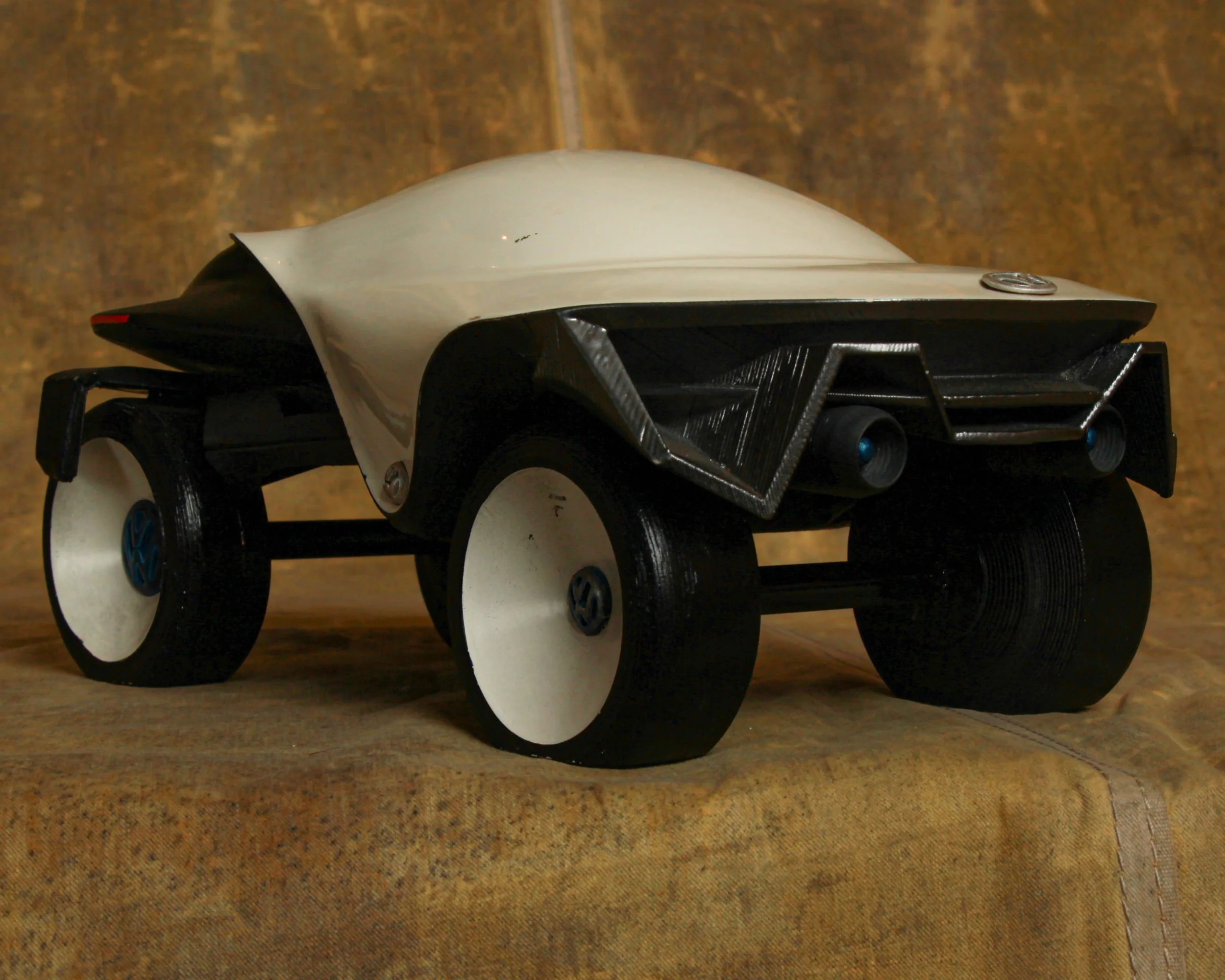
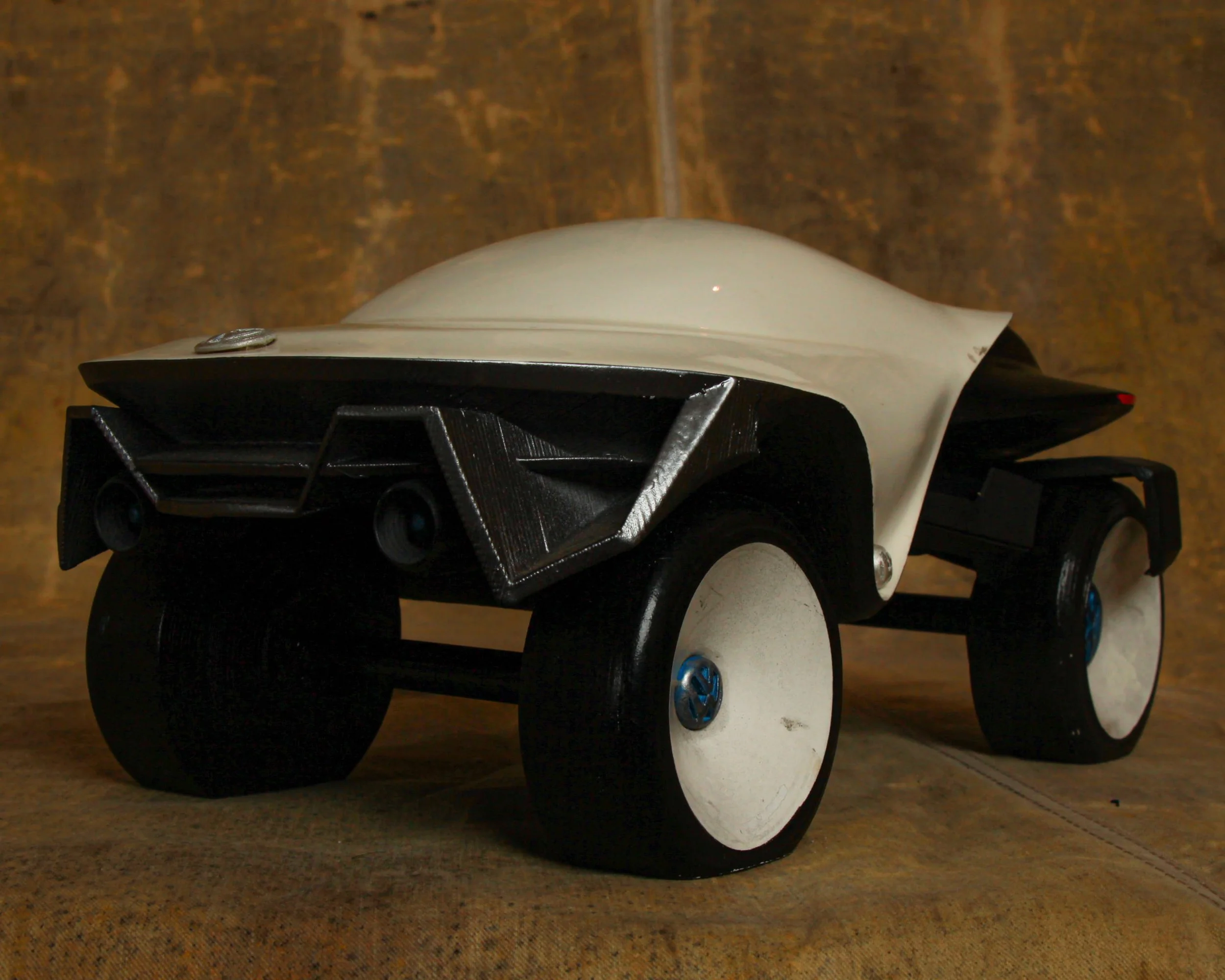
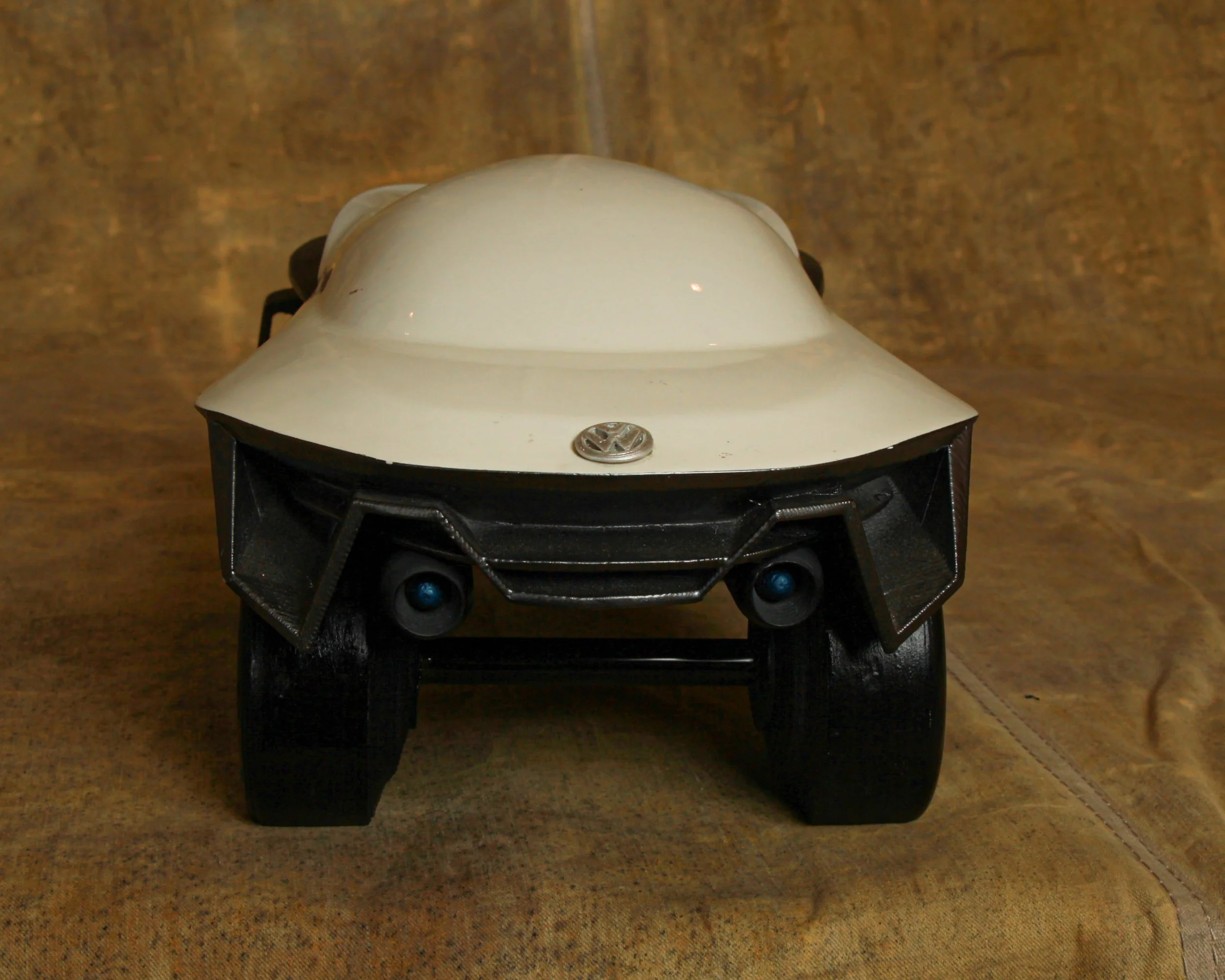
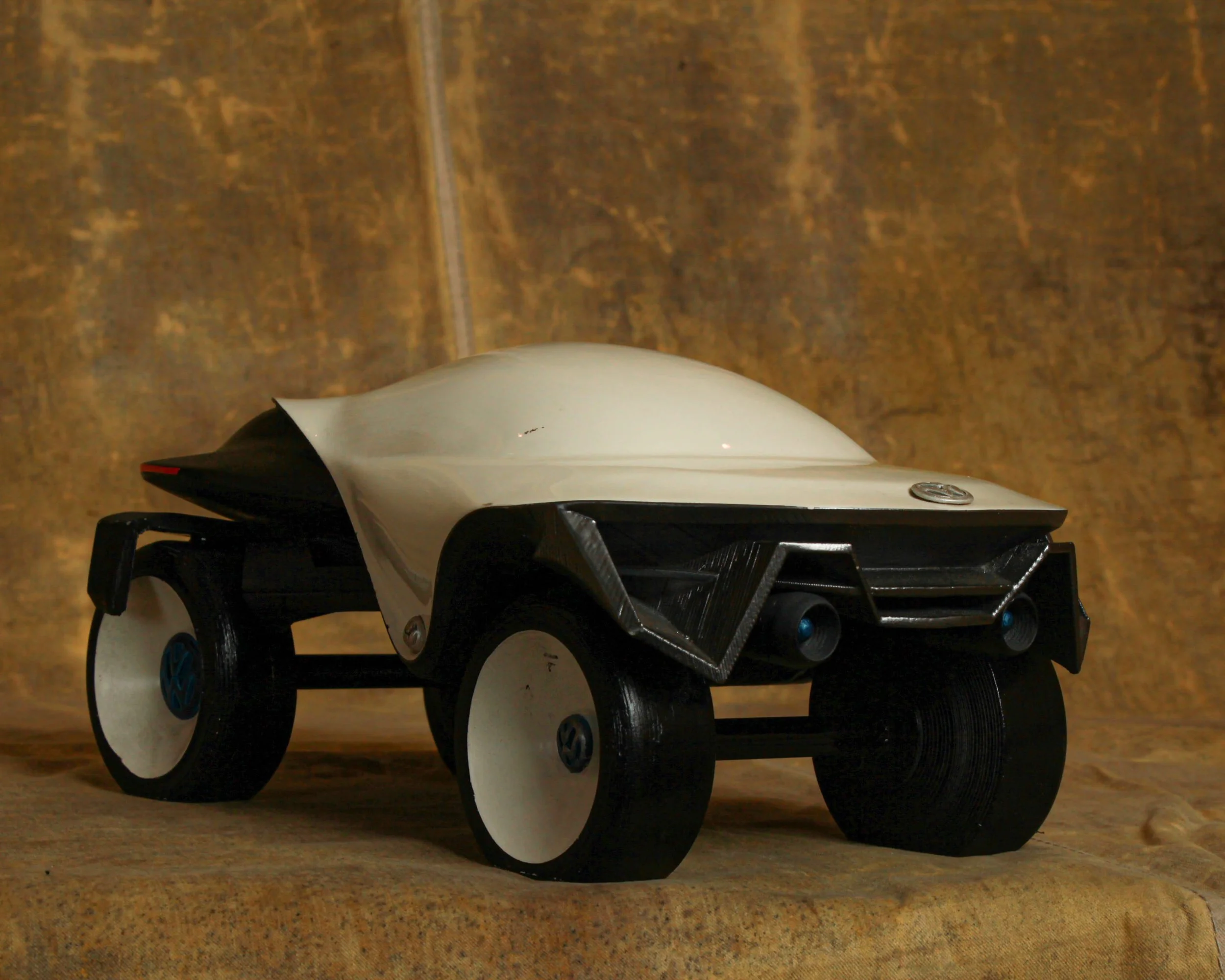
A scratch-built proof-of-concept Volkswagen model, this piece sits somewhere between industrial sculpture, experimental toy, and design exercise. It has that unmistakable VW DNA, not in any one production reference, but in spirit. Rounded, aerodynamic, a little friendly, a little futuristic. The low-slung body flows like a single gesture, with a domed cream-colored shell perched over chunky black running gear and oversized wheels that feel more lunar rover than Autobahn cruiser.
Proof-of-concept models like this were often built to explore ideas quickly, sometimes to test stance, sometimes to spark conversation, sometimes simply to ask “what if?” before committing to anything expensive or final. Whether this was part of an internal design studio project or a design student’s portfolio, it carries the same energy: curiosity first, rules later.
Category History
Concept car models are where imagination gets a physical test run. Long before a vehicle ever hits the road, designers and engineers build scale models to explore form, proportion, and possibility. These models—often made from clay, wood, resin, or metal—act as a bridge between sketch and machine.
The idea gained traction in the early to mid-20th century, as automakers began using concept cars not just for internal development, but as public statements. Futuristic shapes, exaggerated lines, experimental features—these weren’t always meant for production, but to signal direction and ambition.
What makes the models compelling is how much thinking they hold. You can see the decisions in the surface—adjustments, refinements, sometimes visible tool marks. They’re precise, but not final.
They also capture a moment in design history. What felt futuristic then often reads differently now—sometimes dated, sometimes surprisingly forward-looking.
Today, they sit somewhere between sculpture and engineering study. Not just representations of cars, but objects that carry the energy of ideas still in motion—forms being tested, questioned, and pushed before becoming something real.
A scratch-built proof-of-concept Volkswagen model, this piece sits somewhere between industrial sculpture, experimental toy, and design exercise. It has that unmistakable VW DNA, not in any one production reference, but in spirit. Rounded, aerodynamic, a little friendly, a little futuristic. The low-slung body flows like a single gesture, with a domed cream-colored shell perched over chunky black running gear and oversized wheels that feel more lunar rover than Autobahn cruiser.
Proof-of-concept models like this were often built to explore ideas quickly, sometimes to test stance, sometimes to spark conversation, sometimes simply to ask “what if?” before committing to anything expensive or final. Whether this was part of an internal design studio project or a design student’s portfolio, it carries the same energy: curiosity first, rules later.
Category History
Concept car models are where imagination gets a physical test run. Long before a vehicle ever hits the road, designers and engineers build scale models to explore form, proportion, and possibility. These models—often made from clay, wood, resin, or metal—act as a bridge between sketch and machine.
The idea gained traction in the early to mid-20th century, as automakers began using concept cars not just for internal development, but as public statements. Futuristic shapes, exaggerated lines, experimental features—these weren’t always meant for production, but to signal direction and ambition.
What makes the models compelling is how much thinking they hold. You can see the decisions in the surface—adjustments, refinements, sometimes visible tool marks. They’re precise, but not final.
They also capture a moment in design history. What felt futuristic then often reads differently now—sometimes dated, sometimes surprisingly forward-looking.
Today, they sit somewhere between sculpture and engineering study. Not just representations of cars, but objects that carry the energy of ideas still in motion—forms being tested, questioned, and pushed before becoming something real.