
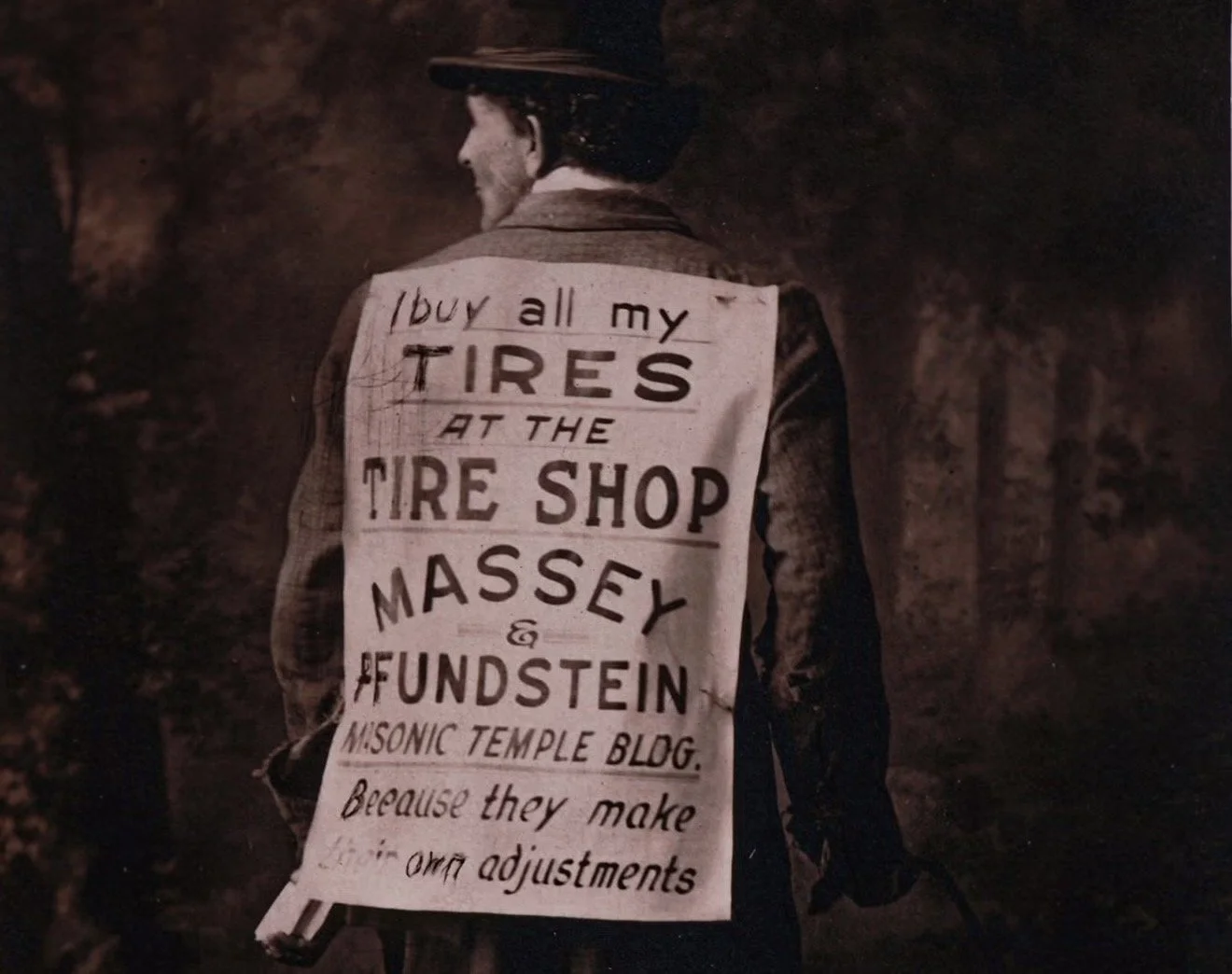
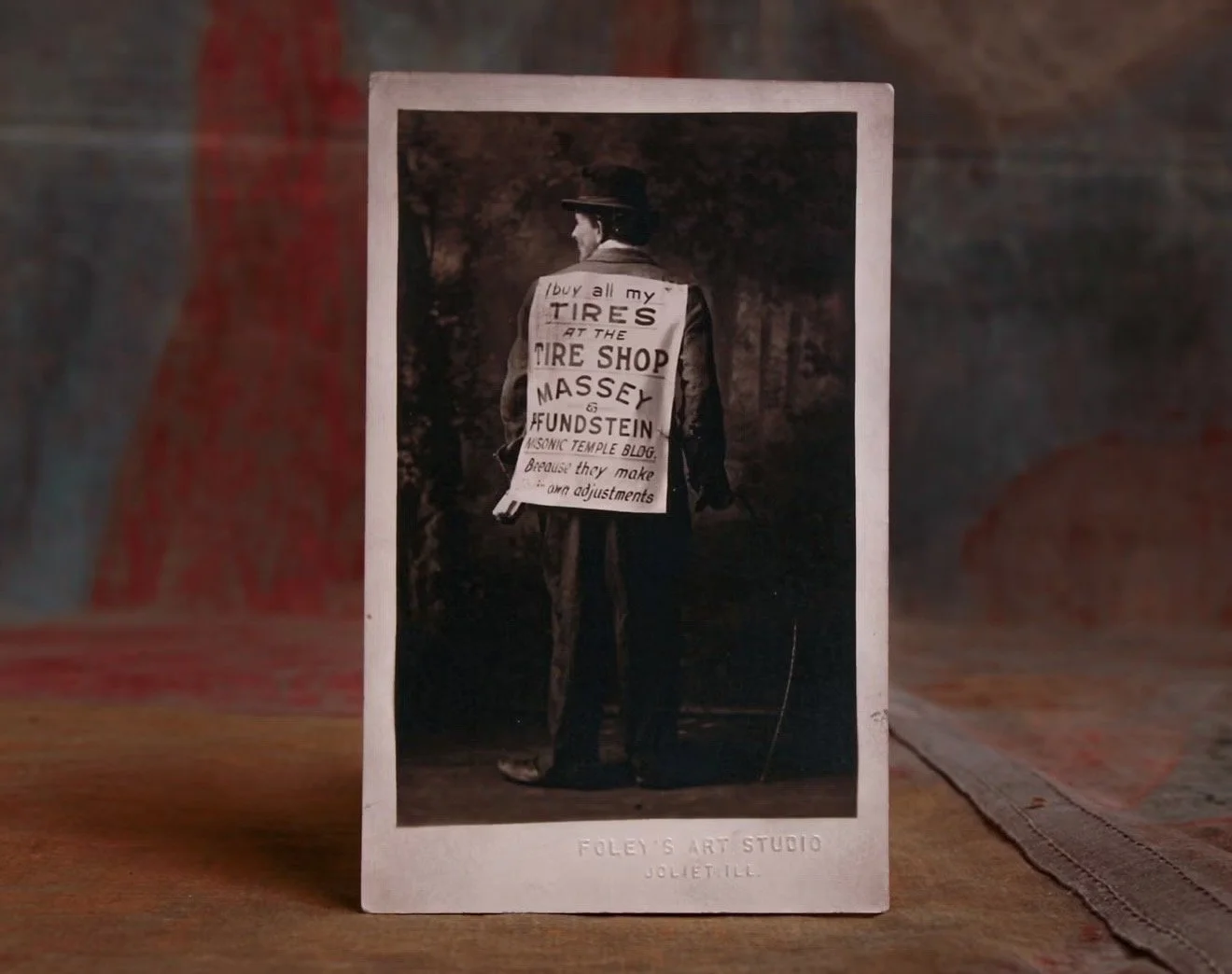
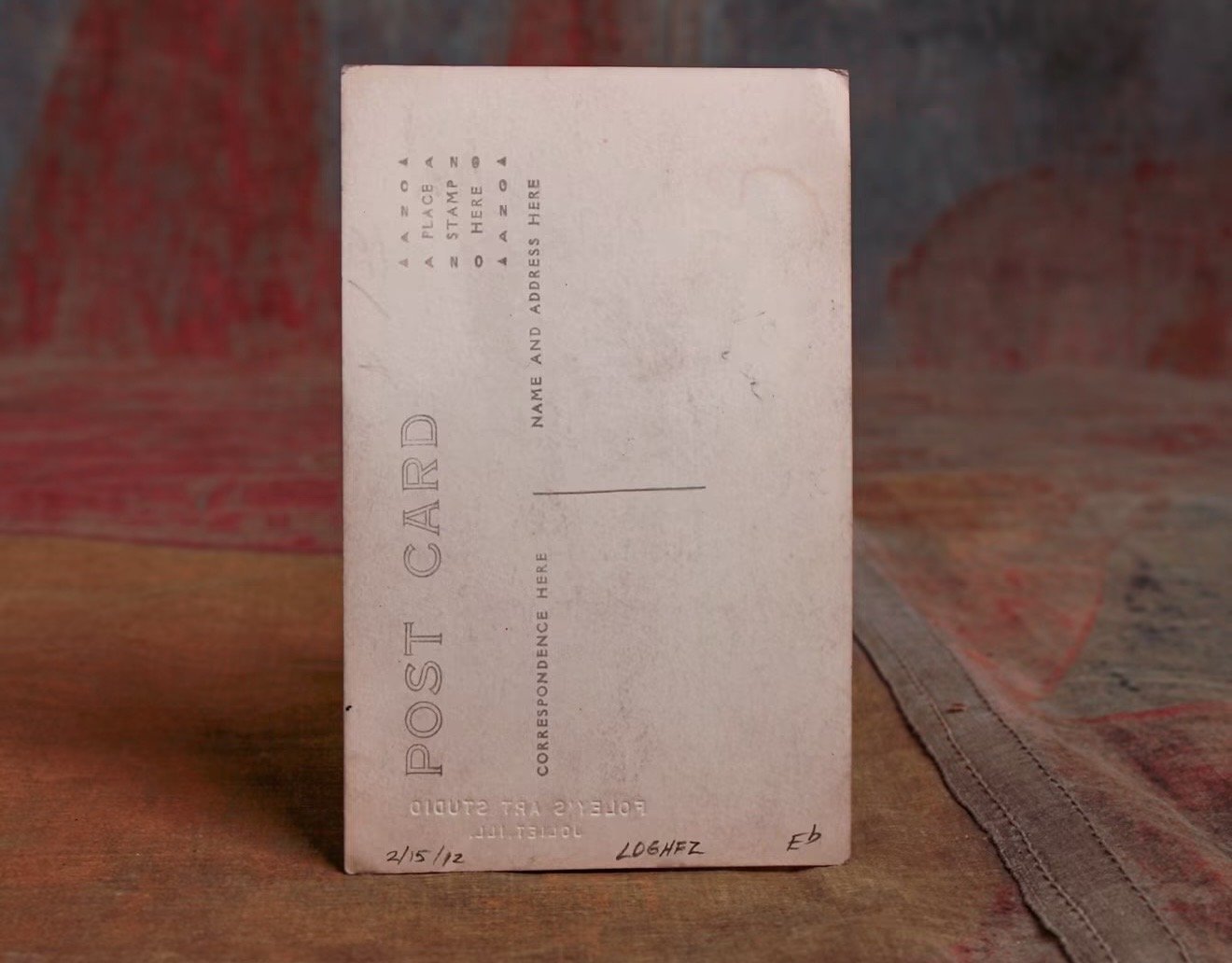
An unusual early 20th century real photo postcard (RPPC) featuring a man photographed from behind wearing a large advertising sign strapped to his back. The sign promotes Massey & Fundstein, a tire shop located in the Masonic Temple Building, with the amusing slogan, “Because they make their own adjustments.” The photograph was taken by Foley's Art Studio in Joliet, Illinois, and shows the gentleman in a suit and bowler hat, posing against a painted studio backdrop. The reverse features a divided postcard layout and a handwritten date of February 15, 1912.
Walking billboards were a familiar form of street advertising throughout the late 19th and early 20th centuries, particularly in busy commercial districts. Long before electronic signs and digital advertising, businesses relied on creative, inexpensive ways to get their messages in front of potential customers.
One popular method involved hiring people to carry advertising boards through crowded streets, shopping areas, and public gatherings. These mobile advertisements came in several forms, including traditional sandwich boards worn over the shoulders, signs mounted on poles, and oversized placards attached directly to clothing.
The practice became especially common during the Victorian era, when growing competition among retailers encouraged increasingly inventive promotional techniques. Advertisers quickly discovered that humor, unusual costumes, and clever slogans could attract attention more effectively than straightforward announcements.
By the early 1900s, walking advertisements were promoting everything from theaters and restaurants to clothing stores, household goods, and automobile supplies.
Real photo postcards, which gained popularity around 1900, provided another inexpensive way to document and distribute unusual images. Unlike commercially printed postcards, these were produced from photographic negatives on specially prepared postcard paper, allowing photographers to create small quantities featuring local businesses, events, and everyday life.
Together, these advertising practices offer an interesting glimpse into the resourcefulness of early American marketing.