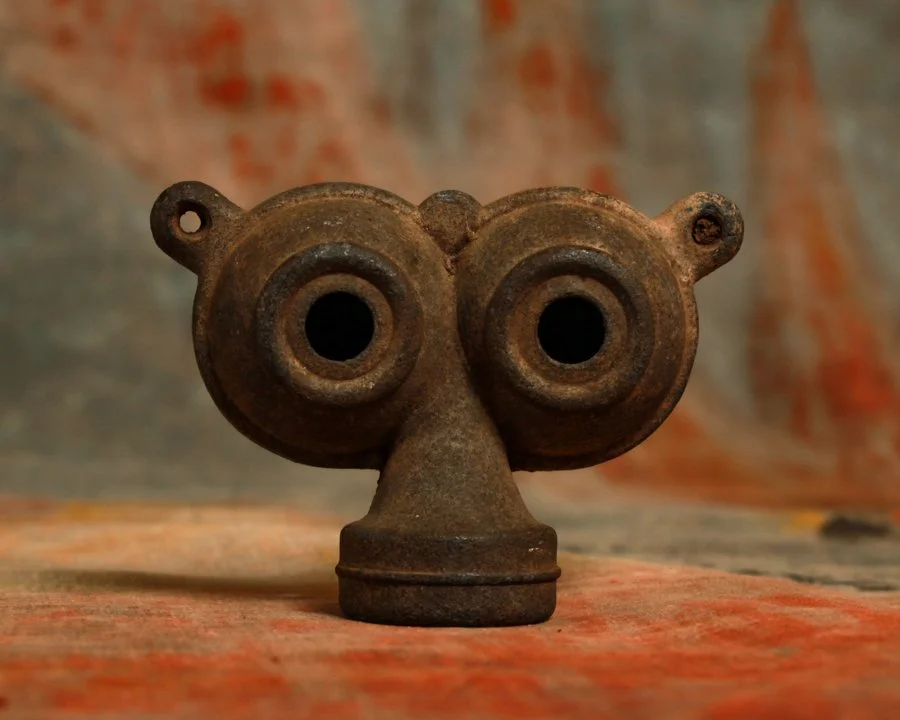
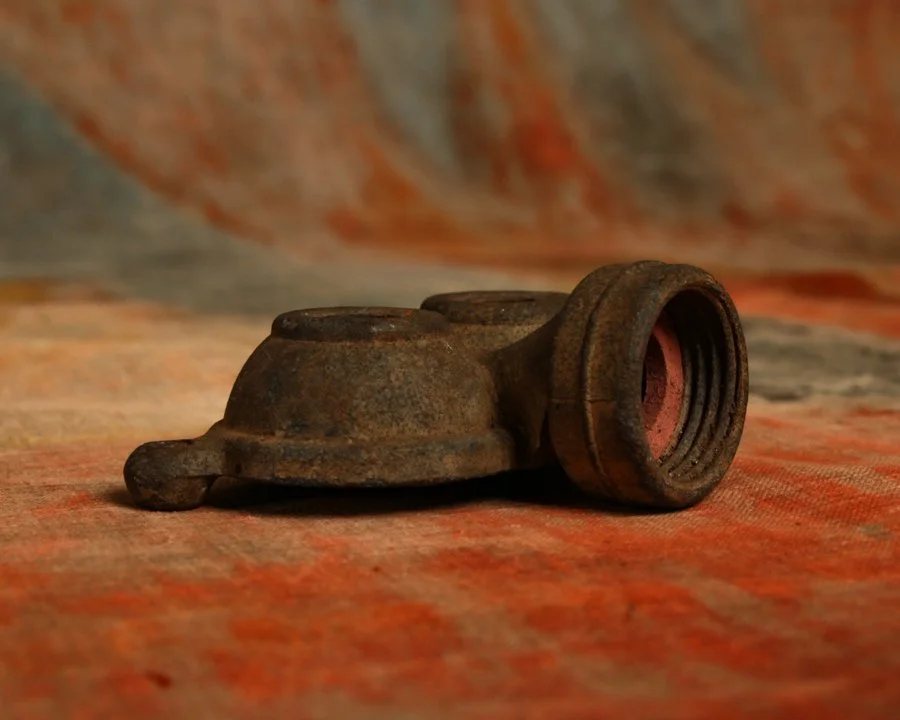
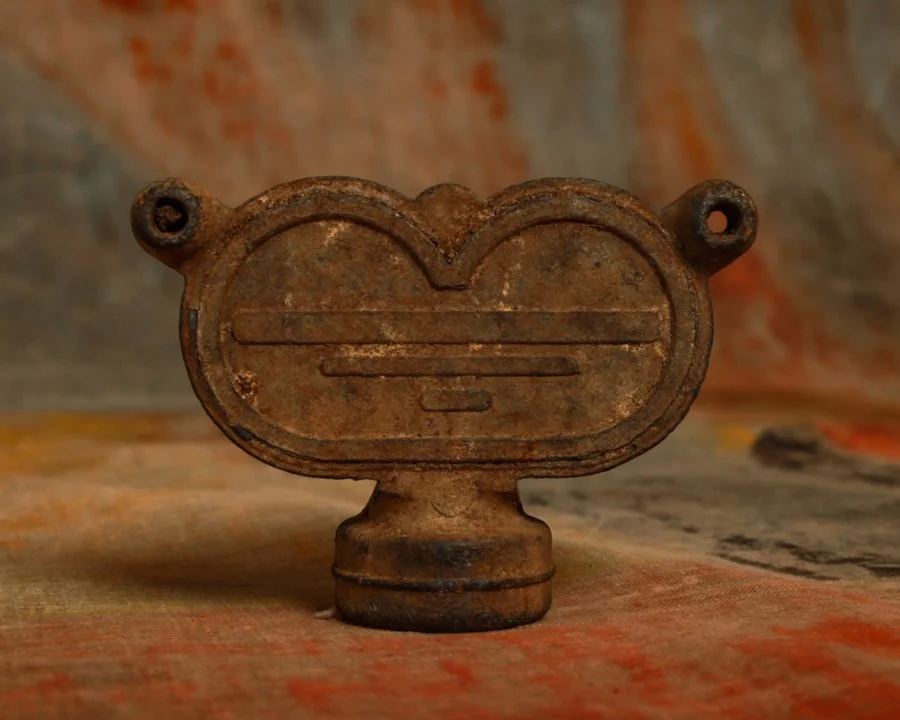
Add whimsy to your collection with this adorable 1930s water sprinkler, cleverly designed as a charming face. With two open eyes, a round mouth, and cute little ears, this delightful piece blends functionality with playful artistry. Its cast metal construction and weathered patina evoke the charm of a bygone era, making it a conversation starter for any garden, shelf, or display.
A perfect example of utility meeting character, where even something as simple as watering carried a sense of humor.
Category History
1930s gardening equipment reflects a moment when domestic life leaned into both practicality and a growing sense of leisure. Gardens weren’t just for subsistence anymore—they were becoming spaces for upkeep, pride, and a bit of personal expression. Tools followed suit, built to work hard but also to be used regularly and reliably.
Materials tell the story. Cast iron, steel, brass fittings, and early rubber hoses dominate the landscape. Everything has weight to it. Handles were often wood, shaped to fit the hand, while metal components were designed to withstand constant exposure to water and soil. There’s very little about these tools that feels disposable.
Water sprinklers, in particular, mark an interesting shift. Early designs range from simple perforated heads to more inventive rotating or oscillating mechanisms powered purely by water pressure. As water flows through, gears or arms move in response, distributing spray in a repeating pattern. It’s a kind of quiet engineering—no electricity, just pressure, balance, and motion.
What makes these objects compelling now is how visible their function is. You can trace the path of water, the movement of parts, the intention behind each detail. Over time, they pick up mineral buildup, worn finishes, small repairs—evidence of seasons spent in use.
They’re tools, but they carry a certain rhythm. Designed for repetition, tied to cycles, and built to last through both.
Add whimsy to your collection with this adorable 1930s water sprinkler, cleverly designed as a charming face. With two open eyes, a round mouth, and cute little ears, this delightful piece blends functionality with playful artistry. Its cast metal construction and weathered patina evoke the charm of a bygone era, making it a conversation starter for any garden, shelf, or display.
A perfect example of utility meeting character, where even something as simple as watering carried a sense of humor.
Category History
1930s gardening equipment reflects a moment when domestic life leaned into both practicality and a growing sense of leisure. Gardens weren’t just for subsistence anymore—they were becoming spaces for upkeep, pride, and a bit of personal expression. Tools followed suit, built to work hard but also to be used regularly and reliably.
Materials tell the story. Cast iron, steel, brass fittings, and early rubber hoses dominate the landscape. Everything has weight to it. Handles were often wood, shaped to fit the hand, while metal components were designed to withstand constant exposure to water and soil. There’s very little about these tools that feels disposable.
Water sprinklers, in particular, mark an interesting shift. Early designs range from simple perforated heads to more inventive rotating or oscillating mechanisms powered purely by water pressure. As water flows through, gears or arms move in response, distributing spray in a repeating pattern. It’s a kind of quiet engineering—no electricity, just pressure, balance, and motion.
What makes these objects compelling now is how visible their function is. You can trace the path of water, the movement of parts, the intention behind each detail. Over time, they pick up mineral buildup, worn finishes, small repairs—evidence of seasons spent in use.
They’re tools, but they carry a certain rhythm. Designed for repetition, tied to cycles, and built to last through both.