

Immerse yourself in the scene of a bustling city street of yesteryear, where the newspaper hawkers would don this apron, their badge of honor. Picture the sun-drenched sidewalks, filled with the sights and sounds of a vibrant metropolis. The rhythmic calls of the hawkers, their voices carrying the urgency and importance of breaking news, echo through your imagination.
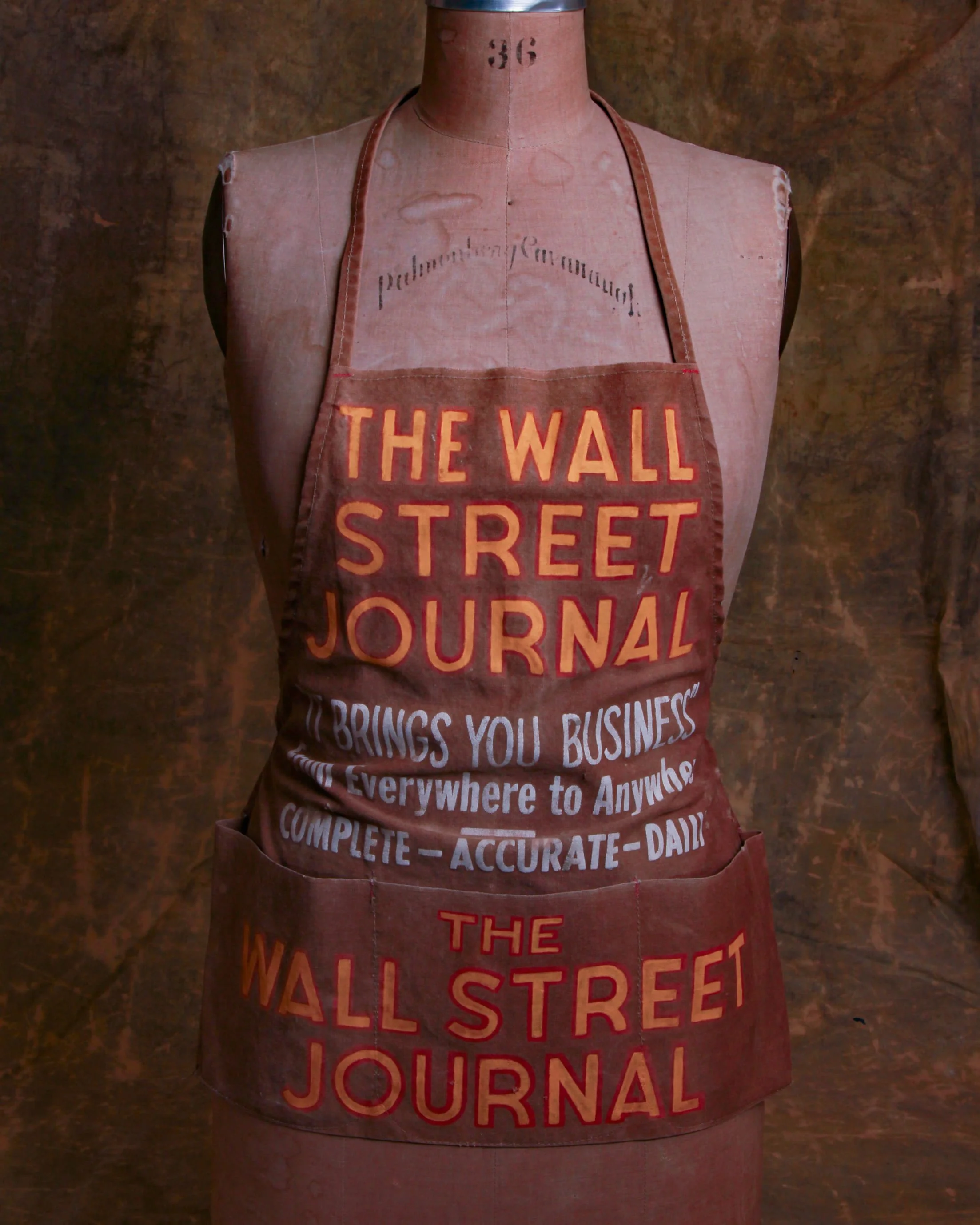
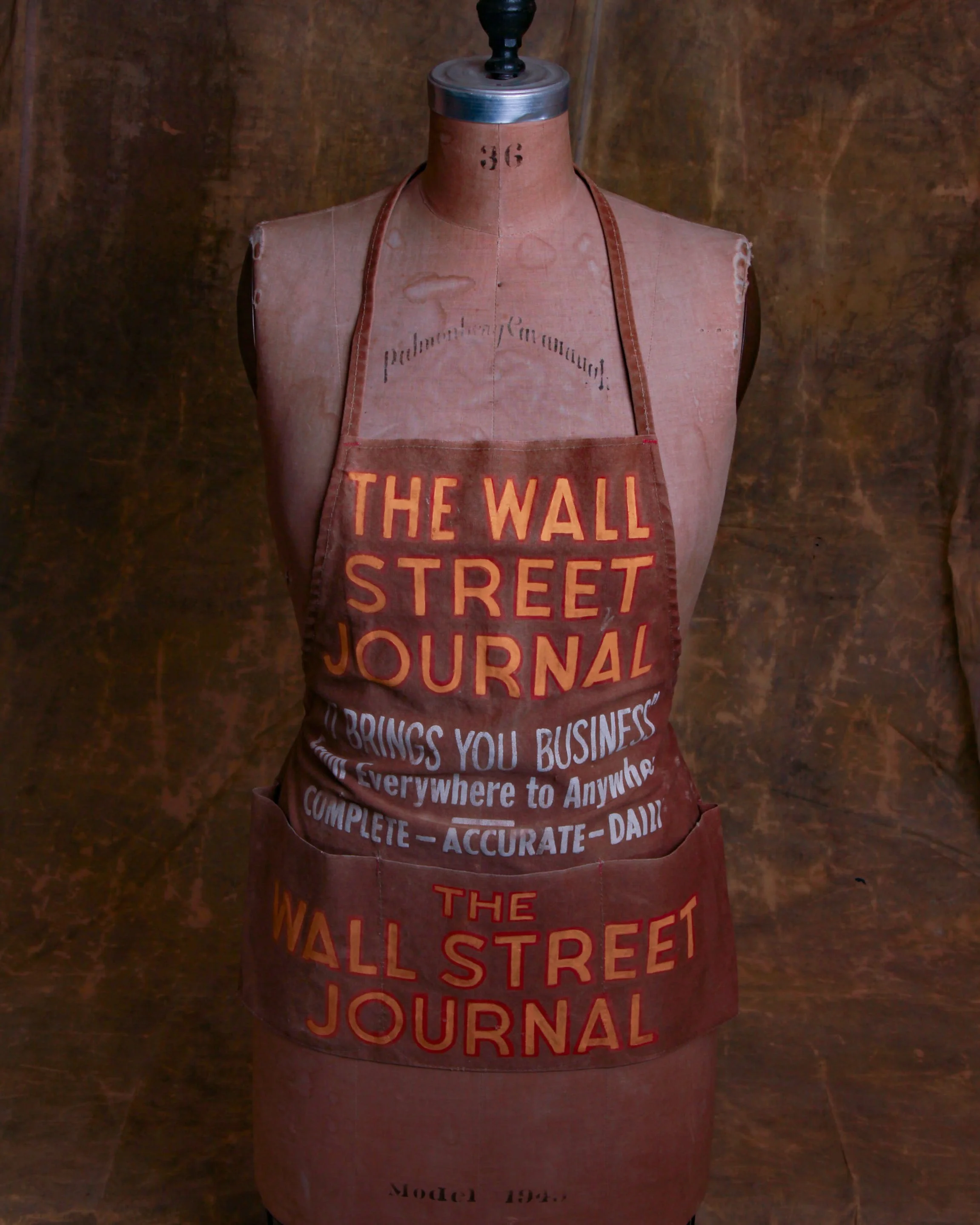
This late 1940s, heavy cloth canvas apron served as a beacon of information in the form of a wearable masterpiece, proudly promoting the esteemed Wall Street Journal newspaper.
As you hold this apron in your hands, you can feel the weight and durability of the canvas fabric, a testament to its early craftsmanship. Its sturdy construction speaks of a time when newspapers were cherished and revered as the primary source of news and knowledge. This apron stands as a symbol of the dedication and hard work of the street hawkers who tirelessly carried the news to the masses.
WSJ
The Wall Street Journal began in 1889 as a modest four-page publication created by Charles Dow, Edward Jones, and Charles Bergstresser—names now better known for the Dow Jones Industrial Average than for their newspaper. Early on, it was less about headlines and more about clarity. It aimed to translate the fast-moving, often opaque world of finance into something investors could actually use.
At a time when markets were fragmented and information traveled slowly, the paper became a kind of daily ledger of trust. It reported stock prices, railroad earnings, and business developments with a tone that was direct and unsentimental. That tone stuck. Even as the paper grew, it resisted flash in favor of precision, building a reputation on consistency rather than spectacle.
Through the 20th century, The Wall Street Journal expanded beyond pure finance, covering politics, global economics, and culture, but always with an eye toward how systems work—who moves markets, and why. Its distinctive front-page illustrations, those tightly crosshatched portraits, became a quiet signature.
What’s interesting is how the paper evolved without losing its core identity. It adapted to radio, television, and eventually the internet, but kept its emphasis on reported fact over noise. Today, it still operates as both a news source and a kind of institutional memory—tracking not just events, but the patterns behind them.
Immerse yourself in the scene of a bustling city street of yesteryear, where the newspaper hawkers would don this apron, their badge of honor. Picture the sun-drenched sidewalks, filled with the sights and sounds of a vibrant metropolis. The rhythmic calls of the hawkers, their voices carrying the urgency and importance of breaking news, echo through your imagination.
This late 1940s, heavy cloth canvas apron served as a beacon of information in the form of a wearable masterpiece, proudly promoting the esteemed Wall Street Journal newspaper.
As you hold this apron in your hands, you can feel the weight and durability of the canvas fabric, a testament to its early craftsmanship. Its sturdy construction speaks of a time when newspapers were cherished and revered as the primary source of news and knowledge. This apron stands as a symbol of the dedication and hard work of the street hawkers who tirelessly carried the news to the masses.
WSJ
The Wall Street Journal began in 1889 as a modest four-page publication created by Charles Dow, Edward Jones, and Charles Bergstresser—names now better known for the Dow Jones Industrial Average than for their newspaper. Early on, it was less about headlines and more about clarity. It aimed to translate the fast-moving, often opaque world of finance into something investors could actually use.
At a time when markets were fragmented and information traveled slowly, the paper became a kind of daily ledger of trust. It reported stock prices, railroad earnings, and business developments with a tone that was direct and unsentimental. That tone stuck. Even as the paper grew, it resisted flash in favor of precision, building a reputation on consistency rather than spectacle.
Through the 20th century, The Wall Street Journal expanded beyond pure finance, covering politics, global economics, and culture, but always with an eye toward how systems work—who moves markets, and why. Its distinctive front-page illustrations, those tightly crosshatched portraits, became a quiet signature.
What’s interesting is how the paper evolved without losing its core identity. It adapted to radio, television, and eventually the internet, but kept its emphasis on reported fact over noise. Today, it still operates as both a news source and a kind of institutional memory—tracking not just events, but the patterns behind them.