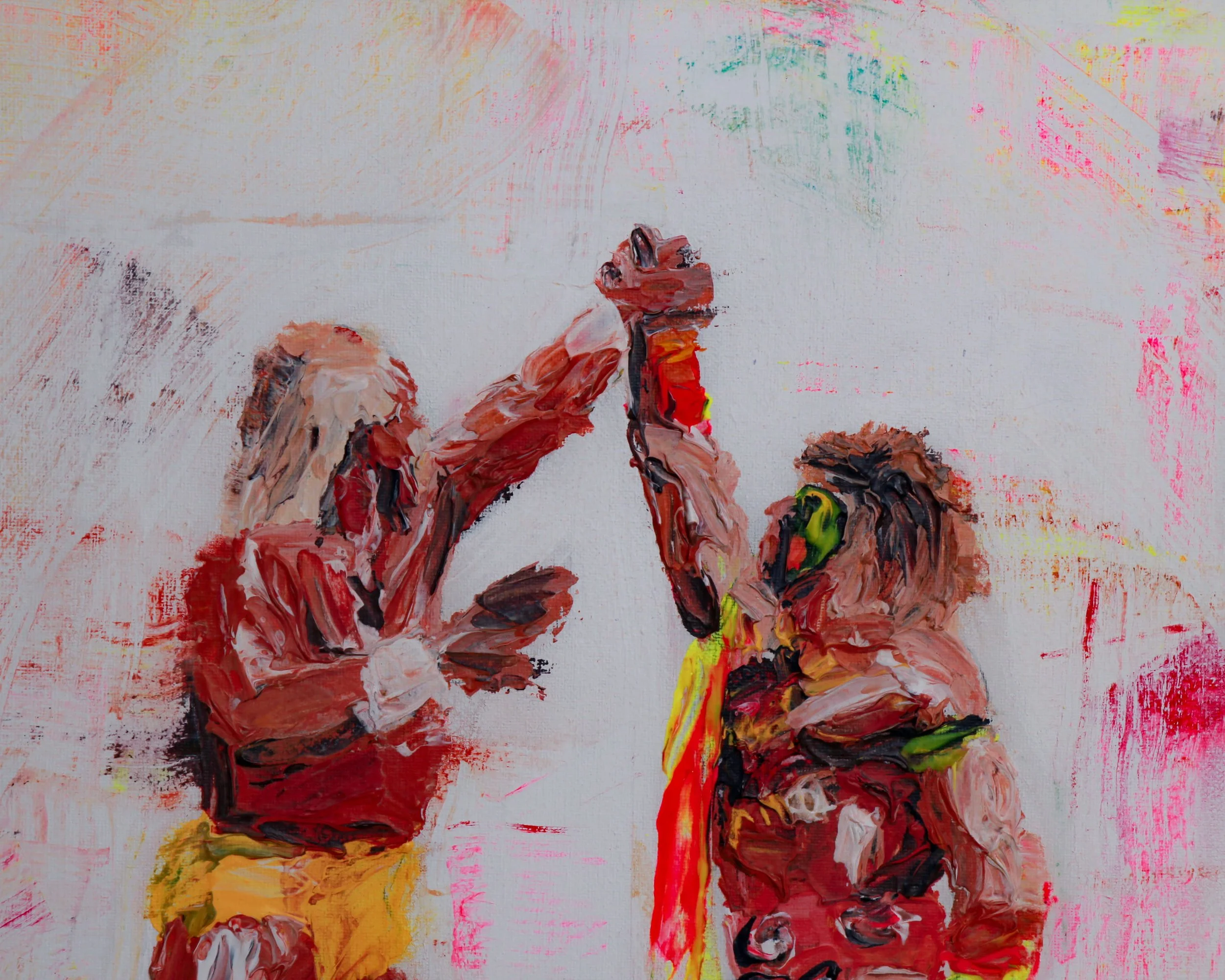
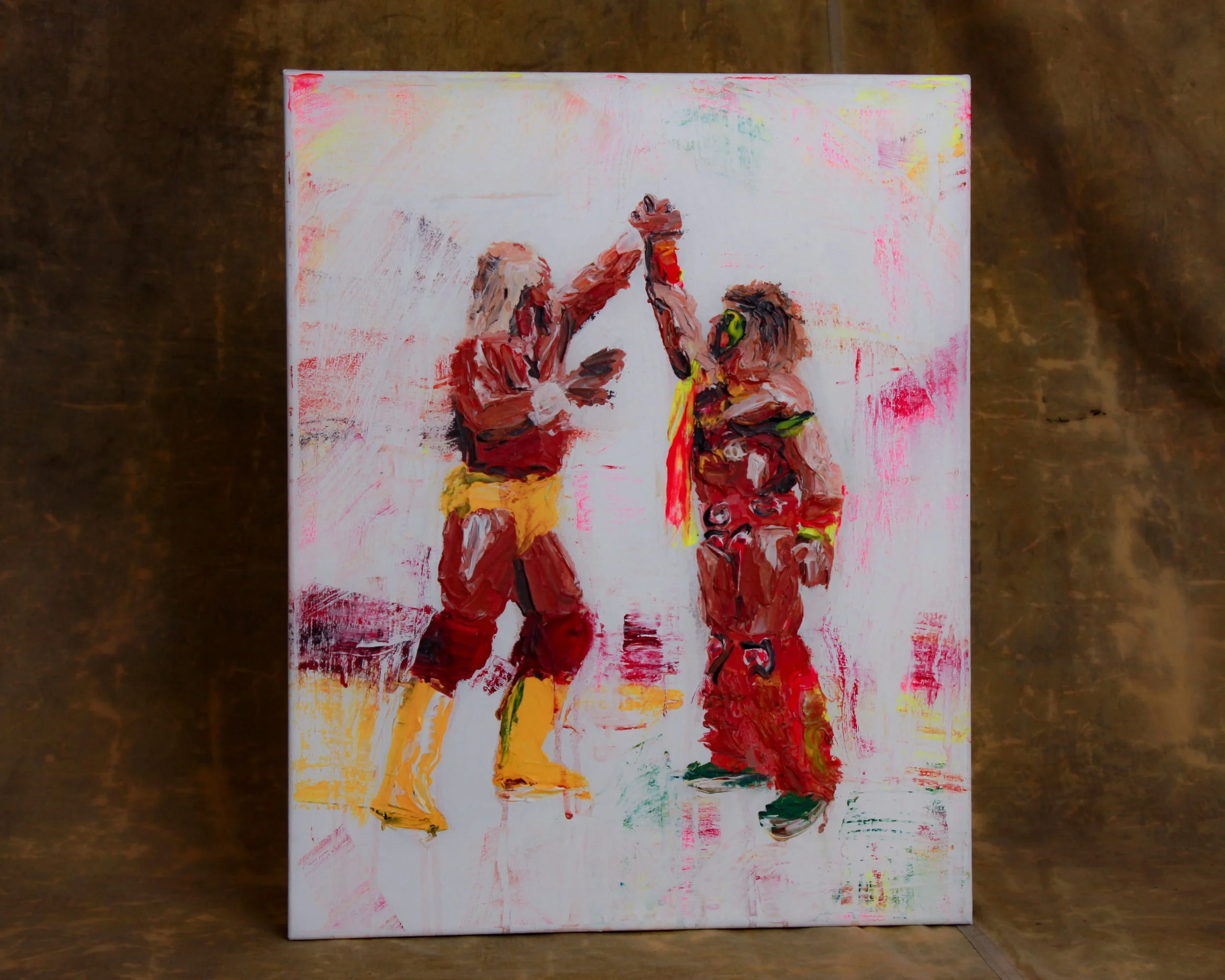
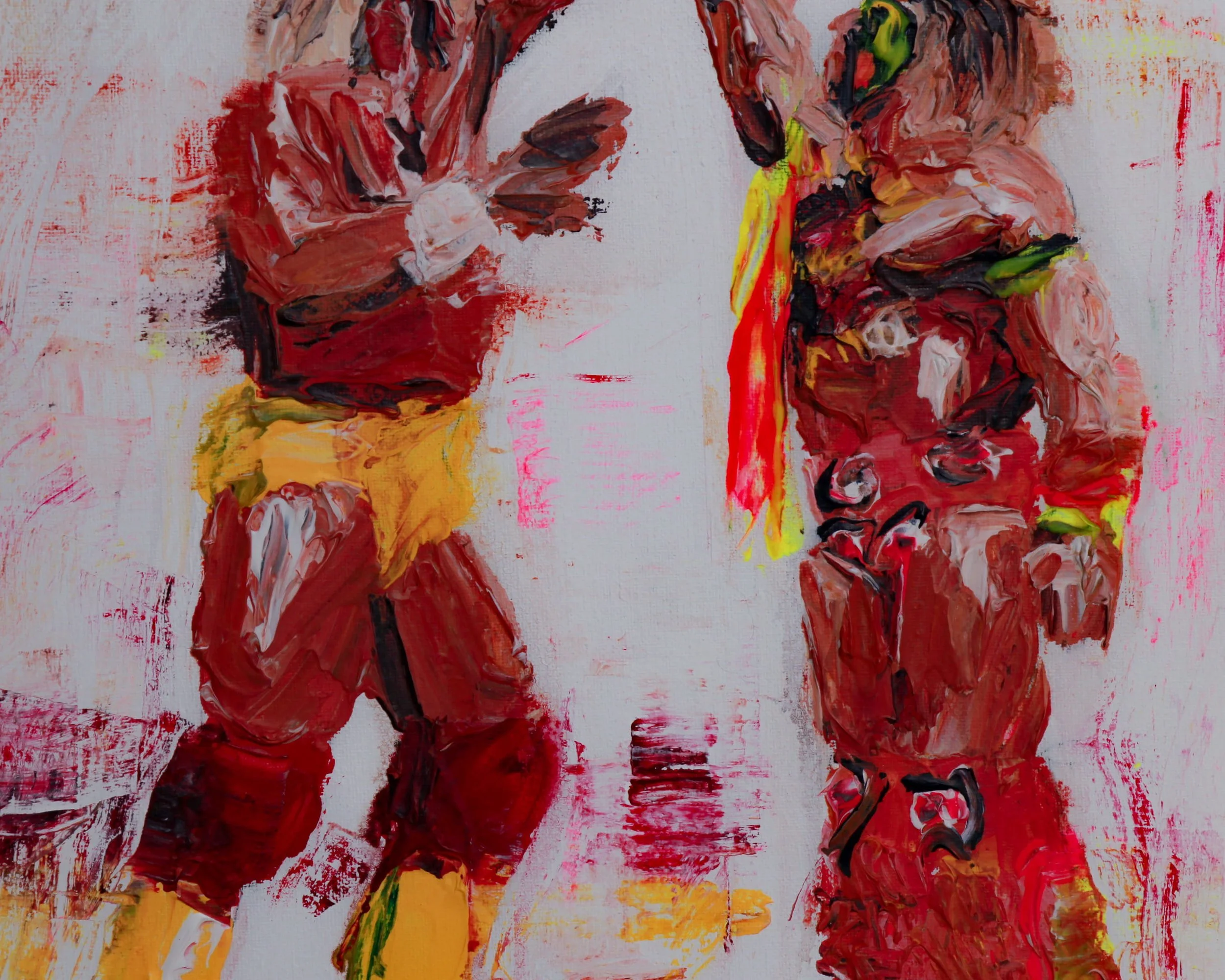
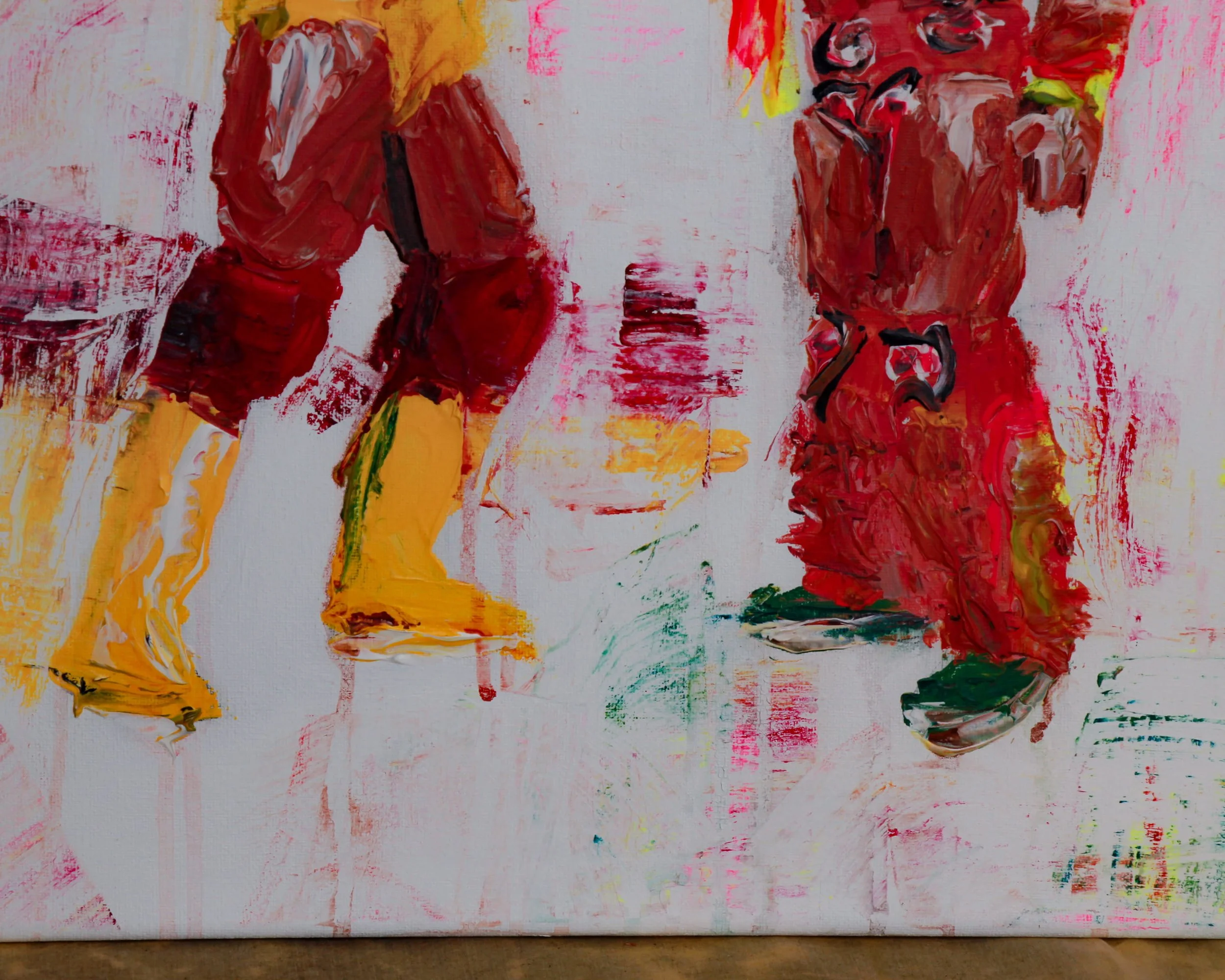
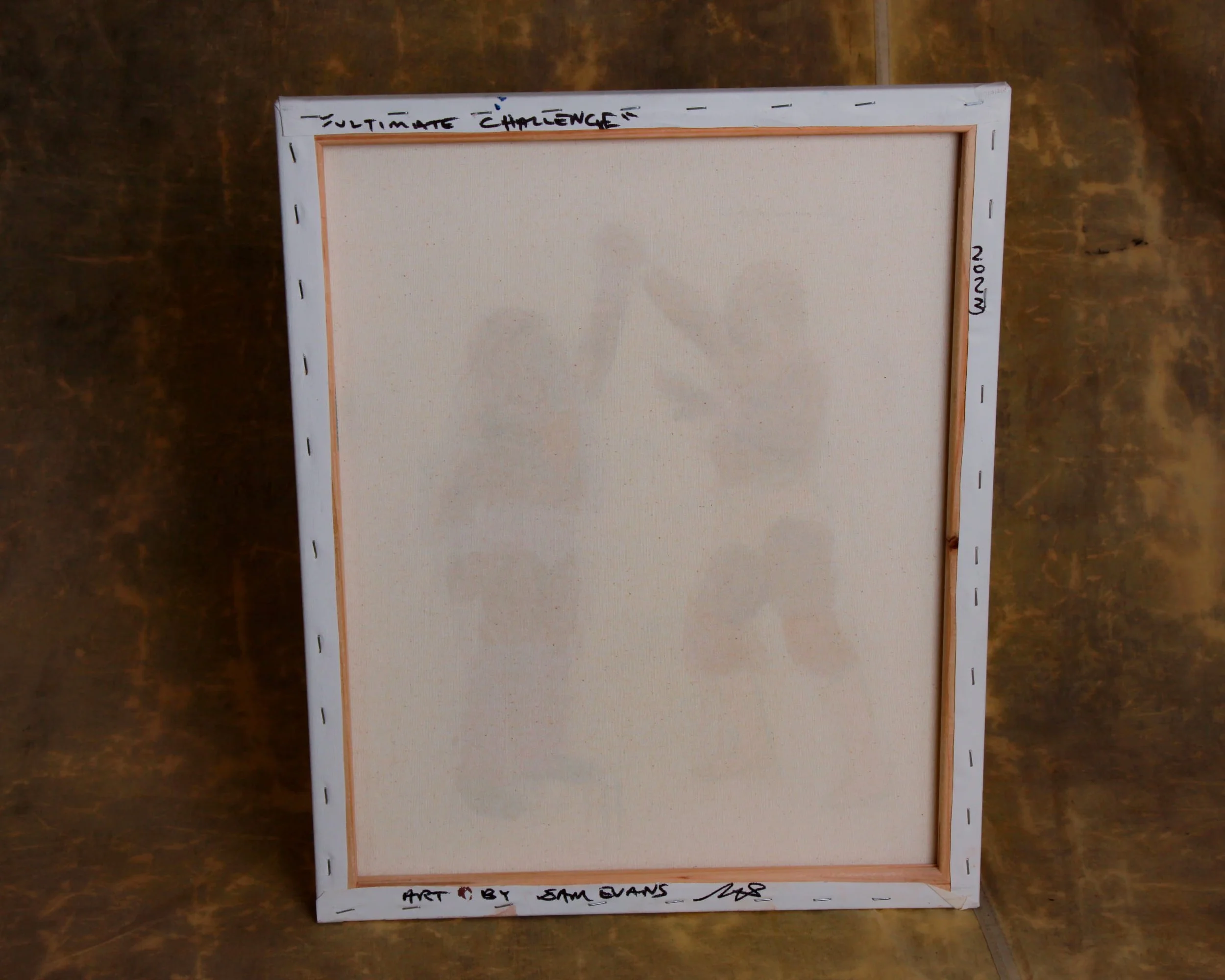
This original painting by Sam Evans is a raw, expressive tribute to one of the most legendary moments in wrestling history—Hulk Hogan and The Ultimate Warrior facing off in a moment of mutual respect. The piece is an explosion of energy, capturing the essence of these two larger-than-life 80s icons in thick, textured strokes of acrylic paint.
The white canvas serves as a wild, chaotic backdrop, with splashes of pink, yellow, and red, echoing the electric atmosphere of a WWF showdown. Hogan, decked out in his classic yellow, stands on one side, his muscular frame rendered in bold, impasto strokes. Opposite him, The Ultimate Warrior is a vision of intensity, his face paint streaked across his features in vivid green and orange, his wild energy practically vibrating off the canvas.
The two wrestlers meet in the center, their hands raised in a high-five that speaks to the drama, camaraderie, and larger-than-life spectacle of professional wrestling at its peak. The thick application of paint gives the piece a tactile, almost sculptural feel, with the artist's brushstrokes adding movement and depth.
Sam Evans
Sam Evans works in that space where image and memory overlap. Based in Australia, his paintings often pull from familiar figures—film characters, cultural icons, everyday faces—but strip them back to something more immediate. The likeness is there, but it’s not the point. Gesture, texture, and mood do most of the work.
His approach leans loose and intuitive. Oil on board or canvas, paint dragged, wiped, layered, sometimes left unresolved. You can see decisions as they happen—areas built up, others abandoned. It gives the work a sense of movement, like it’s still thinking.
What’s interesting is how he balances recognition with abstraction. A character might be instantly identifiable, yet the surface resists polish. Edges blur, colors shift, and the image sits somewhere between clarity and suggestion.
There’s a cinematic quality to it, but not in a literal way. More like fragments of scenes—cropped, paused, slightly altered.
His work doesn’t aim for perfection. It leans into imperfection, letting the process stay visible. That’s where the energy lives.
This original painting by Sam Evans is a raw, expressive tribute to one of the most legendary moments in wrestling history—Hulk Hogan and The Ultimate Warrior facing off in a moment of mutual respect. The piece is an explosion of energy, capturing the essence of these two larger-than-life 80s icons in thick, textured strokes of acrylic paint.
The white canvas serves as a wild, chaotic backdrop, with splashes of pink, yellow, and red, echoing the electric atmosphere of a WWF showdown. Hogan, decked out in his classic yellow, stands on one side, his muscular frame rendered in bold, impasto strokes. Opposite him, The Ultimate Warrior is a vision of intensity, his face paint streaked across his features in vivid green and orange, his wild energy practically vibrating off the canvas.
The two wrestlers meet in the center, their hands raised in a high-five that speaks to the drama, camaraderie, and larger-than-life spectacle of professional wrestling at its peak. The thick application of paint gives the piece a tactile, almost sculptural feel, with the artist's brushstrokes adding movement and depth.
Sam Evans
Sam Evans works in that space where image and memory overlap. Based in Australia, his paintings often pull from familiar figures—film characters, cultural icons, everyday faces—but strip them back to something more immediate. The likeness is there, but it’s not the point. Gesture, texture, and mood do most of the work.
His approach leans loose and intuitive. Oil on board or canvas, paint dragged, wiped, layered, sometimes left unresolved. You can see decisions as they happen—areas built up, others abandoned. It gives the work a sense of movement, like it’s still thinking.
What’s interesting is how he balances recognition with abstraction. A character might be instantly identifiable, yet the surface resists polish. Edges blur, colors shift, and the image sits somewhere between clarity and suggestion.
There’s a cinematic quality to it, but not in a literal way. More like fragments of scenes—cropped, paused, slightly altered.
His work doesn’t aim for perfection. It leans into imperfection, letting the process stay visible. That’s where the energy lives.