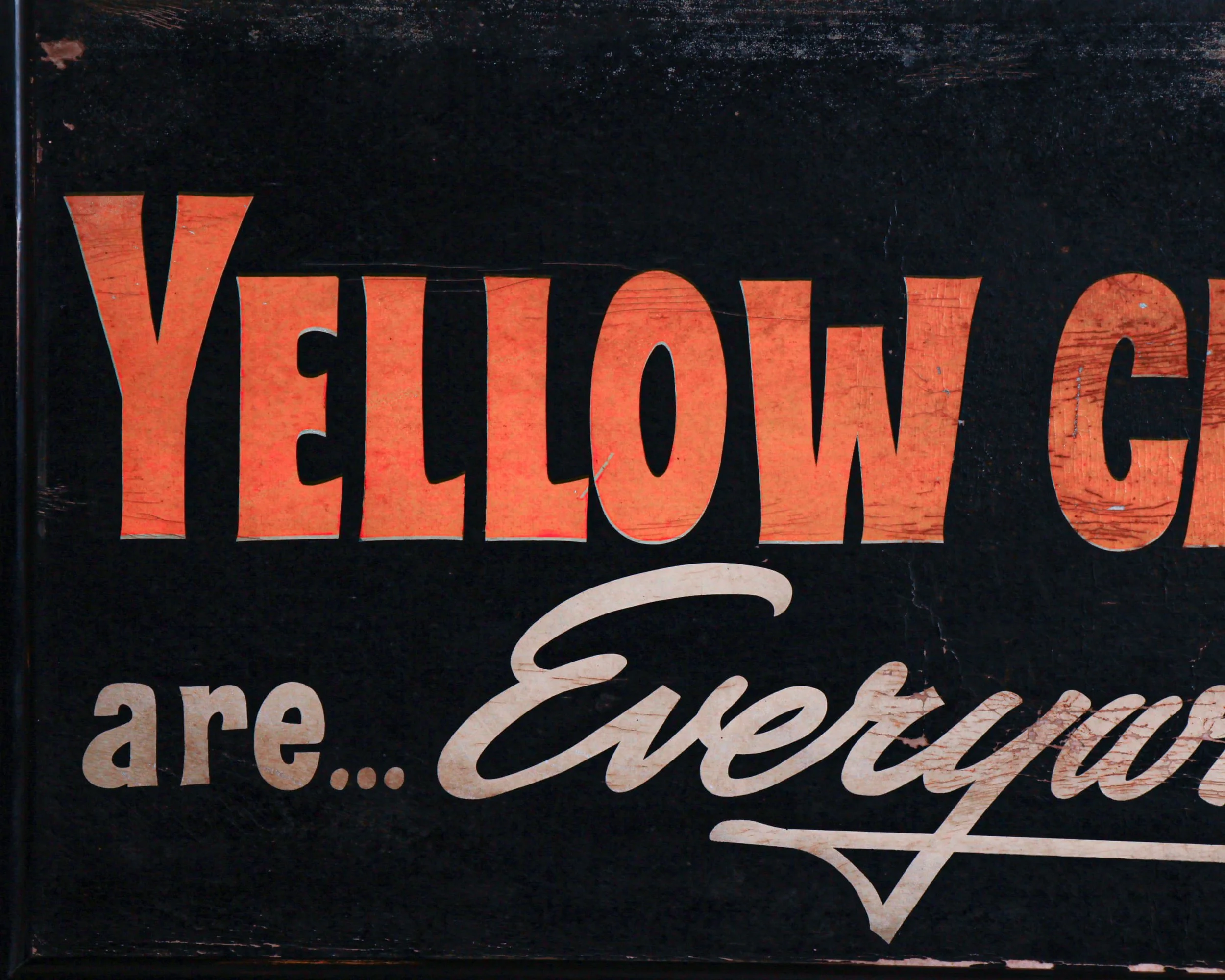
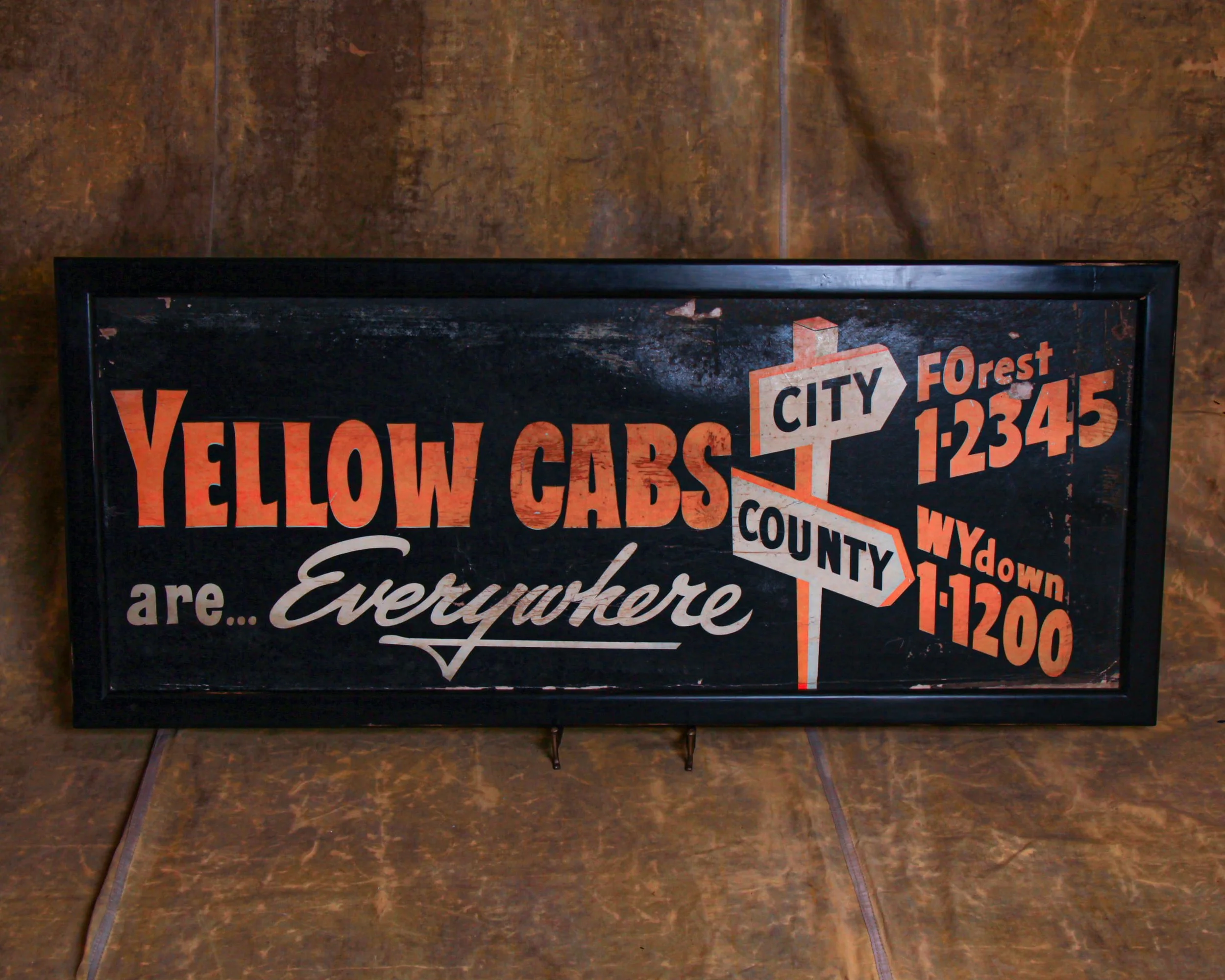
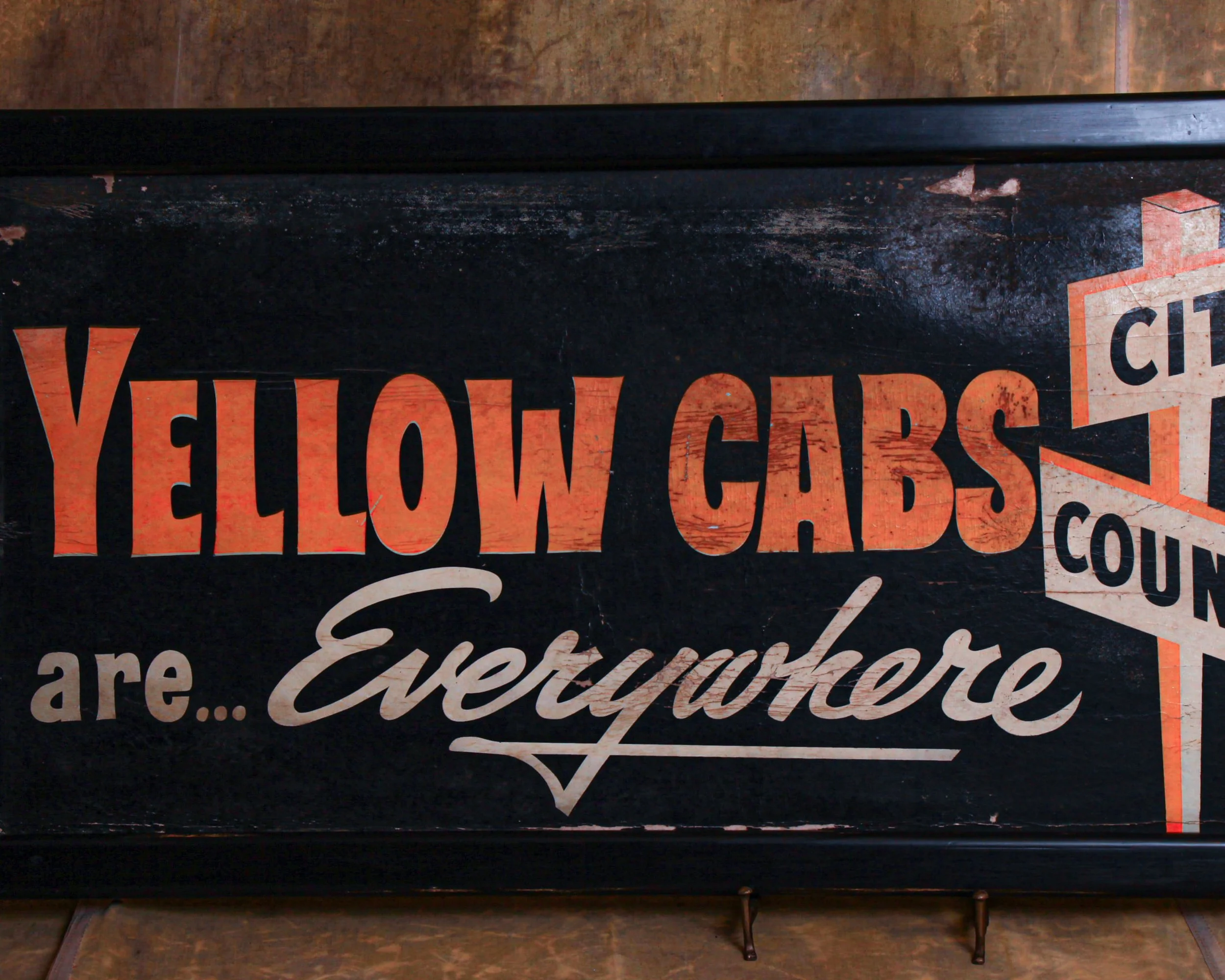
A wide, graphic slice of 1940s advertising, this framed single-sided cardboard sign stretches nearly four feet across, built to catch your eye from across a room—or a street. “Yellow Cabs are… Everywhere” runs boldly across the surface in that confident, straight-to-the-point typography that defined the era. The warm, time-softened orange lettering sits against a deep black ground.
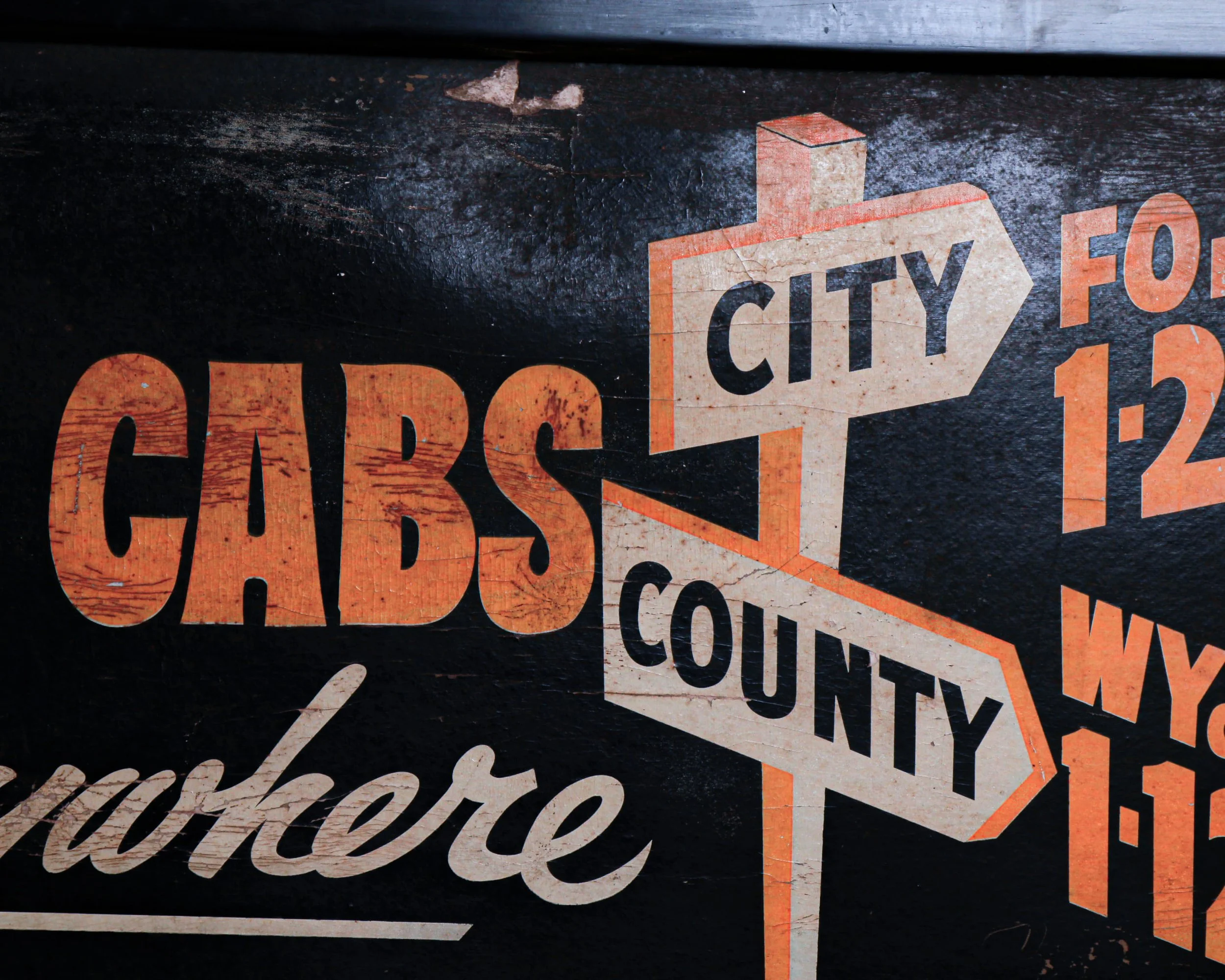
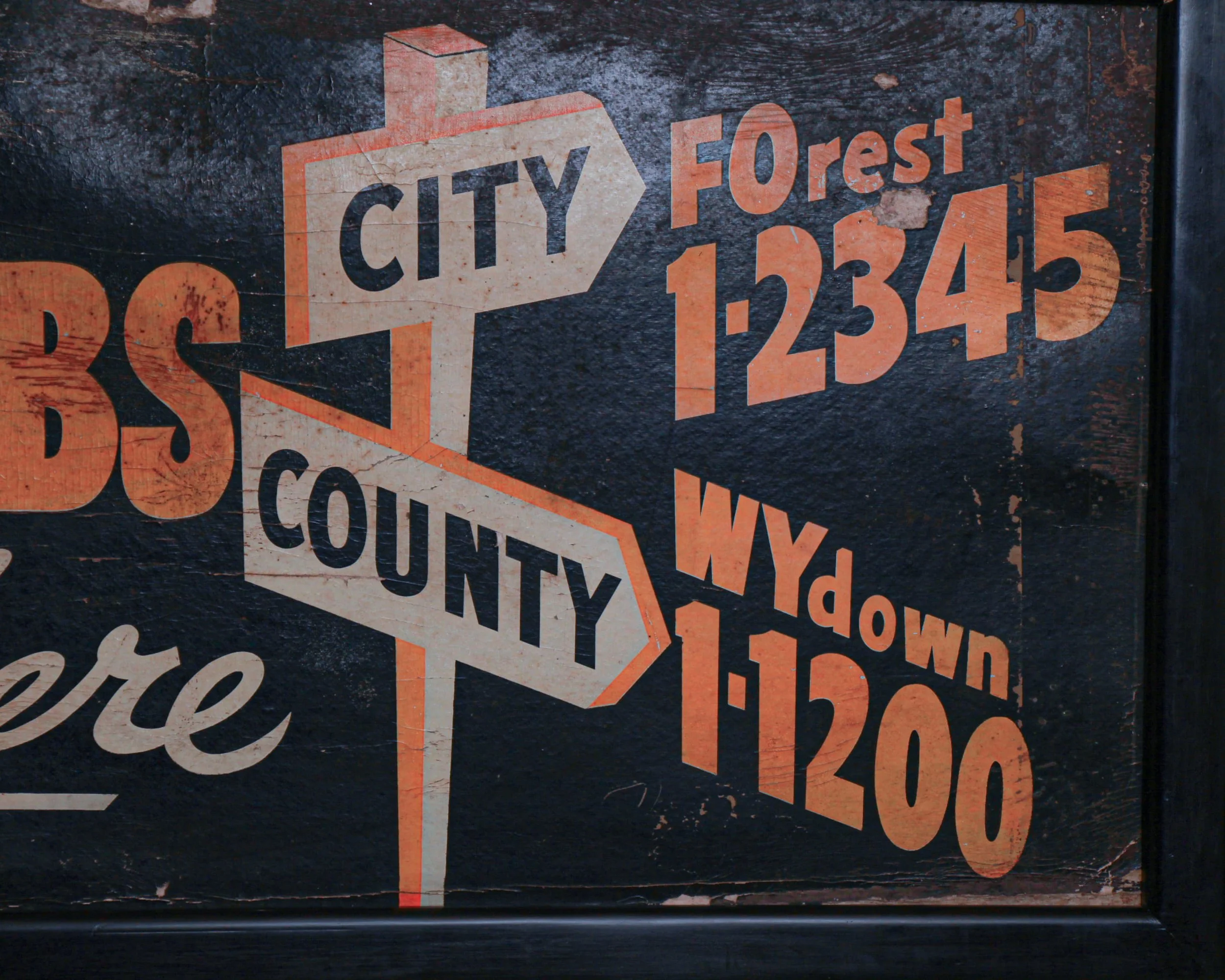
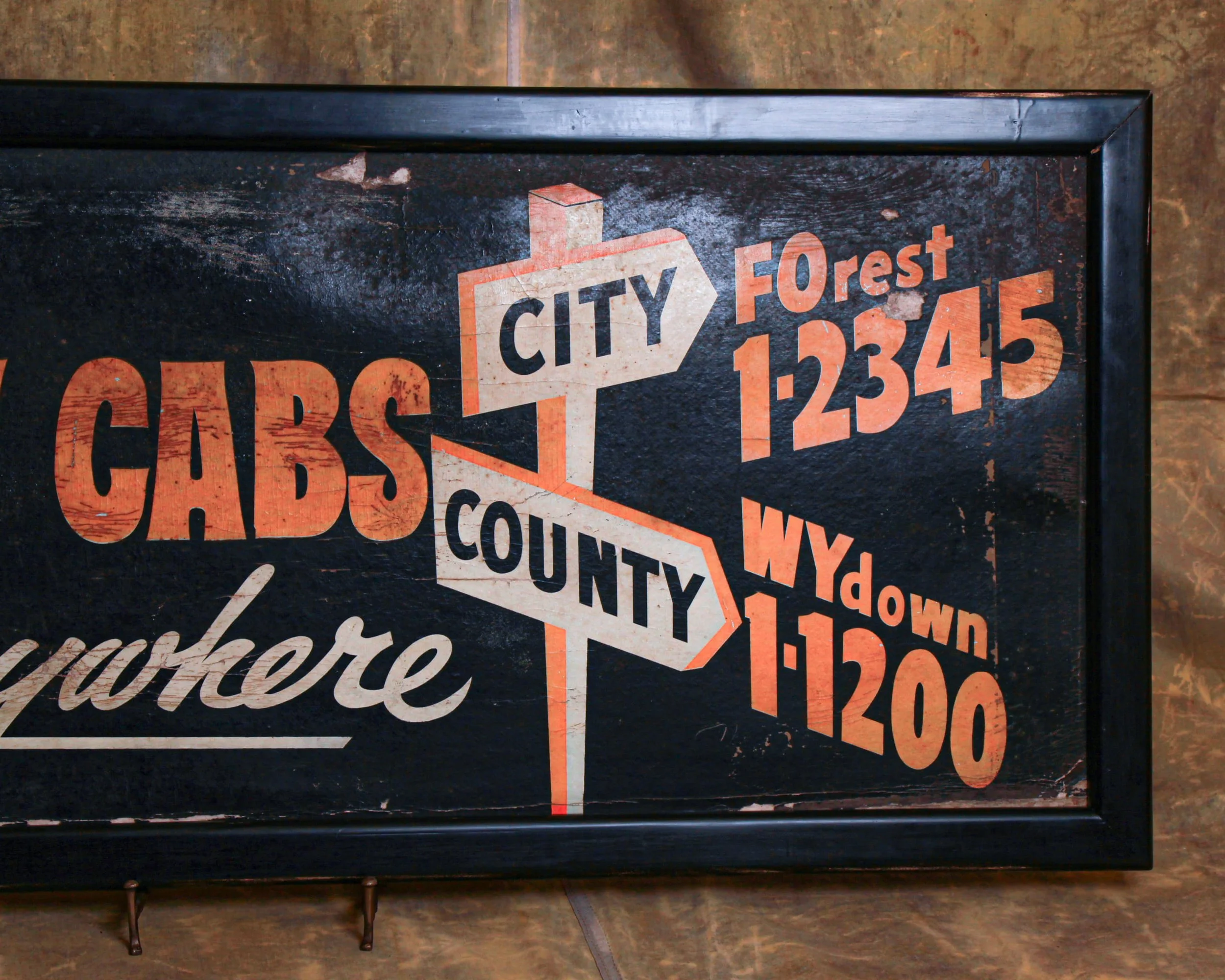
Off to the right, a stylized signpost points in multiple directions—City, County, Forest, Wydown—each paired with mile markers that suggest reach, reliability, and a company that wanted you to believe they had the map covered.
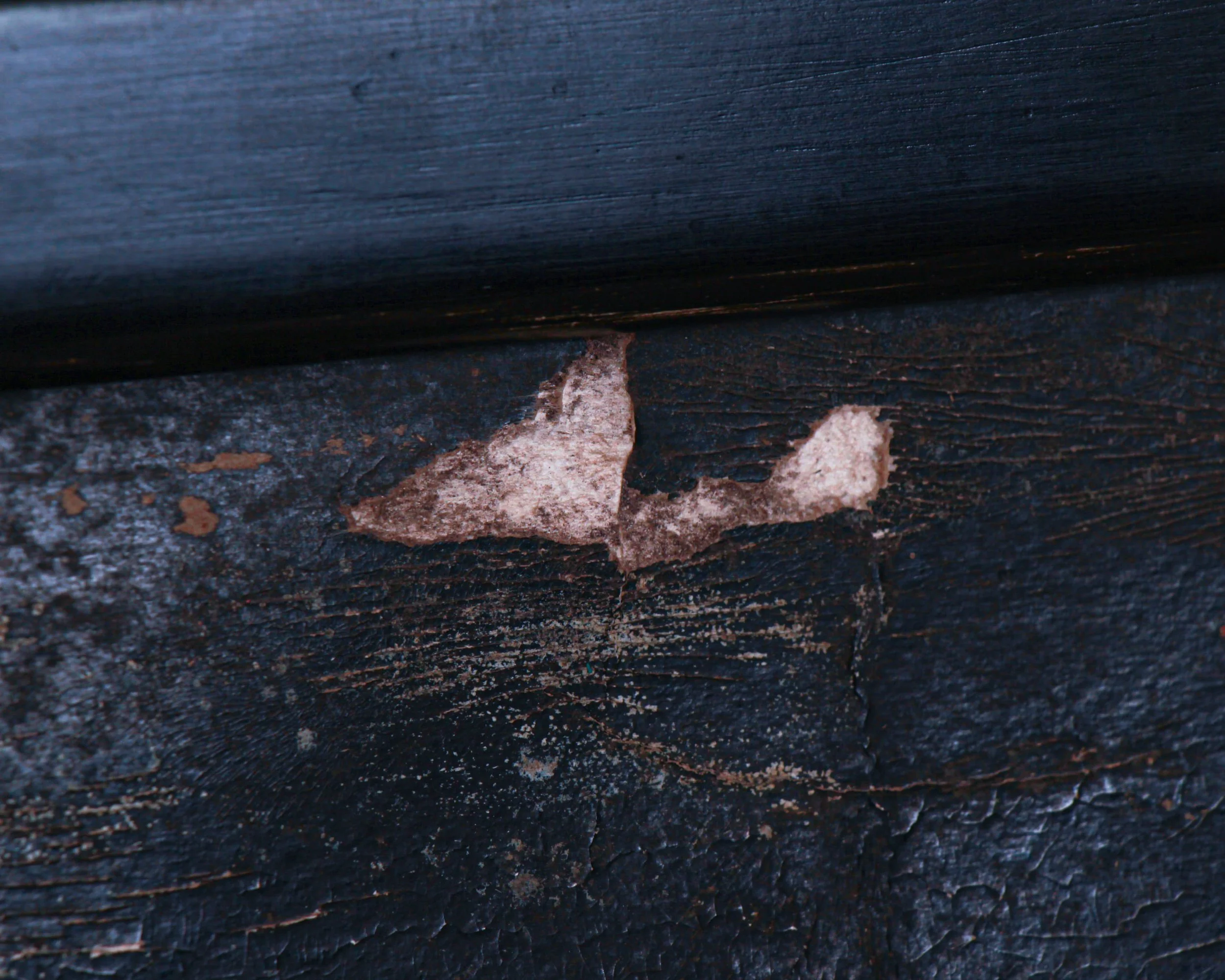
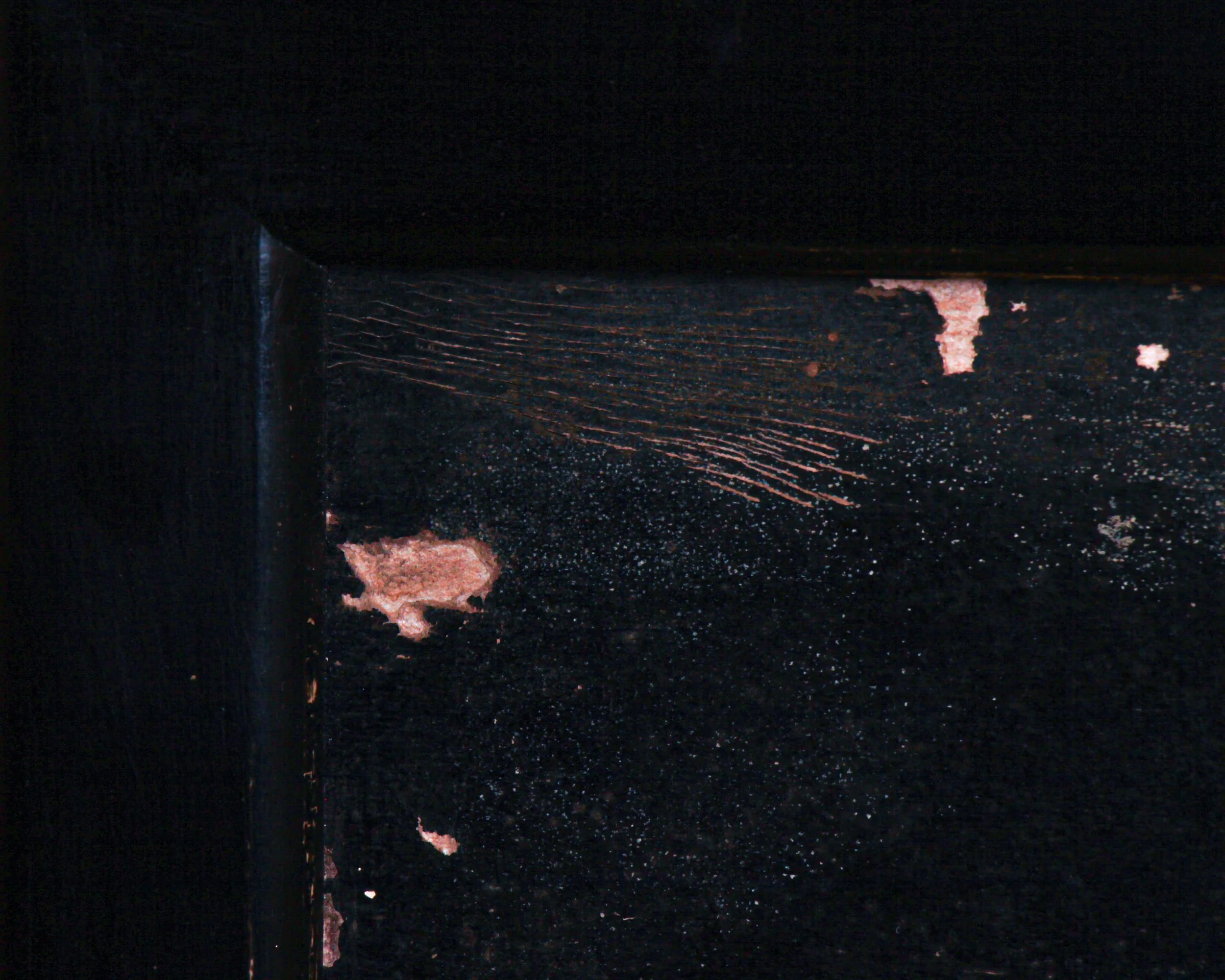
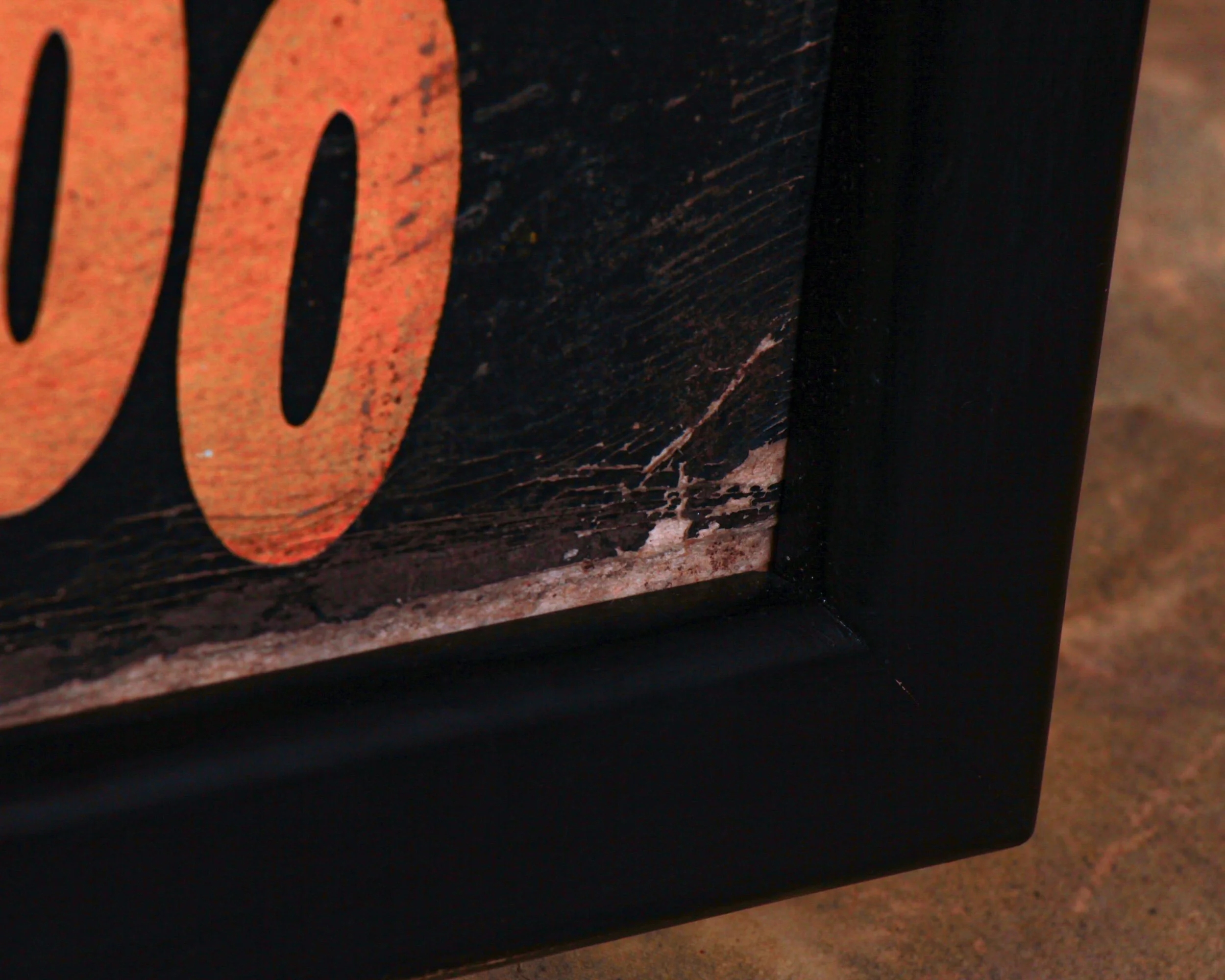
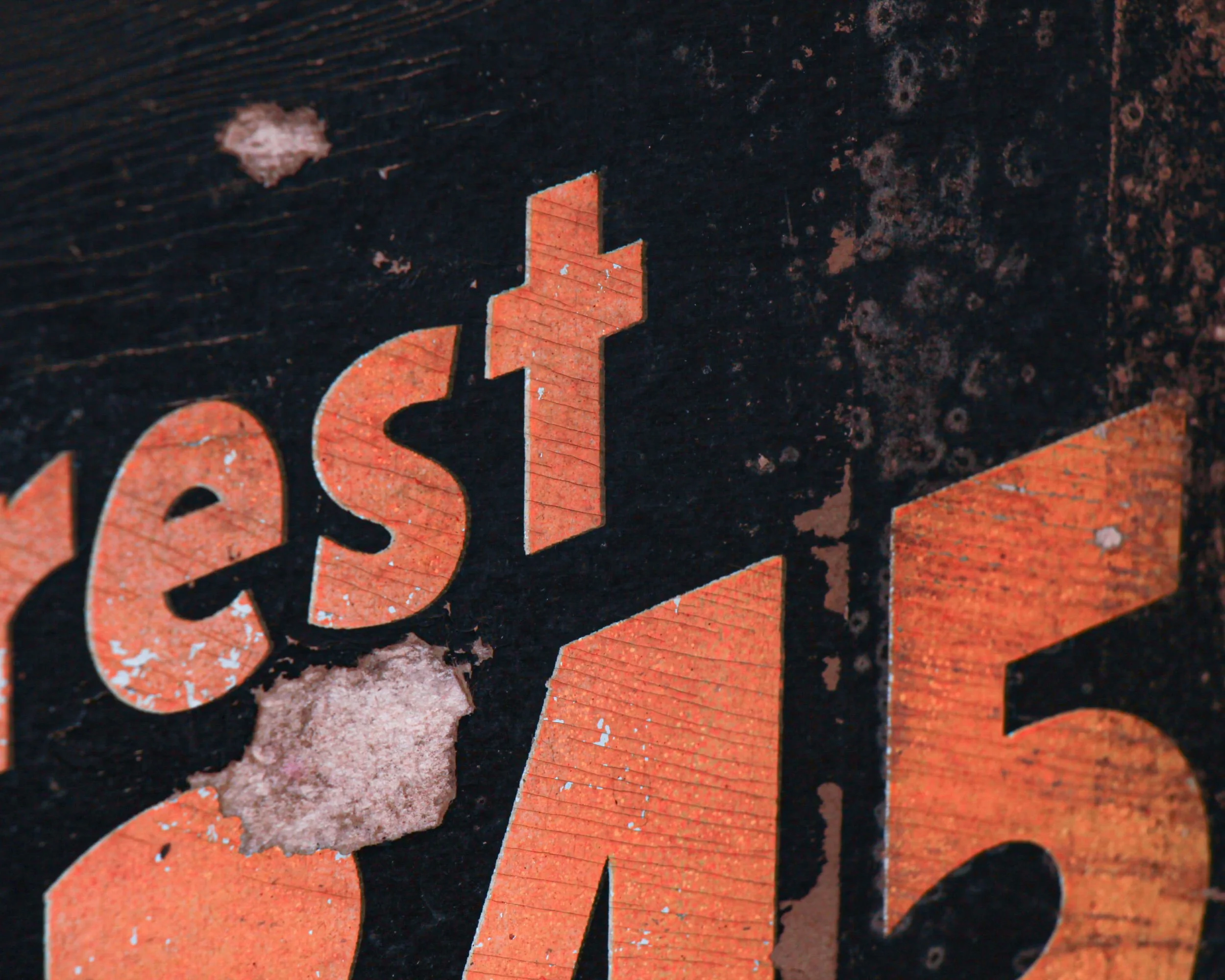
The surface shows honest age. Scuffs, scratches, and small areas of loss reveal the cardboard beneath, giving it that worked-in look that only comes from years of being out in the world rather than tucked away. Nothing distracting, just the kind of wear that adds depth without taking anything away.
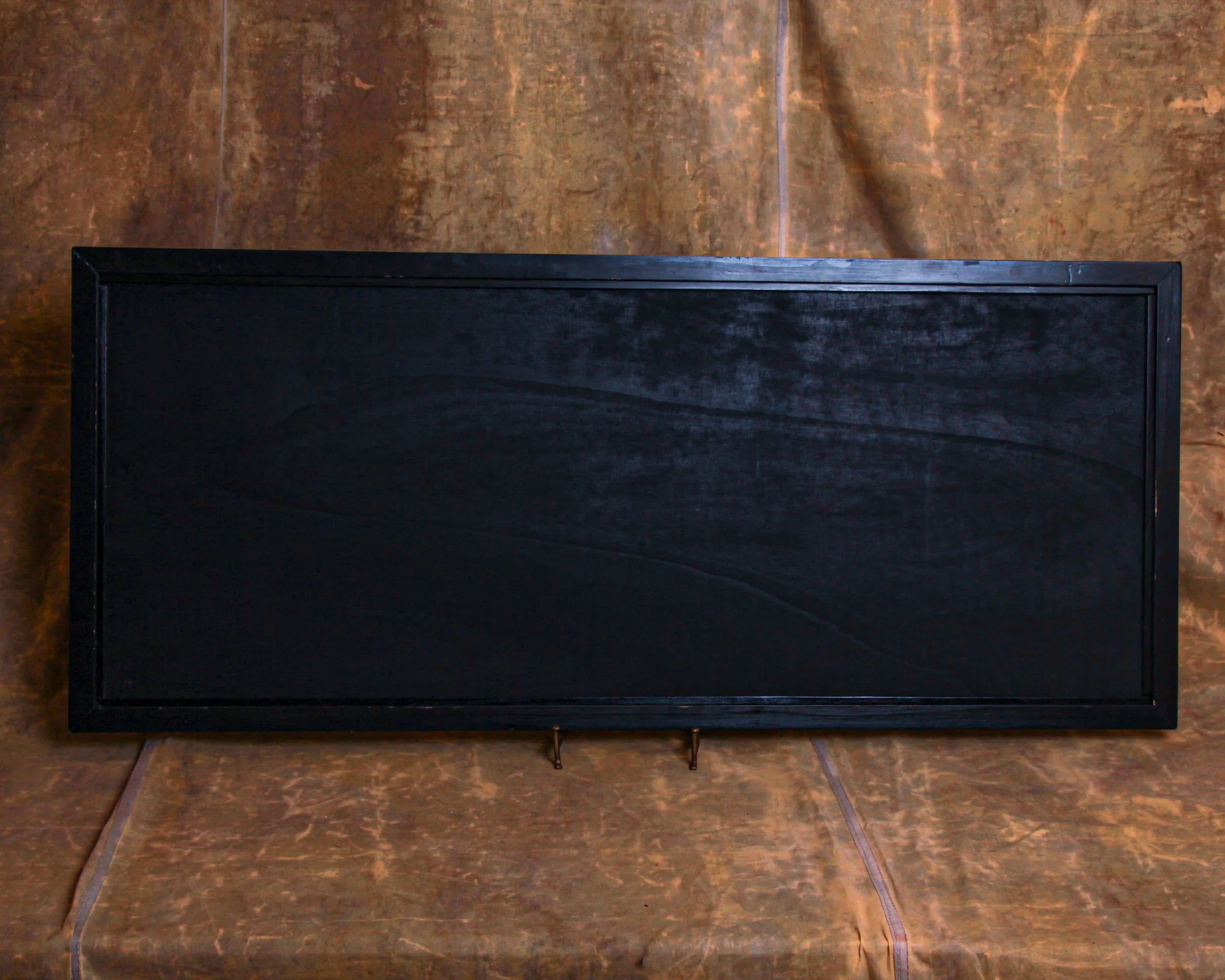
Framed in a simple black wooden frame, it measures 20.25 inches high, 47.5 inches wide, and 1.5 inches deep.
Cabs
By the 1940s, yellow cabs weren’t just a color choice, they were part of the visual language of the American city. The idea goes back a bit earlier, when John Hertz of the Yellow Cab Company standardized the color after a study suggested yellow was the most visible from a distance. By the time the 1940s rolled around, that decision had fully taken hold. In cities like New York, Chicago, and St. Louis, a flash of yellow moving through traffic meant one thing: transportation on demand.
The decade itself was a complicated one. World War II reshaped daily life, and taxis became more than a convenience. Gasoline rationing limited private driving, and many Americans relied on cabs to get to work, train stations, and factories tied to the war effort. At the same time, the industry was tightening up. Many cities began regulating fares, licensing drivers, and introducing medallion systems to control the number of cabs on the street. That structure helped create a sense of reliability and order, even as demand surged.
Design-wise, cabs of the 1940s were solid, purposeful machines. Built by major automakers like Checker, DeSoto, and Ford, they were designed to take abuse. Spacious back seats, durable interiors, and simple, functional dashboards made them workhorses rather than showpieces.
But beyond the mechanics, yellow cabs took on a cultural role. They became shorthand for movement, independence, and the rhythm of city life. Movies, photographs, and advertising from the era leaned into that image, using the taxi as a symbol of connection. If you needed to get somewhere, the answer was already on the street, painted bright enough that you couldn’t miss it.
A wide, graphic slice of 1940s advertising, this framed single-sided cardboard sign stretches nearly four feet across, built to catch your eye from across a room—or a street. “Yellow Cabs are… Everywhere” runs boldly across the surface in that confident, straight-to-the-point typography that defined the era. The warm, time-softened orange lettering sits against a deep black ground.
Off to the right, a stylized signpost points in multiple directions—City, County, Forest, Wydown—each paired with mile markers that suggest reach, reliability, and a company that wanted you to believe they had the map covered.
The surface shows honest age. Scuffs, scratches, and small areas of loss reveal the cardboard beneath, giving it that worked-in look that only comes from years of being out in the world rather than tucked away. Nothing distracting, just the kind of wear that adds depth without taking anything away.
Framed in a simple black wooden frame, it measures 20.25 inches high, 47.5 inches wide, and 1.5 inches deep.
Cabs
By the 1940s, yellow cabs weren’t just a color choice, they were part of the visual language of the American city. The idea goes back a bit earlier, when John Hertz of the Yellow Cab Company standardized the color after a study suggested yellow was the most visible from a distance. By the time the 1940s rolled around, that decision had fully taken hold. In cities like New York, Chicago, and St. Louis, a flash of yellow moving through traffic meant one thing: transportation on demand.
The decade itself was a complicated one. World War II reshaped daily life, and taxis became more than a convenience. Gasoline rationing limited private driving, and many Americans relied on cabs to get to work, train stations, and factories tied to the war effort. At the same time, the industry was tightening up. Many cities began regulating fares, licensing drivers, and introducing medallion systems to control the number of cabs on the street. That structure helped create a sense of reliability and order, even as demand surged.
Design-wise, cabs of the 1940s were solid, purposeful machines. Built by major automakers like Checker, DeSoto, and Ford, they were designed to take abuse. Spacious back seats, durable interiors, and simple, functional dashboards made them workhorses rather than showpieces.
But beyond the mechanics, yellow cabs took on a cultural role. They became shorthand for movement, independence, and the rhythm of city life. Movies, photographs, and advertising from the era leaned into that image, using the taxi as a symbol of connection. If you needed to get somewhere, the answer was already on the street, painted bright enough that you couldn’t miss it.