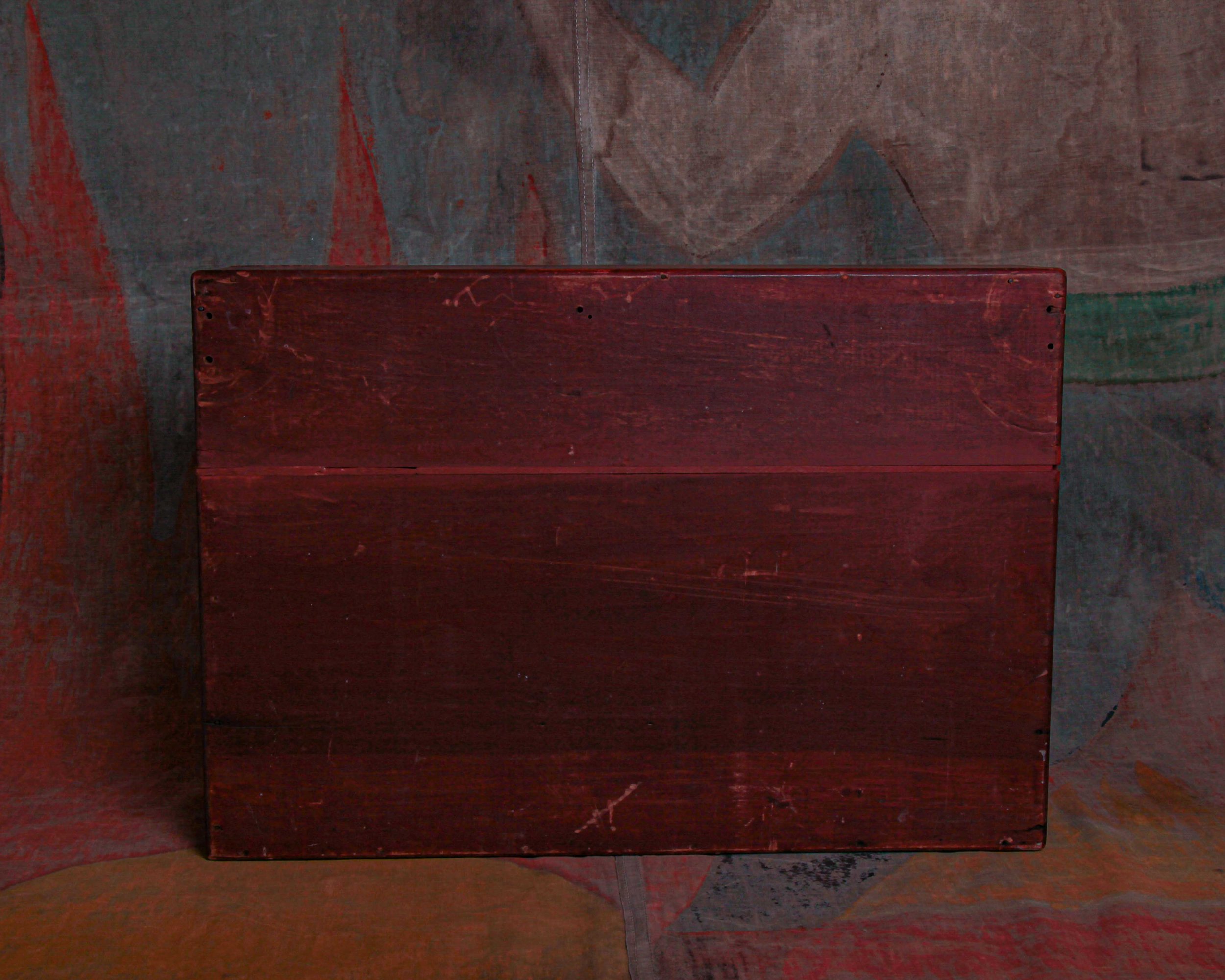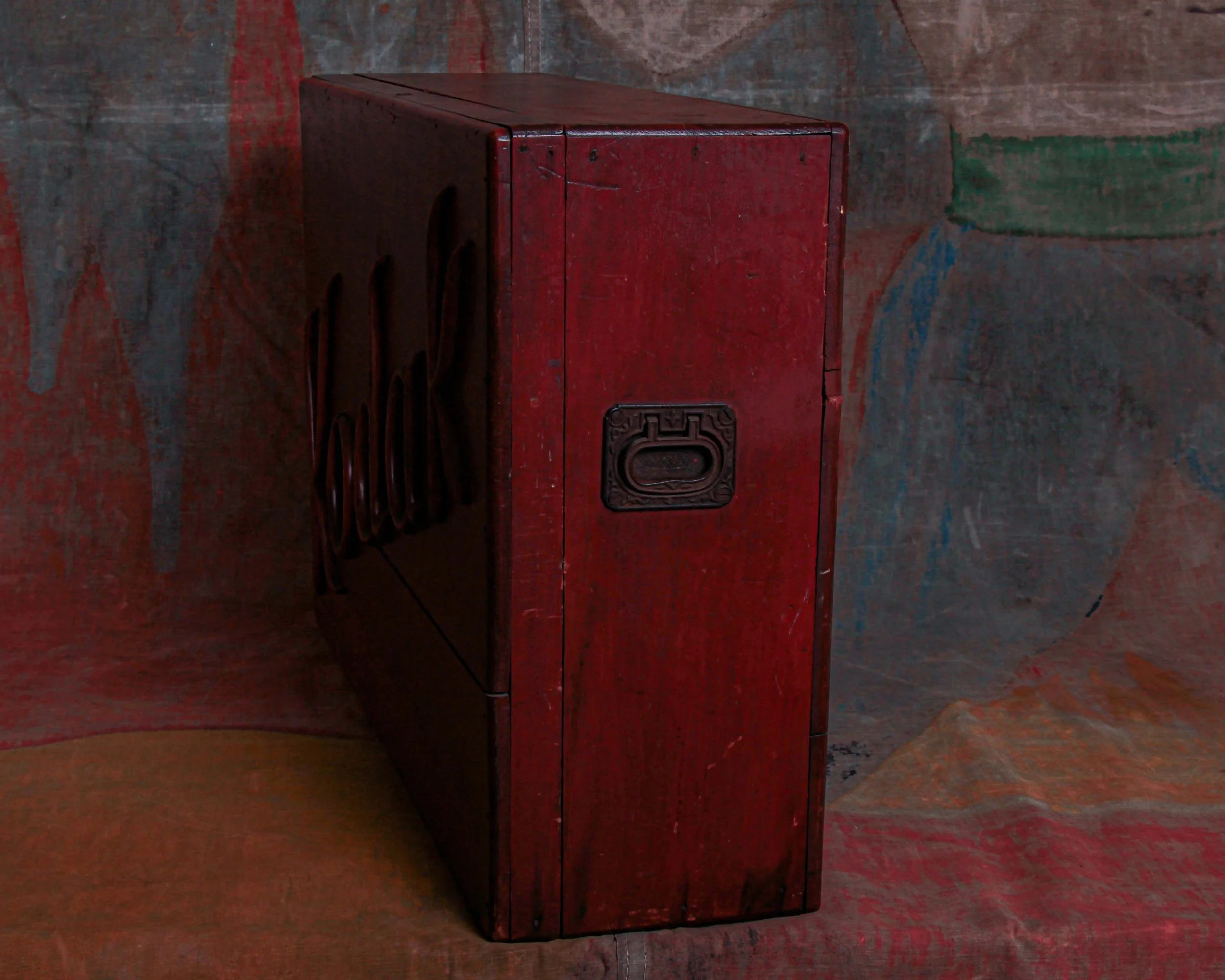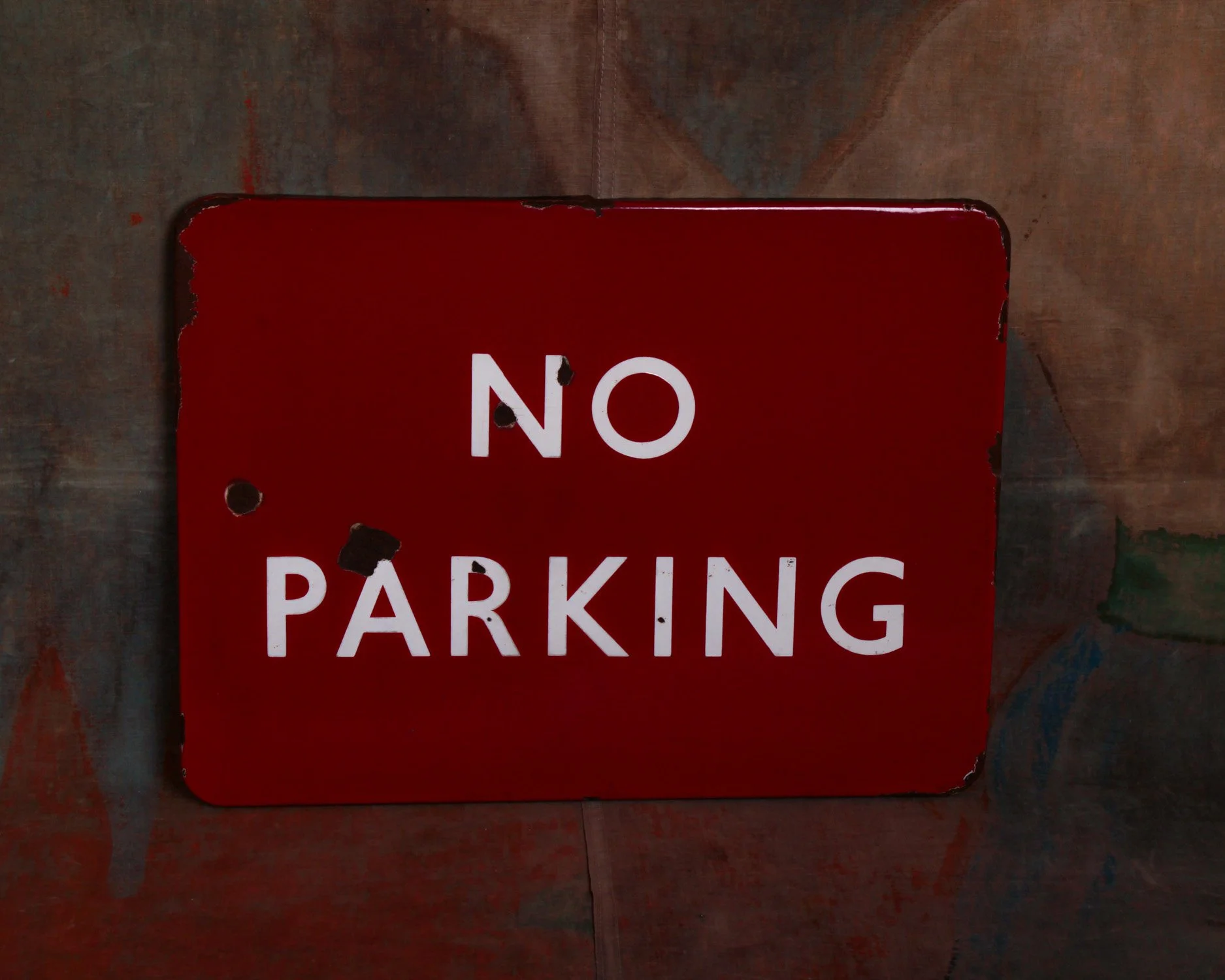
Single-sided British railway porcelain enamel “NO PARKING” sign featuring bold white lettering against a deep red background. Made from heavy-gauge steel with rounded corners, the sign has a glossy enamel finish with scattered chips, surface scratches, and areas of exposed metal and rust. The reverse retains its dark, weathered finish. Its straightforward typography and contrasting colors reflect the practical approach to signage used throughout Britain's railway system.
Porcelain enamel signs became widespread across British railways during the late 19th and early 20th centuries. Manufactured by fusing powdered glass onto metal at high temperatures, the process created a hard, weather-resistant surface capable of withstanding decades of outdoor exposure. Unlike painted signs, which required regular maintenance, enamel signs retained their colors and lettering remarkably well.
Railway companies relied on these signs to communicate everything from station names and platform numbers to safety warnings, advertisements, and restrictions. Before nationalization in 1948, Britain's railway network was operated by several major companies, each maintaining its own visual identity and signage standards.
The formation of British Railways brought greater consistency to the system, although older signs remained in use for many years. Red was commonly associated with prohibitions and warnings, making it particularly effective for instructions such as “NO PARKING.”
Parking restrictions were important around railway stations, goods yards, loading platforms, and access roads, where unobstructed passage was necessary for passengers, deliveries, and railway operations.
By the latter half of the 20th century, porcelain enamel increasingly gave way to aluminum, reflective sheeting, and other less expensive materials. Many surviving railway signs were eventually removed during station renovations, modernization projects, and changes in railway ownership.
Today, British railway enamel signs are collected for their industrial history, graphic design, and connection to the everyday workings of the railway network.