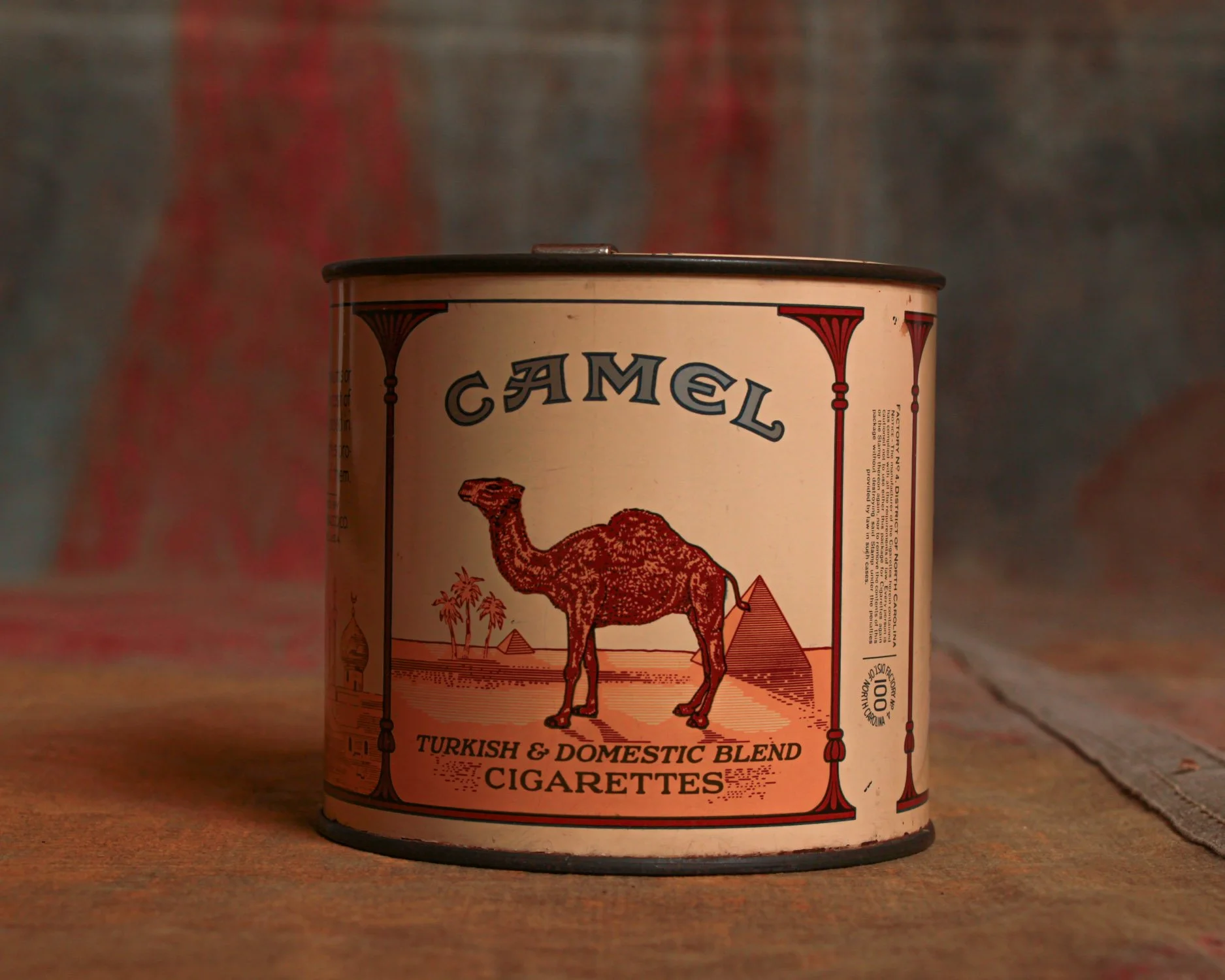
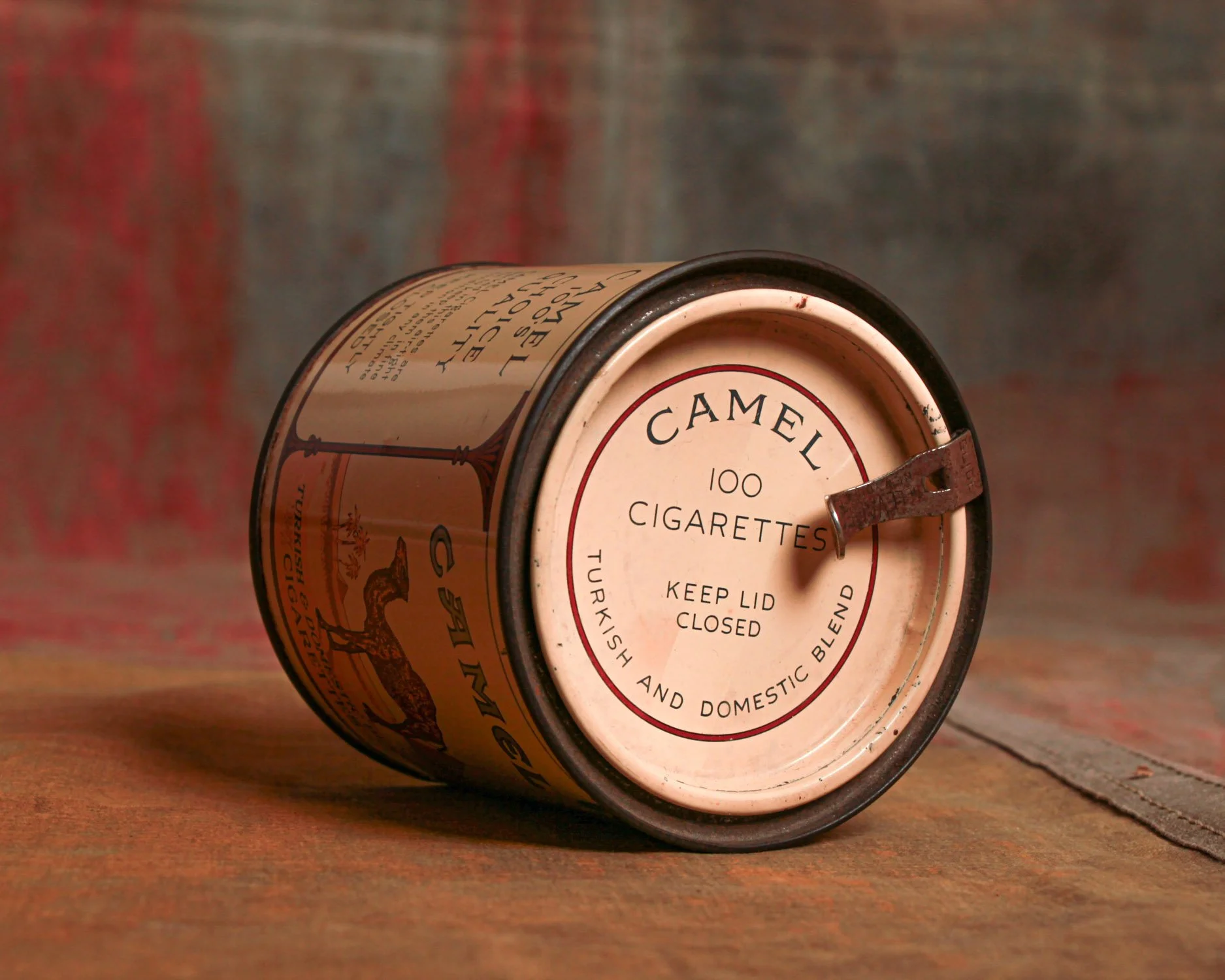
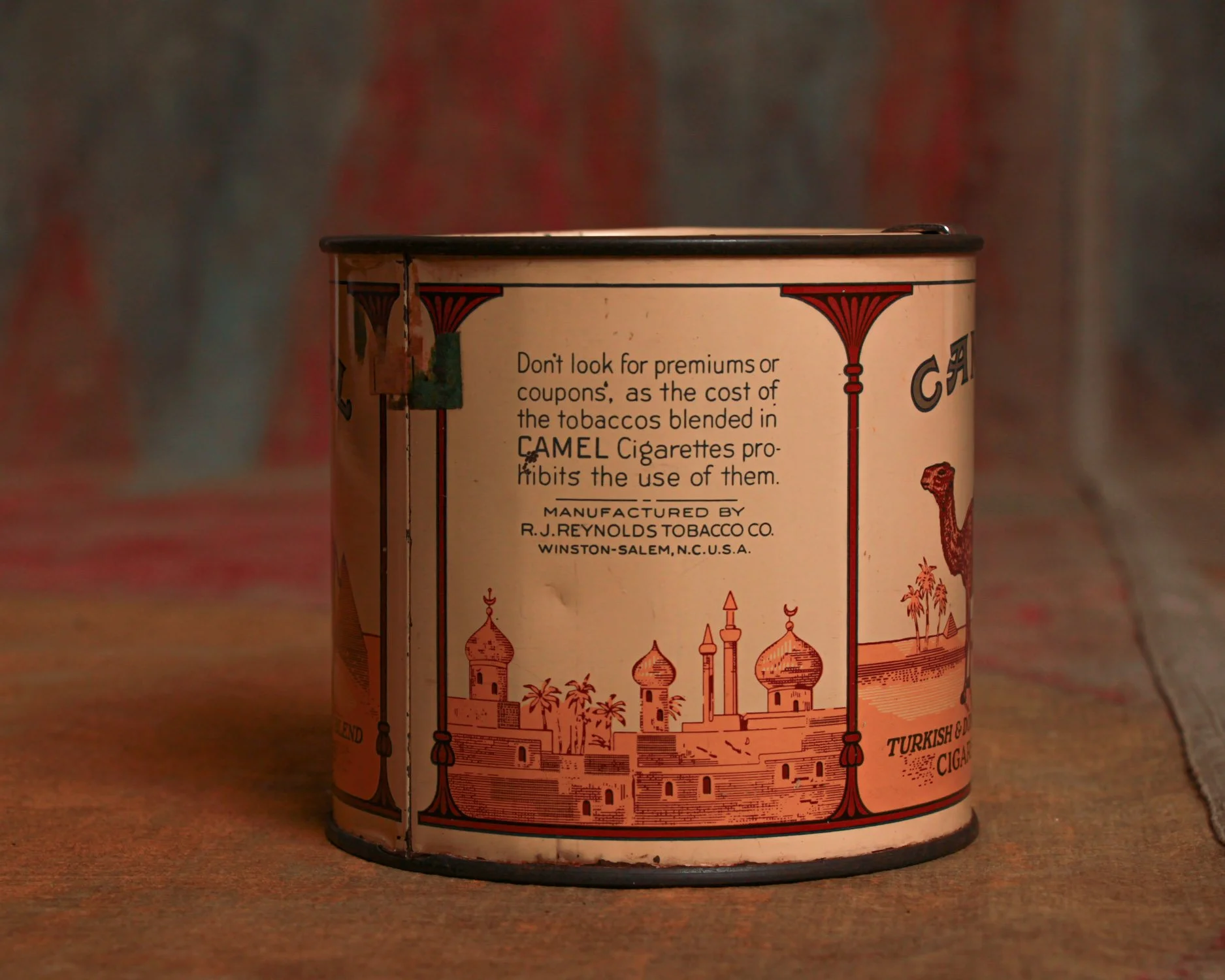

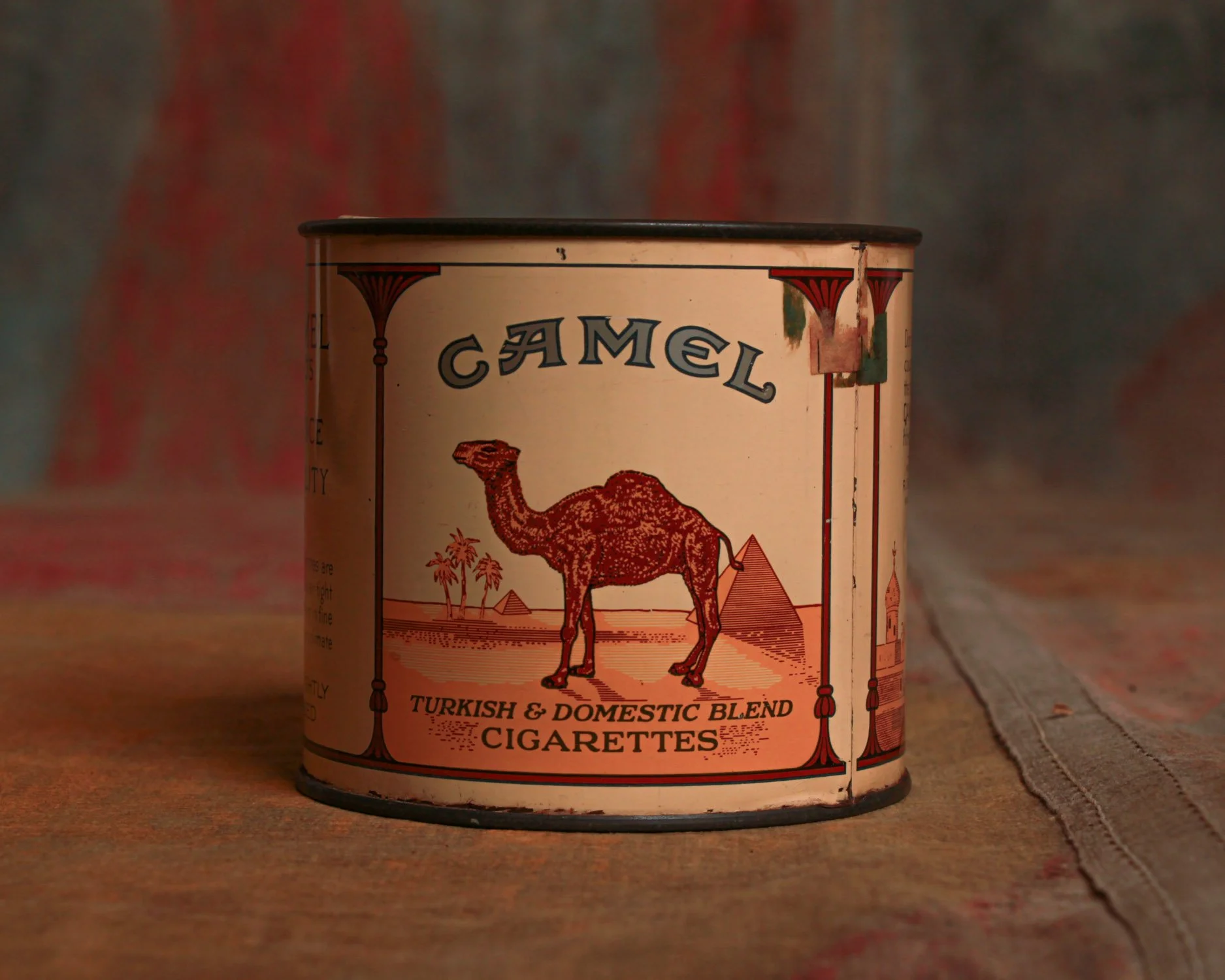
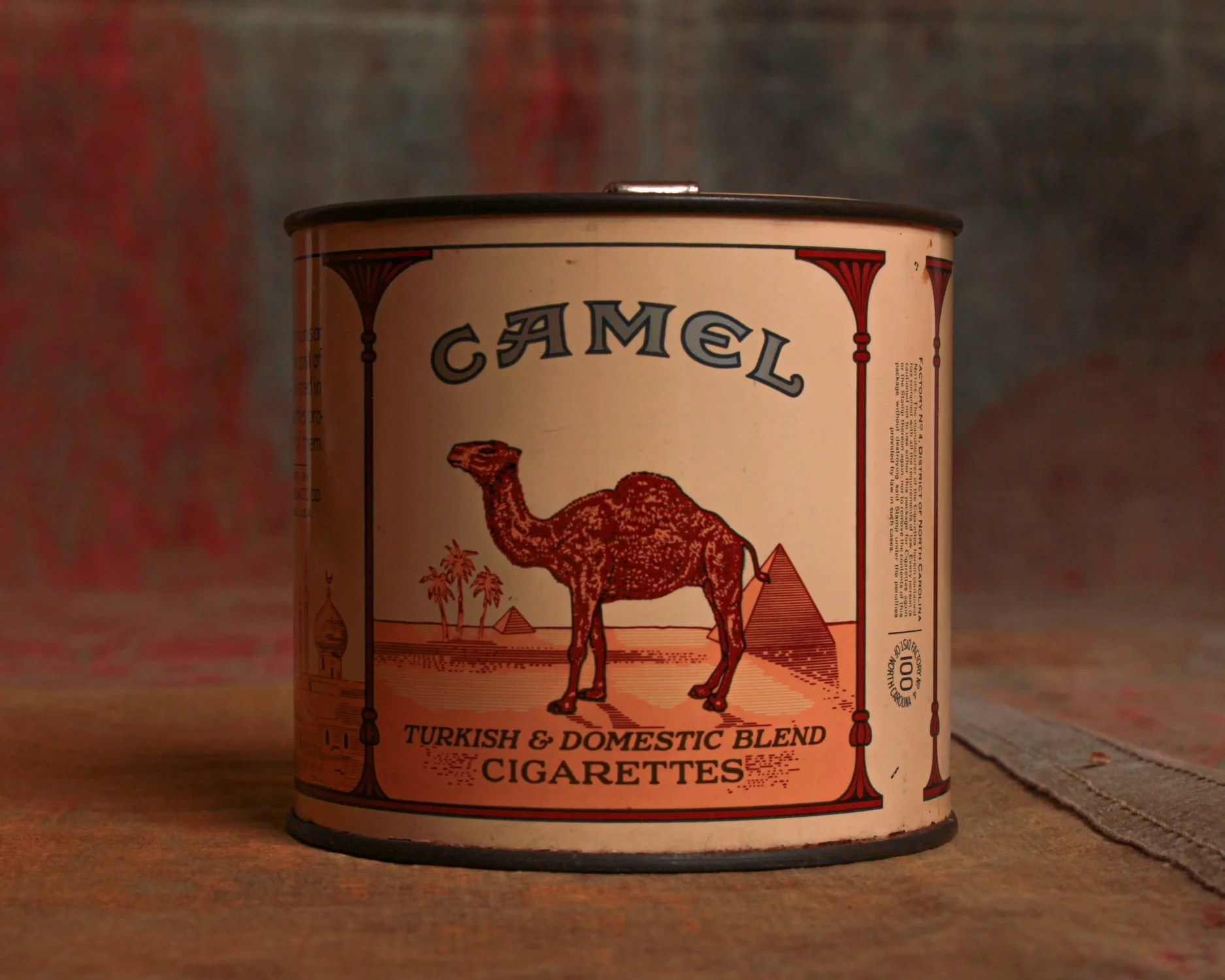
Camel cigarettes tin can produced by the R.J. Reynolds Tobacco Company of Winston-Salem, North Carolina. This cylindrical metal container was designed to hold 100 cigarettes and features the familiar Camel logo above an illustration of a camel standing in a desert landscape, complete with pyramids and palm trees. The cream-colored background is decorated with red and black lettering, ornamental borders, and architectural illustrations. Additional panels describe the Turkish and domestic tobacco blend, along with instructions to keep the container tightly closed. The original metal lid includes a small tab, and the tin shows light scratches, minor discoloration, and wear around the edges. The container is empty and likely dates to the early to mid-20th century.
Camel cigarettes were introduced in 1913 by R.J. Reynolds and quickly became one of America's most recognizable tobacco brands. The company helped popularize the American blended cigarette, combining domestic tobacco varieties with Turkish tobacco to create a distinctive product.
The brand's advertising made extensive use of exotic imagery, particularly camels, pyramids, and Middle Eastern architecture. These illustrations were intended to emphasize the Turkish tobacco component and distinguish Camel from competing American cigarette brands.
During the early 20th century, cigarettes were sold in several packaging formats, including paper packets, cardboard cartons, and reusable metal tins. Larger tins containing 50 or 100 cigarettes appealed to customers purchasing in quantity.
Metal containers offered practical advantages by protecting cigarettes from crushing and helping preserve freshness. Airtight designs were especially useful before modern packaging materials became widespread.
By the 1920s and 1930s, Camel had established itself as a major presence in American advertising, appearing in newspapers, magazines, billboards, and store displays.
As packaging technology advanced, inexpensive cardboard and cellophane-wrapped packs became increasingly common, gradually reducing the everyday use of larger decorative cigarette tins.