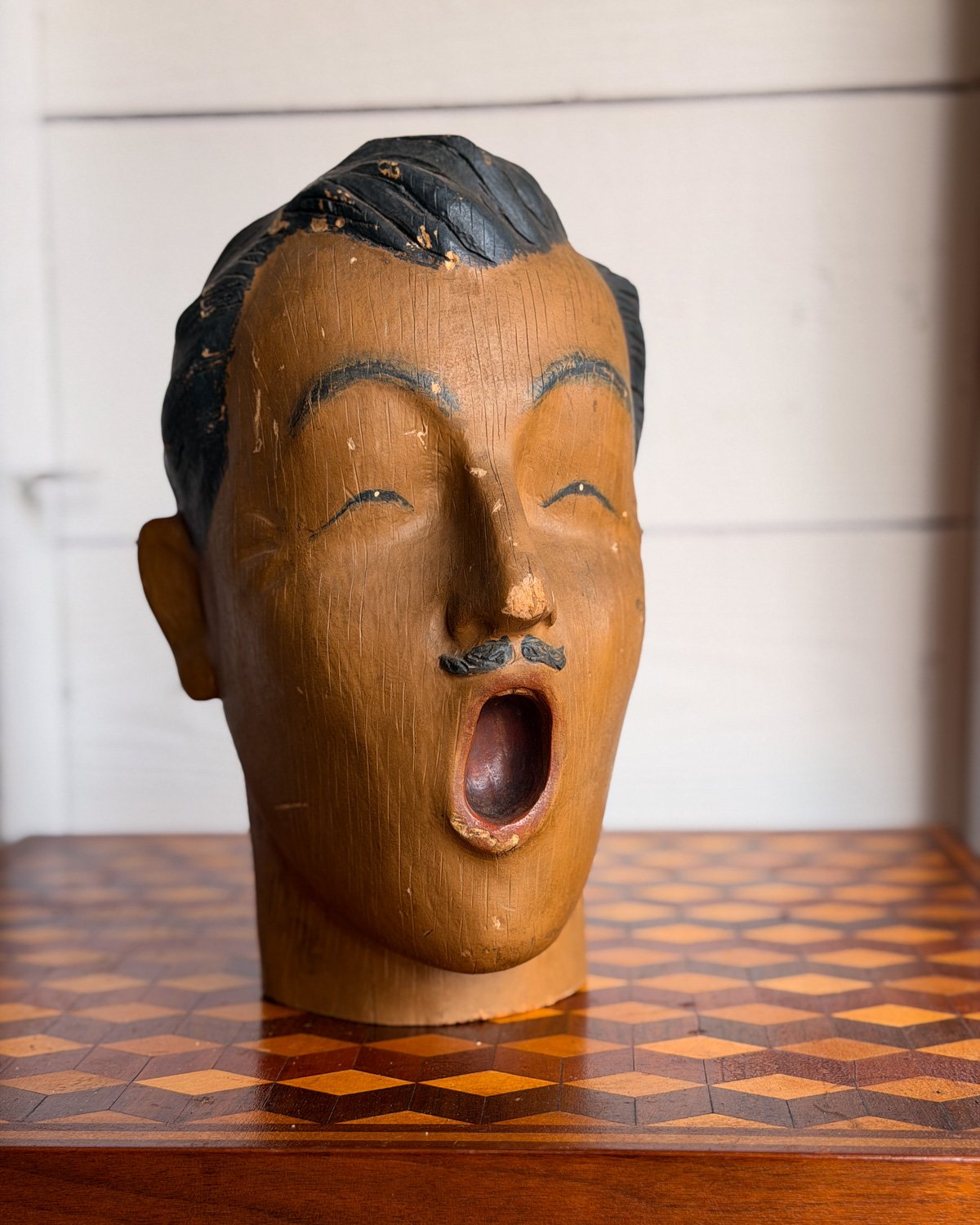
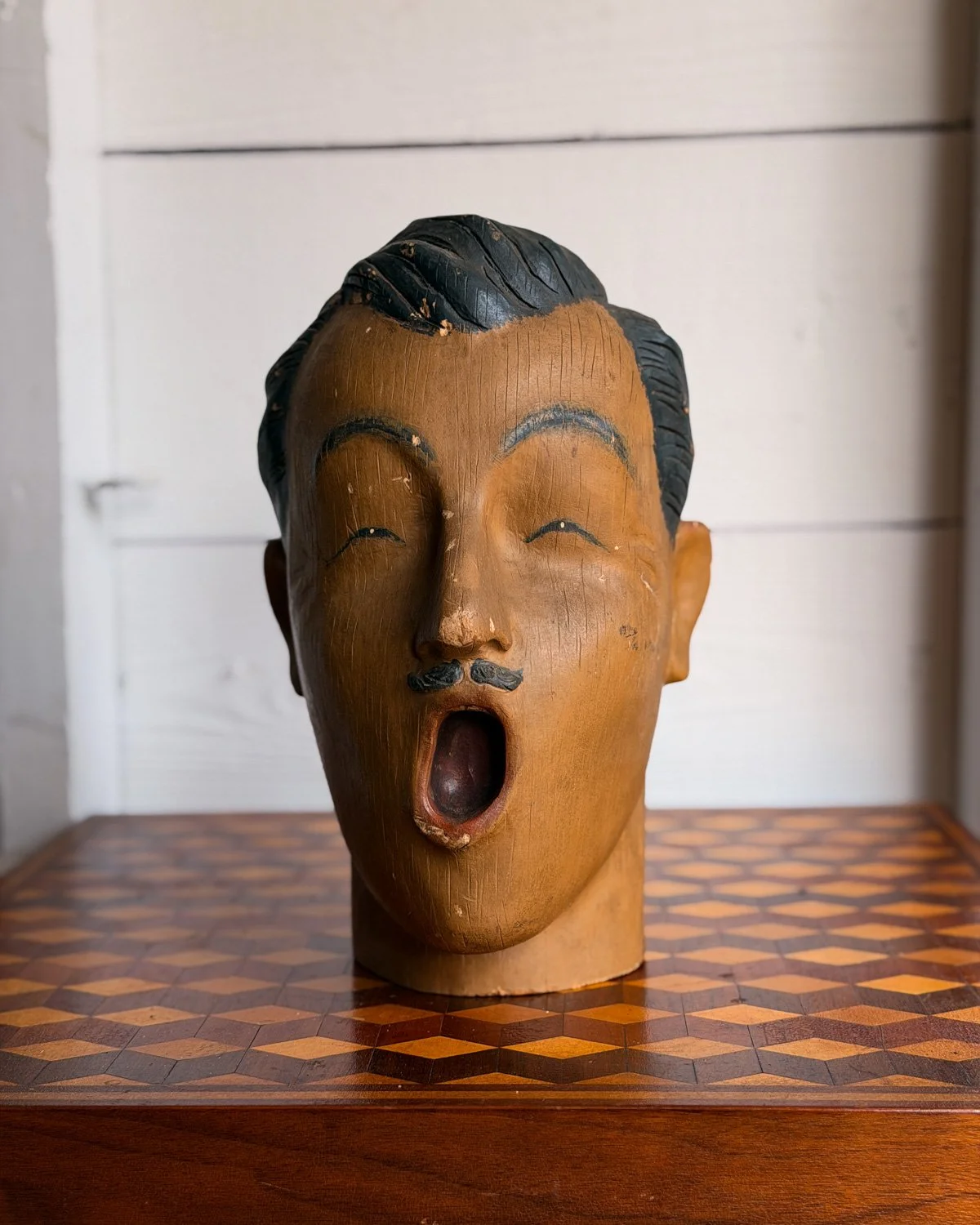
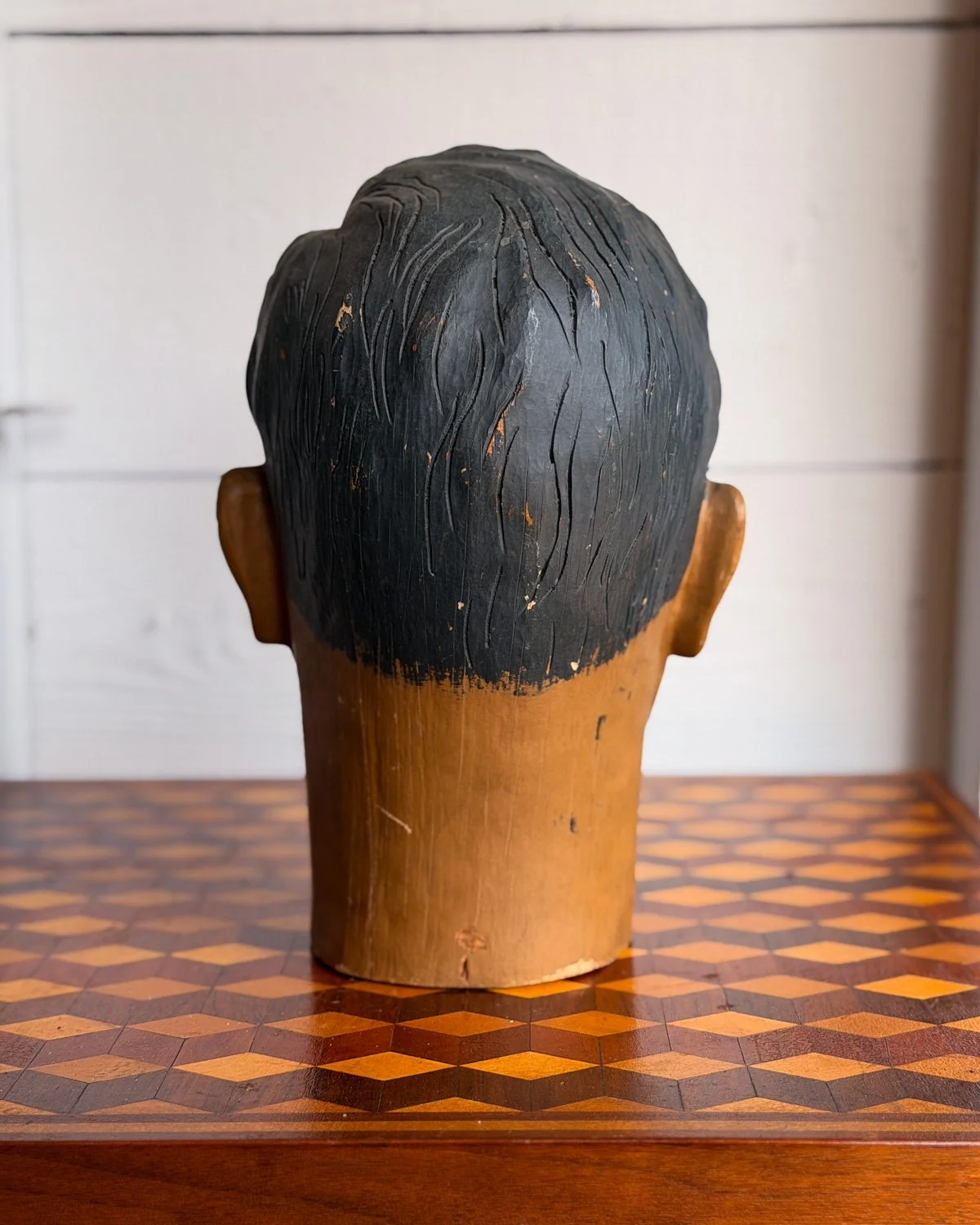
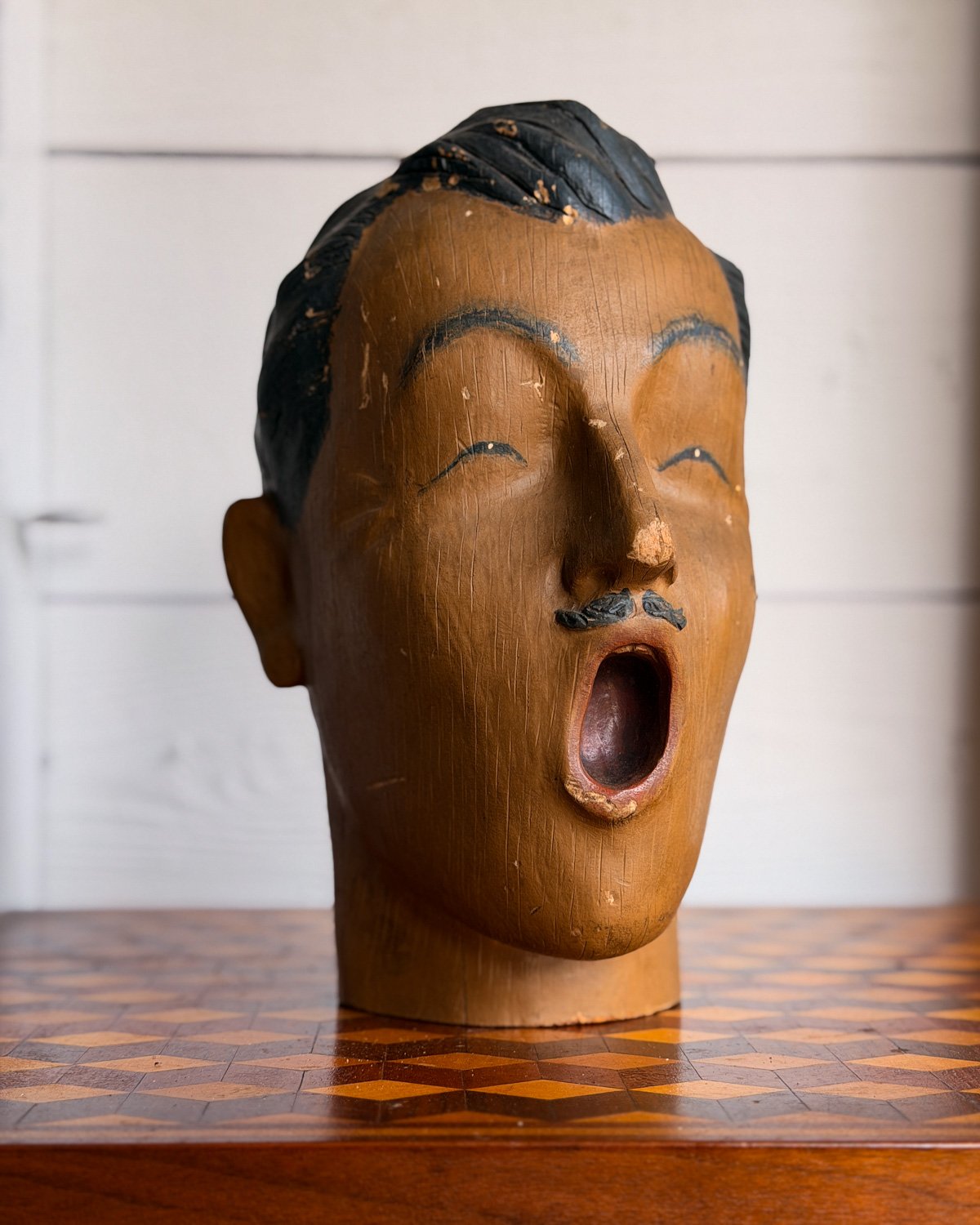
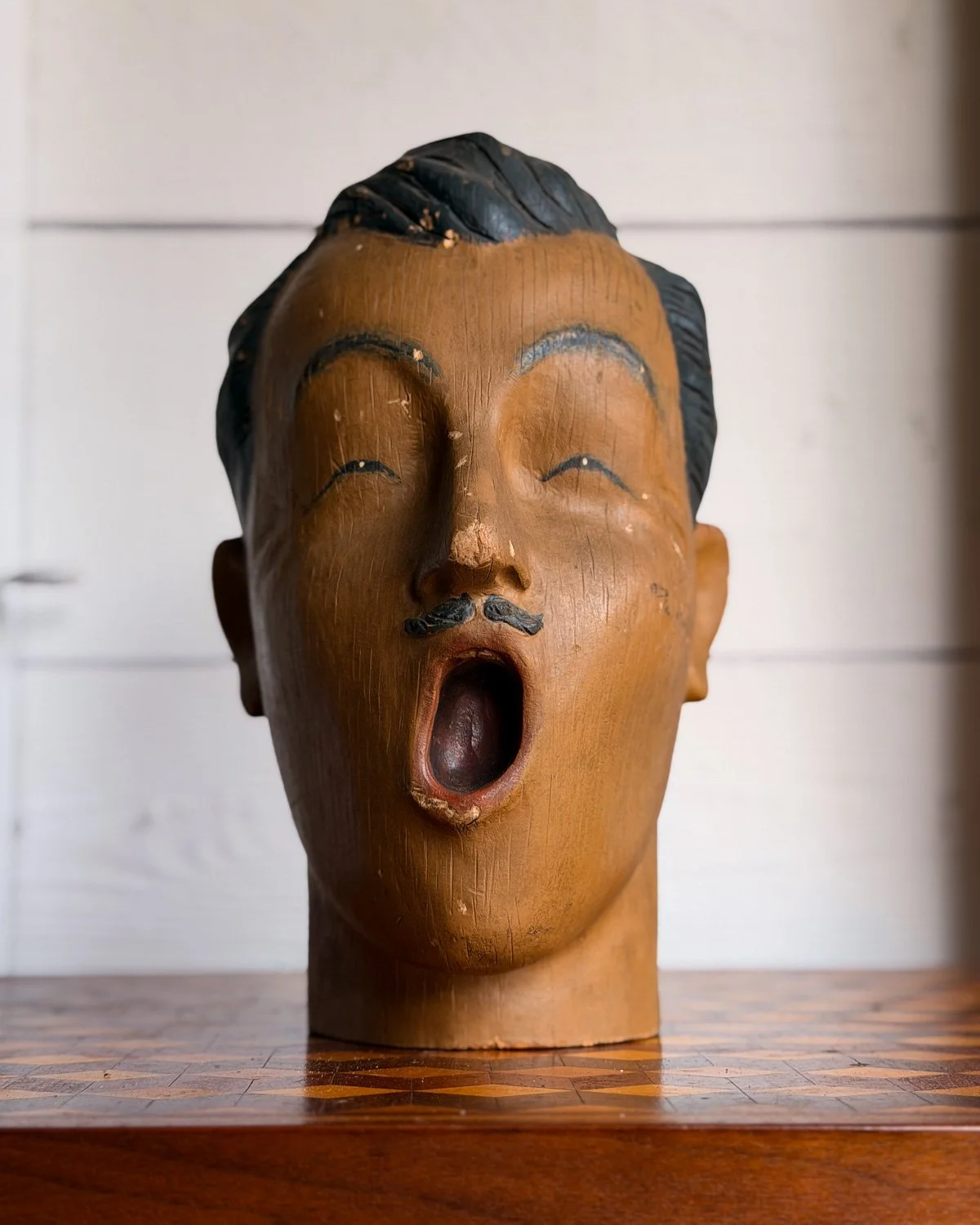
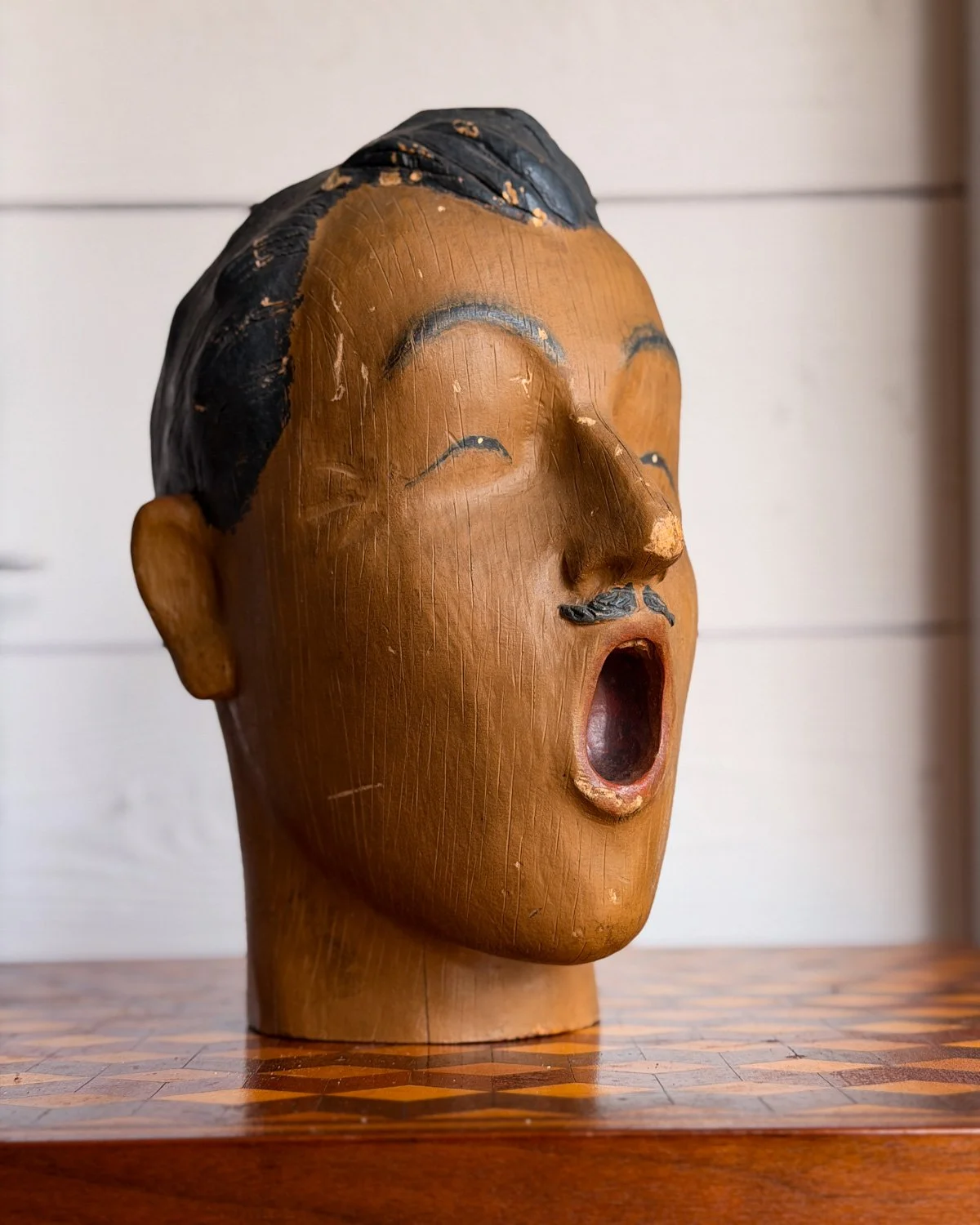
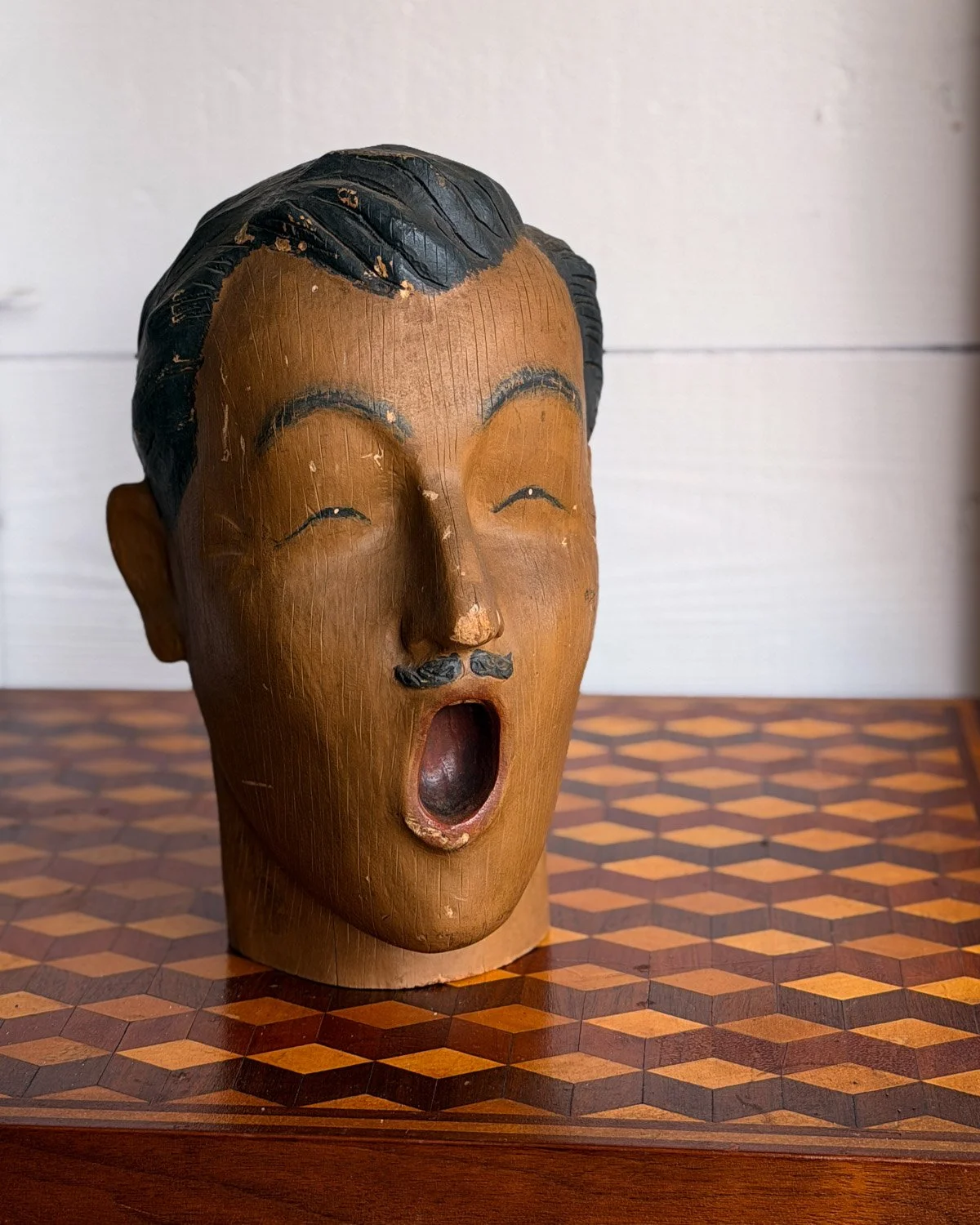
An unusual and wonderfully expressive hand-carved wooden head, most likely dating from the late 19th to early 20th century and possibly originally used as part of a carnival or fairground game. The finely carved features include neatly combed black hair, delicately arched eyebrows, closed eyes, a small mustache, and a wide-open mouth. The original painted surface shows plenty of wear, with scratches, small chips, and a warm, aged patina. Its exact original purpose remains unknown, but the open mouth suggests it may have been incorporated into a ball-toss or similar amusement game.
During the late 1800s and early 1900s, traveling carnivals, county fairs, and amusement parks became increasingly popular throughout the United States and Europe. These lively attractions brought entertainment to towns and rural communities, offering everything from mechanical rides and sideshow performances to games of skill and chance.
Before inexpensive molded plastics became widely available, many carnival games were built by hand using wood, metal, and painted canvas. Skilled carvers and sign painters created colorful figures, animated characters, and elaborate targets designed to catch the attention of passing crowds.
One popular category involved throwing balls or other objects at painted or sculpted targets. Some games featured oversized heads or comical faces with open mouths, challenging players to toss a ball through an opening to win a prize.
Carnival equipment was generally built for repeated use and frequently traveled from fair to fair, meaning pieces were often repaired, repainted, or modified over time.
As amusement technology evolved and mass-produced equipment became more common during the 20th century, many handmade carnival attractions disappeared. Surviving examples are now appreciated by collectors of folk art, vintage amusements, and American fairground history for their craftsmanship, humor, and individuality.
Make the history feel less speculativeTighten the opening description