THIS IS IN OUR EAST COAST INVENTORY, EMAIL US TO FIND OUT WHEN WE CAN SHIP IT hello@heimweeantiques.com
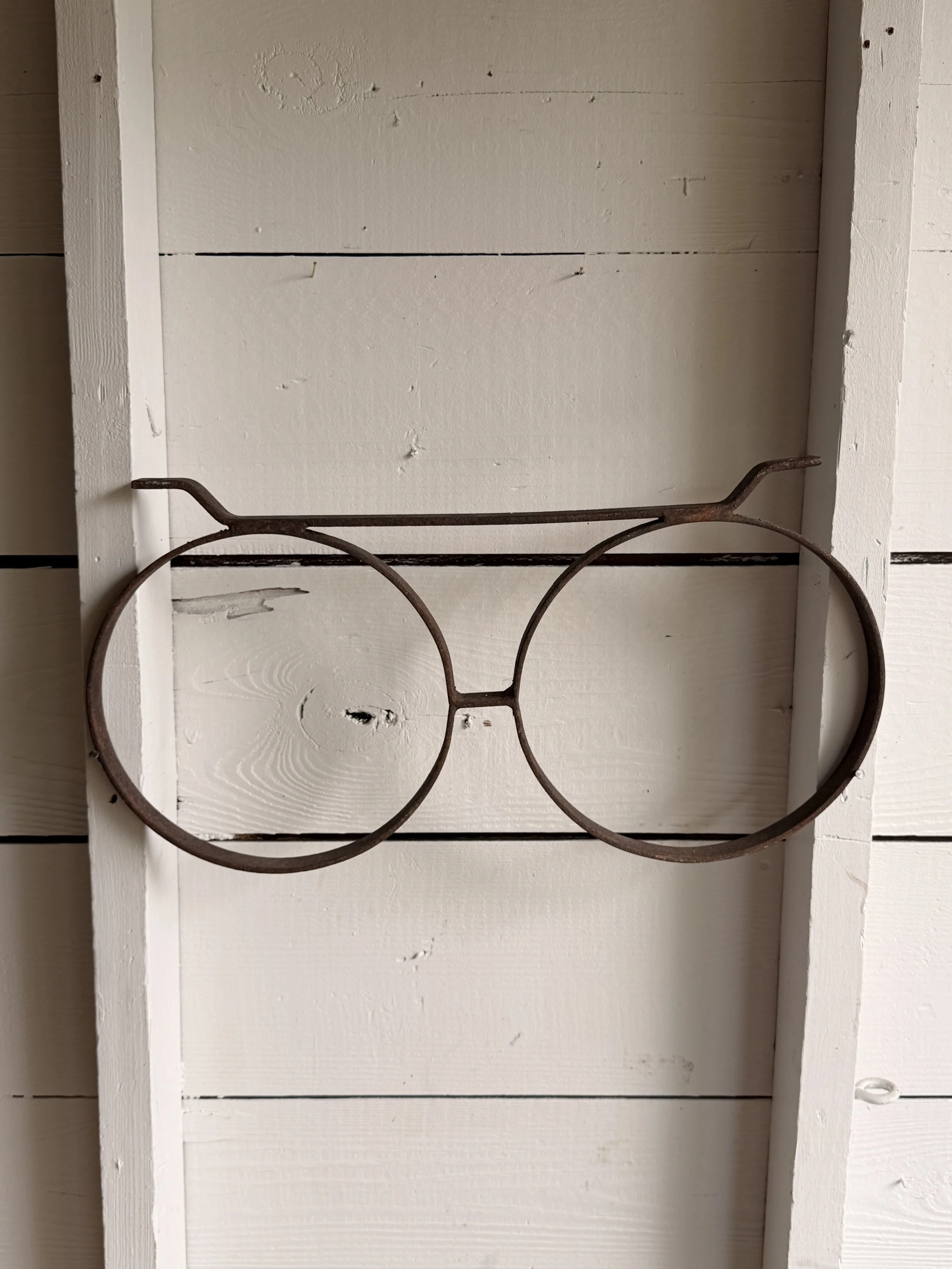
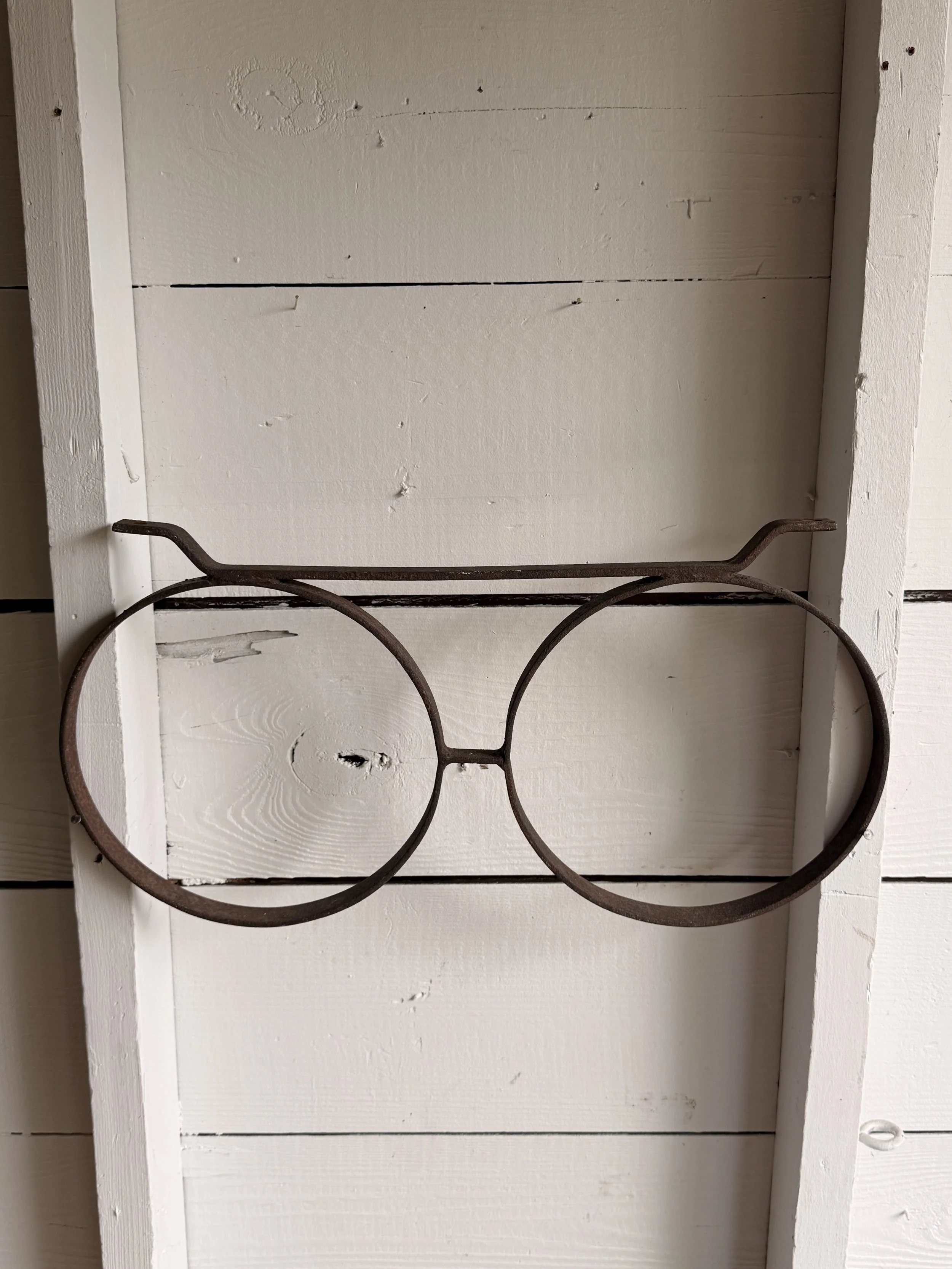
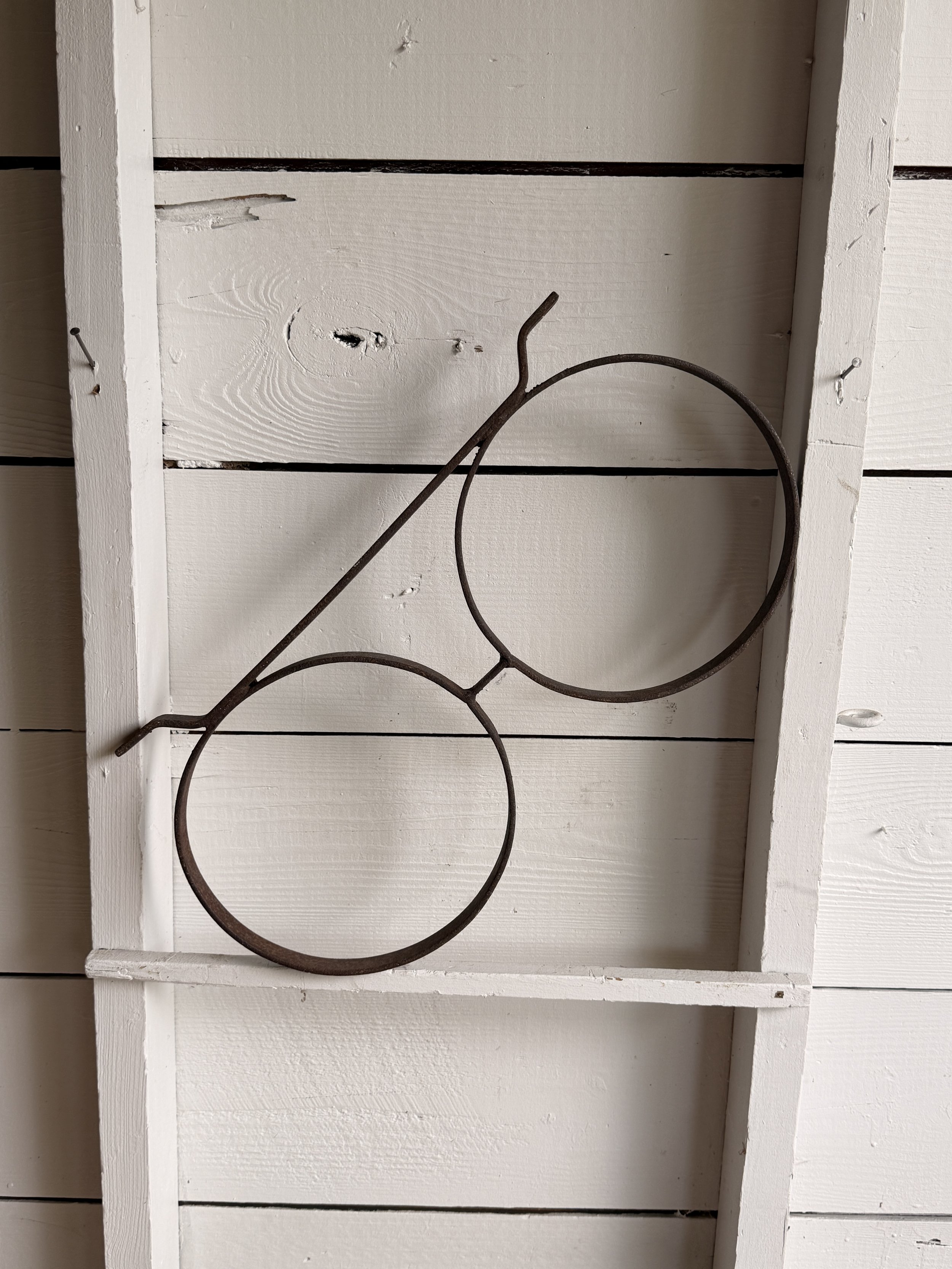
Early 20th-century cast iron optician’s trade sign in the form of an oversized pair of round spectacles. Made from relatively simple iron rod and flat stock, the sign has two large circular “lenses” joined by a small bridge, with long temples extending across the top and turning outward at the ends. There is no glass, so the form is reduced to its essentials, making it instantly recognizable even from a distance. The iron has developed an even, naturally oxidized surface with scattered rust and wear, giving it exactly the kind of untouched character you want in an old trade sign.
Figural trade signs have a long history as a practical form of advertising. Before illuminated storefronts and standardized commercial graphics, shopkeepers often used large three-dimensional symbols to announce their trade. This was particularly useful when literacy rates varied, since a boot could identify a shoemaker, a mortar and pestle an apothecary, and a pair of spectacles an optician or eyeglass maker without requiring a word of text.
By the late 19th and early 20th centuries, oversized spectacle signs were commonly associated with opticians, jewelers, and businesses selling or repairing eyeglasses. Their exaggerated scale made them easy to spot from the street, particularly when mounted perpendicular to a building where pedestrians could see them from either direction.
Cast and wrought iron were natural materials for this sort of outdoor signage. They were durable, could withstand years of weather, and allowed a blacksmith or metalworker to turn a familiar everyday object into something architectural.
This example has a particularly stripped-down, almost modern look. The enormous round frames and slender connecting elements give it a terrific graphic quality, while the rusted iron keeps it firmly rooted in its commercial past. What started as simple street advertising now works just as well as a piece of early industrial folk art.
THIS IS IN OUR EAST COAST INVENTORY, EMAIL US TO FIND OUT WHEN WE CAN SHIP IT hello@heimweeantiques.com
Early 20th-century cast iron optician’s trade sign in the form of an oversized pair of round spectacles. Made from relatively simple iron rod and flat stock, the sign has two large circular “lenses” joined by a small bridge, with long temples extending across the top and turning outward at the ends. There is no glass, so the form is reduced to its essentials, making it instantly recognizable even from a distance. The iron has developed an even, naturally oxidized surface with scattered rust and wear, giving it exactly the kind of untouched character you want in an old trade sign.
Figural trade signs have a long history as a practical form of advertising. Before illuminated storefronts and standardized commercial graphics, shopkeepers often used large three-dimensional symbols to announce their trade. This was particularly useful when literacy rates varied, since a boot could identify a shoemaker, a mortar and pestle an apothecary, and a pair of spectacles an optician or eyeglass maker without requiring a word of text.
By the late 19th and early 20th centuries, oversized spectacle signs were commonly associated with opticians, jewelers, and businesses selling or repairing eyeglasses. Their exaggerated scale made them easy to spot from the street, particularly when mounted perpendicular to a building where pedestrians could see them from either direction.
Cast and wrought iron were natural materials for this sort of outdoor signage. They were durable, could withstand years of weather, and allowed a blacksmith or metalworker to turn a familiar everyday object into something architectural.
This example has a particularly stripped-down, almost modern look. The enormous round frames and slender connecting elements give it a terrific graphic quality, while the rusted iron keeps it firmly rooted in its commercial past. What started as simple street advertising now works just as well as a piece of early industrial folk art.