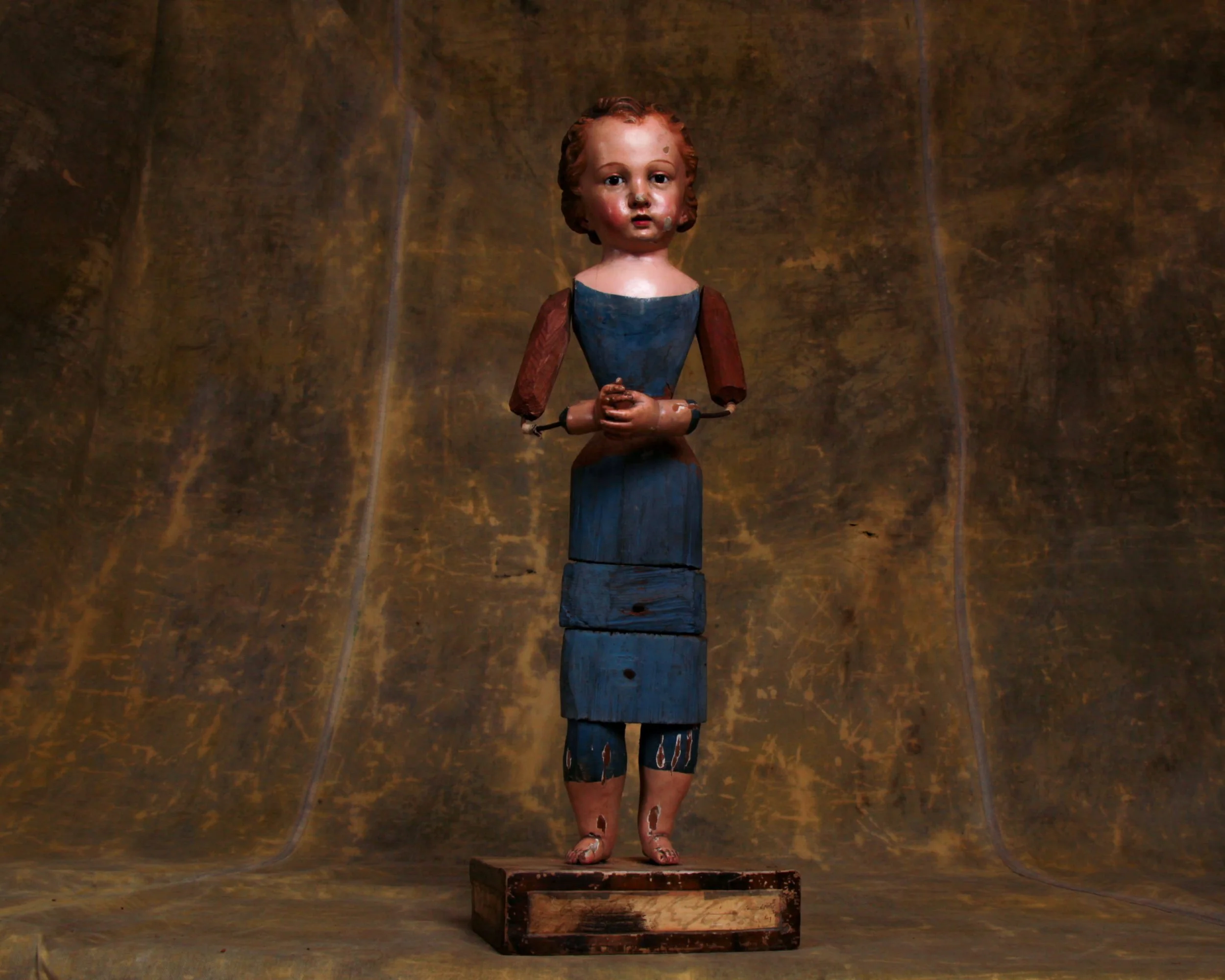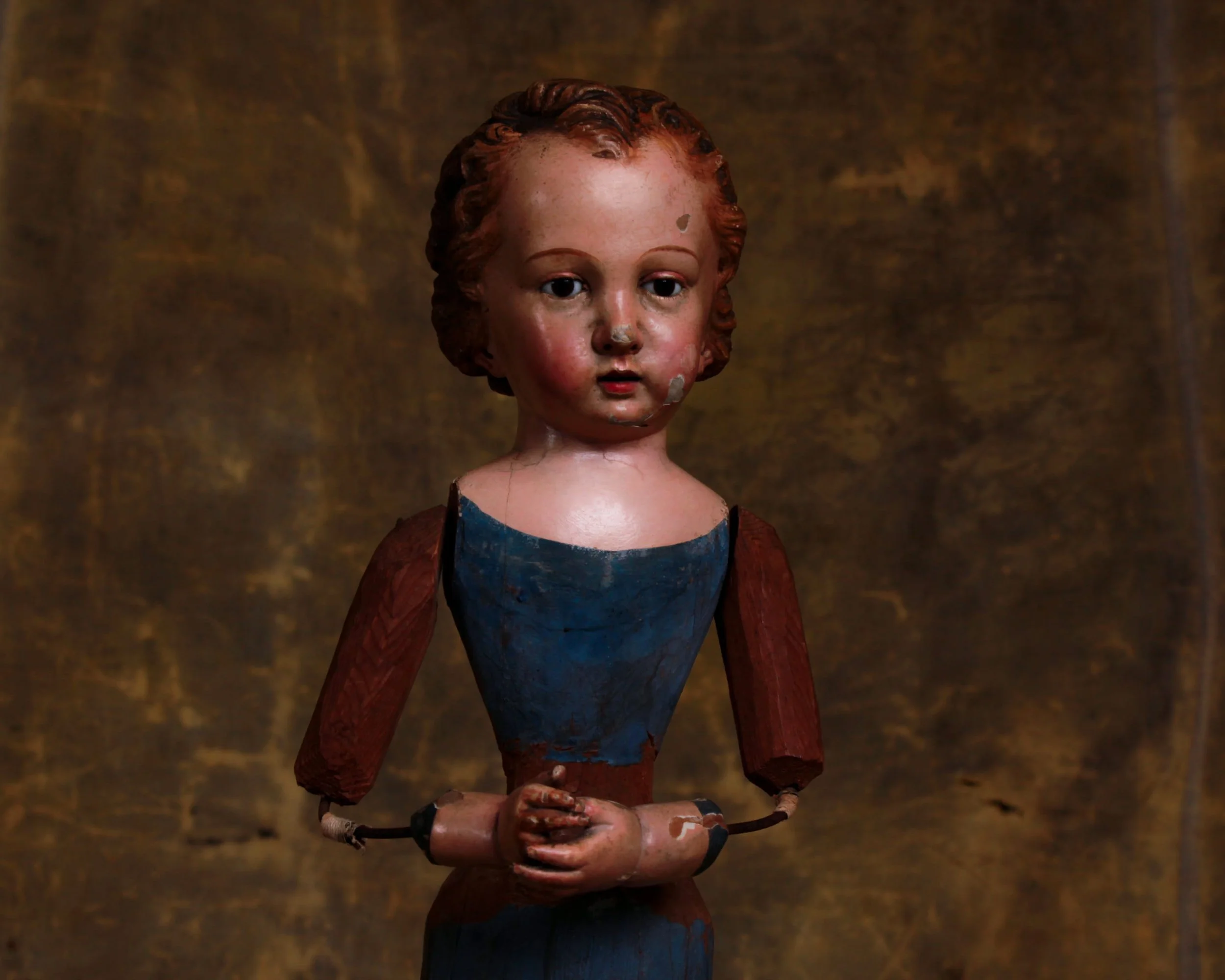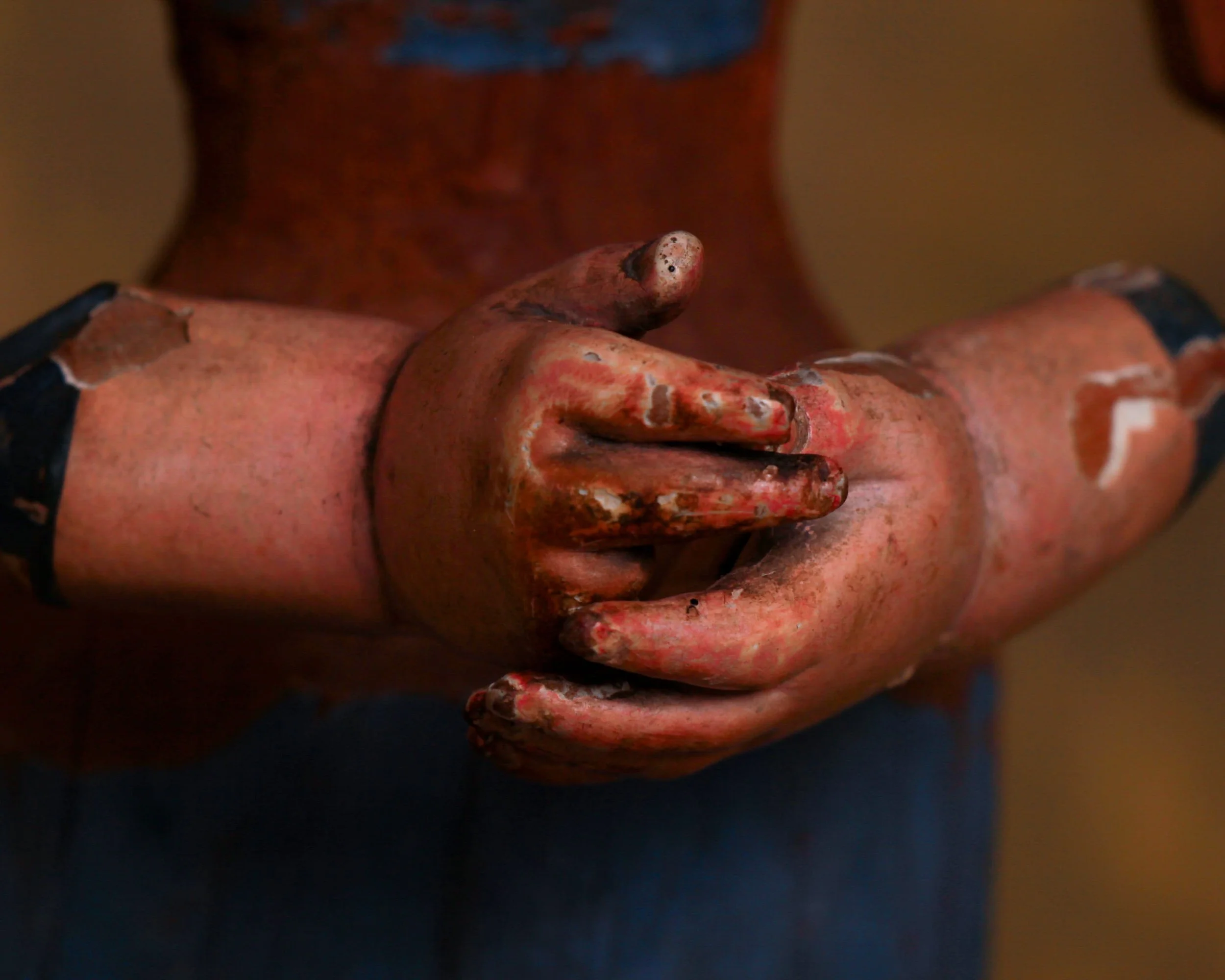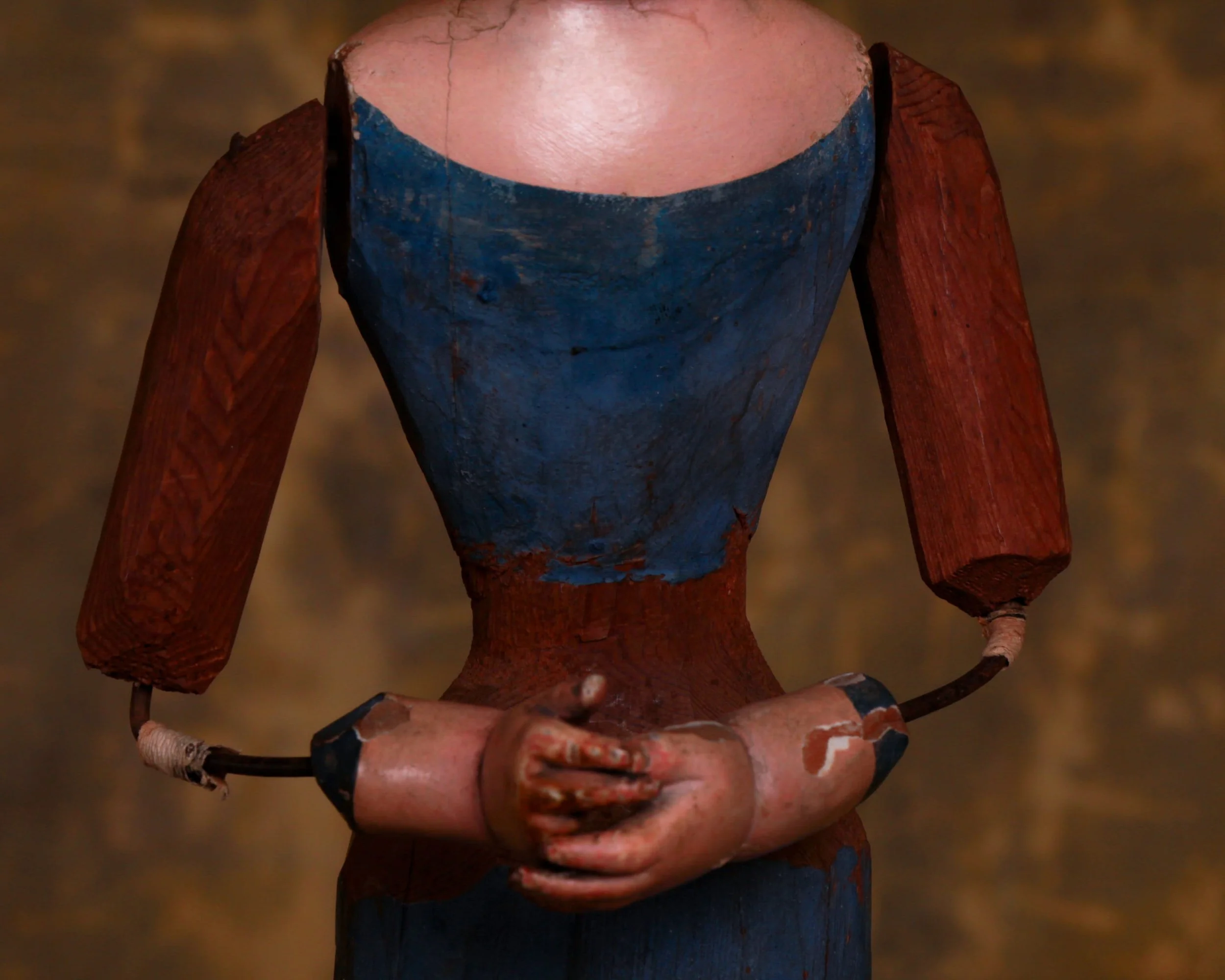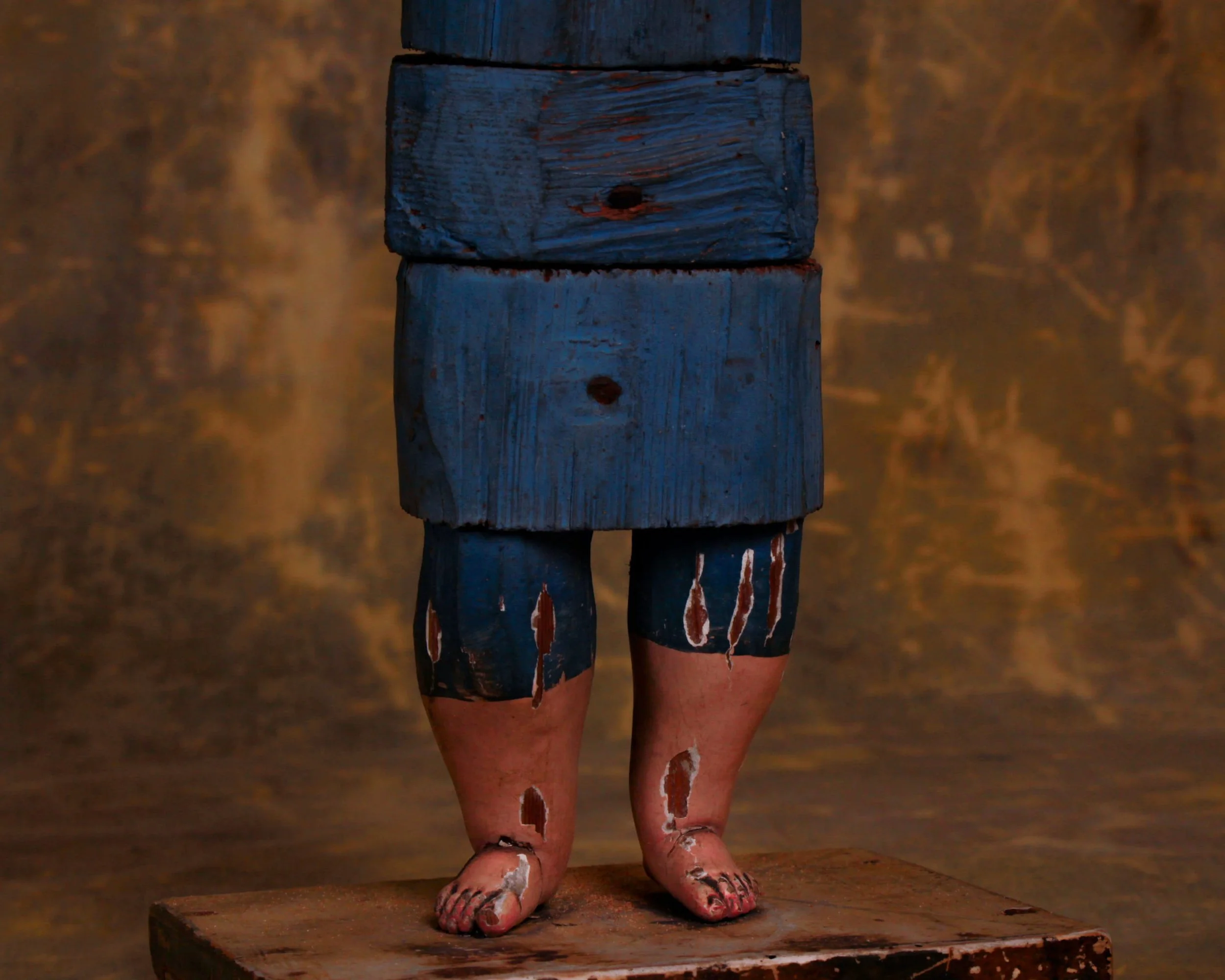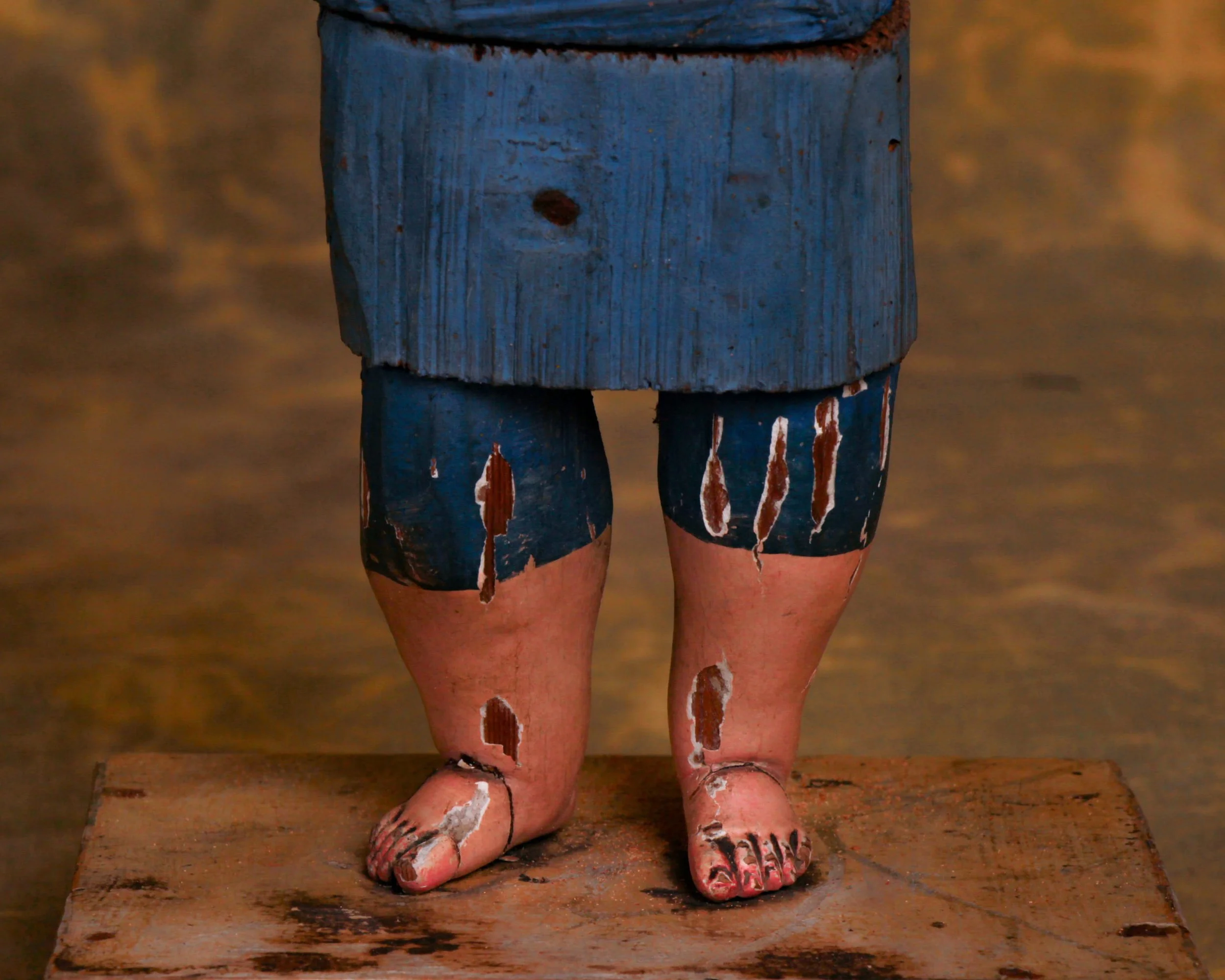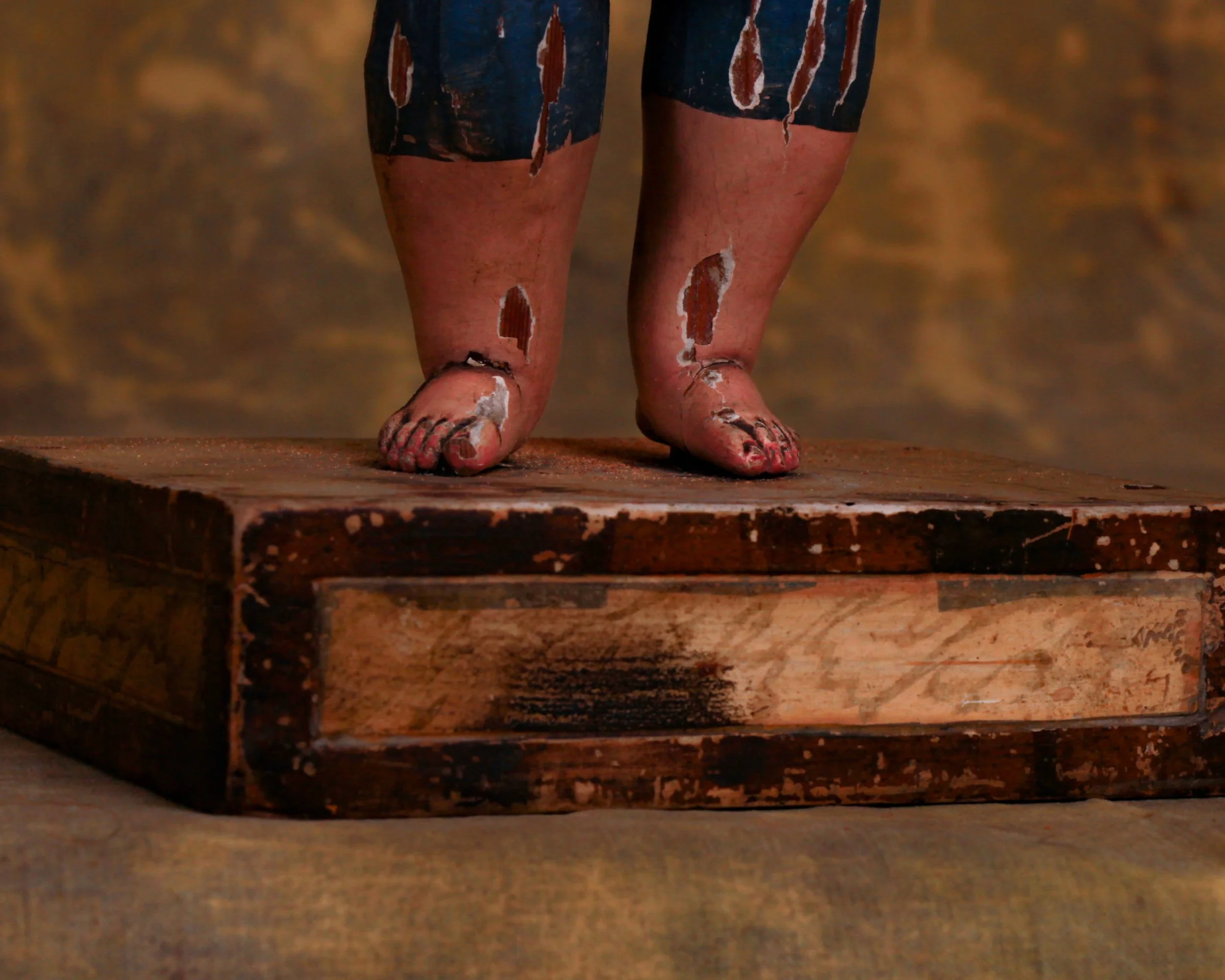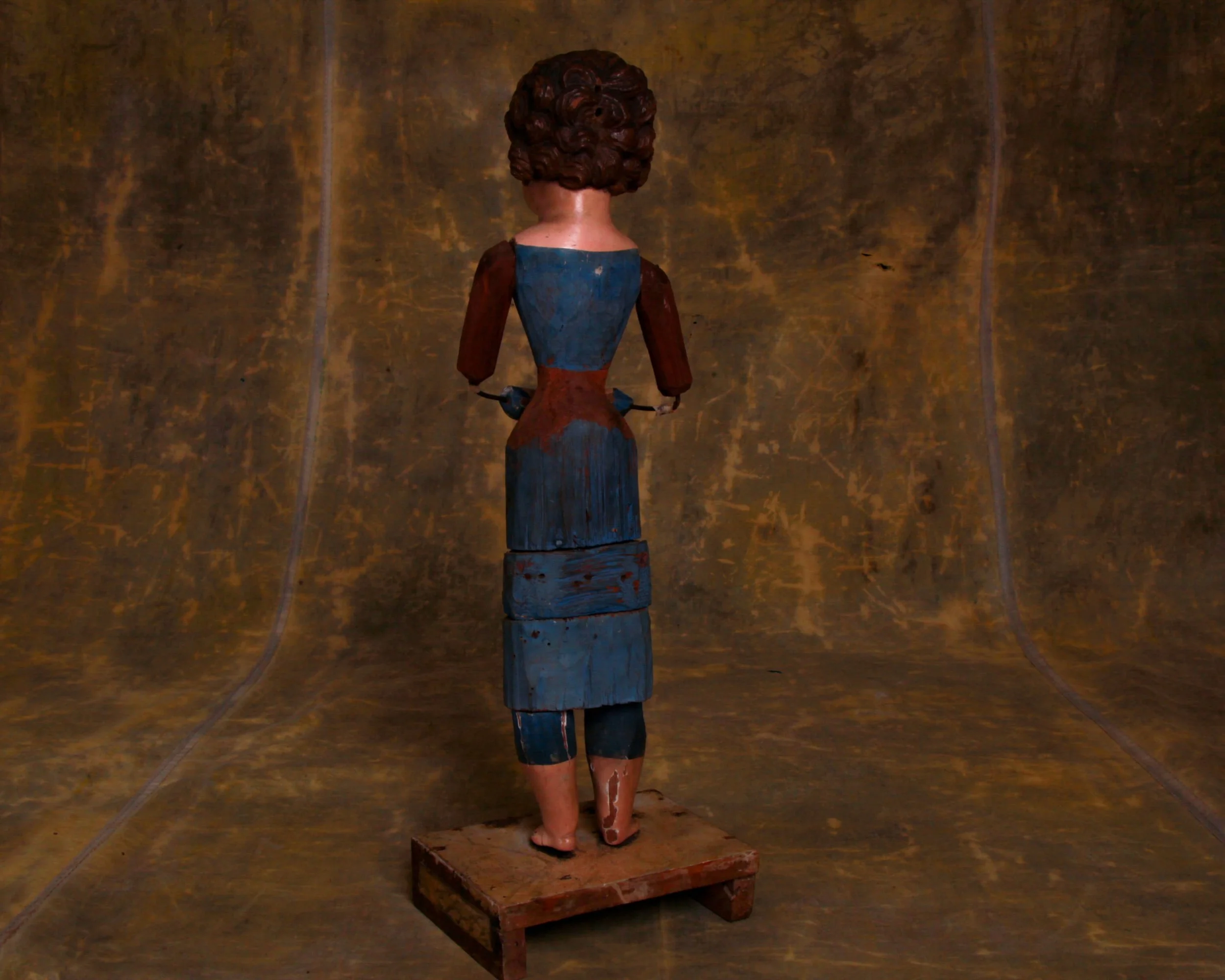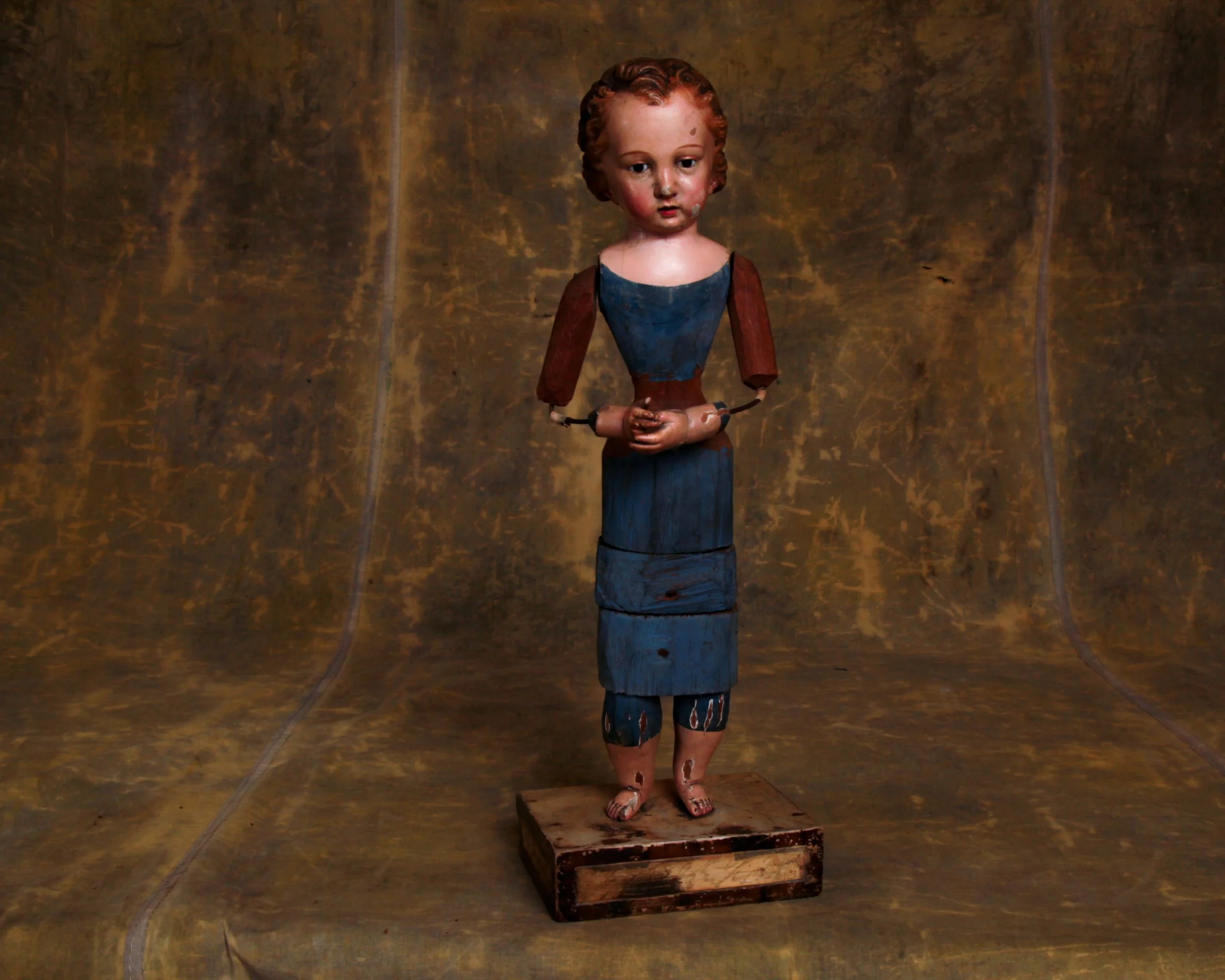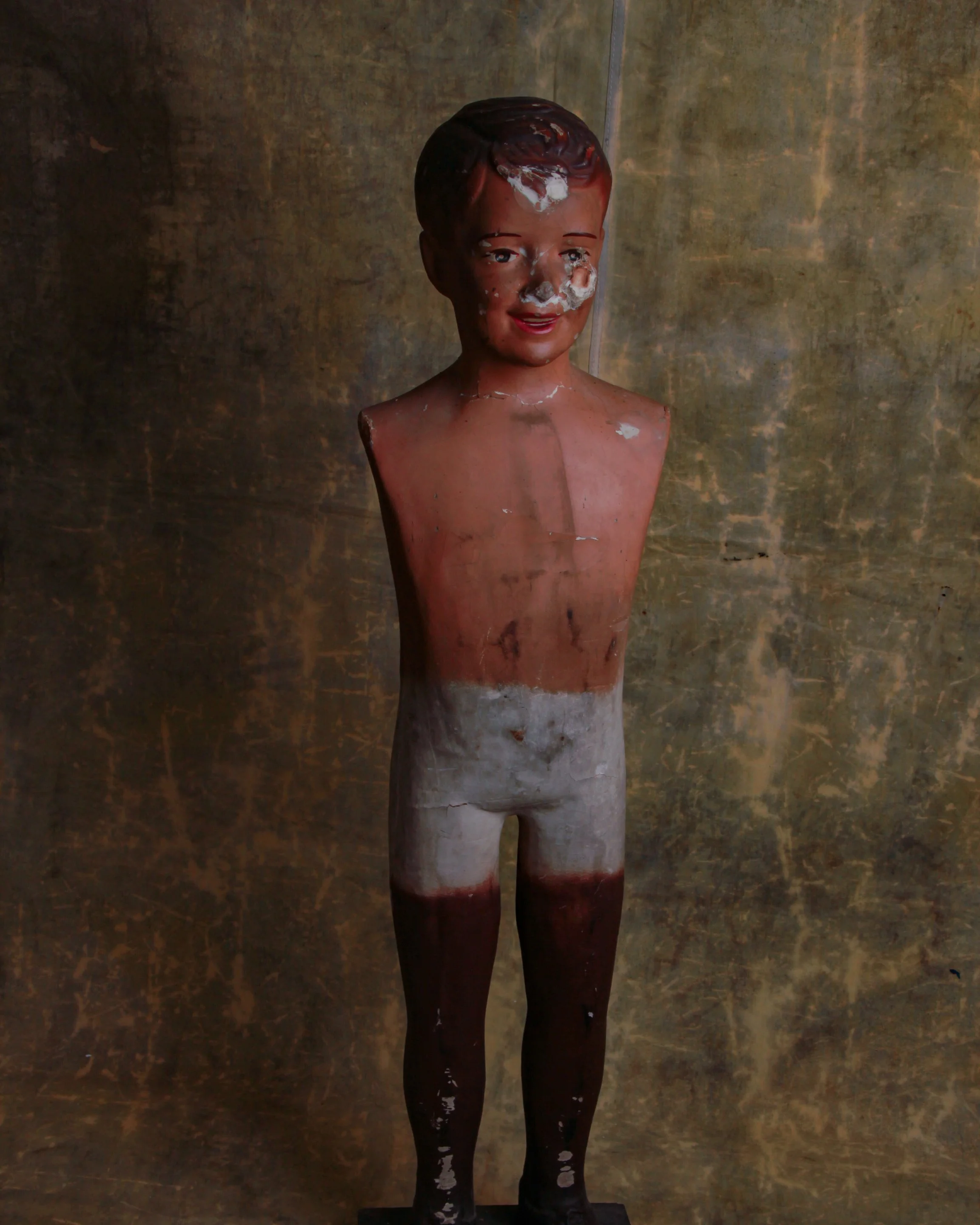

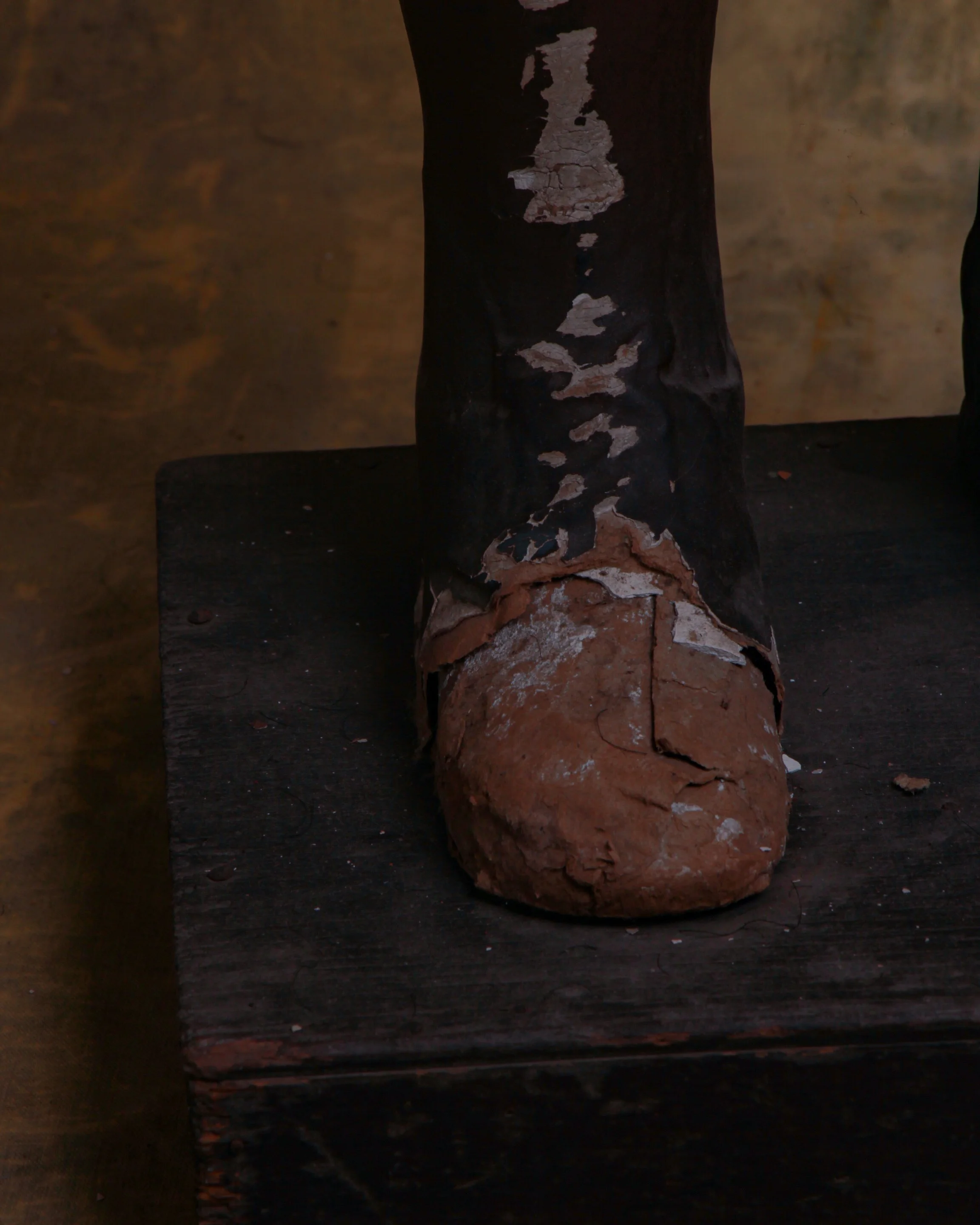
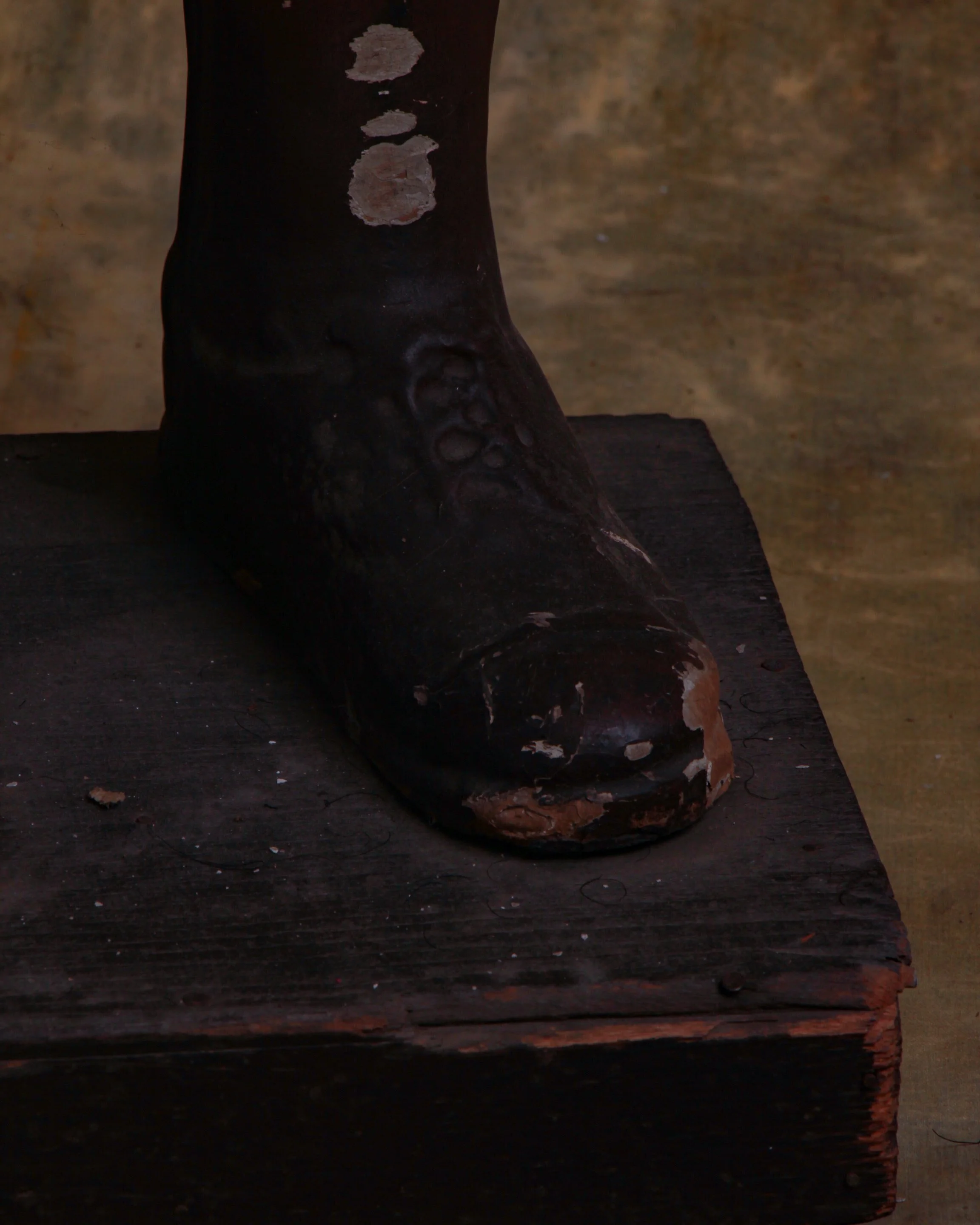

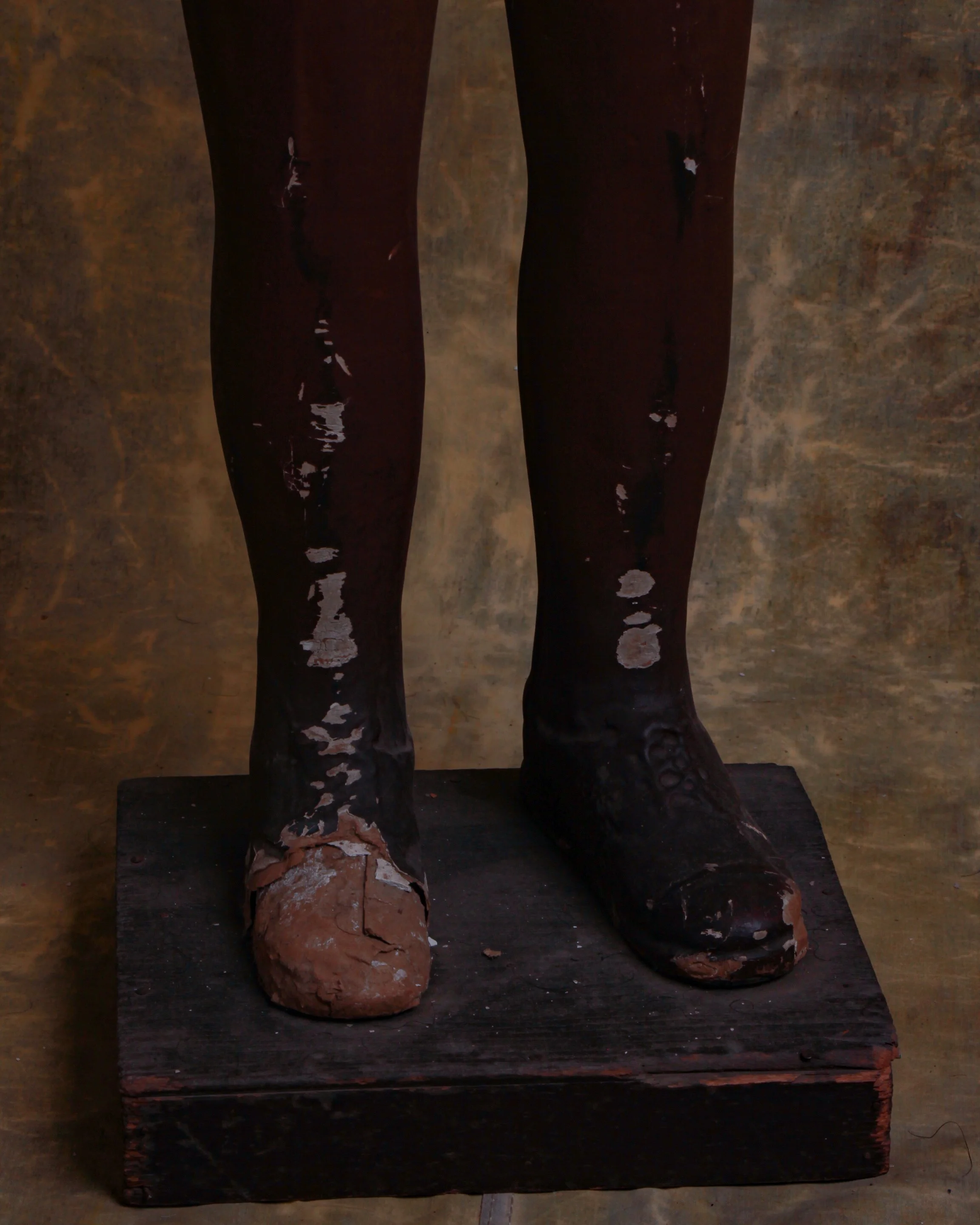





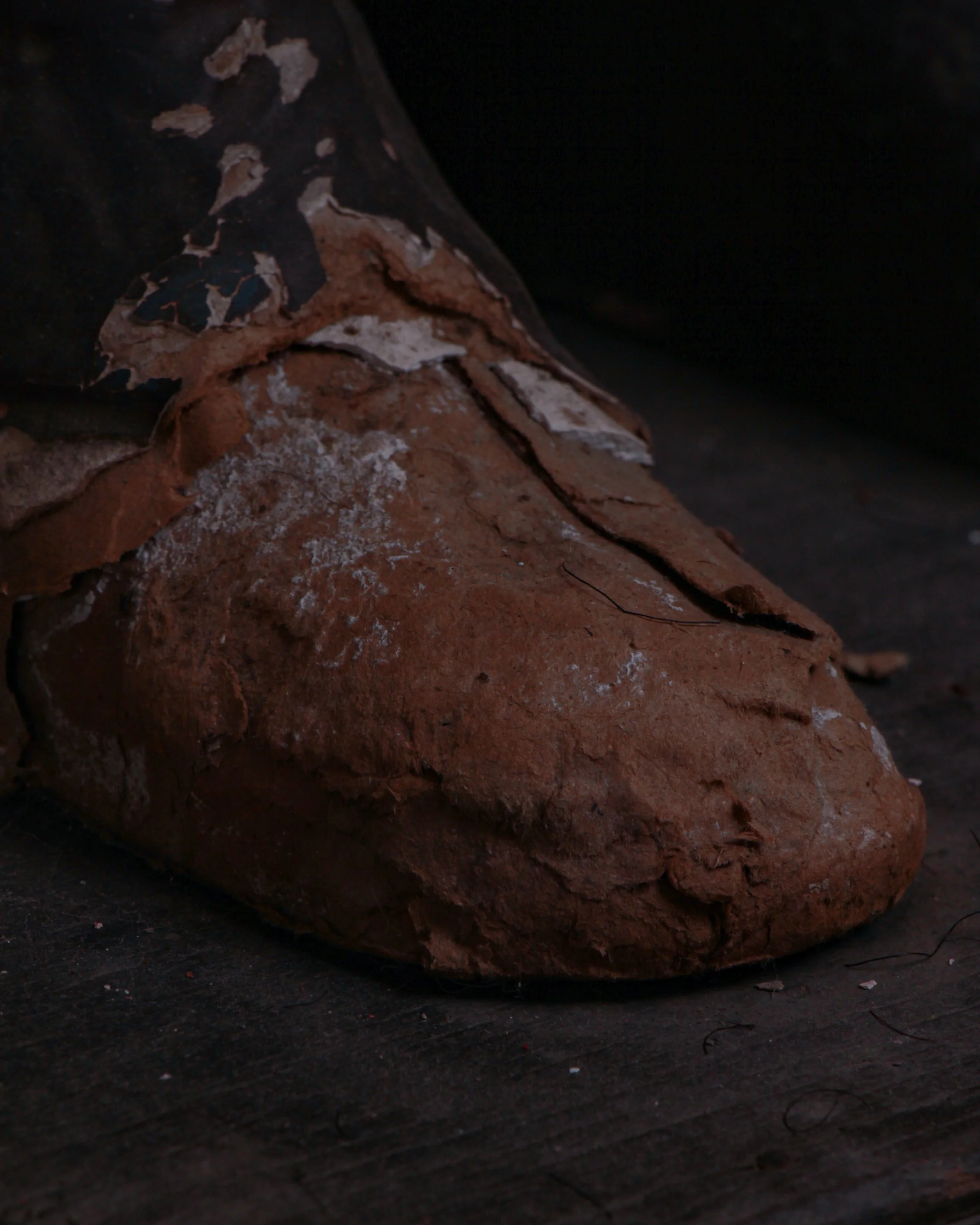

Composition mannequin depicting a young boy, with neatly combed brown hair, painted blue eyes, rosy cheeks, and a smiling expression. The figure has a slender body with squared shoulders, missing arms, painted gray shorts, dark stockings, and molded shoes. It stands on a rectangular wooden base and features a large opening in the back, likely related to its original construction or use. The painted surface shows considerable wear, including scratches, cracking, chipped paint, and areas of exposed material, particularly around the face and feet. Likely made for displaying children's clothing in a shop window or retail setting.
Mannequins became an important part of retail merchandising during the late 19th century, when department stores began using elaborate window displays to attract customers. Before this period, clothing was commonly presented on simple wooden forms, dressmaker's dummies, or hanging racks.
By the early 20th century, manufacturers were producing increasingly realistic figures using materials such as wax, papier-mâché, plaster, and composition, often made from mixtures of wood pulp, glue, and other binders. These materials were relatively inexpensive and allowed manufacturers to create detailed facial features and lifelike proportions.
Children's mannequins became particularly popular as department stores expanded their clothing departments and developed dedicated displays for younger customers. Figures were often dressed in seasonal fashions, school uniforms, sporting clothes, and formal outfits.
During the 1920s and 1930s, mannequin design began moving away from highly realistic Victorian figures toward more stylized forms influenced by changing fashions and modern advertising.
By the 1940s and 1950s, fiberglass and plastics gradually replaced many traditional composition materials, offering lighter, stronger, and more easily maintained alternatives.
These developments transformed shop windows into carefully arranged scenes designed to sell clothing while reflecting the fashions, tastes, and everyday life of their time.