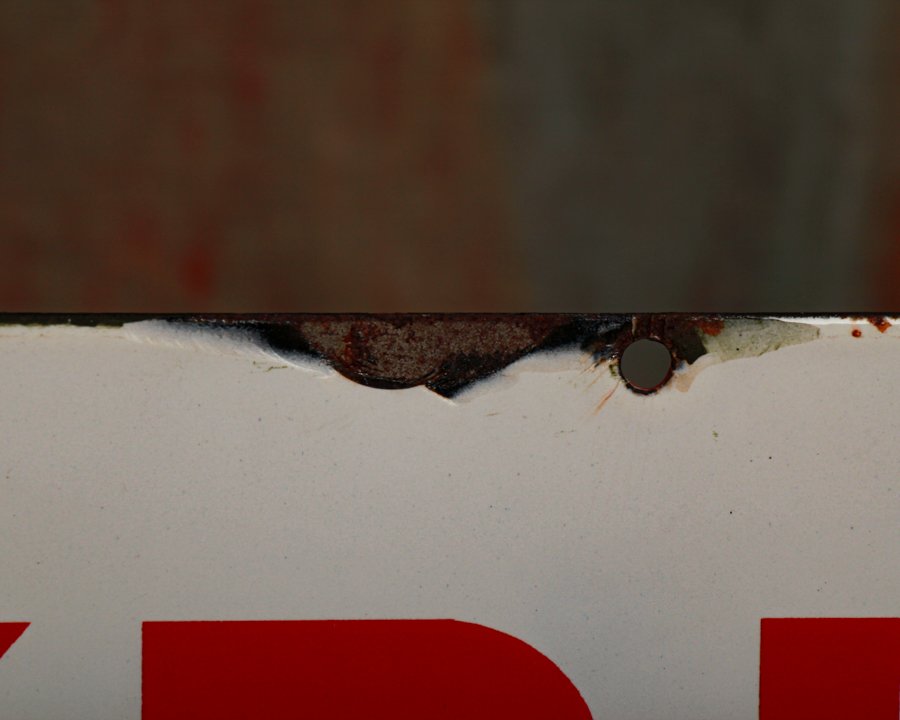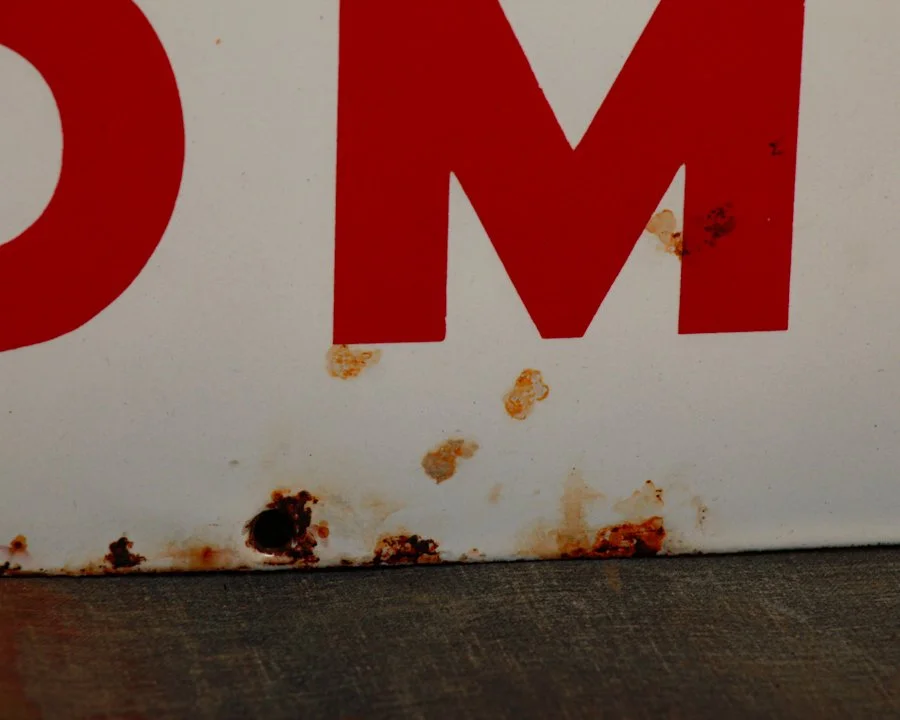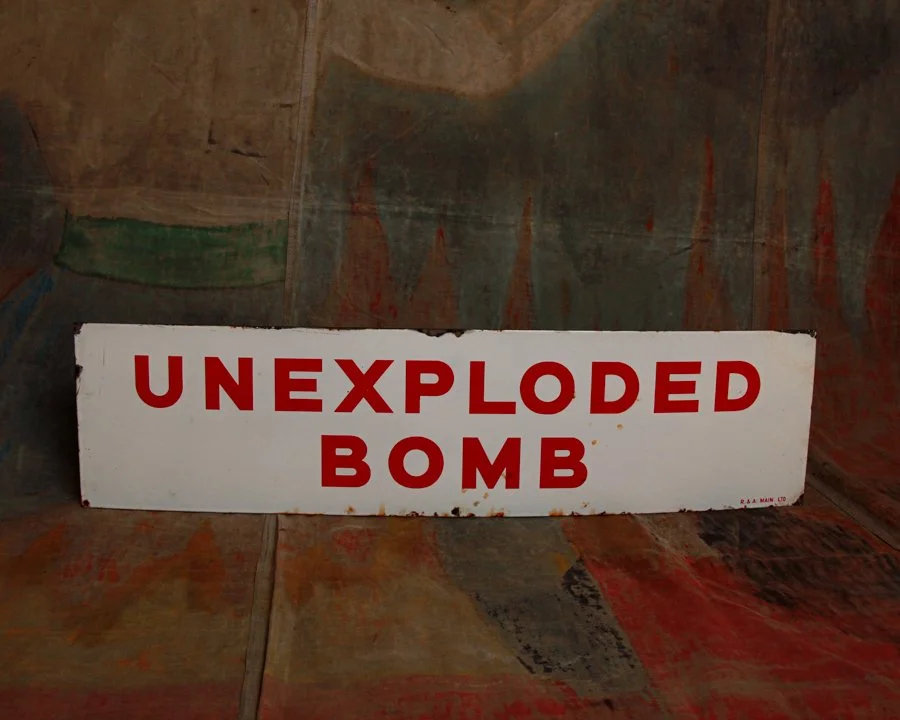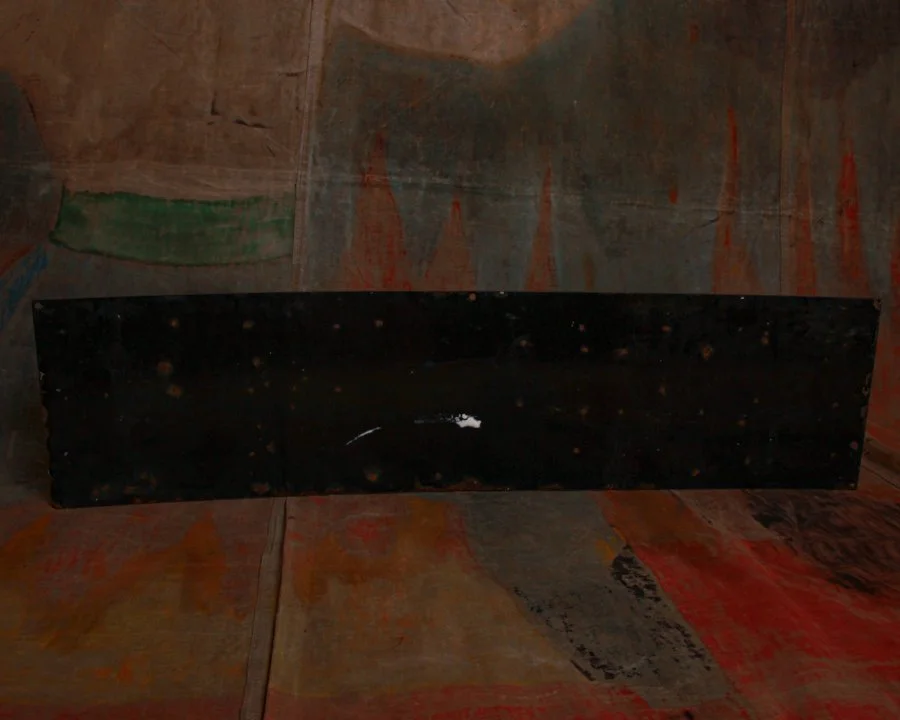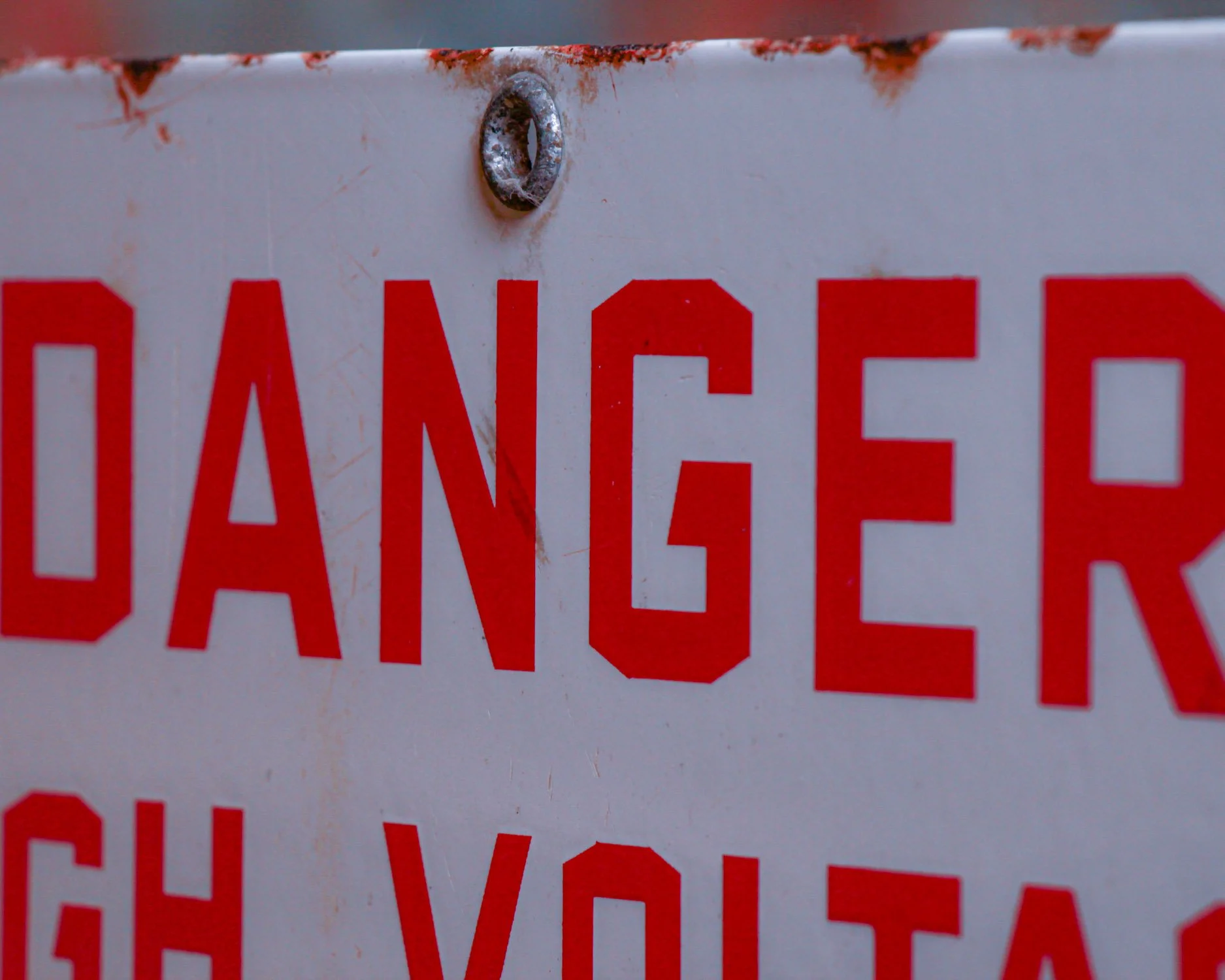
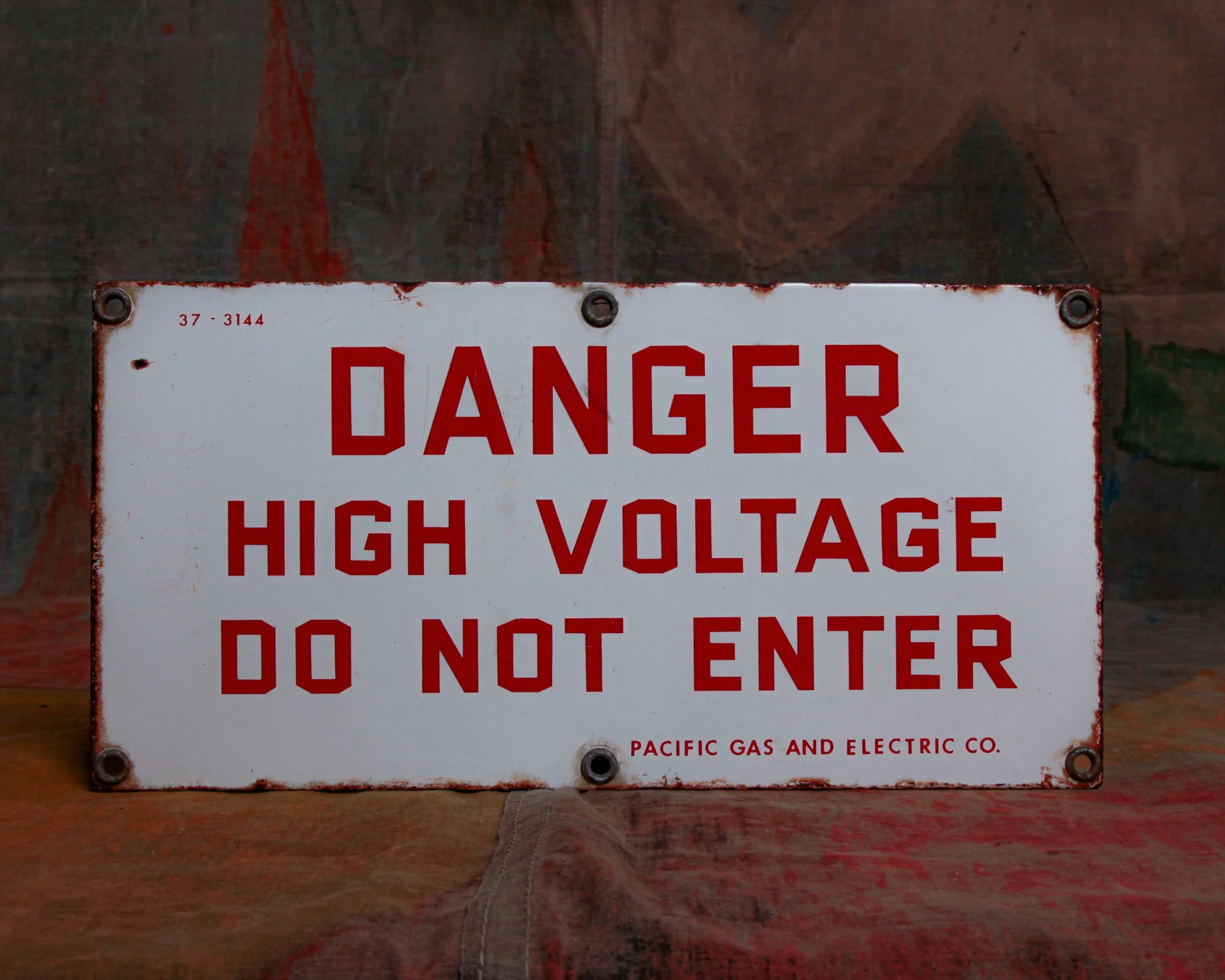
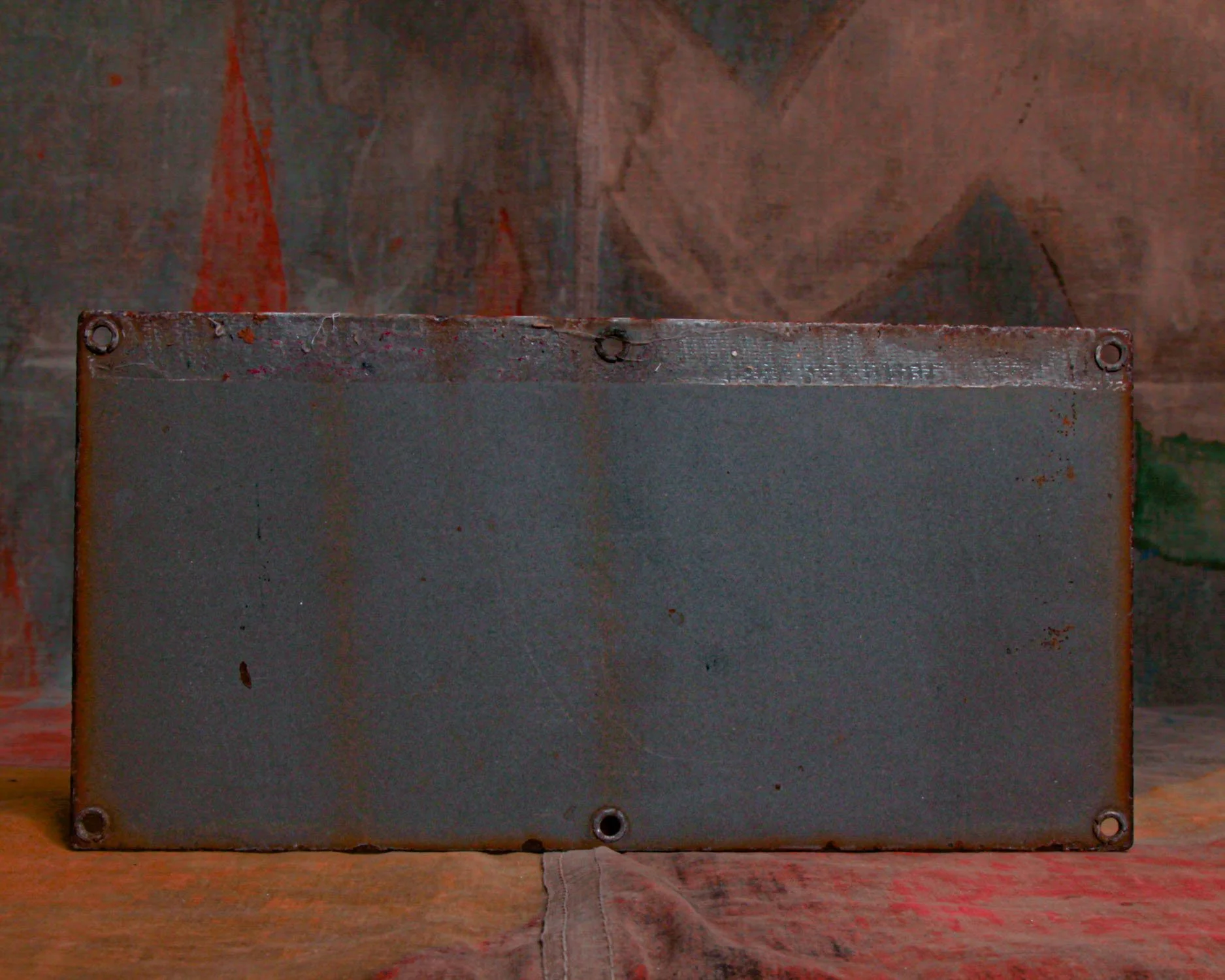
Single-sided porcelain enamel warning sign produced for Pacific Gas and Electric Company (PG&E), featuring bold red lettering against a white background. The message reads “DANGER HIGH VOLTAGE DO NOT ENTER,” with the company name printed along the bottom and the identification number “37-3144” in the upper left corner. Made from heavy-gauge metal with a porcelain enamel finish, the rectangular sign has six reinforced mounting holes. The surface shows scratches, minor discoloration, and rust along the edges, while the lettering remains clear and legible. Likely dating to the mid-20th century, it was intended to warn workers and the public about hazardous electrical equipment or restricted areas.
The widespread introduction of electricity during the late 19th century created a growing need for standardized safety signage. As electrical infrastructure expanded into factories, power stations, commercial buildings, and residential neighborhoods, utility companies began installing warning signs to identify potentially dangerous equipment and restricted locations.
Porcelain enamel became a preferred material for outdoor electrical signage because of its durability and resistance to moisture, sunlight, and temperature changes. The manufacturing process involved fusing powdered glass onto metal at high temperatures, producing a hard, protective surface capable of lasting for decades.
Founded in 1905 through the consolidation of several California utility companies, Pacific Gas and Electric played an important role in developing the state's electrical infrastructure. Its expanding network of power plants, substations, and transmission lines required extensive safety measures.
During the early to mid-20th century, utility companies increasingly adopted bold lettering, high-contrast colors, and direct language to communicate electrical hazards.
Red and white became familiar colors for danger signs, allowing warnings to be recognized quickly, even from a distance.
As electrical safety regulations developed, warning signs became an essential part of industrial workplaces, public utilities, and electrical installations throughout the United States.